

Crater Lake in Late Spring: Snow, Blue Water, and an Unforgettable View
We visited Oregon's most famous lake at the end of May, when winter was still hanging on. Not every road was open, but what we saw was more than enough.
Some Places Live Up to the Photographs
You know those travel photographs that make you stop scrolling?
The ones where the scenery looks so spectacular that you wonder whether somebody adjusted the colors just a little too much?
That's how Crater Lake first caught our attention.
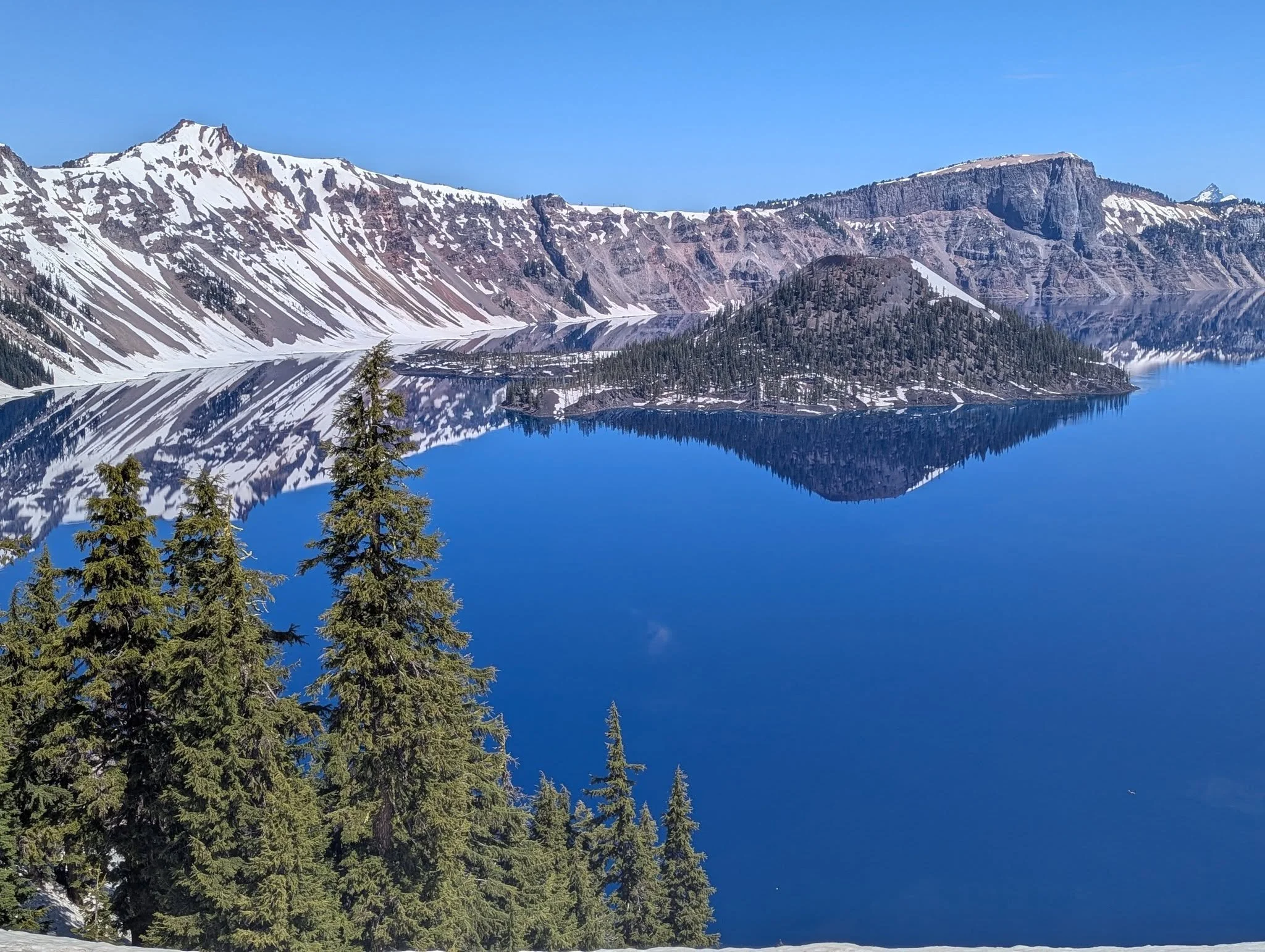
The photographs showed impossibly blue water, snow-covered cliffs, and reflections so clear that it was sometimes difficult to tell where the mountains ended and the lake began.
Gina and I had decided to spend a week exploring Central Oregon, using a quiet Airbnb near Powell Butte as our home base. We didn't have a packed itinerary or a long list of reservations.
But there was one place I absolutely wanted to see.
Crater Lake.
On May 30, 2025, we finally got our chance.
And for once, the photographs hadn't exaggerated a thing.
Two Hours South, and Winter Was Still Waiting
We left Powell Butte that morning for the roughly two-hour drive to Crater Lake National Park.
It was a beautiful drive, and we weren't in any particular hurry. We expected snow at the higher elevations, but knowing there's snow and actually seeing how much remains at the end of May are two very different things.
The park's North Entrance was still closed, so we approached from the south.
The roads we traveled were clear, with a little wet pavement from melting snow. We had rented a Jeep for our Oregon adventure, but we certainly didn't need four-wheel drive that morning.
That was our experience on that particular day, not a promise of what another visitor will encounter. Late spring weather in the Cascades can change quickly.
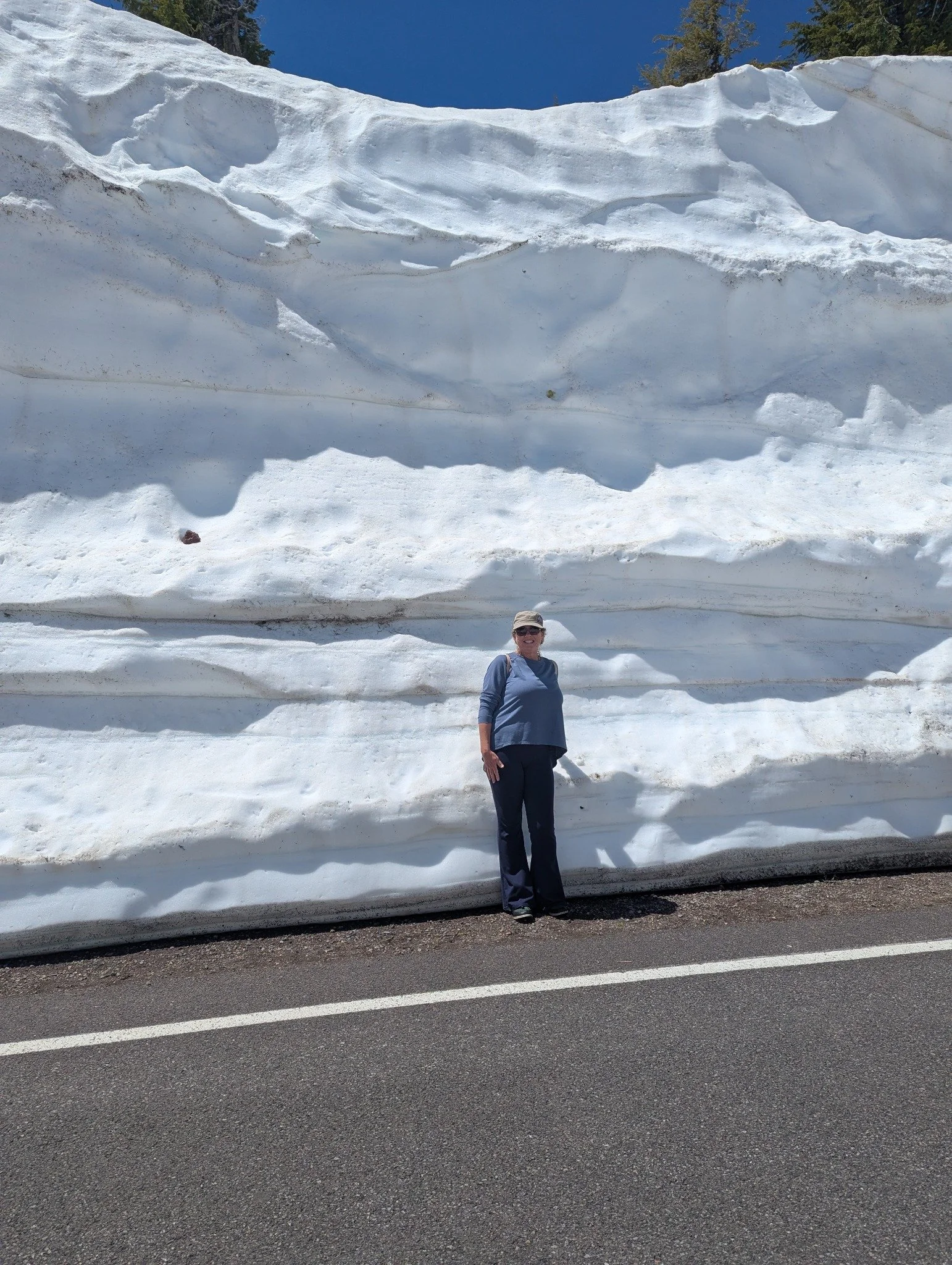
As we climbed higher, the snowbanks grew larger.
And larger.
Eventually, we were looking at walls of snow towering above us, with some piled nearly to the eaves of nearby buildings.
This was May 30. June was practically knocking on the door.
Apparently, nobody had told winter.
The National Park Service reports that the average snow depth at park headquarters in May exceeds six feet. That doesn't mean every May looks the same, but it certainly explains why visitors can encounter enormous snowbanks long after spring has arrived elsewhere.
And Then We Saw the Lake
There are places where you arrive, take a look, and think, Well, that's nice.
Crater Lake wasn't one of them.
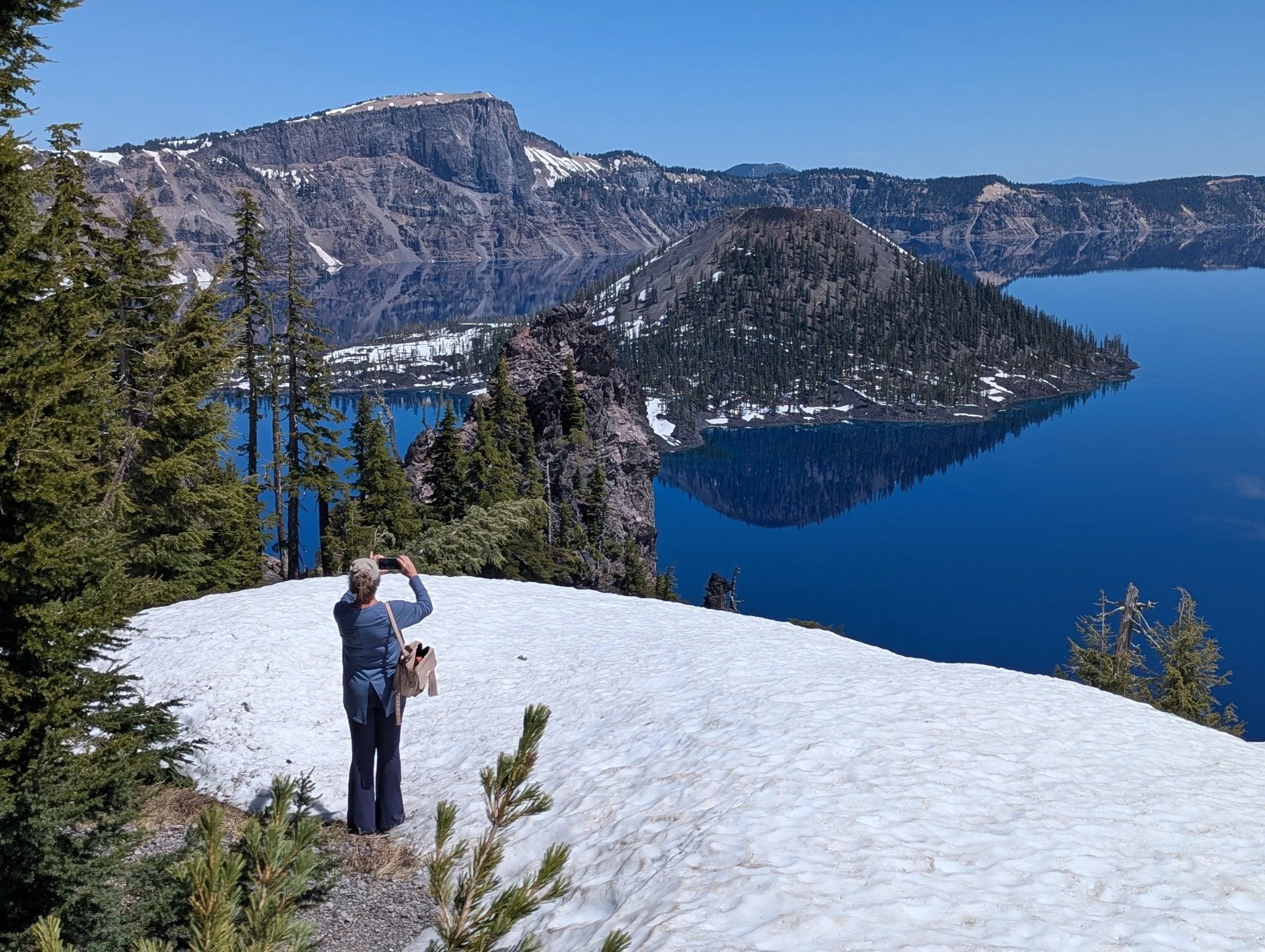
We reached the accessible lake overlooks in the late morning, and the view was breathtaking.
The sky was clear. The air was cool and crisp. Snow still covered much of the surrounding caldera.
And the water?
That extraordinary blue.
The lake was almost perfectly still, reflecting the snowy cliffs and Wizard Island with astonishing clarity.
We stood there looking at something that seemed almost too beautiful to be real.
Crater Lake formed about 7,700 years ago when Mount Mazama collapsed following a massive volcanic eruption. At approximately 1,943 feet deep, it's the deepest lake in the United States. Its exceptional depth and clarity help produce the brilliant blue color that makes it famous.
Interesting geology, certainly.
But standing there, I wasn't thinking about volcanic history or water depth.
I was thinking about how fortunate we were to be seeing it.
In the Google review I wrote afterward, I described it this way:
“Pictures don't do it justice. God's handiwork can't be improved upon.”
Looking back at our photographs, I still feel the same way.
We Didn't Need to See Every Inch of the Park
Here's something worth understanding about visiting Crater Lake in late spring.
You probably won't be able to do everything you could do in August.
During our visit, the North Entrance was closed, and portions of Rim Drive remained buried beneath snow. Many hiking trails weren't accessible either.
We knew that going in.
And we were perfectly content.
We walked around the accessible areas, enjoyed several viewpoints, took photographs, and breathed in that wonderful mountain air.
We also watched the park's informational presentation and browsed the gift shop and cafeteria. We didn't buy anything, but we enjoyed looking around.
We spent a couple of hours at the park before continuing our day.
Could we have spent much longer there during the summer, when more roads and trails are accessible?
Absolutely.
Did we feel cheated because we couldn't?
Not for a moment.
We came to see that magnificent lake, and we saw it under nearly ideal conditions.
Sometimes the experience you came for is enough.
Is Late Spring Actually a Good Time to Visit Crater Lake?
That depends entirely on what you want from the visit.
If your goal is to hike extensively, drive the complete rim, or explore every accessible corner of the park, late May probably isn't your best choice.
The National Park Service explains in its guide to visiting in May and June that these are transitional months. Snow can keep roads and trails closed, and the weather can range from beautiful sunshine to significant snowfall.
Even seeing the lake isn't guaranteed. The Park Service estimates that clouds completely obscure it about 20% of the time in May.
We were fortunate.
We had clear skies, comfortable conditions for sightseeing, and reflections that seemed almost impossibly perfect.
But here's the other side of the equation.
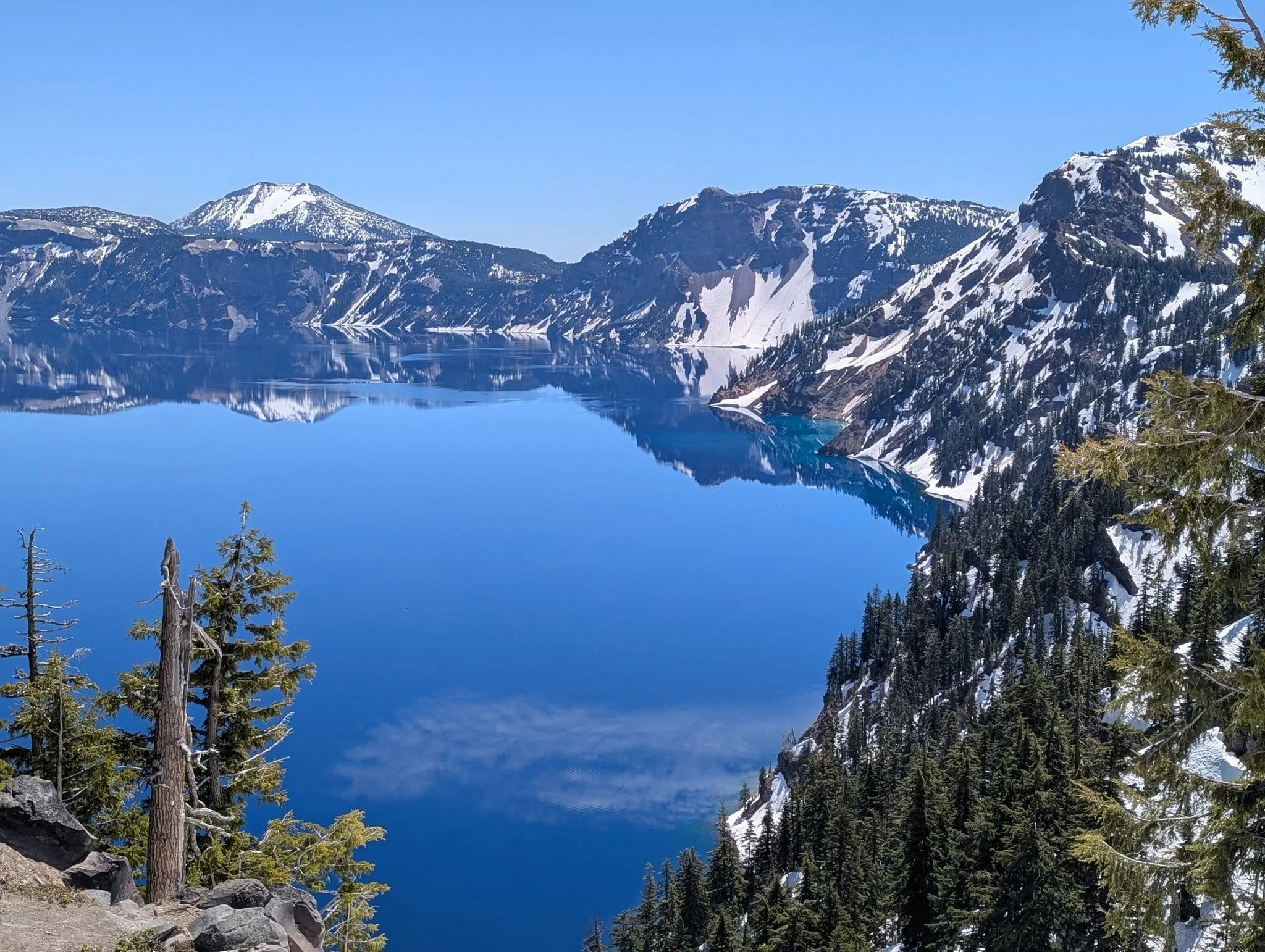
If you want to see snow-covered cliffs surrounding brilliant blue water, late spring can be extraordinary.
Those massive snowbanks weren't an inconvenience to us. They were part of the experience.
And although more sections of Rim Drive may become accessible as June progresses, opening dates depend on snowpack and plowing conditions. Full access sometimes takes until July.
My advice is simple: decide what matters most to you.
If it's hiking, consider later summer.
If it's scenery, snow, and the possibility of those remarkable reflections, don't automatically dismiss May.
Just check the park's current road and trail conditions before making the drive, and be prepared for the possibility that weather may have other plans.
A Few Practical Things Worth Knowing
Visitor information current as of October 2026. Our visit took place in May 2025. Road access, trail closures, services, and construction schedules can change, so always verify current conditions before traveling.
One significant change since our visit involves Cleetwood Cove Trail, the park's only authorized public route down to the lakeshore.
According to the National Park Service, the trail is closed for a major rehabilitation project during the 2026, 2027, and 2028 seasons. Public boat tours are also unavailable during that construction period.
You can read about the work on the Cleetwood Cove Trail and Marina Rehabilitation page.
This doesn't mean Crater Lake itself is closed. Visitors can still enjoy accessible overlooks and other open areas of the park. But anyone planning a hike to the water or a boat tour should understand the restrictions before making arrangements.
There's also a benefit worth mentioning for military travelers.
Eligible U.S. military veterans and Gold Star Families can receive a free lifetime America the Beautiful Military Pass, while qualifying current service members and dependents have an annual-pass option.
The lifetime pass can cover entrance fees for the passholder and passengers in one private, noncommercial vehicle at participating federal recreation sites. Check the National Park Service's military pass information for eligibility and acceptable documentation.
It's a terrific benefit, and one that deserves to be used.
The Adventure Didn't End at Crater Lake
By around noon, we'd seen what we came to see.
But we weren't ready to head straight back to Powell Butte.
During our Oregon vacation, Gina and I had been talking about California's redwoods and giant sequoias. She'd never been to California, although I'd visited during my Navy years.
We weren't going to reach those famous forests that afternoon, but we were already relatively close to the California border.
So we looked at the map and decided to keep driving south.
Why not?
We had no agenda, no reservations, and no particular attraction we needed to reach.
We continued into California, passing through Dorris and visiting a viewpoint where we could see Mount Shasta in the distance.
It was a pleasant drive.
Not spectacular. Not some hidden gem that belongs on everyone's must-see list.
Just a nice afternoon exploring somewhere new together.
We stopped for a late lunch at a place so unremarkable that neither of us remembers much about it.
Some meals become vacation stories.
Others become a reminder that you probably should have packed a sandwich.
Eventually, we turned back toward Oregon and our Airbnb.
But the day's dining experiences still needed a little redemption.
Fortunately, we found Sugar Pine Treats.
Sometimes the Best Stop Is Ice Cream
After a disappointing breakfast and a mediocre lunch, Sugar Pine Treats was exactly what we needed.
The staff were friendly and helpful, and the shop had a fun personality. Ranger-inspired uniforms, stuffed animal heads mounted on the walls, and board games and cards available for customers gave it a character of its own.
And then there was the ice cream.
Let's just say we weren't counting calories.
A Reese's Peanut Butter Cup sundae piled with chocolate, peanut butter cups, whipped cream, and a cherry made for a pretty satisfying conclusion to our culinary adventures that day.
I later gave Sugar Pine Treats a five-star Google review.
It earned every star.

An Extraordinary View and an Ordinary Afternoon
When we look back on that day, Crater Lake is unquestionably the highlight.
The blue water. The snowy cliffs. Wizard Island reflected so perfectly that the lake almost looked like a mirror.
It's a place I would recommend without hesitation.
But I also remember the drive south, seeing Mount Shasta in the distance, laughing about our forgettable lunch, and enjoying ice cream before heading home.
Those weren't bucket-list moments.
They didn't need to be.
We drove to Crater Lake to see something extraordinary. We spent the rest of the day simply enjoying each other's company.
And both parts made it a wonderful day.
For more of our Oregon adventures, read A Week in Central Oregon: Why We Chose Powell Butte Instead of Bend, along with our other stories about exploring the landscapes, small towns, restaurants, and unexpected discoveries around Bend and beyond.