

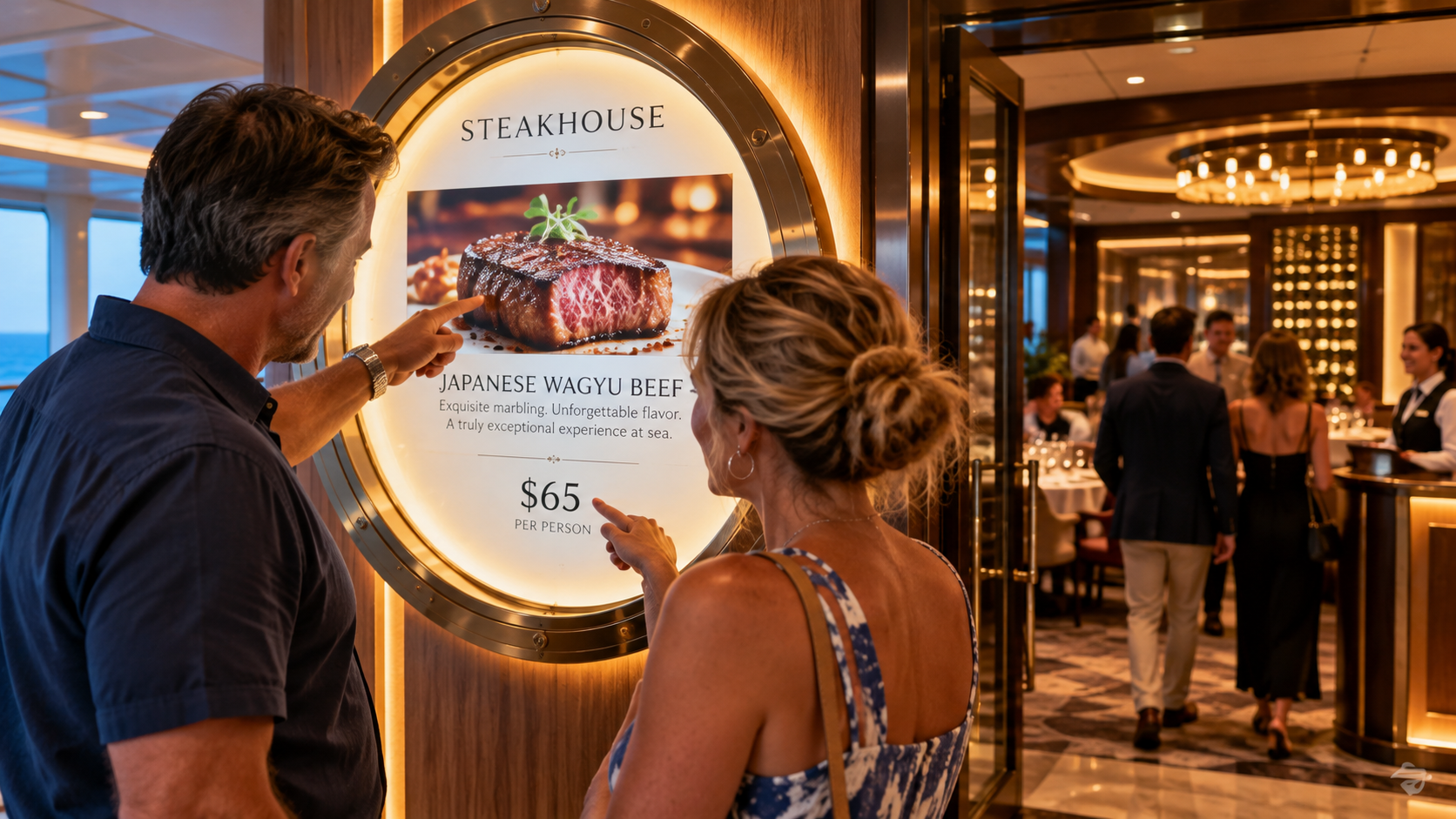
Cruise Specialty Dining: Is It Worth Paying Extra When You've Already Paid for Your Meals?
From steakhouses and sushi bars to chef-driven tasting menus, specialty dining promises something beyond the main dining room. But is that something worth the additional cost?
You've booked your cruise, selected your cabin, and perhaps even prepaid your gratuities.
Your meals are included. The main dining room has an appealing menu, the buffet offers plenty of choices, and depending on the ship, several casual restaurants may be included as well.
Then you start exploring the specialty dining options.
A steakhouse. An upscale Italian restaurant. A sushi bar. Perhaps a chef's tasting menu featuring dishes you wouldn't ordinarily encounter.
The pictures look wonderful.
But there's another charge.
Maybe it's $30 per person. Maybe it's $50. Perhaps considerably more.
Didn't I already pay for dinner?
Yes, you did.
And that's exactly where this conversation should begin.
You're Not Choosing Between a Free Dinner and a $50 Dinner
The main dining room isn't free. You've paid for it as part of your cruise fare, along with the service supported by your daily gratuities.
When you book a specialty restaurant, you're spending additional money while choosing not to use one of the dining experiences you've already purchased.
That doesn't make specialty dining a poor value. But it changes the comparison.
A $50 specialty dinner might be a bargain compared with a $100 restaurant ashore. Yet aboard the ship, an enjoyable dinner is already waiting for you without another charge.
A specialty restaurant isn't competing with an empty stomach. It's competing with a dinner you've already paid for.
The question is whether the additional experience justifies the additional expense.
And the answer?
It depends.
Don't Underestimate the Main Dining Room
I've sailed aboard MSC, Carnival, and Royal Caribbean, and my main dining room experiences have generally ranged from fairly good to excellent. I've also experienced Viking's river cruise dining, which operates on a different scale.
My family has a history in the restaurant business, so I appreciate the skill involved in feeding hundreds or thousands of passengers over a relatively short dinner service.
Multiple courses, different preferences, special dietary requirements, consistent presentation, and food arriving at the proper temperature. It's an impressive operation when done well.
We've also enjoyed having the same waitstaff for much of our voyages. That familiarity can make dinner surprisingly personal.
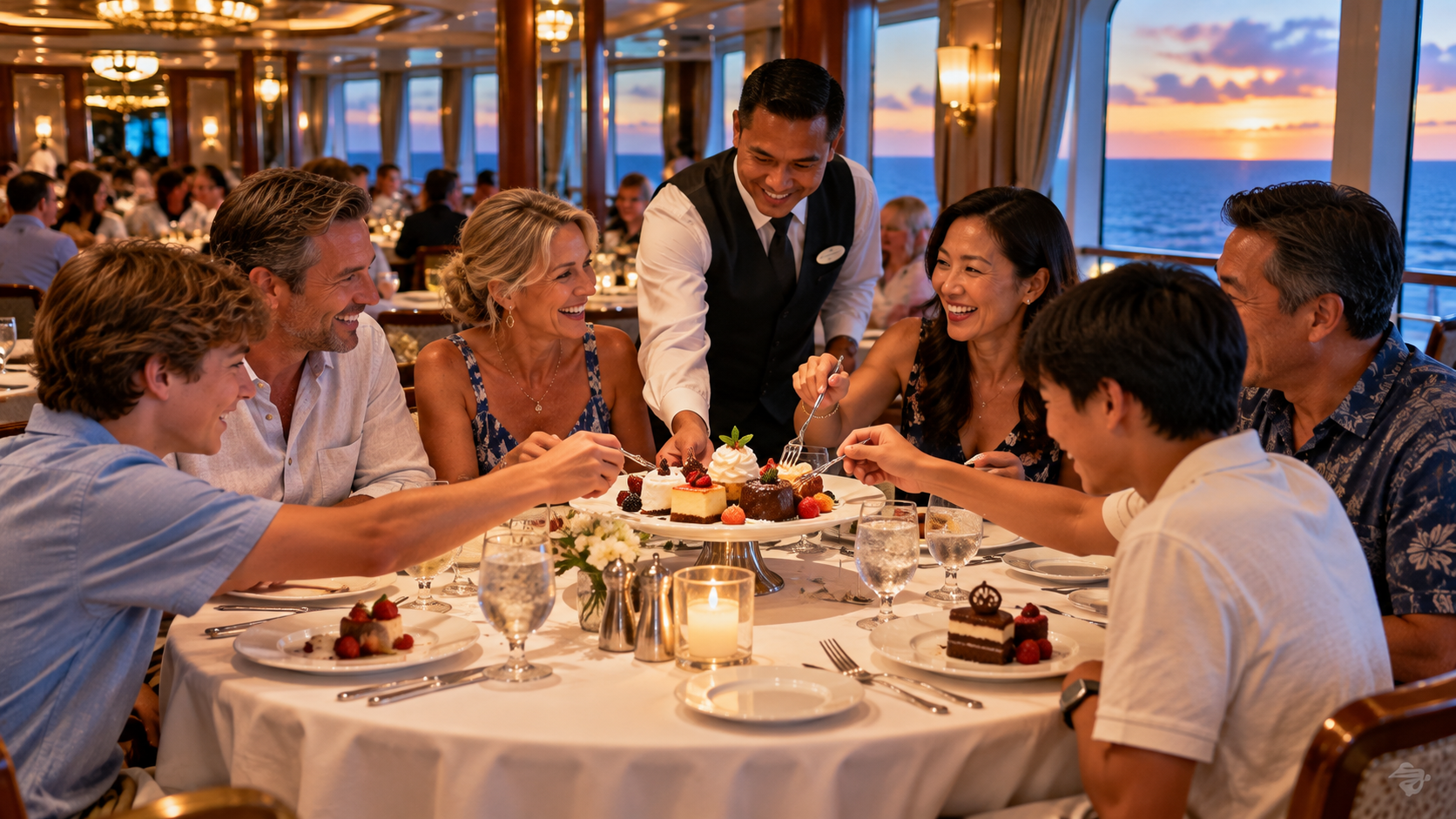
On our Carnival Vista cruise, Gina, Owen, and I shared a table with another couple whose son was close to Owen's age.
We enjoyed their company so much that, by the end of the cruise, we were sharing desserts.
Those evenings became part of the vacation experience.
Would an intimate specialty restaurant have been enjoyable? Possibly.
Would it necessarily have been better? Not at all.
Sometimes the people at your table are just as memorable as the food.
What Are You Actually Buying With Specialty Dining?
Specialty dining is often marketed as an upgrade, but that can mean different things.
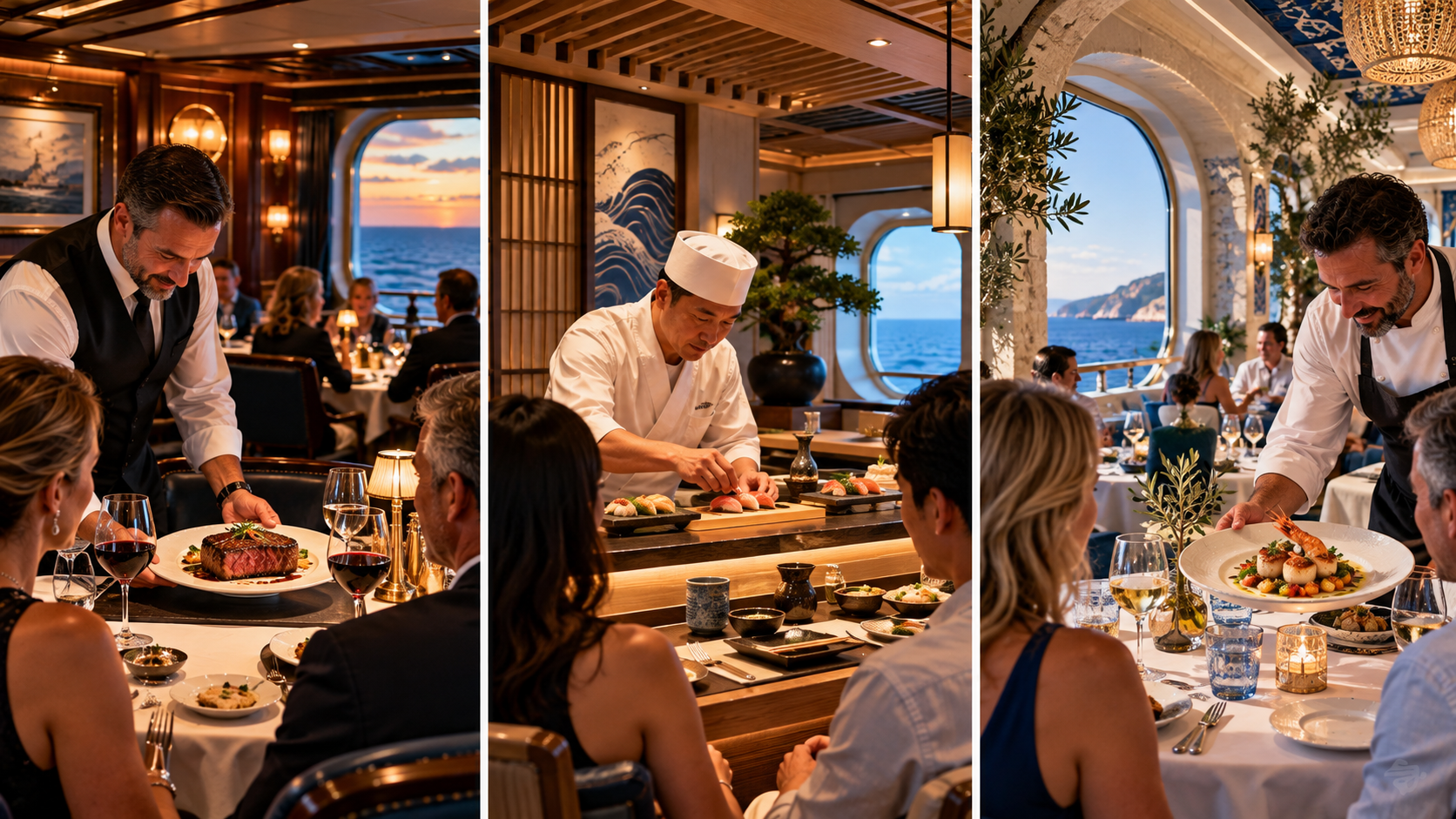
Sometimes you're paying for a quieter atmosphere, a distinctive menu, specialized preparation, or a chef-driven experience. Other times, you're paying for a familiar restaurant concept aboard a ship.
Imagine paying extra for a steakhouse dinner. I'd expect a quality cut of beef, properly prepared and presented, not an ordinary steak with a premium price tag.
A creative fusion restaurant or excellent sushi might be more appealing. So would a menu featuring regional culinary traditions or ingredients from the destinations we're visiting.
Imagine enjoying Alaska-inspired seafood while sailing along the coast, or Mediterranean dishes influenced by the ports on your itinerary.
Of course, a regional name on the menu doesn't guarantee locally sourced ingredients or an authentic culinary experience.
Specialty dining doesn't necessarily buy you better food. It should buy you something different that you genuinely value.
Beyond the Steakhouse: What Different Cruise Lines Offer
Specialty dining has expanded well beyond traditional steakhouses, although the options vary considerably by ship.
Celebrity Cruises
Celebrity offers restaurants such as Fine Cut Steakhouse, Le Petit Chef, and Eden Restaurant on selected ships.
Eden, aboard certain Edge Series ships, combines a distinctive setting with a more creative culinary approach. Le Petit Chef incorporates animated tabletop storytelling into dinner.
Neither experience will appeal to everyone, but both demonstrate that specialty dining can be about more than the entrée.
Norwegian Cruise Line
Norwegian offers concepts including Cagney's Steakhouse, Le Bistro, Teppanyaki, and selected seafood and Italian restaurants.
The variety makes dining packages worth investigating, particularly if several cuisines interest you.
But a package isn't automatically a bargain simply because it includes more restaurants.
Disney Cruise Line
Disney offers an interesting comparison because its rotational dining experience is already included in the cruise fare.
Guests enjoy different themed restaurants while their serving team follows them throughout the voyage.
Disney also offers adult-exclusive dining on selected ships, including Palo and, on certain vessels, Remy or Enchanté.
For parents traveling with children, an adult-only dinner might be the attraction rather than simply a different menu.
Royal Caribbean, Carnival, and MSC
Royal Caribbean offers options ranging from Chops Grille and Izumi to more elaborate dining experiences on selected ships.
Carnival features steakhouses and other specialty concepts, while MSC offers restaurants such as Butcher's Cut and Kaito on certain vessels.
The important distinction is that restaurants, prices, and packages vary by ship, even within the same cruise line.
Research your actual vessel rather than assuming every ship offers the same experiences.
À La Carte, Cover Charges, and Dining Packages
Not every specialty restaurant charges the same way.
Some have fixed cover charges. Others use à la carte pricing. Premium menu items may cost extra, and packages may exclude certain restaurants or experiences.
Norwegian's published specialty dining charges range from $40 to $60 per person for different restaurant categories, before applicable taxes and fees.
For a couple, that's $80 to $120. For a family of five, it's $200 to $300.
And it's additional spending beyond your cruise fare.
Norwegian also offers specialty dining through its Free at Sea program, although the benefits and costs depend on the booking and promotion.
Royal Caribbean provides another example. Its dining package gratuity policy explains that packages purchased through My Royal Cruise include gratuities, while packages purchased onboard have an additional 18% gratuity applied.
Before purchasing any package, consider which restaurants you'd actually choose, what the final price includes, and whether premium dishes, beverages, or service charges cost extra.
A discounted package isn't a bargain if you're paying for restaurants you wouldn't otherwise visit.
Book Before Sailing or Wait Until You're Onboard?
Booking early may offer promotional pricing or help secure a popular restaurant, but the rules vary.
Celebrity's specialty dining package guidance explains that guests may need to complete or adjust package reservations once onboard. Celebrity also specifies a 20% gratuity on specialty dining packages at purchase.
Royal Caribbean outlines reservation availability and cancellation charges in its dining package information.
I'd start by reviewing the actual menus and deciding which restaurants genuinely interest me.
Then I'd compare individual reservations with any available package, including restrictions and final charges.
If the package saves money on meals we'd choose anyway, great.
Otherwise, one memorable dinner might be the better purchase.
When Is Specialty Dining Worth the Splurge?
Gina and I have never purchased specialty dining aboard an ocean cruise.
When we traveled with our children, the additional expense for three or four diners simply didn't make sense. The kids loved the buffet, we enjoyed the main dining room, and we wanted to eat together.
But on a future couples-only cruise, I'd certainly consider trying a specialty restaurant.
I'd be looking for an intimate atmosphere, interesting cuisine, exceptional ingredients, or something we couldn't easily experience at home.
We're happy to spend money on a memorable restaurant.
A $15 sandwich, chips, and a drink can be terrific value if they're delicious. And I'd happily spend $200 on dinner for two if the food, atmosphere, and service justified it.
But as the price rises, so do my expectations.
At $100 per plate, I expect thoughtful presentation, interesting flavors, excellent preparation, and service that makes the evening special.
That standard doesn't change because the restaurant happens to be aboard a ship.
When Should You Keep Your Money?
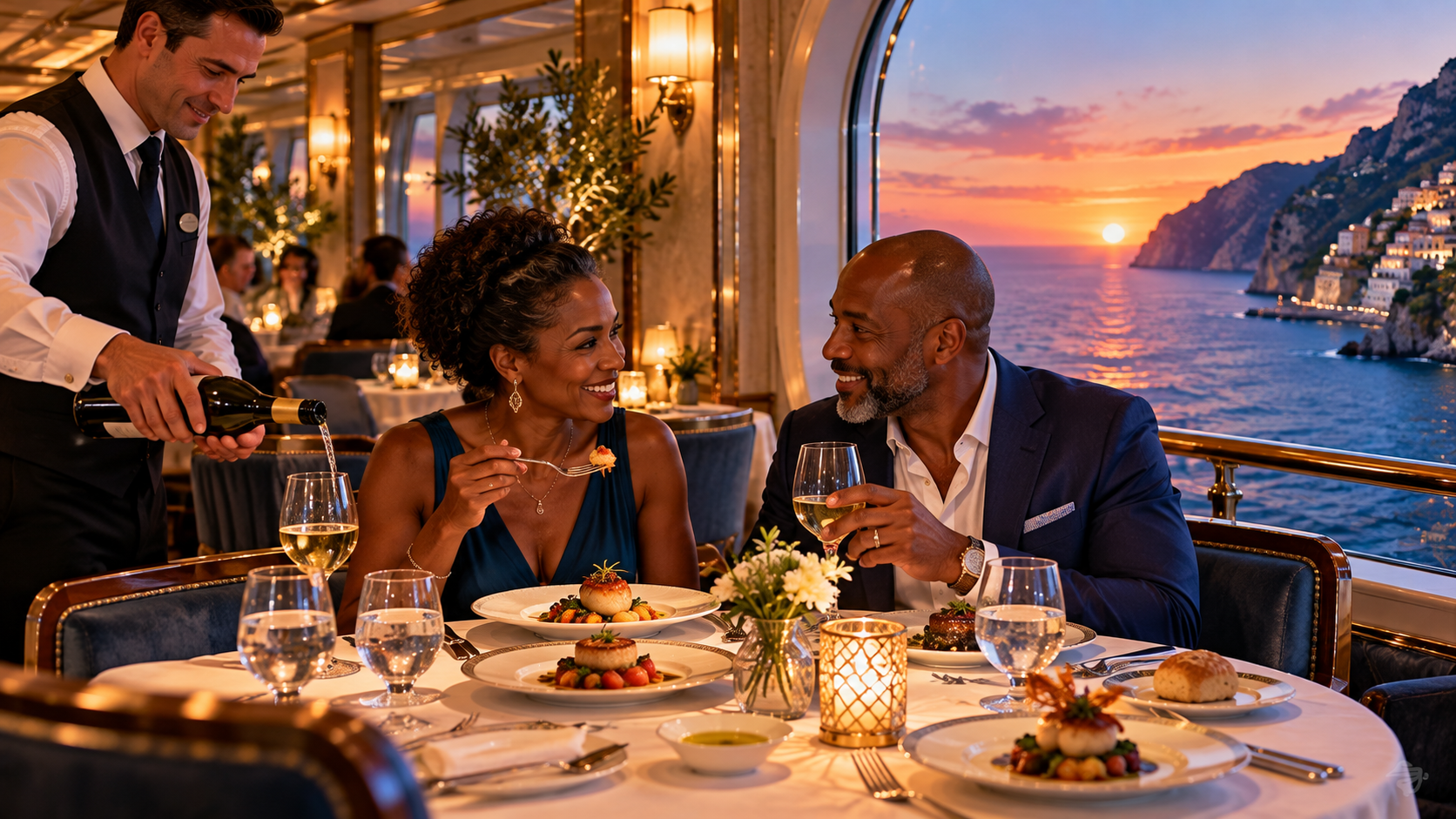
Sometimes the included dining is simply the better choice.
Perhaps the main dining room is excellent. Maybe you're traveling with children who would rather have chicken tenders than a tasting menu. Or perhaps the specialty restaurants offer cuisines you can enjoy at home for less.
There's nothing wrong with choosing a familiar experience if that's what you love.
But a hibachi restaurant doesn't automatically become extraordinary because it's floating in the Caribbean.
And a steakhouse isn't necessarily worth another $60 per person simply because it has white tablecloths.
For a family of five, a $60-per-person restaurant means another $300 before additional charges.
That money could fund a memorable shore excursion or another experience everyone would enjoy.
Or it could simply stay in your pocket.
The Curated Upgrades Take
Specialty dining can absolutely be worth paying extra for, but it isn't automatically better than the meals included in your cruise fare.
The right decision depends on who's traveling, what's available aboard your ship, and what you value in a dining experience.
🟢 Go for it! A distinctive restaurant, exceptional ingredients, a special occasion, or a culinary experience you genuinely want to try.
🟡 Maybe. A dining package offering real savings on restaurants you'd choose anyway, provided the reservations and additional charges make sense.
🔴 Pass on it. Paying extra for an ordinary meal that doesn't particularly interest you, especially when the included dining is already excellent.
I haven't tried specialty dining aboard an ocean cruise yet. But on a future couples-only voyage, I probably will.
Not because I expect the main dining room to disappoint me.
Because sometimes a different experience is worth exploring.
And sometimes, the best dinner aboard the ship is the one you've already paid for.
Travel Smarter. See More.