

Cruising During Hurricane Season? Have a Plan Before You Book
A hurricane-season cruise can be a bargain. Just don’t confuse a good price with a guarantee that Plan A will survive the weather.
There it is.
A Caribbean cruise at a price that makes you stop scrolling.
Good ship. Nice cabin. Ports you like. Maybe even enough left in the vacation budget for an excursion or two.
Then you see the date.
September.
Hurricane season.
Should that stop you from booking?
Not necessarily. I’d cruise during hurricane season.
But I’d go into it understanding exactly what I’m buying: a cruise during a time of year when weather has a greater chance of changing the plan.
If you can live with that uncertainty, there may be some very good cruising opportunities.
When Is Hurricane Season?
The Atlantic hurricane season officially runs from June 1 through November 30.
But the risk isn’t spread evenly across those six months. According to the National Hurricane Center’s tropical cyclone climatology, the statistical peak of Atlantic hurricane season is September 10, with most activity occurring between mid-August and mid-October. National Hurricane Center
That doesn’t mean there’s a hurricane waiting for every September cruise.
It means you’re dealing with probabilities.
You could cruise for a week in September and have beautiful weather from beginning to end. Or the tropics could get busy.
You don’t need to become an amateur meteorologist to book a cruise.
You just need to understand that the possibility of disruption is part of the deal.
The Ship Can Move
This is one reason I wouldn’t automatically avoid cruising during hurricane season.
Cruise ships can move.
Cruise lines monitor tropical systems and can alter routes and itineraries to keep ships away from dangerous weather. Royal Caribbean, for example, says it tries to avoid operating ships in the vicinity of tropical systems and may alter an itinerary when a storm poses a potential threat. Royal Caribbean
Safety comes first.
That doesn’t mean you’re guaranteed glass-flat seas while the ship works around a distant storm.
Whether your stomach agrees with the captain’s routing is a different issue.
Bring whatever seasickness remedy works for you.
The important point is that a hurricane somewhere in the Caribbean doesn’t mean your ship is going to sail straight through it.
What it can mean is that your carefully planned itinerary suddenly becomes considerably less carefully planned.
Semper Gumby
Anyone who has spent enough time around the military has probably encountered this unofficial motto:
Semper Gumby. Always flexible.
It may be the perfect philosophy for hurricane-season cruising.
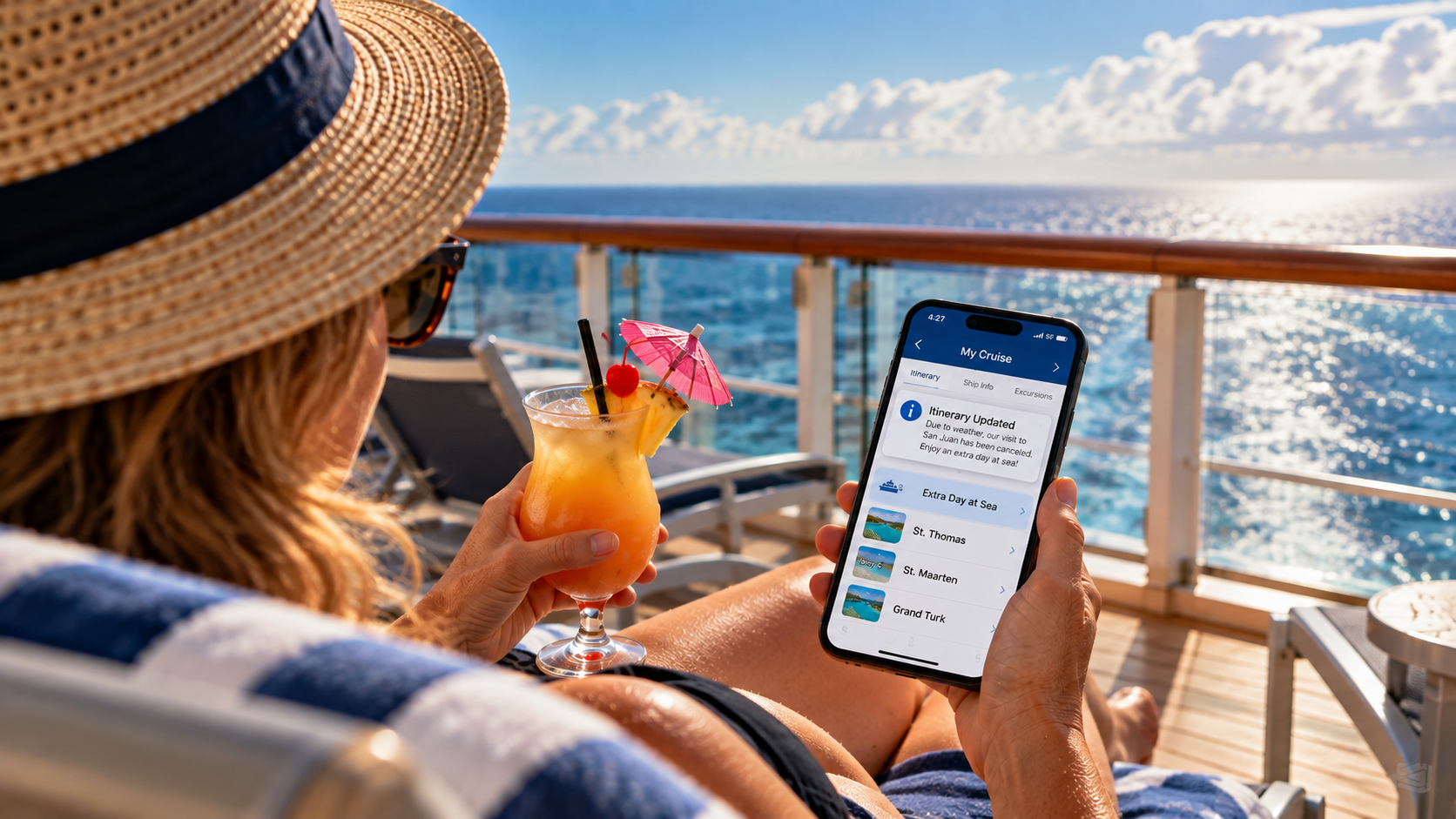
You booked Puerto Rico, St. Thomas and St. Maarten.
Weather develops.
Now you’re going somewhere else.
Or you’re getting another sea day.
Or the ports are in a different order.
Or one disappears completely.
Cruise lines generally reserve considerable flexibility to change scheduled ports and itineraries when weather requires it. Royal Caribbean
If your response is:
“Well...where are we going instead?”
You’re probably built for this.
If Puerto Rico is the entire reason you’re taking the vacation, I’d consider a different sailing or time of year. There’s no reason to deliberately add another variable to the thing that matters most.
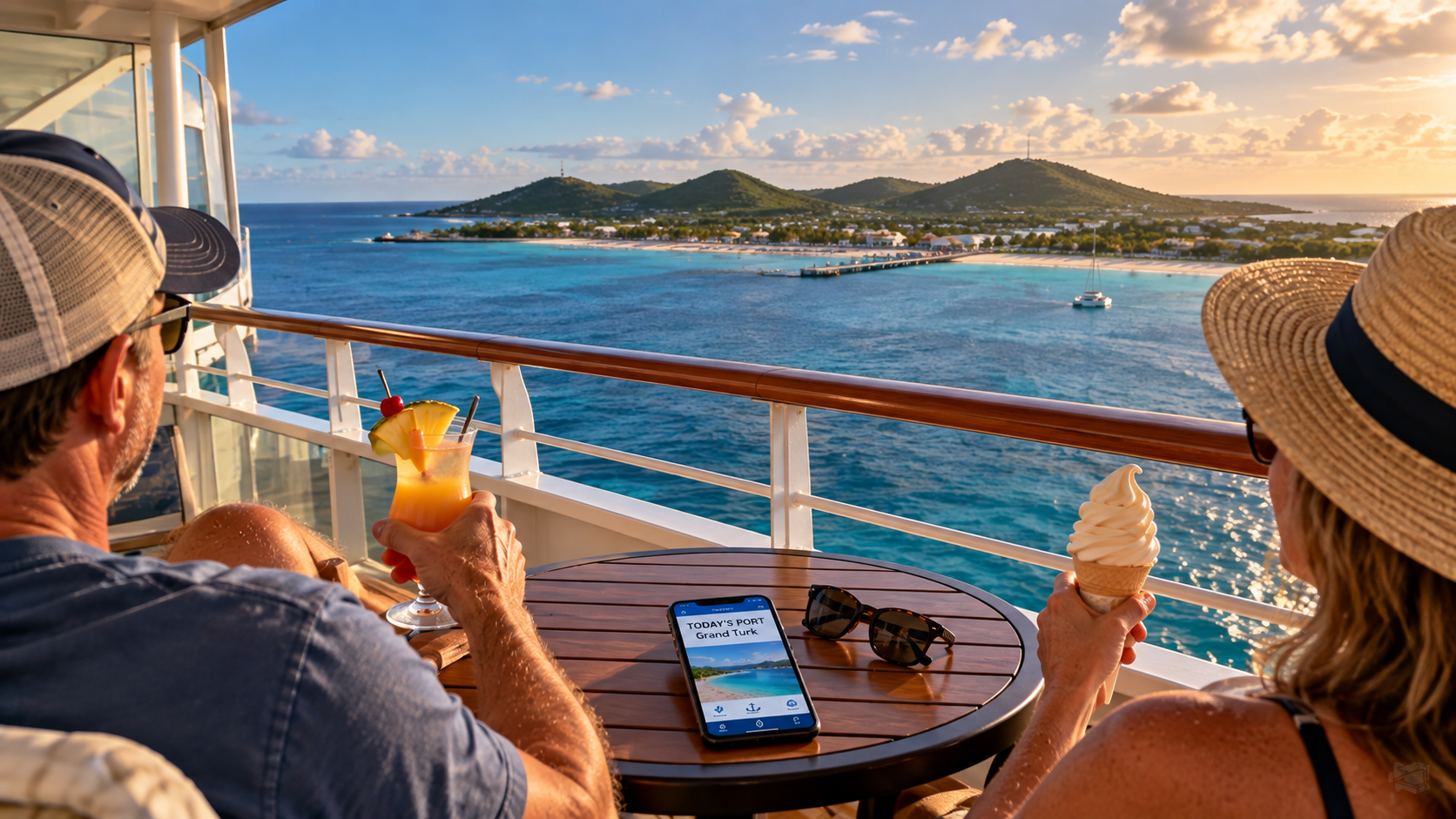
But maybe the ship is the vacation.
You want the balcony. The pool. The shows. The free-flowing soft-serve ice cream. Enough food available around the clock to make you question whether humans were meant to have this much access to pizza.
And if Wednesday’s port changes, you’ll figure out what there is to do wherever the ship takes you.
Have at it.
🟢 The ship is the vacation: Hurricane season wouldn’t scare me away.
🟡 The ports matter, but you’re flexible: Understand that they can change.
🔴 One particular destination is non-negotiable: Choose your sailing accordingly.
The Bargain Comes With an Asterisk
Hurricane-season cruises can offer attractive fares.
That doesn’t mean every September cruise is cheap or every October sailing is a bargain. Cruise pricing depends on the ship, itinerary, demand, school calendars, promotions and plenty of other factors.
But if you find a genuinely good fare during hurricane season, don’t look only at the number.
A weather system could change the itinerary. Your departure could be delayed. Your return could change. In more serious circumstances, a sailing can be shortened or canceled.
Buyer beware doesn’t mean don’t buy.
It means understand what you’re buying.
During hurricane season, flexibility is part of the price.
Flying? Give Yourself More Room
I’m already a fan of arriving before embarkation day rather than betting an entire cruise on a same-day flight.
During the busiest part of hurricane season, I’d pad that further if possible.
I’d fly in two days early.
Could that mean paying for another hotel night when absolutely nothing goes wrong?
Yep.
That’s the point of a buffer.
You hope you wasted it.
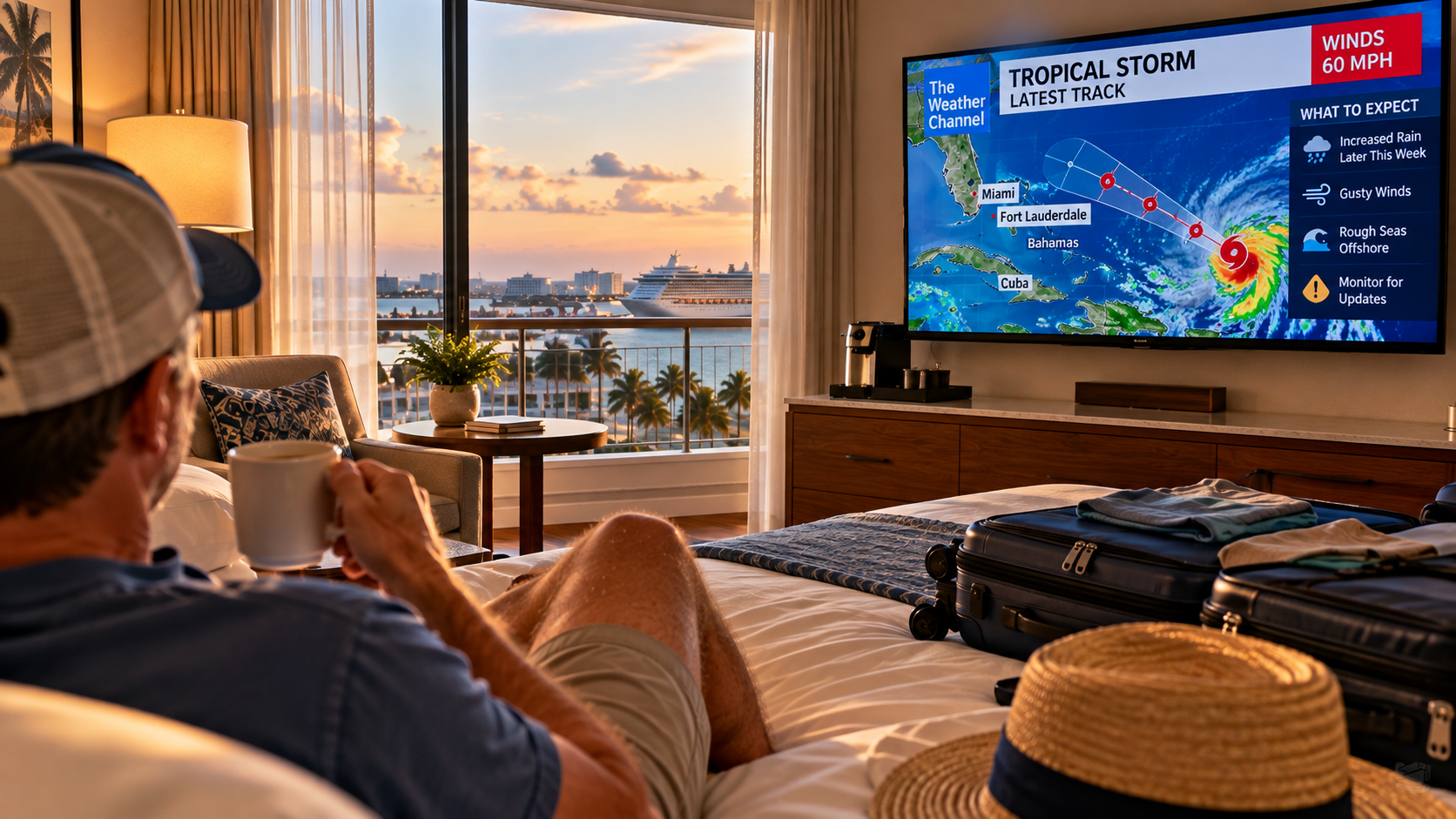
Weather can disrupt airline schedules and transportation before it ever affects your ship. A one-day cushion is certainly better than flying the morning of embarkation, but two days gives you more room if schedules begin unraveling.
🟢 Two days early: My choice when possible.
🟡 One day early: Still much better than same-day.
🔴 Same-day: Not a gamble I’d take during the peak of hurricane season.
If you’re driving to the cruise port, I wouldn’t make major changes to how you normally approach a cruise.
Watch the conditions. Leave yourself reasonable time. Follow official instructions if weather threatens your route or destination.
And above everything else:
Safety first.
A cruise isn’t worth driving into dangerous weather, ignoring an evacuation order or trying to beat a hurricane to the coast.
There will be another ship.
This Is a Trip Where I Strongly Recommend Travel Insurance
I don’t believe every trip automatically needs an expensive insurance policy.
A hurricane-season cruise is different.
I strongly recommend looking seriously at travel insurance.
And I’d do it when planning the trip, not after something starts spinning in the Atlantic.
Timing matters. Once a tropical storm or hurricane has been named, it becomes a known or foreseeable event for insurance purposes, and a newly purchased policy generally won’t cover losses associated with that particular storm. Squaremouth Travel Insurance
So don’t just look for the word hurricane on the policy.
Find out what actually triggers coverage.
What happens if your flight is canceled? What if weather causes you to miss the ship? What if the cruise is delayed or interrupted? What prepaid expenses are covered?
And check the travel protections provided by the credit card you used to book the trip. You may already have useful coverage, but don’t assume it fills every gap.
Know before you go.
Don’t Cancel Just Because There’s a Storm on the Map
This one is important.
Your cruise is five days away.
There’s a storm developing.
You don’t like what you’re seeing, so you decide:
Nope. I’m staying home.
Be careful.
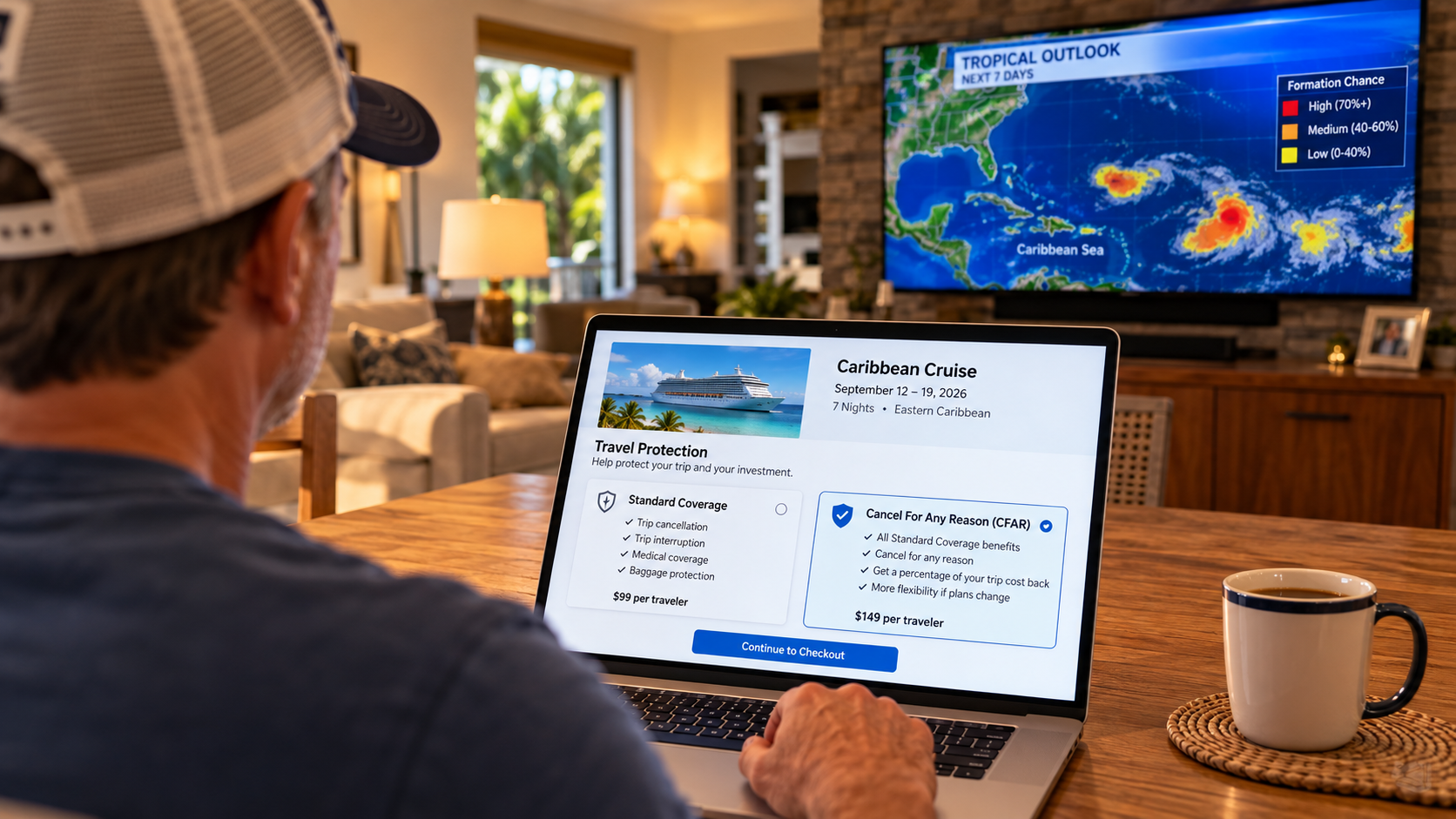
Standard trip-cancellation insurance generally requires you to cancel for a reason covered by the policy. Deciding that you no longer feel comfortable traveling doesn’t automatically qualify.
If you want the ability to cancel on your terms even when the cruise is still operating, that’s when Cancel For Any Reason, or CFAR, coverage is worth investigating.
CFAR generally costs more, comes with purchase and cancellation deadlines, and usually reimburses only a portion of your eligible nonrefundable expenses.
But that’s the protection designed for the situation where you decide not to go rather than the airline, cruise line or another covered event making the decision for you.
🔴 Don’t voluntarily cancel a hurricane-season cruise assuming ordinary travel insurance will automatically reimburse you.
Read the policy first.
So, Would I Book It?
Yes.
At the right price, I’d absolutely consider a hurricane-season cruise.
I’d know when I was traveling and understand the statistical risk.
I’d strongly consider travel insurance and know what it actually covers.
If I were flying, I’d try to arrive two days early.
I’d accept that delays, changes and cancellations are possible.
And most importantly:
I’d be flexible.
The Curated Upgrades Take
Hurricane season isn’t an automatic no.
It’s a buyer beware.
The ship can change course to stay away from dangerous weather. Your itinerary can change with it.
Your job is to protect the parts you control: give yourself enough time to get there, understand your insurance before you need it and accept that the itinerary printed when you booked may not be the itinerary you ultimately sail.
And one rule outranks everything else:
Safety gets the final vote.
The captain may change course.
The cruise line may change ports.
The airline may change your flight.
Mother Nature may throw Plan A in the trash.
Semper Gumby.
If you’re comfortable with that, there can be some very good cruising to be had during hurricane season.
And if the soft-serve machine is working?
We’re still doing pretty well. 🍦🚢