

Cruise Line Private Islands: What’s Included and What Costs Extra
From complimentary beaches and island lunches to waterparks, beach clubs and four-figure villas, the same port day can cost nothing—or more than the cruise itself.
Cruise lines love the phrase “private island.”
It suggests a quiet strip of sand reserved for your ship, with lounge chairs waiting, lunch included and nothing separating you from the water except a short walk down the pier.
Sometimes that is reasonably close to the truth.
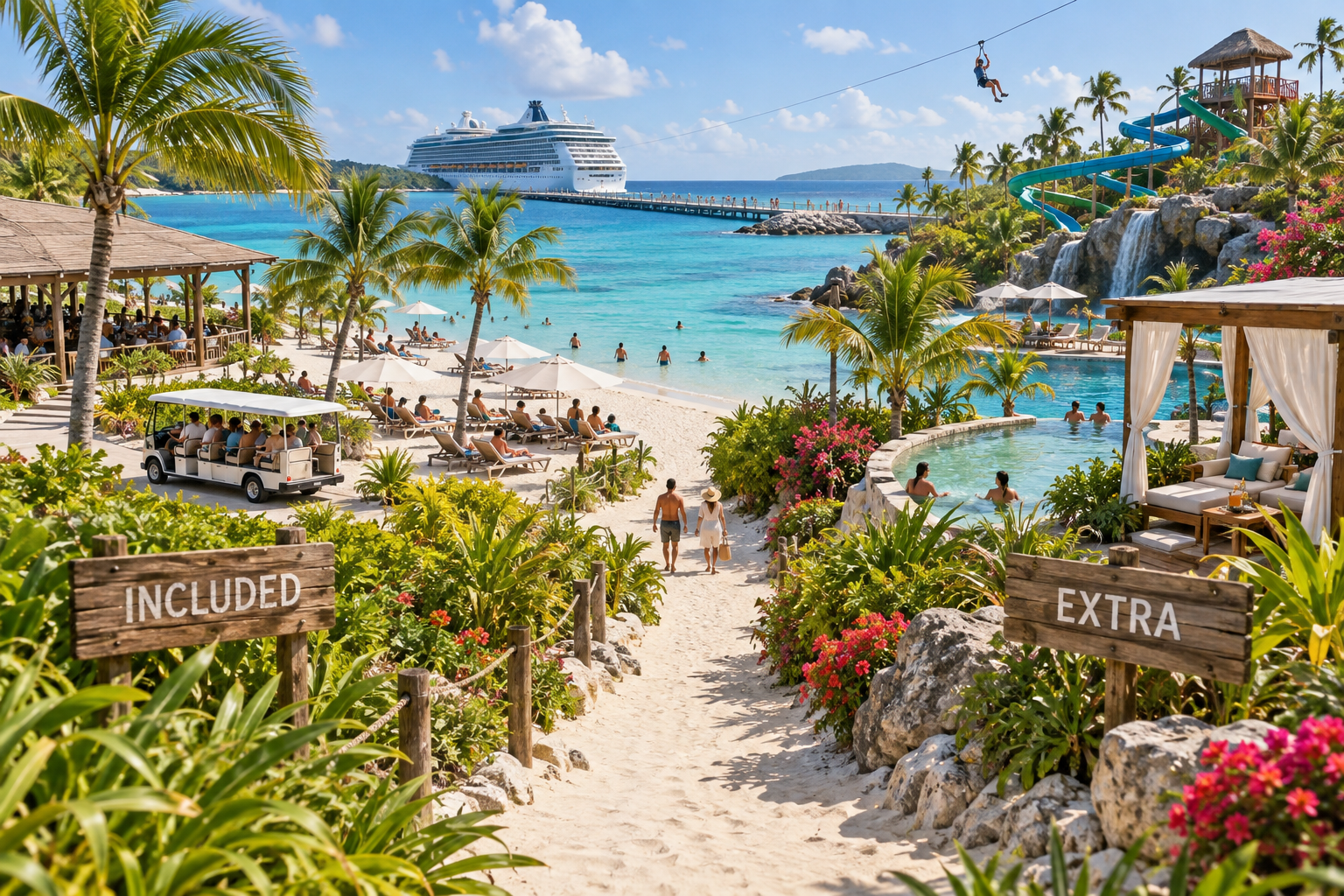
Other destinations are more like tropical theme parks, private beach clubs or purpose-built resort complexes filled with pools, bars, waterslides, zip lines, cabanas and villas available for an additional charge.
The first thing to understand is that you do not need to purchase those upgrades to enjoy the day.
Gina and I have never upgraded one of our cruise-line beach days. We have used the included beaches and chairs, bought an occasional drink and enjoyed ourselves without renting a cabana, entering a premium beach club or buying a waterpark pass.
That does not mean every upgrade is a poor value. A private villa that seems absurd for two people can become more reasonable when its cost is divided among a large family or group of friends.
The useful question is not simply, “How much does it cost?”
It is:
What does this upgrade change about our day—and is that change worth the price to us?
“Private Island” Is Often a Marketing Shortcut
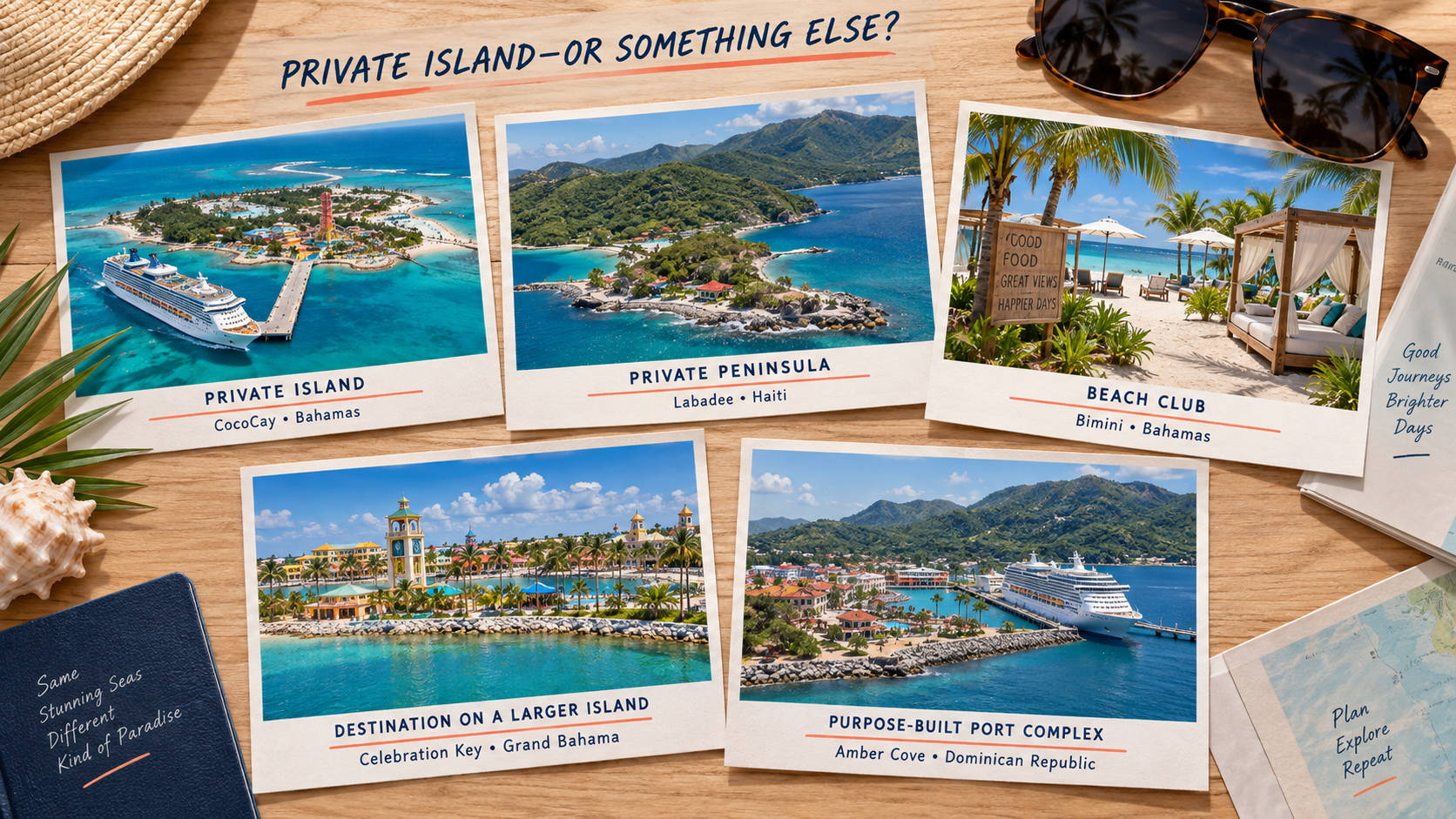
Not every private cruise destination is an entire island owned exclusively by one cruise line.
The term can describe several different arrangements:
A true private island, such as Perfect Day at CocoCay or Great Stirrup Cay in The Bahamas
A private peninsula, such as Labadee on the northern coast of Haiti
A cruise-line beach club located on a larger inhabited island, such as Virgin Voyages’ Beach Club at Bimini
A developed cruise destination on part of a larger island, such as Celebration Key on Grand Bahama
A controlled port and resort complex, such as Amber Cove in the Dominican Republic
This distinction matters because it changes what you can do.
At a self-contained island, nearly the entire port day revolves around facilities created for cruise passengers. At Amber Cove, you can remain inside Carnival’s controlled destination or use it as the starting point for exploring Puerto Plata and the surrounding area.
At Bimini, Virgin passengers visit a private beach-club experience on an inhabited Bahamian island. Disney’s Lookout Cay is located on Eleuthera rather than occupying a separate island.
“Private destination” is often the more accurate umbrella term.
Who Operates Which Cruise Destinations?
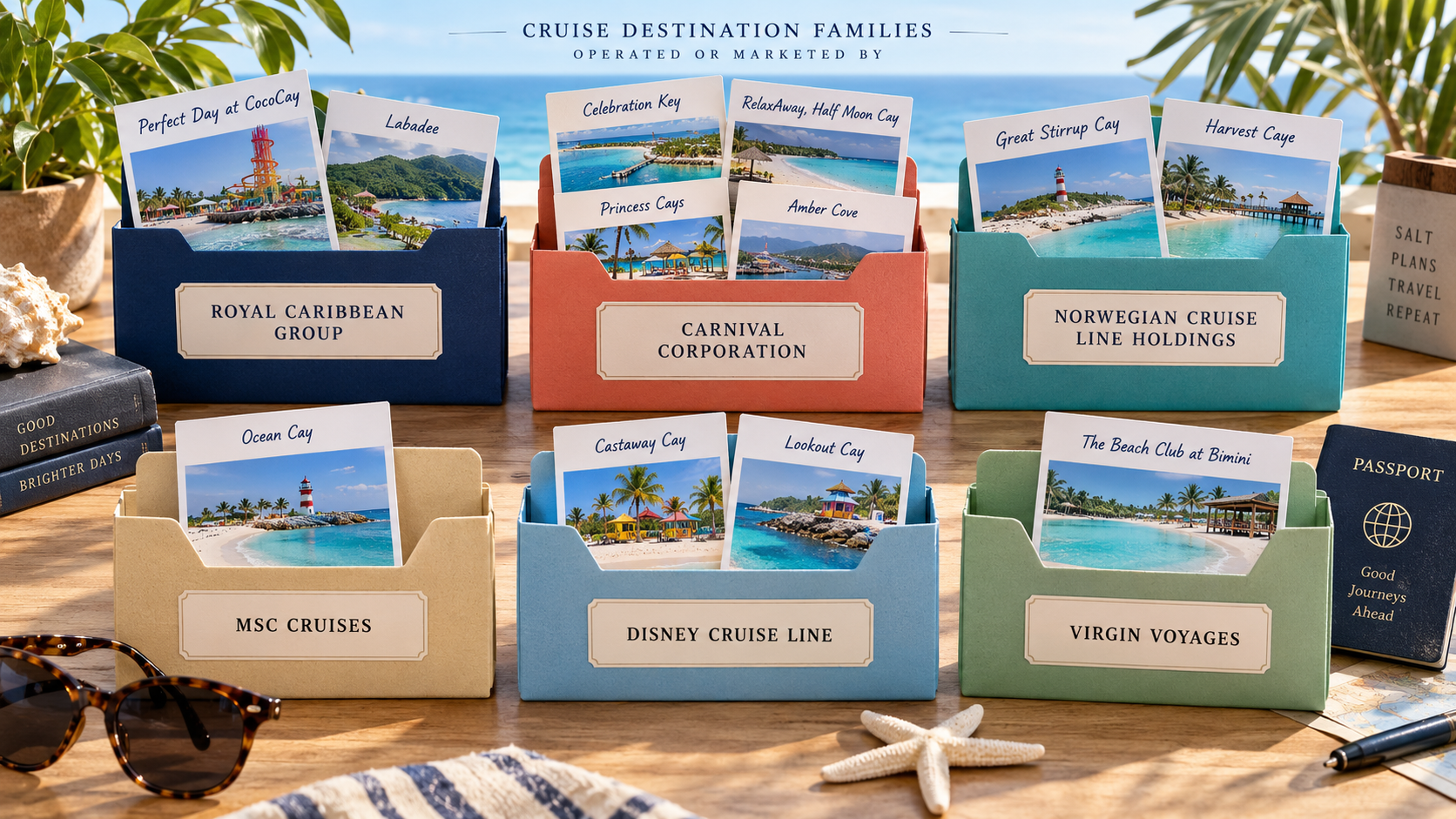
Most of the familiar destinations are connected to one of the major cruise companies. Sister brands may use destinations within the same corporate family, although the actual ships and schedules vary.
Royal Caribbean Group
Royal Caribbean operates Perfect Day at CocoCay in The Bahamas and Labadee on Haiti’s northern coast. Celebrity Cruises also includes CocoCay on selected itineraries.
Labadee is not an island. It is a private peninsula within Haiti.
Royal Caribbean has suspended visits to Labadee through the remainder of 2026, demonstrating why travelers should confirm current itineraries rather than relying on an older destination list.
Carnival Corporation
Carnival Corporation’s brands are connected with several destinations, including:
Celebration Key on Grand Bahama
RelaxAway, Half Moon Cay in The Bahamas
Princess Cays on Eleuthera
Amber Cove near Puerto Plata in the Dominican Republic
The brands using a particular destination may include Carnival Cruise Line, Holland America Line and Princess Cruises, but not every destination is shared equally among them.
Norwegian Cruise Line Holdings
Norwegian Cruise Line operates Great Stirrup Cay in The Bahamas and Harvest Caye in Belize.
Great Stirrup Cay is a private island. Harvest Caye is a resort destination located off the coast of Belize, with access to independently operated food, drinks and activities that do not necessarily follow the same inclusion rules as the ship.
Great Stirrup Cay has also evolved beyond a simple beach stop. Norwegian now promotes its Great Tides Waterpark alongside the island’s complimentary beach experience.
MSC Cruises
MSC’s Ocean Cay MSC Marine Reserve is a former industrial site in The Bahamas that was redeveloped as a marine-reserve destination exclusively for MSC guests.
The emphasis is more heavily placed on beaches, the water and the restored marine environment than on building a full-scale tropical theme park.
Disney Cruise Line
Disney operates two Bahamian destinations:
Castaway Cay is Disney’s private island. Lookout Cay occupies part of Eleuthera and incorporates Bahamian cultural programming into the destination.
Virgin Voyages
Virgin Voyages uses The Beach Club at Bimini in The Bahamas.
This is a private beach-club experience rather than a private island. Bimini remains an inhabited destination beyond the club.
Three Destinations, Three Different Experiences
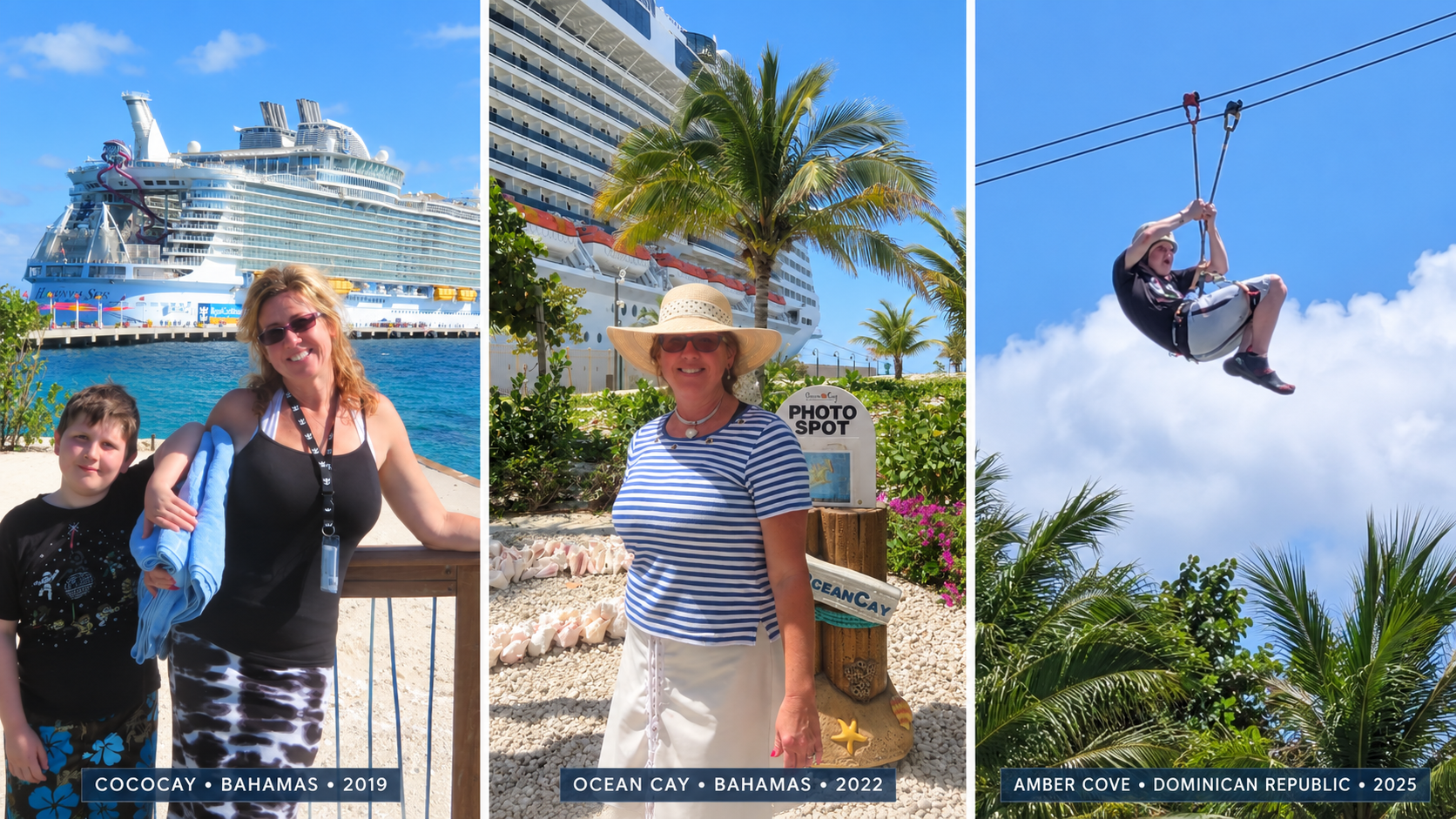
Our visits to CocoCay, Ocean Cay and Amber Cove illustrate how widely these port days can vary.
CocoCay, The Bahamas
We visited CocoCay with Royal Caribbean in 2019.
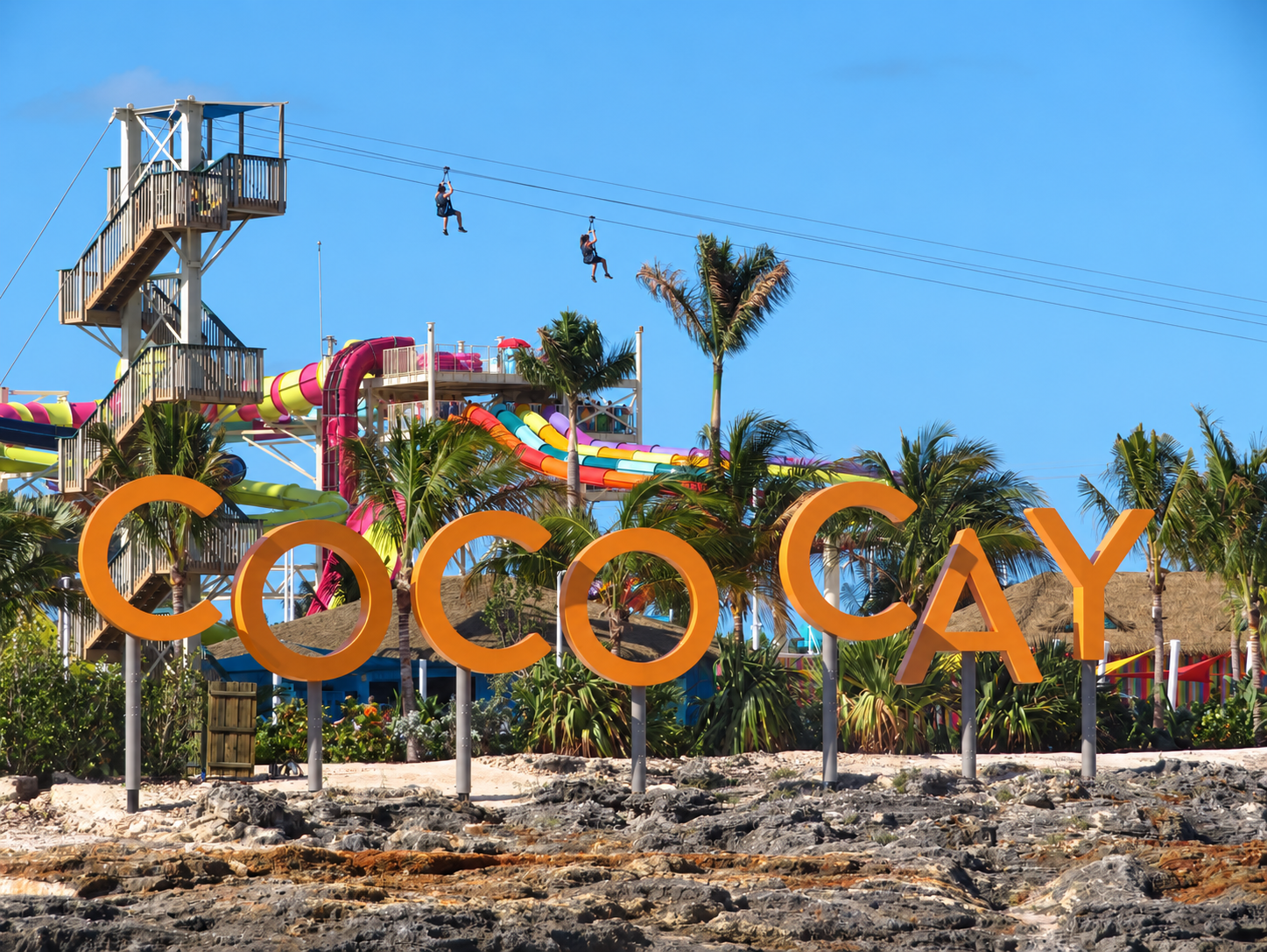
Even then, the destination was moving toward the high-energy Perfect Day model: colorful waterslides, zip lines, music, pools and activities surrounded by a traditional Caribbean beach setting.
Today, Royal Caribbean markets admission to Perfect Day at CocoCay as included with the cruise. Guests can use several beaches, complimentary loungers and Oasis Lagoon without purchasing a Thrill Waterpark ticket or premium beach-club pass.
The energy is part of the attraction. Families can build an active day around pools and attractions, while passengers who want less stimulation can still head toward the sand.
The disadvantage is that CocoCay can feel busy, highly developed and commercialized—especially when more than one large ship is visiting.
Ocean Cay MSC Marine Reserve, The Bahamas
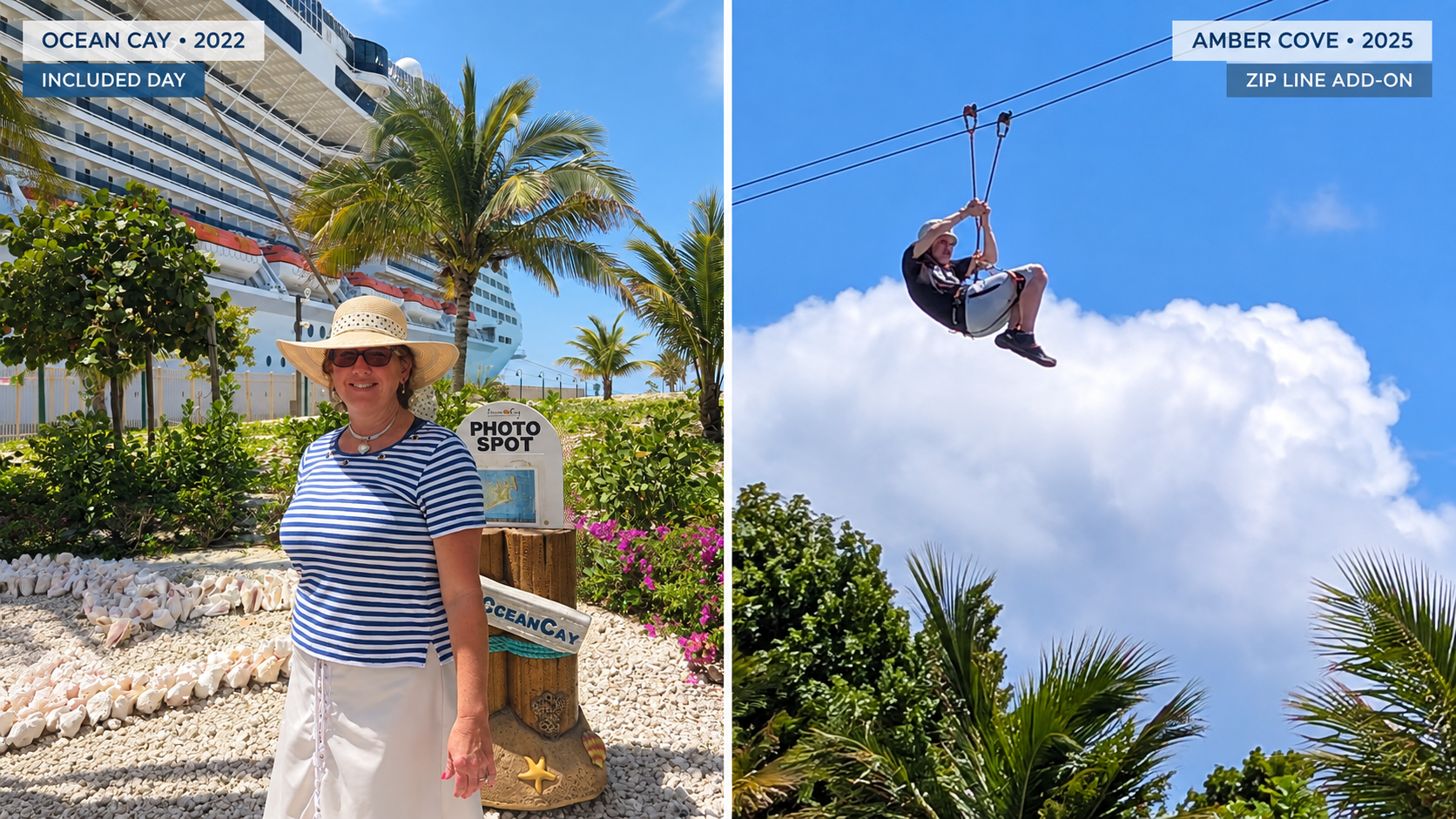
Our 2022 Ocean Cay visit was considerably simpler.
Gina, our son and I went ashore. Dad stayed aboard and enjoyed a quiet ship while many passengers were on the island.
We walked around, spent time at the beach and bought a few drinks. We did not reserve a cabana, purchase an excursion or add any premium experience.
It was Gina’s birthday week, and a DJ marked the occasion by pouring a complimentary shot of rum directly from the bottle into her mouth. Not exactly a white-tablecloth birthday toast—but certainly memorable.
Ocean Cay gave us what we wanted from that day: sunshine, water and an easy walk from the ship without building an expensive schedule around the visit.
Amber Cove, Dominican Republic
Amber Cove was different again.
It is not a private beach or island. It is a purpose-built Carnival destination near Puerto Plata, with shops, restaurants, pools and activities inside the controlled port area.
During our spring-break visit in 2025, we did not leave the Carnival-controlled complex.
Our son paid a modest additional charge to use the zip line after we arrived. That was a small, spontaneous upgrade—not a costly package we had to reserve months before sailing.
The experience shows why terminology matters. Amber Cove can provide a self-contained resort day, but it is also a gateway to the Dominican Republic for passengers who want to venture farther.
What Is Usually Included?
The included experience varies by cruise line and destination, but most private-island port calls provide enough for passengers to enjoy the day without buying an excursion.
Common inclusions may include:
Admission to the destination
Access to designated beaches
A standard lounge chair
Beach towels carried from the ship or distributed ashore
Restrooms and changing facilities
Complimentary tram transportation at larger destinations
Basic splash areas or pools at selected destinations
A casual buffet or barbecue lunch at many destinations
Water or basic nonalcoholic drinks at designated food venues
Scheduled entertainment or family activities
The phrase “at many destinations” matters.
Harvest Caye is a notable exception because its restaurants and bars operate differently from Norwegian’s complimentary onboard dining. Celebration Key uses Carnival’s Island Eats program rather than simply duplicating the ship’s buffet. Package benefits and redemption rules can also change.
Before going ashore, check the cruise app, daily program or destination map for:
Which beaches and pools are complimentary
Whether lunch is included
Which restaurants participate
Whether a meal credit or time restriction applies
Whether your beverage package works ashore
Whether shipboard Wi-Fi reaches the destination
Whether towels must be returned to the ship
Which transportation is complimentary
Do not assume that a benefit follows you ashore merely because it works beside the ship’s pool.
Drink Packages and Wi-Fi Do Not Follow One Universal Rule
Package portability is one of the easiest places to make an expensive assumption.
Royal Caribbean states that qualifying beverage and internet packages may be used at Perfect Day at CocoCay, subject to the package terms.
Other cruise lines and destinations use different rules.
Carnival’s Celebration Key frequently asked questions explain how Island Eats and beverage purchases work there. The onboard CHEERS! package does not simply become an unlimited destination-wide bar package.
At Harvest Caye, food and drinks ashore are generally purchased separately, even when passengers have an onboard Norwegian package.
Disney does not sell a conventional unlimited alcoholic beverage package comparable to those offered by several other mainstream cruise lines.
Wi-Fi is equally inconsistent. A package may extend onto a private island with cruise-line infrastructure, work only in limited areas or stop functioning once you leave the ship.
The safest rule is simple:
Verify each benefit for the specific destination and sailing.
What Usually Costs Extra?
This is where a complimentary beach day can become a very expensive port call.
Common upcharges include:
Waterpark admission
Zip lines and aerial attractions
Snorkel, kayak and paddleboard rentals
Guided excursions
Spa treatments
Premium restaurants
Specialty drinks
Floating mats and sports equipment
Daybeds
Cabanas
Adults-only areas
Premium beach clubs
Private villas
None of those purchases is automatically unreasonable.
A waterpark pass may be the highlight of the cruise for a child. A quiet adults-only beach club may be worth paying for if the main destination is crowded. A cabana can provide shade and a predictable home base for grandparents, small children or someone with limited mobility.
The problem begins when passengers interpret the upgrade list as a list of things required to enjoy the destination.
It is not.
Our Ocean Cay day required no upgrade. Our son’s Amber Cove zip-line ride was a small additional purchase made because he wanted to do it—not because the included destination was unusable without it.
The Upgrade Ladder Can Climb Quickly
The progression often begins innocently:
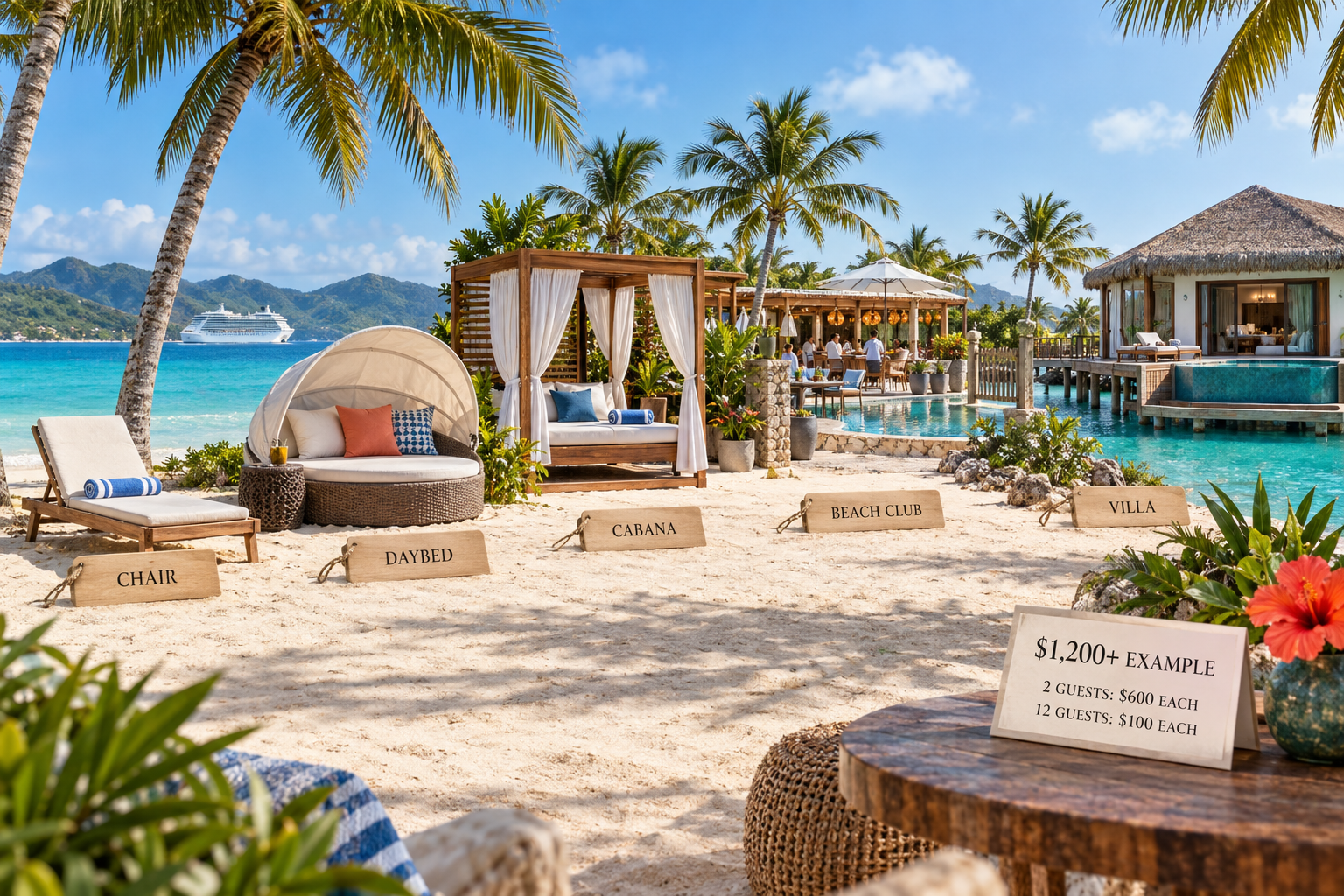
Standard chair → daybed → cabana → beach club → private villa
Each step adds some combination of shade, space, privacy, service, food, better seating or access to a separate pool and beach.
Prices may vary dramatically by sailing, date and demand. Cruise lines frequently use dynamic pricing, so the price one passenger sees may not match another sailing—or even the same sailing after a promotion ends.
At the top of the ladder, the numbers can become startling.
Carnival has listed an Over-the-Lagoon Super Villa at Celebration Key from approximately $1,199.99 per villa for up to 12 guests. Royal Caribbean offers overwater cabanas at Coco Beach Club, while Norwegian markets villas within its Silver Cove area at Great Stirrup Cay.
For Gina and me, spending four figures for several hours in a villa would be difficult to justify. We would rather use an included chair and keep the money for another part of the trip.
The calculation changes for a larger group.
Using a $1,200 example:
Two guests would effectively pay $600 each.
Six guests would pay $200 each.
Twelve guests would pay $100 each.
That does not make the villa cheap. It does show why the total price alone does not tell the entire story.
The relevant questions are:
How many people may use it?
Does the stated price cover the group or each person?
Does it include food, drinks or beach-club admission?
Is there a private restroom or shower?
How much shade and seating does it provide?
Is dedicated service included?
How many hours will you realistically use it?
Would your group otherwise purchase several smaller upgrades?
Does everyone in the group actually want the same experience?
A villa divided among 12 people who value privacy and will remain there all day may be a deliberate splurge.
A $1,200 villa for two people who plan to spend half the afternoon snorkeling away from it is a very different proposition.
Decide What Kind of Day You Actually Want
The cruise planner makes every upgrade look tempting because it presents the destination as a menu of products.
Try planning the day in the opposite direction.
Start by asking what you want to do:
If you want a simple beach day
Use the complimentary beach, standard chair and included meal where offered. Bring sunscreen, a hat and whatever you normally carry for a day beside the water.
You may spend nothing.
If you want activity
Compare the price of individual activities with a package or waterpark pass. Check height, weight and age restrictions before buying for children.
Also check how much time the attraction will consume. A waterpark pass loses value if your ship has a short port call or your family only wants to ride two slides.
If you want quiet
Research the destination map before paying for a premium area. A farther complimentary beach may provide much of the atmosphere you want without an adults-only pass.
If the destination is expected to be crowded, however, guaranteed access to a quieter beach club may be the upgrade that genuinely improves your day.
If you need shade or accessibility
A cabana may provide more practical value than luxury value.
Confirm its walking distance from the pier, tram stops, restrooms, food and water. A beautiful cabana located far from the facilities your party needs may solve the wrong problem.
If you are traveling with a group
Calculate the per-person cost, but do not stop there.
Confirm how many guests the rental includes, whether additional guests cost extra and whether everyone will use the space. One person should not reserve an expensive villa and assume the rest of the group will happily reimburse an equal share.
You Can Always Stay Aboard
A private-destination call is optional.
Dad stayed aboard during our Ocean Cay visit. While much of the ship emptied, he had a quieter day with many onboard facilities still available.
That can be an excellent choice for passengers who:
Have already visited the destination
Prefer a quiet pool deck
Need a break from the sun or heat
Have limited mobility
Want to use the spa while the ship is less crowded
Simply do not enjoy beach days
Some restaurants, shops and activities may operate reduced hours while the ship is in port, but the ship does not cease to exist because everyone else is heading toward the sand.
Sometimes the best private-island upgrade is having more of the ship to yourself.
Our Approach: Enjoy What Is Included First
We do not avoid upgrades as a matter of principle.
We avoid paying for them automatically.
At Ocean Cay, the included experience was enough. At Amber Cove, our son decided the zip line was worth a small additional charge. At CocoCay, another family might reasonably build the entire day around the waterpark.
Those can all be smart choices because each starts with what the traveler actually values.
Before purchasing anything, we would ask:
What can we do without paying more?
What problem does the upgrade solve?
How long will we use it?
What is the real cost per person?
What else could we do with that money?
Would we still want it if it were not labeled an upgrade?
A private destination is one of the easiest places to have a satisfying port day without spending much beyond the cruise fare.
It is also one of the easiest places to spend hundreds—or thousands—of dollars before your feet ever touch the sand.
The beach may be included.
The trick is recognizing when the upgrade improves your day and when it merely upgrades the bill.
Important Planning Note
Cruise itineraries, destination access, package benefits, included food, drink-package coverage, Wi-Fi availability, attraction openings and upgrade prices can change.
Check the cruise line’s current destination page and your sailing’s cruise planner before making a purchase.
Information current as of September 2026.