

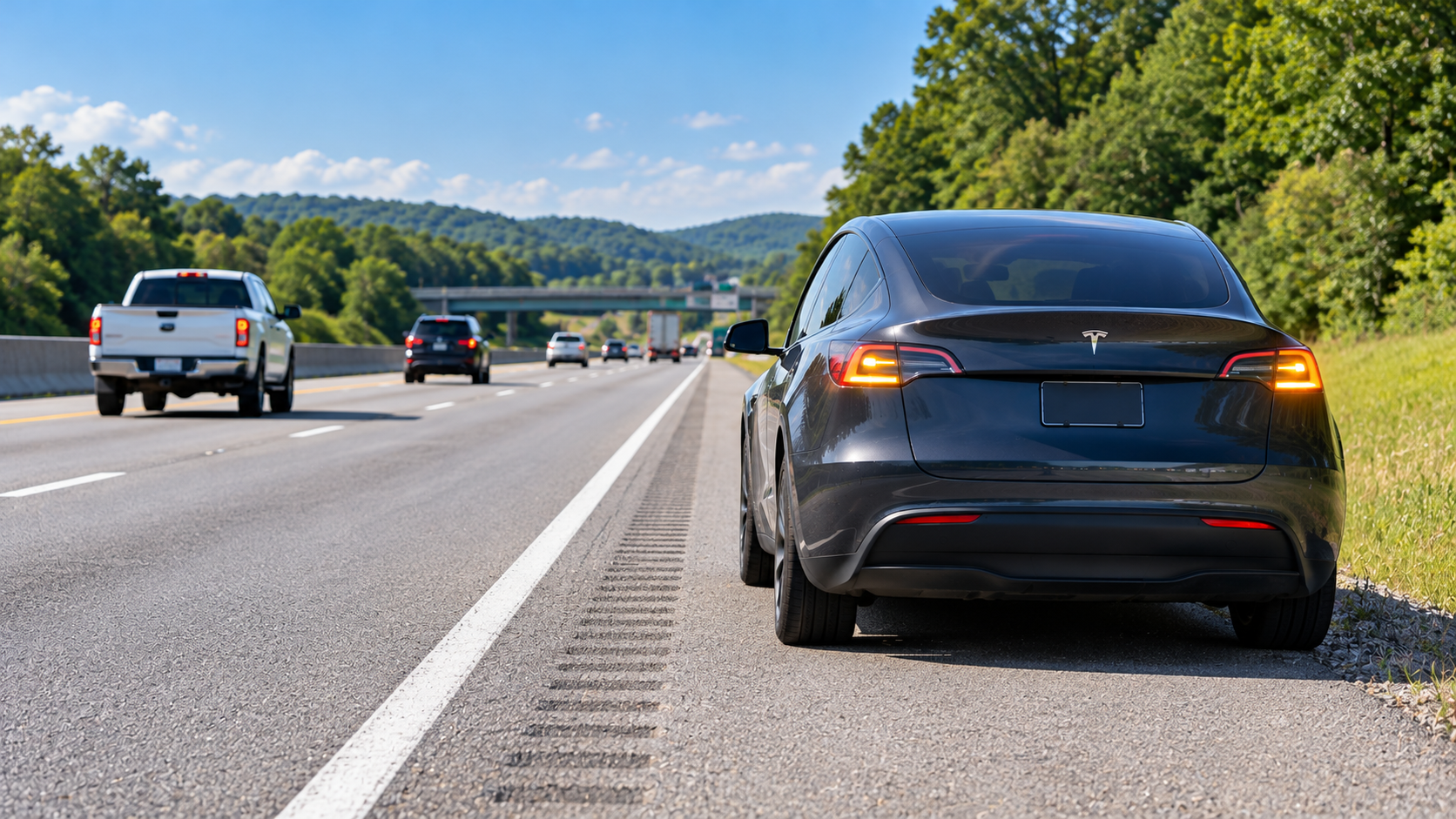
What Happens If Your EV Runs Out of Battery on the Highway?
Your battery reaches 0%. The nearest charger is miles away. Who comes to help, what happens to your car, and who's paying for it?
You're driving down the interstate in your electric vehicle.
The battery is getting low, but you think you can make it to the next charger.
Ten percent.
Five percent.
Two percent.
Then the display reaches zero.
Now what?
For many people considering an electric vehicle, this is one of their biggest fears. Unlike a gasoline-powered car, you can't simply walk to a gas station, buy a gallon of electricity, and pour it into the battery.
But that doesn't necessarily mean you're facing an automotive catastrophe.
Depending on where you are, who provides your roadside assistance, and what kind of vehicle you're driving, someone may be able to bring electricity directly to you.
Or you may need a tow truck.
Running out of charge is inconvenient. It can be expensive. But knowing what happens next can make the situation much easier to handle.
Let's look at what happens, who can help, and what you should know before it ever happens to you.
Does Your EV Really Stop at 0%?
Here's something that confuses a lot of drivers.
When an EV's battery display reaches 0%, that doesn't necessarily mean every last bit of energy has disappeared from the battery.
Battery management systems protect the high-voltage battery, and some vehicles may continue moving briefly after the displayed range reaches zero.
But there's a very important distinction between might and will.
You should never count on having a hidden reserve.
Different manufacturers use different battery-management strategies. As the battery gets critically low, a vehicle may reduce available power and display increasingly urgent warnings.
Eventually, it may no longer be able to propel itself.
Tesla's owner's manual guidance on running out of range warns drivers not to assume any remaining range at 0%.
The practical rule is simple:
Treat 0% as empty, not as the beginning of a secret reserve tank.
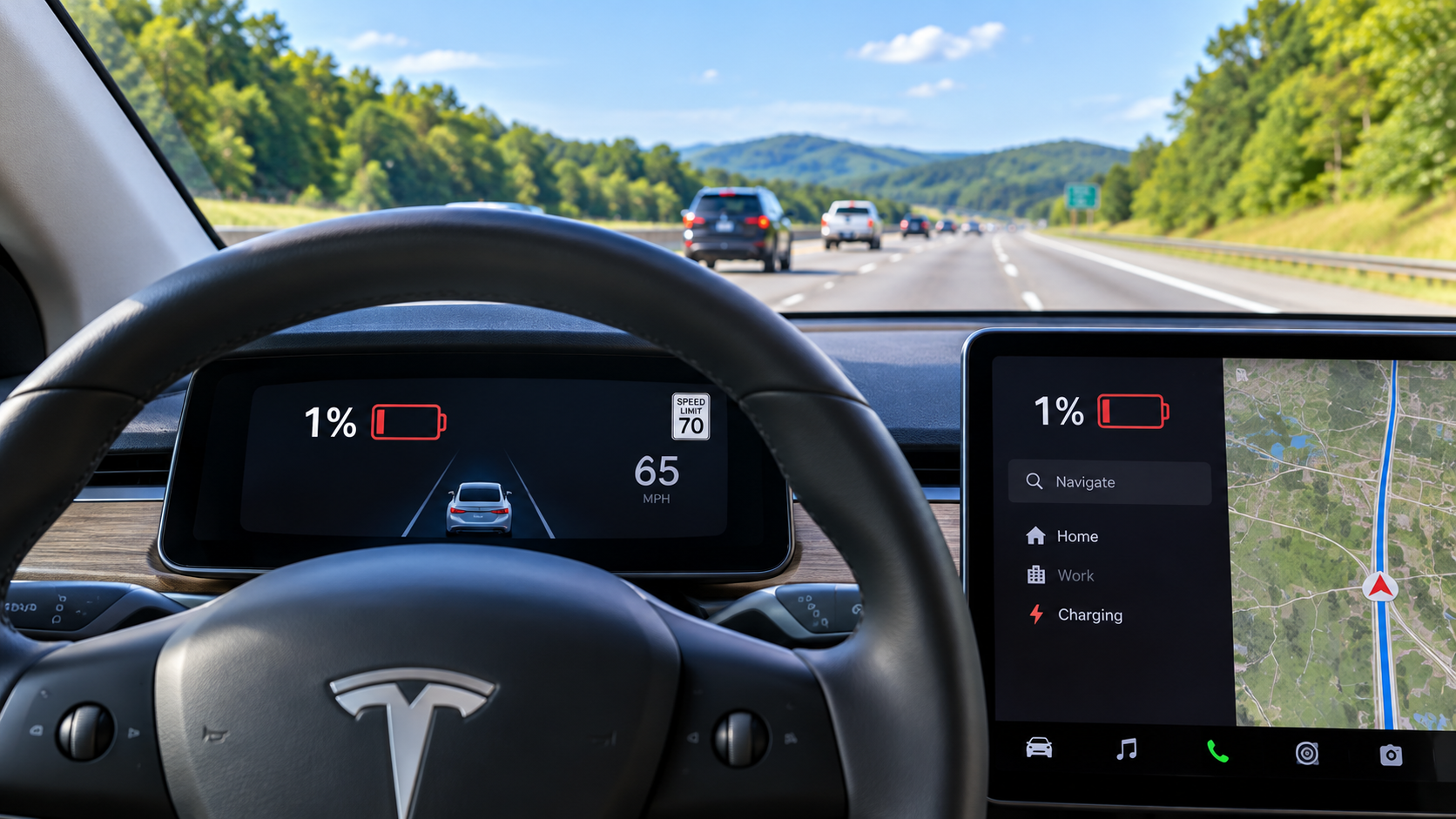
Your First Priority Isn't Charging. It's Safety.
If your EV warns that it may soon become undrivable, the priority is getting somewhere safe before it stops.
Ideally, that means reaching a rest area, parking lot, or another location away from high-speed traffic.
If that's not possible, move onto a safe shoulder while the vehicle can still operate.
Turn on your hazard lights and contact roadside assistance.
If you're stopped in a dangerous location, contact emergency services and follow their instructions.
Don't attempt to push the vehicle along an interstate shoulder or walk down the highway looking for a charger.
Once the car can no longer propel itself, you may need professional assistance to move it.
Can AAA Bring Electricity to Your Car?
Here's where things get interesting.
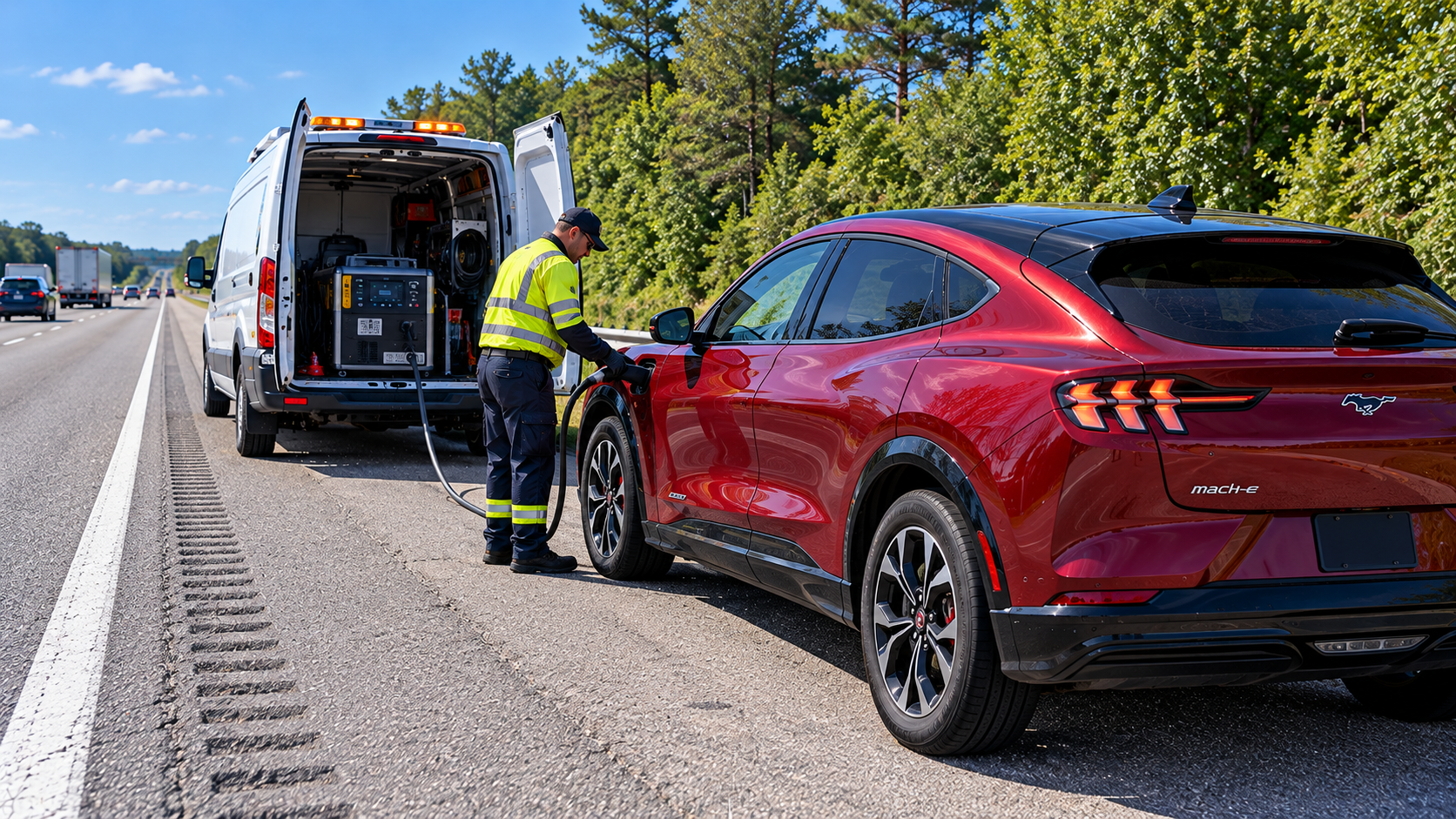
Yes, AAA offers mobile EV charging in select markets.
Instead of automatically sending a tow truck, AAA may be able to dispatch a vehicle equipped to deliver enough electricity for your EV to reach a nearby charging station.
According to AAA's information about mobile EV charging, the service is offered to members in participating markets at no additional charge.
AAA has identified participating markets including Orlando, Charlotte, Nashville, Denver, Philadelphia, and San Francisco, although availability should always be confirmed with the regional club.
Imagine being stranded because you're just a few miles short of the next charging station.
A roadside charging vehicle arrives, supplies enough electricity to get you moving, and you continue to the charger.
No flatbed required.
But there's a catch.
Mobile charging isn't available everywhere.
AAA operates through regional clubs, and services vary by location. A program advertised in a major metropolitan area doesn't necessarily mean a mobile charger is available along a remote interstate.
If mobile charging isn't available, towing may be the practical solution.
Before relying on AAA, check service availability and membership terms for the areas where you plan to travel.
What About Independent Mobile Charging Companies?
AAA isn't the only organization offering roadside EV charging.
Specialized mobile charging companies operate in some markets, bringing charging equipment directly to stranded vehicles.
Some use battery-powered systems. Others use charging equipment mounted on service vehicles.
The goal is generally the same: deliver enough energy to reach a conventional charging station rather than attempting to fully recharge the vehicle at the roadside.
But mobile charging isn't yet universally available.
Coverage areas, response times, charging compatibility, and prices vary.
A company that provides service in a major city may not serve the surrounding rural highways.
It's worth knowing whether mobile charging exists along your route, but it shouldn't be your only emergency plan.
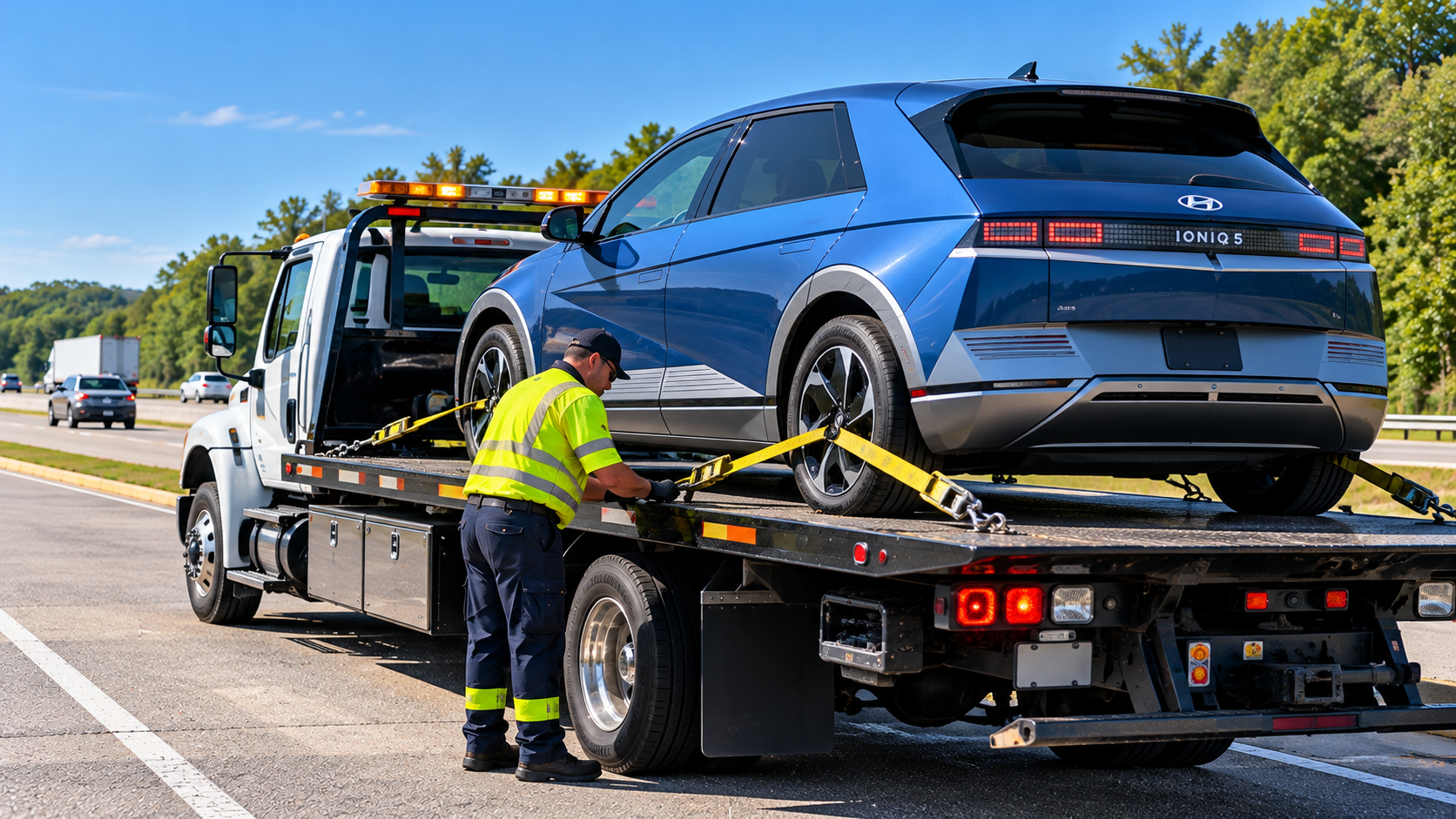
If They Can't Charge It, Where Do They Tow It?
For a gasoline-powered vehicle, roadside assistance may bring fuel or tow the car to a gas station.
For an EV, the most useful destination is usually an accessible, compatible charging station.
But there's something important to understand before you're stranded.
Your towing coverage may not include unlimited mileage.
AAA membership levels commonly have different towing allowances. Depending on the regional club and membership level, a basic membership may cover only a relatively short distance, while higher tiers may cover substantially longer tows.
Consider a situation where the nearest compatible charger is 35 miles away.
If your membership covers only five miles, you could be responsible for the remaining distance.
And that can add up.
You should also confirm where the tow operator is authorized to take your vehicle.
A tow to a dealership that's closed for the evening, or to a charging station that isn't compatible with your vehicle, may not solve the immediate problem.
Ideally, the destination should be accessible, compatible, and operational.
Does Tesla Roadside Assistance Cover an Empty Battery?
Tesla provides roadside assistance, but there's an important distinction between a vehicle breakdown and a driver running out of charge.
If a Tesla becomes undrivable because of a covered mechanical or electrical failure, transportation may be covered under the applicable roadside assistance terms.
Running out of charge is treated differently.
Tesla's published roadside assistance policy explains that it can help arrange assistance for an out-of-range vehicle, but the service is not financially covered.
In other words:
Tesla may help you get the vehicle recovered. That doesn't necessarily mean Tesla is paying for it.
That's worth understanding before a road trip.
And Tesla isn't necessarily representative of every manufacturer.
Other Manufacturers May Handle It Differently
Ford provides an interesting comparison.
Through its 24/7 Live Support program, eligible enrolled Ford EV owners may receive complimentary out-of-charge towing assistance.
Ford describes options for transportation to a public charging station, home, or a Ford dealership within specified limits.
Eligibility, enrollment, vehicle age, mileage, and program terms matter.
Other manufacturers have their own programs, coverage periods, exclusions, and service limits.
A new EV may include roadside assistance for a certain number of years, but that doesn't automatically mean every roadside incident is covered.
The questions to ask are:
Does running out of charge qualify?
Where will the vehicle be taken?
How far can it be towed?
And will there be an out-of-pocket charge?
What About Your Auto Insurance?
You may already have roadside assistance through your auto insurance.
Some insurers offer towing benefits that apply when an EV becomes disabled because it has run out of charge.
For example, Progressive's roadside assistance coverage addresses electric vehicles that run out of charge, with towing provisions subject to the policy's terms.
GEICO's Emergency Roadside Service offers optional towing coverage, with mileage limits and other conditions.
But coverage varies.
The important distinction is whether your policy covers the situation itself, not merely whether the word towing appears somewhere on your insurance card.
It's also worth checking whether the insurer will transport the vehicle to the nearest compatible charger or only to a repair facility.
And if you have multiple roadside assistance programs, don't assume their benefits can be combined.
Know which number you're going to call first.
Does an EV Need a Flatbed Tow Truck?
This is one of the most important technical considerations.
You cannot assume an EV can be towed the same way as a conventional vehicle.
Many electric vehicles have restrictions on towing with their wheels turning on the road.
Tesla's Model Y transport instructions, for example, recommend a flatbed or an approved alternative that keeps all four wheels off the ground.
Other manufacturers may specify different procedures depending on the drivetrain and model.
Improper towing can damage drivetrain components.
And a vehicle that has lost electrical power may require additional steps before it can be loaded.
Some EVs have a transport mode or a procedure for releasing the parking brake. Others may require special equipment if the low-voltage system is no longer functioning.
That's why it's important to tell the dispatcher the exact make, model, and year of your vehicle.
The tow operator needs to know what they're coming to recover.
Can You Just Plug It In and Start Charging Again?
Usually, getting a depleted EV to a working charger is the solution.
But there's a complication that doesn't receive much attention.
Electric vehicles typically have a high-voltage traction battery and a separate low-voltage electrical system.
The low-voltage system powers essential electronics and controls, including components involved in starting the charging process.
If the high-voltage battery becomes severely depleted, the low-voltage system may eventually lose its power source.
In some circumstances, external low-voltage support may be required before the vehicle can resume charging.
Tesla discusses this possibility in its instructions for vehicles that have run out of range.
That doesn't mean every EV that reaches 0% needs special intervention.
It means you shouldn't assume every vehicle can simply be plugged in and immediately return to normal operation.
The manufacturer's instructions matter.
What Does Running Out of Charge Cost?
There's no universal price.
It depends on your location, the services available, and the coverage you already have.
If mobile charging is included in your roadside assistance membership and is available where you're stranded, you may pay nothing beyond your membership.
If your manufacturer covers qualifying out-of-charge towing, transportation may be included.
If your insurance provides roadside assistance, the tow may fall within its coverage limits.
Otherwise, you could face dispatch fees, mileage charges, or additional costs for specialized recovery.
There's also the cost of your time.
A tow truck may arrive relatively quickly in a city, but recovery can take much longer in a remote area.
And if the nearest compatible charger is a considerable distance away, that may affect both cost and response time.
The cheapest roadside emergency is the one you've already prepared for.
Running Out of Electricity Versus Running Out of Gas
Running out of gasoline has one obvious advantage.
A roadside assistance provider can often bring a small amount of fuel directly to the vehicle.
With an EV, that convenience depends on whether mobile charging equipment is available.
But the basic recovery process is similar.
Your vehicle becomes disabled.
You get somewhere safe.
You contact roadside assistance.
Someone either brings energy to you or transports your vehicle somewhere it can be replenished.
The biggest differences are the availability of mobile charging, the time required to add usable range, and the vehicle's towing requirements.
Neither situation is something anyone wants to experience.
And neither needs to become a crisis if you've prepared for it.
Before You Take Delivery, Ask “What If?”
Most people taking delivery of a new electric vehicle want to learn about its range, charging speed, technology, and features.
But there's another question I'd recommend asking before leaving the dealership:
“What happens if this car runs completely out of charge?”
Don't settle for a generic answer about calling roadside assistance.
Ask what your specific vehicle requires.
Can it be moved into neutral without power? Does it have a transport or tow mode? Does it require a flatbed? What happens if the low-voltage battery is also depleted? And does the manufacturer's roadside assistance cover running out of charge?
The answers may be different depending on the vehicle.
Read the owner's manual. Ask the dealership to demonstrate the recovery procedures. Know what your particular car needs before you're stranded somewhere trying to figure it out.
And here's one simple precaution I'd recommend:
Keep a small EV roadside emergency reference card in your glove box, alongside your registration and insurance information.
That card should identify your vehicle, roadside assistance contact information, approved towing methods, how to prepare the car for transport, and where to find the relevant instructions in the owner's manual.
It's a small precaution, but it could save time and confusion when a tow truck arrives.
And because the information is specific to your vehicle, it may be more useful than generic roadside advice.
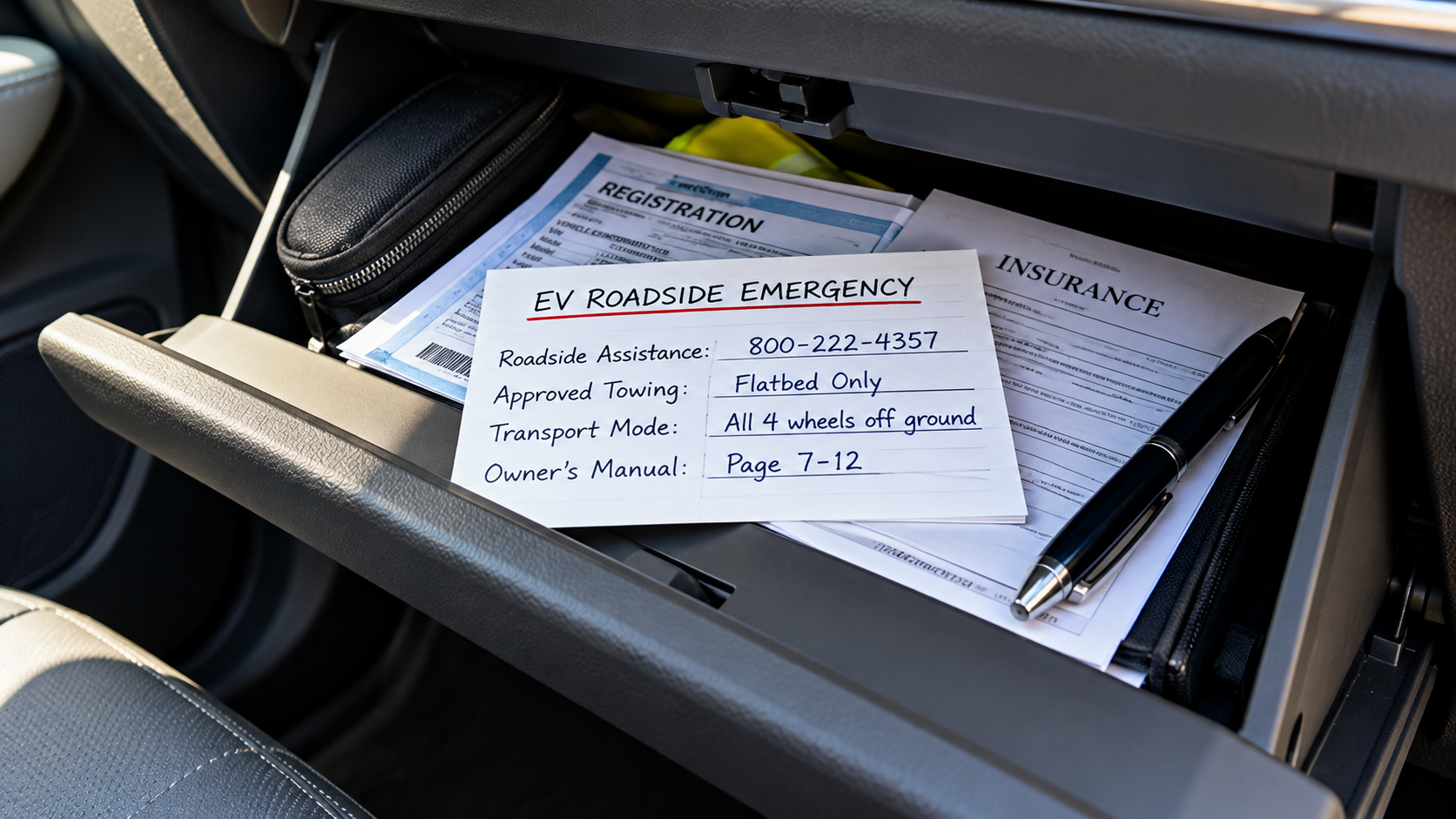
FREE PRINTABLE: EV ROADSIDE EMERGENCY CARD
We've created a printable Curated Upgrades EV Roadside Emergency Card with spaces for the information you should have readily available if your vehicle becomes disabled.
Print it, complete it using your owner's manual and roadside assistance coverage, and keep it with your registration and insurance documents.
What If You're Driving a Rental EV?
Renting an electric vehicle adds another wrinkle to the roadside assistance equation.
Before leaving the rental counter, ask what happens if the vehicle runs out of charge. Does the rental company provide roadside assistance? Will they arrange mobile charging or towing? And most importantly, who pays for it?
Rental companies may treat a depleted battery differently from a mechanical breakdown. Running out of charge could result in additional recovery fees, even if roadside assistance is included with the rental.
If you do become stranded, contact the rental company's roadside assistance number first, unless you're in an unsafe location that requires emergency help.
Don't independently arrange a tow without checking the rental agreement or receiving authorization, since the company may have specific recovery procedures and approved service providers.
And just as with your own EV, take a few minutes to familiarize yourself with the vehicle's charging and towing requirements before hitting the road.
For more advice on rental agreements and avoiding unexpected costs, explore our Ground Transportation articles.
A rental agreement isn't much help if you don't know what it covers until you're already stranded.
So, What Happens If Your EV Runs Out of Battery?
Most likely, you'll need one of two things.
Someone brings enough electricity to get you moving again.
Or someone transports your vehicle to a place where you can charge it.
Neither outcome is particularly appealing when you're trying to enjoy a road trip.
But neither is necessarily a disaster.
The real challenge is understanding which services are available, which ones are covered, and what your vehicle requires.
The best time to learn how your EV needs to be recovered isn't when it's sitting on the shoulder of a highway with 0% battery.
It's before you ever take delivery.