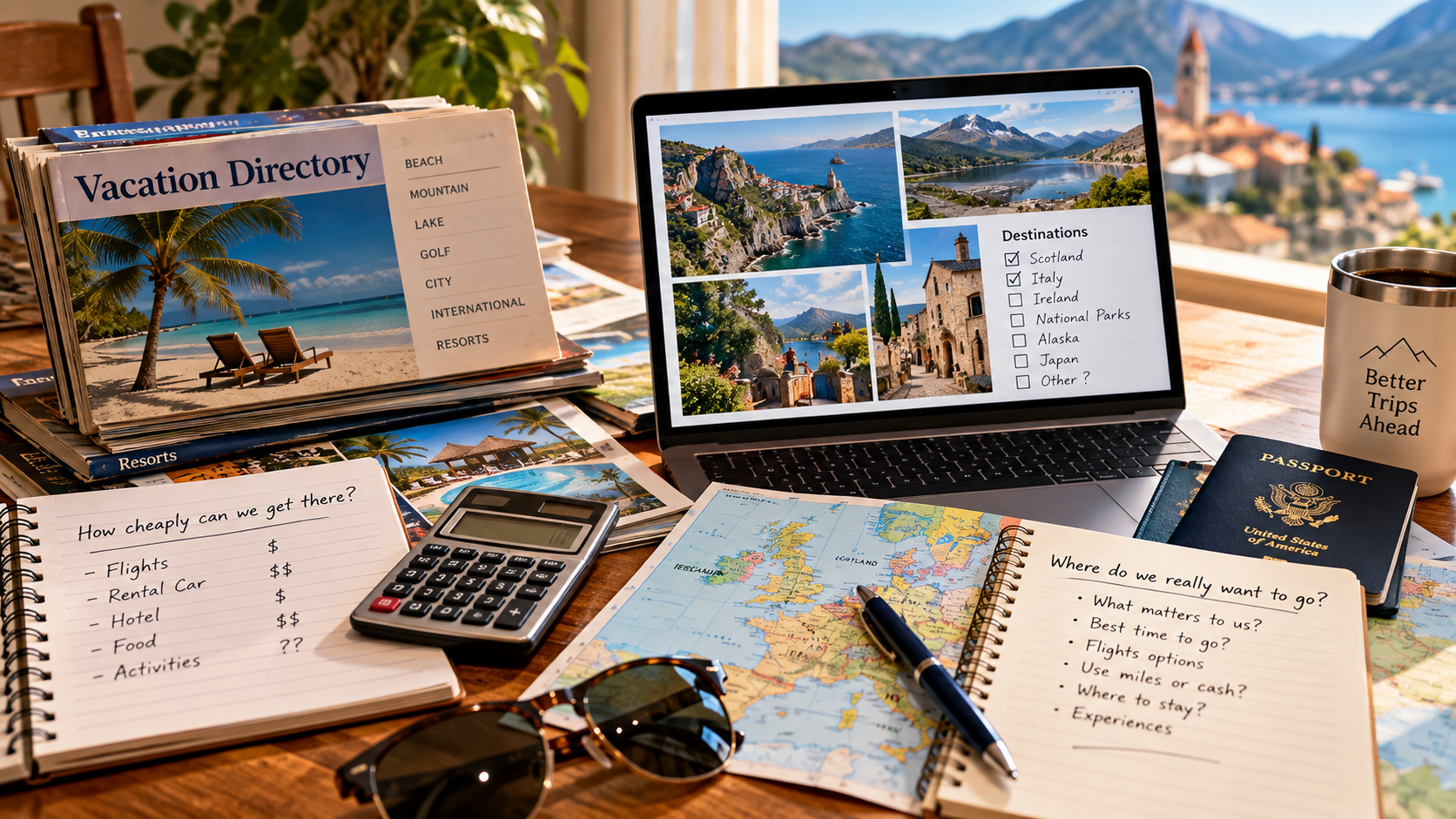
How Travel Changed the Way I Think
Travel shouldn't be defined by your budget. It should be shaped by your priorities.
Travel isn't about spending the most.
It's about getting the most from what you have.
For years, our vacations didn't start with a map.
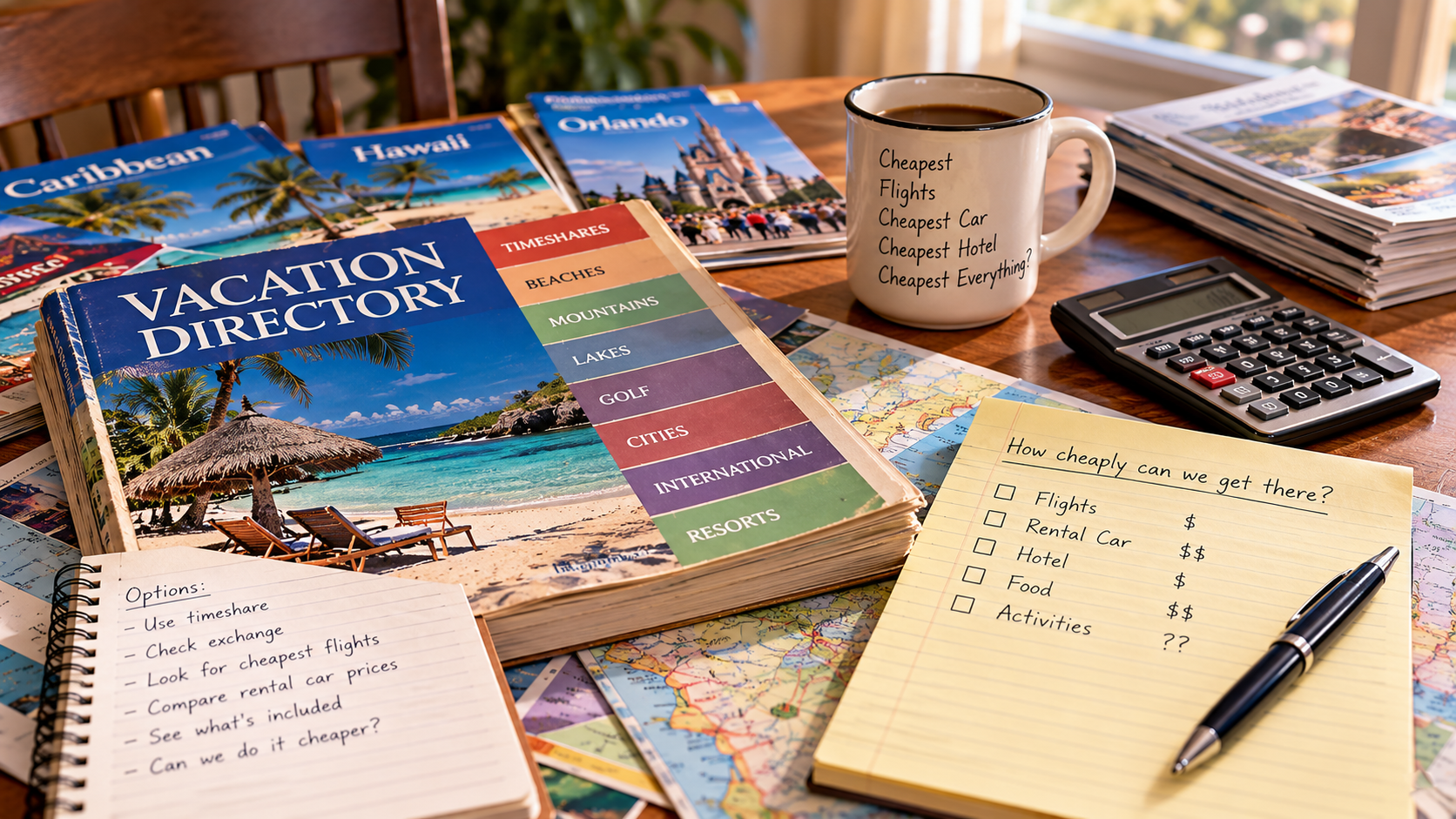
They started with a timeshare directory.
We'd flip through page after page looking for a destination where we could use our exchange. Once we found one, the next question became:
“How cheaply can we get there?”
Cheapest flights.
Cheapest rental car.
Cheapest everything.
On paper, we were saving money.
Looking back, I wasn't really planning vacations. I was planning bargains.
And for a long time, I thought that was smart travel.
It took me years to realize I had been asking the wrong question.
Instead of asking:
“How cheaply can we get there?”
I should have been asking:
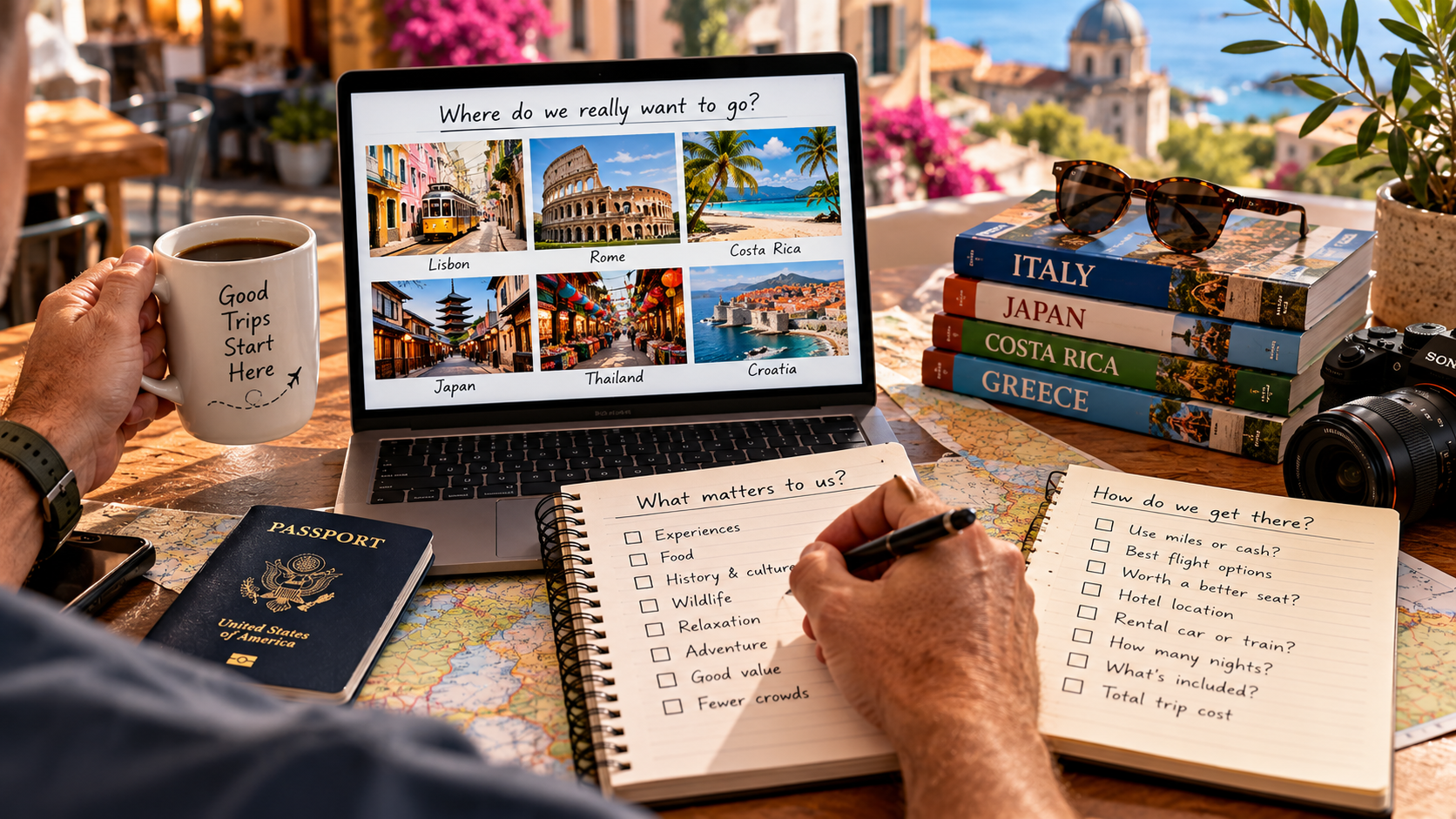
“Where do we really want to go, and what's the smartest way to make it happen?”
That one question changed the way I travel.
The Deal Stopped Choosing the Destination
As we traveled more, we learned.
Sometimes the cheapest flight really was the right choice.
Sometimes using airline miles made more sense than paying cash.
Sometimes spending a little more for a better seat meant arriving rested enough to actually enjoy the first day of the trip.
Other times, it made more sense to save money on the flight or hotel so we could stay another night, enjoy a great meal, or have an experience we couldn't have at home.
There wasn't one formula that worked for every trip.
That was the lesson.
Travel became a series of thoughtful decisions instead of a race toward the lowest price.
I stopped letting the deal decide the destination. I let the destination decide how to build the trip.
Cheap and Good Value Aren't the Same Thing
This became one of the biggest changes in how I think about travel.
Price still matters to me.
A lot.
But I've learned that cheap and good value aren't necessarily the same thing.
A $30 seat assignment might be money well spent on one flight and completely unnecessary on another.
A more expensive nonstop flight might actually be the better value once you consider a long connection, airport meals, inconvenient arrival times, or other costs that don't appear in the airfare search results.
A modest B&B might give us exactly the experience we're looking for while the expensive resort down the road offers amenities we'd never use.
And sometimes the cheapest option really is the best option.
That's important, too.
Traveling smarter doesn't mean finding reasons to spend more. It means understanding what you're getting for what you spend.
The goal isn't the cheapest trip.
It's getting the most value from the trip you can afford.
Some Lessons Cost Money
Along the way, we made mistakes.
We spent money on upgrades that weren't worth it.
We paid for things we probably could have skipped. We've made choices that looked good while planning and considerably less brilliant once we were actually standing there.
That's part of traveling.
But we also discovered upgrades that completely changed an experience.
And some of the best improvements didn't cost anything at all.
They came from planning ahead. Joining loyalty programs before we needed them. Learning how points and miles actually work. Looking at a seat map before accepting whatever was assigned. Understanding what was included before paying extra for something we already had.
Most importantly, they came from remembering what worked and what didn't, then applying those lessons to the next trip.
Travel taught me that better doesn't automatically mean more expensive.
Sometimes better just means better planned.
Start With What Matters to You
Today, our trip planning looks very different.
Instead of starting with whatever destination happens to be available or cheapest, we start with what we actually want from the trip.
Maybe it's history.
Food.
Wildlife.
Scenery.
A road trip.
A particular experience we've talked about for years.
Sometimes we want to see the famous places. Other times we'd rather take the road that leads away from them.
Only after we understand why we want to take the trip do we start figuring out the flights, hotels, transportation, points, miles and all the other pieces needed to make it happen.
That doesn't mean the budget disappears.
It means the budget becomes part of the plan instead of being the entire plan.
That's Where Curated Upgrades Came From
Eventually I realized that the way I approached travel had fundamentally changed.
I wasn't trying to make every trip luxurious.
I was trying to make every trip better.
That's when Curated Upgrades began to take shape.
Maybe you've always dreamed of taking a trip that feels just out of reach.
Maybe you'd simply like a little more legroom on your next flight.
Maybe you're trying to figure out whether those airline miles you've been collecting are actually useful.
Or maybe you just want to travel better without automatically spending more.
You're welcome here.
Curated Upgrades isn't about luxury travel.
It isn't about convincing you to buy the most expensive seat, book the fanciest hotel, or say yes every time someone offers you an upgrade.
It's about helping you understand your options and decide which ones actually improve your trip.
Whether your budget is $500 or $5,000...
Whether you're redeeming 5,000 miles or 500,000...
Whether you're planning your first weekend getaway or the trip of a lifetime...
The goal is the same.
To make the journey better.
So, Is It Really Worth It?
That question sits underneath almost everything I write here.
But I've learned that it rarely has a universal answer.
A $200 upgrade can be a fantastic value for one traveler and a complete waste of money for another.
A hotel I love might be completely wrong for you.
An itinerary that gives me exactly the kind of trip I want might drive someone else crazy.
That's why you'll see three simple recommendations throughout Curated Upgrades:
🟢 Go for it.
🟡 Evaluate whether it's right for you.
🔴 Skip it.
Those recommendations aren't based simply on whether something is cheap or expensive.
They're based on value.
What does it cost?
What do you actually get?
What are the alternatives?
And, most importantly:
Does it make the trip better?
I'll tell you what worked.
I'll tell you what didn't.
And I'll explain why.
Then you can decide whether it's worth it for you.
Because if I wouldn't recommend it to my own friends and family, I won't recommend it to you.