

Returning to the U.S.: What to Expect at Customs & Immigration
Passport control, declarations, Global Entry, connecting bags and what happens before you're officially back in the United States.
Coming home from an international trip involves one final bit of travel bureaucracy before you're officially back in the United States: clearing U.S. Customs and Border Protection.
If you've never done it before, signs for Passport Control, Immigration, Customs and CBP can make the process sound considerably more intimidating than it usually is.
For most returning U.S. travelers, it's pretty straightforward.
The trick is knowing what happens next, especially if you've checked luggage or have another flight to catch.
Information current as of October 2026. Entry procedures, technology, participating airports and import rules can change. Always follow current instructions from U.S. Customs and Border Protection and your arrival airport.
Your First U.S. Airport Usually Matters
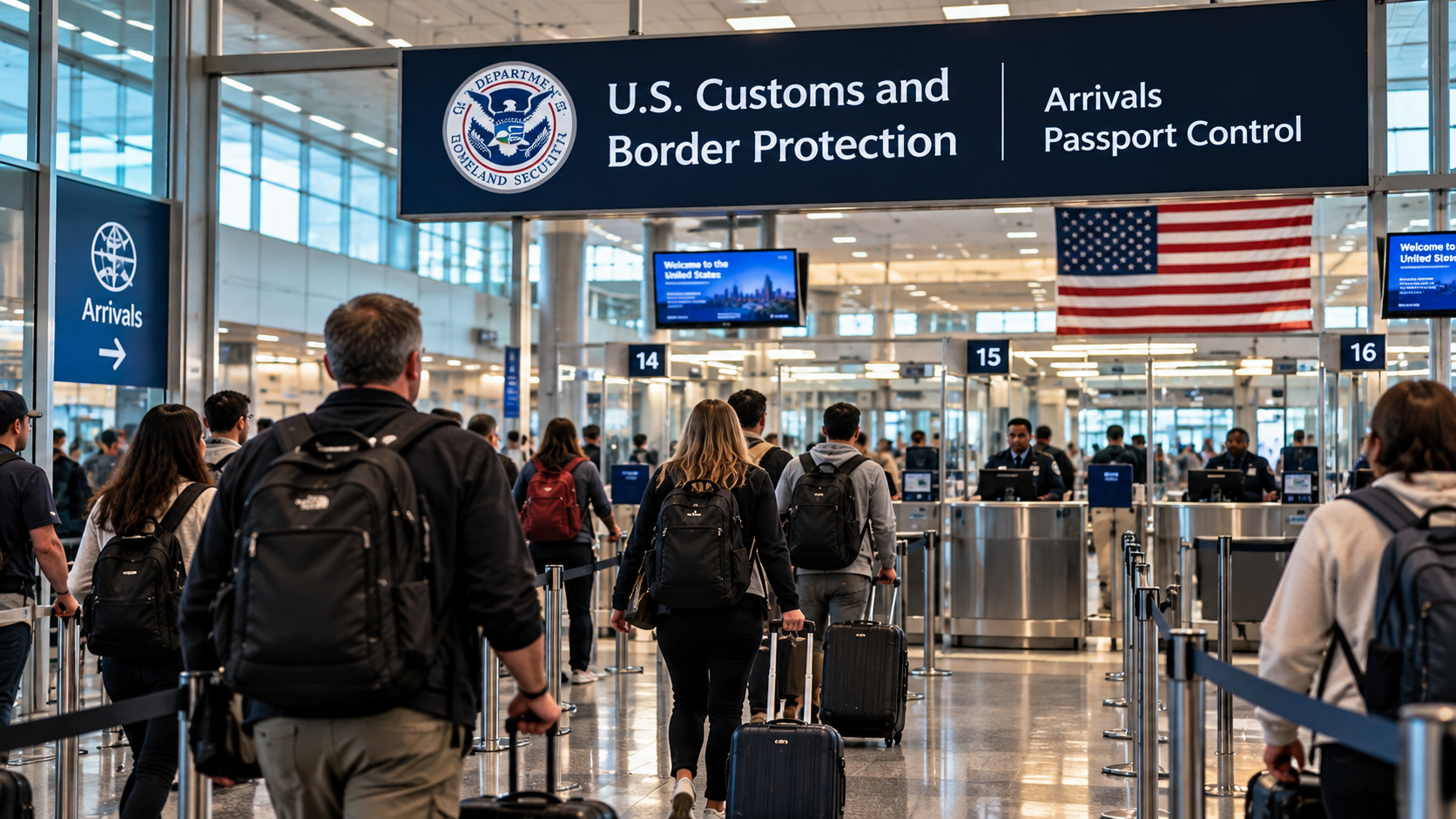
When your international flight lands in the United States, follow the signs for International Arrivals, Passport Control or U.S. Customs and Border Protection.
Don't simply follow somebody who looks confident. They may be connecting to São Paulo.
Your first stop is generally CBP processing, where your identity and admission into the United States are handled. As a returning U.S. citizen, keep your passport accessible and be prepared to answer questions about your trip and what you're bringing home.
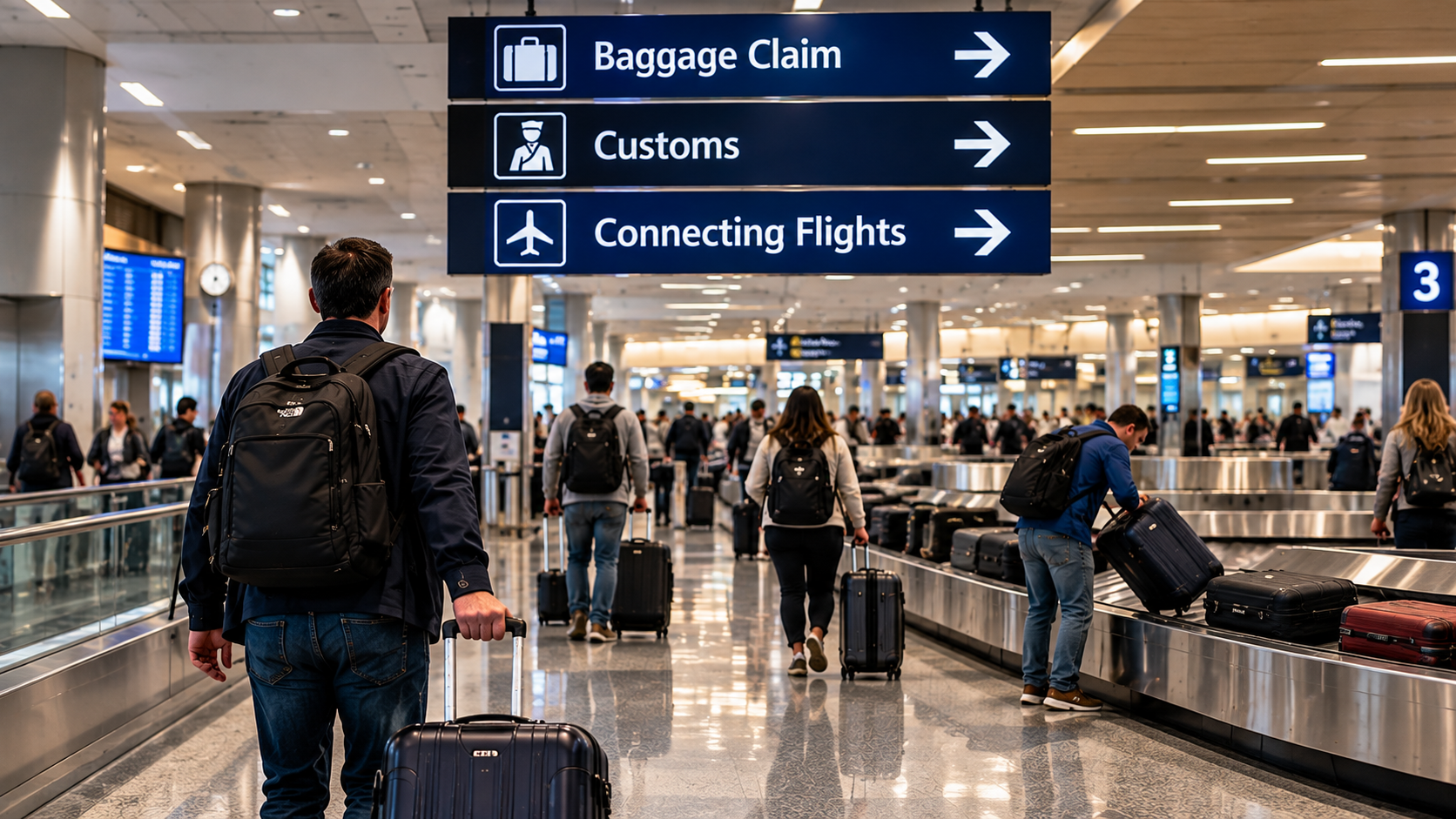
Once you're through passport processing, there is still another important stop: baggage claim.
If you checked luggage, you'll ordinarily retrieve it at your first U.S. port of entry even when the airline tagged the bag all the way to your final destination. You'll then proceed through the customs process with your belongings.
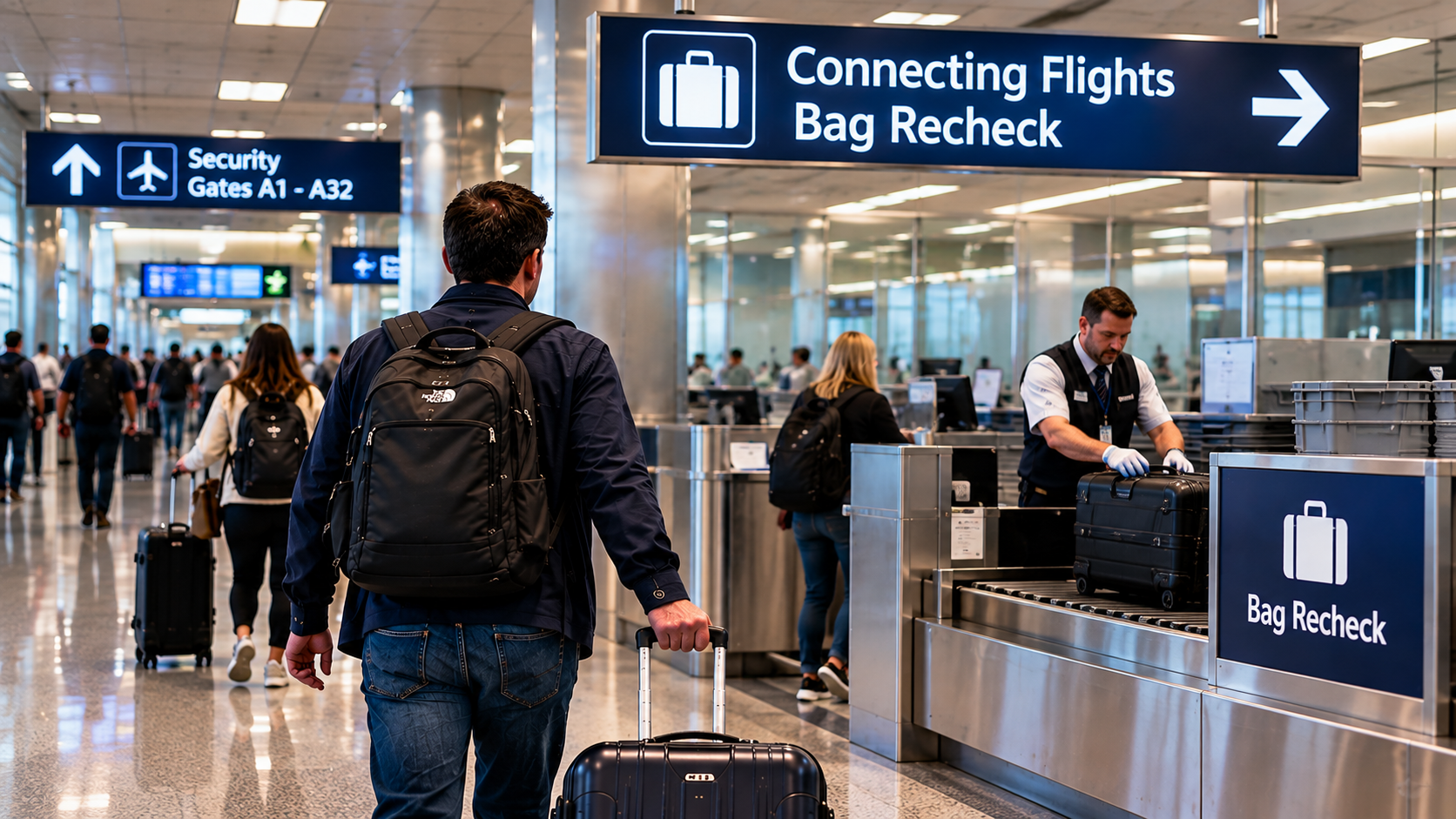
If you're connecting, follow the airport's signs after customs for Connecting Flights or Bag Recheck. The exact setup varies by airport, but there is usually a dedicated location where connecting passengers hand their already-tagged bags back to the airline before proceeding onward.
Depending on the airport and connection, that can also mean another trip through security before reaching your next gate.
This is one reason to be cautious about extremely tight international-to-domestic connections. Passport processing is only one part of the arrival. You may also have to wait for your bag, clear customs, recheck it, navigate the terminal and possibly clear security again.
Global Entry Can Make the Return Much Easier
If you travel internationally regularly, Global Entry can substantially streamline your return.
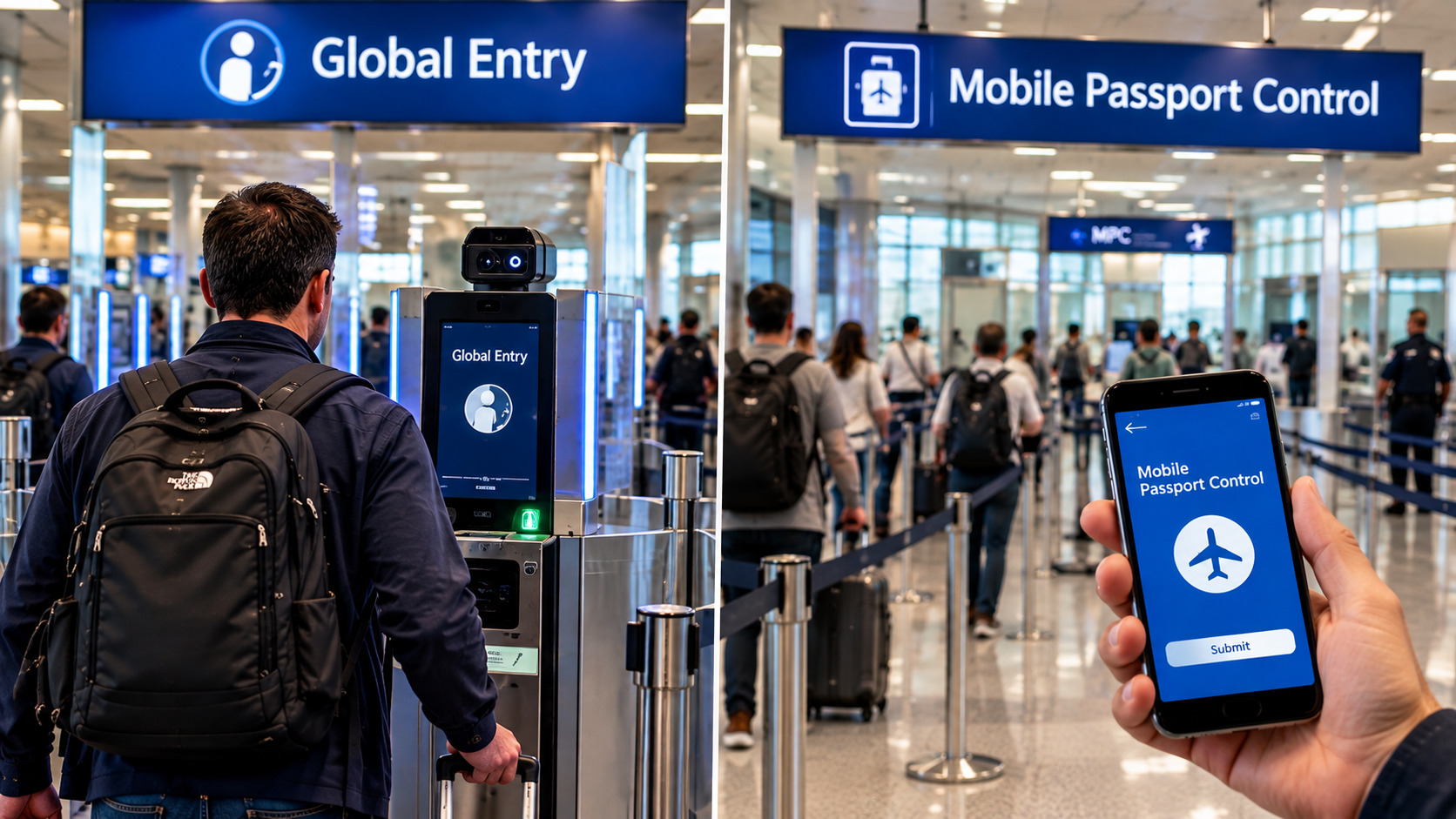
Global Entry is a U.S. Customs and Border Protection Trusted Traveler Program for pre-approved, low-risk travelers. At many locations, modern Global Entry processing uses facial comparison and touchless technology rather than the passport scans, fingerprints and printed receipts longtime members may remember.
But Global Entry isn't diplomatic immunity with nicer signage.
You're still entering the United States. You still have to follow customs and agriculture rules, make required declarations and comply with CBP instructions.
Global Entry also can't make your suitcase come down the carousel any faster. You may breeze through processing only to spend the next 20 minutes staring at an empty conveyor belt.
Air travel retains a sense of humor.
No Global Entry? Don't Overlook Mobile Passport Control
There is another option that doesn't get nearly as much attention.
Mobile Passport Control, usually called MPC, is a free CBP application available to eligible travelers at participating ports of entry.
Travelers create a profile, submit the required travel information and photo, answer CBP inspection-related questions and then follow the airport's instructions for MPC processing.
There's no Global Entry-style application fee or Trusted Traveler enrollment process, which makes MPC particularly interesting for someone who only travels internationally occasionally.
Global Entry and Mobile Passport Control aren't quite competing versions of the same product. Global Entry is a Trusted Traveler Program requiring approval and membership. MPC is a free processing option for eligible travelers.
Either can potentially make your arrival easier than simply walking into the regular passport-control queue.
Yes, You Really Do Need to Declare Things
Customs isn't merely the doorway between baggage claim and freedom.
CBP wants to know what you're bringing into the country.
Returning residents generally must declare merchandise acquired abroad, including gifts. In most cases, the personal duty-free exemption is $800, although the amount and eligibility can vary depending on where you've traveled, how long you were away and other circumstances. CBP explains the current rules for declaring purchases and returning-resident exemptions.
Going over your exemption doesn't mean you've committed an international incident. It may simply mean you owe duty.
Trying to hide what you bought is an entirely different decision.
Keep receipts for significant purchases and answer declaration questions accurately. If you're uncertain whether something needs to be declared, declare it and let CBP make the determination.
And Please Declare the Food
This deserves its own section because it is ridiculously easy to get wrong.
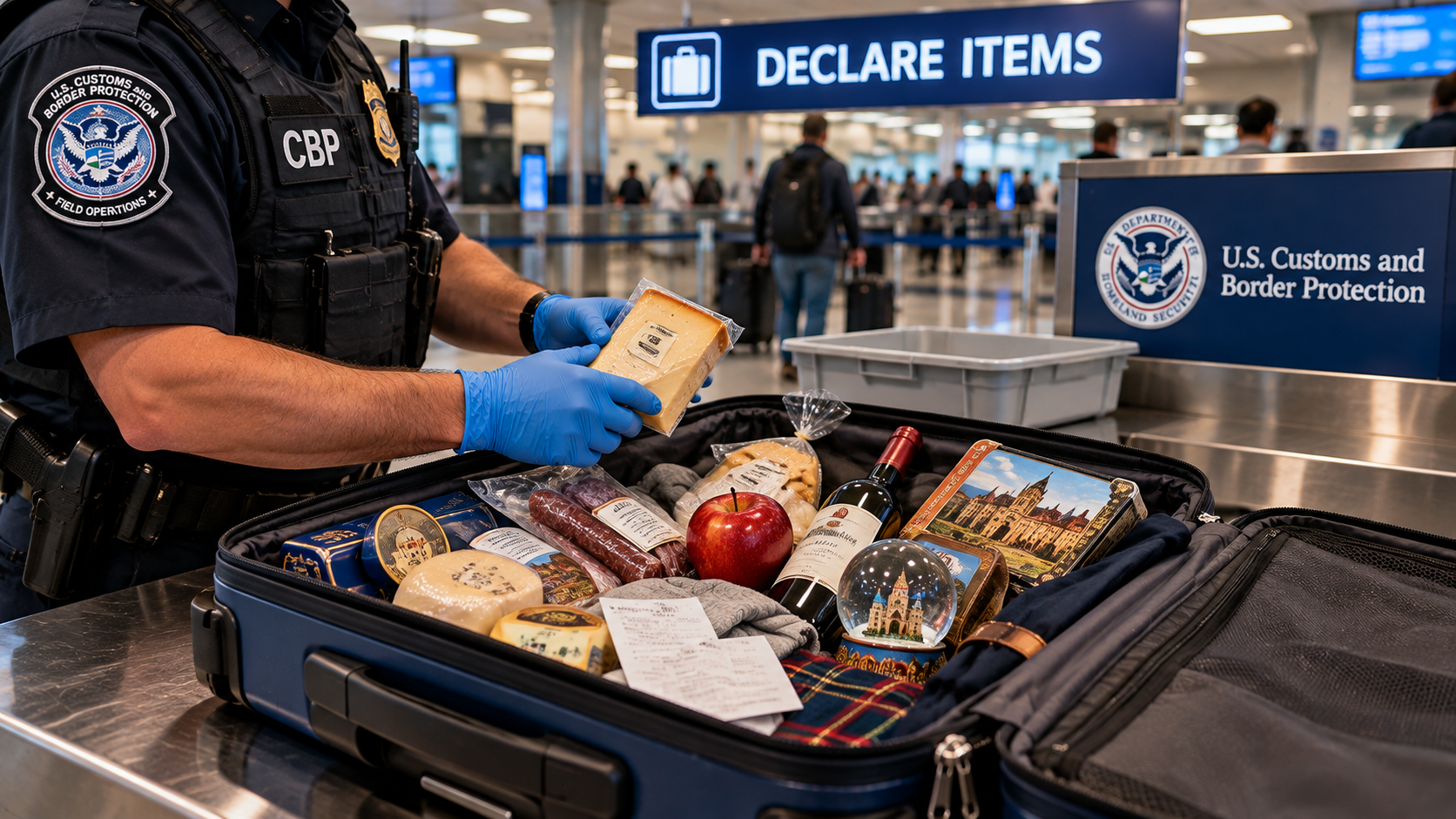
That package of meat you bought overseas? Declare it.
Cheese? Declare it.
Plants, seeds or agricultural souvenirs? Declare them.
That apple the flight attendant handed you somewhere over the Atlantic that you shoved into your backpack because you weren't hungry?
Declare it or leave it on the airplane.
The USDA requires travelers entering the United States to declare agricultural products, and travelers may also need to disclose visits to farms or contact with livestock.
And the innocent-looking apple really does matter.
According to the USDA's rules for bringing fruits and vegetables into the United States, almost all fresh fruits and vegetables from foreign countries are prohibited. That includes fresh produce given to you aboard an airplane or cruise ship.
Here's the part worth remembering: declaring something doesn't automatically mean you can't bring it home.
Declare it and let the inspector make that determination. Travelers who properly declare agricultural products aren't penalized simply because an inspector determines that a particular item can't enter the country.
That's considerably better than having an inspector discover the forgotten apple you didn't mention.
What About Cash?
You can legally travel with more than $10,000 in currency or qualifying monetary instruments.
The important word is report.
Federal law requires amounts exceeding $10,000 to be reported to CBP. If a family or group is traveling together, the threshold applies to the amount they're carrying collectively, not $10,000 per person. CBP explains the currency reporting requirement.
So the rule isn't that you can't bring more than $10,000 into the United States.
It's that you can't quietly bring more than $10,000 into the United States without reporting it.
Rather important difference.
Connecting? You're Probably Not Finished With That Suitcase
One of the most counterintuitive parts of returning from overseas is seeing your final destination printed on your checked-bag tag and then having to retrieve the thing anyway.
At the typical first U.S. port of entry, you reclaim your checked luggage as part of the arrival and customs process.
Afterward, connecting passengers follow the airport's procedures for putting the bag back into the system.
Usually, you're not checking in from scratch. Your bag is already tagged to its final destination. You're essentially giving it back.
Then you continue toward your next flight, which may include clearing security again.
Allowing some breathing room in an international connection suddenly makes a lot more sense.
Secondary Inspection Doesn't Automatically Mean Something Is Wrong
Sometimes CBP wants another look.
You may be directed to additional processing because of a declaration, a question about your trip, documentation, baggage inspection or simply because you've been selected for additional screening.
Global Entry members aren't exempt from that possibility.
If you're referred, follow the officer's instructions and answer questions accurately. A referral itself doesn't mean you've been accused of doing something wrong.
It may, however, make that 52-minute international connection you booked look increasingly optimistic.
The Dublin Exception: Clear U.S. Customs Before You Leave Ireland
And then there is Dublin.
This turns the normal sequence on its head.
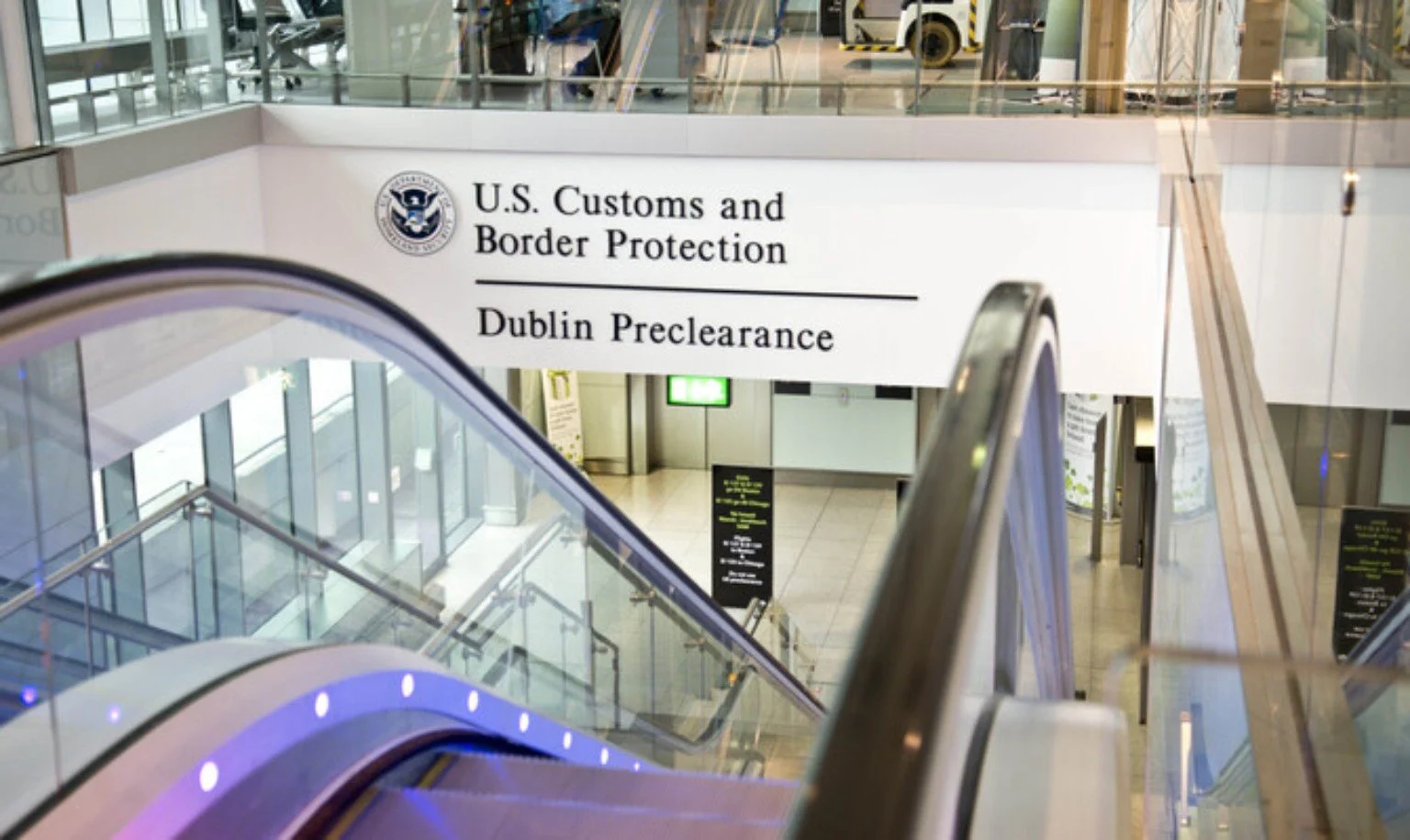
Dublin Airport has U.S. Preclearance, meaning U.S. Customs and Border Protection officers process U.S.-bound travelers before they leave Ireland.
At a Preclearance airport, you complete the U.S. entry inspection before boarding your flight. You then fly to the United States having already been processed by CBP.
So a traveler flying Dublin to Boston clears U.S. entry formalities while still standing in Ireland.
That can make the arrival in Boston feel remarkably domestic compared with the usual international-arrival routine.
Dublin isn't alone. CBP currently operates Preclearance facilities at selected airports outside the United States, including locations in Ireland, Canada, Aruba, Bermuda, The Bahamas and Abu Dhabi. Ireland has facilities at both Dublin and Shannon.
This is also an unusual situation where Global Entry can be relevant while you're physically overseas because you're dealing with U.S. CBP.
That's very different from arriving at Paris, Rome or Tokyo, where being an American doesn't bring TSA PreCheck or Global Entry along for the ride.
Coming Home Doesn't Need to Be Complicated
For most returning travelers, the process boils down to being prepared rather than memorizing every CBP regulation ever written.
Have your passport accessible. Know whether you're using regular processing, Global Entry or Mobile Passport Control. Expect to deal with your checked luggage at your first U.S. port of entry unless you've already completed U.S. Preclearance.
And declare what you're bringing home.
Especially the food.
If you're wondering whether something needs to be declared, declaring it and letting the inspector make the decision is considerably safer than deciding on your own that the apple probably doesn't count.
Global Entry and Mobile Passport Control can make the process faster. Neither changes the rules.
Then you're officially back in the United States, your phone reconnects, your credit card stops wondering which continent you're on, and airport coffee somehow remains just as expensive.