

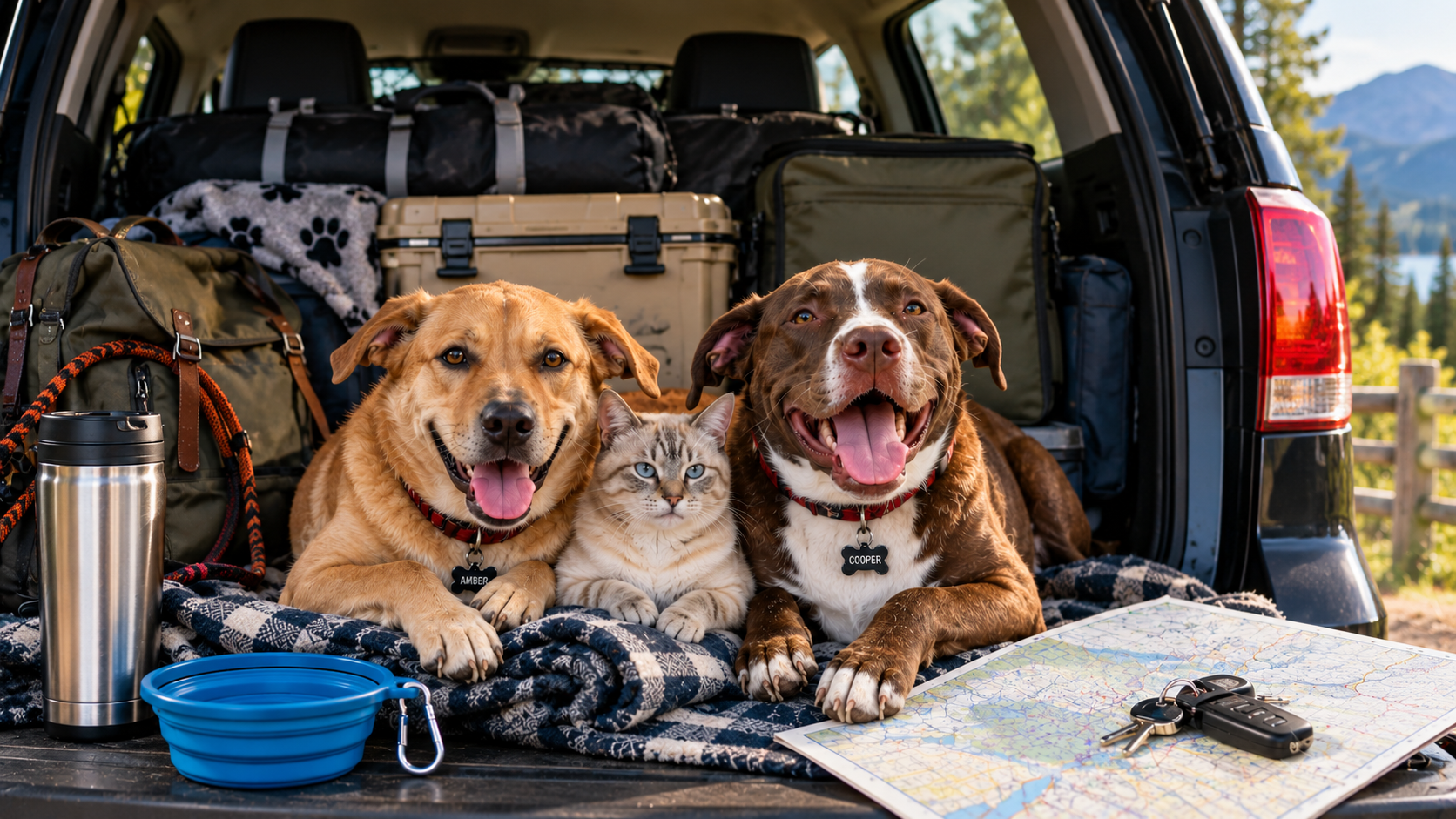
Road Trips With Pets: Plan the Trip Around Them, Too
Pet-friendly doesn't always mean your pet will be comfortable.
There is a question that should probably come before searching for pet-friendly hotels, packing the food bowls or figuring out where the next rest stop is.
Should this particular pet come on this particular trip?
That's a different question from whether you can bring them.
We've taken our dogs on trips that were almost effortless. We've taken them on trips where every fuel stop, meal and hotel required a little more planning. And we've also boarded one dog while taking another because that was the better answer for those particular dogs on that particular trip.
That's really the point.
A pet-friendly trip isn't one where the hotel allows your pet.
It's one where the trip actually works with your pet.
Sometimes It's Easy
We have a place on a lake in Florida about 100 miles from home. It's usually around a two-hour drive, we own the house, and the dogs love being there.
That's about as easy as pet travel gets.
Amber, our 63-pound Lab mix, settles into the back seat and barely makes a peep. Cooper, our 75-pound AmStaff, has somewhat different thoughts about the seating arrangement. His preferred location would apparently be the front seat, preferably occupying as much of Momma's lap as physics allows.
So even on an easy trip, how we pack the vehicle matters.
There are plenty of places along the way where we can stop, put them on leashes and give them a bathroom break. Once we arrive, they can play around the property and in the water.
Everybody has a good time.
That's probably the easiest version of a road trip with pets because the destination, transportation and animals already fit one another.
But add another five hours to the drive and things start changing.
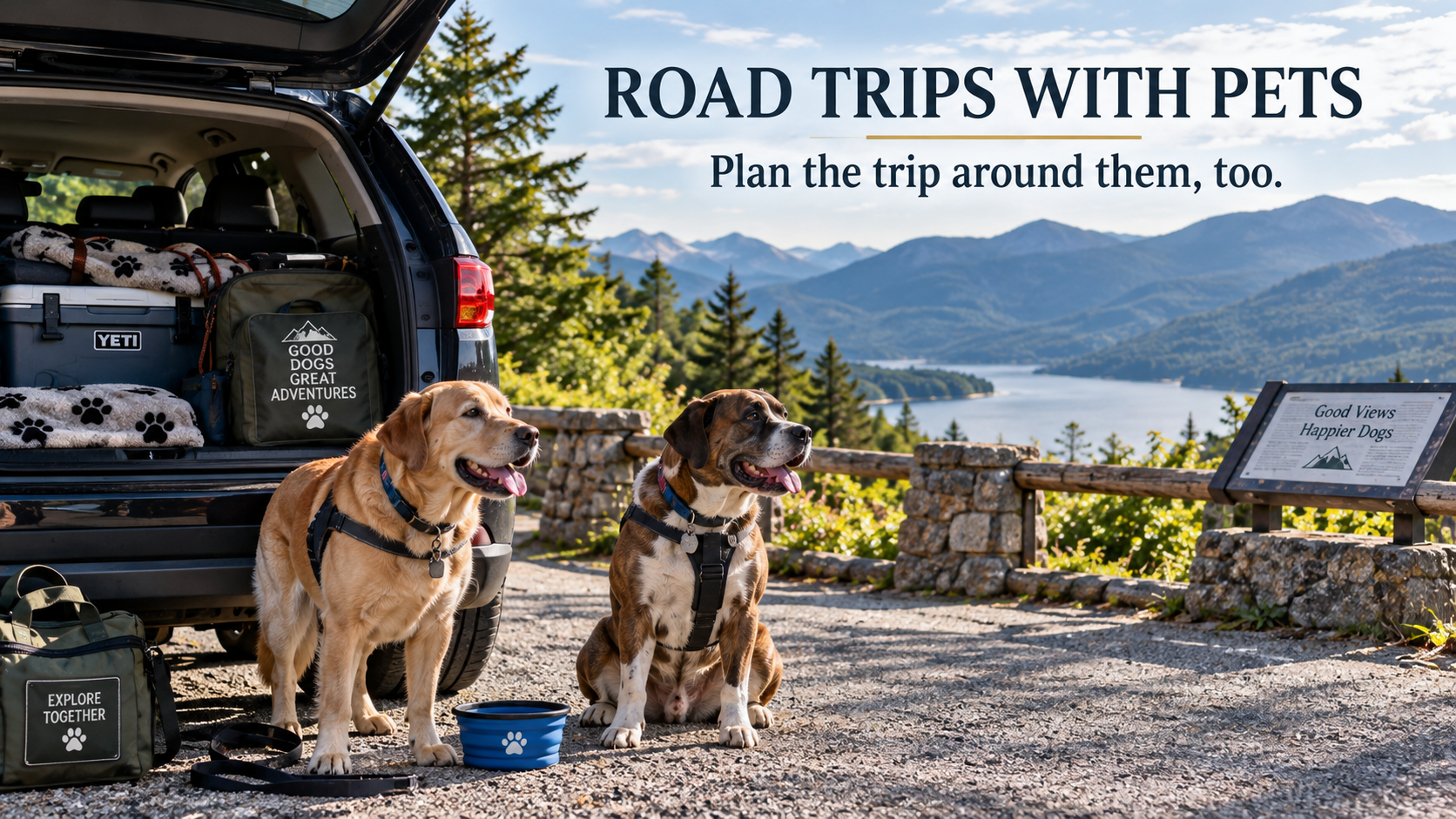
Seven Hours Changes the Trip
Our cabin in the North Carolina mountains is usually seven to eight hours away depending on traffic and how often we stop.
We own that house too, so finding pet-friendly lodging isn't the issue.
Everything between the two houses is.
A bathroom break for two adults is simple.
A bathroom break for two adults traveling with two large dogs can start to resemble planning the Normandy invasion.
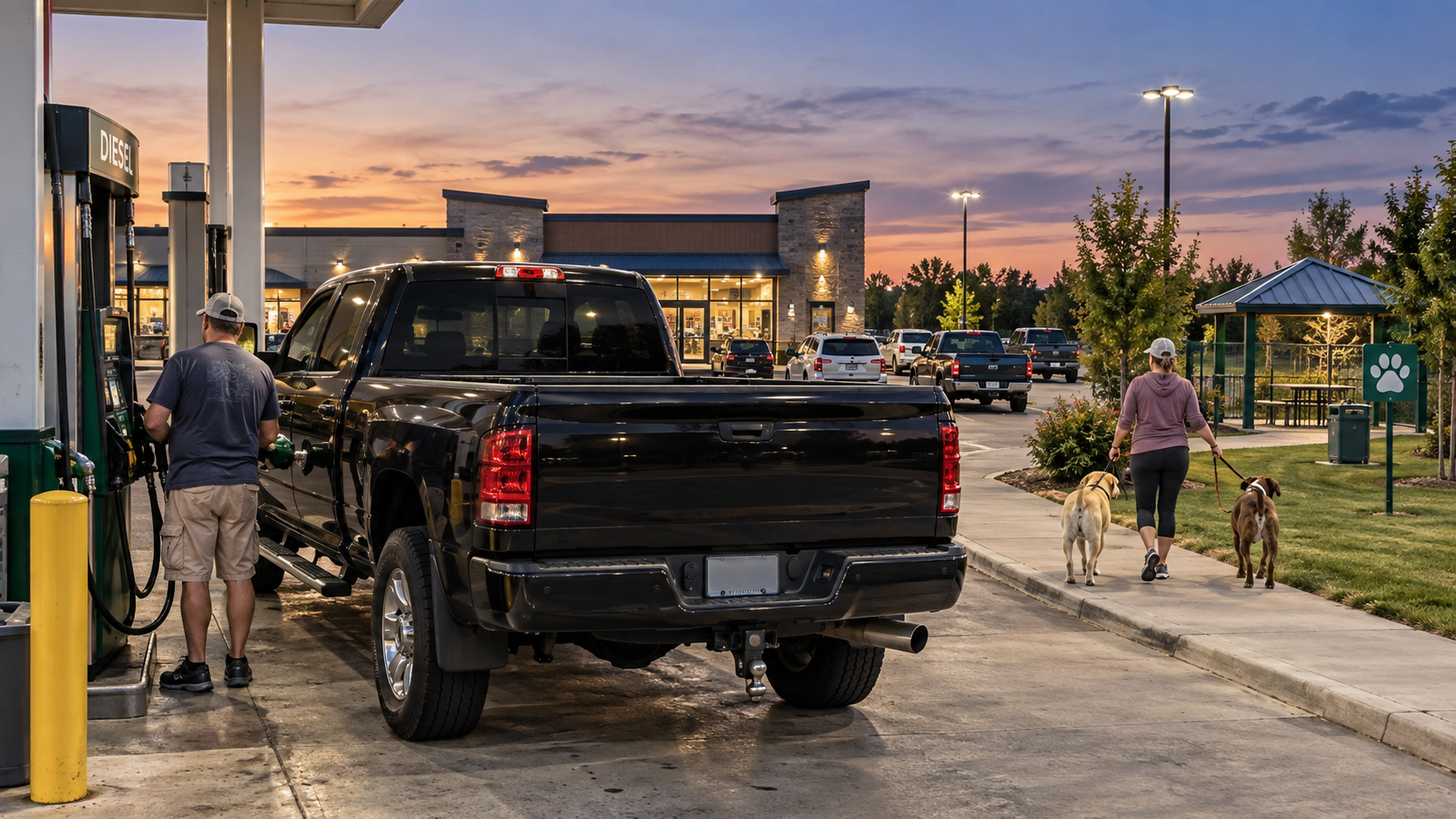
One of us handles both dogs while the other goes inside. Then we switch. The dogs need somewhere reasonably safe and comfortable to walk. If we're buying fuel at the same time, we try to combine everything into one stop.
And yes, sometimes I'll pay a little more for fuel because one station has a better place for the dogs than another.
That's a tiny pet-travel premium, but it's still part of the trip.
Meals change too.
Without the dogs, the conversation might be:
Do you want tacos?
With the dogs, it becomes:
Where can we stop that has outdoor seating?
Drive-through and takeout work. Outdoor seating works when the weather cooperates. Eating in the vehicle also works, although anyone who has eaten a hamburger while being intensely observed by two dogs knows that it isn't exactly private dining.
The longer the drive, the more these little decisions accumulate.
On a longer pet road trip, your stops aren't just breaks from the trip. They're part of the itinerary.
The CDC's pet travel guidance recommends gradually getting pets accustomed to longer drives, making frequent stops so dogs can stretch and relieve themselves, carrying food, water, medications and vaccination information, and safely restraining pets in the vehicle.
That's sensible guidance, but the practical version is even simpler:
Plan the drive around the animal that's actually sitting behind you.
Should They Come or Should They Stay?
There is another option that sometimes gets treated almost like admitting defeat:
Leave the dog home.
For some pets and some trips, that may actually be the better choice.
Cooper gives us a useful counterexample.
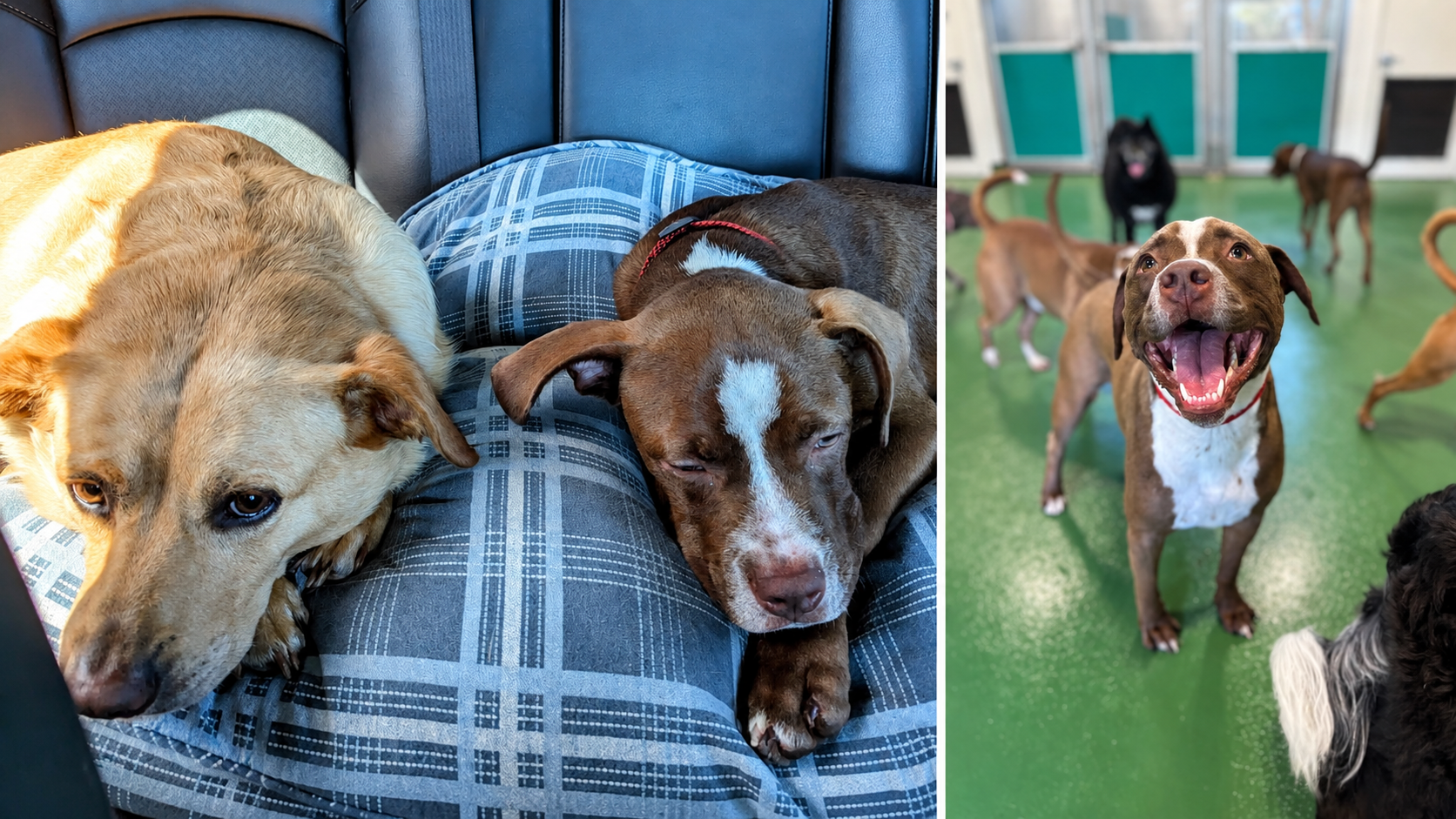
He does well when we board him.
Really well.
This isn't a dog sitting forlornly by a kennel door wondering whether his family will ever return. He gets to play with other dogs, gets attention and generally appears to regard the whole operation as his own vacation.
That matters.
We use one boarding facility that costs around $30 a day and another closer to home that's around $50.
For a two-week trip, that's roughly $420 to $700 per dog.
With two dogs, boarding can obviously become a substantial part of the travel budget.
But bringing them isn't free either.
There can be pet fees at hotels and vacation rentals. Your lodging choices may shrink. Your driving days may take longer. Meals can become less convenient. Sightseeing schedules may have to be built around returning to wherever your pet is staying.
So I don't think the decision is simply:
Which option costs less?
It's:
Which option works better for this animal and this trip?
Pet-Friendly Is Only the First Filter
We learned that more clearly on a week-long trip to Chincoteague, Virginia.
My mother-in-law Janet normally watches Amber when we travel. Janet was coming with us on this trip, so Amber came too.
Cooper went to boarding.
We could have made the drive in one long day, but we wanted a more leisurely trip. That meant finding a pet-friendly hotel on the way north and another on the way home.
And suddenly the hotel search looked different.
Filtering for breakfast included gives you one group of hotels.
Filtering for pets allowed can give you another.
Our hotel charged a $50 pet fee. But the bigger issue wasn't the fifty bucks.
It was Amber.
At home, she's well behaved. But there's a difference between being well behaved in your own house and spending all day in a vehicle, arriving somewhere unfamiliar and then being left alone in a strange hotel room while your humans disappear for dinner.
Would she cry?
Would she bark every time somebody walked down the hallway?
Would we become those people whose dog everyone else on the floor knows by name before breakfast?
And there's another question that needs to come before all of those:
Does the hotel even allow you to leave your pet alone in the room?
Policies vary by hotel and property. Some prohibit unattended pets, while others permit them only under certain conditions, such as being crated. That's why the little “pets allowed” icon on a booking site should be the beginning of the research, not the end.
Before booking, check the actual property's rules for pet fees, size or number restrictions and unattended animals. If the policy isn't clear, call the hotel.
Because a hotel can be pet-friendly without being a good hotel for your pet.
The questions become:
Can my pet stay here?
Then:
Can my pet comfortably stay here alone?
And eventually:
How often will I need to come back?
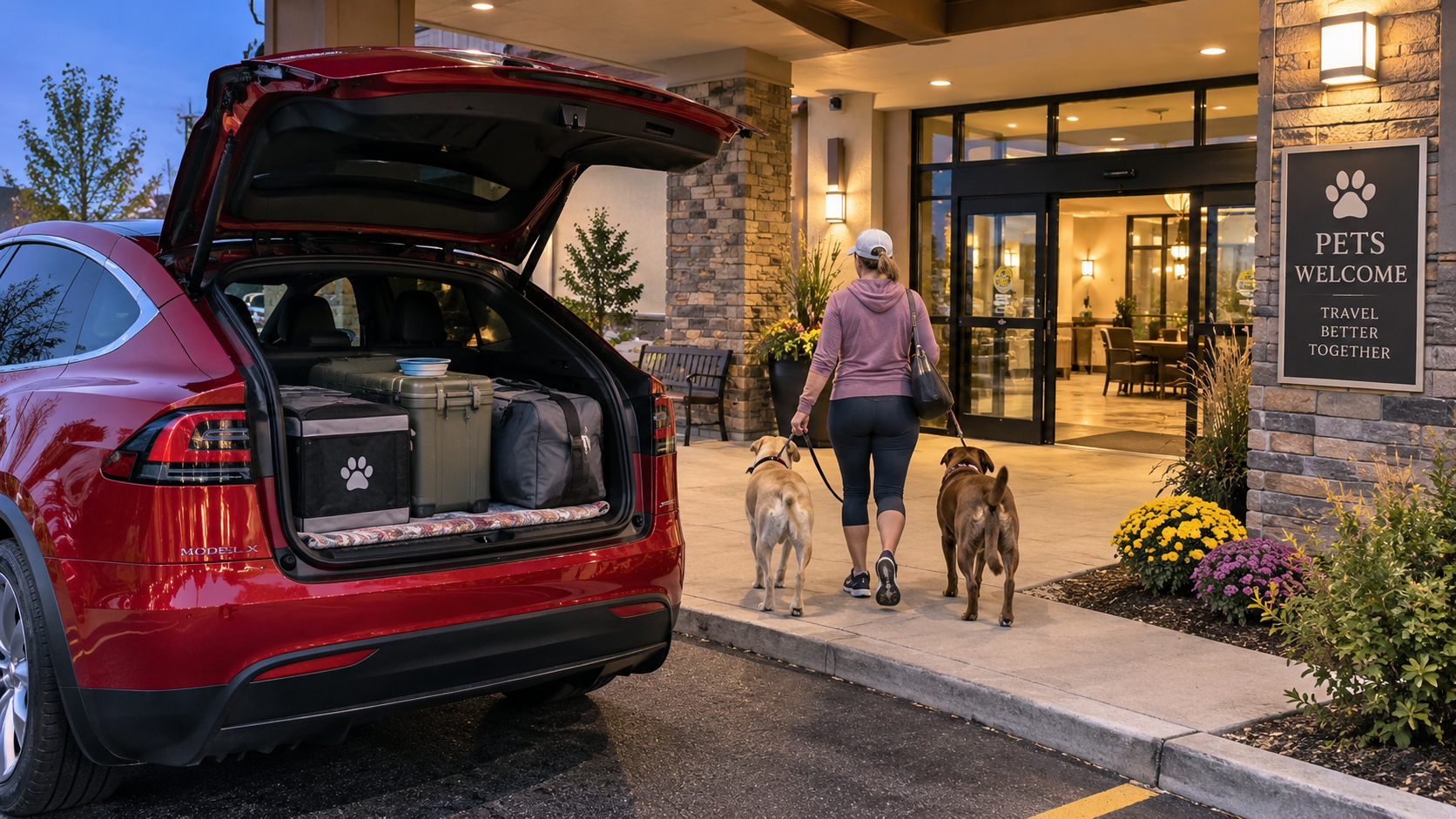
Bringing Them Changes the Destination, Too
Getting Amber to Chincoteague was only half the equation.
Once we arrived, she couldn't come everywhere we wanted to go.
That meant making multiple trips back to the house during the day to check on her and give her a chance to go outside.
There was nothing particularly difficult about it.
But it changed the rhythm of the trip.
Instead of leaving in the morning and wandering around until dinner, our day had an invisible tether attached to the house.
That's something I think gets overlooked when people talk about pet-friendly travel.
Bringing a pet doesn't just change where you sleep. It can change the rhythm of the entire trip.
A restaurant where the dog can't come matters.
An attraction where pets aren't permitted matters.
A six-hour sightseeing day matters.
A rental house 30 minutes away from everything matters.
None of those things automatically mean the pet shouldn't come. They simply belong in the decision before the dog is sitting in the back seat and everyone is committed.
A Few Things Worth Checking Before You Leave
This is where we're not going to give you a 47-item packing checklist.
You know your animal. You know whether you need a leash, food, medication, bowls, poop bags and whatever particular object your dog has decided is absolutely essential to civilization.
There are, however, a few less-obvious things worth checking.
For an interstate trip, the USDA APHIS state-to-state pet travel guidance is a useful starting point. Entry requirements are established by the destination state or territory and can vary, so it's worth checking the rules before you leave rather than assuming every domestic trip works the same way.
The CDC's pet travel guidance also recommends keeping vaccinations current, carrying relevant health and vaccination information, making sure identification information is current, and properly restraining pets while they're traveling in the vehicle.
And there's one piece of advice that shouldn't need much fine print:
Don't leave your pet alone in a parked vehicle.
Beyond that, think about the trip you're actually taking.
Where can the dog get out?
How long will the driving days be?
How will meals work?
What happens while you're sightseeing?
What happens if your dog doesn't handle the hotel as well as you expected?
Those questions will probably affect your trip more than whether you remembered to buy the latest collapsible silicone travel bowl.

And Sometimes the Dogs Aren't the Complicated Part
We've taken Amber and Cooper to the mountain cabin.
We've also taken chickens and ducks.
Yes.
Chickens and ducks.
The cabin already had a proper chicken coop when we bought it, and on one trip we transported six chickens and two ducks up there for the week. They traveled in a large dog crate with water and some protection from the sun.
Not everyone does that.
And if your definition of “pets” extends into the poultry department, there is an additional wrinkle. Chickens and ducks aren't treated as ordinary companion pets for interstate animal-movement purposes, so USDA APHIS and the destination state's animal-entry requirements are worth checking before loading the traveling poultry delegation into the truck.
We're not going to turn this into Federal Regulations for Vacationing Ducks.
The larger lesson is simpler:
Different animals change a trip in different ways.
And that's why there really isn't a universal answer to whether your pets should come.
Plan the Trip Around Them, Too
Sometimes bringing them makes the trip better.
Sometimes boarding is the better answer.
Sometimes one dog comes and the other stays behind.
And apparently, under certain circumstances, two chickens and a duck can score an invitation.
The decision isn't a referendum on how much you love your pets.
It's whether this particular pet belongs on this particular trip.
Because “pet-friendly” isn't something you find by checking a box on a hotel search.
It's something you build into the entire trip.
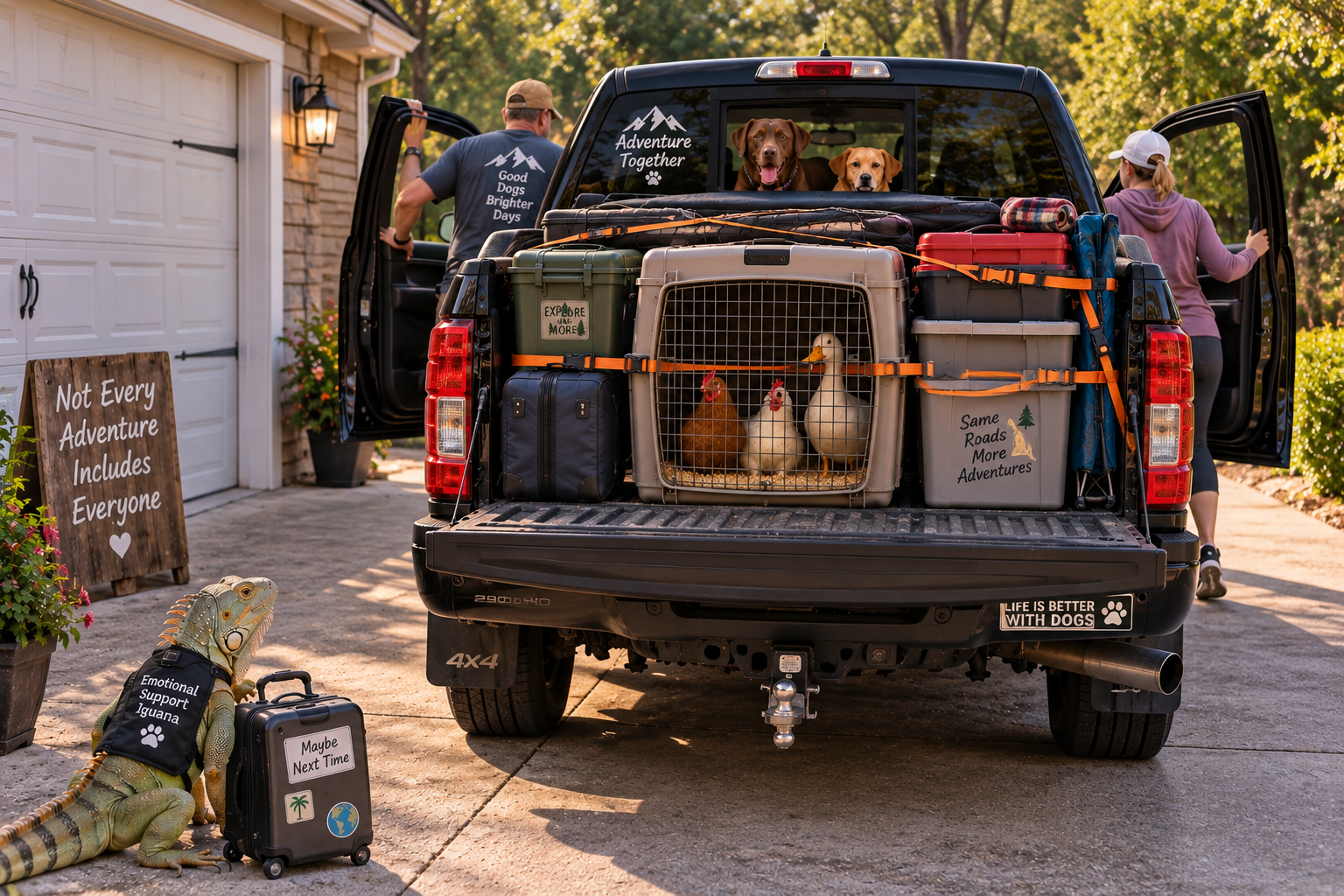
And sometimes...
not everyone makes the cut.