


Vacation Starts in My Living Room
The anatomy of a stress-free travel day
Every few days, some version of the same question appears in a travel group.
Do I really need to be at the airport two hours before a domestic flight?
Three hours for international? Seriously?
I have TSA PreCheck. Can't I just get there 90 minutes before departure?
Maybe.
If traffic cooperates. If the parking shuttle is waiting. If the rental-car return goes smoothly. If the bag-drop line is short. If security isn't backed up. If nothing unusual happens.
You can probably shave some time.
But “have to” and “should” are two entirely different questions.
And somewhere along the way, I realized I was solving the wrong problem.
I wasn't trying to figure out the latest possible moment I could leave home and still make the airplane.
I was trying to figure out how I wanted to spend the day.
Because my vacation doesn't start when the airplane takes off.
It starts in my living room.
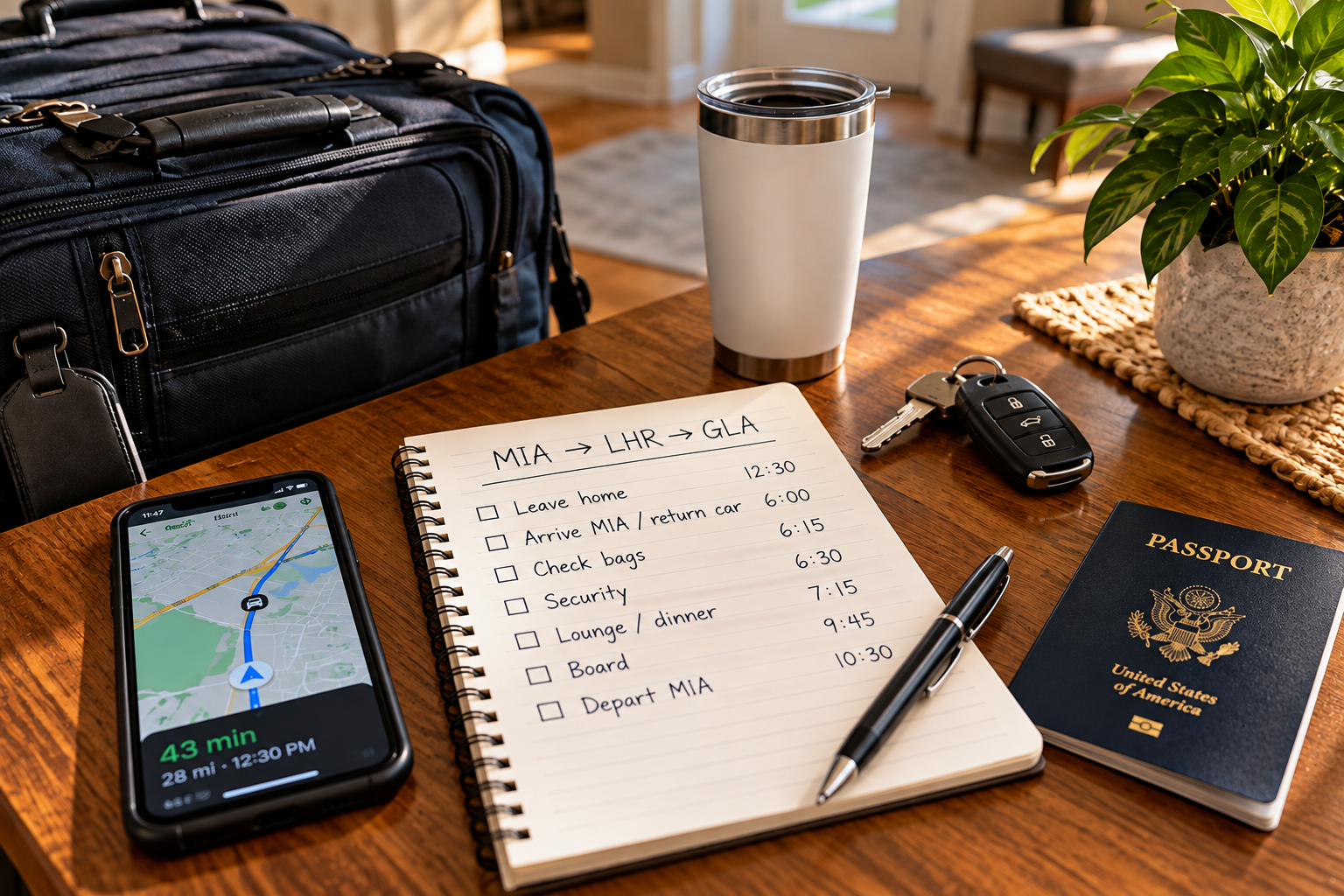
The Perfect Travel Day Exists Only on Paper
Travel planning gets dangerously tidy when we reduce everything to arithmetic.
Thirty minutes to the airport.
Five minutes to park.
Ten minutes through security.
A short walk to the gate.
Perfect.
Except highways have accidents. Parking garages fill. Rental-car returns take longer than expected. Bag-drop lines appear out of nowhere. Security checkpoints get busy.
None of those things has to become a disaster.
The problem comes when we've built a schedule that requires every transition to work perfectly.
That's why I don't think of extra time as simply “getting to the airport early.”
I think of it as a buffer between the things I can control and the things I can't.
And that changes the calculation.
If I arrive at the airport earlier than necessary and spend an extra hour having dinner after security, I haven't necessarily lost an hour.
I've moved that hour from uncertain time into controlled time.
Traffic could have used it.
A slow rental-car return could have used it.
A long security line could have used it.
But if none of those things happen?
I get the hour back as dinner.
That's a pretty good trade.
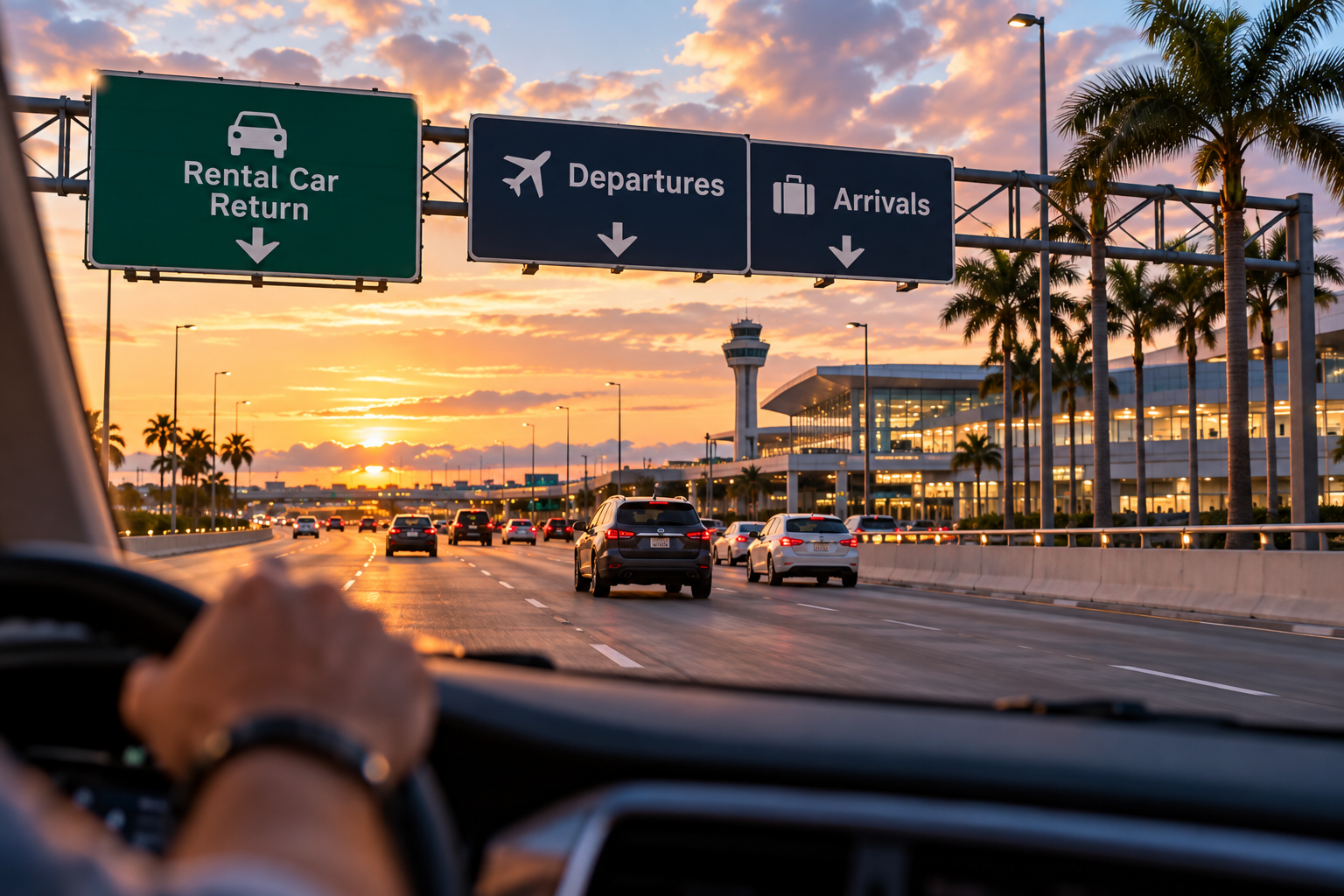
The Latest You Can Leave Isn't Necessarily the Best Time to Leave
Our upcoming Scotland trip is a good example.
Our flight from Miami doesn't leave until late in the evening. On paper, that gives us plenty of opportunities to squeeze more into the day before heading south.
I'm deliberately not doing that.
We'll leave home around midday and make the drive to Miami at an easy pace. There's time for traffic, a stop along the way, and the ordinary little delays that happen on a long drive.
We're also using a one-way rental car rather than leaving our own vehicle parked at the airport for the entire trip.
When we reach Miami, we'll return the car and head into the terminal.
Could we leave later?
Absolutely.
But what exactly would we gain?
A couple more hours sitting at home?
And what would we be putting at risk to get them?
That's where the internet question of “How late can I arrive?” starts to feel backwards to me.
I'm not trying to prove I can make the flight with the smallest possible margin.
I'm trying to make the flight without turning the preceding five hours into a countdown clock.
Your Buffer Doesn't Have to Feel Like Waiting
This is where the idea of “wasted airport time” gets interesting.
If everything goes smoothly on the drive to Miami, we'll be at the airport with plenty of time before departure.
Fine by me.
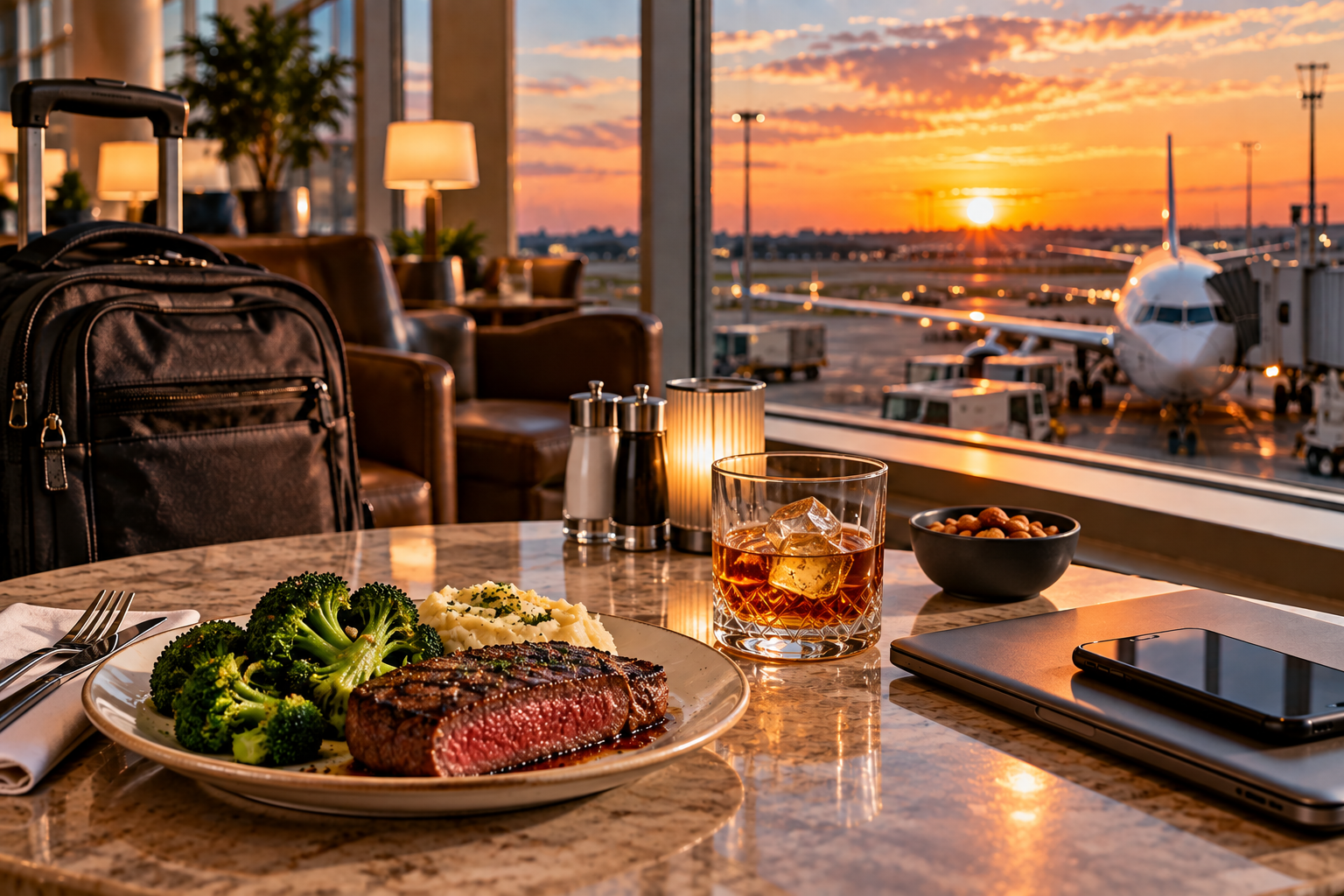
We're flying business class, so we'll have lounge access. We'll check the bags, clear security and have dinner.
For me, that might look suspiciously like a medium-rare steak, some broccoli and a bourbon. 🥃
The important part isn't the lounge.
Someone without lounge access could do essentially the same thing by having a relaxed dinner at an airport restaurant. Or sitting down with a coffee and a book. Or simply finding a quiet gate and watching something on a tablet.
The principle is the same.
The buffer doesn't have to feel like waiting.
In our particular case, the economics are even easier because the lounge, food and drinks are already included with our ticket. If that weren't the case, I'd probably eat before returning the rental car rather than pay airport prices just for the privilege of being early.
That's an important distinction.
I'm not suggesting people spend money to manufacture relaxation.
I'm suggesting that when you have extra time, use it intentionally.
The plane is still leaving at the same time.
I'd rather spend the preceding hour eating dinner than spend it watching the navigation screen recalculate our airport arrival time while traffic turns red.

The Fastest Connection Isn't Automatically the Best Connection
The same philosophy follows us across the Atlantic.
We'll arrive at London Heathrow around 12:30 in the afternoon after flying overnight from Miami.
Breakfast will already have happened on the airplane.
Next order of business?
A shower.
Then lunch.
We'll be continuing in business class from Heathrow to Glasgow, so we'll follow British Airways' Flight Connections process and use the British Airways departure lounge during the connection.
There is an earlier flight to Glasgow that we may technically be able to catch.
I'm not particularly interested in chasing it.
Getting to Glasgow earlier doesn't accomplish much for us. By then, the rental-car office will be closed anyway. We're spending the night at the airport and picking up the car the following morning.
So why turn Heathrow into a race?
If our scheduled connection gives us time to shower, change clothes, have lunch, walk around and let our bodies catch up with the fact that we've crossed an ocean, that's useful time.
It isn't dead time simply because we aren't moving.
And this is where travel planning can become a little obsessed with duration.
We compare itineraries and celebrate the one that's 90 minutes shorter.
But shorter and better aren't synonyms.
A tight connection can be exactly what you want on one trip.
On another, the longer connection may be the better use of your time.
Time Is the One Thing I Can't Replace
I can earn more money.
I can earn more points.
If I overspend on dinner tonight, I can spend less tomorrow.
Time doesn't work that way.
Every minute I spend is gone.
I can't stay late at work tomorrow and earn another 45 minutes of life because I used too many today.
That's exactly why I don't want to waste time.
But I've also stopped defining “wasted time” as time when I'm not moving toward the destination as quickly as possible.
An hour spent panicking in traffic isn't valuable simply because I left home later.
An hour spent eating dinner with my wife isn't worthless simply because we're already inside an airport.
Three hours at Heathrow aren't automatically wasted because there was technically an earlier flight.
The question isn't just:
How long does this itinerary take?
It's:
How do I want to experience those hours?
That is a very different calculation.
Sometimes the Best Plan Is to Stop
Eventually we'll land in Glasgow.
And then we're going to do something spectacularly unambitious.
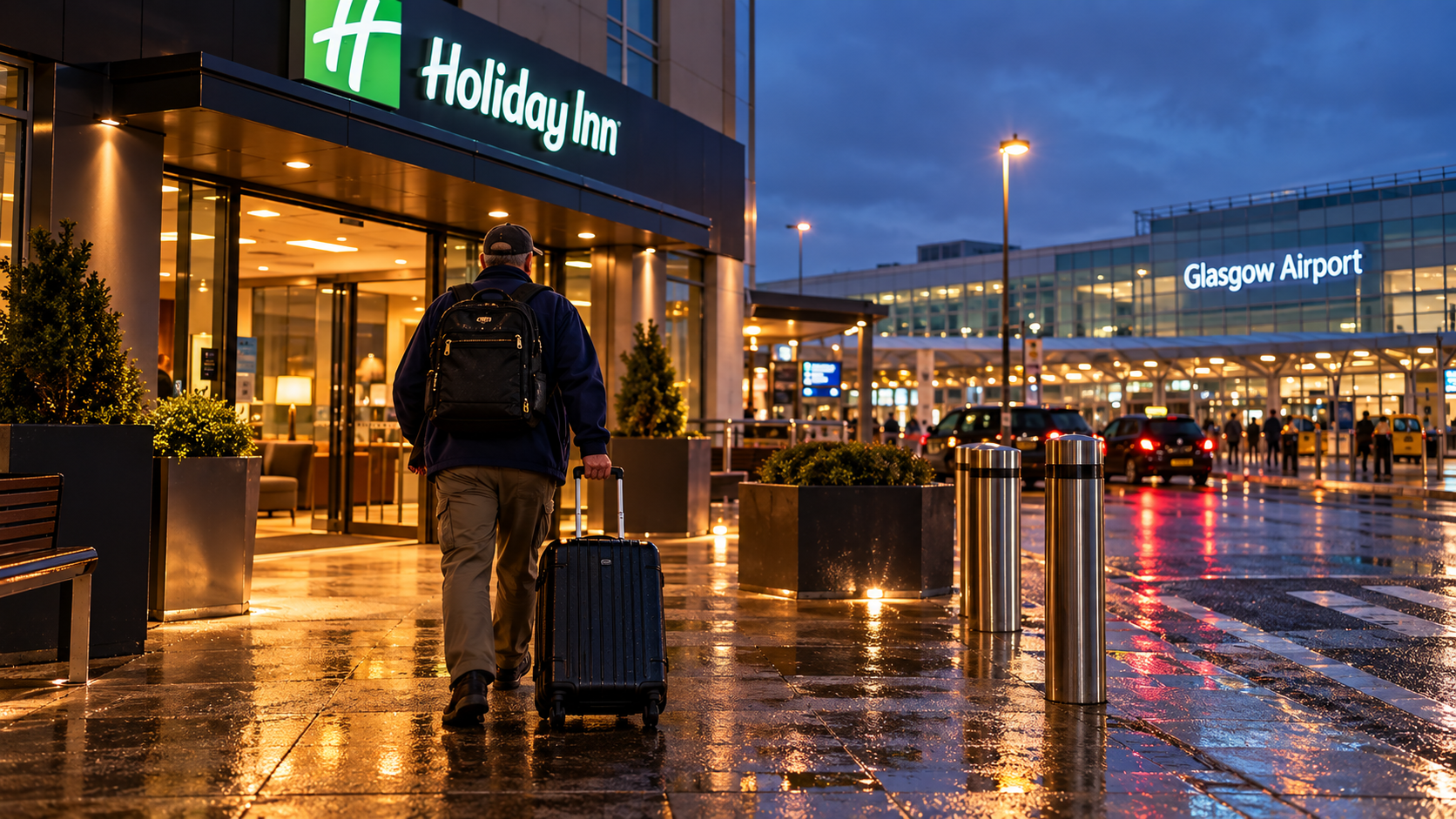
We're going to the hotel.
No rental car.
No first scenic drive.
No squeezing in a pub because Scotland has finally begun.
We'll walk over to our airport hotel, get some sleep, have breakfast the next morning and pick up the rental car with clear heads.
Could we construct an itinerary that extracts a little more sightseeing from that first evening?
Probably.
But we'd be spending energy to buy hours we don't particularly need.
We'll have more than two weeks ahead of us.
Loch Lomond isn't going anywhere overnight.
Neither is Glencoe.
The Highlands will survive until morning.
And after a long international travel day, eight hours of sleep might be a considerably better upgrade than eight more items on an itinerary.
Build a Travel Day That Can Absorb Real Life
None of this means everyone should arrive at an airport absurdly early.
And it certainly doesn't mean my preferred buffer should be yours.
The right amount of time depends on the airport, airline, trip, whether you're checking bags, transportation to the airport and your own tolerance for uncertainty. Airlines and airports can also have specific check-in, bag-drop and boarding cutoffs that matter far more than somebody else's favorite rule of thumb.
The point is simpler.
Don't build a travel day that requires everything to go right.
Give the important transitions enough room to absorb ordinary life.
Then make the buffer useful.
Have breakfast.
Eat dinner.
Read.
Have a bourbon.
Take the shower.
Choose the connection that makes sense for what happens after you land, not simply the one that puts the smallest number on the itinerary.
And occasionally, go to bed.
Because the objective isn't to wring every possible minute of activity from a vacation.
It's to spend those minutes well.
Vacation Starts Before the Airport
When we leave for Scotland, the vacation won't begin somewhere over the Atlantic.
It won't begin at Heathrow.
And it won't begin when I turn the key in a rental car in Glasgow the next morning.
It will start much earlier.
The bags will be packed. The house will be ready. We'll close the door behind us with enough time that the first traffic jam doesn't matter.
There will be no stopwatch running in my head.
No heroic airport sprint.
No prize for arriving at the gate at the last possible second.
Just the beginning of a trip we've been looking forward to for a very long time.
My vacation starts in my living room.
And I intend to enjoy the travel day, too.