

Three Economy Seats or Two Premium Economy Seats?
Could buying an extra Economy seat save two travelers thousands of dollars? We compared actual American Airlines fares, seating arrangements, and cabin benefits to explore a different way to fly comfortably.
What If You Bought the Middle Seat?
Most travelers booking a flight for two automatically search for two tickets. They compare Economy, Premium Economy, and perhaps Business Class, weighing the cost against the comfort each cabin offers.
But what if there were another option?
What if two people purchased three Economy seats, deliberately leaving the middle seat empty?
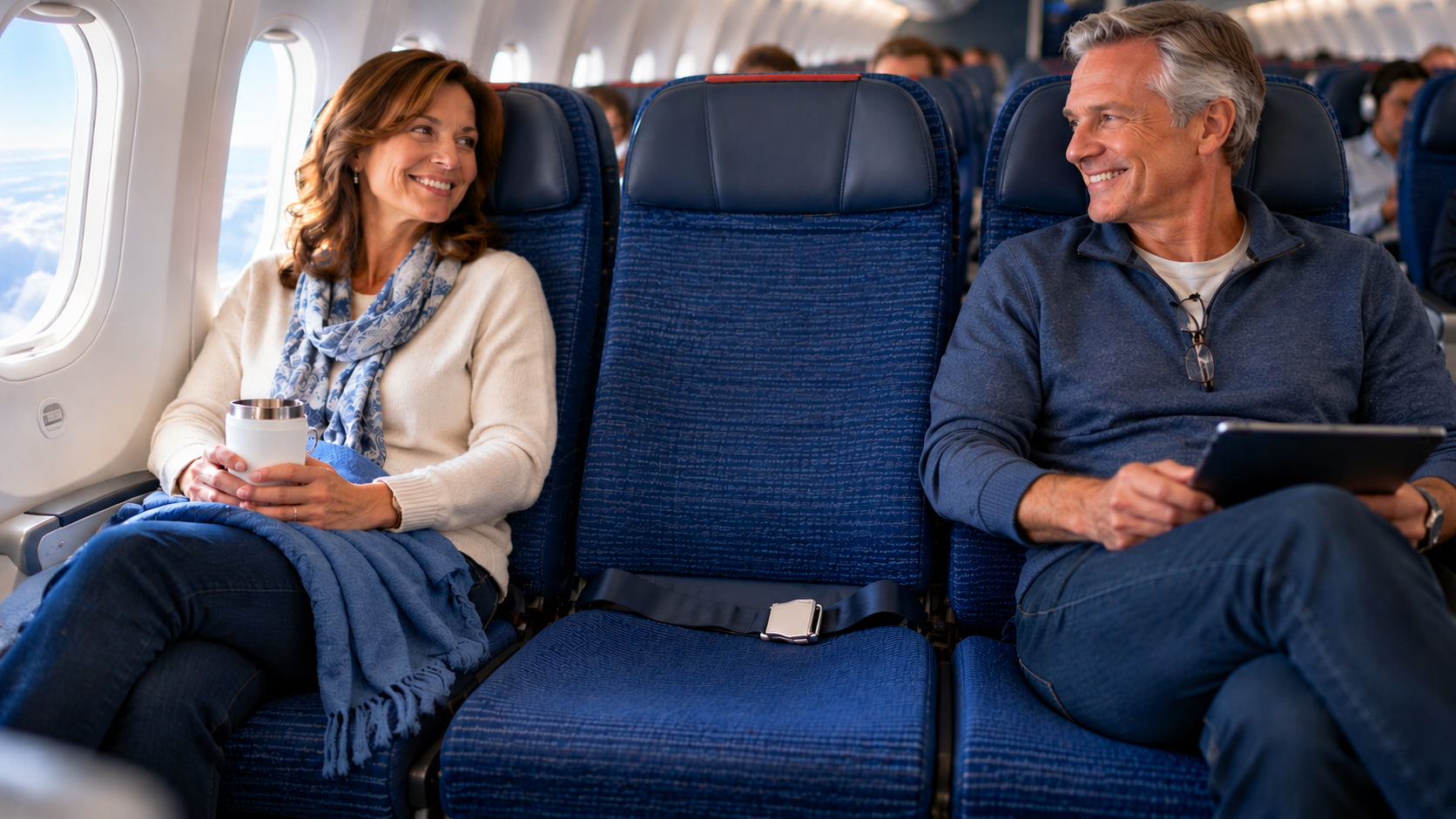
You wouldn't gain additional legroom, a wider individual seat, or Premium Economy service. But you could gain something many travelers value enormously: more room to spread out, without a stranger sitting between you.
And depending on the route and airfare, you might save a substantial amount of money compared with purchasing two Premium Economy tickets.
It's an interesting proposition, but one that deserves a closer look. Because buying three Economy seats isn't necessarily better than buying two Premium Economy seats.
It's simply another choice worth investigating.
Can You Actually Buy an Extra Economy Seat?
That was our first question, and rather than speculate, we asked American Airlines.
We already had a Thanksgiving trip booked from Jacksonville, Florida, to Missoula, Montana, connecting through Dallas/Fort Worth. Our itinerary included Main Cabin Extra seats on the Jacksonville–Dallas portions, where we had selected the aisle and window seats in the same row.
That left the middle seat between us available for another passenger.
We contacted American Airlines and asked whether we could purchase that middle seat specifically for additional personal comfort.
The answer was yes.
Even more interesting, the agent offered to sell us the extra seat only on the two Jacksonville–Dallas segments. We wouldn't need to purchase an additional seat on the entire itinerary.
That mattered because our Dallas–Missoula flights used an Embraer E175 with a two-and-one seating arrangement. We already had a suitable seating option on those segments.
The agent quoted $314.80 for the extra seat on the two Jacksonville–Dallas flights, plus $83 to select the corresponding Main Cabin Extra seats.
Total additional cost: $397.80 round trip.
We then independently searched the same Jacksonville–Dallas round-trip flights and found that a regular Main Cabin ticket was selling for exactly $314.80, including taxes.
In this particular example, the extra-seat base fare matched the publicly available Main Cabin fare.
That doesn't establish a universal pricing rule. Extra-seat prices, booking procedures, seat assignments, and availability can vary. But it gave us something much more useful than a hypothetical possibility: a real airline quote for a real itinerary.
The important distinction is that an extra seat for personal comfort must be arranged correctly with the airline. Simply purchasing a ticket under another person's name, or hoping an unoccupied middle seat remains empty, isn't the same thing.
Before paying, confirm the airline's extra-seat booking procedure, how the seat will be assigned, what happens during aircraft changes or flight disruptions, and whether it can be purchased for only the segments where you want it.
You can start with American Airlines' official website and contact reservations for the rules and pricing applicable to your itinerary.
What Do the Numbers Actually Look Like?
Our Jacksonville–Dallas quote established that American Airlines could accommodate the request. Next, we wanted to see whether the idea might make financial sense on longer flights.
We examined American Airlines fares on several routes, including Miami–Madrid and Dallas/Fort Worth–Honolulu.
The results were interesting.
Miami to Madrid: A Potential Savings of More Than $3,800
For a May 11–21, 2027, round trip between Miami and Madrid, we found American Airlines nonstop flights operated by Boeing 777-200 aircraft.
The fares displayed during our research were:
Two Main Cabin tickets - $2,142.18
Three Main Cabin tickets - $3,213.27
Two Premium Economy tickets - $7,054.18
Potential savings with three Main Cabin seats - $3,840.91
That's a substantial difference.
Imagine what two travelers could do with nearly $3,800 remaining in their vacation budget. Additional nights in Spain, memorable meals, excursions, or even another trip entirely.
But there's an important qualification.
The three-seat figure is an estimate based on three regular Main Cabin fares, not an actual American Airlines international extra-seat quote.
The airline would need to confirm the extra-seat price and availability. Any applicable seat-selection charges would also affect the final comparison.
Still, the fare difference was large enough to make asking the question worthwhile.
Dallas/Fort Worth to Honolulu: A Smaller but Meaningful Difference
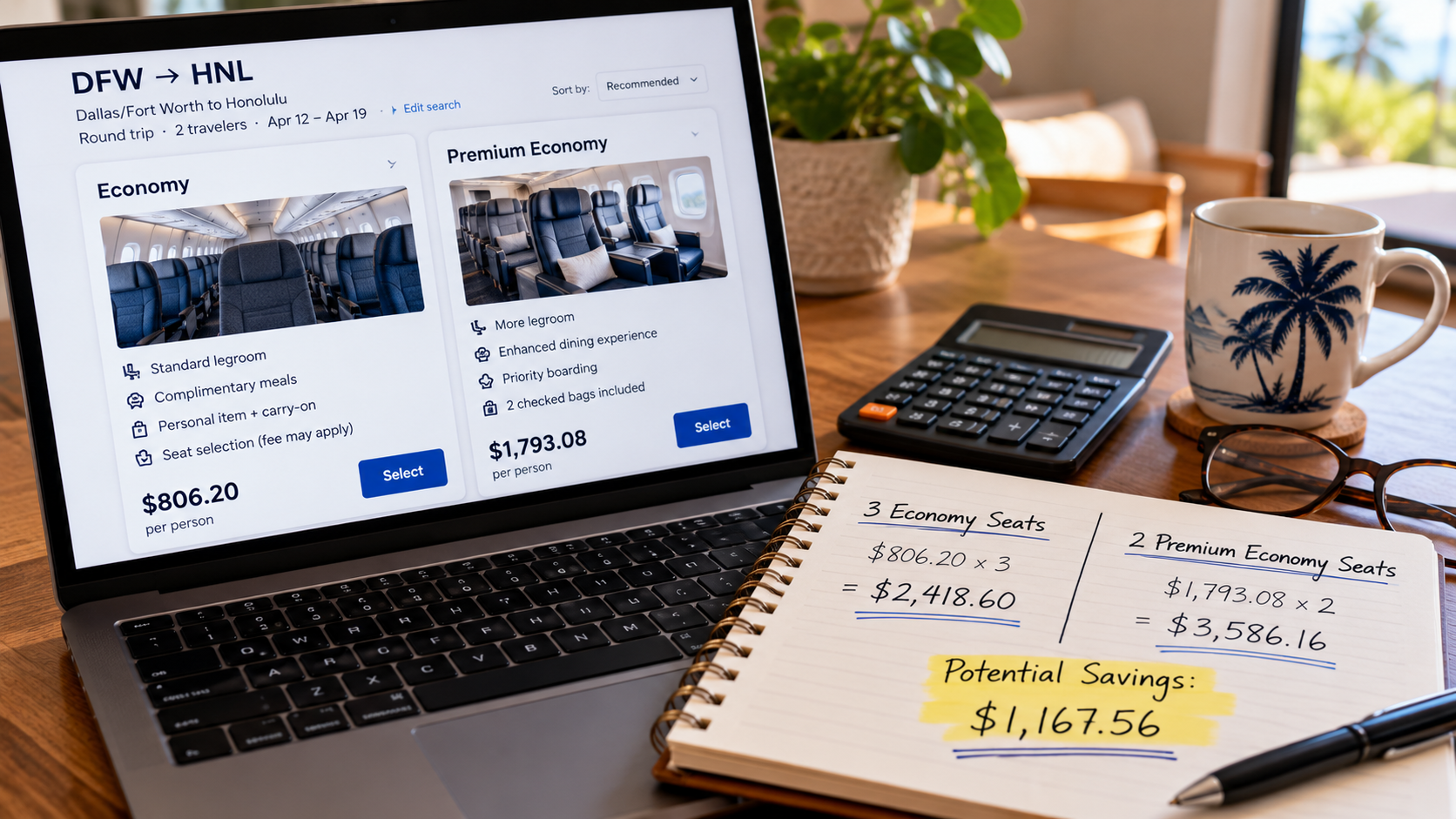
We also examined nonstop American Airlines flights between Dallas/Fort Worth and Honolulu, February 8–18, 2027, aboard Boeing 787 aircraft.
This time, the detailed booking screens provided the following round-trip prices per person:
Main Cabin: $806.20
Premium Economy: $1,793.08
For two travelers, that creates another interesting comparison.
Two Main Cabin tickets - $1,612.40
Three Main Cabin tickets - $2,418.60
Two Premium Economy tickets - $3,586.16
Potential savings with three Main Cabin seats - $1,167.56
Again, the third Economy seat is estimated at the regular ticket price. We did not obtain a confirmed extra-seat quote for this Honolulu itinerary.
These are snapshots of fares available during our research, not prices travelers should expect to find consistently.
Airfares change, aircraft assignments change, and the airline must confirm whether the extra-seat arrangement is available.
But the underlying lesson remains: before automatically paying for Premium Economy, it may be worth pricing an extra Economy seat.
More Shared Width Doesn't Mean More Legroom
Here's where the comparison becomes more interesting.
Three Economy seats and two Premium Economy seats offer very different kinds of comfort.
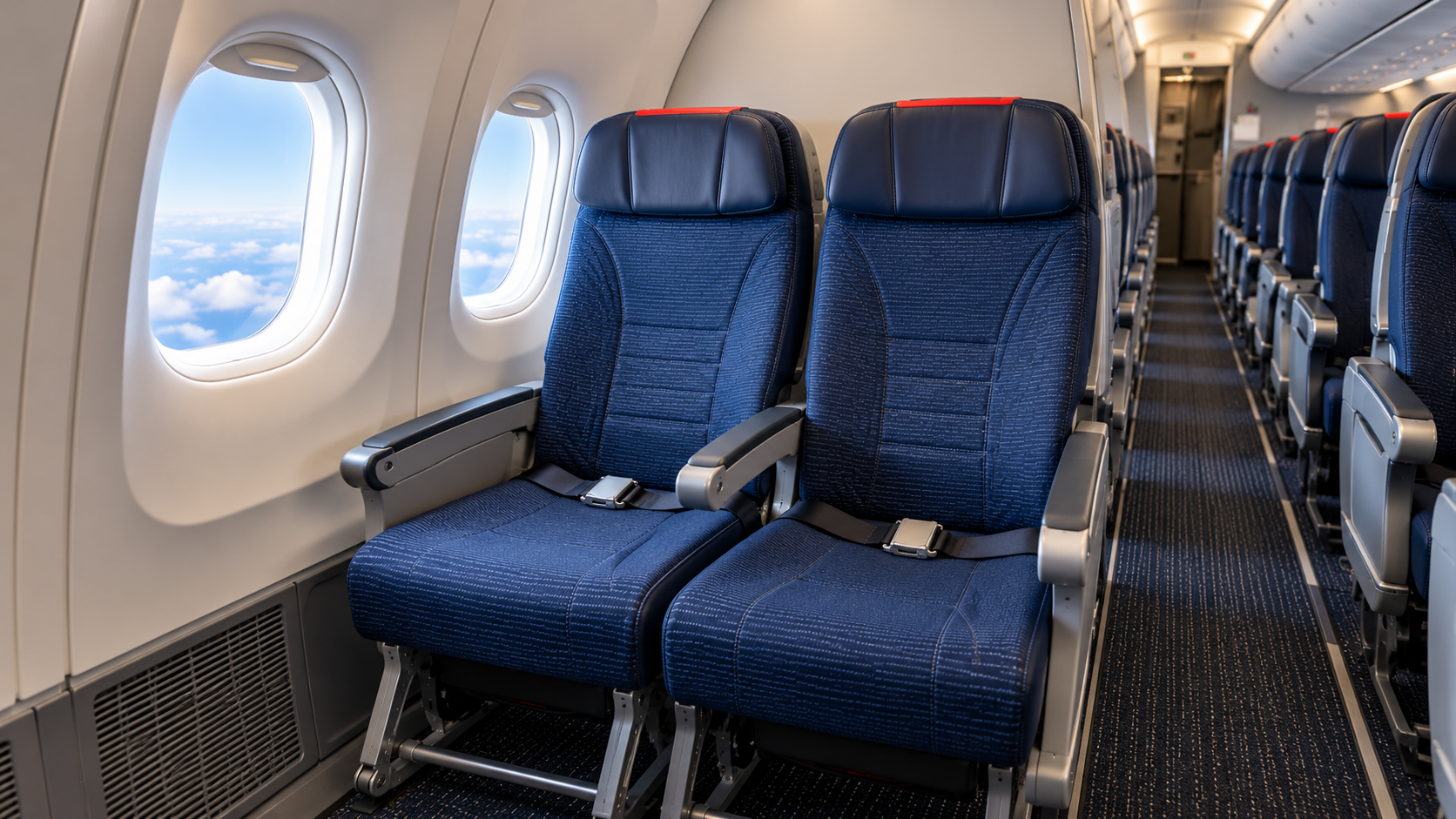
With three Economy seats, two travelers can potentially enjoy the combined space of an entire row. When the interior armrests can be folded away, the empty middle seat creates more room for shoulders, elbows, and personal belongings.
But the individual seats remain standard Economy seats.
Your knees are still the same distance from the seat ahead. The cushions, recline, and general seating design haven't magically become Premium Economy.
Premium Economy takes a different approach.
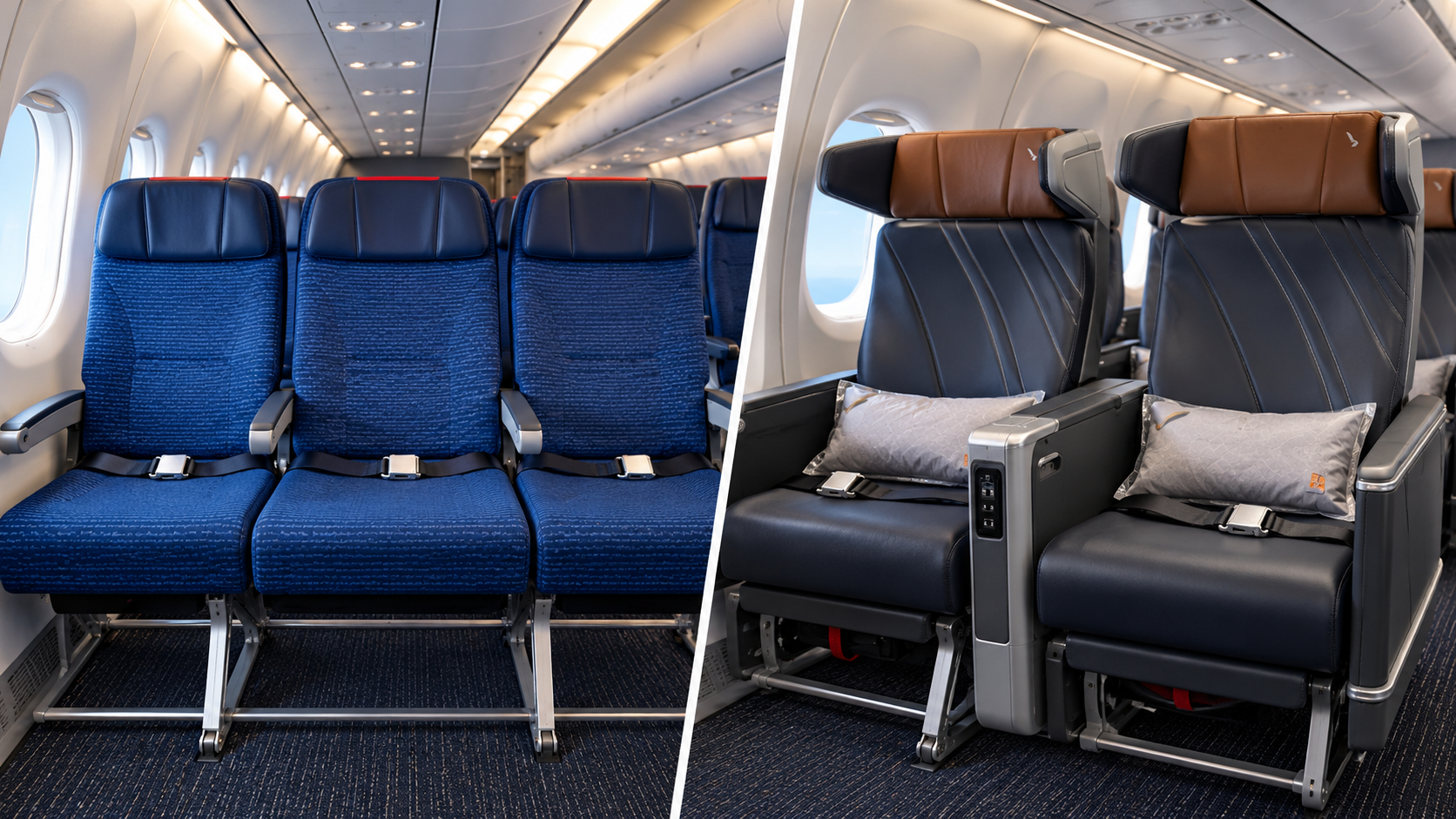
Instead of giving two travelers an additional seat between them, it provides each passenger with a larger, more comfortable individual seat, typically with additional legroom, greater recline, and enhanced support.
On representative American Airlines Boeing 787 configurations, standard Main Cabin seating is approximately 17 inches wide with 31 inches of pitch, while Premium Economy is approximately 19 inches wide with 38 inches of pitch.
That means three Economy seats could provide roughly 51 inches of combined nominal seat width, compared with approximately 38 inches across two Premium Economy seats.
Those figures are illustrative, not measurements of one uninterrupted seating surface. Armrests, seat frames, cabin configurations, and aircraft variations affect usable space.
And remember, seat pitch is not the same thing as actual knee clearance. It's the distance between corresponding points on successive rows.
The Comfort Trade-Off
Think about what actually bothers you on a long flight.
If your biggest complaint is having a stranger pressed against your shoulder, an empty middle seat could make an enormous difference.
If your biggest complaint is limited knee room, a third Economy seat won't solve that problem.
And if you struggle to sleep sitting upright, Premium Economy's greater recline and additional leg support may be worth considerably more than the extra sideways space.
American Airlines Premium Economy seats on applicable widebody aircraft generally offer adjustable headrests and foot or leg supports, along with wider cushions and more substantial armrests.
The exact design varies by aircraft and configuration.
There's another practical consideration: those substantial Premium Economy armrests generally remain between passengers. They're part of the seat design and often house controls or tray tables.
By comparison, some standard Economy seats have movable interior armrests that can open up the space between adjacent seats. Others, particularly certain bulkhead or specialty rows, have fixed armrests.
If creating an open three-seat space is your goal, confirm the actual armrest configuration before buying the extra seat.
And don't assume that three Economy seats automatically make a comfortable place to sleep. Seatbelts, seat contours, limited recline, and the space available to stretch out still matter.
Neither arrangement becomes a lie-flat bed.
Premium Economy Is About More Than the Seat
So far, we've mostly compared space and money.
But Premium Economy passengers aren't simply buying wider seats and additional legroom. They're purchasing a different onboard experience.
And those benefits deserve consideration before deciding that three Economy seats are the better deal.
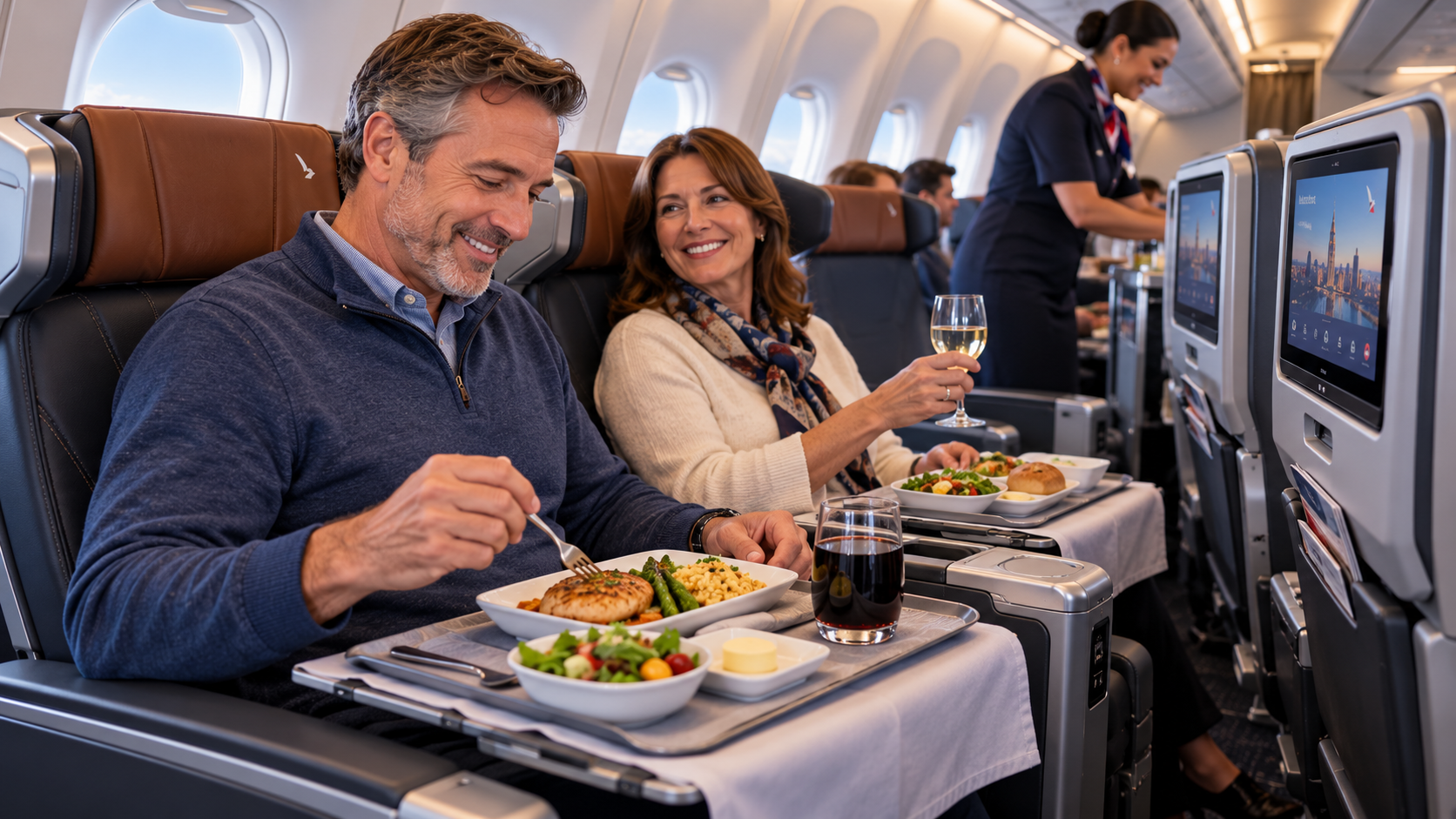
On eligible American Airlines flights, Premium Economy can include priority check-in and boarding, enhanced dining and beverage service, upgraded pillows and blankets, amenity kits, and additional checked-baggage allowances.
The exact package depends on the route and service offered.
Boarding Earlier
American Airlines generally boards Premium Economy passengers in Group 4.
That can mean earlier access to overhead bins and more time to settle in before departure.
Main Cabin passengers typically board later unless their loyalty status, credit card, or another eligibility benefit gives them an earlier group.
Buying an extra Economy seat doesn't automatically upgrade your boarding priority.
Getting Off the Airplane
Here's a benefit that doesn't always receive enough attention.
On American Airlines widebody aircraft, Premium Economy is generally located ahead of Main Cabin.
Assuming passengers leave through a forward door, that means Premium Economy passengers will usually deplane earlier.
You can have the highest frequent-flyer status in the world, but if you're sitting in seat 57B, you're probably waiting for a lot of people to get off before you.
That difference may matter when making a tight connection or simply wanting to begin your vacation sooner.
Of course, the actual deplaning order depends on the aircraft, doors used, and airport operations.
Food, Drinks, and Service
Premium Economy may also offer an enhanced meal presentation, complimentary alcoholic beverages, and additional comfort amenities.
But this is where route differences become especially important.
A transatlantic flight to Madrid and a domestic flight to Honolulu may not offer identical meal services or amenities, even when both use widebody aircraft with Premium Economy cabins.
Likewise, Main Cabin food and beverage offerings vary with flight length, destination, and operating conditions.
For that reason, we wouldn't put a fixed dollar value on Premium Economy dining or assume every flight includes the same extras.
Before booking, check the specific service offered on your route through American Airlines.
Checked Bags and Other Benefits
Premium Economy can include additional checked baggage, which may be valuable for travelers checking multiple suitcases.
But that benefit isn't worth the same amount to everyone.
Someone traveling with only carry-on luggage may place little value on checked-bag allowances. A traveler with eligible airline credit card benefits may already receive a checked bag without purchasing Premium Economy.
And buying an extra seat for personal comfort should not be assumed to provide another passenger's baggage allowance, meals, or loyalty benefits.
This is why comparing only ticket prices doesn't tell the whole story.
There's Another Option: Find a Row With Only Two Economy Seats
Here's something we discovered while studying American Airlines seat maps.
On certain widebody aircraft, the seating arrangement changes near the rear of the Economy cabin. Instead of three seats along the window, some rows have only two.
For a couple traveling together, that can be an attractive alternative.
You still have standard Economy seating, including the usual pitch, recline, and service. But there's no middle seat between you, and no third passenger sharing your immediate row.
And unlike purchasing an additional seat, you may be able to select those two seats without paying for a third ticket.
During our Miami–Madrid research, the American Airlines Boeing 777-200 seat map showed two-seat window pairs in several rear Economy rows. Some were available without an additional seat-selection charge under the fare we examined.
That's potentially a very good deal.
But there's a trade-off.
These seats are often toward the back of the aircraft, sometimes near lavatories or galley areas. Depending on the specific row, there may be additional noise, foot traffic, or differences in seat geometry and recline.
And while you're avoiding a third person immediately beside you, you're not gaining the extra shared width of three Economy seats.
You're also likely to be among the later passengers to deplane.
Still, if your main goal is simply to sit together without a stranger between you, checking the seat map could save you the cost of an additional ticket.
Not every aircraft offers this arrangement, and even aircraft of the same model can have different cabin layouts.
Before You Buy That Third Seat, Ask These Questions
An extra Economy seat can be a useful option, but it isn't something we'd recommend booking casually.
First, contact the airline directly. Explain that two passengers want to purchase an additional adjacent seat for personal comfort, and ask about the procedure for your specific flights.
American Airlines publishes extra-seat booking procedures, including provisions for purchasing additional space for privacy and comfort. These procedures also explain applicable fares, seat-selection charges, and baggage limitations.
Then consider the practical details.
Is the extra seat available on the flights that matter most? A long overnight segment may be worth paying for, while a short connecting flight may not be. Ask whether your itinerary can be priced accordingly. American's published procedures generally require an extra seat for the entire reservation, even though an agent offered us a segment-specific quote during our research. Get the exact arrangement confirmed before purchasing.
Can the three seats be assigned together? Don't assume that paying for another ticket automatically places all three seats in the same row.
Do the interior armrests move? If your goal is additional shared space, this could make a meaningful difference.
What happens if the aircraft changes? Airlines sometimes substitute equipment or change seat assignments for operational reasons. Ask how the extra-seat reservation will be handled if your original seating arrangement becomes unavailable.
Are there additional seat-selection charges? Our Jacksonville–Dallas quote included $83 in Main Cabin Extra seat-selection charges beyond the extra-seat fare.
What benefits do you already have? Airline status, credit cards, and existing baggage allowances can change the value of Premium Economy's additional benefits.
Finally, compare the complete cost of each option, not just the initial airfare.
The goal isn't to make the three-seat strategy work at any cost. It's to discover whether it genuinely improves your travel experience for the money you're spending.
So Which Would We Choose?
That depends on the flight.
On a long daytime flight, three Economy seats might be very appealing if the price difference were substantial and the armrests could be moved out of the way.
On an overnight transatlantic flight, we'd place more value on Premium Economy's additional recline, legroom, and individual seat comfort.
If a suitable two-seat Economy row were available, we'd seriously consider that before paying for either upgrade.
And if Premium Economy were only modestly more expensive than three Economy seats, the additional comfort, service, baggage benefits, and earlier deplaning might easily justify the difference.
There isn't one answer that works for every traveler, every aircraft, or every trip.
A traveler who struggles with limited legroom may find three Economy seats entirely unappealing. Someone who values personal space more than recline might love the arrangement.
A couple planning an expensive international vacation might happily spend several thousand dollars more for Premium Economy. Another couple might prefer to use that money for additional nights at their destination.
Both can be making perfectly sensible decisions.
The Best Upgrade Is the One That Works for You
Travel advice often tries to identify a winner.
The best airline. The best seat. The best cabin. The best way to spend your money.
But your affordable might be someone else's extravagance. Your dream vacation might be another traveler's nightmare.
That's what makes travel personal.
We're not suggesting everyone should start purchasing extra Economy seats. We're suggesting that travelers should know the option exists, understand its limitations, and consider it when the circumstances make sense.
Sometimes three Economy seats might be the better value.
Sometimes two Premium Economy seats will be worth every additional dollar.
And sometimes two ordinary Economy seats in the right row are all you need.
The best seat on the airplane isn't necessarily the most expensive, the widest, or the one with the most legroom. It's the one that makes sense for you, your priorities, and your budget.
That's what traveling smarter is all about.