

Travel Power Adapters: What You Actually Need for International Travel
One outlet, two CPAPs, several chargers, and a much simpler way to keep everything powered overseas.
Affiliate Disclosure: This article contains affiliate links. If you make a qualifying purchase through these links, Curated Upgrades may earn a commission at no additional cost to you. As an Amazon Associate I earn from qualifying purchases.
International power adapters are one of those travel purchases that seem simple until you start shopping.
Type A. Type C. Type G. Universal adapters. USB-A. USB-C. Surge protectors. Voltage converters. Little plastic blocks promising to work in half the countries on Earth.
It gets complicated quickly.
But after years of international travel, my actual need has become pretty simple:
I need to turn one conveniently located hotel outlet into enough usable connections to power everything we need.
For us, that includes something particularly important. My wife and I both travel with CPAP machines. At night, I need two AC outlets for those, plus a way to charge our phones and whatever other electronics need attention.
For years, I solved that problem with a travel adapter and a regular power strip.
And while putting together this article, I discovered it was time for a Curated Upgrade.
First, Understand What a Travel Adapter Actually Does
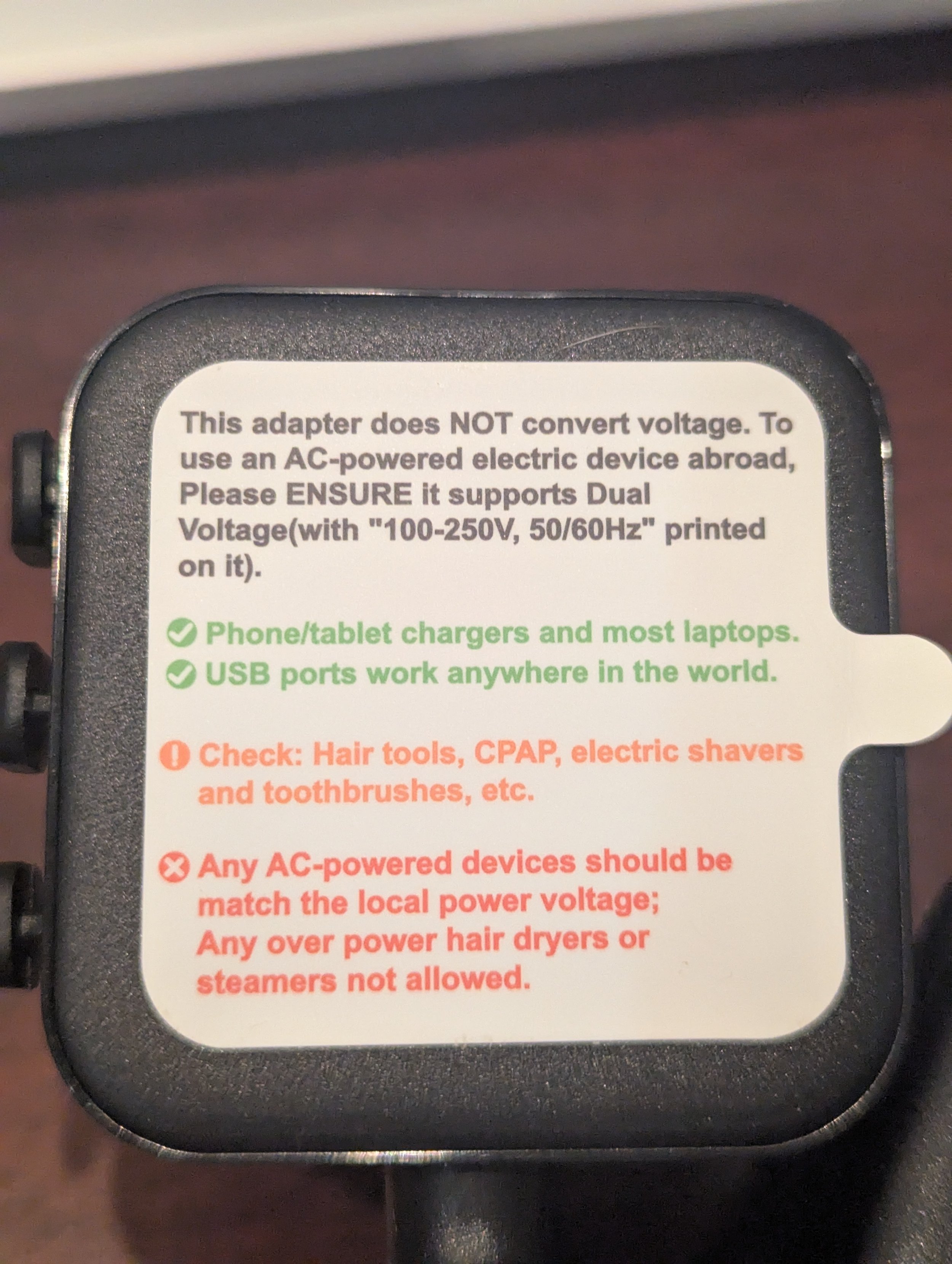
This is probably the most important thing to understand before plugging anything into a wall overseas:
A travel adapter and a voltage converter are not the same thing.
A plug adapter changes the physical connection so your plug fits the outlet in another country.
That's it.
If you're traveling from the United States to the UK, for example, an adapter allows your American plug to connect to a British Type G outlet.
It does not turn British electricity into American electricity.
That's important because the United States generally uses roughly 120-volt power, while many international destinations use roughly 220–240 volts.
Before plugging an AC-powered device into an international outlet, look at its power supply.
You're looking for something along the lines of:
INPUT: 100–240V, 50/60Hz
Many modern phone chargers, laptop chargers and other electronics are designed to handle international voltage automatically.
But don't assume.
Hair dryers, curling irons, electric shavers, toothbrush chargers and other appliances can be a different story. Check the label first.
And if you're traveling with a CPAP, check the specifications on your particular CPAP power supply as well.
Why I Started Traveling With a Power Strip
Hotel rooms have gotten much better about providing outlets, but anyone who has stayed in an older hotel, B&B or historic property knows the game.
There's an outlet behind the dresser.
Another one underneath the desk.
And the outlet beside the bed is occupied by a lamp that may have been installed when international calling required an operator.
That's inconvenient when you're charging a phone.
It's considerably more important when you have medical equipment that needs power beside the bed.
That's why a power strip isn't something I pack only for international travel. I still bring one when we're traveling domestically and staying somewhere that may be older or short on conveniently located outlets. The same goes for international destinations that use the same plug configuration as the U.S. If the outlets already fit my plugs and the voltage is compatible, I don't need a separate travel adapter. The power strip itself is still useful.
When we travel somewhere with a different plug standard, my solution has traditionally been just as simple.
I would bring the appropriate destination-specific adapter, plug my regular U.S. power strip into it, and use that single hotel outlet for both CPAPs and our chargers.
One wall outlet. One adapter. One power strip. Multiple devices.
It also meant I didn't need an individual travel adapter for everything we plugged in.
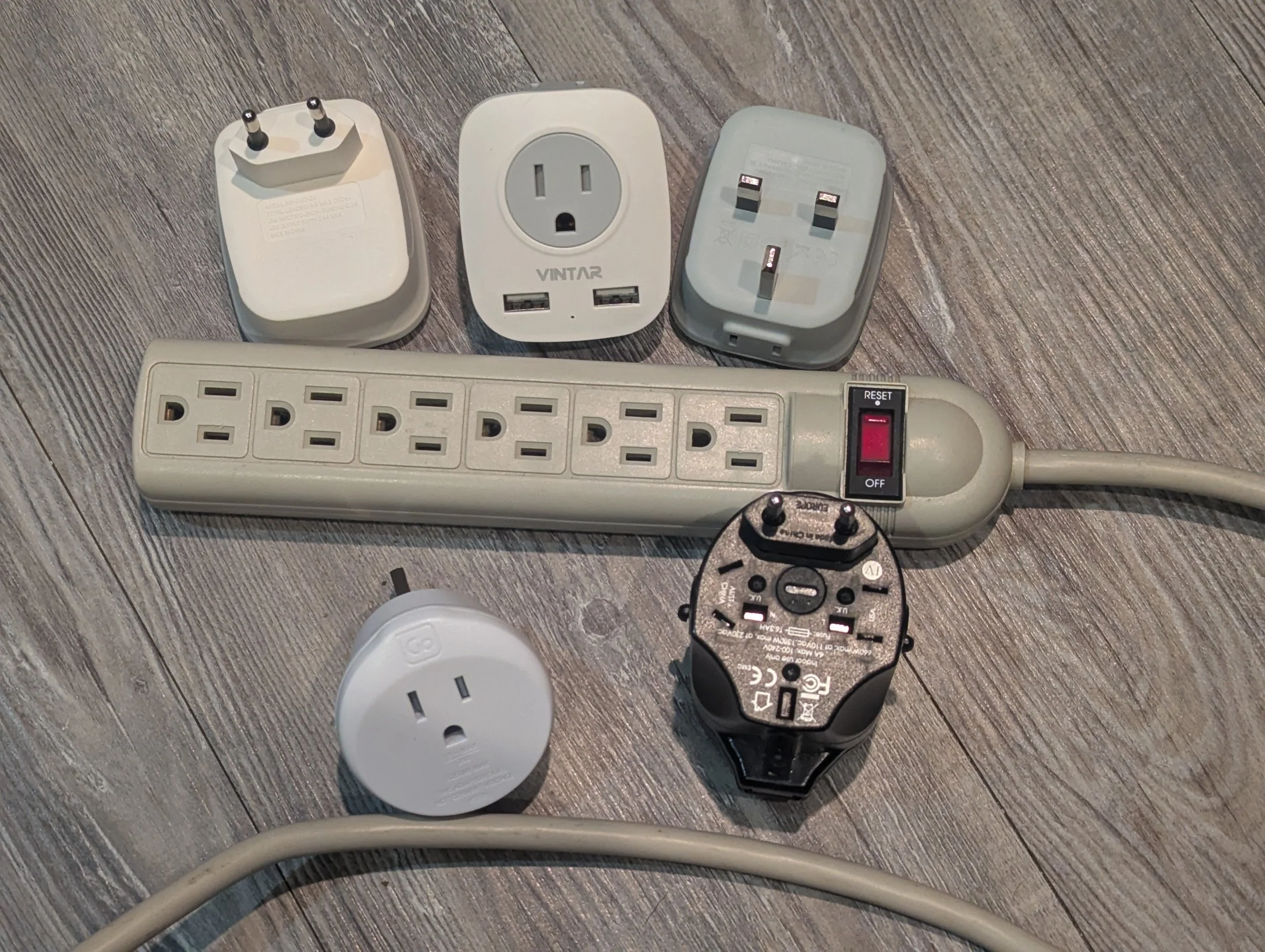
My old international power setup worked, but it meant keeping a collection of adapters for different destinations and pairing the right one with my regular power strip.
Universal Adapter or Country-Specific Adapter?
I own both.
For a trip entirely within one country or region, a simple destination-specific adapter can be perfectly adequate.
Going to Scotland? I need a UK Type G plug.
Traveling through much of continental Europe? I need an adapter appropriate for the outlets I'll encounter there.
They're small, inexpensive and uncomplicated.
A universal adapter becomes more useful when an itinerary crosses countries using different outlet standards. Instead of carrying several separate adapters, one unit can provide several plug configurations.
But there's an important distinction:
Universal plug compatibility does not mean universal voltage conversion.
The adapter determines whether you can physically connect to the outlet.
The voltage rating determines whether the equipment can safely handle the electricity coming through it.
Those are two different questions.
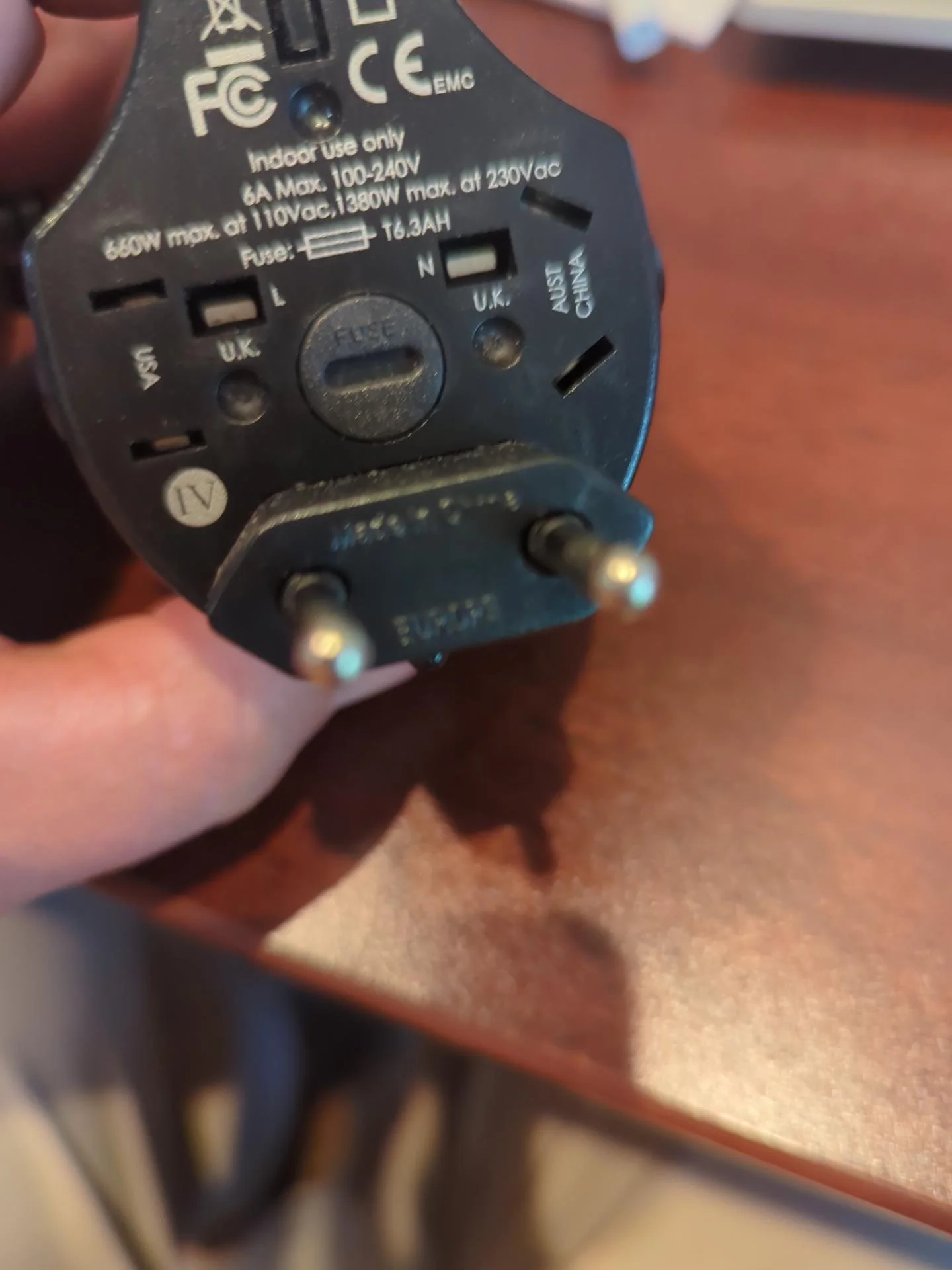
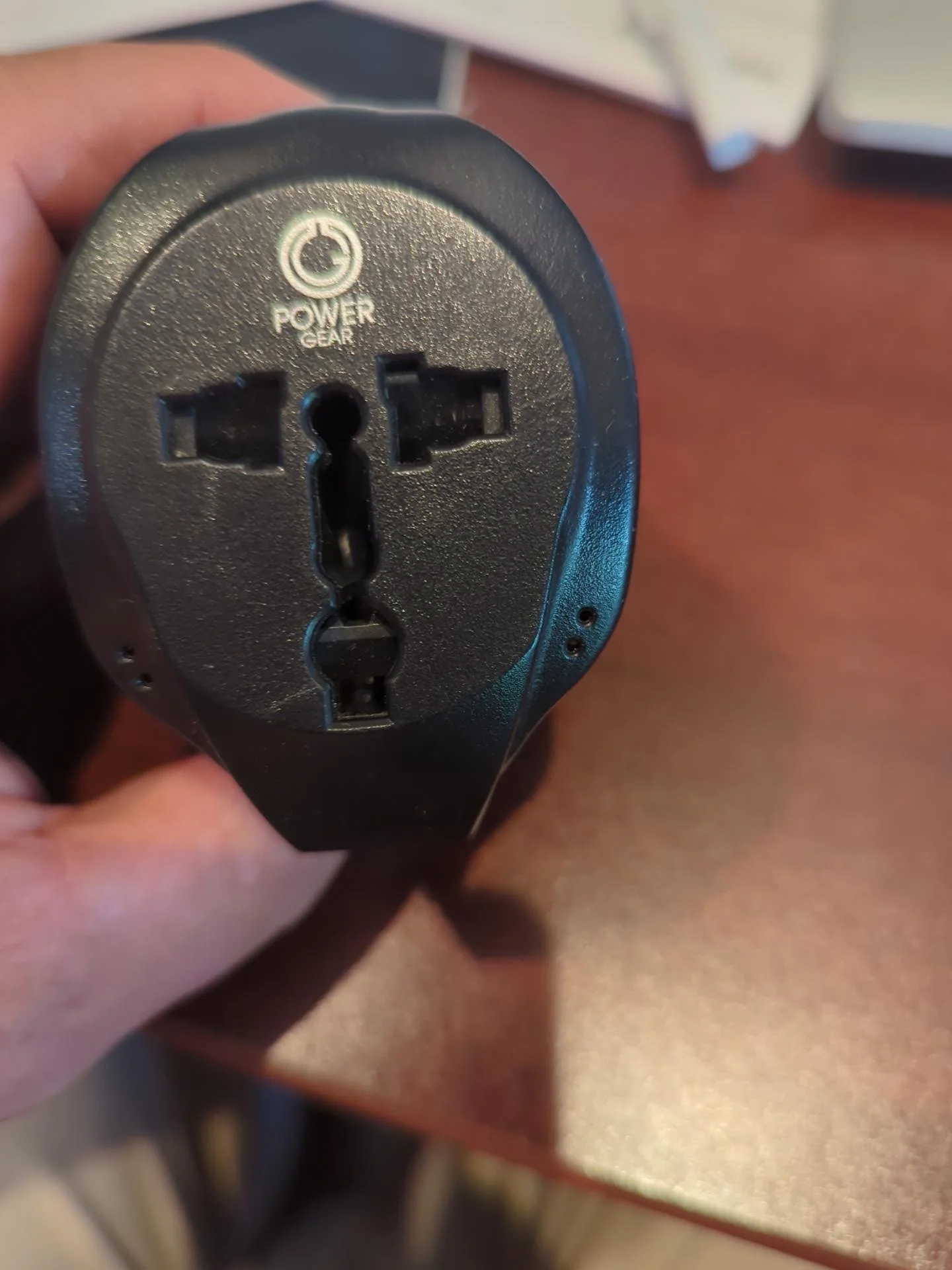
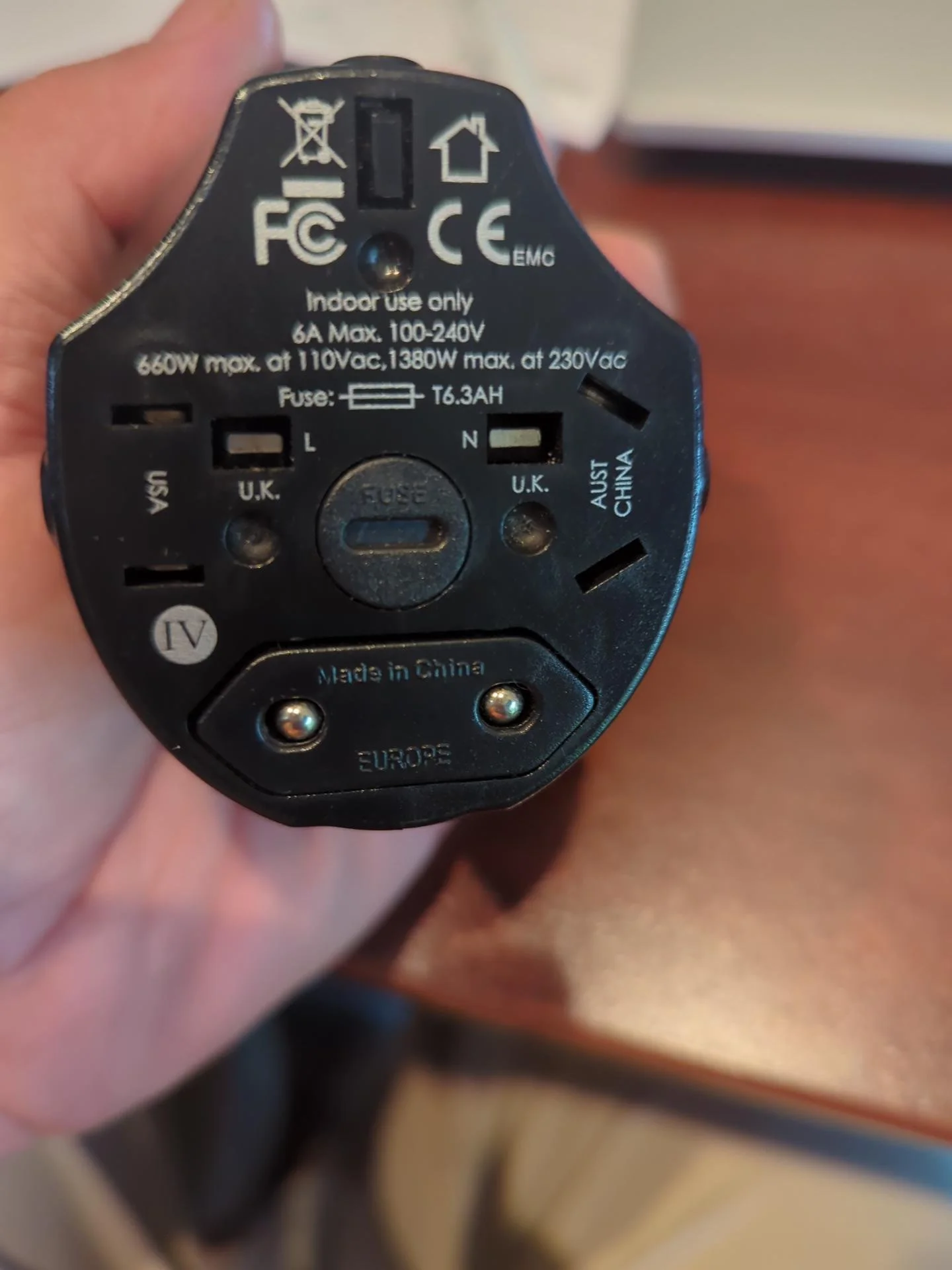
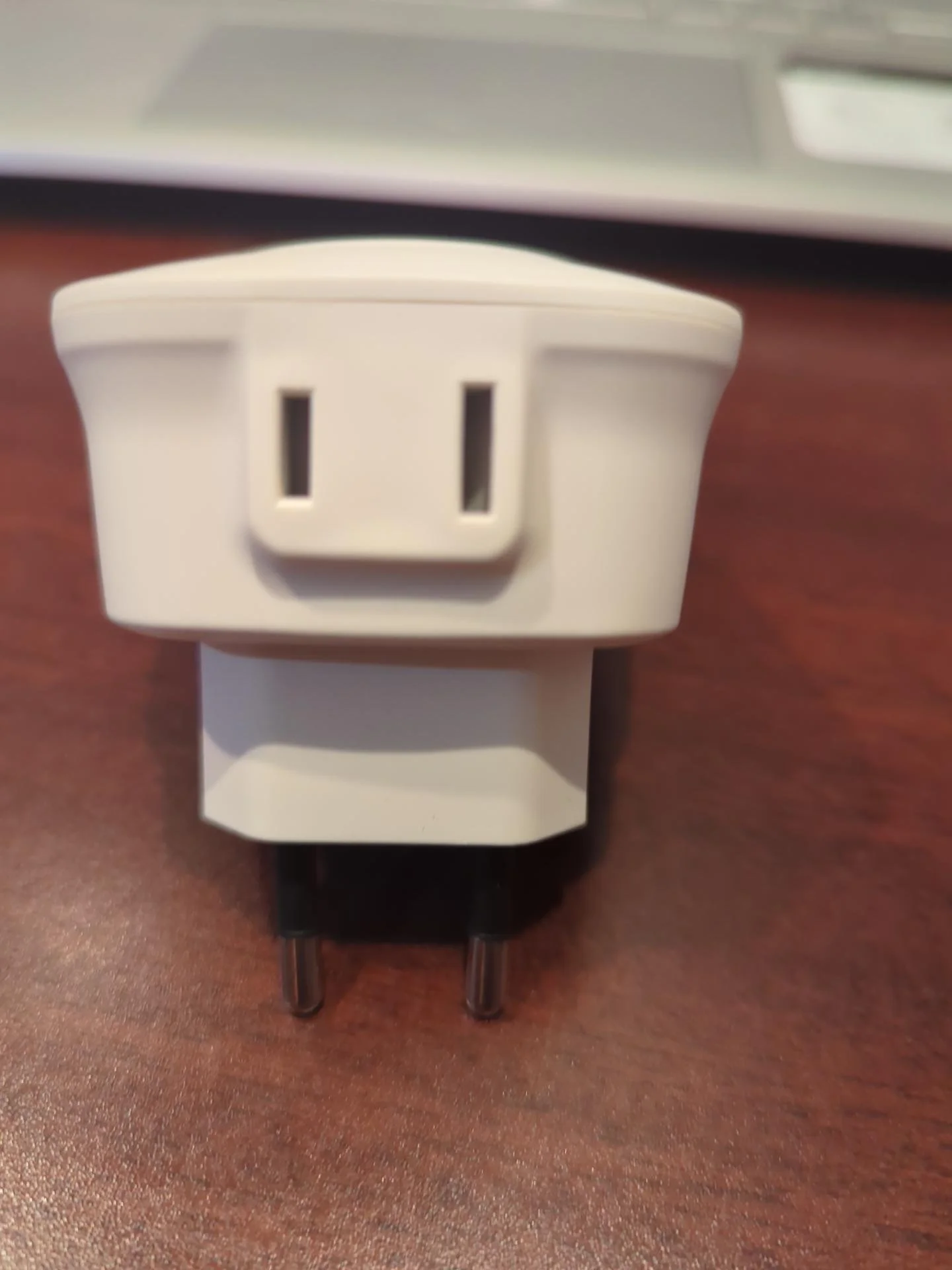
Then This Article Made Me Check My Own Gear
This is where things got interesting.
I wasn't planning to replace my power strip.
I'd used the same basic setup for years:
Adapter into the wall.
Power strip into the adapter.
CPAPs and chargers into the power strip.
It worked.
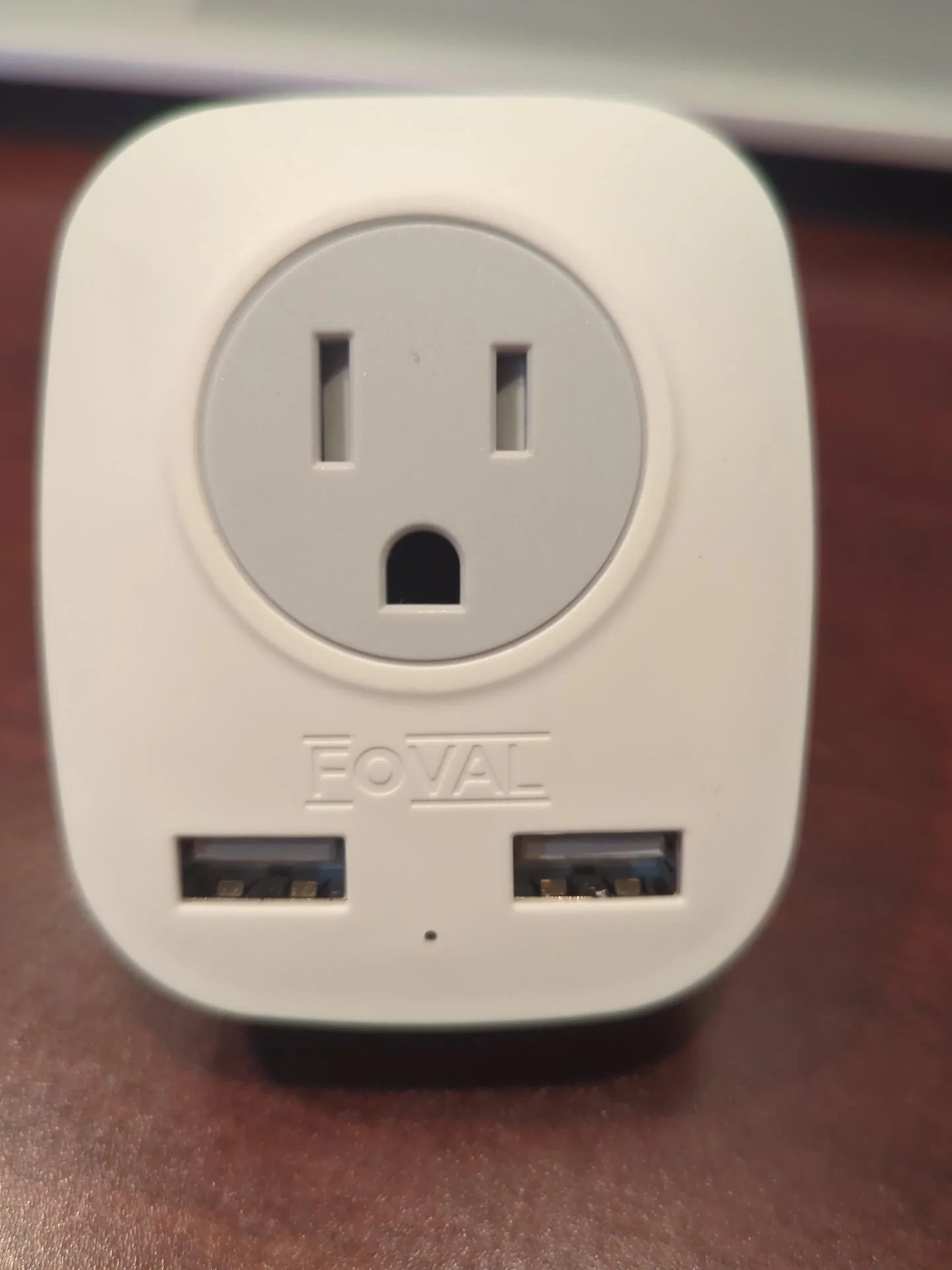
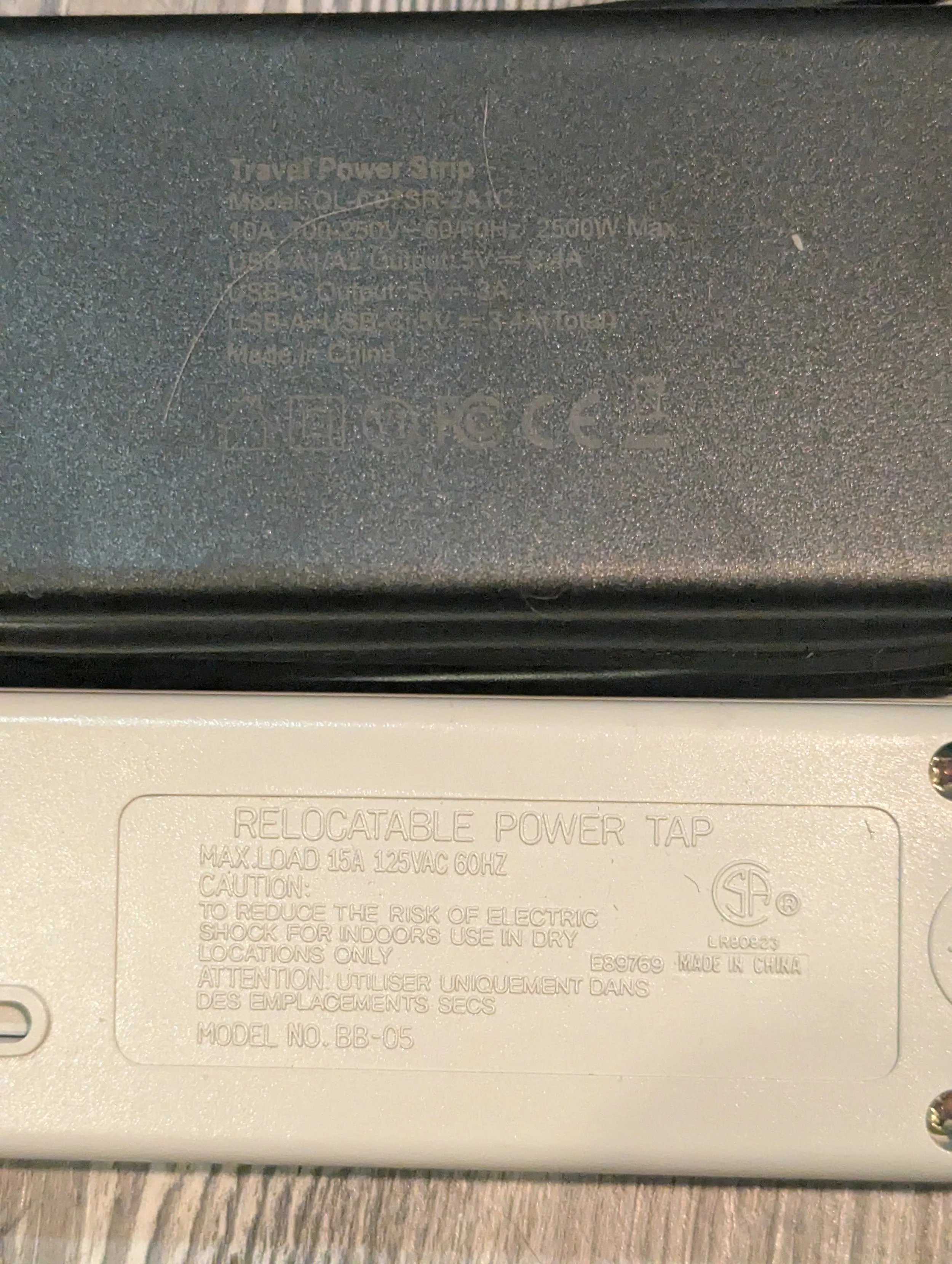
Then, while gathering everything and taking photographs for this article, I flipped over the power strip I'd been carrying.
The label says:
MAX LOAD 15A, 125VAC, 60Hz.
Well then.
I was writing an article telling other travelers to check the voltage ratings on their equipment while staring at a power strip clearly labeled 125VAC.
Apparently Curated Upgrades occasionally upgrades the person writing it.
That sent me shopping for a replacement.

The Curated Upgrade
I didn't want to change the part of my old system that worked so well.
I still wanted one conveniently located outlet to power everything we need beside the bed.
What I wanted to change was everything I had to carry to accomplish it.
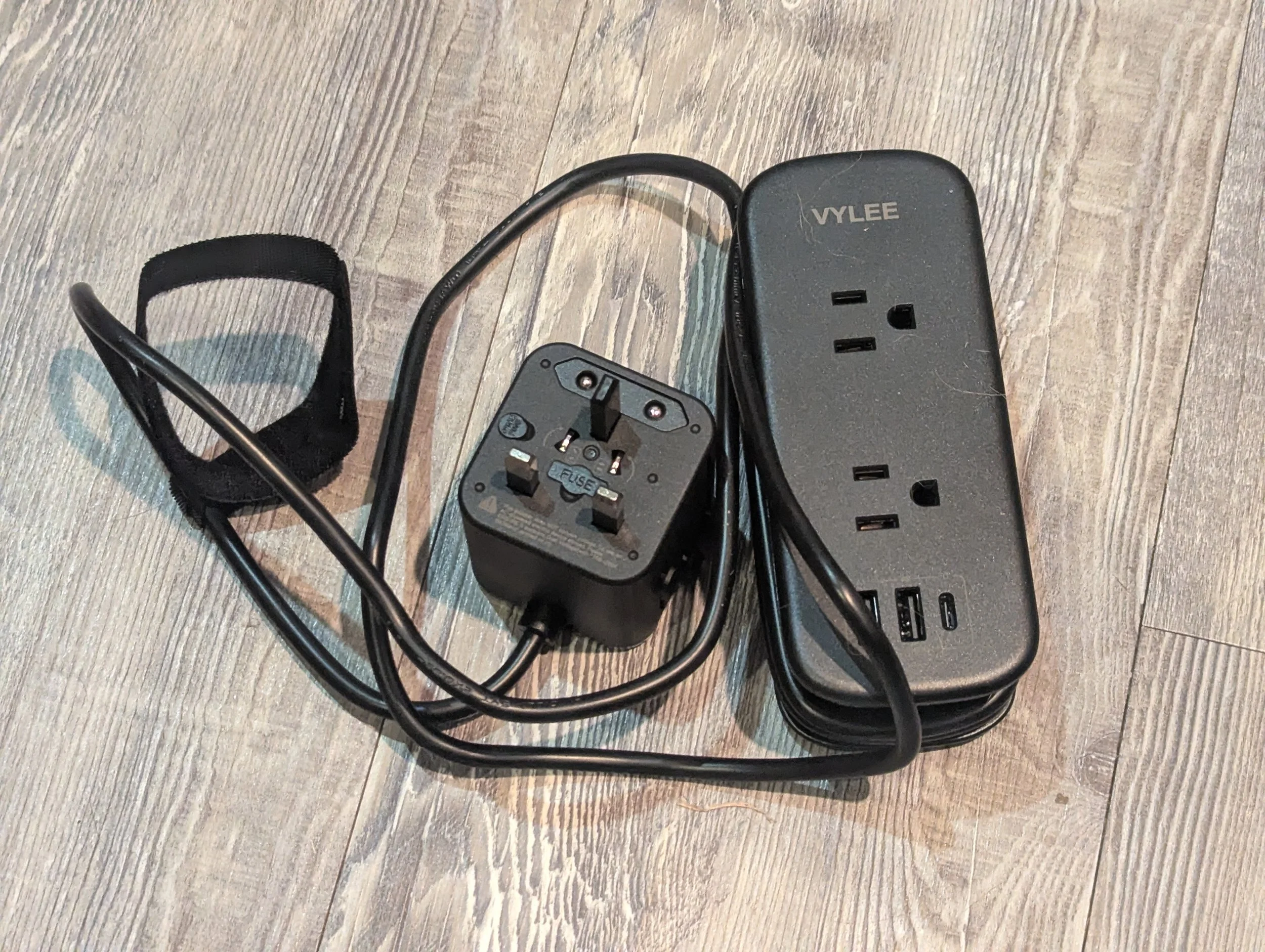
I found a compact VYLEE travel power strip that combines the power strip and international adapter into one piece.
According to the specifications printed on the unit, it's rated:
100–250V, 50/60Hz, 10A, 2500W maximum.
It gives me:
Two U.S.-style AC outlets
Two USB-A ports
One USB-C port
A long cord
Built-in selectable plugs for the U.S., UK, Europe and Australia
A replaceable fuse
A cord that wraps around the body for packing
For us, those two AC outlets are the key.
One for each CPAP.
Phones and other small electronics can use the USB connections or their own compatible chargers.
And because the international plug is built into the end of the cord, I no longer need a separate destination adapter just to connect the power strip to the wall.
One piece replaces two.
See the VYLEE travel power strip I bought on Amazon →
Important: I purchased this power strip myself. It is new and has not yet been tested by me during international travel. I'll be taking it on an upcoming trip and will update this article after I've used it on the road.

My old setup vs. the Curated Upgrade. Two pieces become one, with a power strip designed for international voltage.
Where Will This Setup Work?
Quite a few places, but not everywhere.
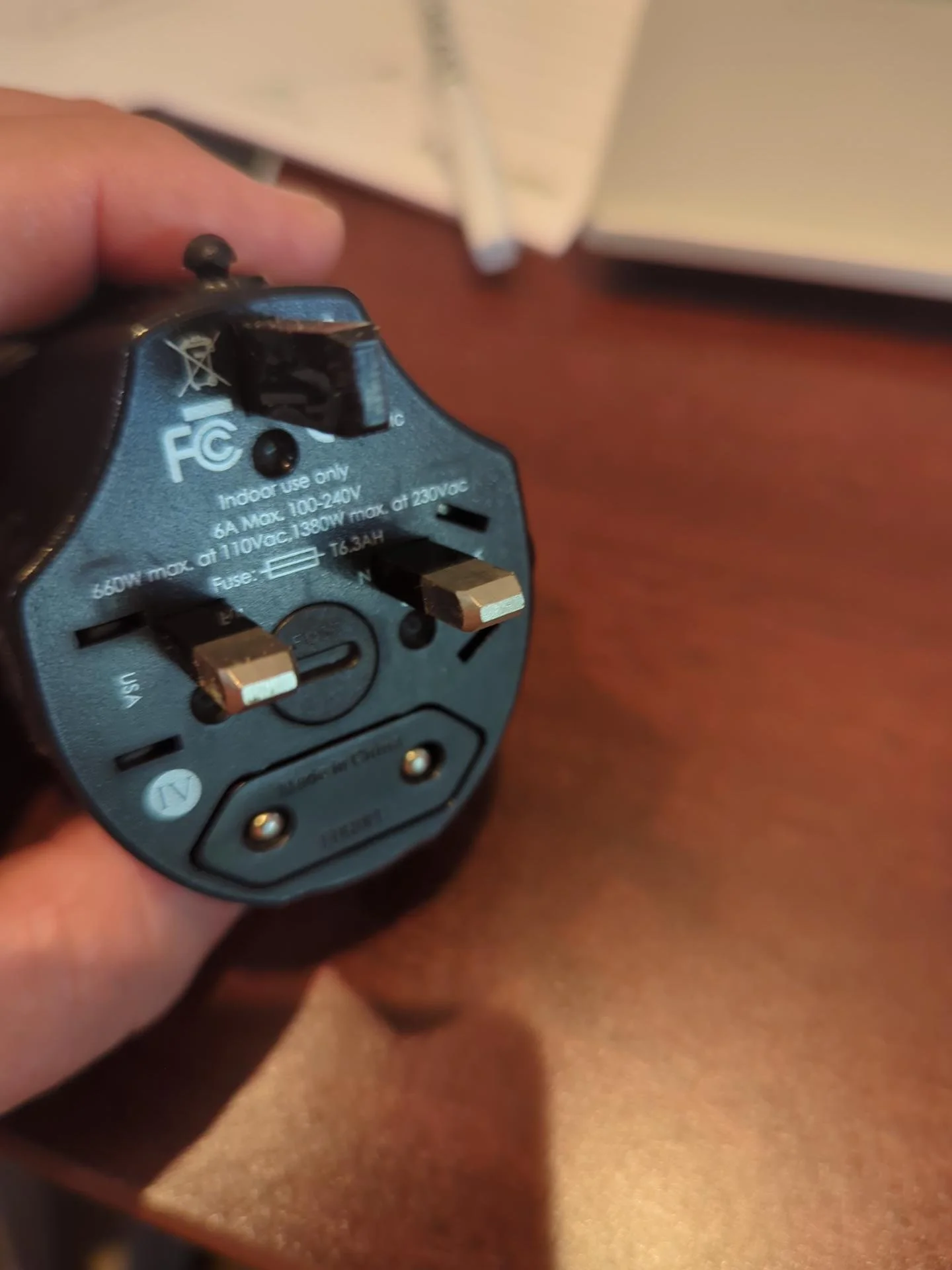
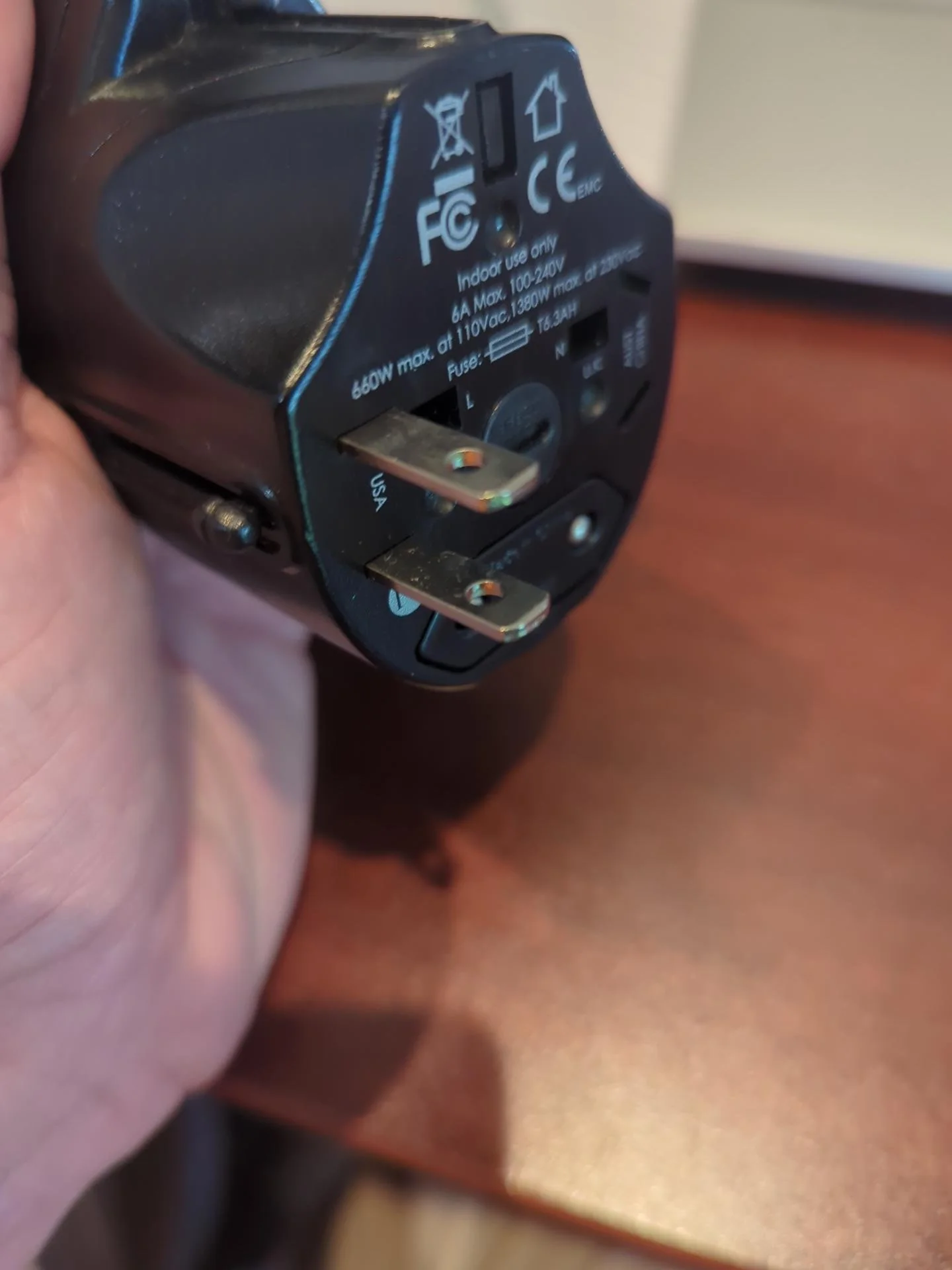
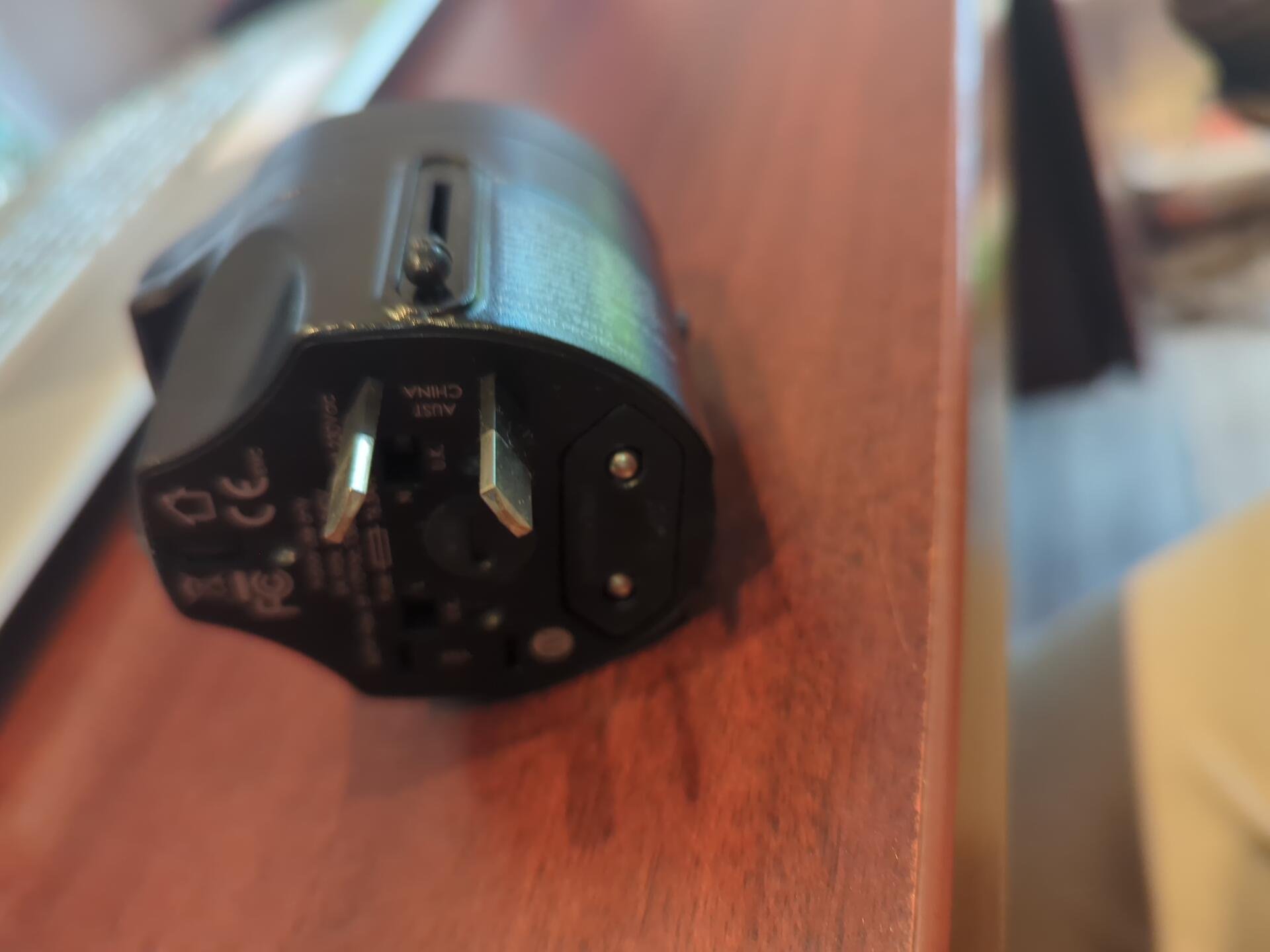
The built-in adapter provides four major plug configurations:
U.S. • European • UK • Australian
That gives it direct compatibility with many of the outlets travelers are likely to encounter around the world.
The UK Type G configuration is the one I'll be using for our upcoming Scotland trip. Type G outlets are also used in Ireland, as well as destinations including Singapore, Hong Kong and the UAE.
The two-round-pin European configuration is useful across much of continental Europe, although European countries can use different socket and grounding arrangements.
The U.S. configuration works with the familiar North American-style outlets found in the United States and various other destinations.
And the Australian Type I configuration covers Australia, New Zealand and some other destinations.
That's an enormous improvement over carrying several individual adapters.
But I wouldn't call it "works everywhere."
I Still Pack a Universal Adapter
Even though this new power strip eliminates most of the separate adapters I've been carrying, I'm not completely retiring my old universal adapter.
It's small, doesn't take up much room, and gives me additional plug options for destinations or outlets the power strip itself can't handle. It also gives me a backup if I encounter an awkward outlet or simply need another connection.
So my new setup isn't quite one power strip and nothing else.
It's:
One international travel power strip + one small universal adapter.
That's still a substantial improvement over the collection of adapters and the old household power strip I've accumulated and traveled with over the years.
And for me, that's the sweet spot. I'm not trying to pack the absolute minimum. I'm trying to pack less while still having a backup.
Where Won't It Work?
There are other electrical plug standards around the world.
For example, you can encounter Type D outlets in India and Type M outlets in South Africa and some other destinations. There are additional standards and country-specific variations as well.
Some destinations also use more than one outlet type.
So I wouldn't buy any "worldwide" adapter, throw it in the suitcase and assume the problem is solved forever.
Check the outlet type used at your destination before every international trip.
And remember that physical fit is only part of the equation.
Even if your adapter fits the wall, the AC-powered device you're plugging into it still needs to be compatible with the local voltage.
Grounding arrangements can differ too. If a device requires protective grounding, don't assume that because a plug physically fits, the grounding arrangement is equivalent.
Don't Confuse Maximum Wattage With Voltage Conversion
The new strip says 2500W Max.
That doesn't mean I can plug any 2,500-watt American appliance into it anywhere in the world.
The strip still does not convert voltage.
A 120V-only appliance doesn't suddenly become a 230V appliance because the power strip can handle 230V.
That's particularly important with high-wattage devices such as hair dryers, curling irons and similar appliances.
For those, check the actual appliance.
Every time.
Do You Need Something Like This?
Maybe not.
That's one reason I'm not particularly fond of generic "10 Best Travel Adapters" lists.
The right answer depends on what you're trying to power.
If you're traveling alone with a phone and a USB-C laptop, a good compact international adapter may be all you need.
If you're visiting one country and charging a couple of devices, an inexpensive destination-specific adapter might be simpler.
Our situation is different.
We travel with two CPAP machines, two phones and assorted rechargeable electronics.
And I have no interest in crawling behind hotel furniture every night hunting for another outlet.
For us, putting several connections at the end of one cord beside the bed solves a genuine travel problem.
That's the point of a Curated Upgrade.
Don't pack more gear because it exists. Pack the gear that solves an actual problem.
What I'm Packing Next
For our next international trip, the charging setup gets considerably simpler.
The new universal travel power strip goes in the suitcase.
Both CPAP power supplies can use its two AC outlets, after I've verified that each power supply is compatible with the voltage at our destination.
Phones and other USB devices can use the built-in USB ports or their own compatible chargers.
And the separate UK adapter and old 125V power strip?
They can stay home.
It's one less piece to remember, less bulk in the suitcase and a setup actually designed around the international travel I'm using it for.
Now it just needs to survive the ultimate product-testing laboratory:
an actual trip.
I'll report back.
One Important Exception: Cruise Ships
Cruise lines can have their own restrictions on power strips, extension cords and surge-protection devices.
Something appropriate for a hotel room isn't automatically permitted aboard a ship.
Before packing electrical gear for a cruise, check your cruise line's current prohibited-items policy.
That's another Travel Gear rabbit hole for another day.