

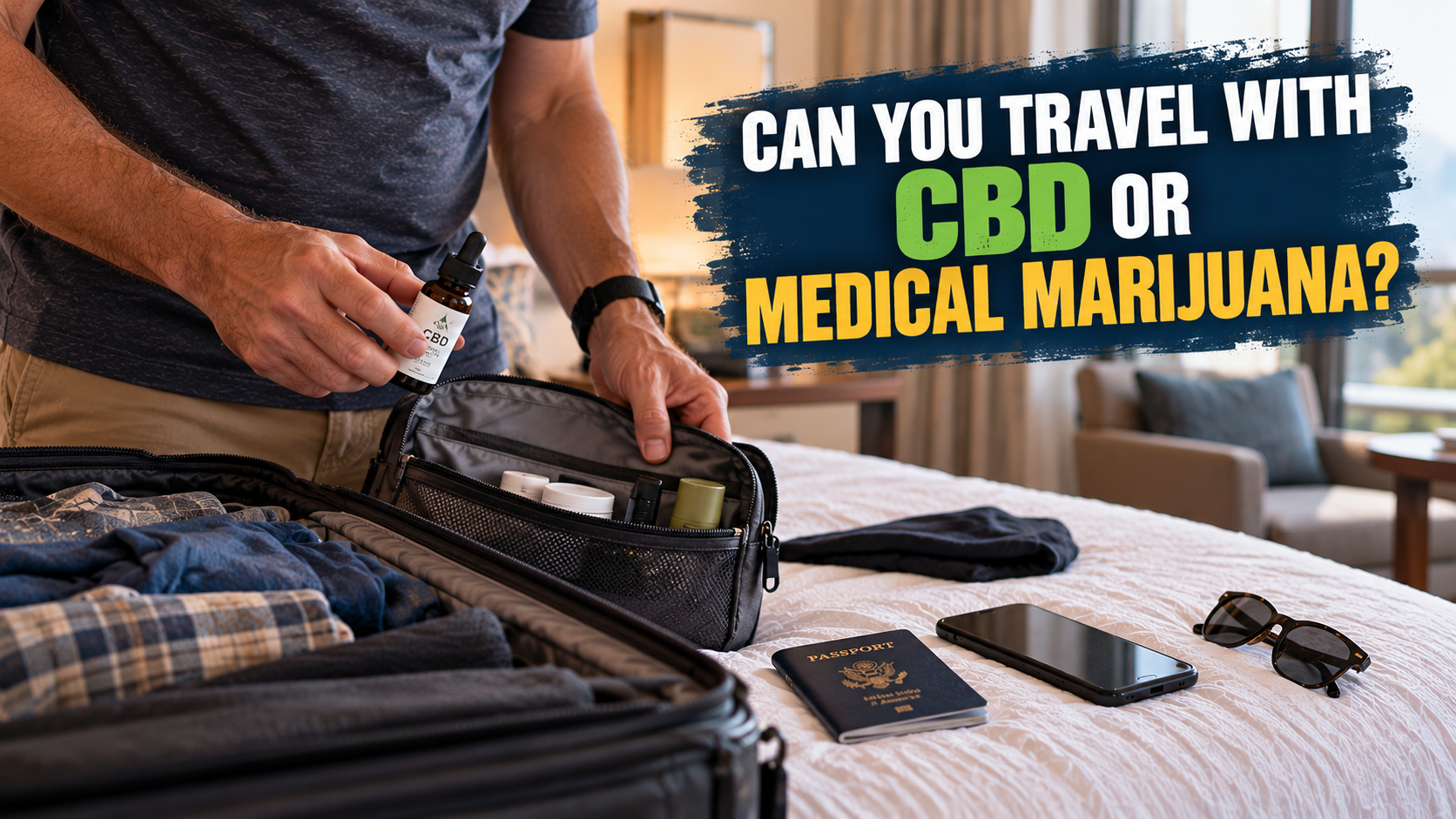
Can You Travel With CBD or Medical Marijuana?
It may be perfectly legal where you bought it. That doesn't necessarily mean it's legal to take it where you're going.
A friend recently asked me a travel question I've seen come up repeatedly:
Can you travel with CBD or medical marijuana?
You bought it legally.
You use it legally.
Maybe you even have a medical marijuana card issued by your state.
So you toss it into your bag and head out on vacation.
Simple, right?
Not necessarily.
CBD and marijuana sit at an awkward intersection of federal law, state law, transportation rules, cruise-line policies, and the laws of wherever you're traveling.
And those rules don't follow you simply because the product was legal when you bought it.
IMPORTANT: This article provides general travel information, not legal or medical advice. Cannabis and CBD laws vary by jurisdiction and can change. Always verify the current rules for your departure point, destination, transportation provider, and any country or jurisdiction you will enter or transit.
Start With Four Questions
People often ask:
“Is marijuana legal?”
For a traveler, that's not specific enough.
Instead, ask:
What exactly am I carrying?
Where am I starting?
Where am I going?
How am I getting there?
A CBD topical on a road trip within one state presents a very different situation from THC gummies in your carry-on for an international flight.
And a medical marijuana card adds another wrinkle, but it isn't a universal travel permit.
CBD and Marijuana Aren't the Same Thing
Federal law distinguishes hemp from marijuana largely by THC concentration. But that doesn't mean every product with CBD printed on the package is automatically legal everywhere.
The product itself matters. Its THC content matters. State and local laws can matter.
And internationally, an entirely different set of laws may apply.
Even the label isn't necessarily the final word. The FDA has warned consumers that some tested CBD products didn't contain the CBD levels claimed on their labels.
Know what you're actually carrying before putting it in your luggage.
Flying Within the United States
This is where things get confusing.
You may live in a state where marijuana is legal. You may even be flying to another state where it's legal.
But you're still entering an aviation system governed in significant part by federal law.
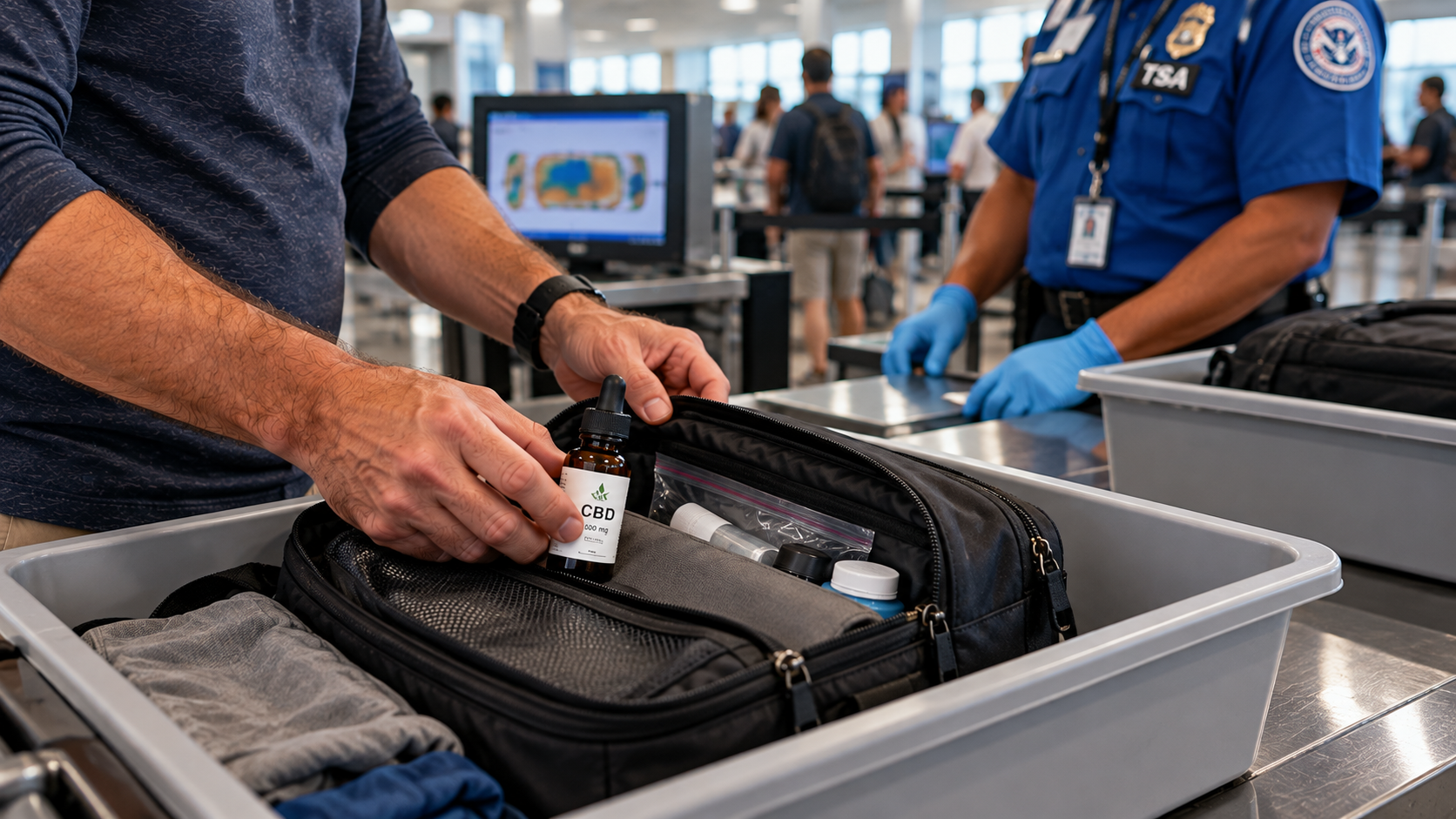
According to TSA's guidance on medical marijuana and cannabis products, its screening procedures focus on aviation security. TSA officers aren't searching passengers' bags specifically for marijuana or other illegal drugs.
But if an illegal substance is discovered during screening, TSA says the matter is referred to law enforcement.
TSA also identifies exceptions for certain products containing no more than 0.3% THC on a dry-weight basis and FDA-approved products.
Which gives us one of the most important distinctions in this entire article:
“TSA isn't looking for it” is not the same thing as “you're allowed to bring it.”
What About Medical Marijuana?
A state medical marijuana card generally establishes your status under that state's program.
It doesn't turn marijuana into an ordinary federally recognized prescription medication, and it doesn't require every other state to recognize your card.
Some jurisdictions may offer limited recognition or reciprocity for visiting medical cannabis patients. Others may not.
So this isn't a great strategy:
“I'll just show them my card.”
Your card isn't a diplomatic passport for your gummies.
Check the current rules where you're going.
Crossing State Lines
This one is easy to overlook.
Suppose marijuana is legal in State A.
It's also legal in State B.
That does not automatically make transporting marijuana from State A to State B legal.
Crossing a state line introduces federal law into the equation.
Lawfully produced hemp is treated differently under federal law, but individual CBD products can still raise questions about their contents and applicable state rules.
So don't look only at whether possession is legal at your starting point and destination.
The journey itself matters.
What About Driving?
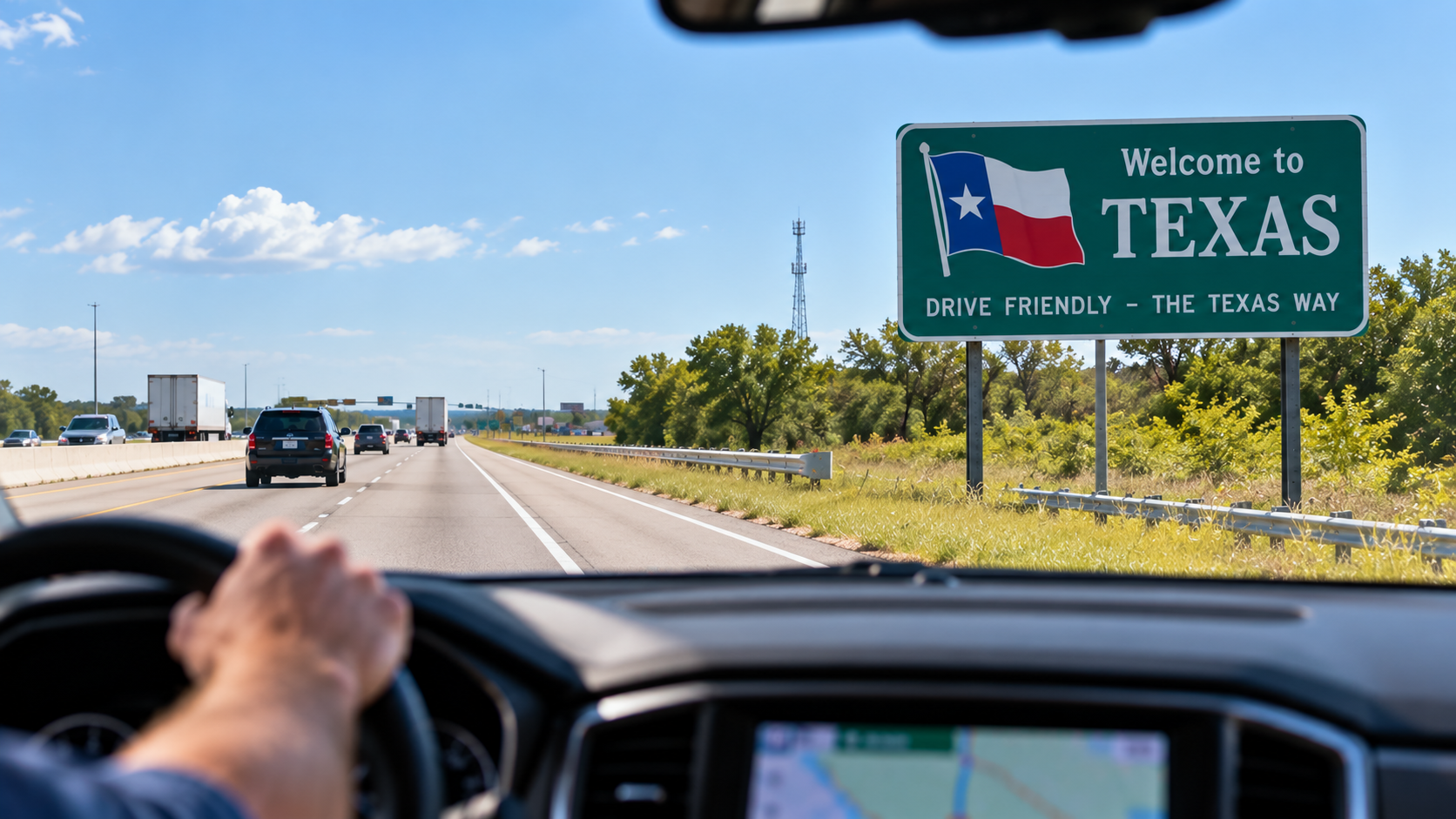
Driving may feel simpler because there's no TSA checkpoint.
Legally, it may not be.
If you remain entirely within one state, that state's possession and transportation rules are your starting point.
Cross a state line and you've changed jurisdictions.
A long road trip may pass through several states with very different cannabis laws, even if your starting point and destination both allow the product.
And one point shouldn't require much elaboration:
Don't drive impaired.
Legal possession and legal driving are separate questions.
CBD on a Plane
CBD is where the internet grows an impressive crop of confidently incomplete answers:
“CBD is federally legal.”
That's not enough information.
The federal distinction between hemp and marijuana involves THC concentration, but the letters CBD on a package aren't a universal permission slip.
You still need to know what's actually in the product and whether it complies with the rules that apply to your trip.
And once you leave the United States, the answer can change completely.
Gummies, Oils, Creams and Vapes
Changing the form doesn't eliminate the rules.
An edible may still raise cannabis questions. An oil or tincture may also have to comply with airport security rules for liquids. A topical can contain ingredients treated differently at your destination.
And a vape introduces another set of rules entirely.
The FAA requires electronic cigarettes and vaping devices to remain with the passenger or in carry-on baggage. They cannot be packed in checked baggage and must be protected against accidental activation.
But that's a battery and aviation-safety rule.
It doesn't mean whatever is inside the vape is legal to possess or transport.
One little device. Two completely different sets of rules.
And changing marijuana into a gummy doesn't make the legal questions evaporate.
It just makes them taste like watermelon.
Cruises Are Their Own Little Kingdom
Cruise passengers sometimes assume:
“We're leaving from a state where it's legal.”
Or:
“It's medical.”
Or:
“We're sailing somewhere marijuana is legal.”
None of those answers whether the cruise line allows it aboard.
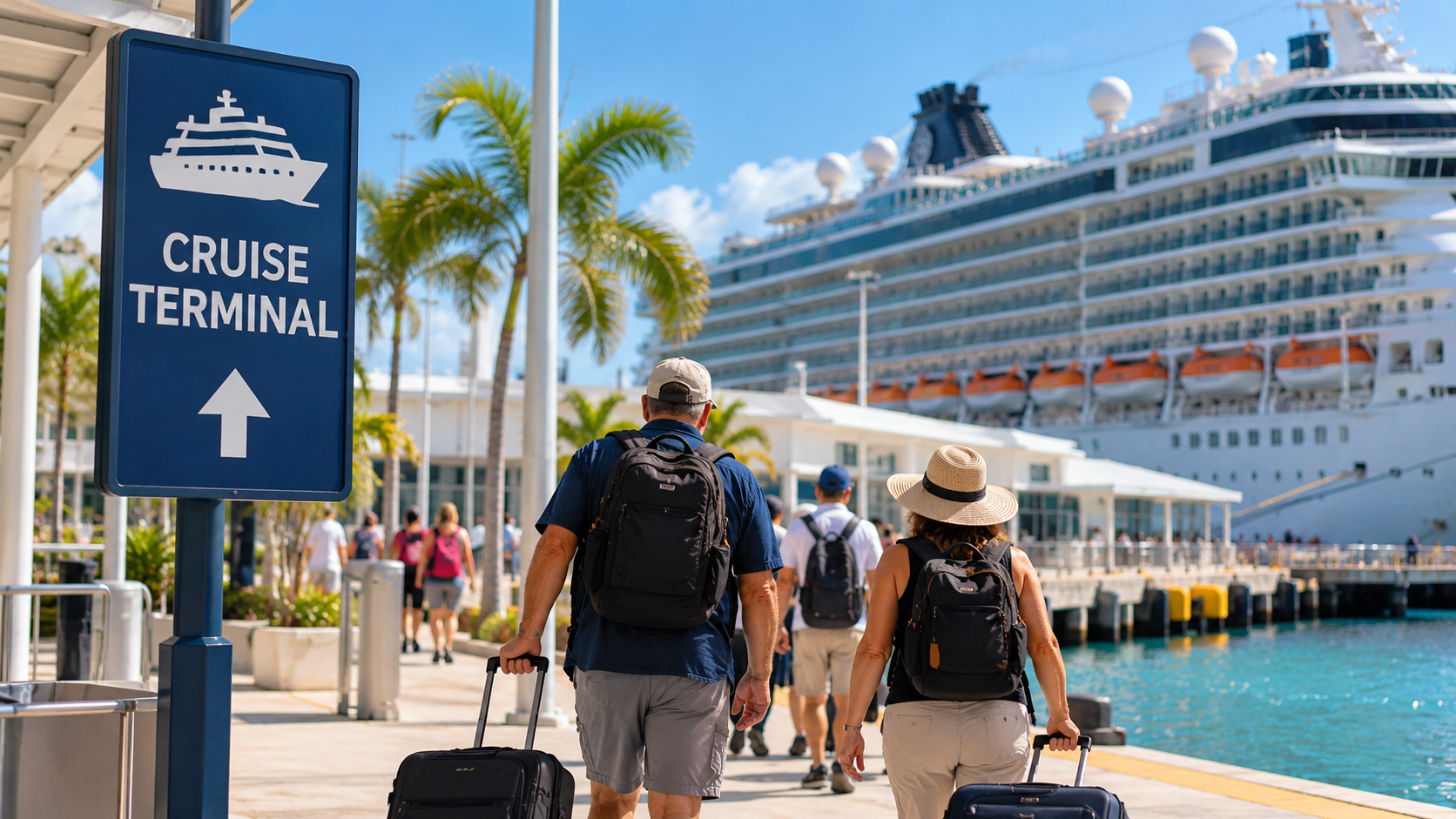
Major cruise lines can be stricter than the law at the departure port.
For example, Carnival's current prohibited-items policy prohibits marijuana, including medical marijuana, as well as CBD products aboard its ships. Other major cruise lines have similar restrictions.
Then the ship begins visiting other countries, adding customs and foreign drug laws to the equation.
Before bringing any cannabis or CBD product on a cruise, check the specific cruise line's current prohibited-items policy and the laws of the countries on your itinerary.
“It's legal at the port” doesn't mean it's allowed on the ship.
International Travel Changes Everything
This is where the advice becomes wonderfully simple:
Do not assume anything.
A product routinely sold at home may be restricted or prohibited in another country.
That includes CBD.
Your U.S. medical marijuana card doesn't override another country's laws. Neither does a doctor's recommendation.
The U.S. State Department advises travelers to check medication restrictions for every country they plan to visit or pass through and warns that bringing something legal in the United States into another country can result in serious legal consequences.
These aren't hypothetical warnings. Some countries prohibit cannabis or CBD products even when the traveler has a prescription.
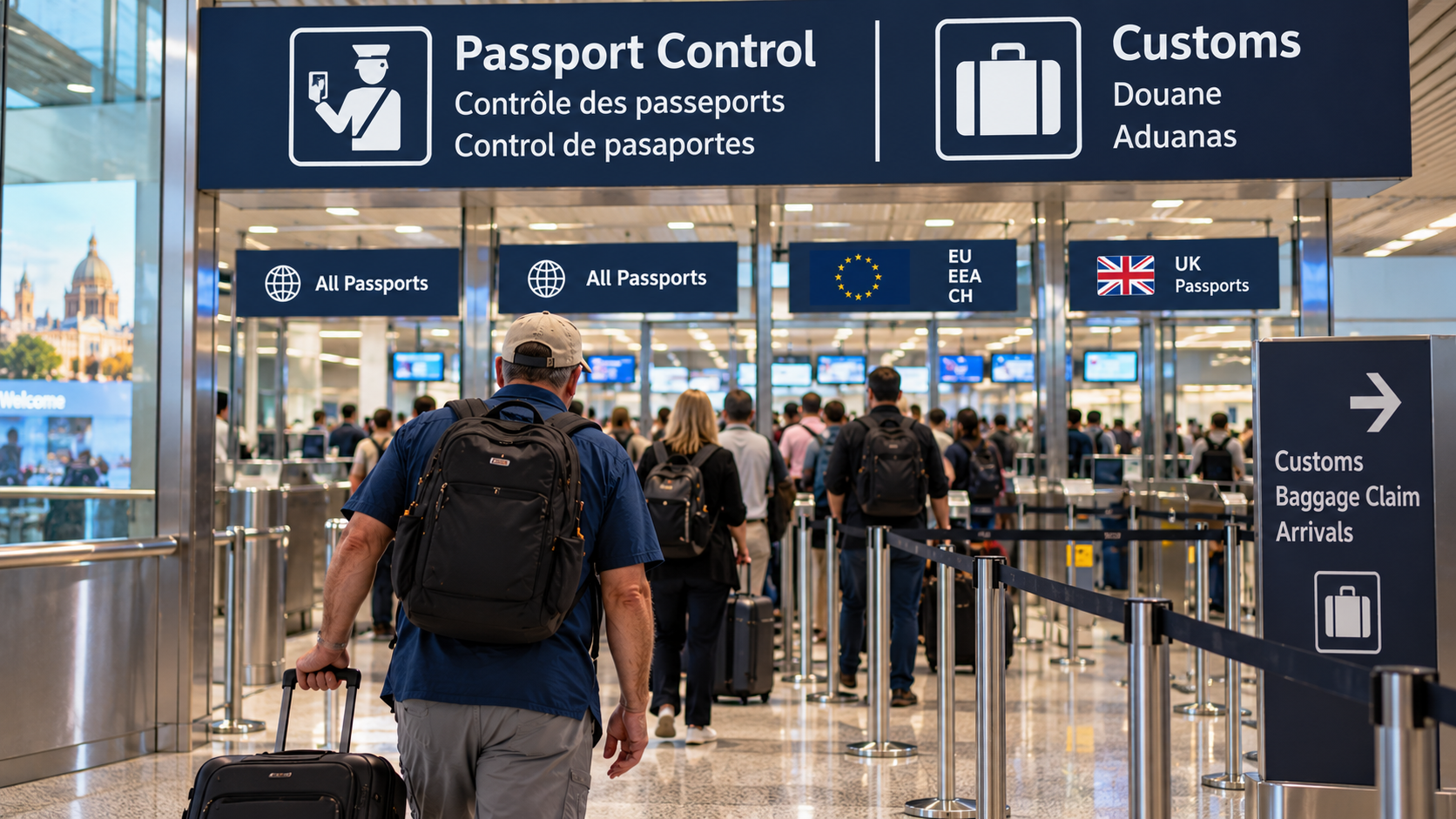
When you cross an international border, their rules apply.
Not your home state's.
What About Connecting Flights?
Don't check only the country beside FINAL DESTINATION on your itinerary.
Transit rules vary.
Depending on the country, airport and itinerary, you may need to clear immigration or customs, reclaim luggage, or otherwise enter the connecting country.
That's why the State Department recommends checking restrictions for countries you plan to visit or pass through.
Check every country involved in the itinerary.
Travel has an annoying habit of changing the plan after you've left home.
“But It's in My Checked Bag”
The suitcase does not have diplomatic immunity either.
Putting something in checked baggage doesn't change whether you're legally permitted to possess or transport it.
And on an international trip, your checked suitcase is crossing the border too.
There can even be situations where the baggage rules work in the opposite direction. Remember those vape devices? FAA rules require them in the cabin, not checked baggage.
Again, baggage rules and cannabis laws are separate questions.
Hiding the problem under three pairs of socks doesn't solve it.
It just makes the socks accomplices.
Don't Assume the Packaging Protects You
None of these automatically makes an otherwise prohibited product legal:
“It's unopened.”
“I have the receipt.”
“The dispensary sold it to me.”
“My doctor recommended it.”
“It's just CBD.”
Those things may help establish what the product is or why you possess it.
They don't rewrite the law where you're traveling.
What If You Buy It at Your Destination?
If a product is legal where you're visiting, buying it there may avoid transporting it into that jurisdiction.
But you still need to understand local rules for purchasing, possessing and using it.
And don't assume you can bring the leftovers home.
The moment you cross another border, you've created a new travel question.
Legal to buy there does not automatically mean legal to bring back here.
So What Should You Do?
Before traveling with CBD or medical marijuana, work through the actual trip instead of searching for one universal yes-or-no answer.
Know exactly what you're carrying and its THC content.
Check the law where you're starting, where you're going, and anywhere you're crossing or connecting through.
Check your airline, cruise line or other transportation provider when applicable.
And for international travel, use official government sources rather than relying on a social-media post saying:
“I brought mine last year and nobody cared.”
Getting away with something isn't the same thing as being allowed to do it.
Maybe Leaving It Home Is the Better Answer
Sometimes the research produces a clear answer.
Sometimes it produces seventeen browser tabs and a headache.
If you're uncertain whether a cannabis or CBD product is permitted somewhere you're traveling, leaving it home may be considerably easier than discovering the answer from a customs officer after landing.
For someone who uses marijuana medically, however, that can create a separate healthcare question.
Don't simply discontinue something you rely on medically because a travel article told you not to pack it.
Talk with the healthcare professional involved in your care about the trip and whether appropriate alternatives exist.
That's a medical conversation.
The border question is a legal one.
Don't confuse the two.
The Curated Upgrades Takeaway
The biggest mistake travelers can make with CBD or marijuana is assuming:
“It's legal at home, so I'm fine.”
Travel changes the equation.
Federal law may matter. State law may matter. Cruise-line or airline policies may matter. Another country's laws may matter.
And a medical marijuana card doesn't automatically erase any of them.
Before putting cannabis or CBD in your suitcase, answer four questions:
What is it? Where am I starting? Where am I going? How am I getting there?
If you can't confidently determine whether it's allowed throughout that journey, don't let the airport, cruise terminal, state line or international border be where you conduct the experiment.
LEGAL & MEDICAL DISCLAIMER: This article provides general travel-planning information only and is not legal or medical advice. Cannabis, hemp, CBD, transportation and import laws vary by jurisdiction and can change. Verify current rules with appropriate government authorities and transportation providers before traveling. If cannabis is part of your medical care, consult a qualified healthcare professional before changing or discontinuing its use.