

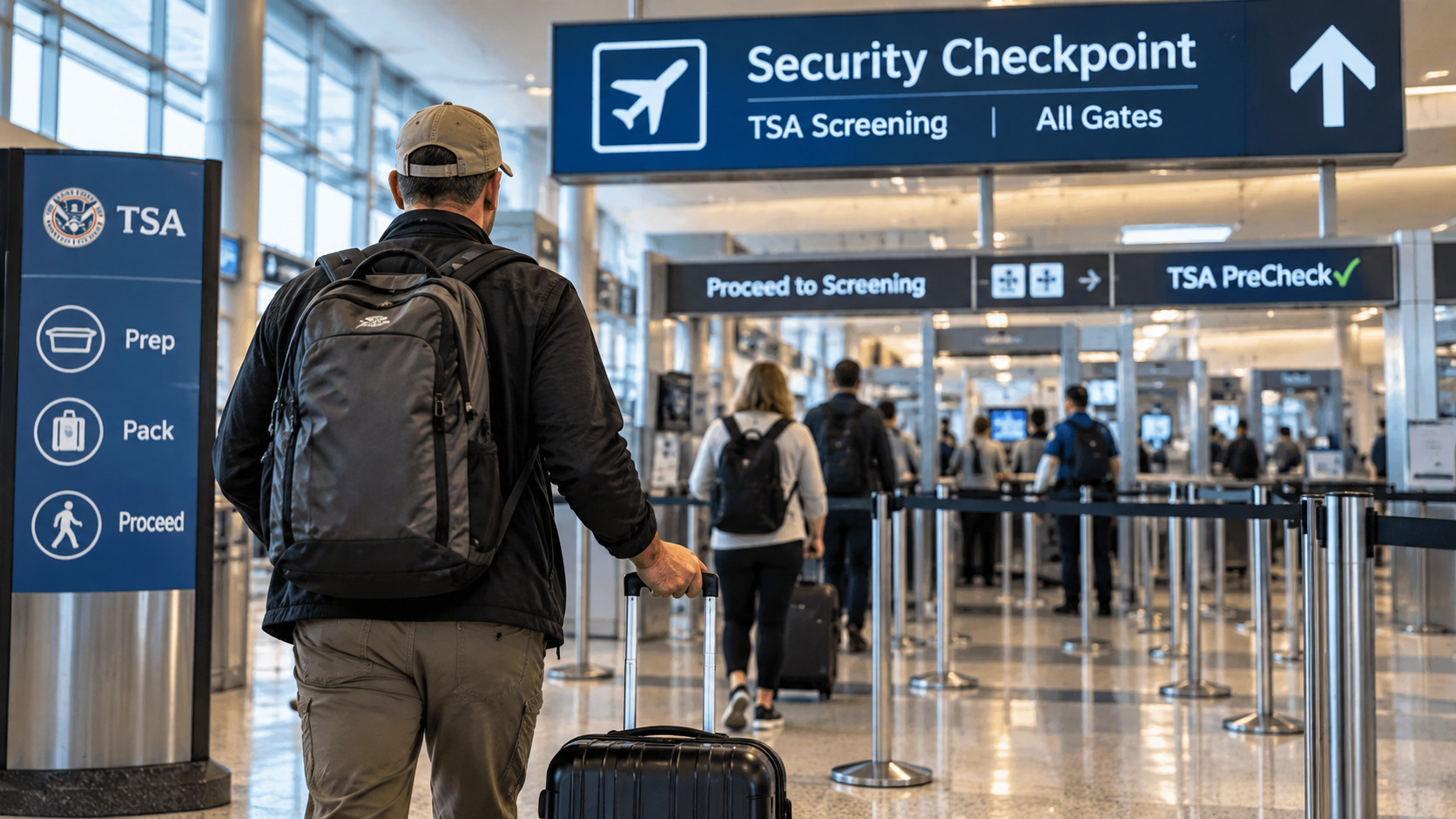
TSA Airport Security: What to Expect and How to Be Ready
Airport security is one of those parts of flying that becomes remarkably easy once you know what's coming.
You don't need an elaborate strategy. You don't need to start unpacking your suitcase while you're still in line. And you definitely don't want to reach the front of the checkpoint and suddenly begin searching six pockets for your ID.
A little preparation goes a long way.
This guide covers the normal TSA screening process at U.S. airports, what changes with TSA PreCheck, where CLEAR+ fits into the picture, and even how some people can now go through security without actually having a flight to catch.
Current as of September 29, 2026: TSA procedures, screening technology and airport access programs can change. Always follow instructions from TSA officers at the checkpoint you're actually using.
Before You Even Reach Security
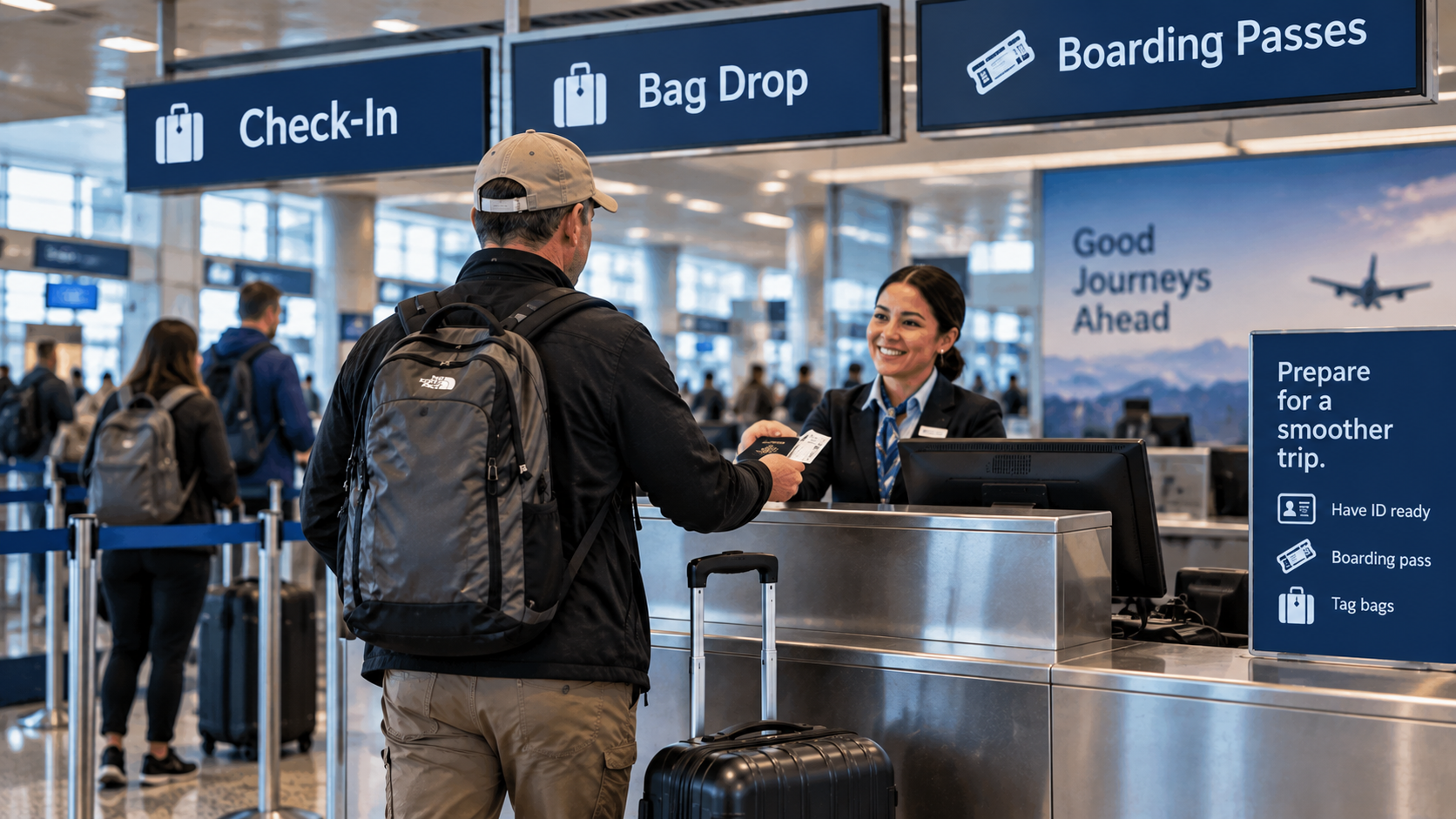
If you're checking luggage, your first stop is generally your airline's check-in or bag-drop area. If you're carrying everything aboard and already have your boarding pass, you may be able to head directly for security.
Before joining the TSA line, take 30 seconds and get organized.
Have your boarding pass accessible. Know where your identification is. Make sure you haven't accidentally left a bottle of water in your carry-on. And if you've stuffed your phone, wallet, keys, loose change and half the contents of your junk drawer into your pockets, now is an excellent time to deal with it.
This isn't about racing through security.
It's about not becoming THAT passenger when you reach the front.
Your ID Matters More Than It Used To
Adults 18 and older need acceptable identification at the TSA checkpoint.
Since May 7, 2025, travelers using a state-issued driver's license or identification card need one that meets REAL ID requirements, unless they use another TSA-accepted form of identification such as a passport.
Before traveling, check TSA's current list of acceptable identification.
Showing up without acceptable identification doesn't necessarily doom your trip, but it can certainly make it more interesting. TSA may attempt to verify your identity through an additional process and subject you to additional screening. If your identity cannot be verified, you won't be allowed through the checkpoint.
Children under 18 generally don't need to provide identification to TSA when traveling domestically, although an airline may have its own requirements.
The easiest solution is remarkably low-tech: know what ID you're using and have it somewhere you can actually find it.
What Happens in Standard TSA Screening?
Here's where some old airport advice has become outdated.
You generally keep your shoes on now.
In July 2025, DHS ended the longstanding requirement for passengers in standard screening lanes to routinely remove their shoes.
So if your mental picture of TSA still involves everyone padding around the checkpoint in their socks, you can retire that particular piece of travel history.
Other procedures aren't quite as universal.
TSA continues to deploy newer screening equipment, and what you're asked to remove from your bag can depend on the technology being used at that particular checkpoint.
That means the best advice isn't:
"Always take your laptop out."
It's:
Listen to the TSA officer standing in front of you.
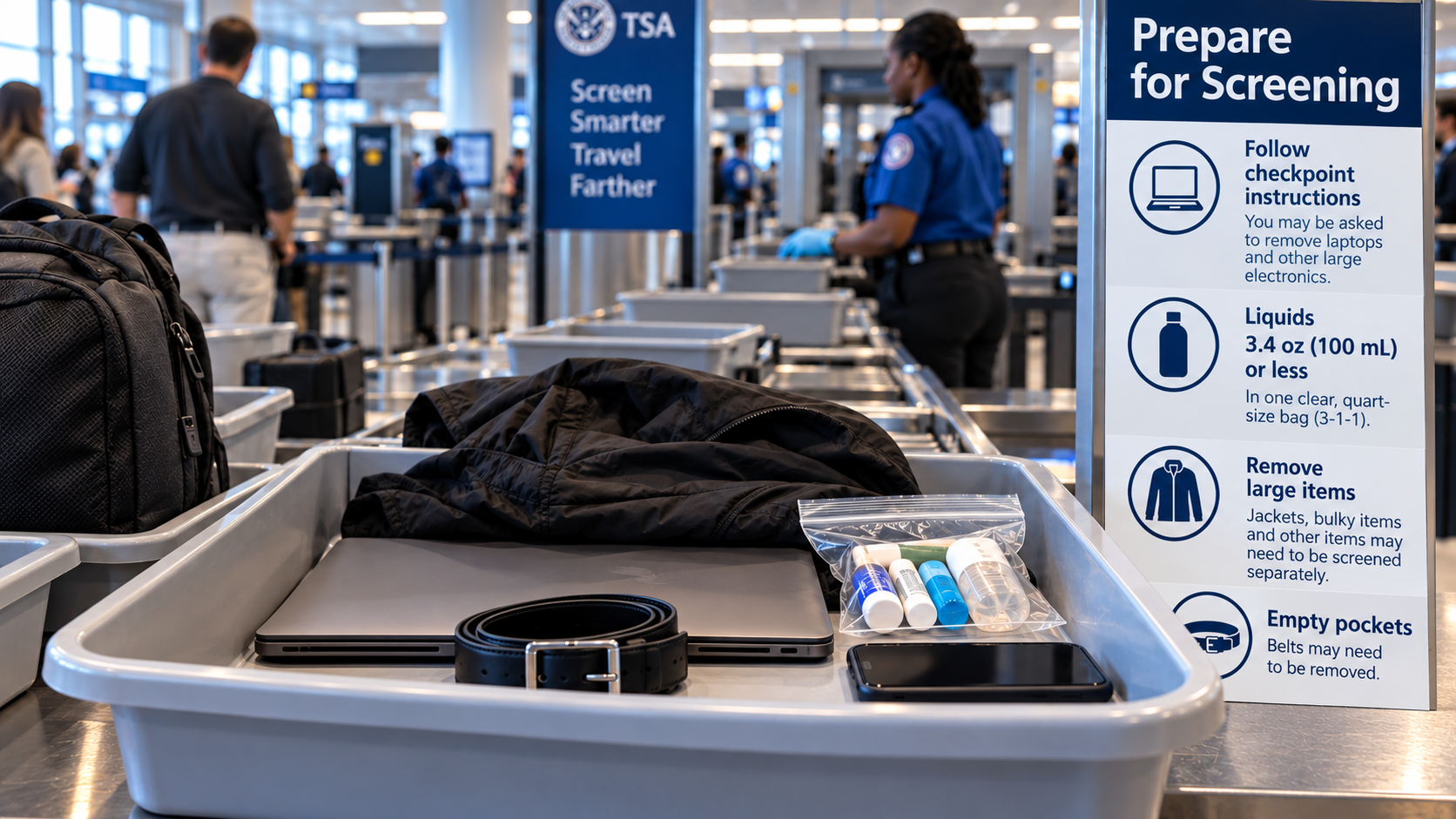
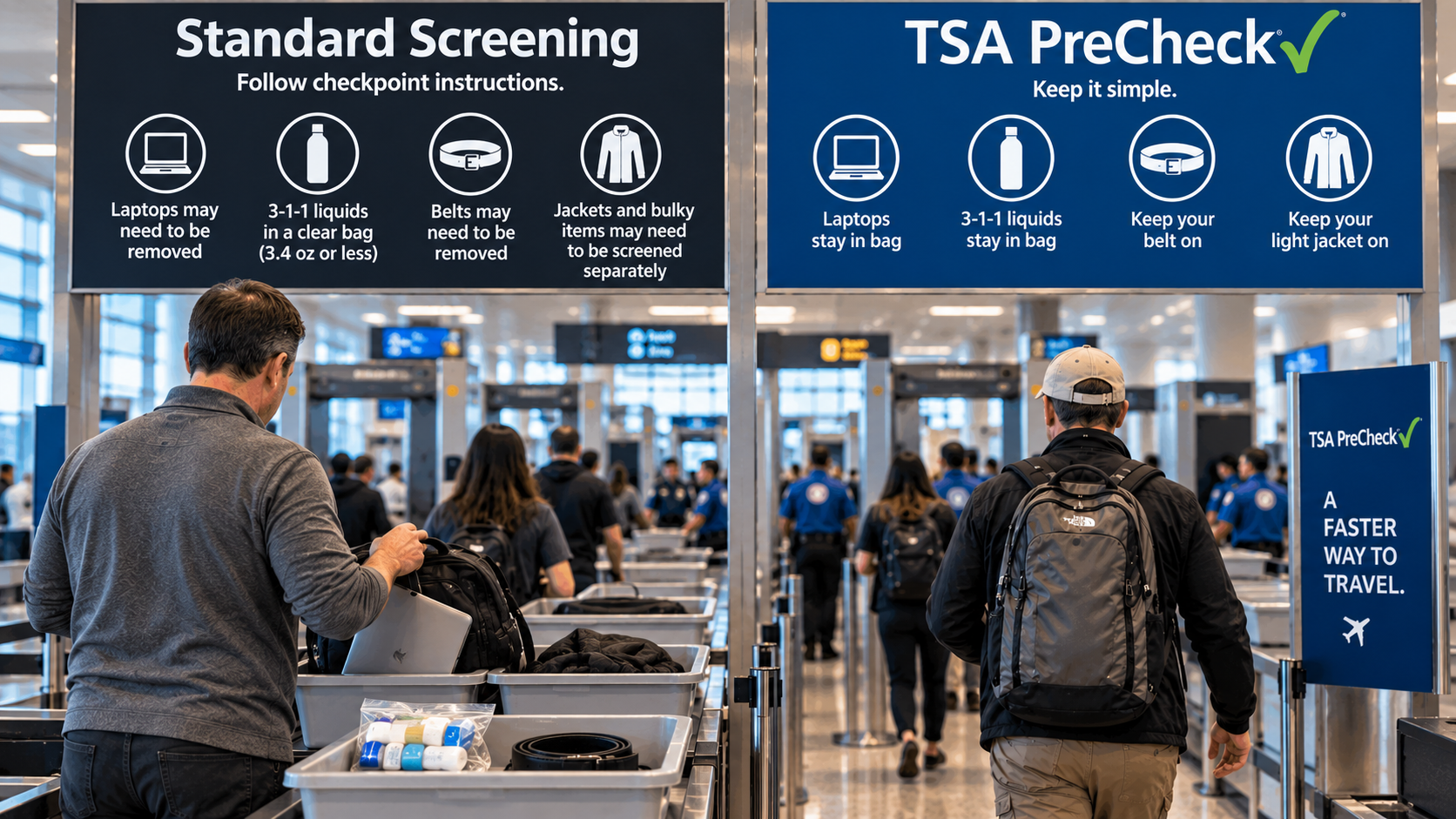
At some checkpoints, you may be asked to remove laptops and other large electronics. At checkpoints using newer screening equipment, those items may be allowed to remain inside your bag.
The familiar 3-1-1 liquids rule remains important for normal carry-on liquids: containers no larger than 3.4 ounces or 100 milliliters, generally contained in a single quart-size bag. Exceptions exist for certain medically necessary liquids and other special circumstances.
Belts, jackets and other items may also need to be removed depending on the screening process.
And empty your pockets.
Please.
Your phone doesn't need its own dramatic reunion with you on the opposite side of the body scanner.
TSA maintains its very useful What Can I Bring? database if you're unsure whether something belongs in your carry-on, checked luggage or at home.
The important lesson is simple: prepare, then follow the instructions at your checkpoint instead of automatically doing whatever TSA asked you to do at a different airport three years ago.
TSA PreCheck Changes the Experience
TSA PreCheck isn't simply a shorter security line. It provides an expedited screening process for eligible travelers.
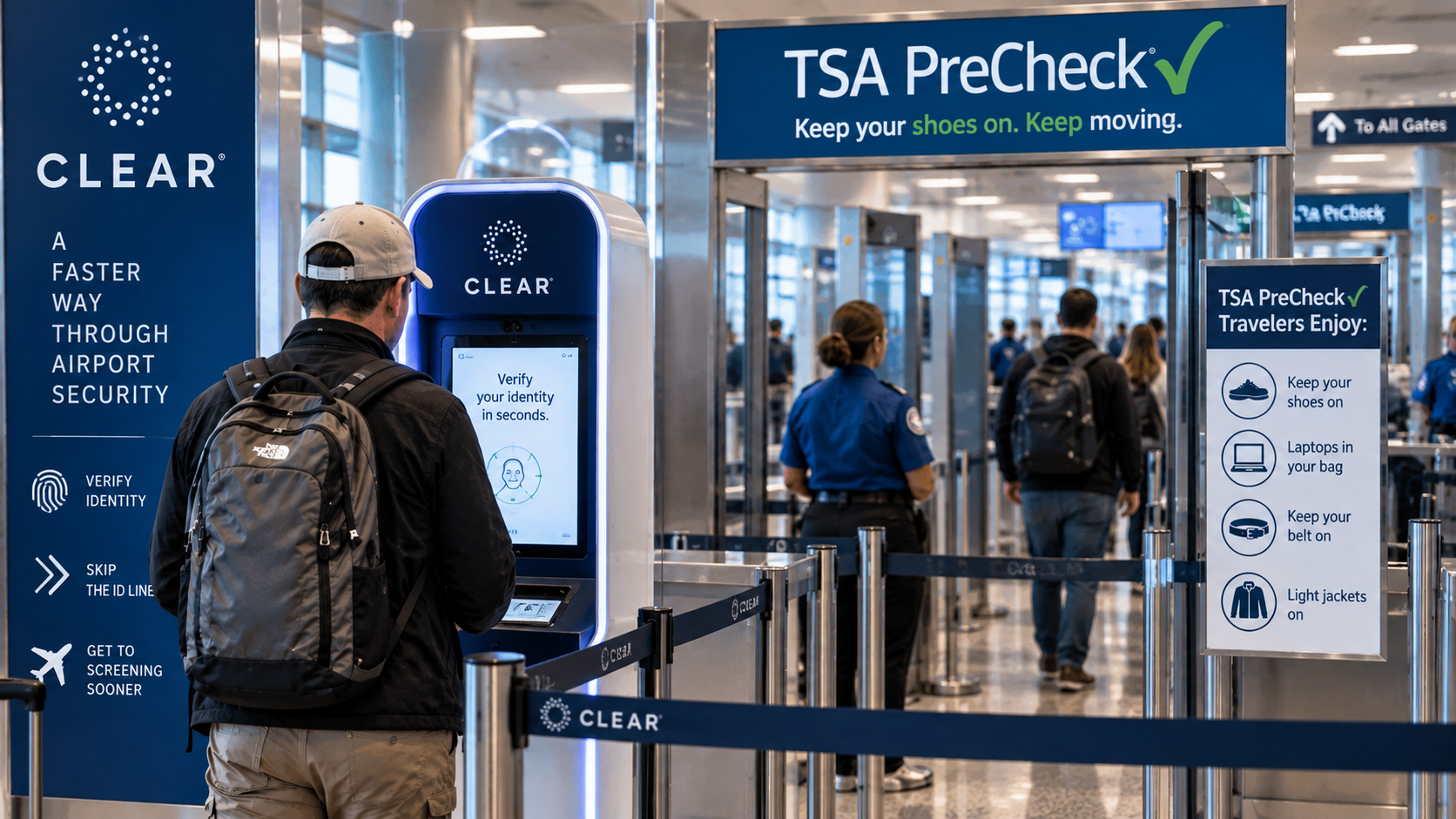
PreCheck passengers generally leave laptops and compliant 3-1-1 liquids packed while keeping belts and light jackets on.
Shoes stay on too, although that's no longer the exclusive PreCheck benefit it once was now that standard-screening passengers generally keep theirs on as well.
You can find current benefits, enrollment information and participating locations directly from TSA PreCheck
Once you're enrolled, your Known Traveler Number, or KTN, needs to be associated with your airline reservation.
Don't simply assume that because you have PreCheck, you're automatically using PreCheck on every trip. Look at your boarding pass for the TSA PreCheck indicator.
That's the little piece of evidence that matters when you're standing at the checkpoint.
And expedited screening is never an absolute guarantee. TSA can still require additional screening when necessary.
So What Does CLEAR+ Do?
This is where airport programs start getting tossed together into one big bowl of alphabet soup.
CLEAR+ and TSA PreCheck aren't the same thing.
CLEAR+ primarily helps expedite the identity-verification portion of the airport security process. Members use CLEAR's identity technology before proceeding to TSA screening.
TSA PreCheck changes the screening experience itself.
So you can have:
CLEAR+ without PreCheck: expedited identity verification followed by standard TSA screening.
PreCheck without CLEAR+: TSA identity verification followed by the PreCheck screening process.
CLEAR+ and PreCheck: CLEAR handles the expedited identity-verification portion, followed by PreCheck screening.
CLEAR explains the distinction between the programs in its CLEAR+ vs. TSA PreCheck guide.
Enrollment in one does not automatically enroll you in the other.
And I'd still carry your physical identification.
Airport technology is wonderful right up until the moment it decides it would like to see your driver's license after all.
What About Seniors, Disabilities and Medical Conditions?
Travelers with disabilities, medical conditions or other special circumstances may need additional assistance getting through airport security.
Some older advice specifically mentions the screening accommodations TSA once provided travelers 75 and older, particularly keeping shoes on. The nationwide change to standard shoe screening has made that particular distinction far less meaningful.
Much more useful is knowing about TSA Cares.
Travelers with disabilities, medical conditions and other special circumstances can contact TSA Cares before traveling to ask screening questions and request assistance.
TSA recommends contacting the program at least 72 hours before departure when requesting checkpoint assistance. Depending on the circumstances and availability, that can include assistance from a Passenger Support Specialist.
Travelers who may need help can review the current information on TSA Cares before departure.
Wait. Can You Go Through TSA Without a Plane Ticket?
For decades, the security checkpoint was essentially the dividing line.
No boarding pass? No wandering down to the gate to see someone off or waiting there when they returned.
That's changing.
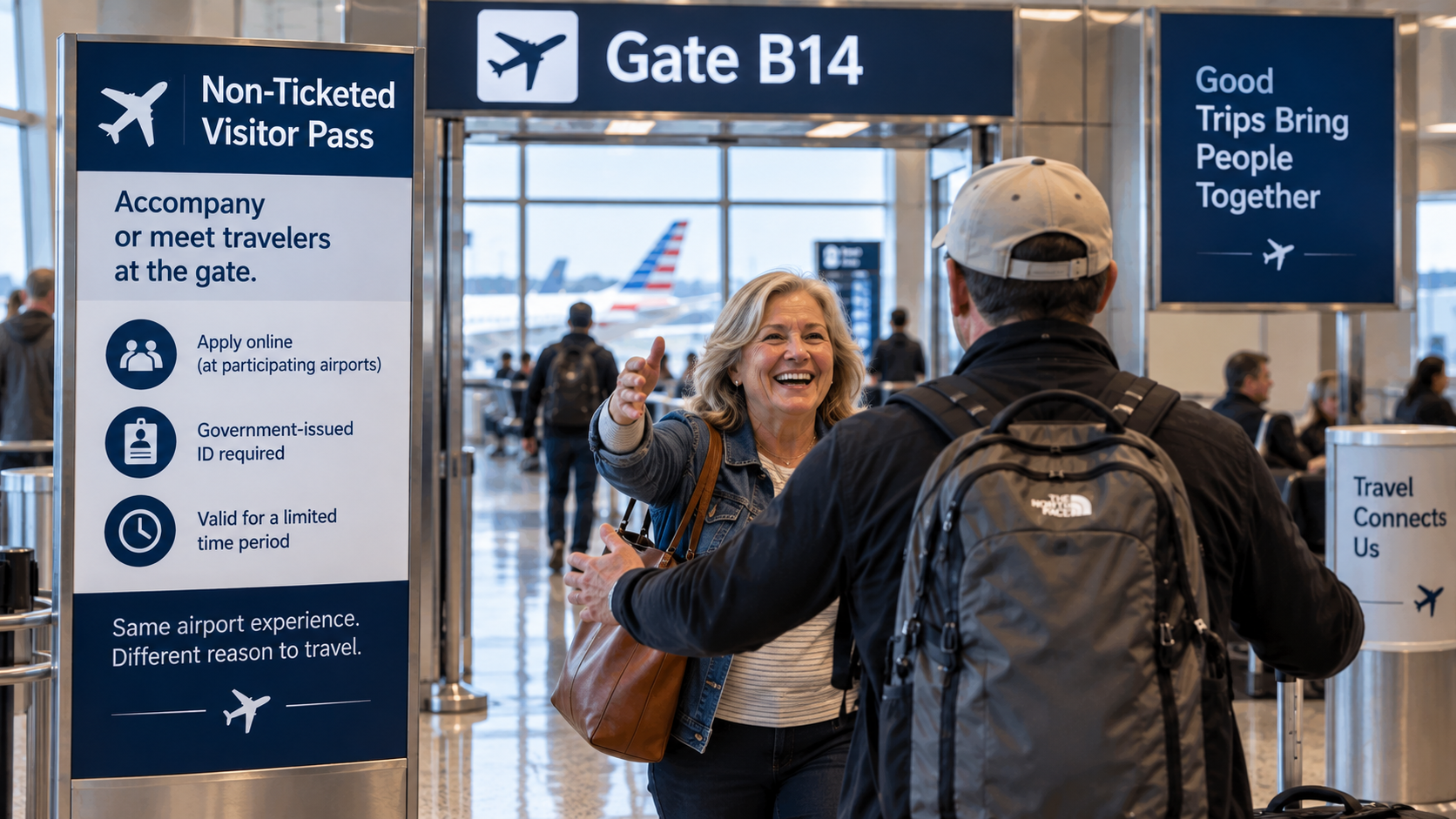
Some U.S. airports now offer programs allowing approved non-ticketed visitors to enter the secure side of the terminal after completing the required application and security screening.
And in September 2026, TSA introduced Gateside by TSA PreCheck, allowing eligible TSA PreCheck members at participating airports to request access even when they aren't flying.
The practical reasons are actually pretty wonderful.
You might accompany an elderly relative to the gate, spend a little more time with someone before departure, meet a family member as they walk off the plane, or visit someone during a long connection.
Availability, eligibility and procedures vary, so this is definitely one to verify before driving to the airport expecting to stroll through security.
And then there's another advertised benefit.
Shopping and dining.
Apparently there is an untapped population yearning to go through airport security without actually traveling so they can experience airport retail.
I've personally never been sitting at home thinking:
You know what I need? An Amelia Island hoodie. If only I could get through security at JAX, I could pay an extra $20 for one.
Throw in a prepackaged tuna sandwich and a coffee and we've created a lovely little $150 afternoon without the inconvenience of actually going anywhere.
The Easiest TSA Strategy Is Simply Being Ready
You don't need to memorize every TSA procedure before heading to the airport.
In fact, you probably shouldn't.
Technology changes. Procedures change. Different checkpoints can use different equipment.
Instead, get the fundamentals right.
Have acceptable identification. Have your boarding pass accessible. Know what's in your carry-on. Follow the 3-1-1 liquids rule. Empty your pockets before you're standing in front of the scanner. If you have TSA PreCheck, make sure it actually appears on your boarding pass.
Most importantly, listen to the TSA officer working that checkpoint, that day.
You'll get through security without unnecessary drama, everyone behind you will silently appreciate your competence, and you'll arrive airside with plenty of time to contemplate whether that tuna sandwich is really worth $14.95.
It probably isn't.
But you're on vacation.