


Do You Need Vaccinations Before Traveling Internationally?
Some countries recommend vaccinations. Others require proof of vaccination for entry. Knowing the difference is an important part of planning an international trip.
A quick note: This article provides general travel information, not medical advice. Always consult your doctor or qualified medical professional before receiving vaccinations or taking preventive medications. Your health history and travel plans matter.
One More Thing to Check Before You Book
You've found a destination that looks incredible. Maybe you've already started comparing flights, checking hotel prices, and making a list of things you'd like to see.
But before you start making reservations, there's another question worth asking:
Does this destination recommend or require any vaccinations?
It's an easy detail to overlook, particularly if you're accustomed to traveling within the United States.
And there's an important distinction that many travelers don't realize.
A vaccination might be recommended to protect your health without being required to enter the country. Another destination might require proof of vaccination from certain travelers before allowing them to enter.
Those are two very different situations.
We've talked about researching destinations before making reservations in Before You Plan an International Trip, Check This Website. Vaccination requirements are another reason that research belongs at the beginning of your planning, not the end.
CHECK BEFORE YOU GO.
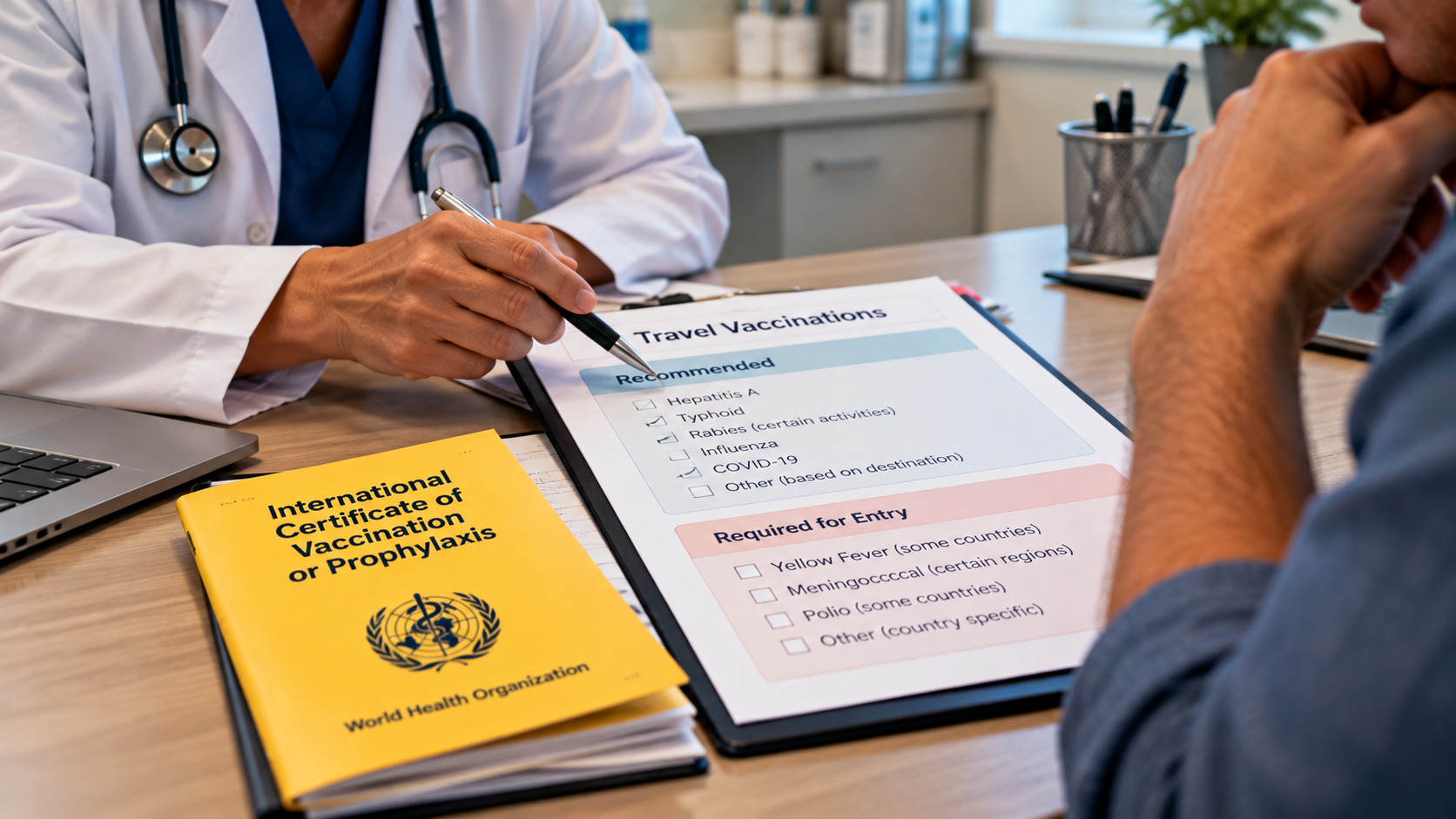
Recommended and Required Are Not the Same Thing
Let's say you're planning a trip to a country where yellow fever is a concern.
You might discover that vaccination is recommended for travelers visiting certain areas.
That recommendation is about protecting your health.
But depending on the destination and where you've recently traveled, you might also encounter a requirement to show proof of yellow fever vaccination.
That's about satisfying the country's entry rules.
Here's the distinction:
Recommended: A health authority advises vaccination because of potential health risks associated with a destination, activity, or individual circumstances.
Required: A country has an entry rule requiring certain travelers to provide proof of vaccination.
A vaccination can be recommended without being required. It can be required for some travelers but not others. Sometimes both apply.
And an entry requirement doesn't automatically mean a particular vaccination is medically appropriate for everyone.
That's why checking official requirements and consulting your medical professional are both important.
Three Familiar Examples
You don't need to memorize a long list of diseases to understand why this matters. A few familiar examples tell the story.
Yellow Fever
Yellow fever is one of the clearest examples of the difference between a health recommendation and an entry requirement.
Some countries recommend yellow fever vaccination for travelers visiting certain areas.
Other countries require an International Certificate of Vaccination or Prophylaxis, commonly called a yellow card, from travelers arriving from particular countries where yellow fever is a risk.
Sometimes your travel route matters as much as your destination.
For example, a country may impose a documentation requirement because you've recently visited or transited through a yellow fever risk country.
And some travelers have medical reasons why yellow fever vaccination may not be appropriate. That's a matter to discuss with a qualified medical professional, along with any implications for entry requirements.
Hepatitis A
Hepatitis A vaccination is another common travel health recommendation for certain destinations.
But unlike yellow fever, hepatitis A vaccination generally isn't something travelers must prove at immigration.
This illustrates an important point:
Just because a country doesn't require a vaccination for entry doesn't mean there aren't health precautions worth discussing.
Your healthcare professional can help determine whether a recommendation applies to your itinerary and circumstances.
Malaria
Malaria introduces a different consideration.
Travelers often hear about malaria before visiting certain tropical destinations and assume they need a vaccination.
But there isn't a routinely recommended malaria vaccine for adult international tourists.
Instead, depending on where you're traveling, prevention may involve prescription medication, mosquito precautions, or both.
And malaria risk can vary considerably within the same country.
A visit to a major city may involve different considerations from spending several nights in a remote rural area.
The point isn't that everyone visiting a particular country needs malaria medication.
It's that you should understand the risks associated with your particular trip and discuss appropriate precautions with your medical professional.
Your Destination Isn't the Whole Story
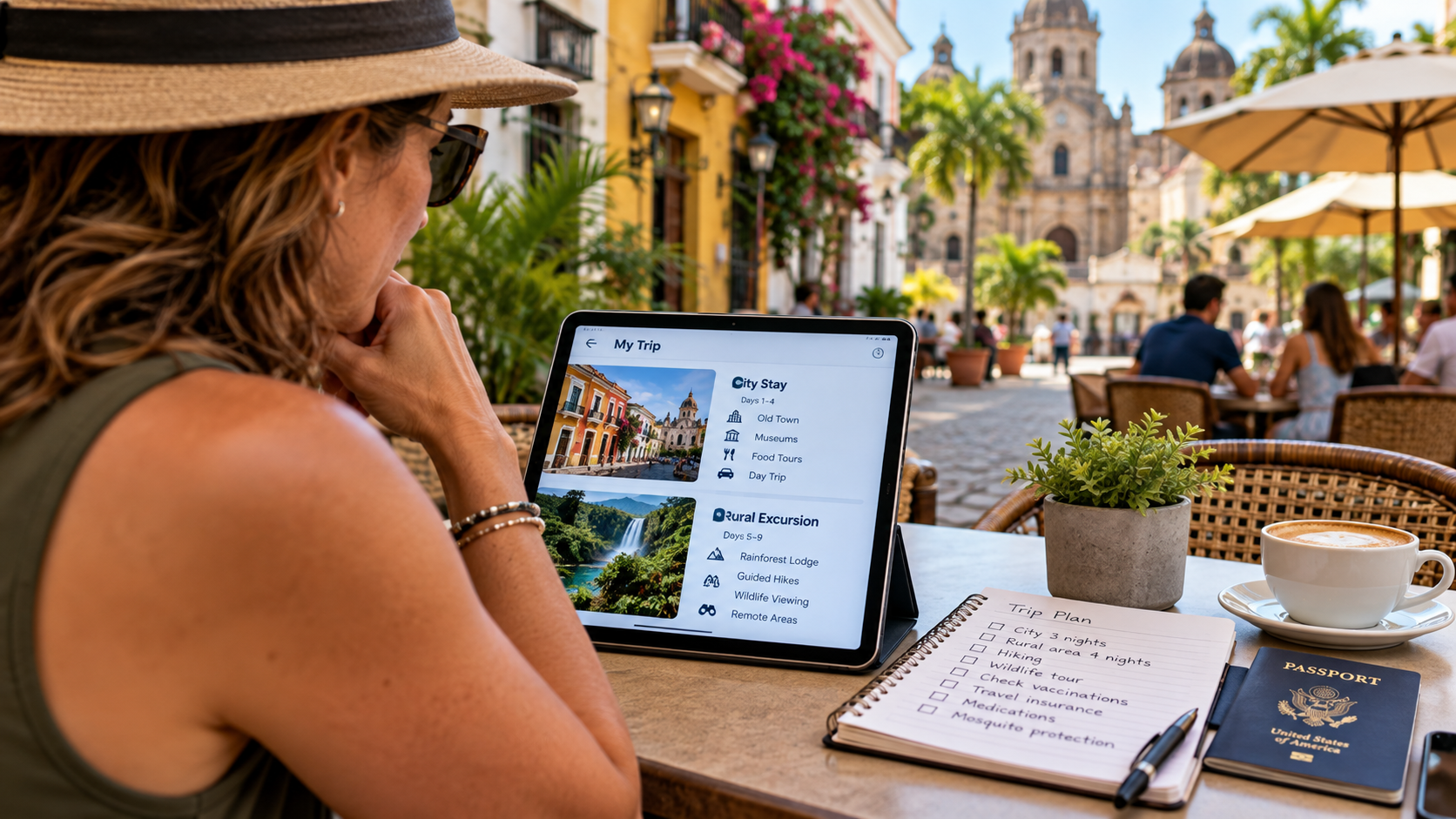
Imagine two travelers visiting the same country.
One plans to spend five days exploring a major city, staying in a hotel, visiting museums, and enjoying restaurants.
The other plans to spend three weeks traveling through rural areas, hiking, and staying in remote accommodations.
Same country. Very different trips.
Their health recommendations may differ because of where they're going, what they're doing, how long they're staying, and their individual medical circumstances.
Your route matters, too.
Certain vaccination entry requirements depend on countries you've recently visited or traveled through. Even an international connection may be relevant under some countries' rules.
That's why we recommend checking your complete itinerary, not simply the final destination.
And don't assume that because a friend traveled there last year without needing vaccination documentation, the same rules will apply to you.
Where Do You Find Reliable Information?
Fortunately, you don't have to guess.
Start with the CDC Travelers' Health website.
Select your destination and review the information about recommended vaccinations, disease risks, and other travel health precautions.
The CDC is particularly useful for identifying questions to discuss with your healthcare professional.
Next, visit the U.S. State Department's country information pages.
These pages provide important travel and entry information and can help direct you toward the destination's official requirements.
Finally, verify any vaccination entry requirements through the destination country's official government, immigration authority, or embassy.
Remember: A CDC health recommendation and another country's legal entry requirement aren't necessarily the same thing.
Both deserve attention, but they answer different questions.
And because rules can change, check again as your departure approaches.

Don't Leave This Until the Last Minute
Imagine discovering a vaccination requirement three days before your flight.
Now you're scrambling to find an appointment, obtain the necessary documentation, and figure out whether you'll satisfy the entry requirement in time.
That's not exactly the relaxing start to a vacation you had in mind.
Some vaccinations require multiple doses. Others need time before protection develops or before the documentation becomes valid.
For example, when a yellow fever vaccination certificate is required, it generally becomes valid 10 days after vaccination.
The CDC recommends arranging a pre-travel health consultation at least a month before departure, ideally earlier if your itinerary or vaccination needs are more complicated.
That gives you time to discuss recommendations, arrange appointments, and address any entry documentation requirements.
And if you're planning a last-minute trip, don't assume there's nothing you can do. Contact a qualified healthcare professional and explain your itinerary.
Our preference is simple:
Check before you book whenever possible.
Finding out early gives you options. Finding out at the airport may leave you with very few.
The Curated Upgrades Takeaway
Before booking an international trip, take a few minutes to research the destination's vaccination recommendations and entry requirements.
Understand the difference between what's recommended for your health and what's legally required for entry.
Check your entire itinerary, including connections. Use official government and public health sources rather than relying on an old forum post or someone else's experience.
And remember, Curated Upgrades provides travel information, not medical advice. Always consult your doctor or qualified medical professional before receiving vaccinations or taking preventive medications.
The goal isn't to become an expert in infectious diseases.
It's to avoid discovering at the airport that you missed something important.
CHECK BEFORE YOU GO.
Travel Smarter. Go Further.