

Analysis Paralysis: When Is the Best Time to Buy Airline Tickets?
The fare looks reasonable. The dates work. So why is it so hard to click Purchase?
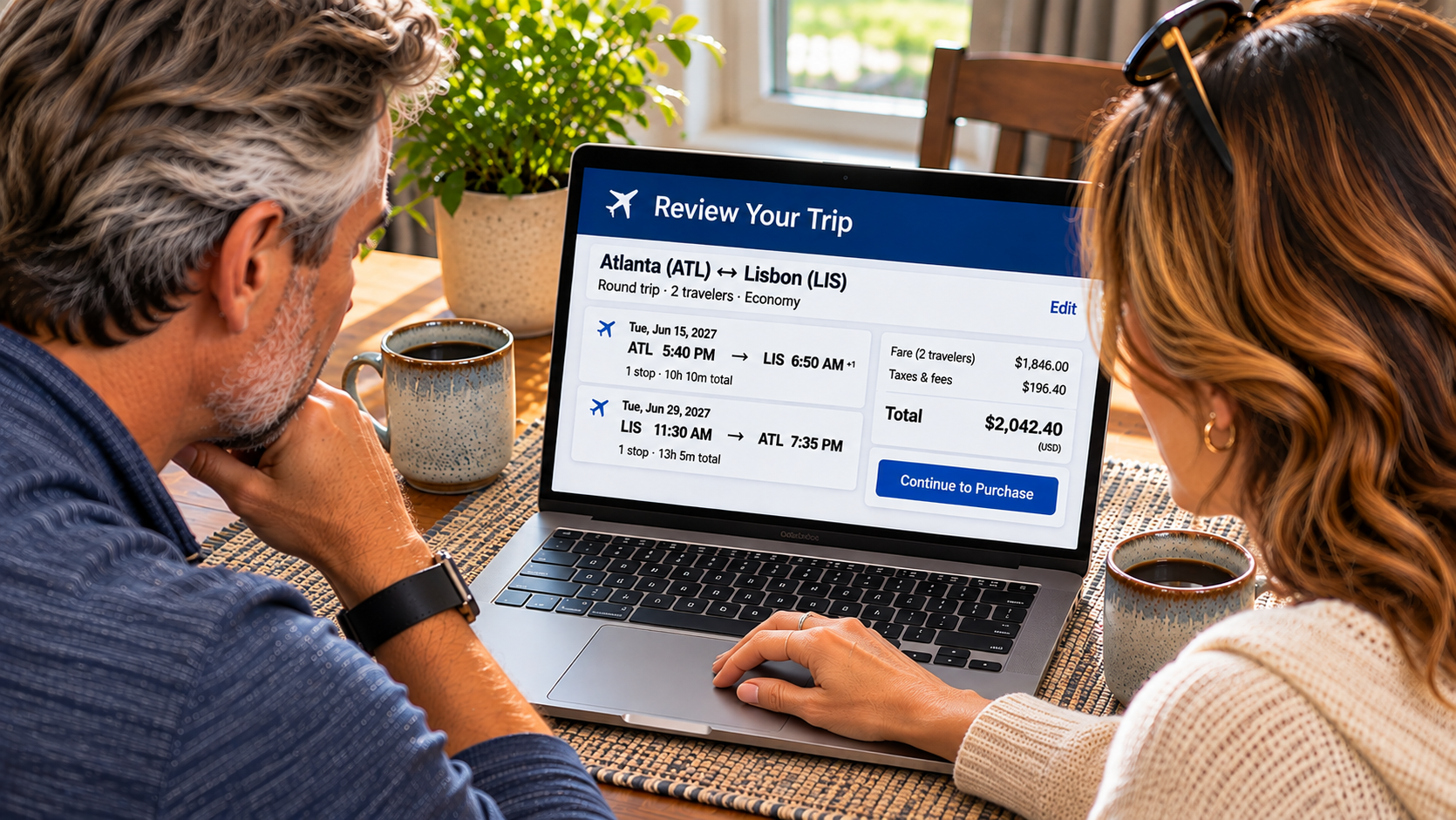
You've found the flights. The departure times work. The connection isn't terrible. The price is within your budget.
But what if it's cheaper next Tuesday? What if you wait another month? What if someone else gets the same flight for $200 less?
So you check again tomorrow. And the next day.
Welcome to airfare analysis paralysis, where you can spend three weeks trying to save $50 and end up paying $200 more.
I've booked plenty of flights over the years. Some were bargains. Others probably weren't. I'm 10,000% certain I've paid more than someone else for the same seat.
And I've enjoyed the trips anyway.
Because the goal isn't necessarily finding the cheapest ticket. It's finding a price that works for you and the trip you want to take.
What Is a Good Airfare, Anyway?
I see this question constantly in travel forums:
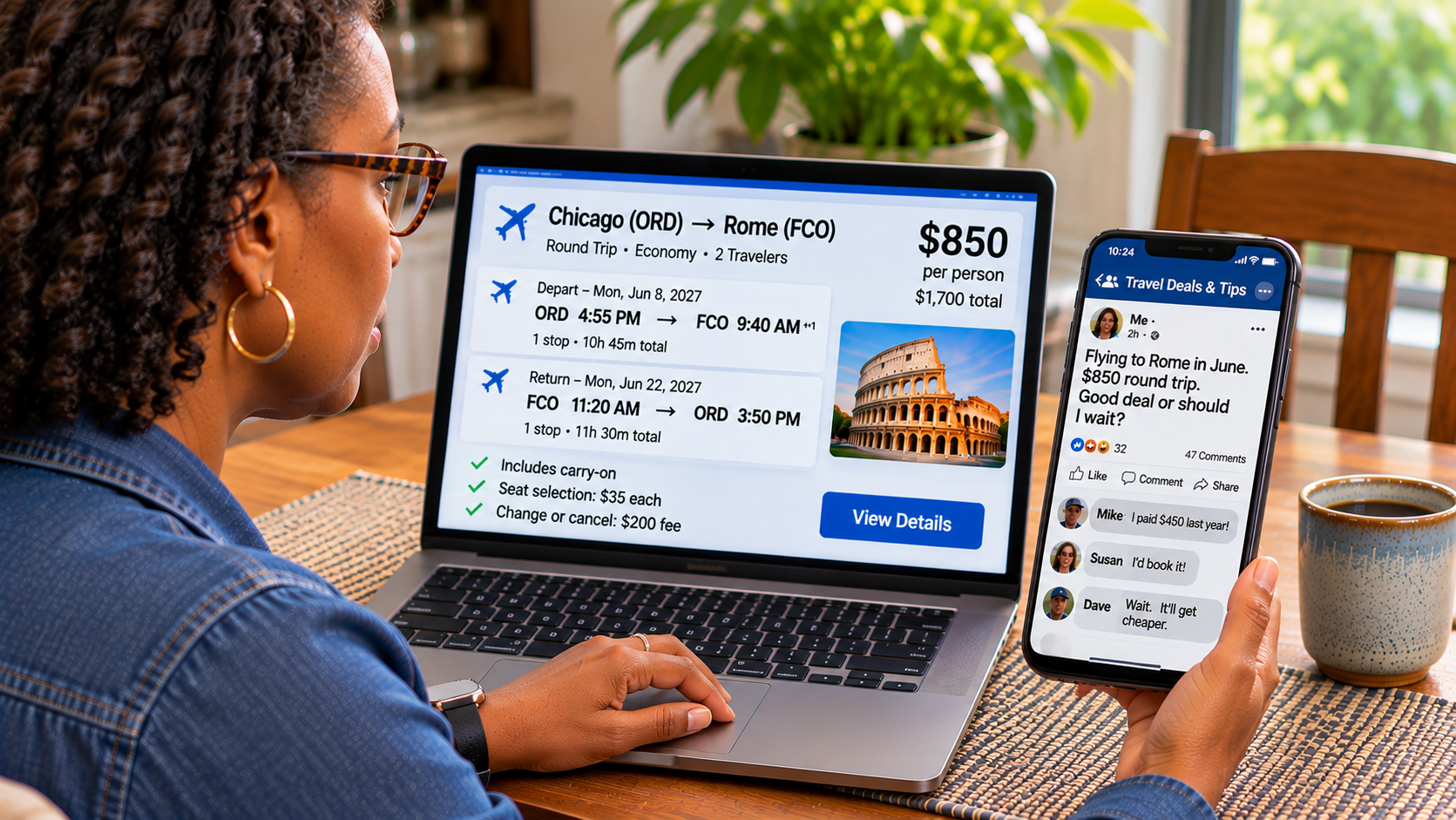
"I'm flying to Rome in June. Is $850 a good price?"
Maybe. But compared with what?
Basic Economy or regular Economy? Nonstop or two connections? A convenient departure or an overnight layover? What dates? What baggage allowance?
When I start researching flights, I use my own travel experience as a baseline. Then I check Google Flights, often looking a few days before and after my preferred dates if we have flexibility.
Google Flights may indicate whether current prices are low, typical, or high compared with historical fares. Capital One Travel offers similar guidance.
They're useful tools, but they're not crystal balls. And while I can search and track Premium Economy or Business Class fares, historical comparisons and predictions aren't always as detailed or available as they are for Economy.
I also compare what I'm actually willing to purchase. If I don't want Basic Economy, its advertised price isn't my benchmark.
Past fares provide perspective, but costs and market conditions change. Fuel, labor, inflation, competition, and demand all influence airline economics and pricing. A ticket purchased twenty years ago isn't necessarily a useful comparison without that context.
Once I've compared realistic options, I ask myself a simple question:
Is this trip worth this price to me?
Sometimes the Destination Is Negotiable. Sometimes It Isn't.
If we're planning a summer vacation without a fixed destination, I have choices.
Maybe Scotland is expensive this year. Maybe Oregon or somewhere we've never visited offers better value.
I'm not going to spend months hoping one particular airfare drops when we could enjoy a completely different trip.
But sometimes the destination and dates are nonnegotiable.
We wanted to see a concert at Red Rocks Amphitheatre in Colorado. The concert had a specific date, and I had a long weekend available.
That was our window.
I wasn't going to ask the band to reschedule because airfare might be cheaper the following Thursday.
I found flights with acceptable schedules at a price I was comfortable paying and booked them.
Could I have saved money by waiting? Possibly. Could I have paid more? Absolutely.
But we had our flights, our concert tickets, and a weekend to look forward to.
For me, that was a successful purchase.
You're Buying a Trip, Not Just an Airline Ticket
Here's something people overlook when they're chasing a lower airfare.
The flight is only one part of the expense.
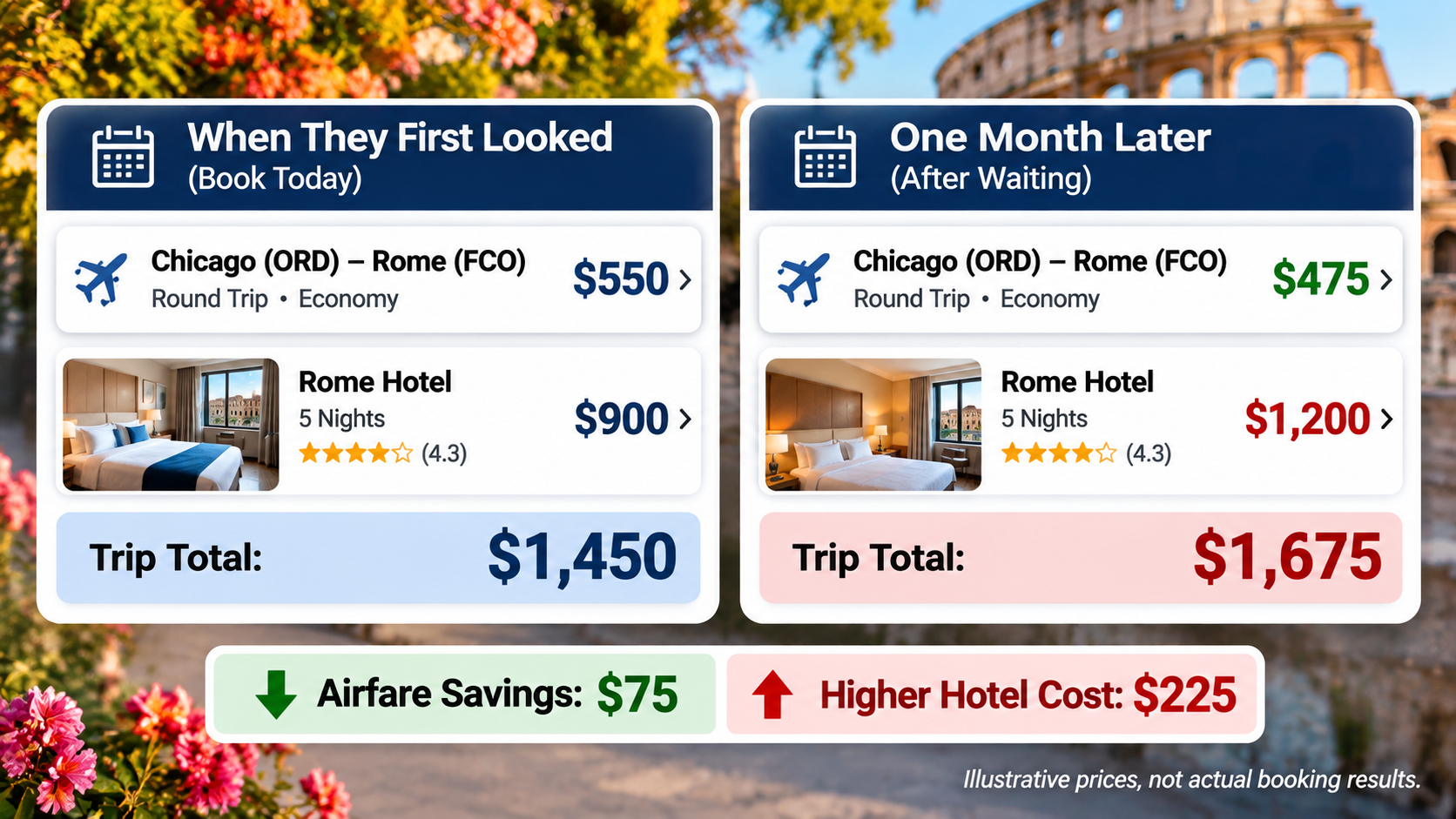
Suppose you wait a month hoping to save $75 on airfare. Meanwhile, your preferred hotel increases by $60 a night.
Over five nights, that's another $300.
Or the rental car you wanted becomes unavailable, leaving you with a more expensive alternative.
Of course, lodging and rental prices can fall, too. Flexible cancellation policies sometimes let you secure reservations while continuing to compare prices.
The point is to consider the entire trip.
If airfare is higher than expected but the trip is important to me, I might economize elsewhere. A less expensive hotel, a smaller rental car, or a change in itinerary could bring the total cost back within budget.
The cheapest airline ticket doesn't automatically produce the cheapest vacation.
There's No Trophy at the Boarding Gate
Here's something I don't worry about: what the passenger across the aisle paid.
Maybe they paid less. Maybe they paid twice as much. Maybe somebody got a complimentary upgrade to First Class.
Good for them.
There isn't a trophy at the boarding gate for the passenger who found the best fare.
I also don't crowdsource my travel decisions.
There's nothing wrong with asking questions or learning from other travelers. But someone who says they'd never pay $800 for a particular flight doesn't know my circumstances.
Maybe I want a nonstop. Maybe Premium Economy is worth the difference to me. Maybe the cheaper alternative involves a connection I don't want.
And my checkbook doesn't care what a stranger paid for a different flight last September.
Every trip has its own priorities, compromises, and budget.

Sometimes I Keep Looking After I've Booked
Buying the ticket doesn't always mean I stop searching.
For our upcoming Scotland trip, we've booked Premium Economy on Virgin Atlantic from London Heathrow to Miami using points.
We're happy with those seats.
But if Upper Class becomes available at a points price I like, I'd consider changing the booking. If a suitable award itinerary from Edinburgh to Orlando opens up, that might be even better.
I'm not searching because I regret what I booked. I'm watching for a specific improvement I'd actually use.
The same principle can apply to paid tickets.
Depending on the airline, fare type, and booking terms, you may be able to change or cancel a ticket and use a credit toward a lower-priced replacement.
But a flight credit isn't necessarily a refund. Basic Economy restrictions, credit expiration dates, award redeposit rules, and third-party booking conditions all matter.
Before making a change, compare the actual savings with any fees, lost benefits, or credit restrictions. The U.S. Department of Transportation's airline ticket refund guidance is a useful starting point for understanding refund rights, although voluntary changes and fare credits depend on the applicable ticket terms.
If there's no realistic way to improve my booking, I stop looking.
There's Value in Having Your Plans Made
I like knowing where we're going, where we're staying, and how we're getting around.
Whenever practical, I also like having most of the trip paid for before we arrive.
That doesn't mean buying everything at the first price I see.
I research, compare, and make decisions. Then I move on.
I'm sure I've paid too much for airfare, hotels, Airbnbs, and rental cars at some point.
I'm equally sure I've gotten some excellent deals.
But the experiences have been worth it.
There's value in having the important arrangements settled, provided the costs fit your budget. And there's value in the time you get back when you're no longer checking the same flight every morning.

So When Should You Buy?
There isn't one perfect booking day or a universal number of days before departure. Historical airfare trends can be helpful, but they can't account for every route, holiday, concert, or personal priority.
Here's my approach.
🟢 BUY IT: The Trip and Price Make Sense
You've compared realistic alternatives. The itinerary works. The total trip fits your budget.
Maybe the fare drops tomorrow. That doesn't make today's decision wrong.
🟡 KEEP WATCHING: You Have Flexibility and a Reason to Wait
Your dates or destination are flexible, current fares seem unusually high, or you're watching for a specific improvement to an existing booking.
Set an alert, decide what price would make you act, and keep your expectations realistic.
🔴 STOP SEARCHING: There's Nothing Useful Left to Decide
You've booked your ticket, there's no practical rebooking opportunity, and you're only checking whether somebody else paid less.
Close the browser. Stop second-guessing yourself.
You've made your decision. Now enjoy the anticipation of the trip.