


I’m Loyal to My Checkbook
Why Smart Travelers Prioritize Real Value Over Airline Loyalty
People sometimes ask if I’m loyal to a particular airline.
The answer is yes.
And no.
I absolutely believe in airline loyalty programs. If you fly an airline, join its program. They’re generally free, the miles can add up, and even an occasional traveler can eventually benefit from them.
But when it’s time to actually book a trip, my loyalty doesn’t belong to an airline logo painted on a tail fin.
It belongs to my checkbook.
And that doesn’t mean I automatically choose the cheapest ticket.
Sometimes I intentionally spend more.
Sometimes I use points instead of cash.
Sometimes I look at an award ticket and decide my points are worth more to me sitting in the account for another trip.
Sometimes I’ll pay more for a nonstop flight because avoiding a connection gives me several hours of my vacation back.
And sometimes the cheapest economy ticket really is exactly what I need.
The goal isn’t to spend the least. The goal is to get the most value from what I spend.
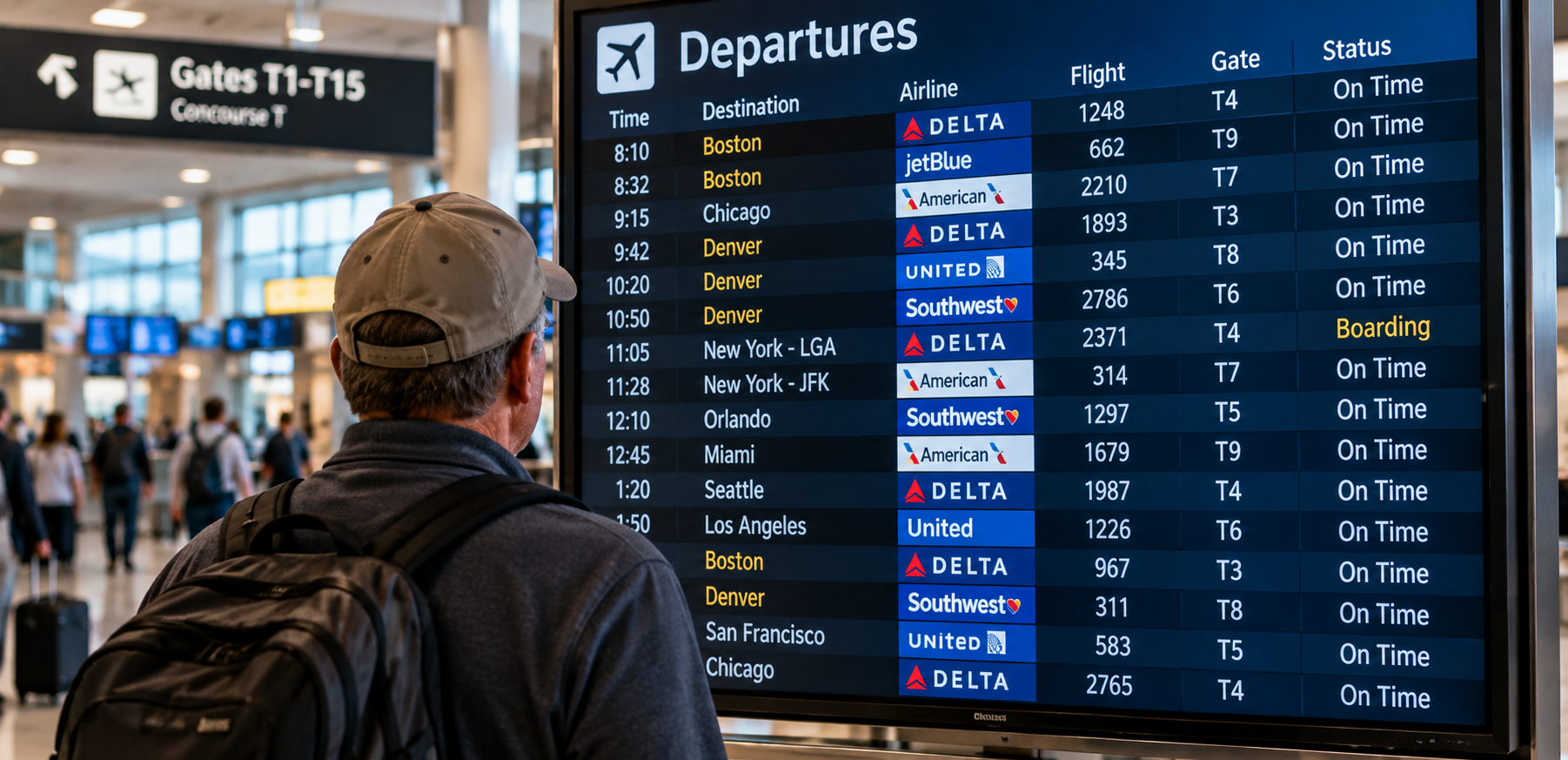
Loyalty Is a Tool, Not a Rule
Airline loyalty can absolutely have value.
In fact, I think every traveler should join the loyalty program for any airline they fly. They’re generally free, and there’s little reason to leave miles or potential benefits sitting on the table.
But joining a loyalty program and allowing that program to dictate your travel decisions are two very different things.
Status can bring better seats, checked bags, priority service, upgrades and other benefits. Miles can unlock flights you might never consider paying for with cash.
But loyalty becomes expensive when it starts making decisions for you.
Suppose one airline charges $420 for the trip you want, while another charges $310 and has a better schedule.
How much are the miles, status credit or familiar airline experience on the first airline actually worth to you?
Maybe they’re worth the extra $110.
Maybe they’re not.
That’s the calculation I want to make.
I don’t want to spend an extra $110 automatically because I’ve convinced myself that I’m an Airline A person.
Loyalty programs should work for you. You shouldn’t work for them.
That’s the distinction.
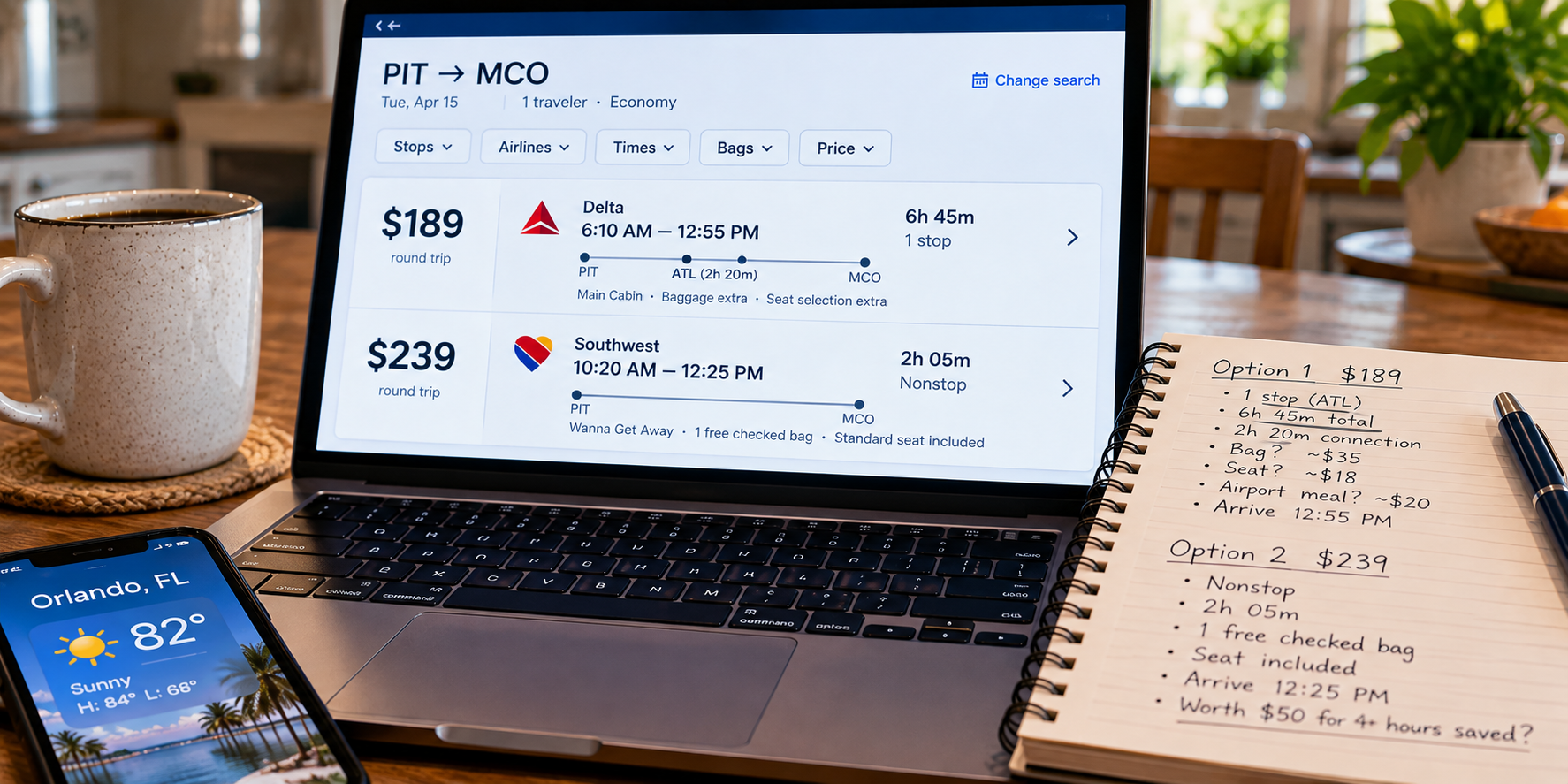
The Cheapest Ticket Isn’t Necessarily the Cheapest Trip
Airfare is only one line on the travel budget.
A cheaper flight with an inconvenient schedule might require another hotel night.
A long connection can mean another meal at airport prices and several hours you could have spent somewhere else.
A bargain flight into a secondary airport might save $75 on airfare and cost $100 in transportation to reach where you’re actually going.
Basic Economy might look cheaper until you add the bag and seat selection you wanted anyway.
And sometimes none of those things matter enough to justify spending more.
That’s why I don’t ask only:
“Which flight is cheapest?”
I ask:
“What does each option actually cost me?”
That includes money.
But it also includes time, convenience and aggravation.
The Cheapest Flight Isn’t Always the Cheapest Trip
Time Has Value, Too
This is probably the part of the equation I’ve come to appreciate most.
I’ve learned that my vacation starts in my living room, not when the airplane lands at the destination.
The drive to the airport, the flight, the connection and the arrival are all part of the trip.
So if two flights are $50 apart but one gets me to my destination six hours earlier, I’m not simply deciding whether six hours are worth $50.
I’m deciding what those six hours mean on this trip.
If I’m heading somewhere for two weeks and have nowhere I need to be that evening, perhaps I keep the $50.
If it’s a four-day getaway and the cheaper flight consumes most of the first day, that changes the calculation considerably.
The same thing happens with connections.
I’ll tolerate a connection when it makes sense. But I’m not going to add two connections and eight hours to a travel day just to remain loyal to one airline or squeeze a few more miles from a ticket.
My vacation time has value even though nobody sends me a receipt for it.
Sometimes the Upgrade Is Worth It
Being loyal to my checkbook doesn’t mean keeping it closed.
There are trips where I’ll happily spend more.
A better seat on a long overnight flight might mean arriving rested enough to actually enjoy the first day.
Premium Economy might offer enough additional comfort, space and benefits to justify the difference.
A Business Class award might be an excellent use of points even though economy would get me to exactly the same airport.
But the equation changes on a two-hour domestic flight.
Do I really need the premium cabin?
Maybe.
But I’m going to look at the price difference and ask what I’m actually getting for that money.
Sometimes I’ll decide the upgrade is absolutely worth it.
Other times I’d rather keep the money for a great dinner, another hotel night, an experience at the destination or simply leave it in my account.
That’s the part the airline’s upgrade screen doesn’t calculate for me.

Different Trips Deserve Different Decisions
A two-hour domestic flight and a nine-hour overnight flight don’t present the same problem.
Neither do a family vacation, a weekend getaway, a solo trip or the trip you’ve been planning for years.
On one trip, comfort might matter enormously.
On another, schedule wins.
Sometimes price dominates the decision.
Sometimes I’m willing to spend considerably more because the expensive option solves a problem that matters to me.
That’s why making the exact same booking decision every time rarely makes sense.
There is no airline, cabin, hotel chain, credit card or loyalty program that will be the best answer for every trip.
And that’s okay.
Points Aren’t Free Money
This philosophy applies to points and miles, too.
Once I’ve earned them, they’re another travel currency.
If a flight costs $250 or 30,000 miles, I don’t automatically use the miles because the flight suddenly feels “free.”
Those 30,000 miles could potentially be much more useful on another trip.
The reverse can also be true.
If cash fares are unusually high and an award is available at a reasonable rate, using miles might be the obvious choice.
The important thing is that I compare them.
I don’t hoard points forever waiting for some mythical perfect redemption.
But I don’t spend them simply because I have them either.
Points have value. Cash has value. The question is which one makes more sense for this trip.
Value Over Habit
Over the years, I’ve stopped asking:
“Which airline should I be loyal to?”
Instead, I ask:
“What’s the best value for this particular trip?”
Sometimes the answer takes thirty seconds.
Sometimes I have multiple tabs open, points balances pulled up, flight schedules scattered across the screen, and enough numbers scribbled on a piece of paper to make it look like I’m planning a small corporate merger.
But the principle stays simple.
What am I spending?
What am I getting?
What am I giving up?
Then I make the choice that makes the most sense for that trip.
That might mean staying loyal to an airline.
It might mean flying its biggest competitor.
Both can be smart decisions.
Because the airline doesn’t need my loyalty nearly as much as my travel budget needs my attention.
So when people ask which airline I’m loyal to, my answer hasn’t changed.
I’m loyal to my checkbook.