

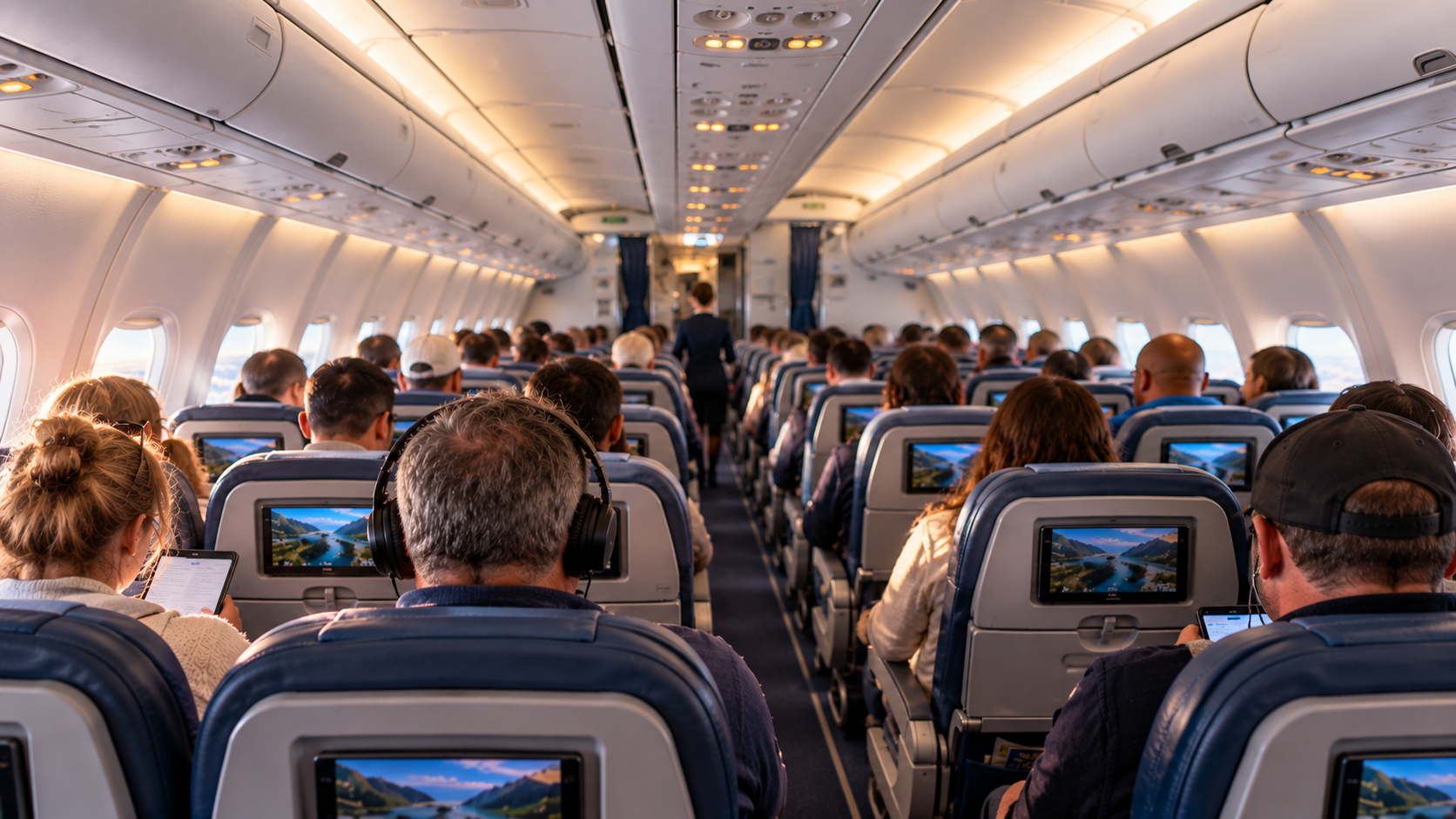
Tired of Seat 57B?
You don't need a First-Class ticket to make your next flight more enjoyable.
Most people don't remember the seat they flew in. They remember where it took them.
For years, though, I treated flying as something I simply had to endure before the vacation could begin.
I bought the cheapest reasonable ticket. I accepted whatever seat came with it. I squeezed into my row, watched the little airplane crawl across the map, and reminded myself that the good part started when we landed.
I also assumed the people having a better experience had simply spent a lot more money than I had.
I was wrong.
There is an enormous amount of territory between suffering in Seat 57B and buying a First-Class ticket.
Sometimes a better trip starts with choosing a different flight. Sometimes it's knowing which economy seat to select. It might mean using a benefit you already have, spending a few dollars strategically, or deciding that an upgrade isn't remotely worth what the airline is asking.
That's really what Curated Upgrades is about.
Not spending more.
Spending smarter.
The First Upgrade Happens Before You Buy the Ticket
I used to think airfare was mostly about one number: the price.
I'd search for flights, sort the results, find something reasonably cheap, and book it.
But two tickets that cost almost exactly the same can produce completely different travel days.
One might be nonstop while another consumes three extra hours with a connection. One might arrive at a convenient time while another lands so late that you need an additional hotel night. A cheaper fare might charge separately for the bag and seat you actually want.
And sometimes the flight that costs $40 more gives you something far more valuable than $40.
Time.
That's why I've stopped looking at airfare as simply the price of getting from Point A to Point B.
The flight is part of the trip.
Seat 57B May Not Actually Be Your Only Option
Economy looks like one product when you're shopping for airfare.
Once you open the seat map, things get more interesting.
There are aisle seats and windows. Exit rows and bulkheads. Seats with additional legroom. Seats that don't recline. Rows near lavatories and galleys. And, of course, middle seats that somehow remain exactly as wide regardless of how much you wish otherwise.
Even within the same cabin, your experience can vary considerably.
That doesn't mean you should automatically pay for a seat assignment.
It means you should know what you're accepting before you accept it.
A few minutes spent looking at the aircraft and available seats can sometimes improve several hours of your trip.
Free Is Still My Favorite Upgrade
Not every upgrade requires opening your wallet.
Airline loyalty programs are generally free to join, and even an occasional traveler can benefit from having an account before flying. Miles you never collect can't help pay for a future trip.
And earning miles doesn't necessarily require spending your life on airplanes. Depending on the program, there may be other ways to build a balance through credit cards, transfer partners, shopping portals, promotions, or everyday spending.
The same principle applies to benefits you may already have.
Maybe a credit card includes a checked bag, lounge access, a travel credit, preferred boarding, or another perk that changes the economics of your trip. Perhaps your fare or airline status already includes something you were preparing to purchase separately.
Before paying for an upgrade, I want to know what I already have.
The cheapest upgrade is the one you've already paid for.
Then There Are the Upgrades Worth Buying
This is where travel becomes personal.
Would I pay $35 to escape a middle seat on a long flight?
Very possibly.
Would I pay substantially more for essentially the same seat a few rows farther forward?
Maybe not.
Would I pay for an exit row that gives me enough room to stretch my legs on a longer flight?
Now we're talking.
There isn't a universal dollar amount at which an upgrade becomes "worth it." The value changes with the flight, the traveler, and even the trip.
A 90-minute daytime hop and an eight-hour overnight flight aren't the same problem.
Neither are a solo traveler who doesn't care where they sit and a couple who would really like to spend the next eight hours somewhere in the general vicinity of each other.
The question isn't simply:
How much does the upgrade cost?
It's:
What am I getting for that money?
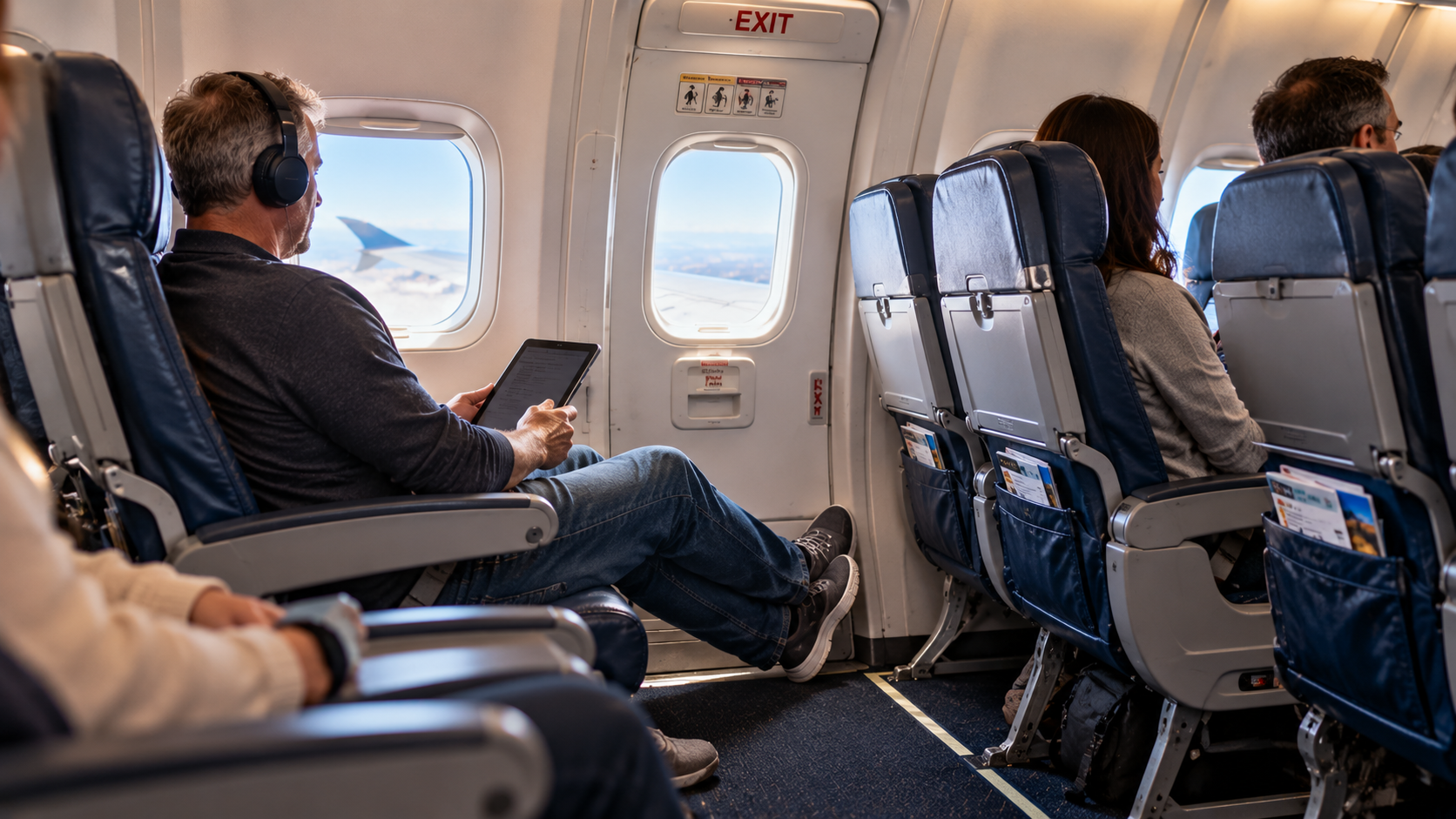
Sometimes the upgrade isn't a different cabin. It's simply a better seat.
And Sometimes the Right Answer Is Economy
This may be the most important part.
Curated Upgrades isn't about constantly moving toward the front of the airplane.
I've flown trips where spending more for a premium cabin made sense. I've also looked at the price difference and thought about what else that money could buy after I landed.
A great dinner.
Another night at the destination.
A rental car.
An experience I'd remember long after I'd forgotten what was served at 35,000 feet.
Sometimes an exit row is the sweet spot. Sometimes Premium Economy changes a long flight enough to justify the price. Sometimes the ordinary economy seat you already have is perfectly fine.
An upgrade is only an upgrade if it improves something that matters to you.
Your Vacation Doesn't Have to Start at Baggage Claim
That's probably the biggest thing I've changed about the way I travel.
I no longer treat the journey as the unpleasant admission price for reaching the destination.
The drive to the airport matters. The airport experience matters. The flight certainly matters. So does the connection, the seat, the arrival time, and how I feel when I finally walk out of the terminal.
I still care about price.
I just don't assume the lowest number on the screen automatically represents the best value.
And that's what Seat 57B has come to represent for me.
Not a bad seat.
A way of traveling where you simply accept whatever you're given because you assume the alternatives must be expensive.
They aren't always.
Sometimes the smartest upgrade costs money. Sometimes it costs points. Sometimes it costs five minutes of research.
And sometimes it costs absolutely nothing.
The goal isn't to fly First Class.
The goal is to make the journey better.