


Build the Trip Around the Hardest Reservation First
Some plans can move. Some can’t. Find the least flexible piece of your trip first, then build everything else around it.
It’s tempting to plan a vacation in order.
Book the flights. Find a hotel. Start filling Friday, Saturday and Sunday with things to do. Add a dinner reservation or two. Eventually, the itinerary starts looking pretty good.
Then you try to book the one thing you really wanted.
And it’s not available.
Sometimes the better approach is to start somewhere else:
Find the hardest reservation first.
Not necessarily the most expensive thing. Not necessarily the highlight of the entire trip. Find the thing with the least flexibility, put that on the calendar, and build outward from there.
Some Things Simply Don’t Move
Suppose you’re traveling to Charlotte for a NASCAR weekend.
The race is Sunday afternoon at 3.
That’s it.
You may have dozens of hotels to choose from. You may have several flights that work. You can visit the NASCAR Hall of Fame Saturday morning or afternoon. A race shop tour might fit somewhere else in the weekend.
But the green flag isn’t waiting because you found a better airfare on Monday.
Sunday at 3 goes on the calendar first.
Now work backward and forward. Which nights do you need the hotel? When should you arrive? Which flight home gives you enough time after the race? Where do the other activities fit?
The race is the obvious anchor because it simply doesn’t move.
But the hardest reservation isn’t always that obvious.

Flexible... Until It Isn’t
Suppose you’re spending a long weekend in New York and there’s a Broadway show you really want to see.
The show may have several performances while you’re there. Friday night. Saturday matinee. Saturday night. Maybe Sunday afternoon.
Plenty of choices.
Until there aren’t.
The Saturday evening performance sells out. Friday has only scattered seats. Sunday doesn’t work particularly well with your flight home. But there are still good seats available for the Saturday matinee.
Book the show.
Now Saturday at 2 is spoken for. Plan lunch, sightseeing and dinner around it instead of filling Saturday first and discovering later that the performance you want no longer fits.
The difference from the NASCAR example matters.
The race had one fixed time.
Broadway gave you several choices, but availability gradually took those choices away.
Both can become the hardest reservation for completely different reasons.
Sometimes One Reservation Plans the Evening
Restaurants can do the same thing.
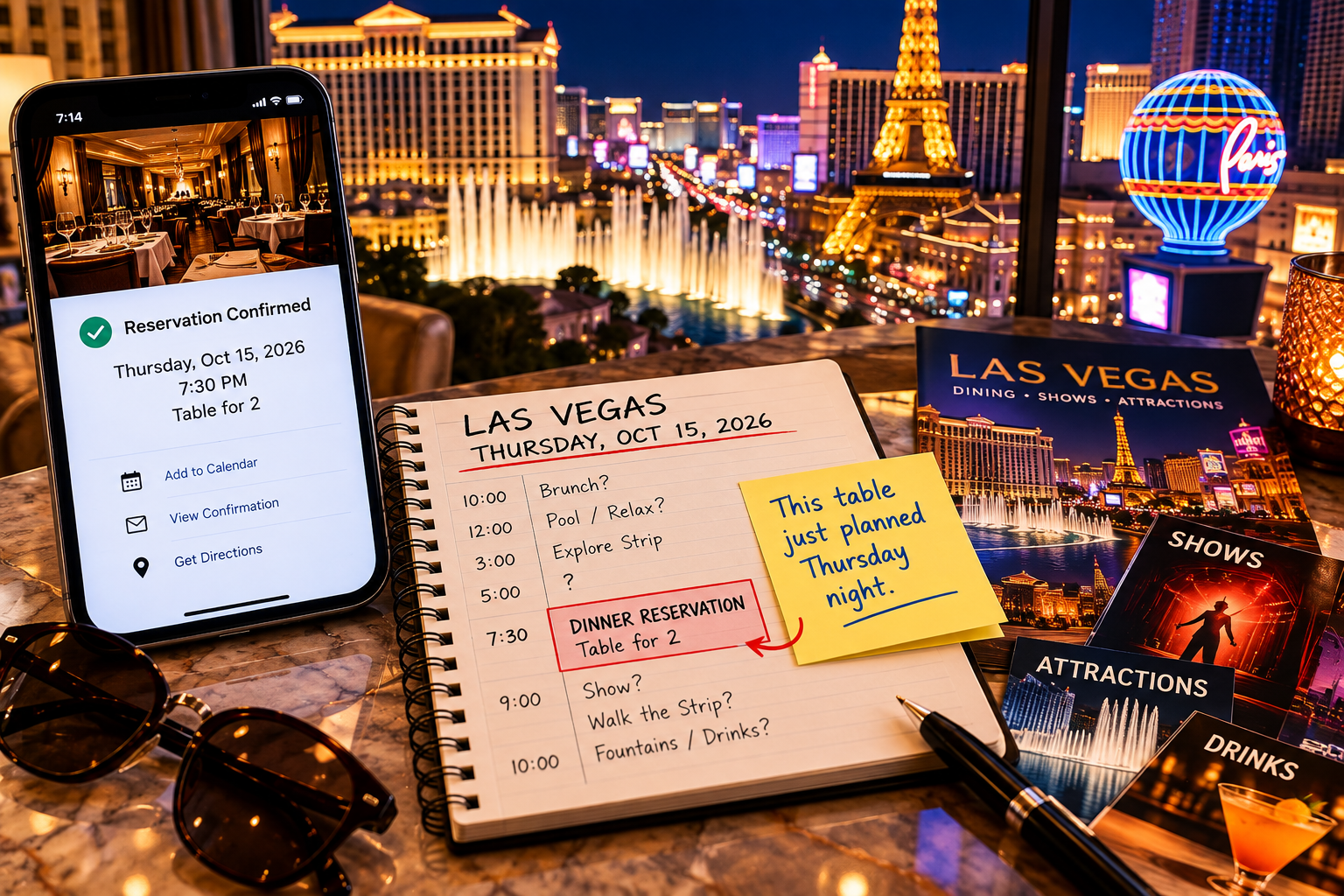
Maybe you’re going to Las Vegas and really want dinner at a particular celebrity chef’s restaurant. Perhaps Gordon Ramsay Hell’s Kitchen is on your list.
You don’t need to organize the entire vacation around dinner. You simply check availability before filling that evening with something else.
The table you want isn’t available Saturday. Friday conflicts with another plan. But Thursday at 7:30 works.
Thursday at 7:30 just became an anchor.
Now you know when to schedule a show, when you can wander the Strip and whether that late-afternoon activity you were considering still makes sense.
The restaurant may not even be among the three most important things you’re doing in Las Vegas.
That doesn’t matter.
It had fewer alternatives than everything else you were considering for Thursday night.
Sometimes the Hardest Reservation Has Wings
Flights can create the same problem, especially when you’re traveling somewhere with limited service.
A major route might have departures throughout the day. Miss the 10 AM flight and there may be another at noon.
Other destinations might have one flight that actually works for your trip.
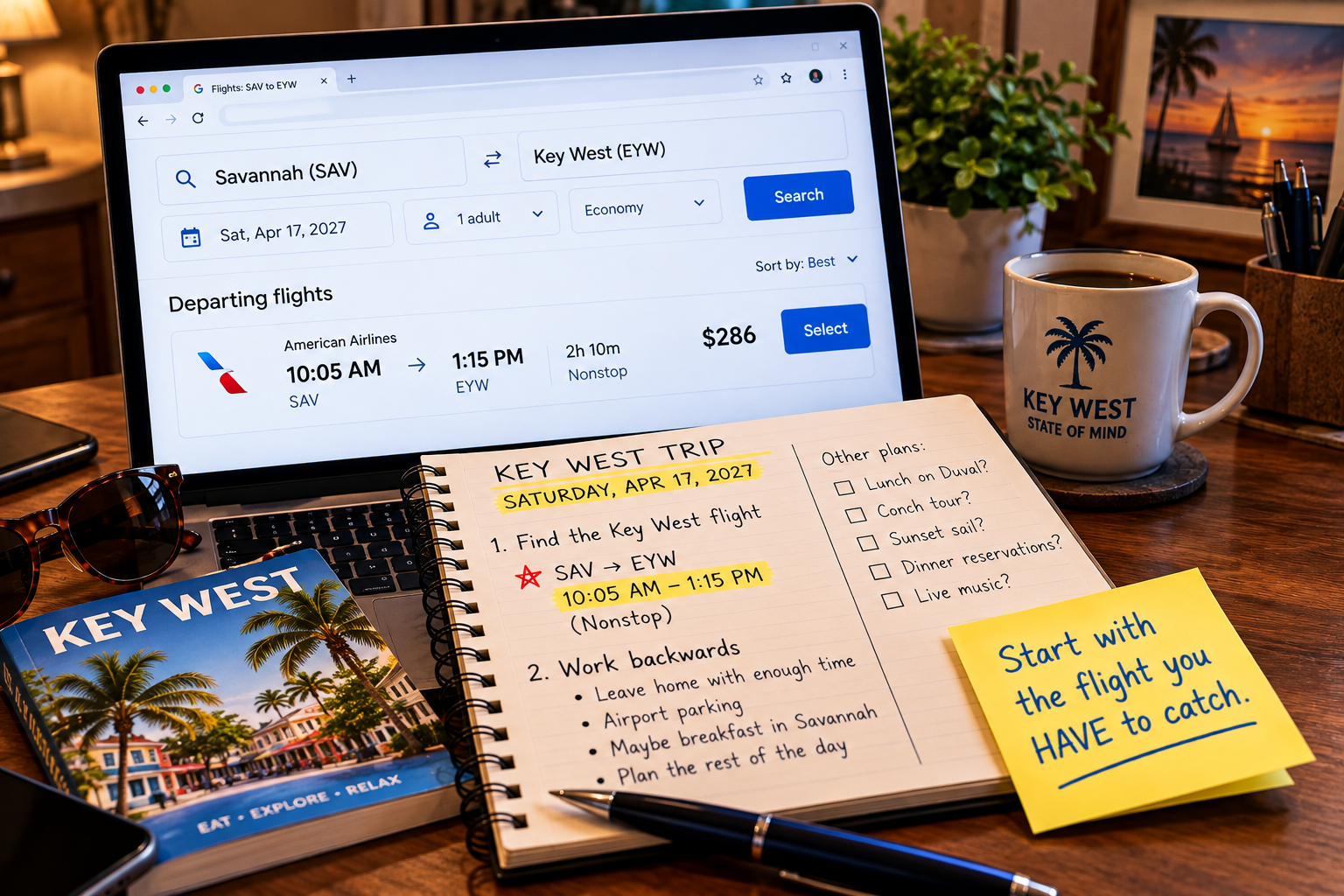
Suppose you’re looking at Savannah to Key West and the flight that fits your dates and schedule leaves at 10:05 AM.
Start there.
That departure determines when you leave home, when you need to reach the airport and what you can realistically do that morning.
The same thing can happen with a connection. If there’s only one useful onward flight to your destination, start with the flight you have to catch and work backward to find the first flight that gets you there comfortably.
This is especially useful when flight searches tempt us to start with the wrong end of the trip.
The nicest departure from home isn’t necessarily the one that makes the entire itinerary work.
Hardest Doesn’t Mean Most Important
That’s the distinction.
The NASCAR race might genuinely be the reason for the entire trip.
The Broadway show might be one of six things you want to do.
The restaurant might simply be a dinner you’ve wanted to try.
And the flight certainly isn’t why you’re going to Key West.
But each can become the least flexible piece of the itinerary.
That’s what you’re looking for.
Once you identify it, secure it first.
Then let the flexible pieces stay flexible.
Hotels with plenty of availability can move. Museums that are open most days can move. Dinner at the neighborhood restaurant you haven’t chosen yet can definitely move.
There’s no prize for booking those first.
This is also where Ask Better Questions Before You Book fits into the planning process. Instead of asking only what you want to do, ask which parts of the trip will become difficult or impossible to move later.
You Don’t Need to Plan the Entire Trip First
This isn’t an argument for scheduling every hour of your vacation six months ahead.
Quite the opposite.
You’re protecting flexibility.
Before filling the calendar, look at the handful of things you know you want to do and ask one question:
Which of these will be hardest to move later?
Book that first.
Then look for the next constraint.
Eventually you’ll reach the things that can happen almost anytime. Those can wait.
You don’t need an elaborate spreadsheet or a color-coded 15-day master plan.
Sometimes all you need is one immovable square on the calendar.
Put that in first.
Then build the trip around it.