


Want Better Travel Advice? Ask a Better Travel Question
The internet probably knows your destination. It doesn't know you.
Spend a few minutes in almost any online travel group and you'll see some version of these questions:
What should we do with our kids?
Is this a good itinerary?
Where should we stay that won't break the bank?
Is July a bad time to go because it rains?
There is absolutely nothing wrong with asking any of them.
In fact, they're usually being asked for exactly the right reason. Someone is planning a trip, isn't sure what to do next, and is hoping people who have been there can help.
And they probably can.
But first, they need a little more from you.
The problem with a broad travel question isn't that it's a bad question. It's that the people reading it may have to guess what a good answer means for you.
That's where a small change can produce much better advice.
Before You Ask the Internet, Ask the People in Your Living Room
Some travel questions are best answered before you ever open Facebook, Reddit or a travel forum.
What does your family actually enjoy?
How quickly do you like to travel?
Would you rather see three places well or seven places briefly?
What can you comfortably afford?
Is there something you're willing to splurge on?
Do your kids love castles, animals and trains, or would all three inspire a synchronized eye roll?
Those aren't questions strangers on the internet can answer particularly well.
Your travel partners can.
This doesn't mean you need to completely plan the trip yourself before asking for advice. Quite the opposite. Once you know a little more about what you're looking for, the collective experience in a good travel group becomes far more useful.
You're giving people something to work with.
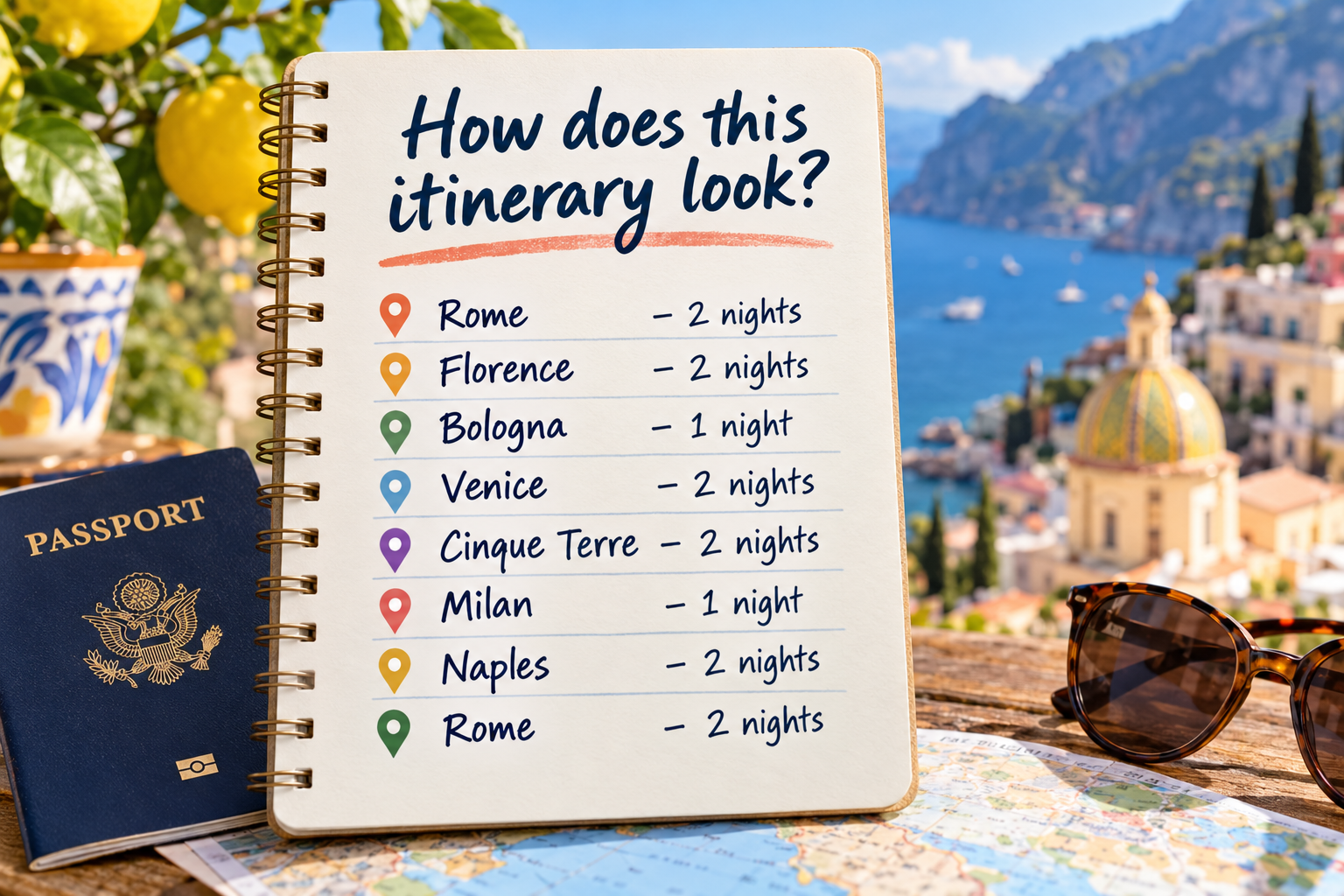
“Is This Itinerary Good?”
This may be one of the hardest travel questions to answer because good for whom?
One traveler might look at eight stops in two weeks and see an adventure.
Another sees eight hotel check-ins, seven packing mornings and a suspicious amount of time staring through train windows.
Neither person is wrong.
That's why an itinerary question becomes much easier to answer when you explain what you're trying to accomplish.
Instead of:
“Here's our itinerary. Does this look good?”
Try something closer to:
“We have 14 days in Italy. We enjoy smaller towns, food and history, and we're comfortable changing hotels every three or four nights. We'd rather experience a few places than check off every major city. Does this route make sense?”
Or perhaps you want precisely the opposite.
Maybe you've dreamed of seeing Rome, Florence and Venice and you don't mind moving quickly because this could be your only trip to Italy.
Say that.
Your trip does not have to satisfy somebody else's definition of slow travel, fast travel, luxury travel, budget travel or anything in between.
The useful question is whether the itinerary supports the trip you want to have.
This is also where our Map First, Book Second approach can help. Before committing to hotels, put the trip on a map. Sometimes a route that looks perfectly reasonable as a list turns into a plate of spaghetti once you see the backtracking.
And before locking everything down, consider Build the Trip Around the Hardest Reservation First. If one experience has limited availability, that may be the piece the rest of the itinerary should orbit.
There is a little Amazing Race hiding in many ambitious itineraries.
There's nothing wrong with that if that's the trip you want.
Just decide whether your goal is to complete a checklist or experience a place. Then let people know which game you're playing.
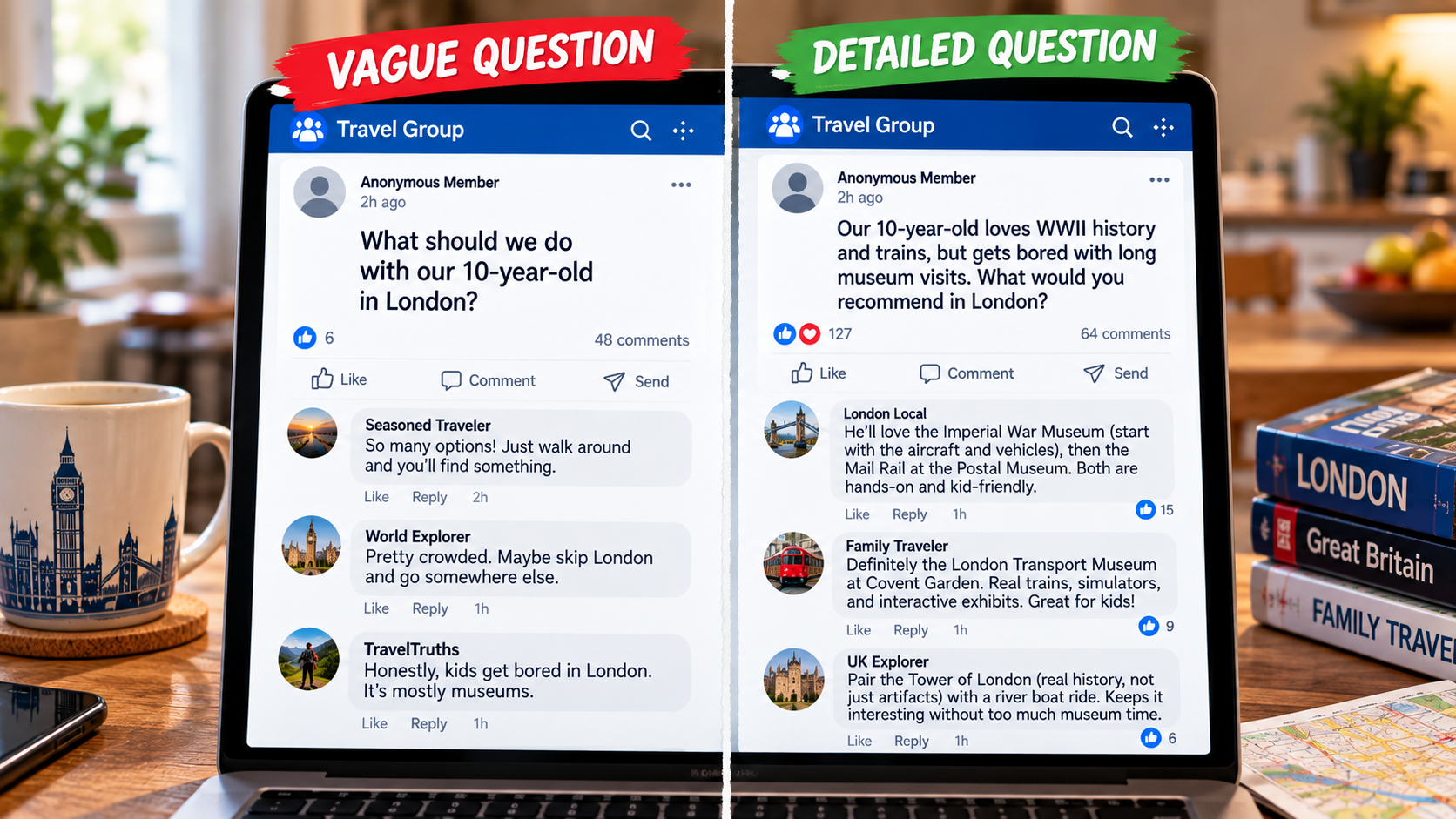
“What Should We Do With Our Kids?”
Here's another perfectly reasonable question that strangers can't answer very well without some help:
“We're going to London with our 10-year-old. What should we do?”
I don't know your 10-year-old.
Maybe they're fascinated by World War II.
Maybe they'd happily spend six hours looking at trains.
Maybe they love football.
Maybe the words historic walking tour cause them to suddenly develop an unexplained ankle injury.
You know them. We don't.
So this is another conversation to have in your living room.
Ask your kids what sounds interesting. Show them a few possibilities. Let them choose something.
We've found that involving the people actually taking the trip can reveal ideas that would never have appeared on our own list.
Then bring that information to the travel group.
Instead of:
“What should we do with our 10-year-old in London?”
Try:
“Our 10-year-old loves WWII history and trains but gets bored during long museum visits. We'll have three days in London. What would you recommend?”
Now someone who knows London has something incredibly useful to work with.
They don't need to know your child.
You supplied that part.
They can supply London.
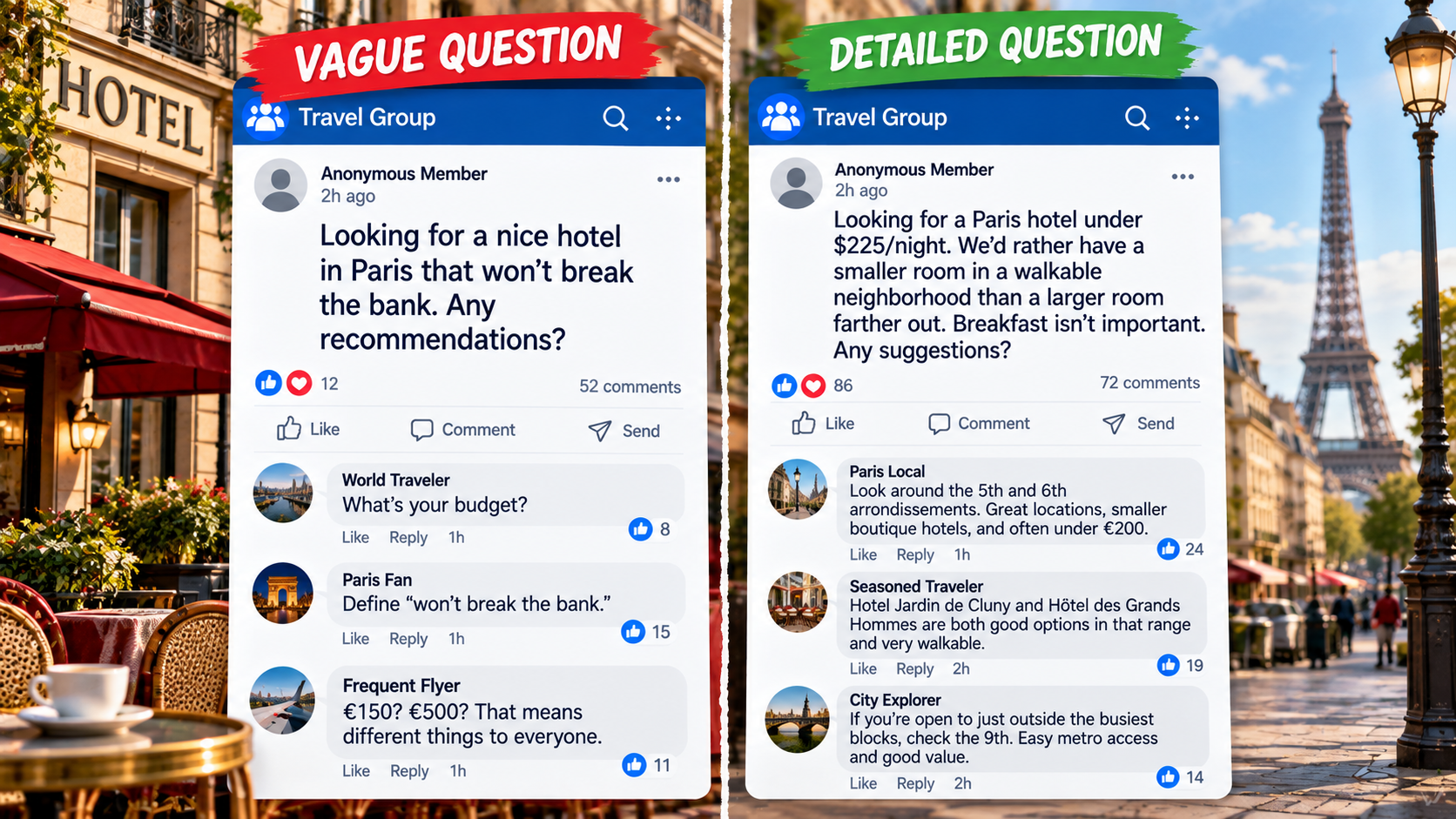
“Something Nice That Won't Break the Bank”
This phrase appears everywhere in travel groups.
And everyone understands what the person means.
The problem is that nobody knows where their bank actually breaks.
One person's affordable hotel is $125 a night. Another person's is $300. Someone else might happily spend $500 on the hotel because lodging is the thing they enjoy most.
Again, none of them is wrong.
But “reasonably priced” doesn't give someone enough information to make a reasonably useful recommendation.
This is another decision for the living room.
Before asking where to stay, decide what you're comfortable spending. Then decide where you're flexible.
Perhaps $225 per night is your target, but you'd spend $275 for an exceptional location.
Maybe you'd rather have a smaller room in the center of town than a larger room requiring a 30-minute commute.
Perhaps breakfast doesn't matter.
Maybe a pool absolutely does.
Now compare:
“Looking for a nice Paris hotel that won't break the bank.”
with:
“We're looking for a Paris hotel under $225 per night. We'd rather have a smaller room in a walkable neighborhood than a larger room farther out. Breakfast isn't important. Any suggestions?”
That second question gives experienced travelers something they can actually curate.
And if you're still figuring out where the money should go, Points & Miles 101 can help you think about where points might offset a major trip expense while leaving cash available for the things that matter more to you.
The internet can help you find value.
You have to decide what value means to you.
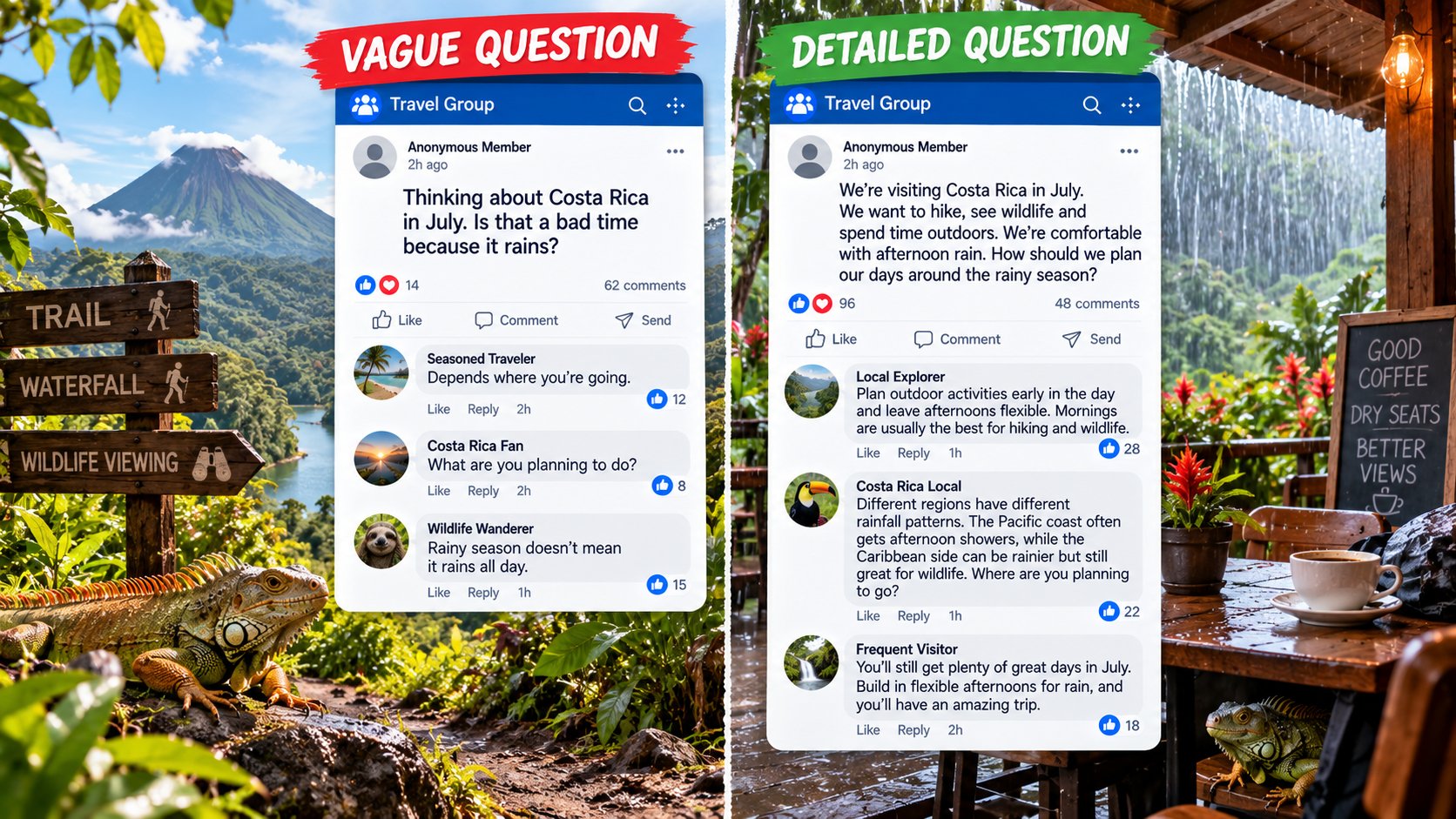
“Is This a Bad Time to Go Because It Rains?”
Weather questions get especially interesting because we're often asking for certainty that simply doesn't exist.
“We're going to Costa Rica in July. Is it going to rain?”
Probably at some point.
It's a tropical country with a rainy season.
But that's not really what most travelers are asking.
What they usually want to know is:
Will the weather ruin my trip?
That's a much better conversation.
Instead of asking strangers to predict the weather months from now, ask them how the destination works in that weather.
Try:
“We're visiting Costa Rica in July. We want to hike, see wildlife and spend plenty of time outdoors. We're comfortable with afternoon rain. How should we plan our days around the rainy season?”
Now a local or experienced traveler can tell you which activities are better early in the day, whether one region might fit your plans better than another, and where flexibility matters.
That's useful information.
And it works beyond weather.
Instead of trying to eliminate every uncertainty before leaving home, learn how the destination handles it.
Rain happens.
Trains get delayed.
Restaurants close.
Plans change.
Sometimes the upgrade isn't preventing those things.
It's knowing what to do when they happen.
The Better Question Formula
You don't need to write a travel-group post that reads like a mortgage application.
Usually, a few details are enough.
Tell people where and when you're going, who is traveling, what you enjoy, what you don't enjoy, your approximate budget when relevant, and what you're actually trying to decide.
That's it.
Compare:
“Recommendations for 48 hours in Cortland?”
with:
“We have 48 hours in Cortland in October. We're traveling as a couple, enjoy local food and easy outdoor activities, and don't mind driving 30 minutes for something worthwhile. What would you prioritize?”
Suddenly, the answers can become much more specific.
And probably much more useful.
Sometimes You're Really Asking, “Does This Sound Okay?”
There's another reason people post broad questions that deserves a little grace.
Sometimes they've already made most of the decisions.
They aren't really asking strangers to redesign the trip.
They're looking for reassurance.
“Here's what we're planning. Does this sound reasonable?”
That's okay too.
Say so.
You might write:
“We're pretty happy with this itinerary and aren't looking to completely rebuild it. Does anything jump out as unrealistic, or is there something important we should know before booking?”
That's a terrific question.
You've told people what kind of help you want.
And you've reduced the odds that somebody responds by enthusiastically dismantling the vacation you've spent six months planning.
Better Questions Usually Get Better Conversations
Travel groups can be extraordinary resources.
Somebody in that group has probably driven that road, stayed in that neighborhood, taken that train, traveled there with children, visited during rainy season or discovered the little restaurant you'd never find from a generic Top 10 list.
That's knowledge worth tapping into.
The trick isn't knowing everything before you ask.
It's giving people enough information to help.
So start in the living room.
Talk to the people taking the trip.
Figure out what excites you, what doesn't, how quickly you want to move, what you can comfortably spend and where you're willing to splurge.
Then take those answers to the internet.
You don't need to ask the perfect travel question.
Just ask a better one.
You'll probably get better advice.
And maybe fewer snarky comments too.