

Exit Row Seats: Are They Worth Paying Extra For?
More legroom sounds like an easy upgrade. But before you pay extra for an exit-row seat, make sure you're getting something you'll actually appreciate.
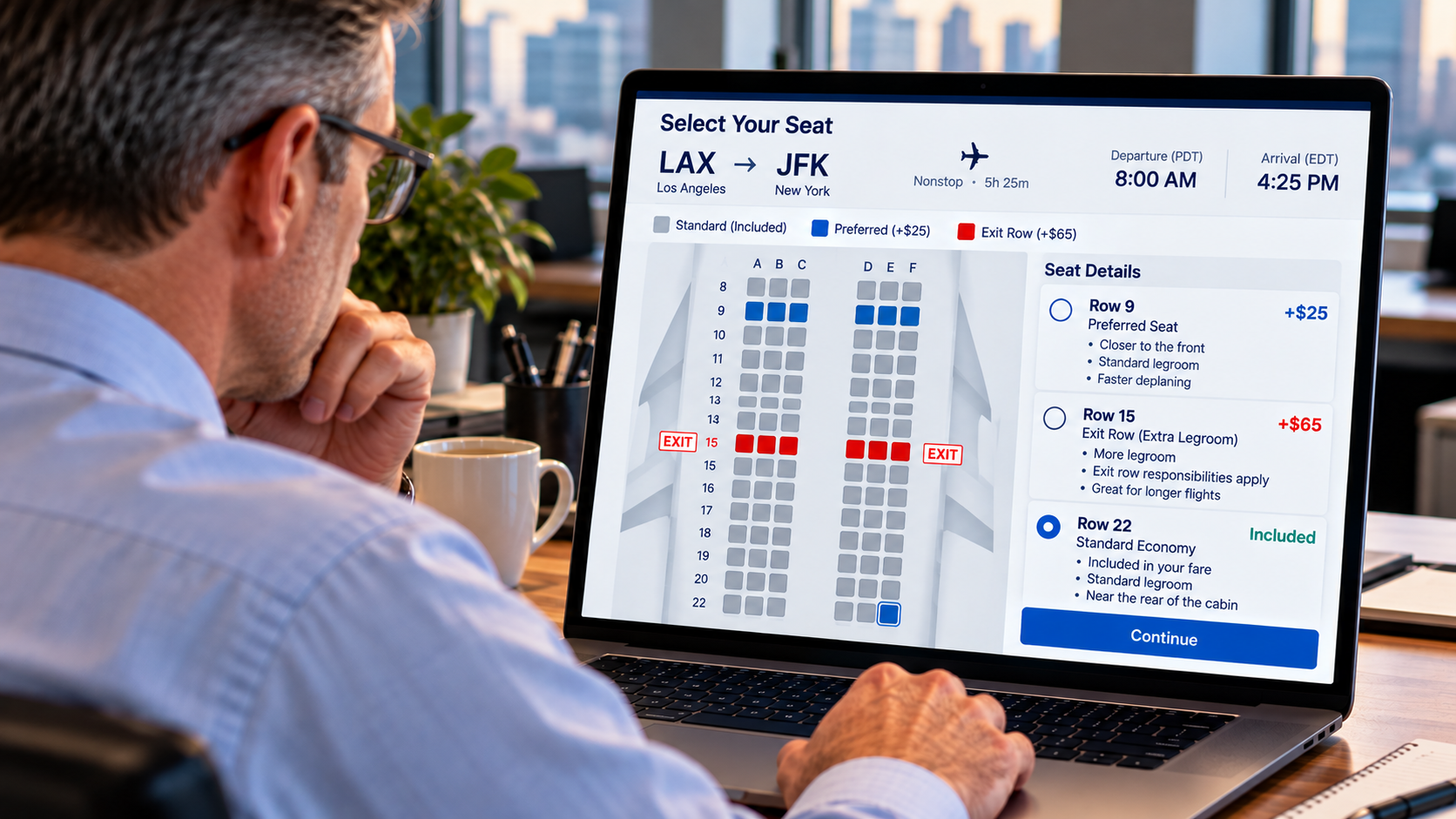
You're booking a flight, you've selected your fare, and now you're staring at the airline's seat map.
Most of the Economy seats are included in your ticket. A few are highlighted in different colors, with an additional price attached. Among them are the exit rows.
Maybe it's $30. Maybe it's $60. Perhaps it's considerably more.
The airline promises extra legroom, and that certainly sounds appealing. Who wouldn't want more space to stretch out?
But here's the question worth asking before clicking that seat:
Is the exit row actually a better seat, or simply a more expensive one?
I've paid extra for exit-row seating on several occasions, and I've generally been happy with the decision. But I don't automatically select an exit row whenever one is available.
The aircraft, the seat location, the flight duration, and the price all factor into whether I'm willing to spend more.
And sometimes, I'd rather keep my money.
What Are You Actually Buying?
The biggest attraction of an exit-row seat is usually additional legroom.
On many aircraft, emergency exit access requirements result in more open space around certain exit rows than you'll find in standard Economy seating.
For taller passengers, or anyone who dislikes spending hours with their knees pressed against the seat ahead, that can make a meaningful difference.
But extra legroom isn't necessarily the same thing as a more comfortable seat.
You're still sitting in Economy. The seat cushion, backrest, width, and general onboard experience may be essentially identical to those of the standard Economy seats a few rows away.
What you've purchased is primarily additional space, not an entirely different seating experience.
And depending on the aircraft, that space can be surprisingly useful.
There are other ways to make an Economy flight more comfortable, too. In Three Economy Seats or Two Premium Economy Seats?, we explored whether purchasing an additional Economy seat could be a worthwhile alternative for two travelers who value extra personal space.
But an exit-row purchase is a different decision. You're paying for a particular seat and its location, not another seat beside you.
When Extra Legroom Really Pays Off
After a river cruise in Germany, my wife Gina and I flew home on a Delta aircraft with a 2-4-2 Economy seating configuration.
I used airline miles to secure exit-row seating for our daytime transatlantic flight.
Gina had the aisle, and I had the window.
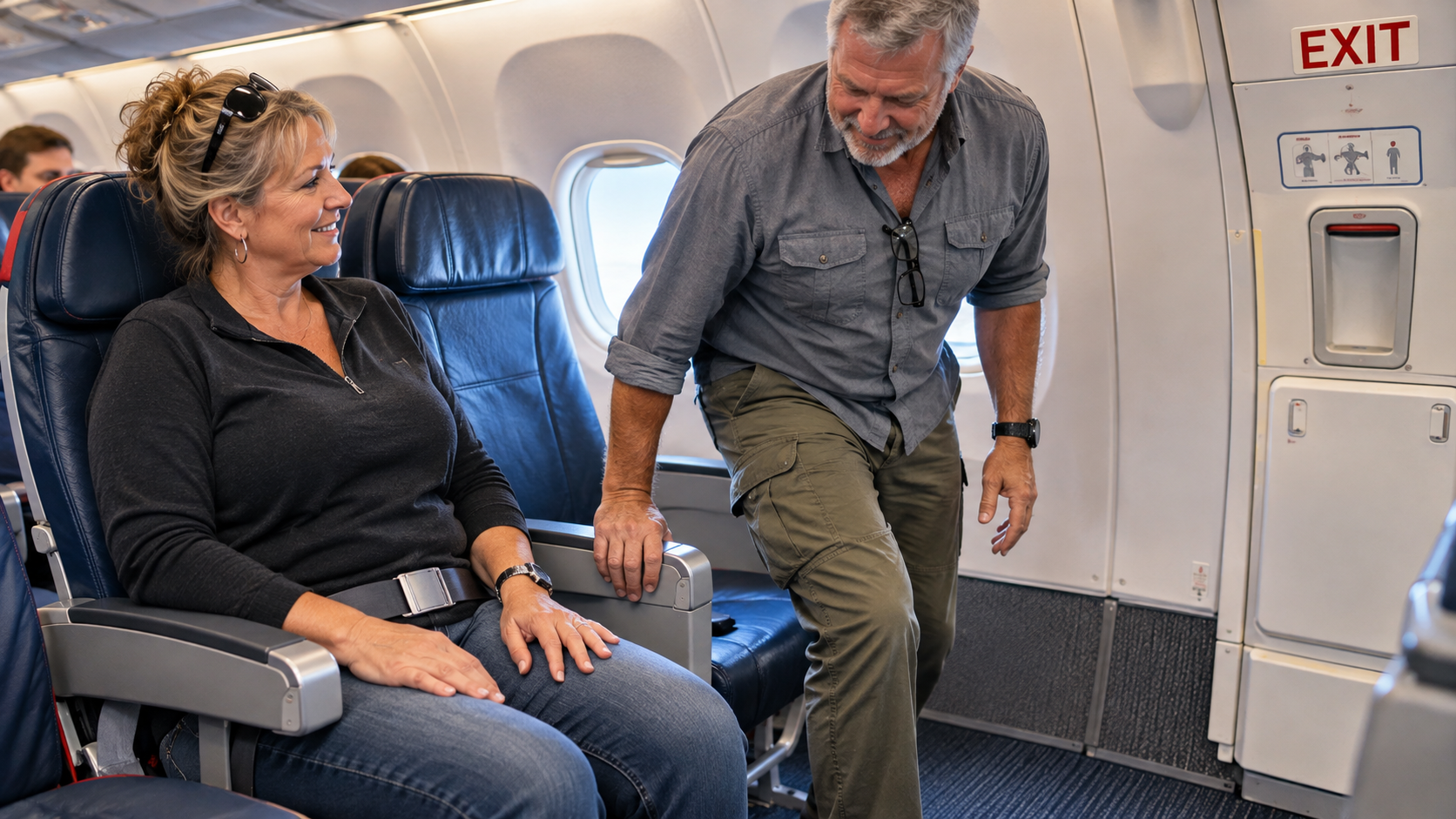
With the extra space in front of us, I could stretch my legs and, more importantly, get up to use the restroom without making Gina stand.
On a long flight, that little bit of freedom is worth something.
I wasn't particularly concerned about sleeping. It was a daytime flight, and reclining wasn't a priority. I wanted to stretch out, move around when necessary, and avoid spending hours feeling cramped.
The exit row delivered exactly what I wanted.
There was one minor inconvenience. The seatback entertainment screen was farther away, so operating the touchscreen required leaning forward.
Was that a dealbreaker? Not even close.
For that particular flight, the advantages easily outweighed the inconvenience.
But that doesn't mean I'd make the same choice on every flight.
Not All Exit Rows Are Created Equal
One of the biggest mistakes travelers can make is assuming every exit-row seat offers the same experience.
They don't.
The aircraft matters, and so does the specific row.
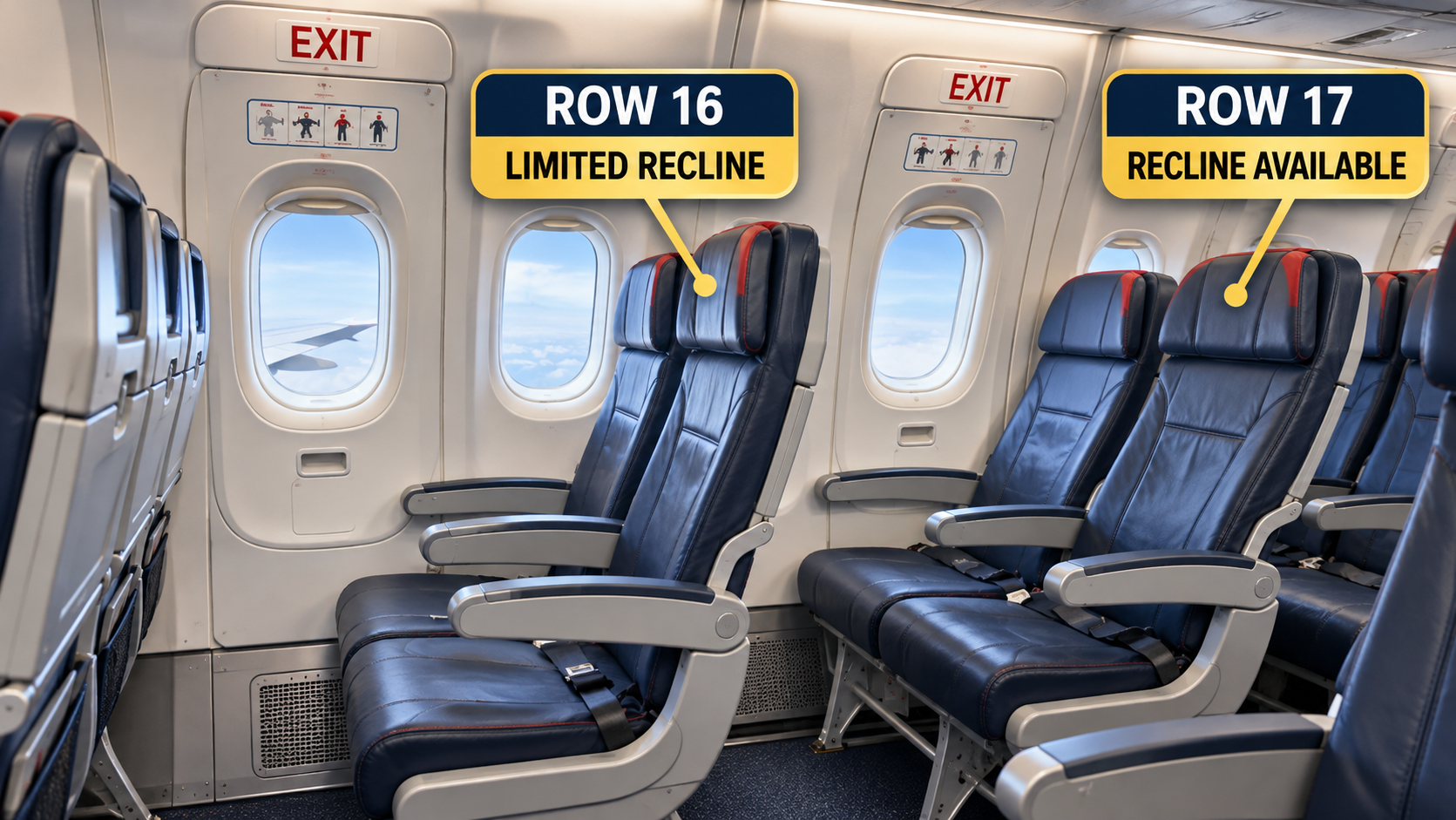
Some aircraft have two consecutive rows alongside overwing emergency exits. The first row may have restricted or no recline because reclining could interfere with access to the emergency exit behind it.
The second row may offer additional legroom without the same restriction.
For example, certain American Airlines Boeing 737-800 configurations have consecutive exit rows 16 and 17, with limited or no recline associated with row 16.
That doesn't mean every 737-800, or every airline operating one, has exactly the same arrangement. Aircraft interiors and seat numbering can vary.
The important lesson is that two exit rows on the same airplane can provide very different experiences.
Other configurations introduce different considerations.
Some exit-row seats have fixed armrests because the tray tables are stored inside them. Others have entertainment screens that fold out from the armrest or are mounted farther away.
On certain aircraft, the exit door itself or its surrounding structure can intrude into the space available to your feet.
And occasionally, an exit area may have two seats rather than three, or a nearby flight attendant jumpseat used during takeoff and landing.
I've encountered some of those arrangements myself. They can make an exit-row location particularly appealing, although a nearby jumpseat doesn't automatically mean additional usable legroom.
The important thing is to evaluate the specific seat, not simply the words exit row on the seat map.
A Better Seat Isn't Always Farther Forward
Here's another consideration that doesn't get enough attention: where the exit row is located.
When I'm traveling for pleasure, I generally prefer sitting toward the front of the cabin.
On government-funded work trips, I don't always get to choose my original seat assignment. Sometimes I'm assigned a seat much farther back than I'd normally select.
In January 2026, I flew from Jacksonville to San Diego on American Airlines for work. I spent approximately $150 on upgraded seat selections across four flight segments, two of which were exit rows.
I considered it money well spent.
The additional legroom was welcome, but so was sitting closer to the front of the aircraft.
And that's where the decision becomes more interesting.
Suppose I'm already sitting in row 9, and an exit-row seat is available in row 22.
Would I pay extra to move backward thirteen rows just for more legroom?
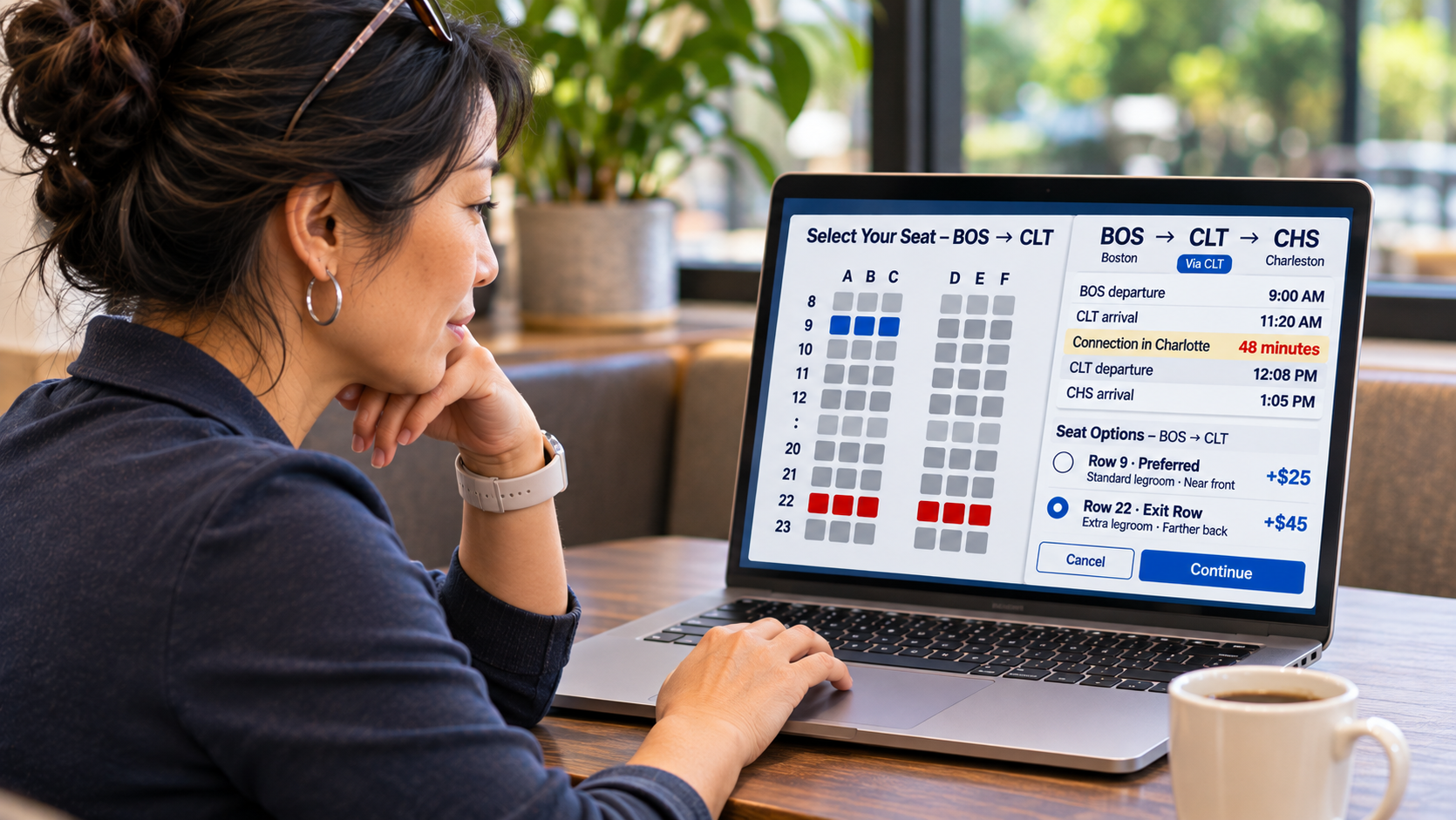
Maybe. But I'd think carefully about it, especially if I had a tight connection.
Now reverse the situation.
Suppose my original assignment is row 39, and an exit-row seat is available in row 12.
That becomes a much more attractive upgrade. I'm getting extra legroom while moving significantly closer to the front.
Of course, faster deplaning isn't something the airline guarantees when selling an exit-row seat. It's simply a practical consequence of where you're sitting, assuming passengers leave through the forward door and other circumstances are equal.
When connections are tight, that can matter.
On my American flights, I also benefited from Group 5 boarding through my AAdvantage credit card, which gave me earlier access to overhead-bin space.
American's Main Cabin Extra seating product also advertises Group 5 boarding, but I already had that benefit through my card. It wasn't an additional reason for me to pay for those seats.
It's important to distinguish what you're actually gaining from benefits you may already receive.
The Exit-Row Trade-Offs
Before paying extra, it's worth considering what you might be giving up.
Recline: Some exit-row seats recline normally. Others have limited or no recline, particularly when another emergency exit is located directly behind them.
Armrests: Some configurations have fixed armrests with tray tables stored inside. If you enjoy raising the armrest between adjacent seats, that may not be possible.
Seat width: An armrest-mounted tray table or entertainment screen can sometimes reduce usable seating width.
Entertainment: As I discovered on our Delta flight, additional legroom can place the seatback entertainment screen farther away. Other aircraft use screens that fold out from the armrest.
Storage: Depending on the configuration and airline rules, you may be required to place personal belongings in the overhead bin during taxi, takeoff, and landing rather than keeping them at your feet.
Foot space: Some exit doors have structures or protrusions that make the available space less useful than the seat map suggests.
Cabin activity: Certain exit areas attract passenger traffic, particularly when they're near lavatories or other shared cabin spaces.
None of these drawbacks automatically makes an exit row a bad choice.
But they demonstrate why the amount of legroom alone doesn't tell the whole story.
Personally, I generally travel with a carry-on rather than a personal item, so having to stow a bag overhead isn't much of a sacrifice.
And with size 12 shoes, I'm certainly not looking to fill the space around my feet with additional luggage.
Other travelers may feel differently.
There's Also a Responsibility Attached
Unlike most seat selections, choosing an exit row involves more than comfort and price.
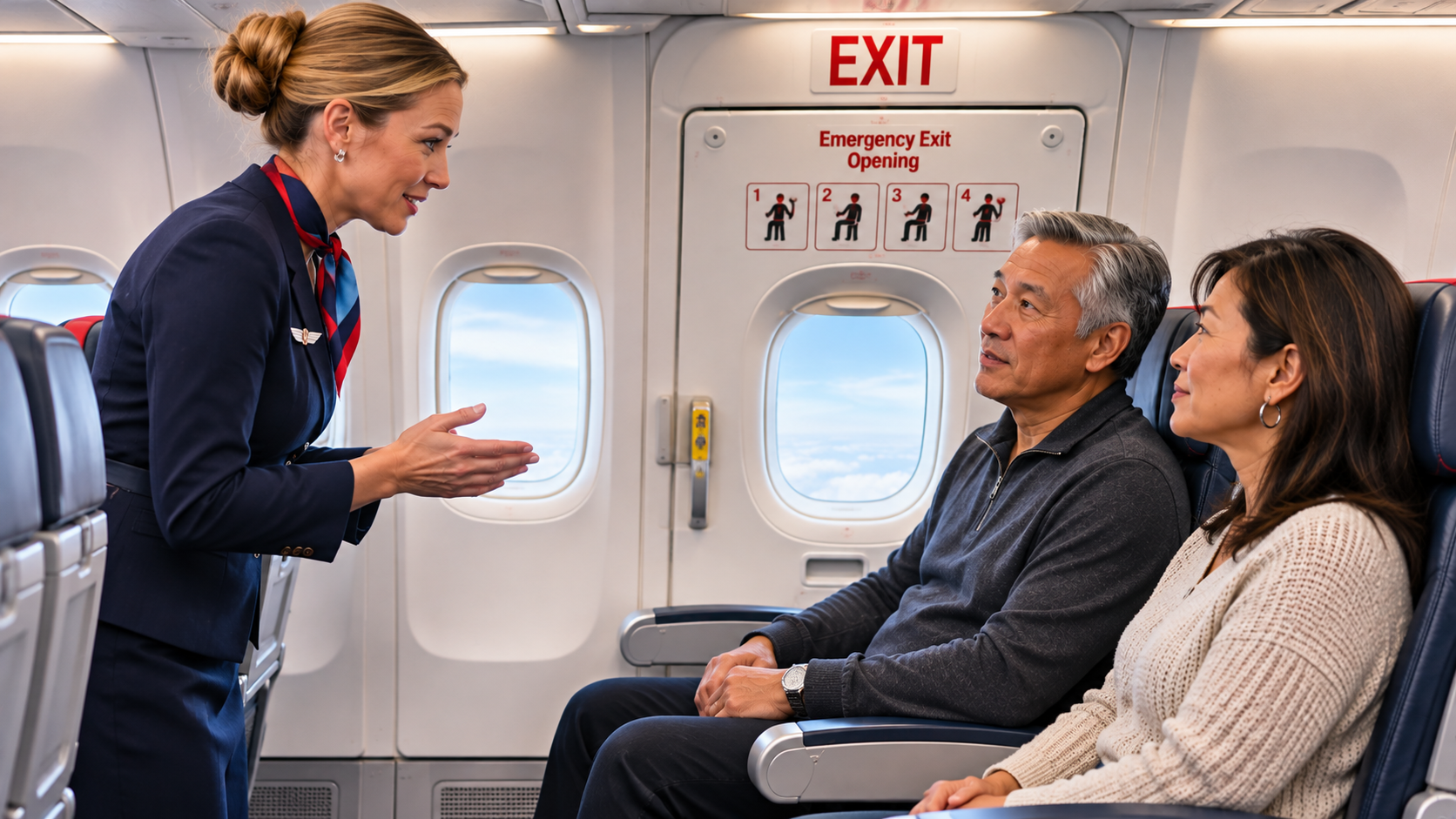
Under FAA regulation 14 CFR § 121.585, passengers occupying designated exit seats must meet specific eligibility requirements and be willing and able to assist during an emergency evacuation.
Among the requirements, passengers must be at least 15 years old and capable of understanding and performing the necessary emergency functions.
Depending on the circumstances, those functions could include identifying hazards outside the aircraft, operating an emergency exit, and helping other passengers evacuate.
The regulation addresses a passenger's actual ability to perform the required functions, not simply their willingness to say yes.
Flight attendants typically confirm that exit-row passengers are willing and able to perform these responsibilities.
In my experience, this usually involves a direct verbal confirmation from each passenger, although some crews provide more personalized instructions.
It's not simply a ceremonial question.
If you're unwilling or unable to perform the required functions, you shouldn't occupy the exit row. Passengers can request another seat without having to explain their reasons.
The FAA establishes the regulatory requirements. Individual airlines implement those requirements through their operating procedures.
And neither the FAA nor the airline is promising extra comfort simply because the seat is next to an emergency exit.
What About the Price?
This is where the decision becomes personal.
I wouldn't pay a substantial upcharge for an exit-row seat on a 44-minute flight from Jacksonville to Miami or Atlanta.
By the time we're airborne, the flight is nearly over.
On a four- or five-hour flight, however, I'd be much more interested.
More room to stretch out, easier movement, and potentially a better location in the cabin could make a reasonable seat-selection fee worthwhile.
But I don't have a universal dollar limit.
A $60 upgrade might be a terrific value on one flight and a waste of money on another.
I'd want to know what aircraft I'm flying, where the exit row is located, whether the seat reclines, and what my current seat assignment looks like.
I'd also consider whether I'm traveling alone or with Gina, whether we're seated together, and how much time we have between connecting flights.
The same seat can be a smart purchase for one traveler and an unnecessary expense for another.
And don't forget to check whether your airline status, credit card benefits, or fare already provides access to preferred or extra-legroom seating.
Paying for a benefit you already have isn't much of an upgrade.
Our Recommendations: Pay, Pause, or Pass?
There's no universal dollar amount that makes an exit-row seat worthwhile. But here's how we'd approach the decision.
🟢 GREEN: Worth Serious Consideration
A reasonably priced exit-row seat on a flight lasting several hours, especially when it provides substantial additional legroom without sacrificing features you value.
It's even more attractive if you're moving from the back of the aircraft toward the front.
Example: Paying $40 to move from row 39 to an exit row near row 12 on a four-hour flight.
You're getting additional space and a more favorable cabin location.
🟡 YELLOW: Take a Closer Look
The seat costs considerably more, has restricted recline, or requires moving farther back in the cabin.
Example: Paying $60 to move from row 9 to exit row 22 when you have a tight connection.
The legroom might be welcome, but you're giving up a location advantage. Whether that trade-off makes sense depends on your priorities.
🔴 RED: Keep Your Money
A substantial charge for a very short flight, a seat with compromises that outweigh its benefits, or an upgrade that doesn't meaningfully improve your journey.
Example: Paying $75 for an exit-row seat on a 44-minute flight.
Unless you have a particular reason to value that space, your money may be better spent elsewhere.
And one requirement overrides all three recommendations: if you don't meet the exit-row eligibility requirements or aren't willing and able to assist in an emergency, don't select an exit-row seat.
These are examples, not universal price thresholds. What feels worthwhile to one traveler may be completely unnecessary to another.
Before You Click That Exit-Row Seat
When the airline presents an exit-row seat for an additional charge, take a moment to consider a few questions.
How long is the flight? The longer you'll be sitting there, the more opportunity you'll have to appreciate the extra space.
What aircraft are you flying? Different aircraft, and even different configurations of the same aircraft type, can have very different exit-row layouts.
Does the seat recline? If reclining matters to you, this can be a deciding factor.
Are the armrests fixed? Particularly important when traveling with a companion.
Where is the row located? Extra legroom might not justify moving significantly farther back, especially with a tight connection.
What does the upgrade actually cost? Check the total for every passenger and flight segment, not just the price displayed beside one seat.
What happens if your aircraft changes? Seat assignments can change after booking. Review the airline's terms regarding paid seat selections, changes, and refunds.
You don't need to turn seat selection into a research project.
But a few minutes reviewing the aircraft layout can prevent you from spending money on an upgrade that doesn't deliver what you expected.
So, Are Exit-Row Seats Worth Paying Extra For?
For me, they often are.
I've enjoyed the additional space on long flights, appreciated the freedom to move around without disturbing Gina, and found that moving closer to the front of the aircraft can be particularly useful on connecting itineraries.
But I wouldn't pay extra simply because the seat map labels a row as an emergency exit.
I'd consider the aircraft, the seat configuration, the location, the flight duration, and the asking price.
Sometimes that exit-row seat is exactly the upgrade you need.
Sometimes the standard Economy seat you've already selected is perfectly fine.
And sometimes the best upgrade is keeping that extra $60 in your pocket and spending it somewhere you'll enjoy it more.
The smartest seat upgrade isn't necessarily the one with the most legroom. It's the one that gives you something you actually value, at a price you're comfortable paying.
Travel Smarter. Go Further.