

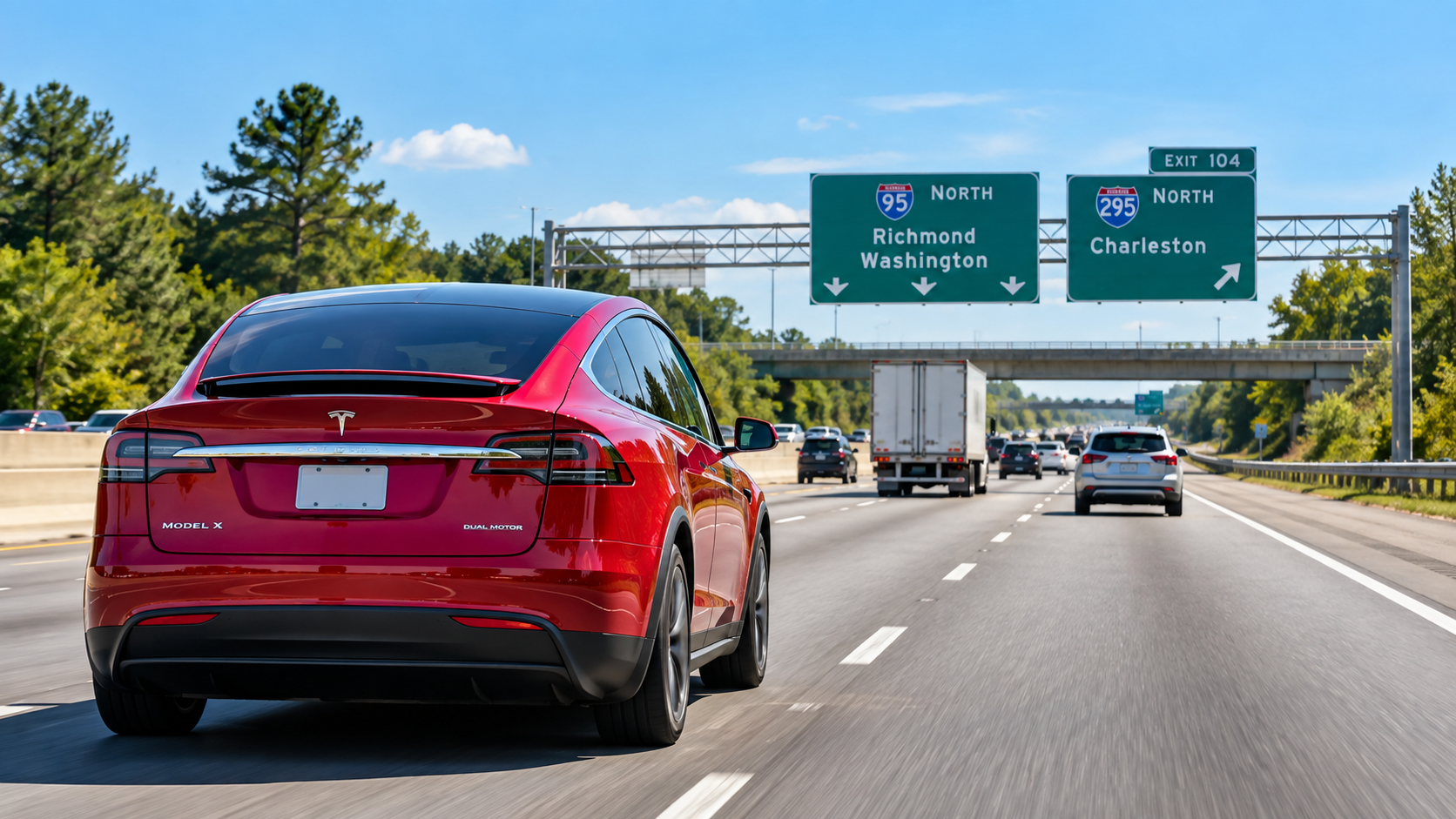
How I Plan a Tesla Road Trip: Charging, Hotels and the Route Between
I don’t plan a road trip around the car. I plan the trip I want to take, then make sure the Tesla fits the plan.
The first long trip in an electric vehicle can feel like it requires a minor in electrical engineering.
Where are the chargers? How long will charging take? What percentage should I leave home with? What happens if a charger is occupied? Should I charge to 100% every time? And how much of this needs to be figured out before I leave the driveway?
After road-tripping in our Tesla Model X, my planning has become much simpler.
I figure out where we actually want to go, where we’re spending the night and what charging will be available when we get there. Then I let the car handle much of the highway charging math.
That’s an important distinction.
I don’t build the vacation around charging stations. I build the vacation, then make sure the charging works.
I Start With the Trip, Not the Chargers
My first planning question has nothing to do with electricity.
Where are we going?
I plan the route much the same way I would with any other vehicle. I look at the destination, distance, where we want to stop, where we’ll spend the night and how many hours I actually want to drive in a day.
Only then do I start thinking about charging.
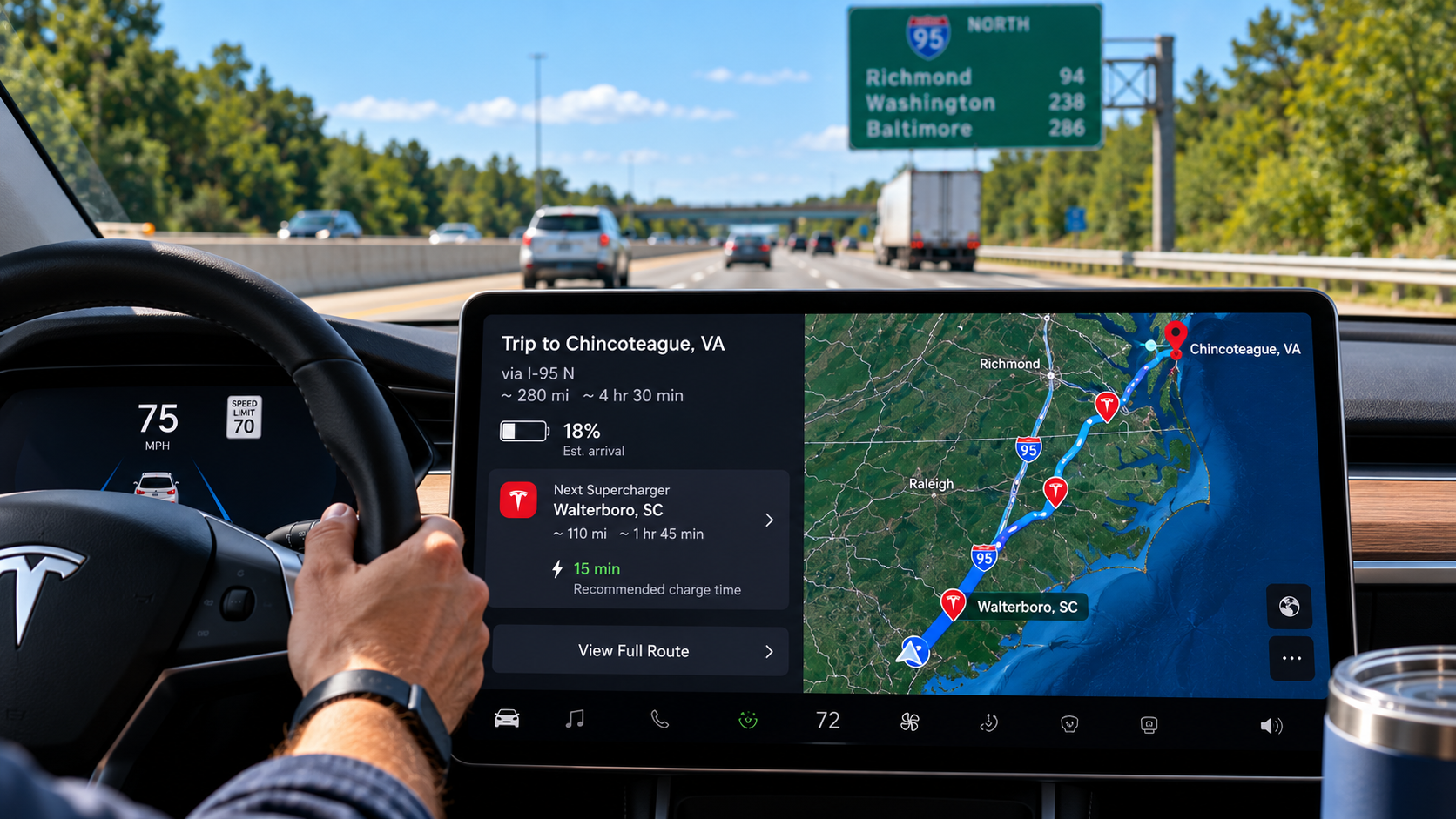
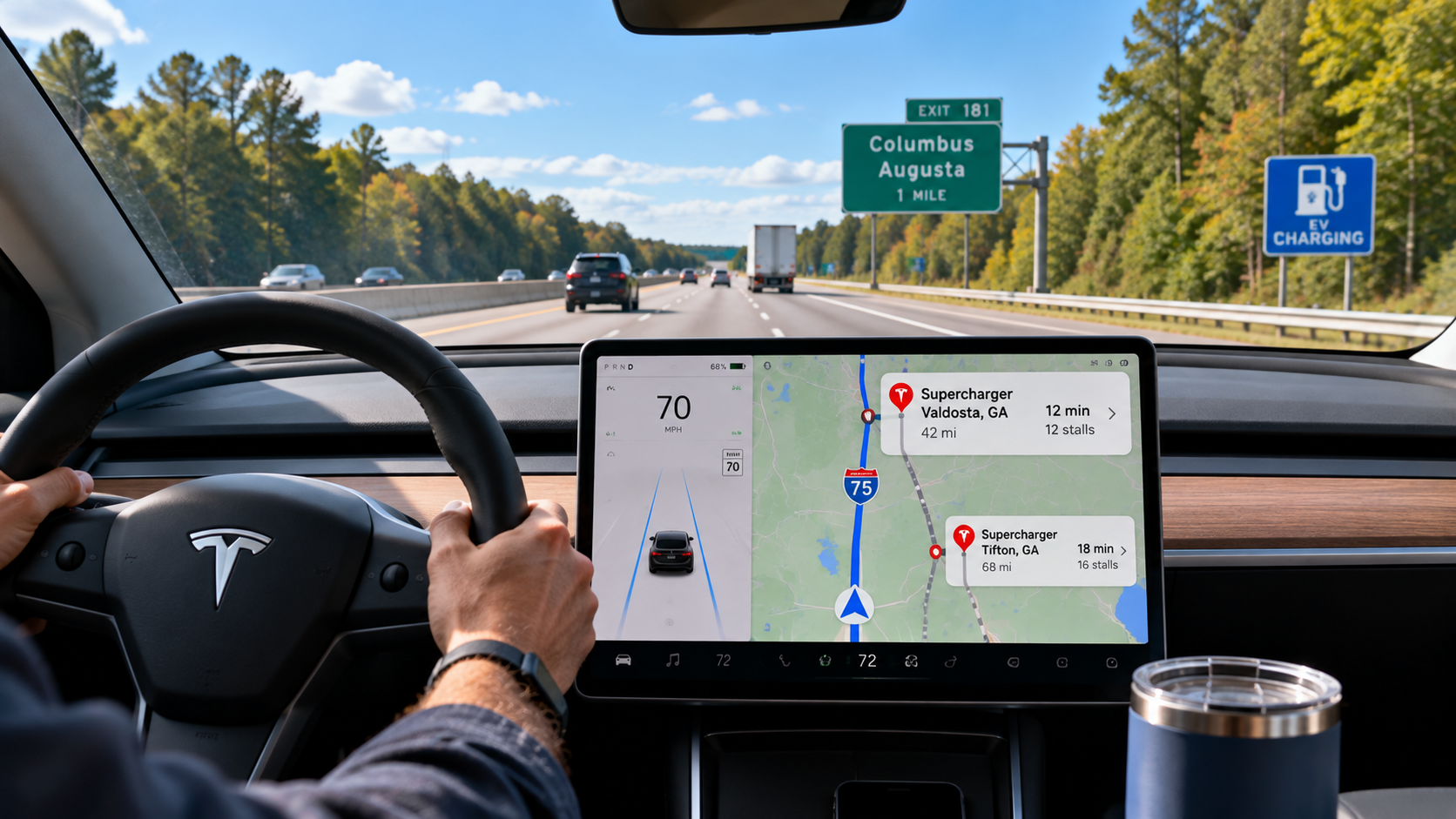
Tesla’s Trip Planner can automatically add charging stops along the route. It can also show Supercharger availability and nearby amenities, which means I don’t need to sit at home plotting every charger between Georgia and Virginia. Tesla
I do, however, want to understand the route the car is proposing.
A charging stop that makes perfect mathematical sense to the Tesla may not be the stop that makes the most sense for us. Maybe we’re getting hungry earlier. Maybe we need a restroom. Maybe the dog needs a break. Maybe there’s a better place for lunch farther down the road.
The navigation system handles the energy calculations.
I still plan the human part of the trip.
I Leave Home With Plenty of Charge
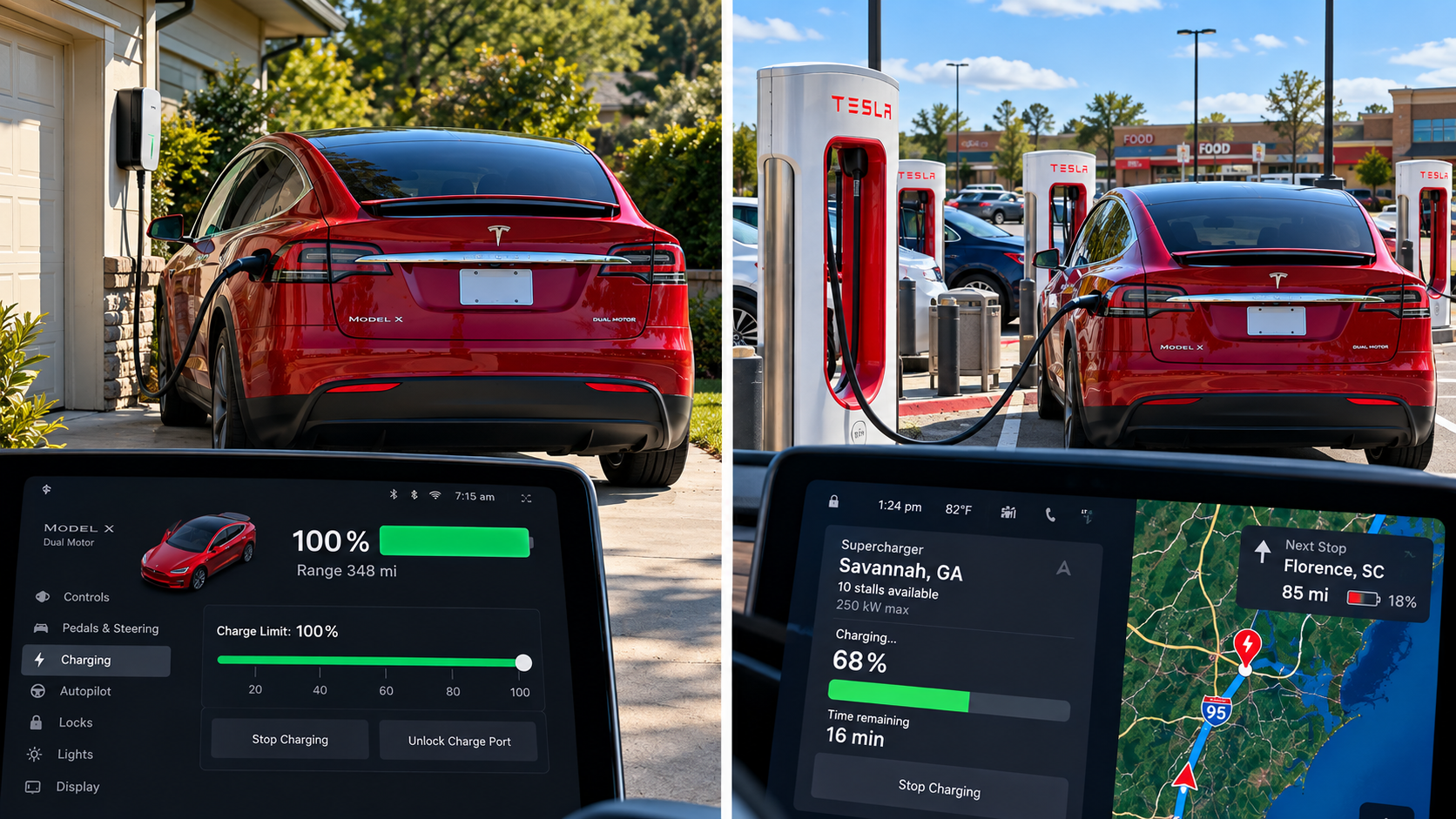
For a long road trip, I want to leave home with a well-charged battery.
Home is generally the easiest and least expensive place for me to put electricity into the car, and there’s little reason to begin a long travel day needing an immediate charging stop.
But that doesn’t mean the entire trip becomes a quest to keep the battery at 100%.
That’s one of the biggest adjustments when moving from gasoline-road-trip thinking to EV-road-trip thinking.
With a gas vehicle, we’re accustomed to stopping, filling the tank and driving away with the gauge sitting on F.
On the road, an EV doesn’t necessarily work most efficiently that way.
Tesla notes that charging speed slows as the battery fills, so reaching 100% typically takes significantly longer than reaching 80%. When Trip Planner is navigating the trip, it recommends how long to charge before continuing toward the next stop or destination. Tesla
So once we’re on the highway, I’m usually asking:
How much charge do I need to comfortably reach the next stop?
Not:
How do I get back to 100%?
I Let the Tesla Do the Math
This may be the biggest relief for someone contemplating a first EV road trip:
I don’t calculate how many kilowatt-hours I’ll need between every charger.
The car does it.
I enter the actual destination and let Trip Planner calculate the route. When charging is required, it adds Supercharger stops, recommends charging times and estimates how much energy will remain when the vehicle reaches each stop. Tesla
That’s considerably more information than I’m going to calculate from the driver’s seat.
So I use the technology.
But there’s one number I watch closely:
Estimated battery percentage at arrival.
“Can I reach it?” isn’t really the whole question.
I want to know what I’ll have left when I get there.
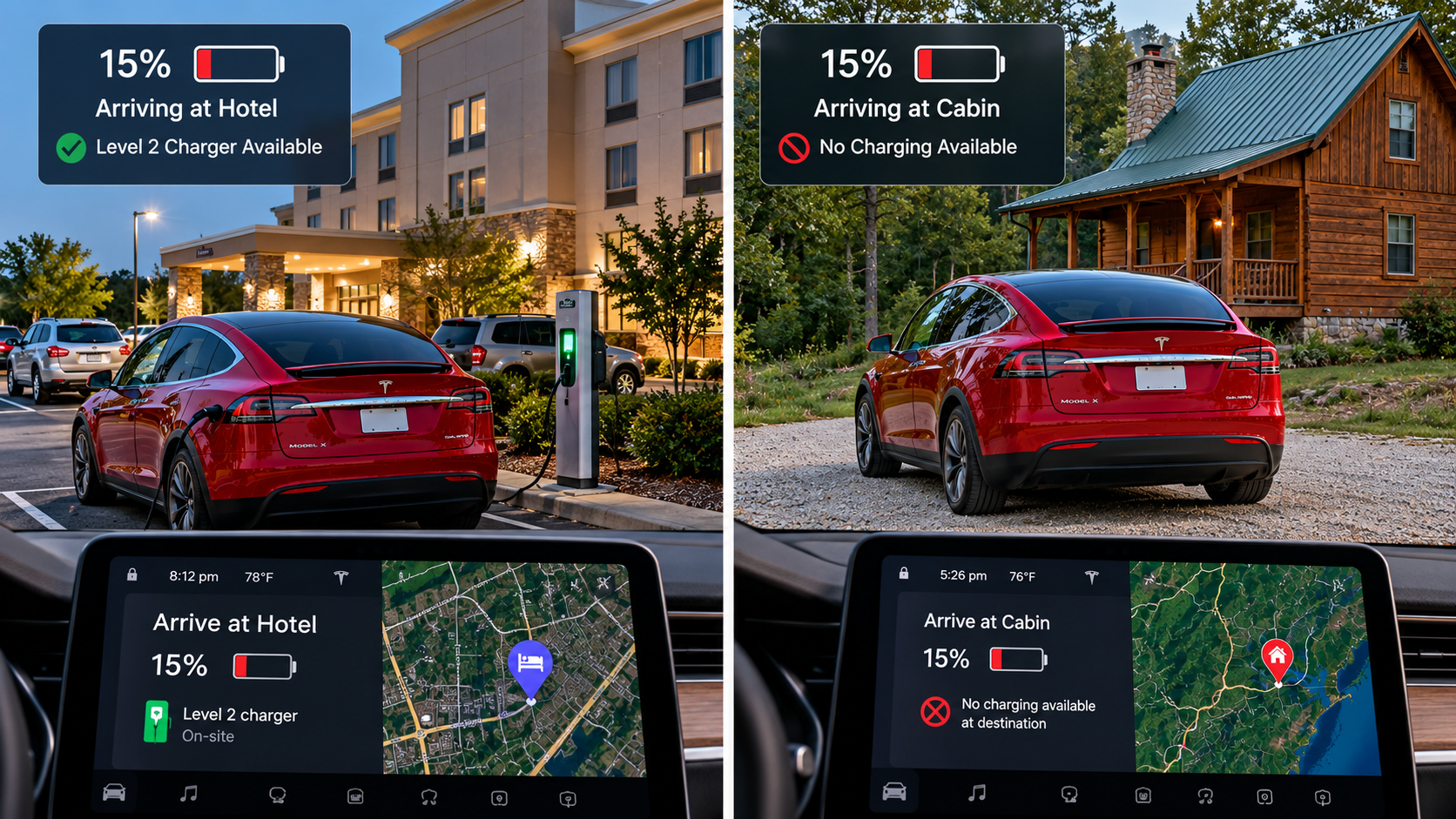
Arriving at a hotel with 15% remaining and a working Level 2 charger is very different from arriving at a remote house or cabin with 15% and no convenient place to plug in.
Same 15%.
Completely different situation.
The Destination Is Part of the Charging Plan
Highway charging gets most of the attention when people talk about EV road trips.
In my experience, what happens after you leave the highway can matter just as much.
Superchargers can move us hundreds of miles down the interstate. But if we’re staying somewhere for several days, I want to know what happens to the car while we’re there.
Can I charge at the hotel?
Is there a Level 2 charger nearby?
Can I charge at the house or cabin?
Will we be doing enough local driving that I’ll need additional charging before we leave?
This is why EV charging has become part of my lodging research.
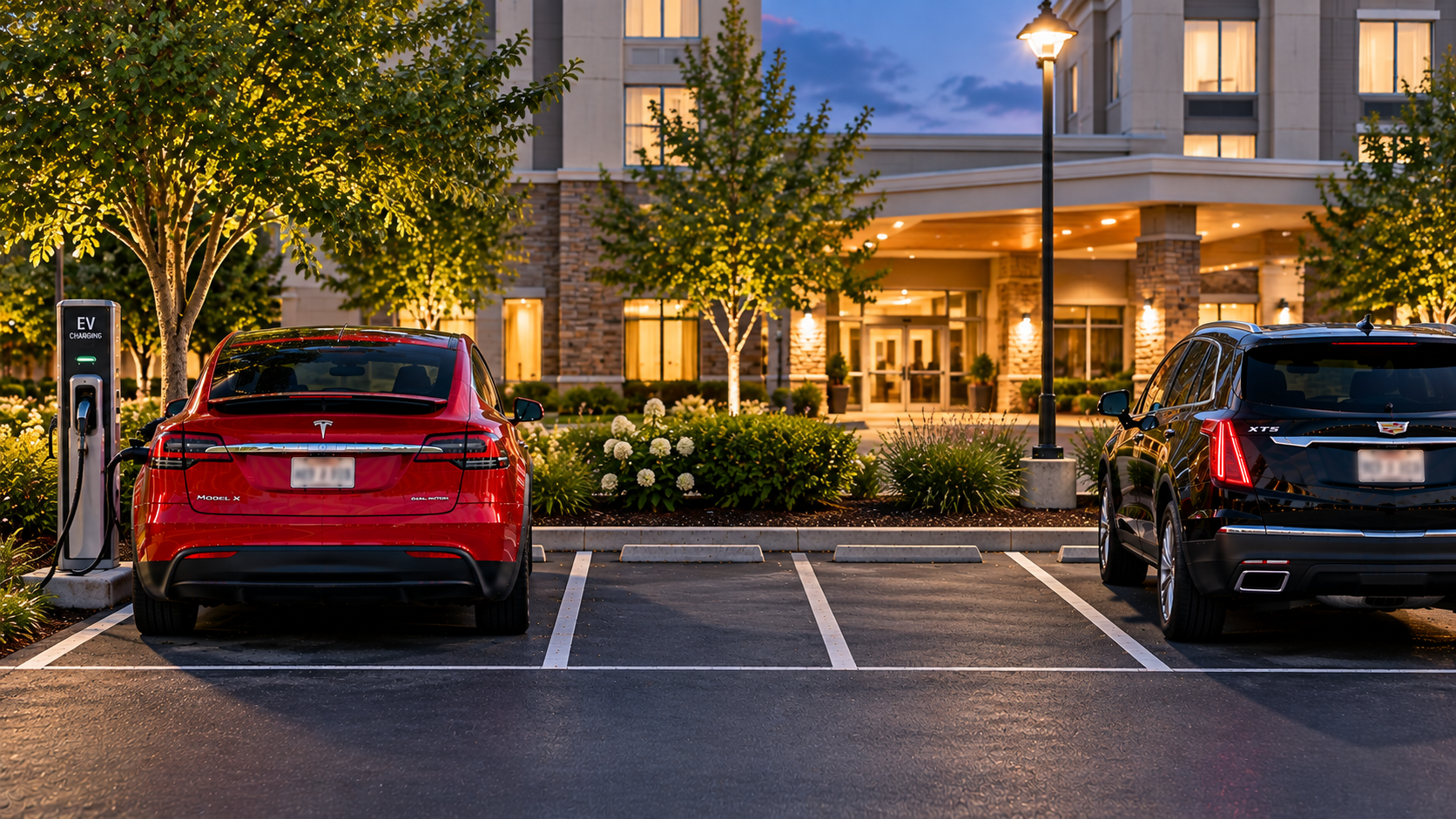
Tesla’s Destination Charging network includes hotels, restaurants and other destinations where the vehicle can charge while you’re already parked. Tesla isn’t the only option, either. A hotel or destination may have another compatible Level 2 charger that works perfectly well for an overnight stay. Tesla
On one of our recent road trips, complimentary hotel charging meant we could arrive, plug in, go inside and sleep, then return to a substantially charged car the next morning.
That’s almost ideal EV charging because the car was going to sit there all night anyway.
And the hotel room itself isn’t an EV expense. We needed somewhere to sleep regardless of which vehicle we drove. Charging was simply an amenity we used, just as another guest might use the pool, fitness room or included breakfast.
I Don’t Assume the Hotel Charger Will Be Mine
Finding a hotel that advertises EV charging isn’t quite the same thing as reserving a charger.
There may be two charging spaces and six guests who want them.
A charger can be occupied.
It can be out of service.
Someone can leave a fully charged vehicle sitting in the space.
Or the hotel’s definition of “EV charging available” may turn out to be less convenient than expected.
So I treat hotel charging as a very useful benefit, not something I blindly assume will work.
🟢 Best case: I arrive, plug in and let the car charge while we sleep.
🟡 My approach: If overnight charging matters to the next day’s plan, I know what my nearby alternative is before arriving.
🔴 What I avoid: Arriving nearly empty and making one hotel charger the single point of failure for tomorrow morning.
Sometimes that means stopping at a Supercharger shortly before reaching the hotel and adding enough energy that overnight charging becomes a bonus rather than a necessity.
The goal isn’t to construct an elaborate contingency tree.
It’s simply to make sure one occupied or broken charger doesn’t control tomorrow’s travel plans.
EV Charging Isn’t Always in the Middle of Nowhere
There’s still an image of EV road-trip charging that involves a lonely charger tucked behind a building with nowhere to eat, nowhere to sit and questionable prospects for finding a bathroom.
Those chargers certainly exist.
But they aren’t the entire charging network.
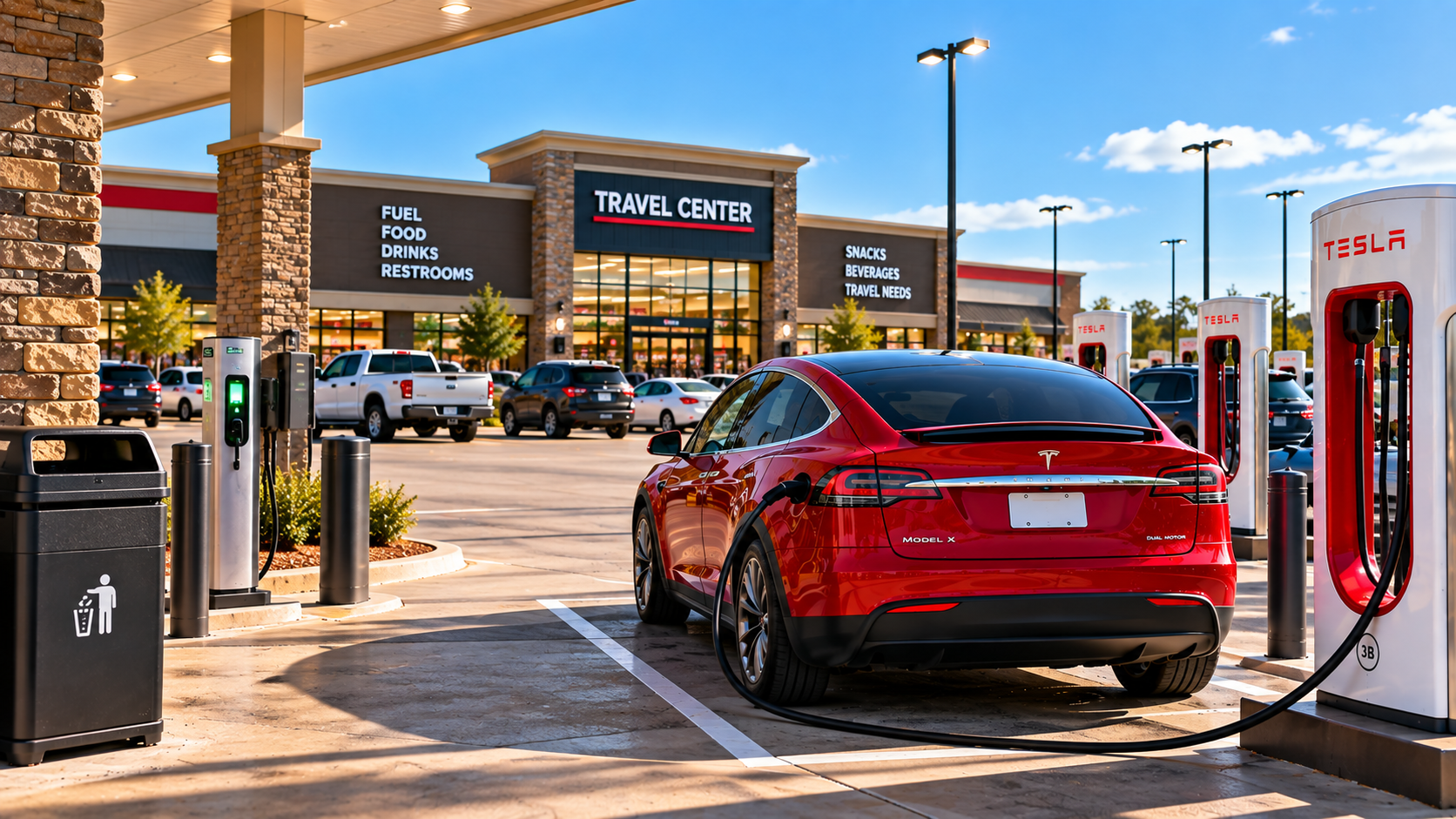
Tesla says its Superchargers are located on major routes near convenient amenities, and the navigation system can show amenities within walking distance, including restrooms, restaurants, lodging, shopping and Wi-Fi. Tesla
And EV charging is increasingly becoming part of the same highway infrastructure gasoline travelers already use.
Large travel centers can combine gasoline pumps, EV fast charging, food, coffee, restrooms and travel supplies at the same stop. Buc-ee’s is one familiar example of the kind of large highway travel center where EV charging can coexist with the traditional fuel-stop experience.
The important part for me isn’t the name on the building.
It’s what’s available while the car is charging.
Charging Stops Are Also People Stops
A charging stop doesn’t automatically equal wasted time.
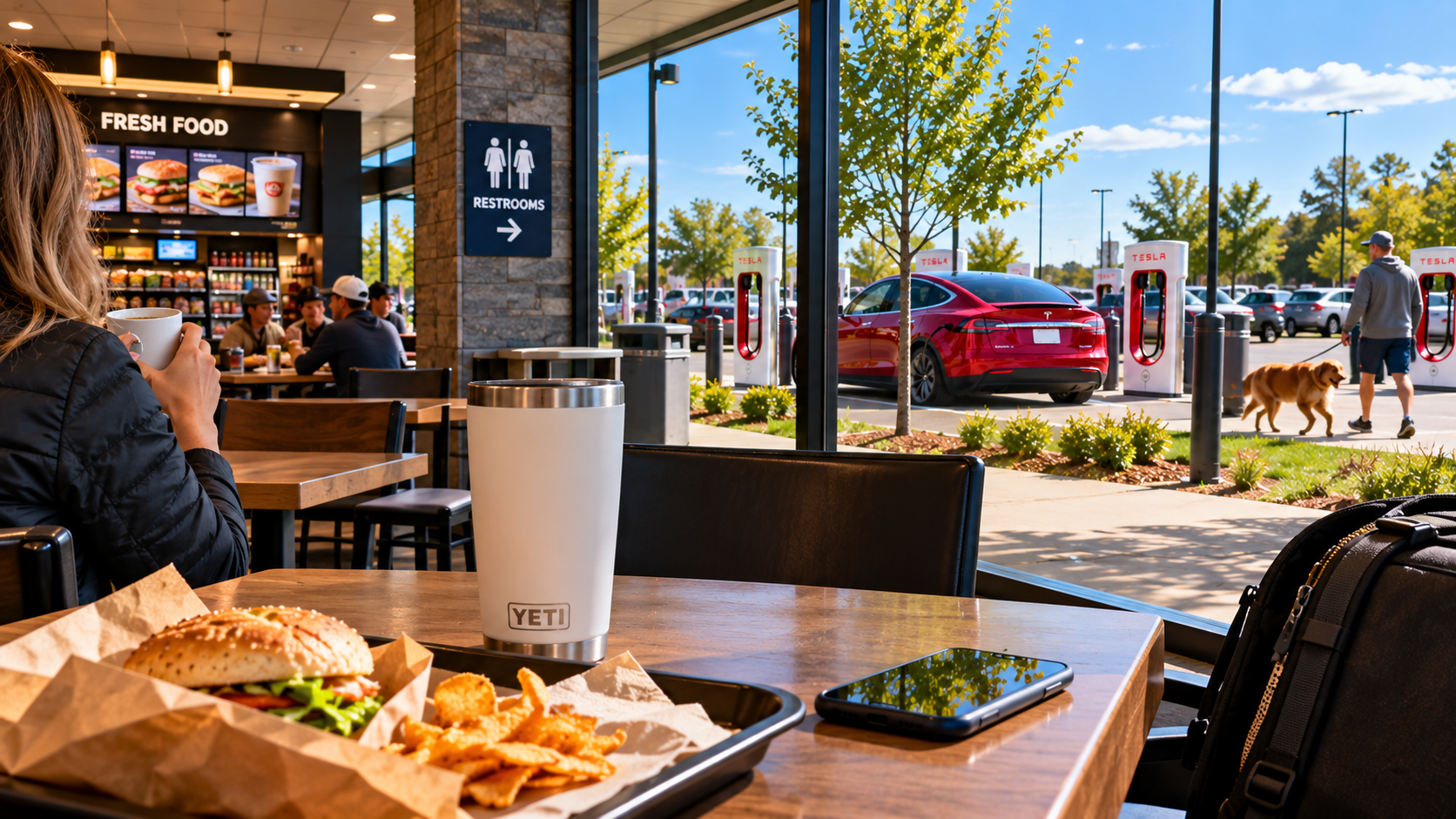
On a long driving day, we’re stopping anyway.
We need restrooms.
Coffee.
Food.
A chance to stretch.
And when the dog is traveling with us, somebody eventually needs a patch of grass.
So when Tesla proposes a charging stop, I don’t look only at the charger.
I look at what’s around it.
Tesla’s Supercharger information describes essentially the same routine: plug in, then grab a coffee, stretch your legs or do something else while the vehicle charges. The Tesla app can monitor the charging session and tell you when you’re ready to continue. Tesla
Sometimes the car is ready before we are.
Sometimes we’re waiting a few minutes for the car.
Either way, I’m trying to make the charging stop and the people stop happen at the same time.
That’s very different from spending 20 minutes doing nothing but waiting for electricity.
Speed, Weather and Terrain Still Matter
The route Tesla calculates when I leave isn’t carved into granite.
Conditions matter.
I normally drive around 75 to 80 mph on the interstate, and higher speeds use more energy.
Cold or hot weather can affect consumption.
Strong winds can matter.
Uphill travel requires additional energy.
Climate control uses electricity.
Cargo and other conditions can affect efficiency as well.
Tesla specifically identifies elevated driving speed, weather, wind, climate-control use, uphill travel and heavy cargo among the factors that can increase Model X energy consumption.
That’s another reason I pay more attention to the arrival estimate while we’re driving than I do to whatever range number appeared when we backed out of the driveway. Tesla also notes that the displayed range in miles is based on regulatory test data rather than your personal driving pattern, while real-world range varies with speed, weather, terrain and other factors.
If the predicted arrival percentage starts dropping farther than I’m comfortable with, the solution usually isn’t dramatic.
Slow down a little.
Charge a little longer.
Or let navigation adjust the plan.
The point of watching the number isn’t to create range anxiety.
It’s to avoid it.
I Want a Backup, Not a Spreadsheet Full of Them
Could I research every charging station along a 700-mile route before leaving home?
Sure.
I could also print every gas station between Georgia and Virginia.
I don’t do that either.
For most of our Tesla road trips, the Supercharger network and onboard navigation do most of the heavy lifting.
What I care about more is the weak point in the trip.
If we’re leaving the interstate for a remote destination, I’ll look more carefully.
If overnight charging is important to the next day’s plan, I’ll know where another charging option is.
If we’re heading somewhere with sparse charging infrastructure, I’ll investigate before we get there.
Tesla navigation can display charging locations, stall availability, operating status, charging rates and nearby amenities. If a Supercharger on the planned route goes offline, Trip Planner can also notify the driver and attempt to reroute to another location. Tesla
For me, one sensible alternative at a critical point is more useful than a spreadsheet containing every charger within 100 miles.
🟢 Know the next logical charging stop.
🟡 Know a sensible alternative where the trip has a weak point.
🔴 Don’t turn a vacation into a spreadsheet of every electrical outlet between home and your destination.
Plan around the parts that could actually cause trouble.
Then drive.
I Don’t Plan the Road Trip Around the Tesla
That’s really the entire philosophy.
I choose where we want to go.
I decide how far I want to drive.
I choose where we want to stay.
Then I make sure the charging supports those decisions.
Sometimes that means choosing a hotel with complimentary charging.
Sometimes it means making another Supercharger stop.
Sometimes the best charging stop happens to be where we want lunch.
And occasionally an EV simply may not be the best vehicle for a particular trip.
That’s okay too.
The Tesla is transportation.
It isn’t the destination.
On two recent road trips covering about 2,250 miles, this approach worked well enough that charging itself became fairly routine. When I compared the actual costs afterward, our Model X also came out about 36% to 37% cheaper in energy costs than my estimate for making the same trips in our former Cadillac XT5.
EV vs. Gas on a Road Trip: What It Actually Cost Me
That article has the actual charging sessions, gasoline comparison and the assumptions I used to reach those numbers.
But cost isn’t what makes me comfortable taking the Tesla on a long trip.
Knowing how the charging fits into the trip does.
Once you understand that, planning an EV road trip starts looking much less like managing a battery.
And much more like planning a road trip.