


How to Make Phone Calls While Traveling Overseas
Calling home from another country should be simple. Then you see a foreign phone number filled with unfamiliar digits, spaces and leading zeros and suddenly you're wondering what you're actually supposed to dial.
Fortunately, smartphones make international calling much easier than it once was.
The simplest rule is to use the + international format whenever possible.
Calling the United States From Overseas
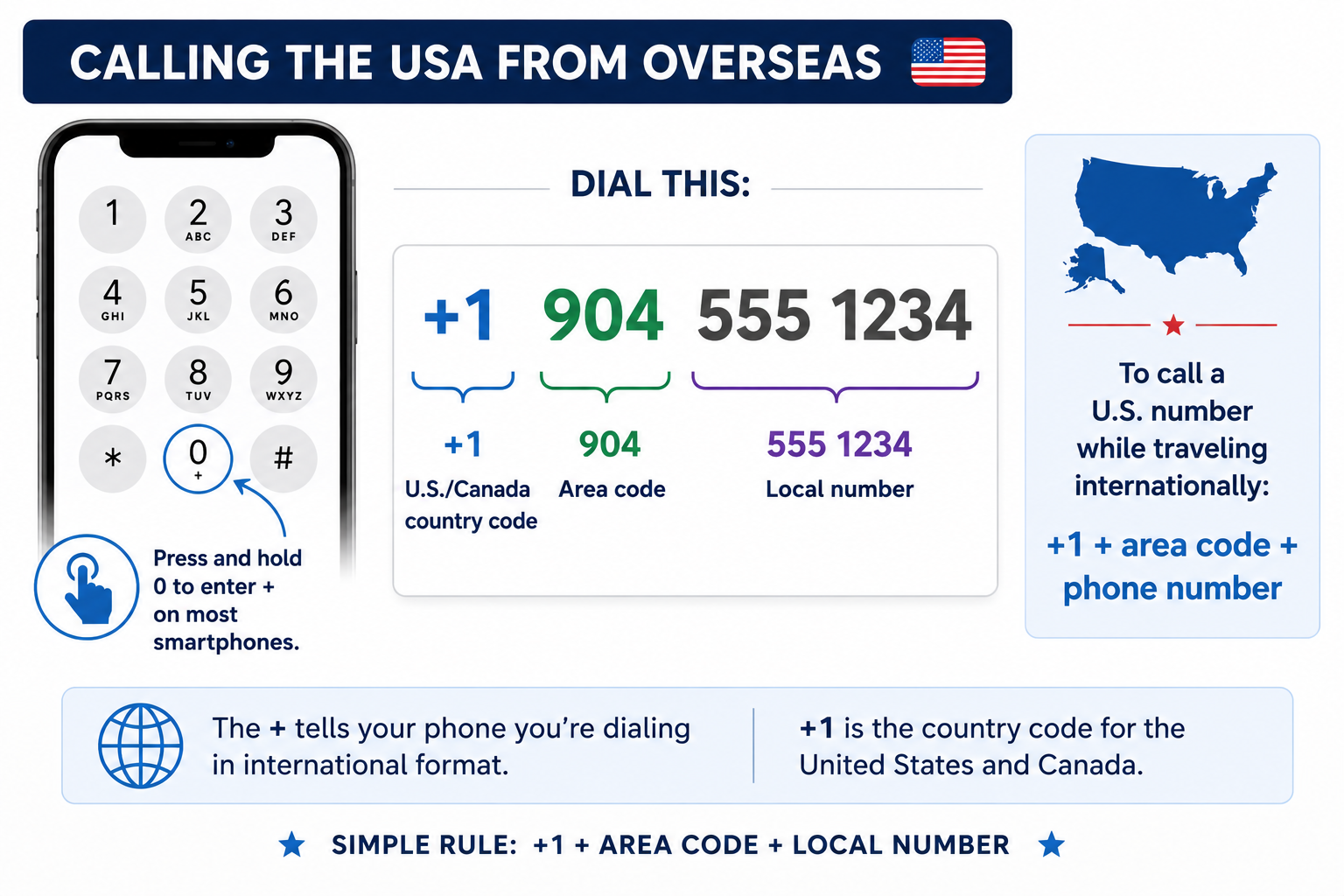
To call a U.S. number while traveling internationally, use:
+1 + area code + phone number
For example, if the U.S. number is:
(904) 555-1234
Enter:
+1 904 555 1234
The +1 identifies the United States and Canada as part of the North American Numbering Plan.
How Do I Type the + Sign?
On most smartphones, open the phone keypad and press and hold the 0 key until the + appears.
Using the + sign is easier than remembering the international exit code for each country you're visiting.
Calling a Local Number While You're Overseas
This is where international dialing can get confusing.
Suppose you're in Scotland and your hotel lists its telephone number as:
0131 555 1234
That's a UK domestic-format number.
When dialing it in international format, enter:
+44 131 555 1234
Notice what disappeared?
The 0 at the beginning.
The United Kingdom uses +44 as its country code. When converting many UK domestic numbers to international format, the leading 0 is removed.
So:
0131 555 1234
becomes:
+44 131 555 1234
Calling Another Country While You're Already Overseas
You don't have to be in the United States to use an international number.
Suppose you're an American traveling in France and want to call a hotel in Scotland.
You can dial:
+44 131 555 1234
The + tells the network you're using international format. The 44 tells it the destination is the United Kingdom.
The same principle works when calling many other countries.
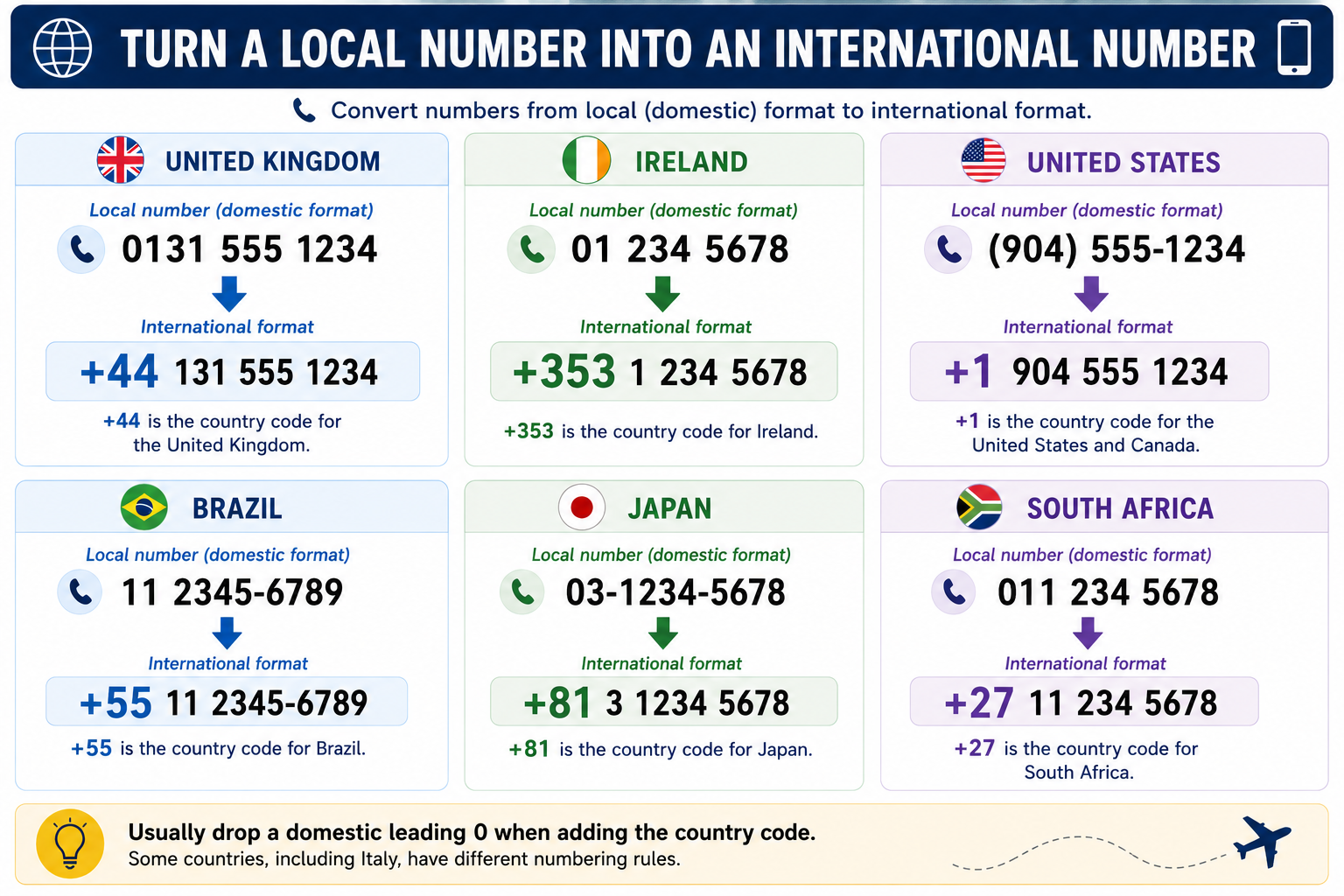
These are examples of common dialing patterns. Numbering rules can vary by country and by the type of telephone number you're calling.
Don't Automatically Drop Every Leading Zero
The “drop the zero” rule is useful, but it isn't universal.
Italy is a notable exception. For Italian geographic telephone numbers, the leading zero is part of the telephone number and is retained when dialing internationally.
That's why the safest approach isn't memorizing the telephone rules of dozens of countries.
Whenever possible, look for a number already published in international format beginning with +.
Save Travel Contacts in International Format
Here's an easy habit that eliminates much of the confusion.
When you add an overseas hotel, restaurant, tour company or other travel contact to your phone, save the number using:
+ country code + phone number
Instead of saving an Edinburgh hotel as:
0131 555 1234
save:
+44 131 555 1234
Now the number is stored in a format that's useful whether you're at home, in Scotland or traveling somewhere else.
Consider doing the same with important U.S. contacts before leaving home.
What About WhatsApp, FaceTime and Other Calling Apps?
Internet-based calling and messaging apps can make communicating internationally much easier.
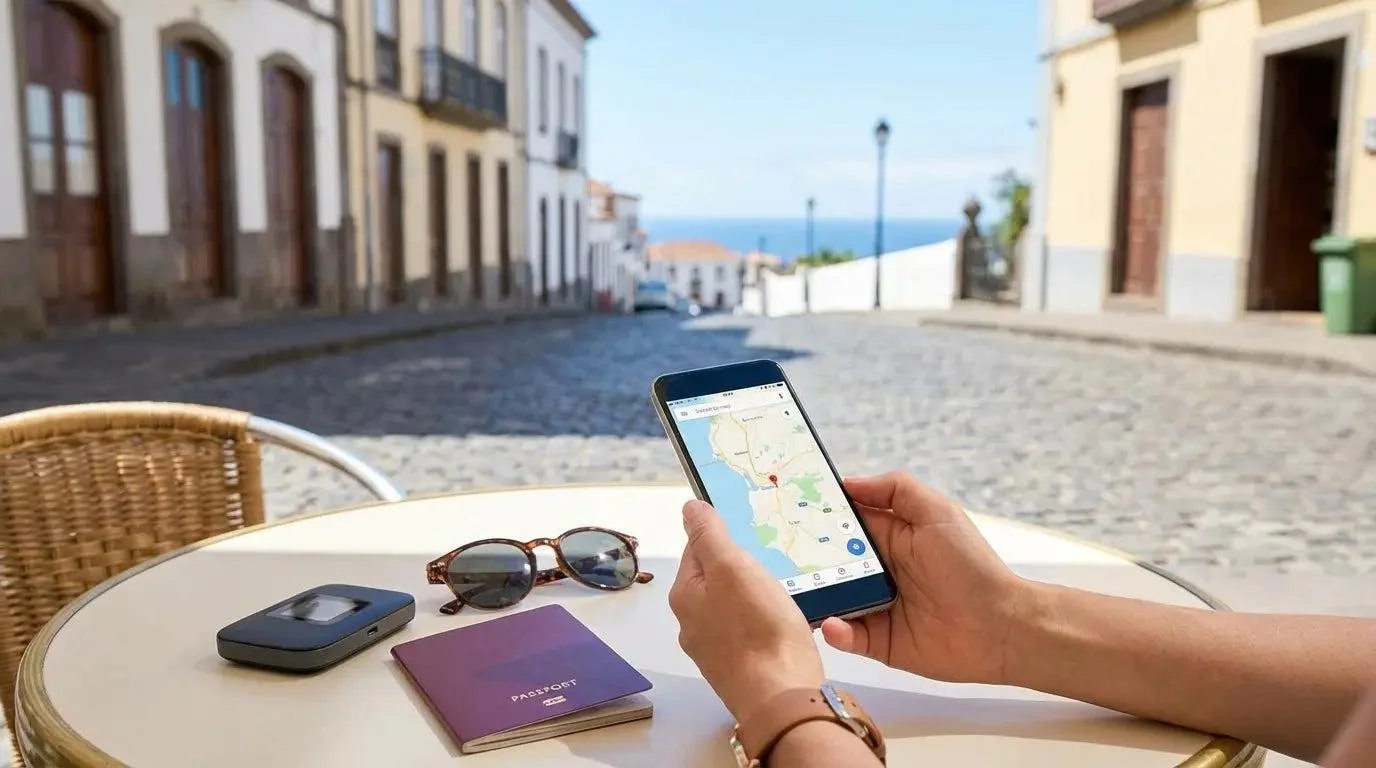
Instead of placing a traditional international cellular call, these services use an internet connection. That connection might come from hotel Wi-Fi, your U.S. cellular plan, an international roaming plan, a local SIM or a travel eSIM.
But using an app doesn't necessarily make the underlying connection free. If you're using cellular data overseas, the rules and charges associated with your cellular plan still apply.
What About Wi-Fi Calling?
Wi-Fi Calling can allow your regular U.S. phone number to make and receive calls over a Wi-Fi connection when supported by your phone and carrier.
It can be extremely useful overseas, but charges depend on your carrier, plan and the number you're calling.
A call made using Wi-Fi Calling is not automatically a free international call.
If you plan to use Wi-Fi Calling overseas, enable it and test it before leaving home.
How Will Your Phone Actually Connect Overseas?
Knowing what number to dial is only half of the equation.
You'll also need a way for your phone to connect.
You could use your existing U.S. cellular plan, purchase an international pass from your carrier, install a travel eSIM, buy a local SIM or even use a second phone.
We've compared those choices, including their advantages, disadvantages and typical costs, in our companion guide:
Know the Emergency Number at Your Destination
Don't assume 911 works everywhere.
Emergency telephone numbers vary considerably around the world, and some countries use separate numbers for police, fire and medical emergencies.
A few examples:
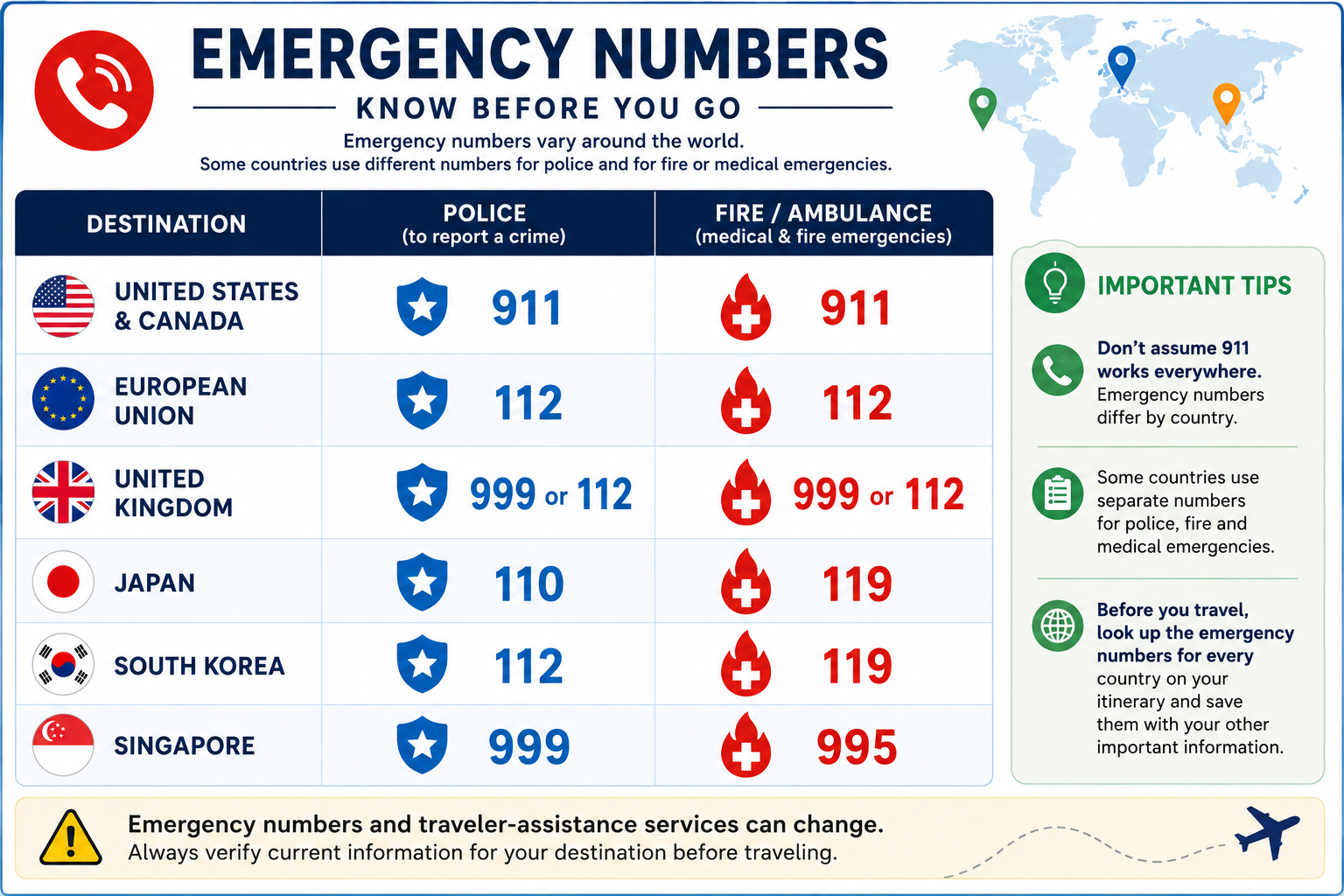
Japan, for example, uses 110 for police and 119 for fire or ambulance. South Korea also uses 112 for police and 119 for fire and emergency medical services. Singapore uses 999 for police and 995 for fire, rescue and medical emergencies.
The important lesson isn't to memorize a worldwide list. Before leaving home, look up the emergency numbers for every country on your itinerary and save them with your other important travel information.
It's also worth checking whether your destination provides a special traveler-assistance service. Japan, for example, operates a 24-hour multilingual visitor hotline, while South Korea has multilingual assistance available for international travelers.
Emergency numbers and traveler-assistance services can change. Always verify current information for your destination before traveling.
The Simple Version
International dialing looks complicated until you reduce it to one habit:
Save and dial telephone numbers using + and the country code whenever possible.
Calling the United States?
+1 + area code + phone number
Calling the United Kingdom?
+44 + phone number without the usual domestic leading 0
Calling another country?
Use its + country code and the telephone number in the correct international format.
And if a hotel, restaurant, airline or tour operator already provides its telephone number beginning with +, use it that way.
Once your contacts are saved in international format, your smartphone can handle most of the geography for you.
More International Phone Help
Not sure whether you should use your U.S. carrier, buy an international plan, install an eSIM or purchase a local SIM?
Our companion guide compares the major options for staying connected abroad.