

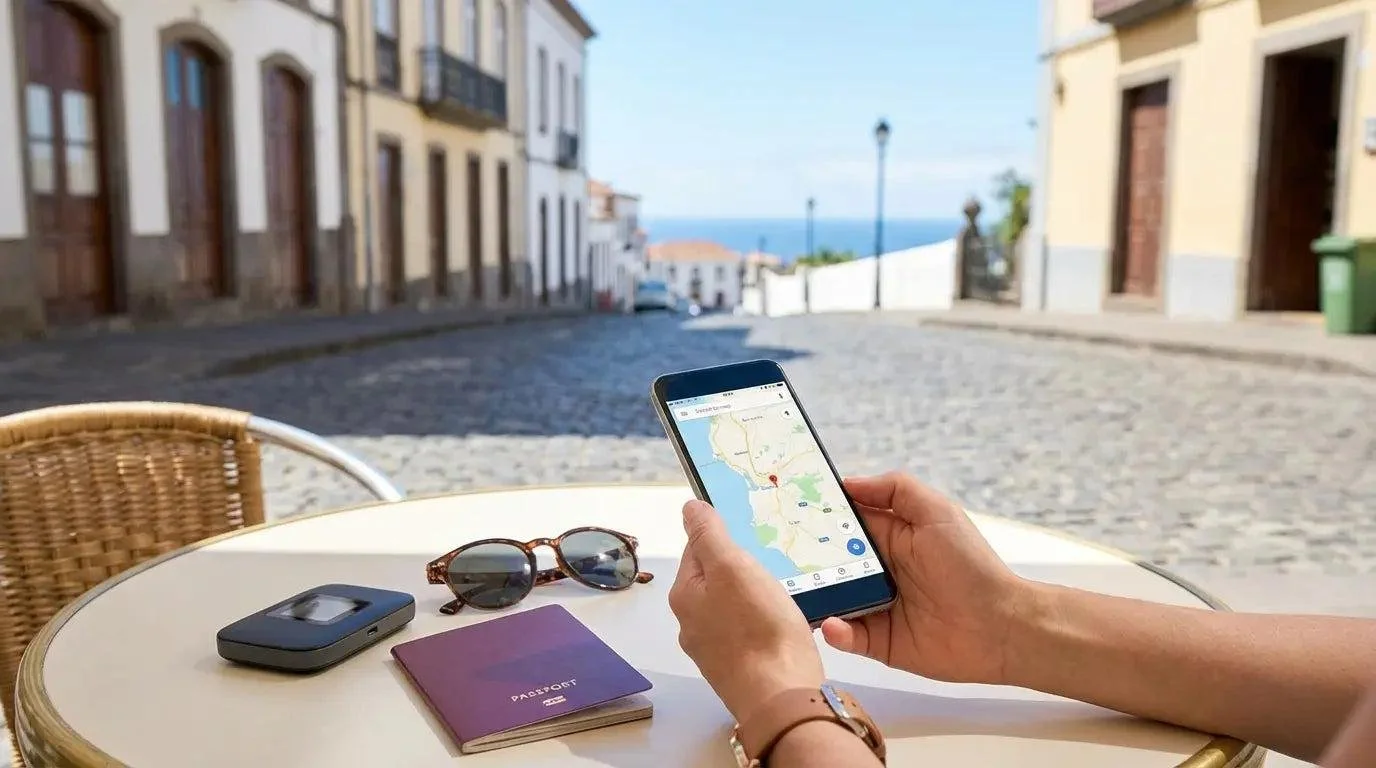
Using Your Phone Overseas: A Practical Guide to Staying Connected
Traveling internationally used to mean deciding whether to pay painful roaming charges, hunt down a local SIM card after landing, or simply leave your phone in airplane mode until you found Wi-Fi.
Thankfully, travelers have more choices today.
Depending on your phone, carrier, destination and length of trip, you may be able to use your existing U.S. plan, purchase an international pass, install an eSIM, buy a local SIM, or even travel with a second phone.
There isn't one best answer for everyone. The goal is to find the right balance of cost, convenience and connectivity for your trip.
Your Main Options
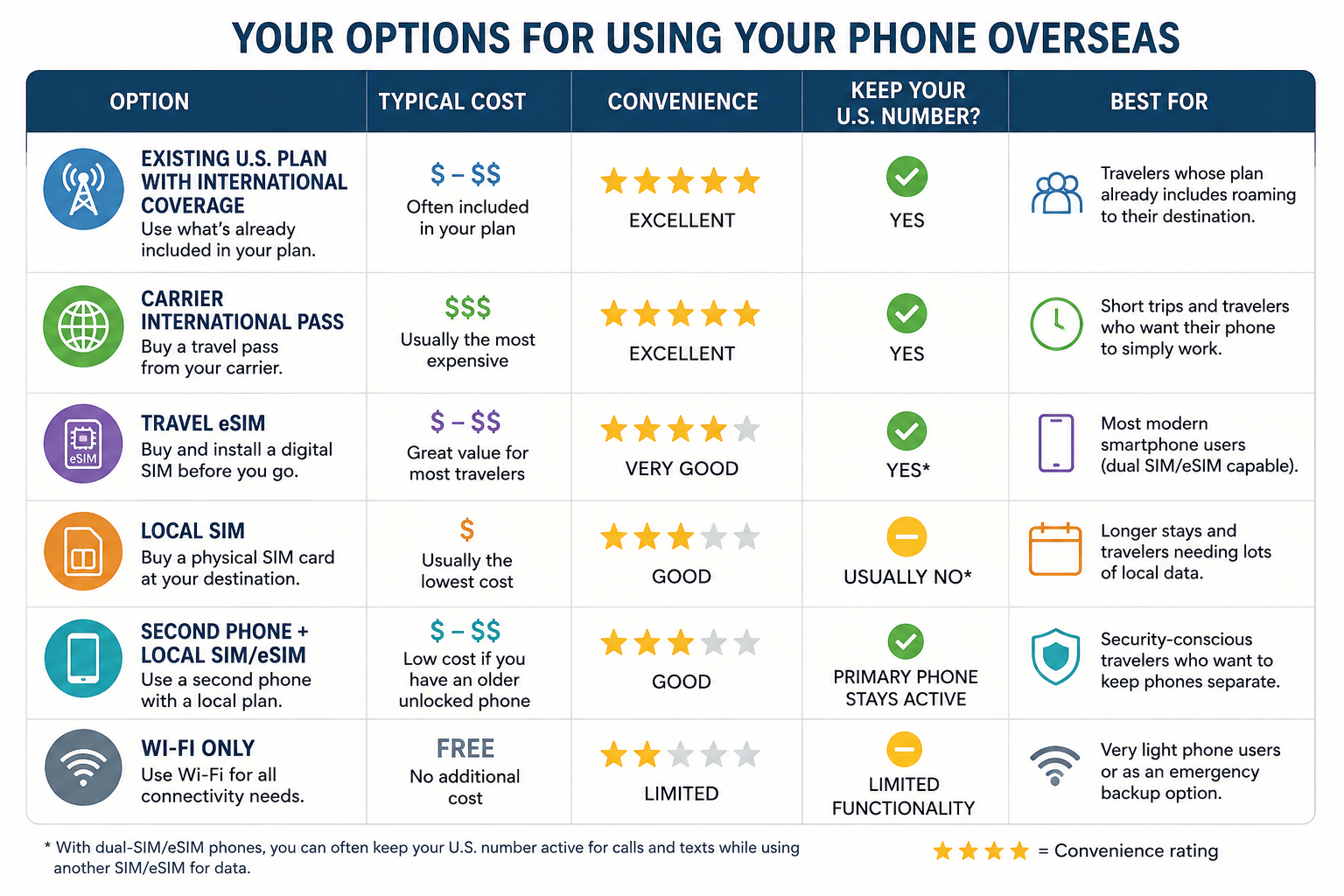
Option 1: Use Your Existing U.S. Plan
Before buying anything, check your current cellular plan.
Some U.S. plans now include international data and texting in a large number of countries. Others include service in Canada and Mexico but charge extra elsewhere.
This can make the easiest solution surprisingly affordable: do nothing.
Check your carrier's app or website before departure and look specifically at:
Countries included in your plan
Amount of high-speed data included
Speed after your high-speed allowance is exhausted
Cost of voice calls
Text messaging
Hotspot use
Wi-Fi Calling
Cruise ship and airline coverage, which may be completely different
Don't assume that because your carrier advertises international coverage, your particular plan includes it.
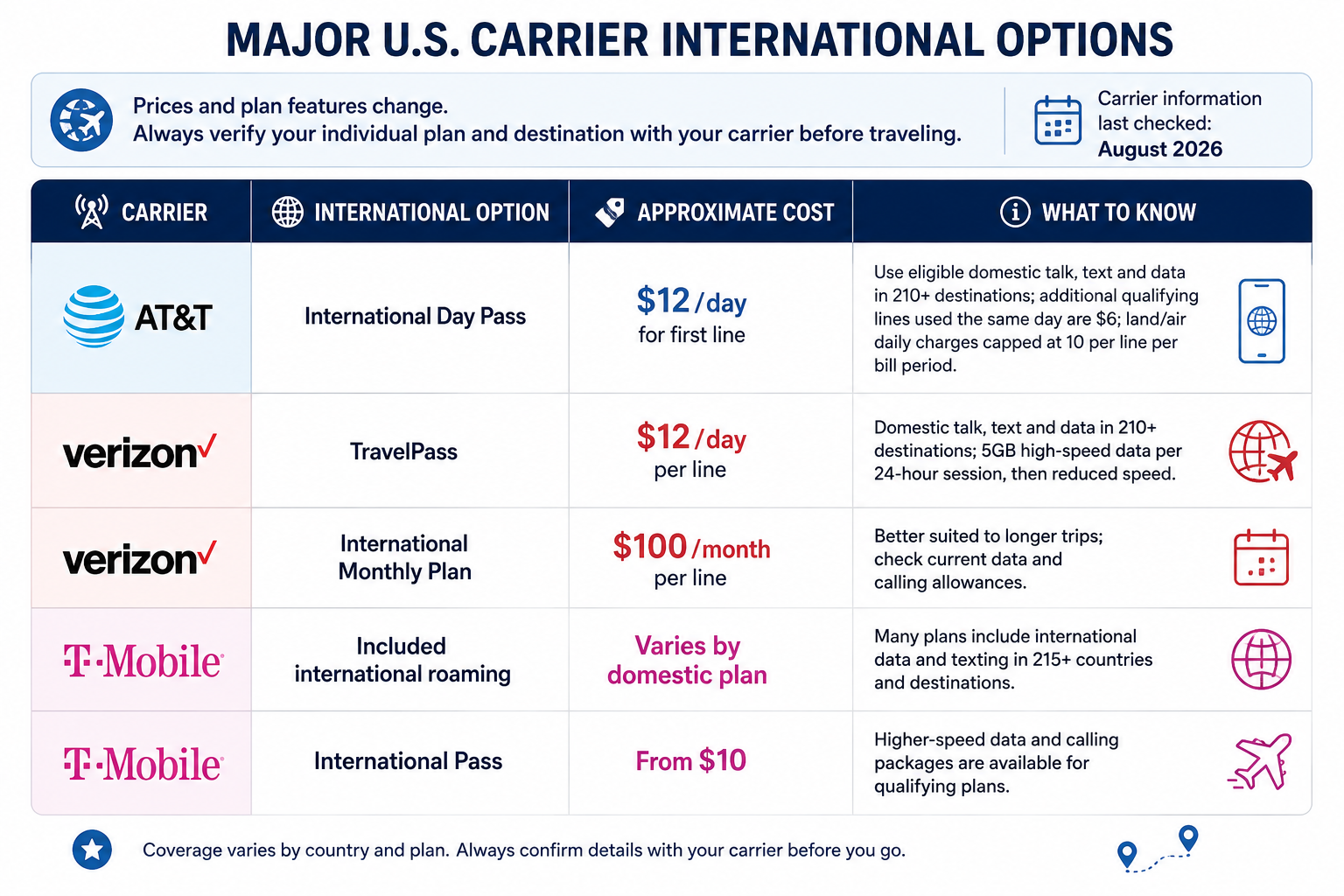
Option 2: Buy an International Plan From Your Carrier
For pure convenience, this is difficult to beat.
You land, take your phone out of airplane mode and continue using the same number, apps, contacts and data plan.
The downside is cost.
Daily international passes can become expensive on a two- or three-week vacation, especially when traveling with several people.
But cost isn't everything.
If spending a little more means you don't have to install another SIM, change settings, worry about which line is handling your data or troubleshoot your phone after an overnight flight, that convenience may be worth paying for.
That's an upgrade worth considering.
A Useful Cost Comparison
Daily plans sound inexpensive until you multiply them.
A $12 daily international pass used every day on a 14-day vacation could cost $168 for one phone.
For two travelers, that's potentially $336.
That's when comparing your carrier's included benefits, monthly options and eSIMs becomes worthwhile.
Option 3: Use a Travel eSIM
For many travelers with newer smartphones, an eSIM offers an excellent compromise between price and convenience.
An eSIM is a digital SIM. Instead of removing the physical SIM card from your phone, you download and install another cellular plan.
Many modern phones support more than one SIM, allowing you to keep your U.S. number while using a separate eSIM for international data.
That can give you something close to the best of both worlds.
Before purchasing an eSIM, confirm:
Your phone supports eSIM
Your phone is carrier-unlocked
The eSIM covers every country you're visiting
How much high-speed data is included
Whether hotspot/tethering is permitted
Whether the plan provides data only or also includes a phone number
What happens when your data allowance runs out
How long the plan remains valid
Install your eSIM before leaving home whenever possible. You don't necessarily need to activate the international service yet, but having everything installed while you have reliable internet makes life easier.
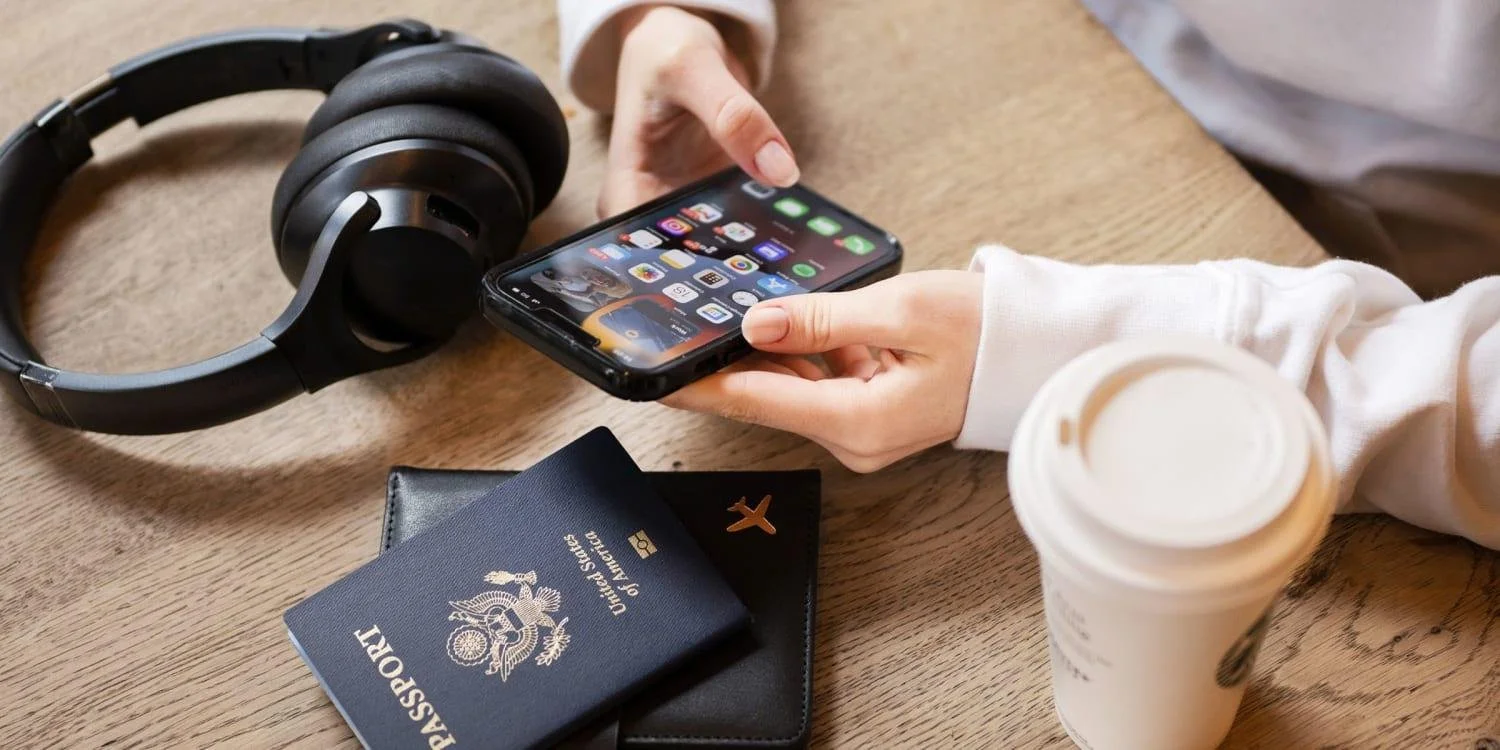
Option 4: Buy a Local SIM
The old-fashioned solution still works.
An unlocked phone can use a physical SIM purchased from a cellular provider at your destination. Local plans can offer excellent value, particularly on longer trips.
The disadvantages are mostly convenience.
You may receive a different phone number, your U.S. line won't necessarily be available, and you'll need to purchase and configure the SIM.
For travelers spending several weeks or months in one country, however, a local SIM can still make a lot of sense.
Option 5: Take an Older Phone
Here's an option that doesn't get discussed nearly enough.
Before eSIMs became commonplace, I traveled internationally with an older unlocked smartphone.
I loaded it with the apps I expected to need, including my airline app, maps, Facebook and other travel tools. After arriving, I purchased a local SIM and used that phone for cellular service.
My primary phone remained separate and could still be used on Wi-Fi.
There are still advantages to this approach.
A lost or stolen travel phone doesn't necessarily expose the device you use every day. You can carry your primary phone more selectively, and an older unlocked phone can become a perfectly capable travel device.
It's not the most elegant solution anymore, but if you already have a suitable phone sitting in a drawer, it may cost very little.
Don't Forget Wi-Fi Calling
Wi-Fi Calling can be extremely useful overseas.
When properly supported and configured by your carrier, your phone can make and receive certain calls over Wi-Fi rather than a foreign cellular network.
Set it up and test it before leaving the United States.
Carrier rules and charges vary, particularly when calling foreign numbers, so don't assume that every call made over Wi-Fi is free.
Need to Make a Call While You're Abroad?
Having service is only half the equation. Learn how to call the United States, dial local numbers, use country codes, and save international numbers correctly in our companion guide.
HOW TO MAKE PHONE CALLS WHILE TRAVELING OVERSEAS →
Two-Factor Authentication Can Complicate Things
Your bank, credit card company or other account may send a security code to your U.S. mobile number.
That's easy at home.
It can become considerably less easy when you've removed your U.S. SIM or disabled the line overseas.
Before traveling, check important financial and travel accounts. Where possible, consider authenticator apps, passkeys or other approved verification methods in addition to SMS.
Download What You Need Before Leaving
Even with an international data plan, prepare for periods without service.
Download:
Offline maps
Airline apps
Hotel apps
Train and transit apps
WhatsApp or other messaging apps you'll use
Reservations and confirmation numbers
Boarding passes when available
Important addresses
Translation data or language packs
Your carrier's international support information
A screenshot doesn't care whether you're standing in a dead zone.
Watch Out for Cruise Ships
International cellular coverage and cellular service at sea are not the same thing.
Your normal international plan may not cover a ship's cellular network. Maritime roaming can carry completely different charges.
Before sailing, check both your carrier's cruise coverage and your cruise line's connectivity options.
When in doubt, airplane mode is cheap insurance against an unpleasant cellular surprise.
So Which Option Should You Choose?
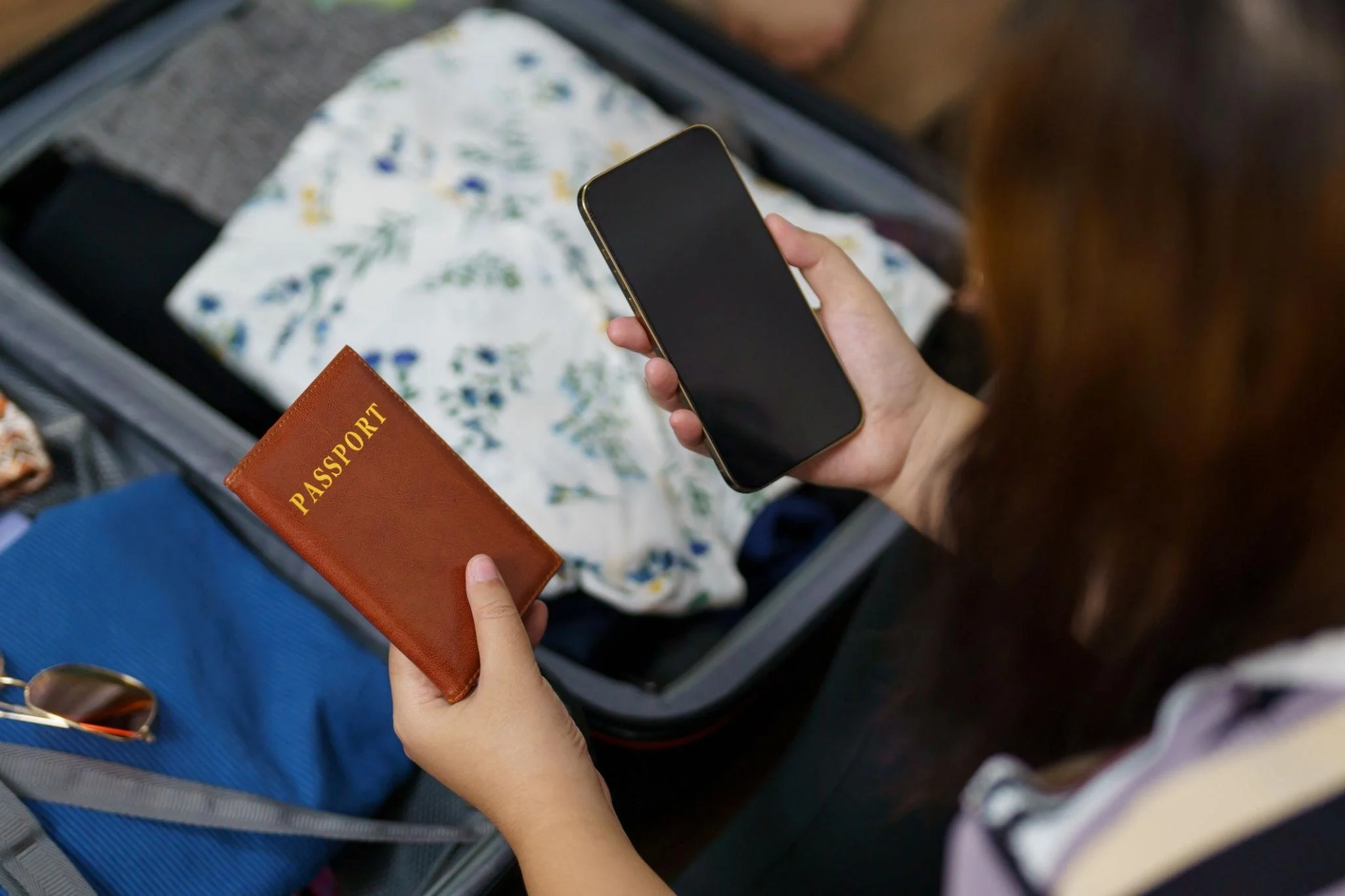
For a short international trip, using your carrier's international service may be worth the additional cost simply because it's easy.
For a one- or two-week trip, an eSIM can offer an attractive combination of cost and convenience.
For a long stay in one country, a local SIM deserves serious consideration.
And if your existing U.S. plan already includes adequate international data, don't buy something simply because the internet told you that international travelers need an eSIM.
Start by finding out what you already have.
Then compare the alternatives.
The best international phone solution isn't necessarily the cheapest. It's the one that gives you the connectivity you need, at a cost you're comfortable with, without adding unnecessary complications to your trip.
Before You Go
Whatever option you choose, test as much as possible at home.
Know which line will handle data. Know whether your U.S. number will remain active. Know how you'll receive security codes. Know what calls cost.
A few minutes spent sorting that out before departure beats trying to decipher cellular settings while standing in an airport arrivals hall with luggage in one hand and 8% battery remaining in the other.