

How We Planned Our Ireland Road Trip Without Planning Every Minute
We knew where we were going. We knew where we were sleeping. What happened in between was allowed to surprise us.
When we planned our road trip through Ireland, we didn't start with a list of attractions and try to squeeze all of them into a calendar.
We started with a map.
We knew there were places we wanted to see. We knew roughly how much of the country we wanted to cover. And because this was a road trip, we also knew that getting from one place to another wasn't simply transportation.
The road was part of the trip.
That changed how we planned everything.
Instead of asking, How much can we fit into each day?, we asked a different question:
How much structure do we need to have a great trip without scheduling the life out of it?
That approach gave us some memorable planned experiences.
It also gave us places we hadn't necessarily planned on seeing, roads that changed how we thought about distance, and a little chocolate and coffee shop in Kilbeggan that wasn't on the itinerary at all.
That, to us, is what a road trip should leave room for.
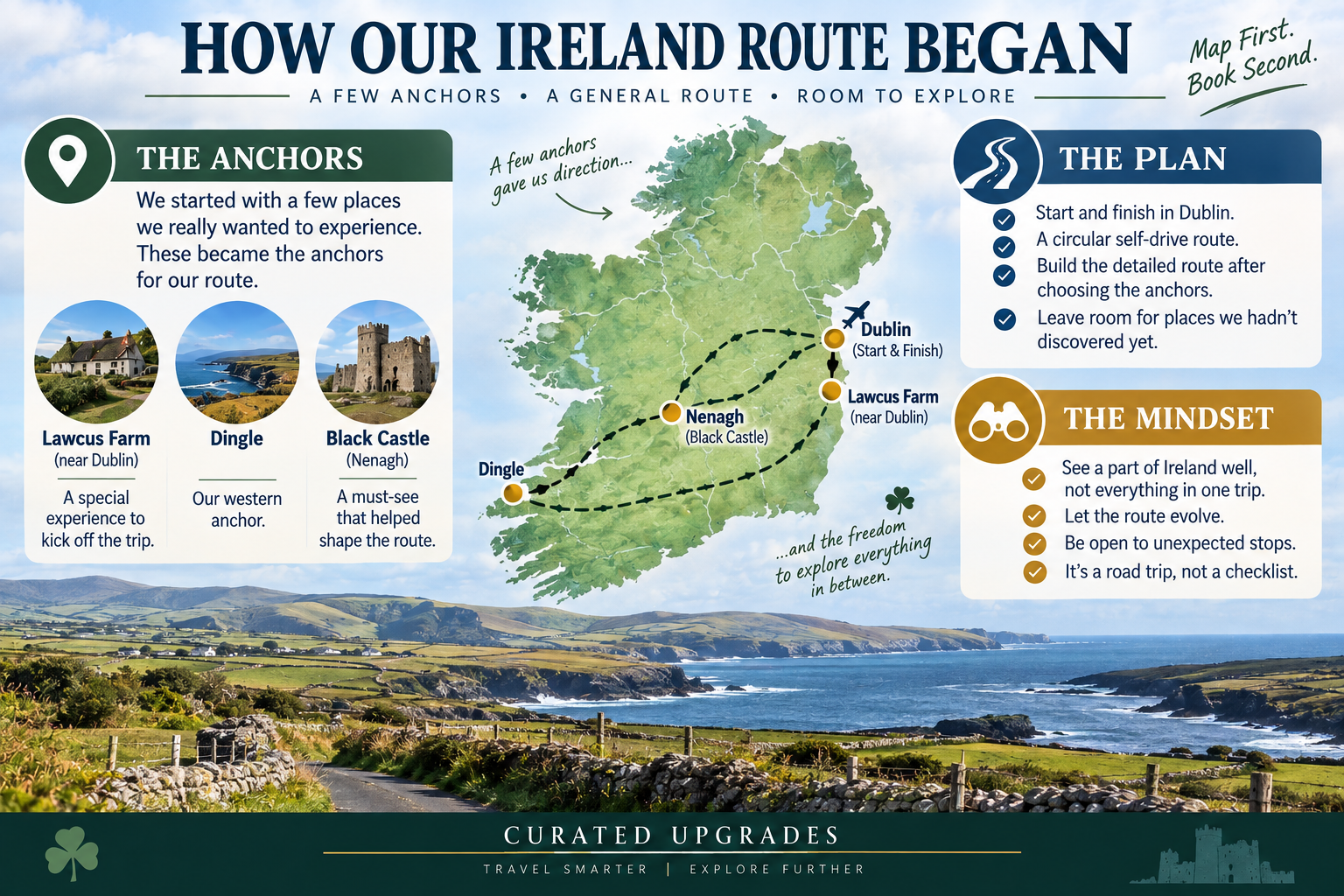
Start With the Anchors
Before booking accommodations, we needed to understand the shape of the trip.
Where did we really want to go?
Which places mattered enough that the rest of the route should be built around them?
Those became our anchors.
An anchor doesn't have to be the biggest attraction in a guidebook. It simply has to matter enough to you that you're willing to shape part of the trip around it.
For us, that included places such as the Black Castle in Nenagh. It wasn't merely another pin on a map. It was somewhere we specifically wanted to experience.
Once enough of those anchors were on the map, we could begin connecting them.
That's essentially the philosophy that eventually became one of the foundations of Curated Upgrades:
Because once you know where you actually want to go, decisions about where to sleep, how long to stay and how far to drive become much easier.
One Country Doesn't Mean One Trip
Once we started putting those anchors on a map, another thing became obvious.
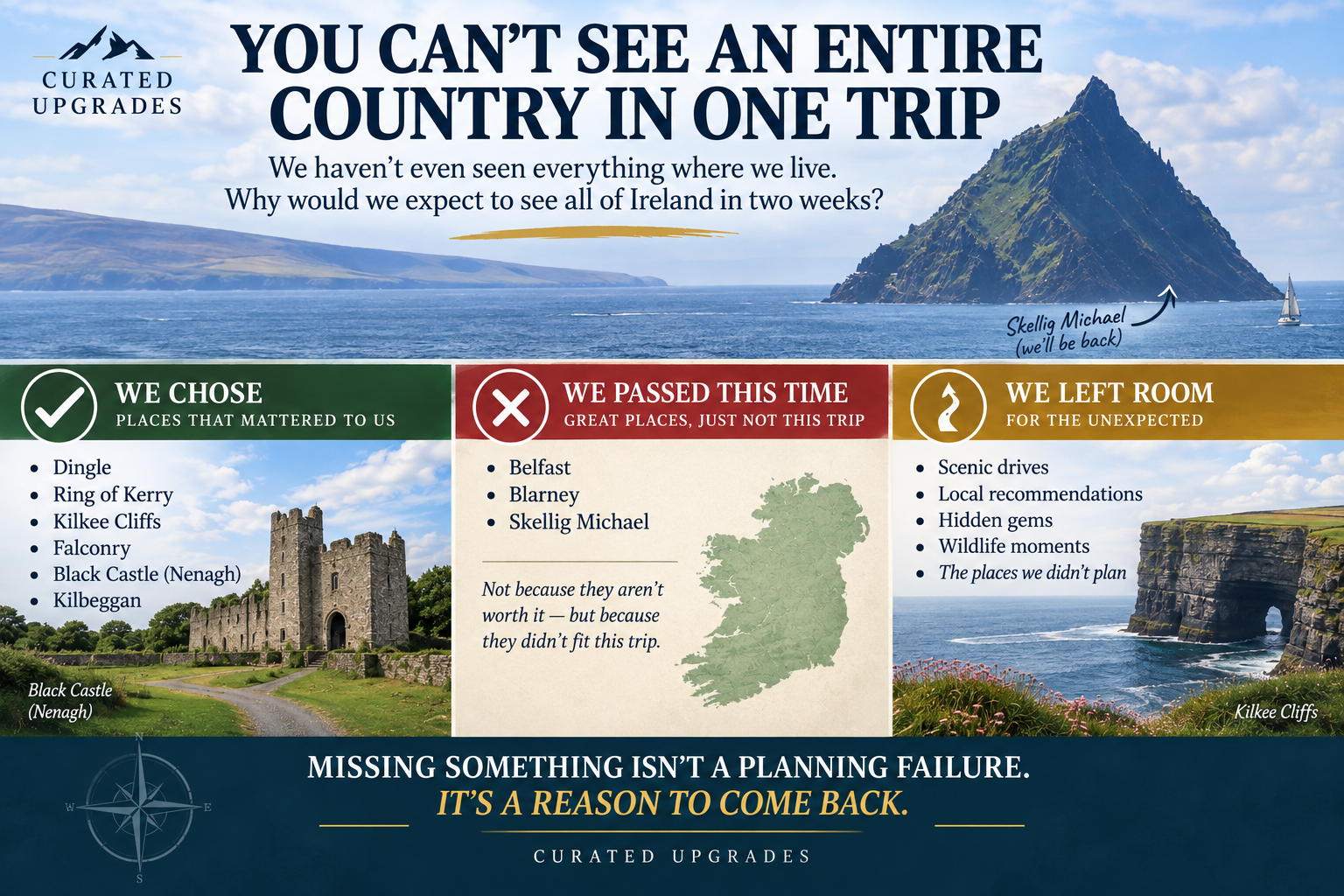
Ireland may look manageable on a map, but that doesn't mean every interesting place belongs on the same itinerary.
Trying to connect every appealing castle, coastal drive, village and scenic overlook would have turned the trip into a race.
So we made choices.
Some places made this trip.
Others didn't.
And that's okay.
One of the easiest ways to overplan a road trip is to treat every place you might someday want to visit as something you need to visit this time.
We'd rather experience part of a country well than spend the entire trip trying to conquer the map.
There can always be another trip.
We Planned the Stops. Not Every Minute.
Once we knew the general route, we could decide how quickly we wanted to move through it.
Our answer was: not very quickly.
Most of our driving days were kept to roughly three hours or less.
That's not a magic road-trip formula. It was simply enough driving to move the trip forward without allowing the drive to consume the day.
We also stayed more than one night in many places.
That matters more than it might seem when you're looking at an itinerary on a screen.
Checking out, loading the car, driving, finding the next accommodation, checking in and unpacking again all consume time. Doing it every morning can make a road trip feel surprisingly mechanical.
Staying longer occasionally changes the rhythm.
You stop simply passing through a place and get a chance to be there.
Most importantly, we left room between the anchors.
We knew where the day needed to end.
We didn't necessarily know everything we'd do before we got there.
Leave Room for Something You Didn't Expect
This is where deliberately leaving some empty space starts paying dividends.
Not everything worth experiencing will appear on the itinerary you created at home.
And not everything needs to.
Sometimes you discover something along the way and simply have enough time to say:
Let's go see that.
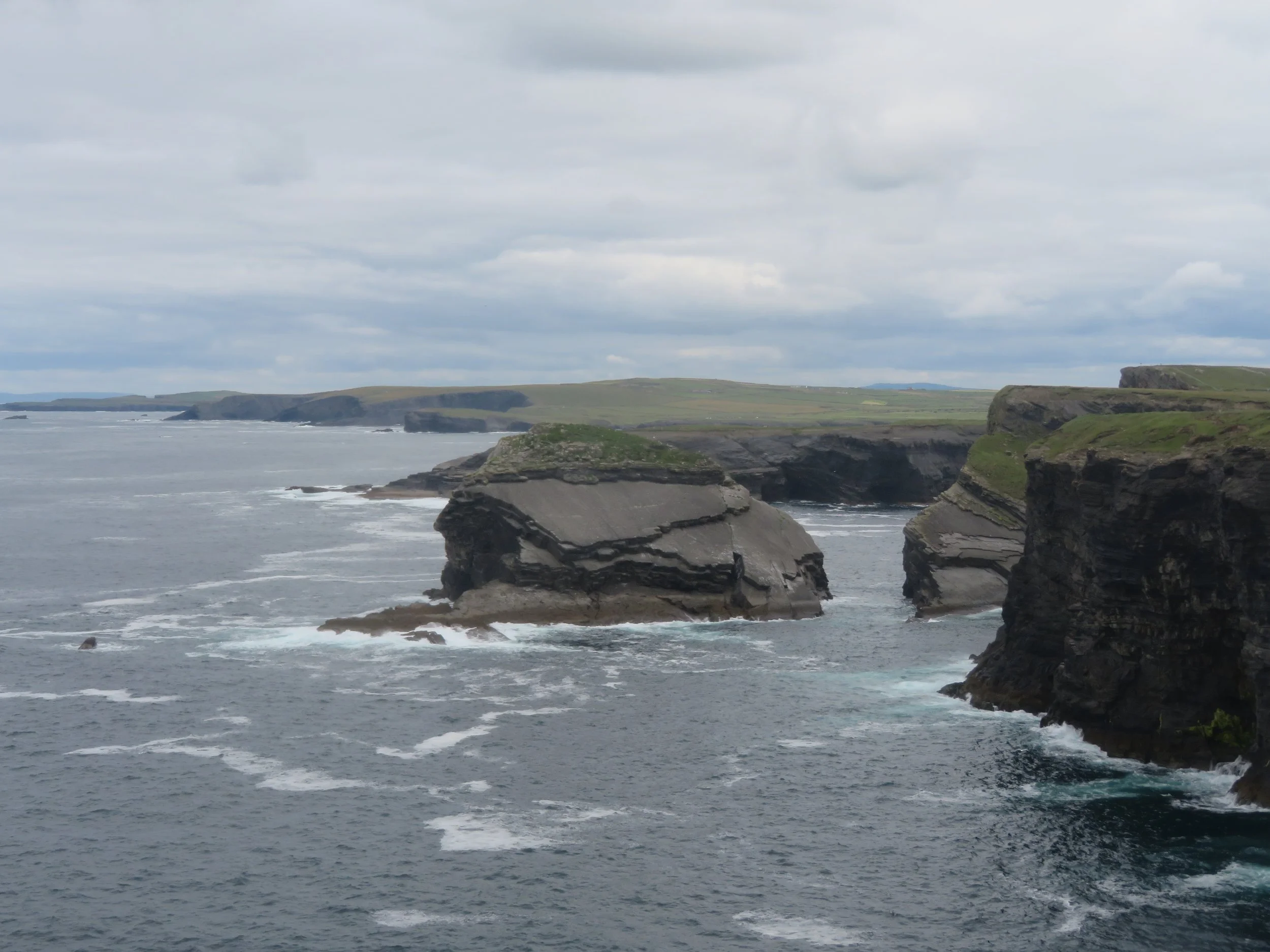
Kilkee was one of those places where the landscape itself justified slowing down.
The cliffs don't need an elaborate itinerary around them. They need time.
Time to get out of the car.
Time to walk.
Time to look out over the Atlantic instead of checking the clock because the next reservation starts in 45 minutes.
If we'd built every day around maximizing the number of things we could see, that kind of flexibility would have been the first thing sacrificed.
Instead, it was part of the trip.
Don't Let the Map Fool You
There's another reason we deliberately kept those driving days manageable.
Miles don't tell you what an Irish drive is going to feel like.
A navigation app is useful. We certainly used one.
But the estimated drive time was a starting point, not a schedule.
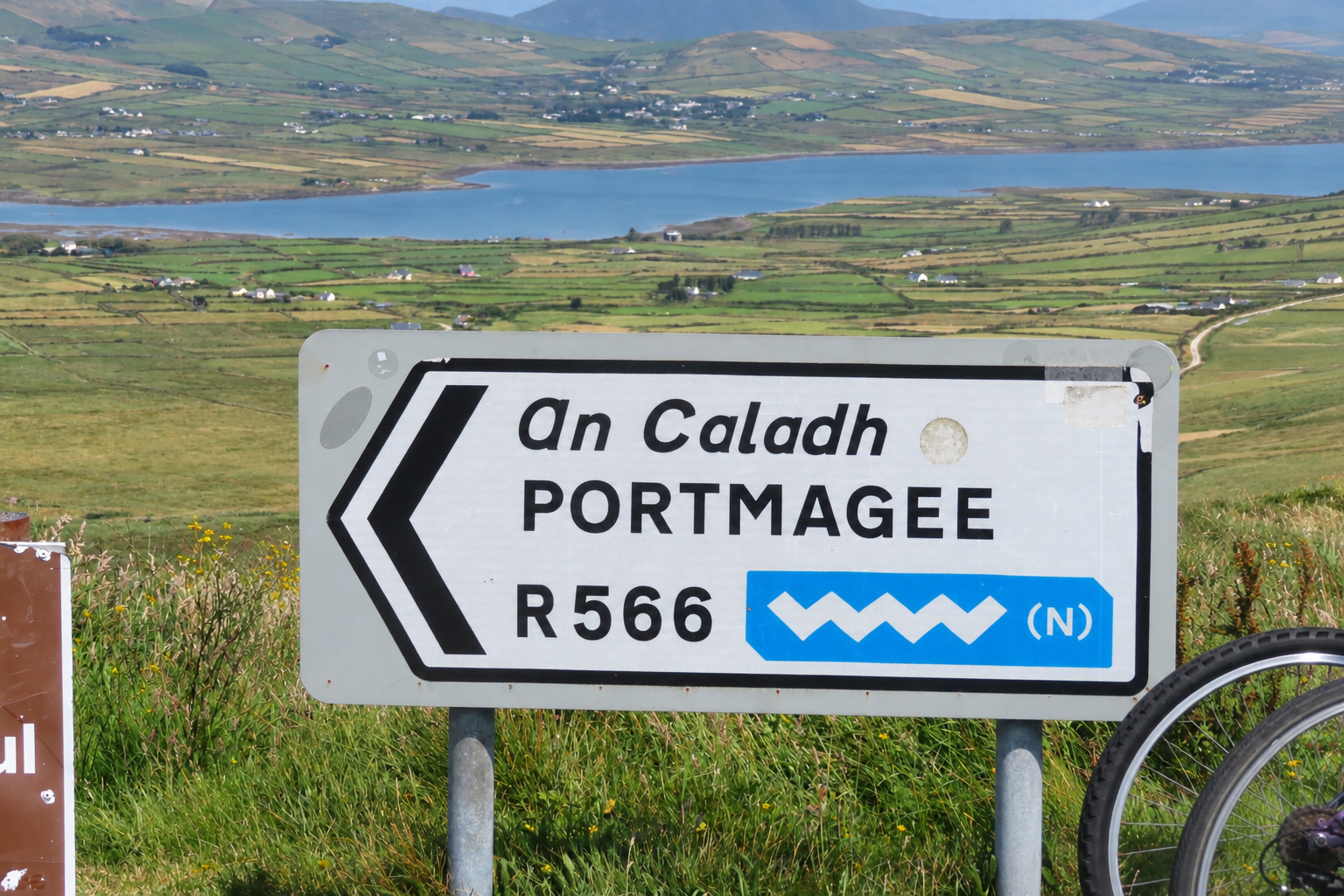
Road type matters.
An N-road and a tiny local road can produce very different driving experiences even when the mileage looks similar.
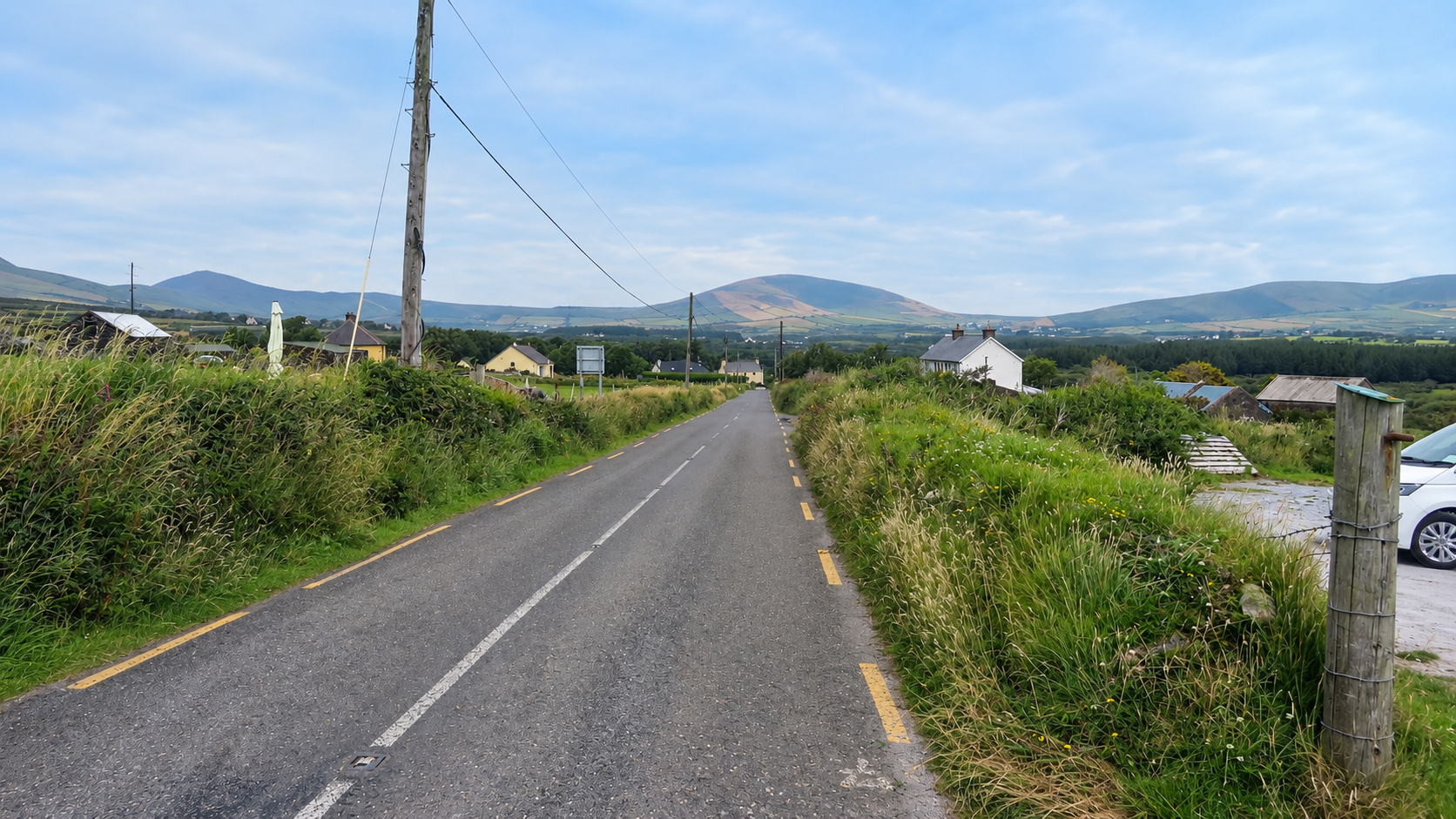
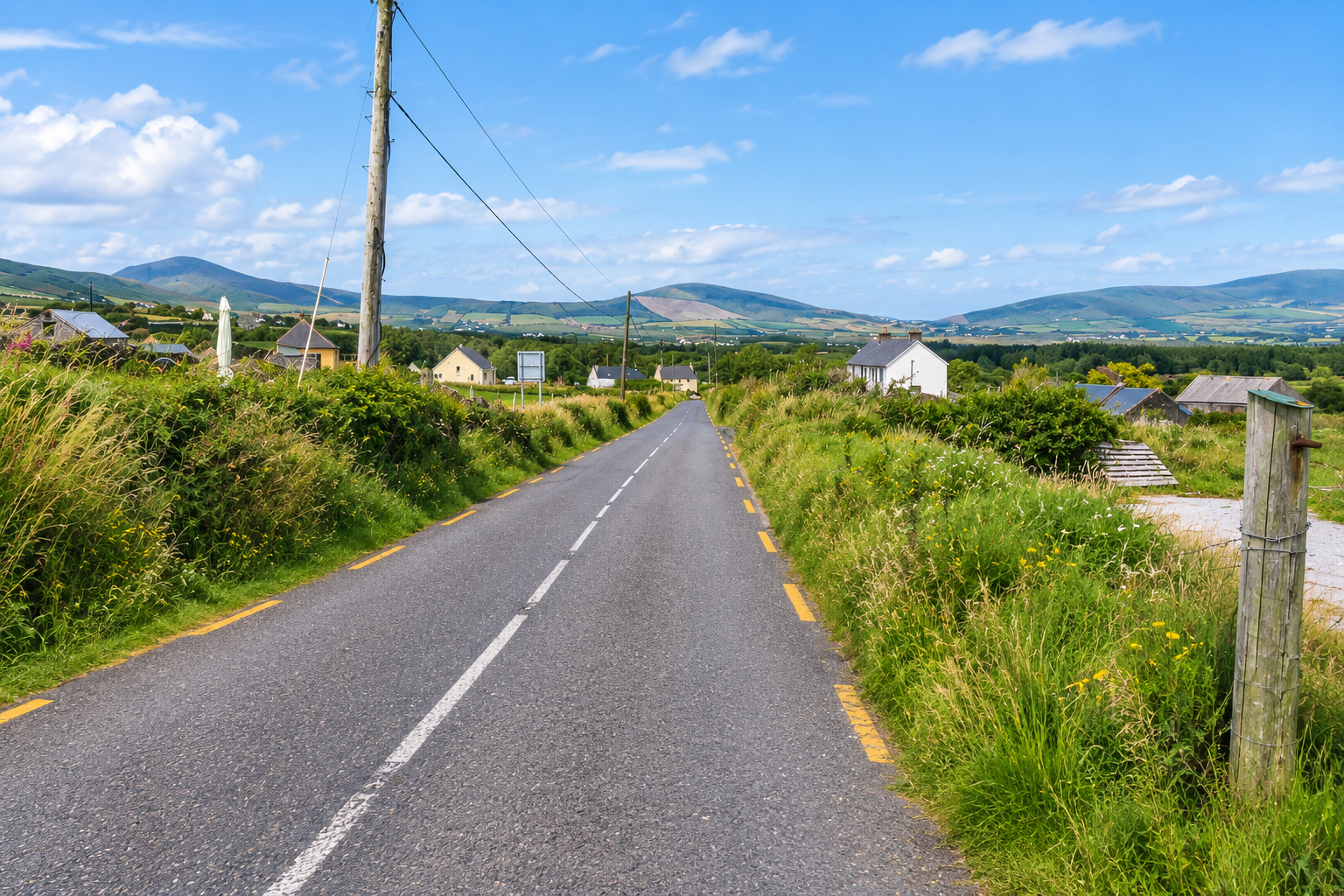
You can move comfortably along one stretch and later find yourself on a narrow road bordered by hedges, grass or stone walls, negotiating oncoming traffic and wondering exactly which patch of vegetation is supposed to become the other half of the road.
Then add everything else that happens on an actual road trip.
A village catches your attention.
You want coffee.
There's a beautiful view.
You see a sign pointing toward something interesting.
Someone needs a bathroom.
Or you simply decide that you're in Ireland and don't particularly care whether you arrive at the next hotel at 3:00 or 4:00.
That's why we wouldn't look at a mapping app saying 2 hours, 47 minutes and build a day assuming we'd arrive exactly 2 hours and 47 minutes later.
Give the road some breathing room too.
And Sometimes You Just Stop
All of those ideas eventually come together in one of the simplest memories from the trip.
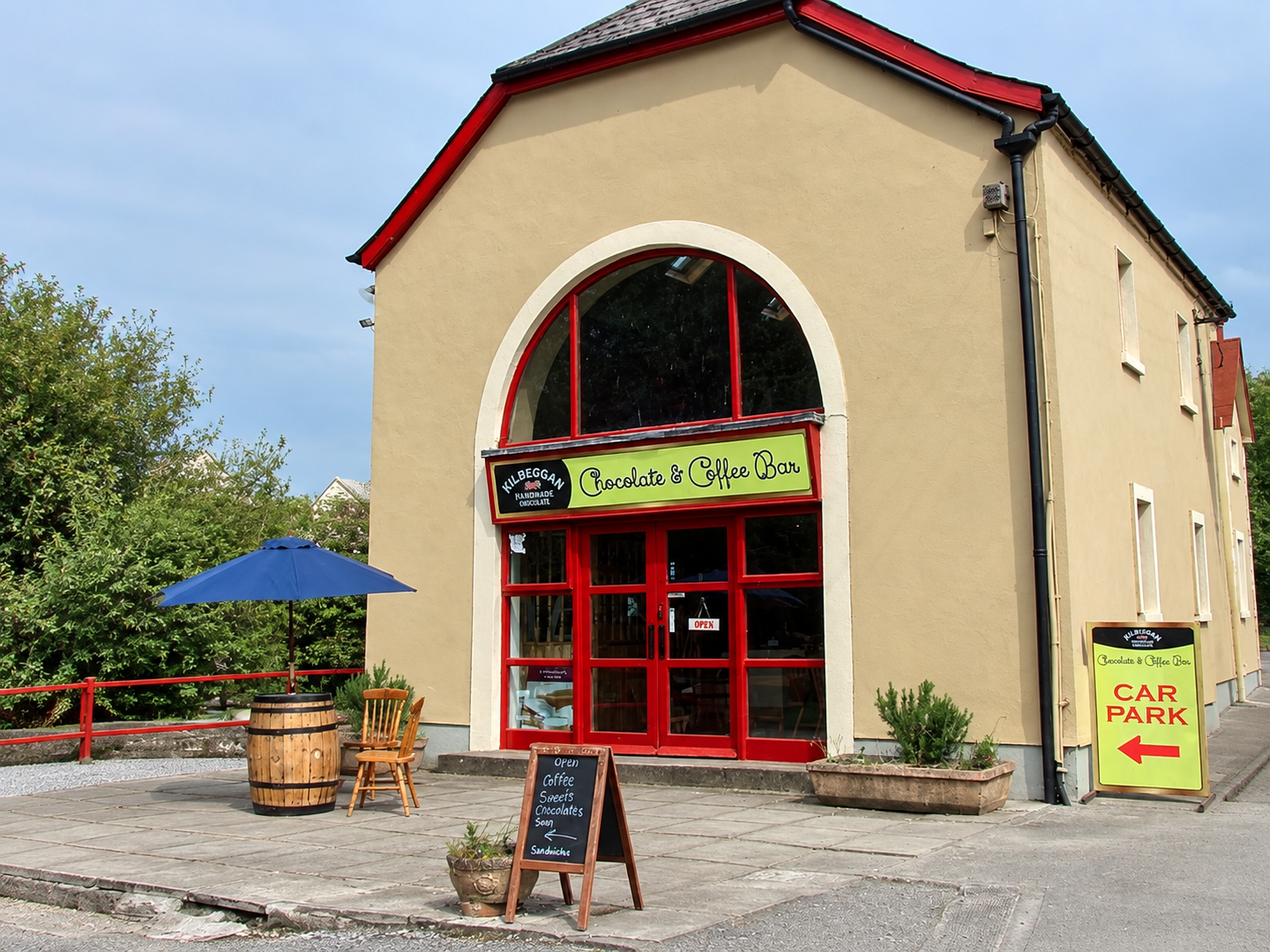
We hadn't planned to visit the Kilbeggan Chocolate & Coffee Bar.
It wasn't an anchor.
It wasn't a reservation.
It wasn't something we'd researched before the trip and starred on a map.
We came across it.
It looked interesting.
So we stopped.
That's it.
And years later, we still remember that stop.
There's something wonderfully revealing about that.
When planning an expensive trip, it's tempting to believe you're getting more value by putting more things on the itinerary.
Another attraction.
Another reservation.
Another famous sight.
Another box checked.
But eventually, adding more things doesn't give you more travel.
It gives you more deadlines.
If we'd planned that day down to the minute, an unexpected chocolate and coffee shop might have been something we drove past because we had somewhere else we were "supposed" to be.
Instead, we had time.
So the unexpected stop became part of the trip.
Plan Enough to Give Yourself Freedom
None of this means we'd recommend arriving in Ireland, renting a car and driving off without knowing where you're going to sleep.
That's not flexibility.
That's just creating a different kind of problem.
The sweet spot is somewhere in the middle.
Choose the anchors.
Build the route.
Book the accommodations that matter.
Reserve the experiences that genuinely require reservations.
Keep the driving days realistic.
And then look at the empty spaces that remain on the itinerary.
Don't automatically assume they need to be filled.
Those spaces give you permission to linger at Kilkee.
They give you time when an Irish road takes longer than Google predicted.
They let you pull over because the view is worth pulling over for.
And every once in a while, they let you walk into a little chocolate and coffee shop you knew absolutely nothing about that morning.
Map First. Book Second.
Looking back, our Ireland road trip wasn't memorable because we executed an itinerary perfectly.
The itinerary was successful because eventually it got out of the way.
It gave the trip enough structure that we weren't constantly solving logistical problems.
We knew where we were going.
We knew where we were sleeping.
We knew the things that mattered most to us were protected.
Everything else had room to breathe.
That's still the balance we look for when planning a road trip today.
Plan the structure. Protect the freedom.
Or, in Curated Upgrades language:
Then leave a little room for whatever you haven't discovered yet.
Because sometimes the upgrade isn't another reservation.
Sometimes the upgrade is having enough time to stop.