

Over-the-Counter Medications Abroad: Pack Them or Buy Them There?
Some everyday remedies may be restricted overseas, while others might be available at your destination. Here's how to decide what to pack, what to leave behind, and what to check before you travel.
Medical disclaimer: This article provides general travel information and is not medical advice. Consult your healthcare professional or pharmacist about medications appropriate for your individual health needs and itinerary.
Do You Really Need to Pack All That?
You're getting ready for an international trip. Clothes are folded, toiletries are packed, and now you're staring into the medicine cabinet.
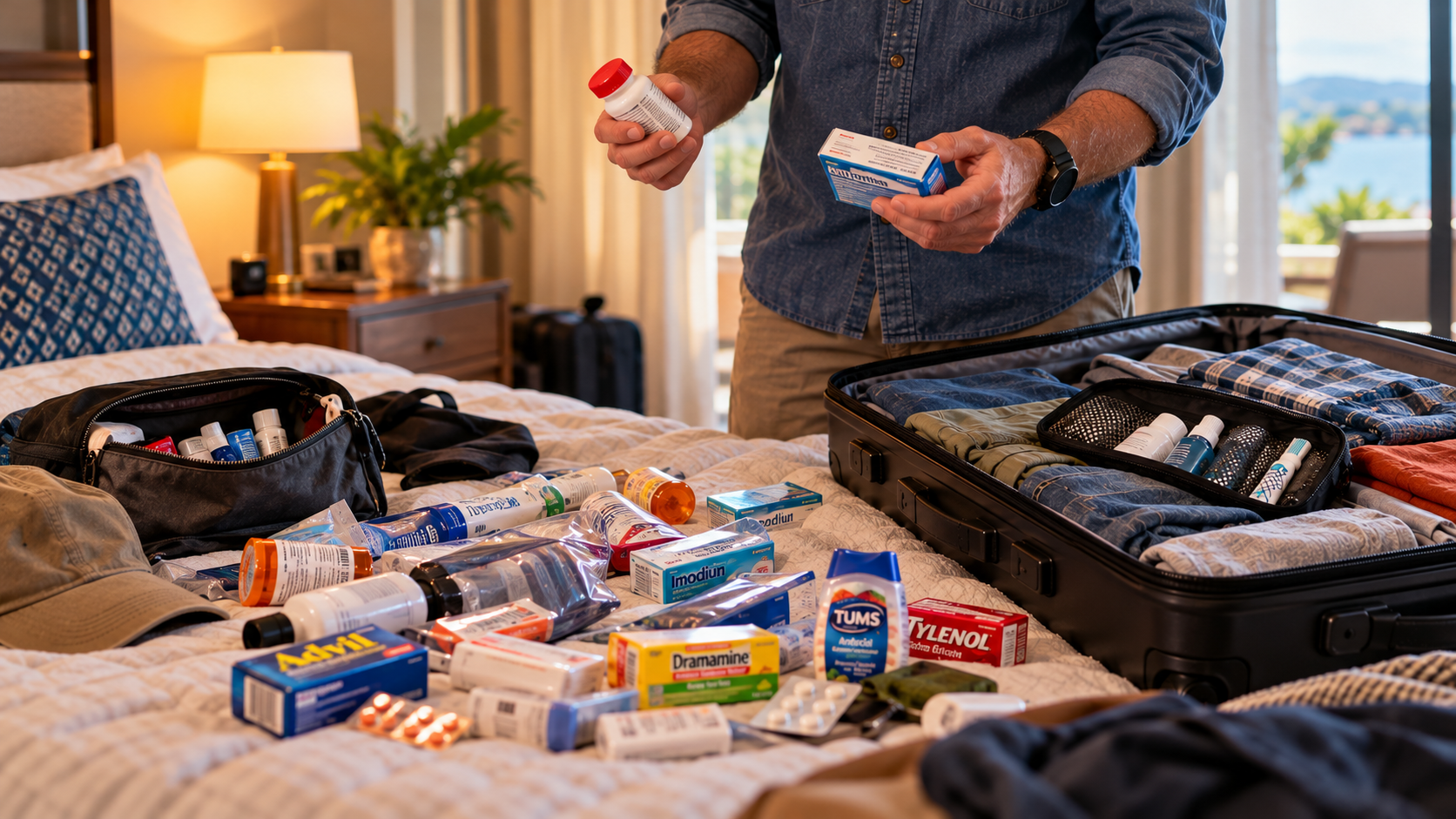
Pain relievers? Better bring some. Cold medicine? Just in case. Antacids, allergy tablets, something for an upset stomach, something for motion sickness?
Before long, you've assembled a small traveling pharmacy.
But here's a question worth asking: Do you actually need to bring all of it?
If you're spending a week in a major European city, staying near shops and pharmacies, you might not need to carry a remedy for every imaginable minor ailment.
On the other hand, if unfamiliar foods occasionally upset your stomach, bringing a small supply of your favorite remedy might save you from hunting down a pharmacy after dinner.
And if you're heading somewhere remote, with limited access to pharmacies or medical care, your packing decisions may be very different.
The trick is finding the balance between being prepared and carrying things you probably won't need.
There's another consideration, too. Some medications available without a prescription in the United States are restricted or prohibited in other countries.
So before you toss that familiar bottle into your suitcase, it's worth taking a closer look.
Your Medicine Cabinet Doesn't Need a Passport
We tend to pack medications for the same reason we overpack clothes: What if I need it?
But there's a difference between bringing something you regularly use and packing an entire collection of medications for hypothetical emergencies.
Think about your destination.
Are you staying in a city with established pharmacies and easy access to healthcare? Or are you heading into the countryside, spending several days aboard a small vessel, or exploring somewhere with limited services?
Those circumstances matter.
For a typical city vacation, buying an ordinary remedy locally may be an option, particularly if you rarely use it and wouldn't need it immediately.
But there are trade-offs. A familiar product might not be available under the same name, the formulation may differ, and pharmacy practices and prices vary from country to country. Medication quality can also be a concern, which is why the CDC recommends bringing the medicines you expect to need, rather than relying on buying replacements abroad.
The goal isn't to arrive empty-handed. It's to pack deliberately instead of packing automatically.
What Should You Bring From Home?
Some medications deserve a place in your luggage, even when pharmacies are readily available at your destination.
Start with the things you know you're likely to need.
If you frequently experience motion sickness, for example, bringing your usual remedy makes sense. The same applies if you occasionally deal with an upset stomach, gas, heartburn, or seasonal allergies.
You already know which products work for you and how you tolerate them.
There's real value in that familiarity, especially when you're tired, dealing with a language barrier, or trying to enjoy a vacation rather than decipher medication labels.
A small, sensible supply of familiar remedies can be worth the space.
The key is checking that the specific active ingredients are permitted in the countries you're visiting and, where applicable, transiting through.
For medications you need regularly, including prescriptions, the calculation changes. Don't assume you'll be able to replace them abroad. Bring an appropriate supply, with an allowance for delays when permitted, and follow your destination's medication import rules.
For more on that subject, see Traveling With Prescription Medication: The Complete Guide.
When Buying Locally Makes More Sense
Imagine you're spending ten days in London, Paris, or Rome.
You're staying in a neighborhood with supermarkets, shops, and pharmacies. You feel fine when you leave home, and you rarely need cold medicine.
Do you really need to pack several different cold remedies for an illness you may never develop?
Not necessarily.
For an unexpected, minor, nonurgent ailment, purchasing an appropriate medication from a reputable local pharmacy may be a practical option.
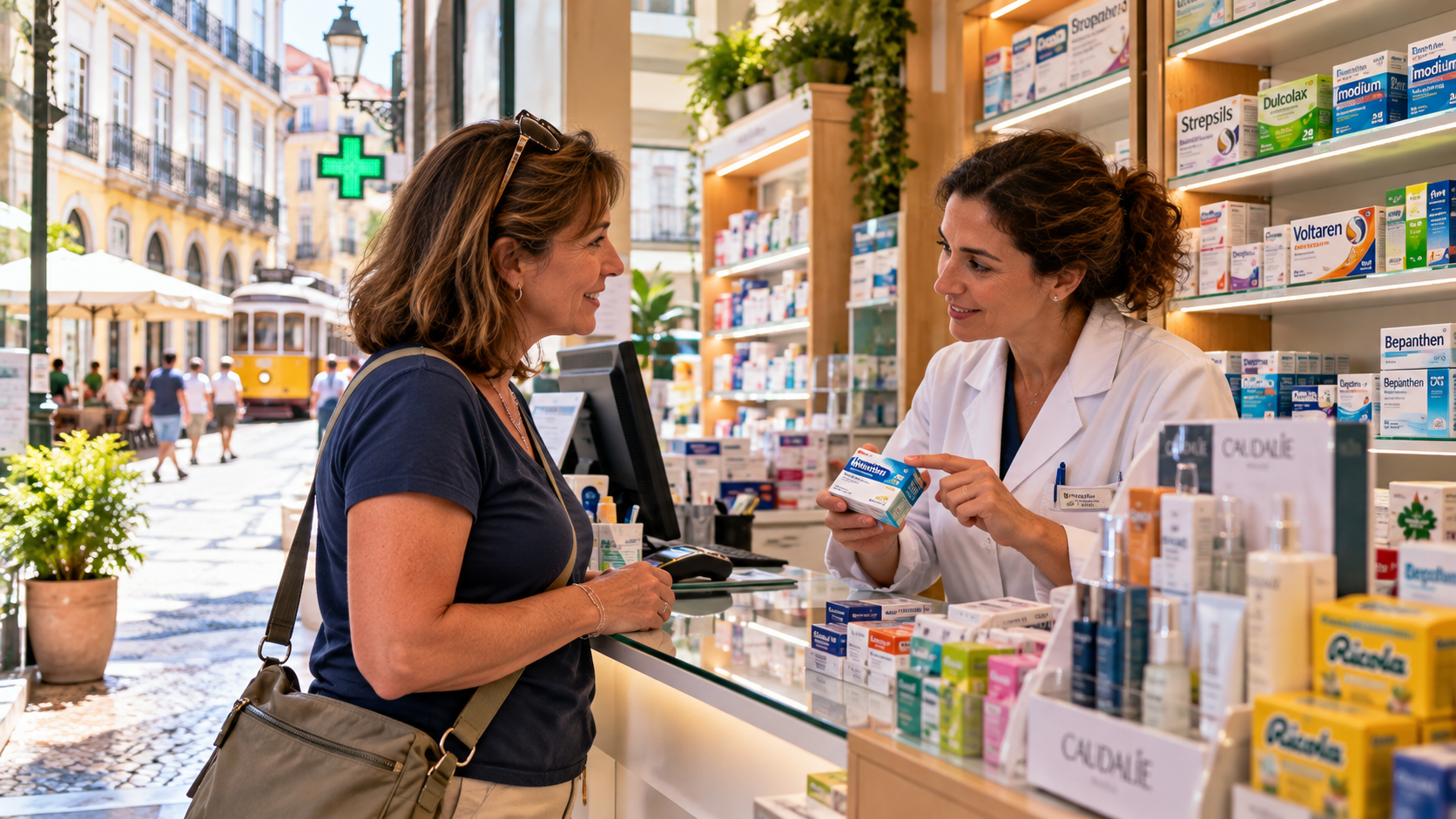
In many destinations, pharmacists can help travelers with everyday complaints. Depending on local regulations, they may recommend a suitable nonprescription product or advise when medical attention is necessary.
There are a few things to keep in mind.
A familiar brand name may not exist overseas. Even when it does, the formulation or strength may be different. And some products sold without a prescription at home may require one elsewhere.
Rather than choosing a product because the box looks familiar, describe your symptoms and ask the pharmacist to confirm the active ingredients, strength, and directions. Mention any relevant medical conditions, allergies, or other medications.
Choose an established, licensed pharmacy. Avoid street vendors, suspicious sellers, and products with questionable packaging or labeling.
Also consider the timing. If you're arriving late at night, traveling on a holiday, or heading directly into the countryside, an accessible pharmacy might not be as convenient as you imagined.
Curated Upgrades Recommends: If your destination has reliable pharmacies, consider leaving behind optional medications you rarely use and could reasonably purchase there if needed. Bring familiar, permitted remedies for recurring problems and anything you expect to need during the trip.
The Bigger Surprise: OTC Doesn't Mean Legal Everywhere
Here's where travelers can get caught off guard.
A medication that sits on an American drugstore shelf doesn't automatically have permission to cross an international border.
Different countries regulate medicines differently, and those rules can apply to products you bought without a prescription.
One familiar example is pseudoephedrine, an ingredient found in certain cold and sinus medications.
Japan has restrictions involving some stimulant-related substances and medications. Travelers need to check the exact ingredients and applicable import rules rather than assuming that a familiar American cold medicine is permitted.
That doesn't mean every cold medicine is prohibited in Japan. It means the ingredients, formulation, quantity, and applicable rules matter.
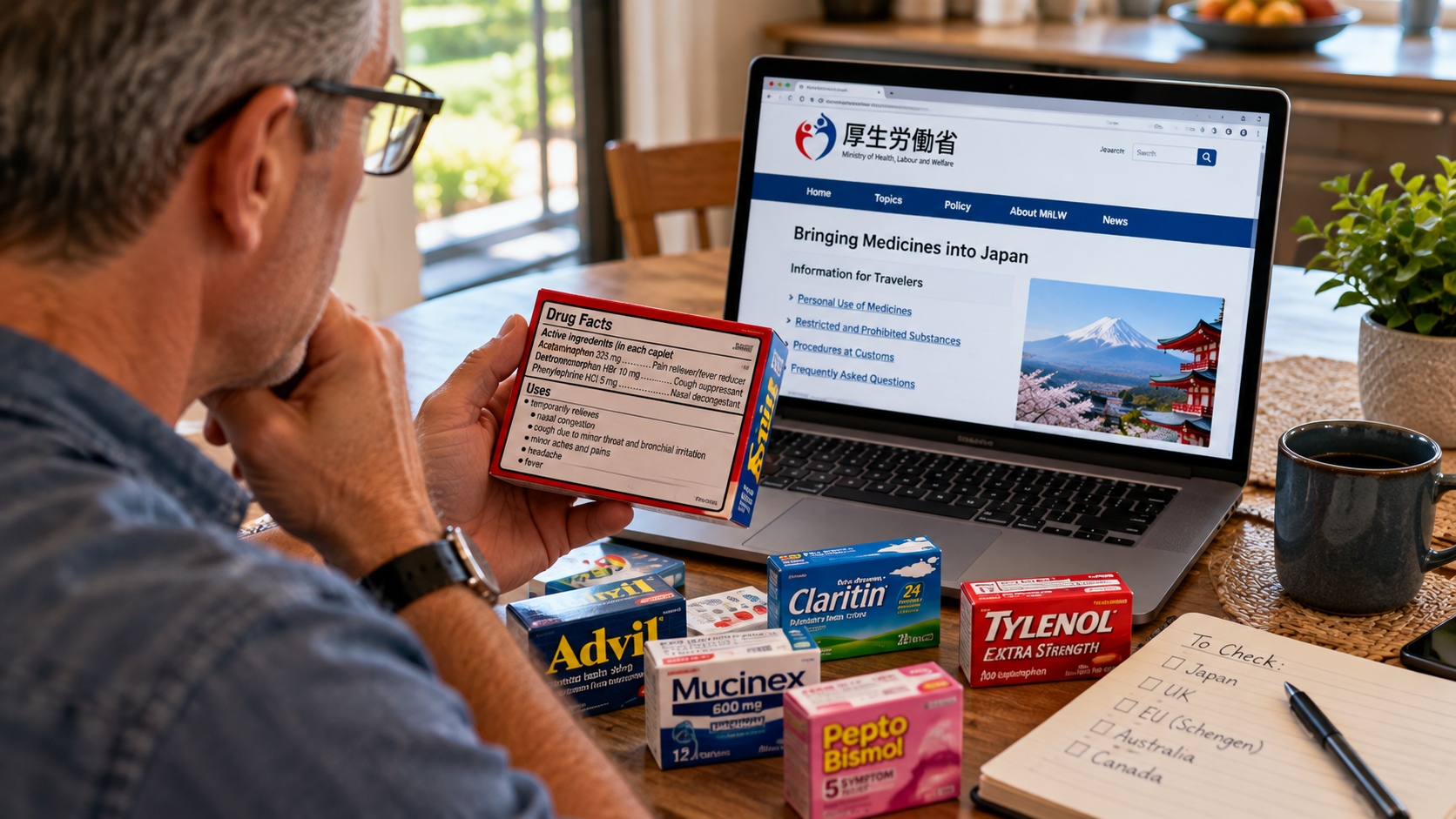
Japan's Ministry of Health, Labour and Welfare explains its personal medication import procedures, including circumstances where travelers need advance documentation.
Another wrinkle is that brand names can be misleading. Products sold under the same brand family may contain different active ingredients.
That's why checking only the name on the front of the box isn't enough.
Look at the active ingredients listed on the label, then verify those ingredients against your destination's official medication rules.
This is particularly important for combination products that contain several ingredients in a single tablet or liquid.
And remember that a medication being legal to purchase locally does not necessarily mean you're allowed to import your own supply. Importation and retail-sale rules are separate questions.
How to Check Before You Pack
Fortunately, you don't need to become an international pharmaceutical expert.
You just need to know where to look.
Start with the U.S. Department of State's international medicine and health guidance. It explains why travelers should verify medication restrictions with the countries they plan to visit or pass through.
Next, consult your destination country's official customs, health authority, or embassy website for medication import rules.
Check the actual ingredients, permitted quantities, and any documentation requirements. If you're connecting through another country, determine whether its rules apply to your transit situation.
The CDC's Travelers' Health website is another valuable resource for destination-specific health considerations and preparation.
For a broader look at official resources worth checking before international travel, see Before You Plan an International Trip, Check This Website.
When the rules aren't clear, contact the destination country's embassy, consulate, or relevant government authority rather than relying on an old travel forum discussion.
Medication regulations can change, and an answer that was correct for someone else's trip several years ago may no longer apply.
A Few Practical Packing Habits
Whether you bring two medications or ten, a little organization goes a long way.
Keep medications in their original, clearly labeled packaging whenever practical, and follow the destination's specific packaging and documentation requirements.
Avoid carrying loose, unidentified tablets in a mixed container. That can make it difficult to establish exactly what you're carrying if someone asks.
Keep essential medications in your carry-on luggage, particularly if delayed or lost checked baggage would create a problem.
And don't bring large quantities simply because you found a bargain at home. Some countries impose limits on how much medication a traveler may import for personal use, even when the product itself is permitted.
The same caution applies in reverse.
If you discover an inexpensive medication overseas, don't automatically stock up for the flight home. Bringing medication into the United States is governed by separate rules, and a product legally sold abroad may not be permitted for import.
U.S. Customs and Border Protection provides guidance on traveling with medication into the United States.
The sensible approach is to bring what you need for personal use, keep it identifiable, and verify the rules before crossing a border.
Your Destination and Travel Style Make the Difference
There's no universal medication packing list that makes sense for every traveler.
A weekend in a major city isn't the same as a two-week road trip through rural communities. A cruise with several port calls isn't the same as a remote hiking adventure.
Your health history matters, too.
If you rarely experience digestive problems, packing several different stomach remedies may be unnecessary.
If you know unfamiliar foods sometimes disagree with you, bringing a small amount of a trusted, permitted remedy is a reasonable precaution.
And if you're traveling somewhere where reliable pharmacies may be difficult to find, you may need a more comprehensive personal travel health kit.
The CDC's travel health kit guidance explains how to tailor what you bring to your destination, activities, and individual needs.
The important thing is to make those decisions intentionally rather than automatically packing everything in your medicine cabinet.
The Curated Upgrades Takeaway
International travel doesn't require you to bring a miniature drugstore.
A few familiar remedies for problems you're likely to encounter may be enough for some trips, particularly when you're visiting somewhere with reliable pharmacies and easy access to everyday medications.
But don't confuse easy availability at home with permission to carry a medication overseas.
Before you travel, check the rules for the ingredients you're packing, consider how accessible pharmacies will be at your destination, and make sure you're prepared for your own recurring health needs.
And remember that buying locally is an option for some occasional needs, not a guarantee that you'll find the same product or a suitable substitute. For medications you expect to need, the safer approach is generally to bring an adequate, legally permitted supply from home.
For personalized advice about medication choices, suitability, or dosing, consult your healthcare professional or pharmacist.
Pack what you need. Leave behind what you don't. Check what's legal before you go.
That's traveling smarter.