

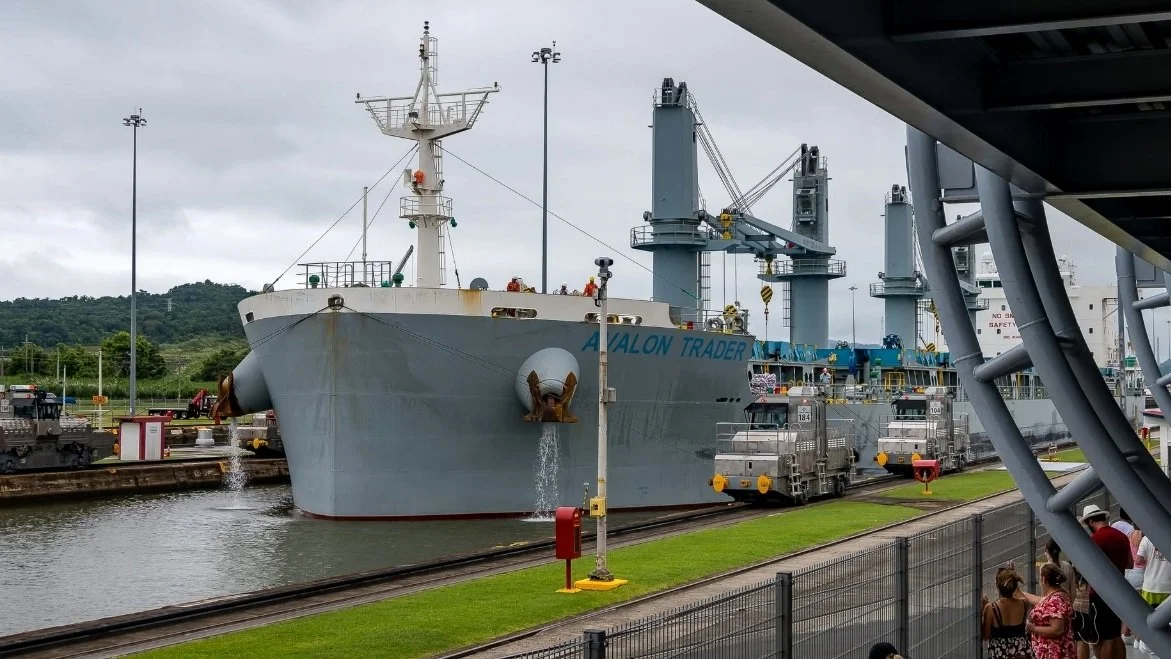
Visiting the Panama Canal: A Harbor Pilot's Perspective
Thirty-five years of maneuvering ships, one bucket-list visit to Miraflores Locks, and a chance to watch an extraordinary operation from the other side of the bridge.
A Bucket-List Visit, Years in the Making
Some travelers dream of seeing the Eiffel Tower. Others want to stand at the edge of the Grand Canyon.
I wanted to watch a ship transit the Panama Canal.
I've spent roughly 35 years working with ships, tugs, and harbor operations, including serving as a Chief Harbor Pilot. You might think that after a career spent maneuvering vessels, I'd want to spend my vacation doing something entirely different.
Quite the opposite.
Back in 2011, friends and I took a narrowboat trip along England's Four Counties Ring, operating the locks ourselves as we traveled. It was fascinating to experience the process firsthand, even on that much smaller scale.
Ever since, I've wanted to watch the Panama Canal in action.
During our trip to Panama, Gina and I finally made it happen.
And while my professional background certainly influenced what I saw, the experience also taught us several things that could help anyone planning a visit.
The Most Important Decision Happened Before We Arrived
We aren't naturally city people. Given the choice, we're more likely to explore a small town or countryside road than spend a day in a major metropolitan area.
But we had three specific things we wanted to accomplish during our one day in Panama City: a morning monkey boat tour, an afternoon visit to Miraflores Locks, and a special dinner that evening.
We were staying roughly two hours away, so improvising the entire day wasn't particularly appealing.
Instead, we researched the attractions, estimated travel times, looked into ticket availability, and paid particular attention to the timing of ship transits.
That last detail matters.
Visiting the Panama Canal and actually watching a ship pass through the locks are not necessarily the same experience.
Ships operate on their own schedules, not yours. You could arrive at a perfectly functioning visitor center and find yourself looking at an empty lock chamber.
Our solution was to build the day around the experiences with the most important timing requirements, then fit everything else around them.
We've explored that approach in Build the Trip Around the Hardest Reservation First, and you can see how our complete day came together in One Perfect Day in Panama City: Monkeys, Miraflores & a Birthday Dinner.
Getting to Miraflores: Tickets, Parking, and Arrival
We arrived on a Thursday afternoon, using Waze to navigate directly to the visitor center.
The drive was straightforward, and we found ample free parking. We had purchased our tickets online earlier in the week, so getting inside involved only a short wait.
Our total admission was $34.44 for two adults, or $17.22 each, at the time of our visit.
The Panama Canal offers different admission rates for residents and international visitors. The significantly lower resident rate requires appropriate identification, so don't assume the lowest advertised price applies to everyone.
For current prices, ticket options, and visitor information, use the official Panama Canal visitor website.
Our arrival was easy, but don't assume every visit will be equally quiet. Tour groups, holidays, construction, and ship transit times can all influence how busy the center becomes.
Our advice: Purchase tickets in advance when practical, confirm the current operating arrangements, and allow enough flexibility that a short delay won't spoil the rest of your day.
Do the Exhibits and IMAX Before Watching the Ships
This is probably our most useful recommendation.
We deliberately visited the exhibits and watched the IMAX presentation before heading out to see the ships transit.
The exhibits gave us context about the Canal's history, construction, engineering, and operation. We spent approximately 30 minutes exploring the displays and models.
Then we watched the 45-minute IMAX film about the Panama Canal, narrated by Morgan Freeman.
Even with my maritime background, I found the presentation informative and worthwhile.
More importantly, it prepared visitors to understand what they would soon see outside.
Without that background, the lock operation might look like a large ship sitting in a concrete chamber while the water level changes.
Once you understand the process, you begin noticing the coordination, engineering, and decisions involved.
For Gina, the exhibits and film provided a foundation for understanding a world that has been part of my professional life for decades.
If the schedule allows, learn how the Canal works before watching it work.
It's a simple change in the order of your visit that can make the experience much more rewarding.

The Main Event: Watching Ships Transit Miraflores
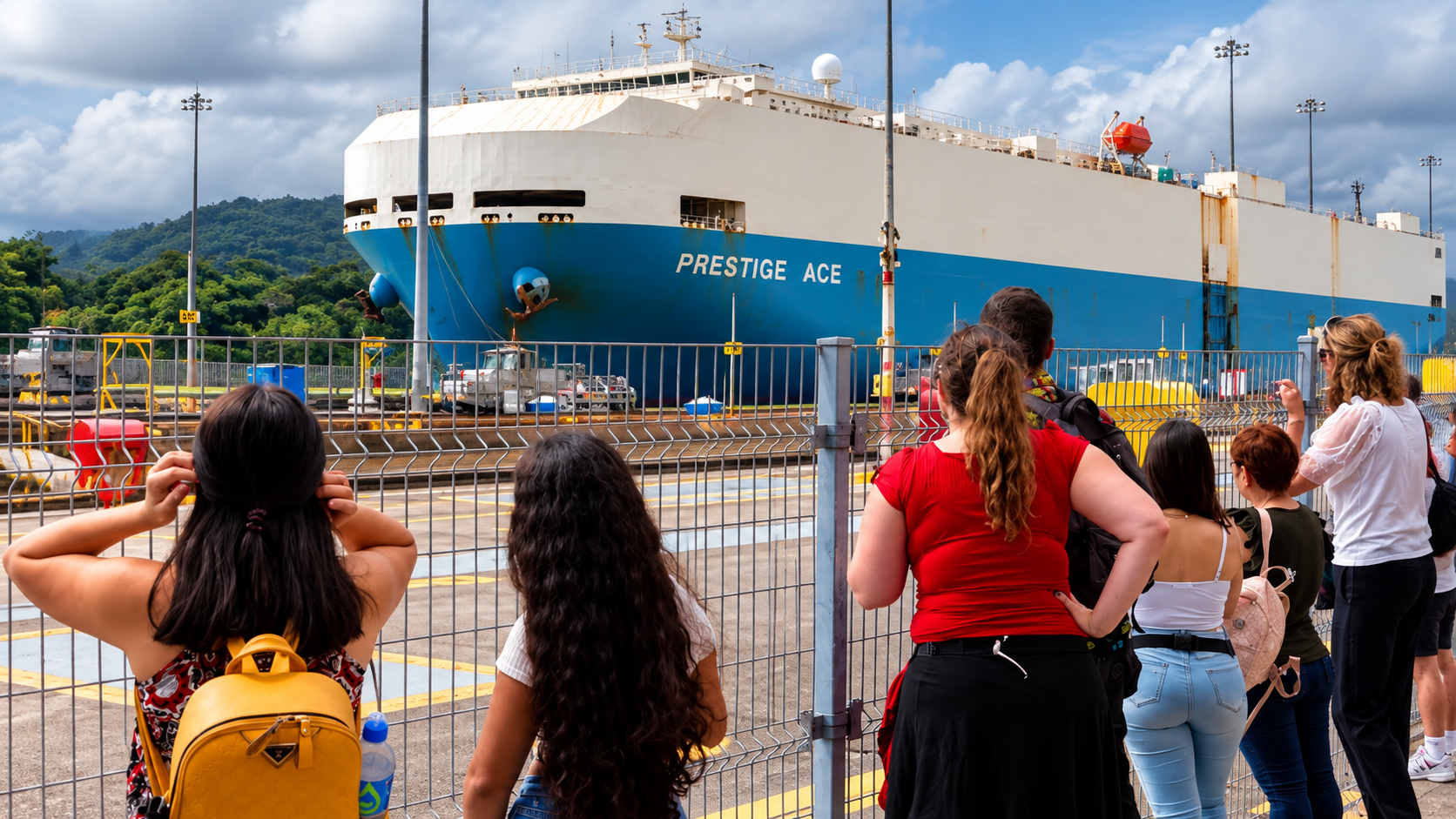
After the film, we headed to the observation area and waited approximately 30 minutes for the next group of Pacific-bound ships.
First came a car carrier.
Then came a ship that made the afternoon unexpectedly personal: MV Jaguar, a vessel I had previously piloted.
Of all the ships in the world that could have appeared during our visit, here was one with which I already had a professional connection.
For the next hour or so, we watched the transit unfold.
From the observation area, visitors can see the ships, lock gates, water levels, lines, and electric locomotives moving alongside the vessels.
Occasional announcements explained what was happening and offered interesting details about the operation.
I appreciated the restraint. The commentary was helpful without turning the entire experience into a nonstop narration.
The ships and the people operating the Canal were the main attraction.
Those Little Locomotives Have an Important Job
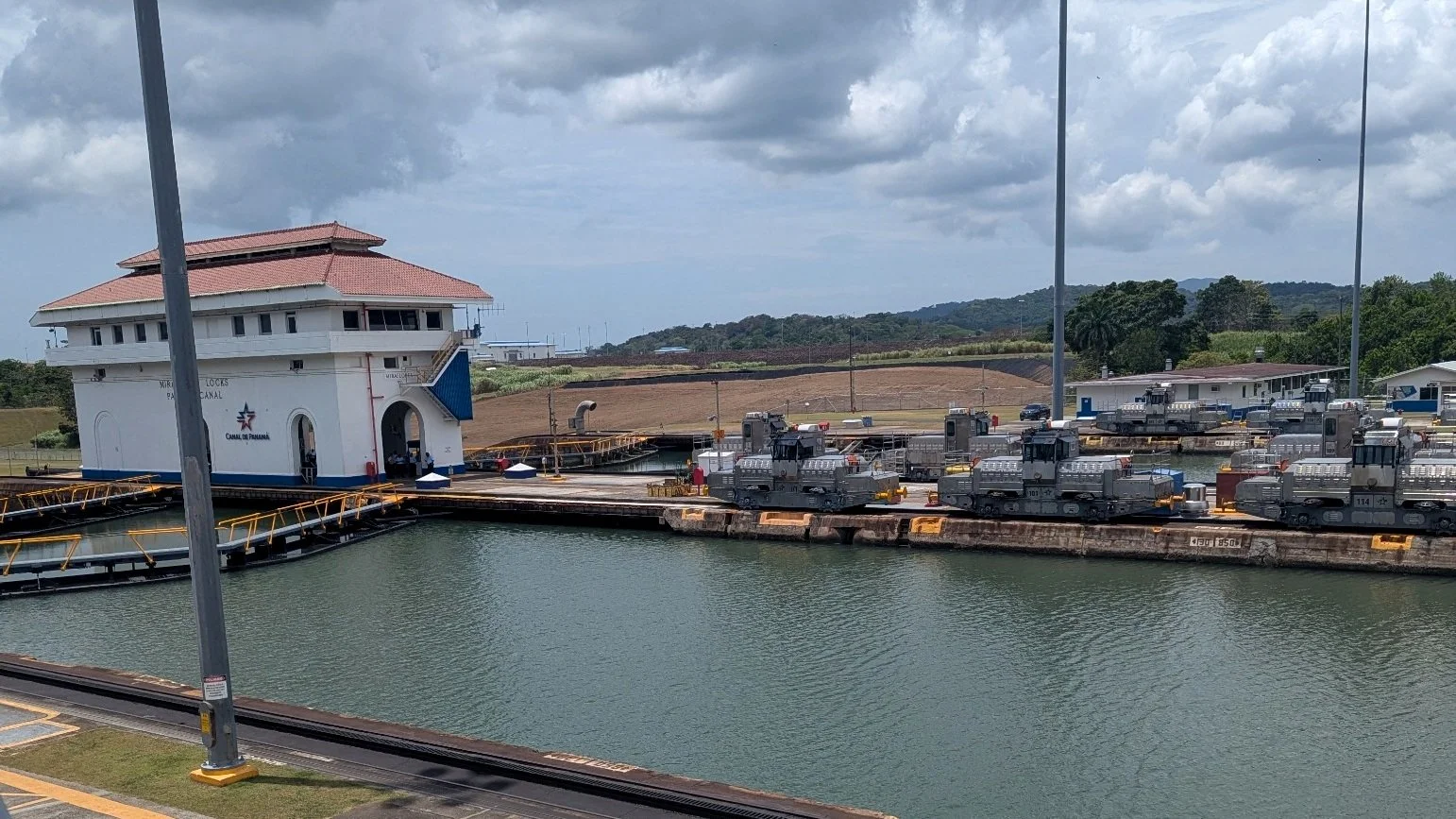
One of the details visitors notice immediately is the series of small electric locomotives traveling along tracks beside the original lock chambers.
They're commonly called mules.
Despite their modest appearance alongside enormous ships, they play an important role in keeping vessels properly positioned within the locks.
The locomotives work with steel cables to help control a vessel's lateral position as it moves through the chamber. They aren't simply miniature trains pulling ships across Panama.
The ship's propulsion, the pilot's directions, and the coordinated work of the lock crews all contribute to a successful transit.
And those enormous gates?
They aren't there just to separate one section of water from another. The locks raise and lower ships between sea level and the elevated waters of the Canal system, including Gatun Lake.
The process is controlled, deliberate, and surprisingly quiet.
From the observation deck, you can see the visible machinery. What you can't necessarily see is the continuous stream of decisions being made to keep everything moving safely.
The Beautiful Ballet Nobody Hears
This was the part of the visit I enjoyed most.
To a casual observer, a large ship might appear to be moving almost imperceptibly.
But from a pilot's perspective, there's a remarkable amount happening.
You're constantly evaluating position, speed, momentum, angles, available clearance, and the effects of your next maneuver.
Orders are being given. Adjustments are being made. Different teams are coordinating their actions.
It's a carefully choreographed operation in which small decisions matter.
Standing on the observation deck, I found myself mentally following the process, imagining the calculations and instructions taking place aboard the vessels.
My own private commentary was considerably more detailed than anything coming over the public-address system.
Gina, meanwhile, was listening to nearby visitors trying to identify the ships and figure out what was happening.
Every so often, she'd ask me whether their explanations were correct.
Eventually, she couldn't resist.
"That's a car carrier ship. My husband is a Chief Harbor Pilot."
Somewhere inside, my nine-year-old self was absolutely beaming.
And just like that, I found myself answering questions from the people around us.
What kind of ship was that? What were those little locomotives doing? How did the pilot maneuver something so enormous through such a confined space?
I was happy to explain what I could, drawing on my own experience maneuvering ships and working with tugs.
It was a wonderful reminder that what seems routine to someone who works in the maritime industry can be fascinating to someone seeing it for the first time.
But there was another part of the afternoon that meant even more.
Over the years, Gina had only had the opportunity to watch me pilot a submarine once. At Miraflores, she could observe an operation closely related to the work I've spent much of my life doing.
She could begin to understand why someone might come home mentally exhausted from a job that doesn't necessarily look physically demanding.
For me, it was fascinating to watch.
For us, it became a shared experience that connected my professional life with our travels.
And that's something I hadn't anticipated when we purchased the tickets.
How Much Time Should You Allow?
Our visit took approximately three hours, including arrival, exhibits, IMAX, waiting for the next ships, watching the transit, and a stop at the gift shop.
Here's approximately how our time broke down:
Exhibits and displays: 30 minutes
IMAX presentation: 45 minutes
Waiting for the next ship transit: 30 minutes
Watching ships: about 60 minutes
Entry, walking, and gift shop: the remaining time
Those aren't official attraction durations. They're what we experienced.
You might finish sooner, especially if no ships are scheduled during your visit. Or you might happily spend longer watching multiple vessels.
The visitor center's published suggested visit duration is shorter than our actual experience, but we wouldn't have wanted to rush.
Our recommendation is to allow roughly three hours if watching a ship transit is important to you. More importantly, check the expected transit window before deciding when to arrive.
A Few Things We'd Do Again
We would absolutely purchase tickets ahead of time, plan around the expected ship movements, and watch the IMAX film before heading to the observation area.
We'd also avoid squeezing Miraflores into a narrow gap between other reservations.
The best part of the visit isn't something you can hurry. Watching a ship move through a lock takes as long as it takes.
Bring water, dress for Panama's heat and humidity, and be prepared to spend time outdoors. Consider sun protection and comfortable footwear, particularly if you'll be standing at the viewing area for a while.
One additional detail worth remembering: the Canal's visitor facilities can change. Renovations, altered viewing areas, and temporary closures can affect the experience. Check the official website shortly before your visit rather than relying on an older travel article, including ours.
Remember Whose Canal You're Visiting
The Panama Canal has a complex international history, including decades of United States involvement.
Under treaties signed in 1977, control was transferred to Panama on December 31, 1999.
Today, the Canal is operated by Panama, and it represents an enormous source of national pride.
Visitors should approach that history with curiosity and respect.
You're a guest in someone else's country. Act accordingly.
So, Is Miraflores Locks Worth Visiting?
For me, this was a bucket-list experience. But good travel recommendations aren't one-size-fits-all.
🟢 Go for it! If you enjoy ships, engineering, history, transportation, or watching skilled professionals at work, Miraflores offers a fascinating opportunity to see the Panama Canal in action. Plan around a ship transit and allow time for the exhibits and IMAX.
🟡 Maybe. If your interest is more casual, consider how much time you have in Panama City and whether ships are expected during your visit. The experience is much more rewarding when you can actually watch a transit.
🔴 Pass on it. If ships and engineering hold no interest for you, or your schedule won't allow you to see a transit and that's your main reason for visiting, your limited vacation time may be better spent elsewhere.
The point of good travel advice isn't to convince everyone to enjoy the same things. It's to help people understand what an experience offers so they can decide whether it belongs in their itinerary.
For us, Miraflores delivered exactly what we'd hoped for, along with a few unexpected personal moments.
And perhaps the most remarkable thing I took away from the afternoon was this:
When everything is done correctly, something extraordinary can look remarkably ordinary.