

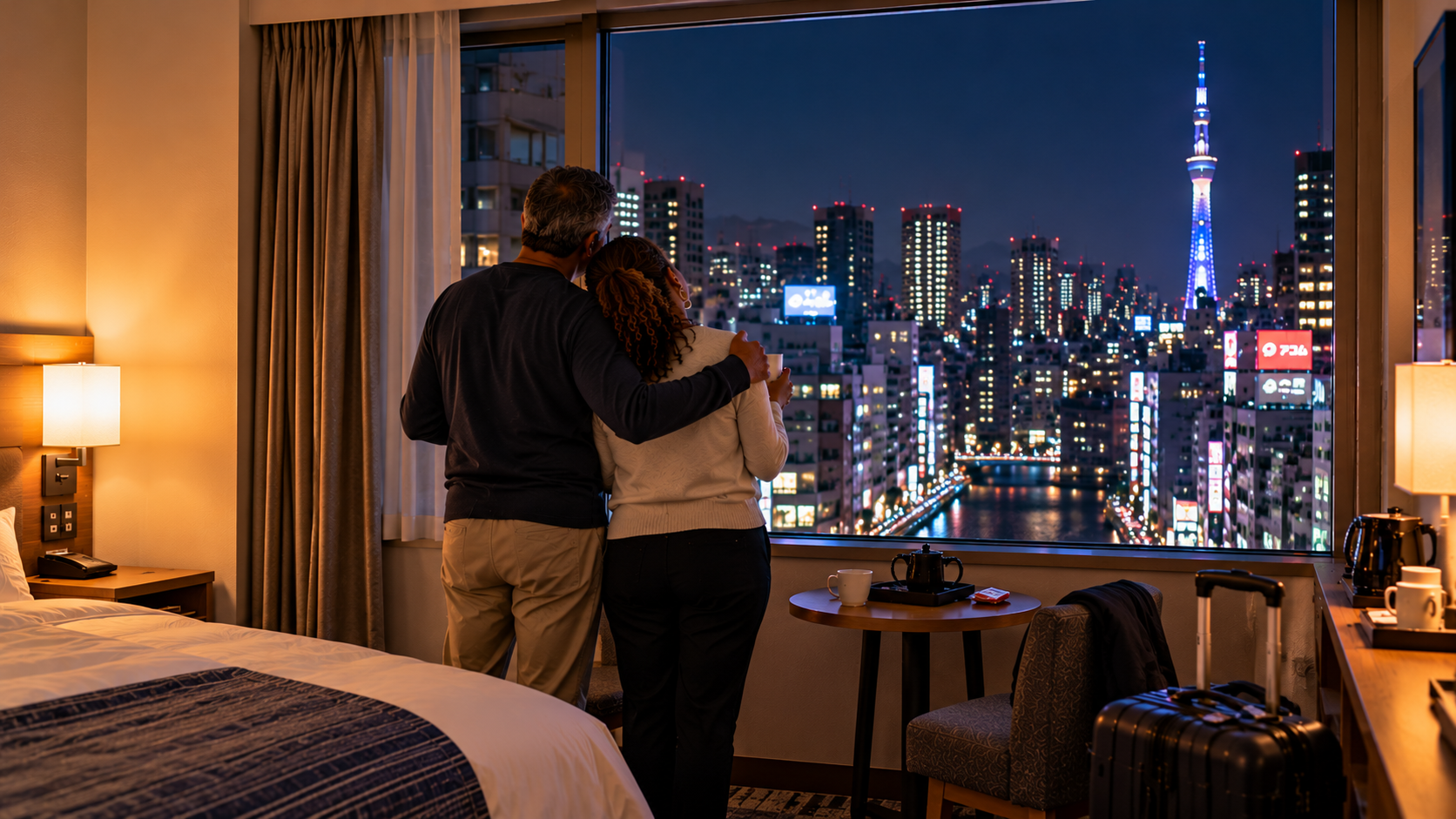
Plan Your Arrival Day Like You're Going to Be Tired
Your flight lands in Tokyo at 5:45 PM. Your body thinks it's 4:45 AM. And you still have to get to the hotel.
You've been planning your trip to Japan for months. You've researched neighborhoods, restaurants, temples, markets, and everything else you want to experience in Tokyo.
Your flight lands at 5:45 PM.
Maybe you could squeeze in dinner somewhere special. Perhaps a little sightseeing. After all, you're finally in Japan!
Not so fast.
There's a difference between what your itinerary technically allows and what you're actually going to feel like doing.
And after a long-haul flight across the Pacific, that difference can be enormous.
The Trip Starts Before You Board the Plane
Let's follow a couple traveling from the East Coast to Tokyo.
They've planned intelligently. Rather than risking a tight connection before their international flight, they flew to Los Angeles the previous day and spent the night.
That's a strategy we've discussed in Award Travel Mistakes.
Now it's departure day.
They wake up in Los Angeles, have breakfast at their hotel, take the shuttle to LAX, check their luggage, clear security, and find their gate.
Nothing particularly stressful. No racing between terminals. No worrying whether a delayed domestic flight will ruin their international plans.
They're flying economy, perhaps with an exit-row seat for a little extra legroom.
At 1:45 PM, they depart Los Angeles for Tokyo Haneda.
Their East Coast body clocks say it's 4:45 PM.
So far, so good.
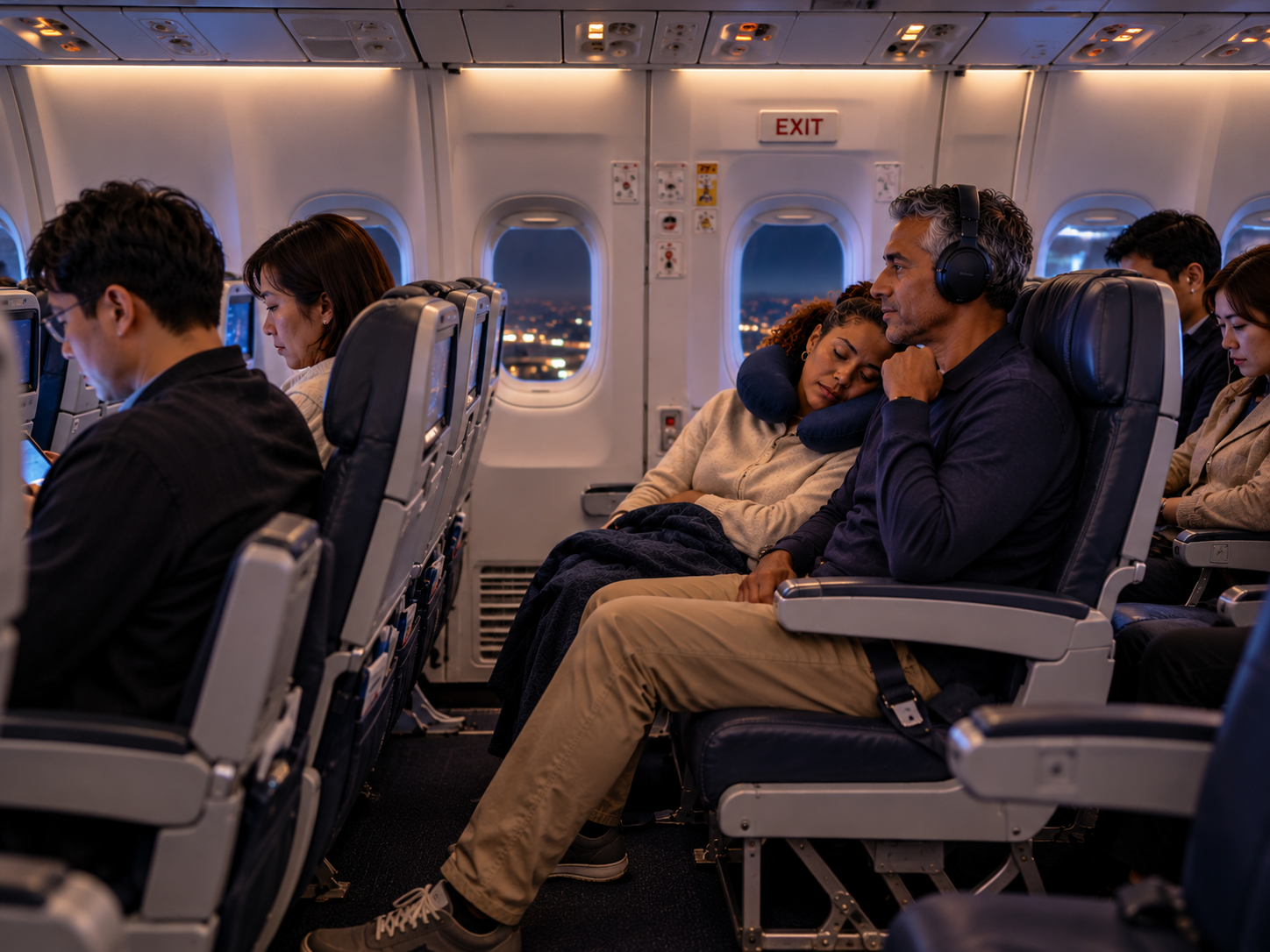
Twelve Hours Later, Two Very Different Clocks
After approximately 12 hours in the air, they arrive in Tokyo around 5:45 PM the following day.
Tokyo is heading into its evening. Restaurants are preparing for dinner, commuters are heading home, and the city is coming alive with lights.
But back on the East Coast, it's 4:45 AM.
That's what their bodies think the time is.
And there's another problem.
They haven't actually had a night's sleep.
Maybe they managed three or four hours of broken sleep on the airplane. Maybe they barely slept at all. Either way, they've effectively pulled an all-nighter while sitting in an economy seat.
Tokyo says it's dinner time. Their bodies say it's 4:45 in the morning.
That's jet lag, certainly. But it's also plain old travel fatigue.
Even if you traveled for 12 hours without crossing a single time zone, you'd probably be tired.
And their journey isn't over.

Illustrative flight times based on U.S. daylight saving time. Actual schedules and flight durations vary.
Landing Isn't the Same as Arriving
The airplane touches down at Haneda.
Great! They're in Japan.
But they're not at their hotel.
There's immigration, baggage claim, customs, and finding transportation. Depending on arrival traffic and circumstances, it may take a couple of hours or more before they're actually settling into their room.
Haneda is generally more convenient to central Tokyo than Narita, but either airport requires some planning for the trip into the city.
For transportation options, travelers can consult the official Haneda Airport website.
Our couple could use a train or take a taxi. After such a long journey, they may decide the additional cost of a taxi is worth avoiding another round of navigating stations with luggage.
They might choose an airport-area hotel or a conveniently located hotel in the city. Either way, the goal is the same: make the final leg of the journey as straightforward as possible.
They finally reach their hotel around 8 or 9 PM.
Now think about how long they've been traveling.
They left their Los Angeles hotel that morning. They spent hours at the airport, approximately 12 hours flying, and more time getting through arrival formalities and into Tokyo.
They're potentially 17 or 18 hours into their travel day, perhaps longer.
And their bodies still haven't caught up with the local clock
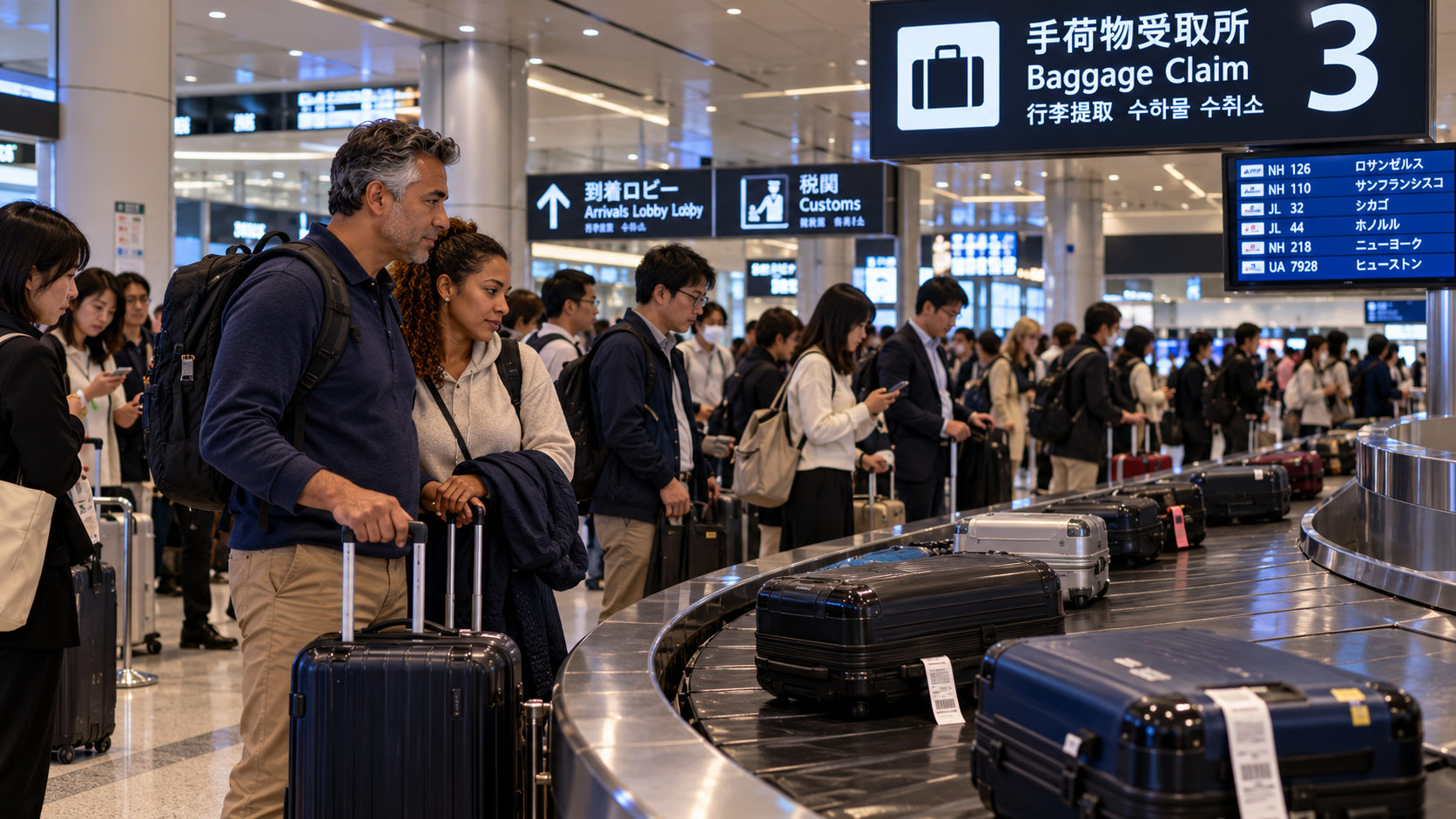
Adrenaline Will Only Get You So Far
There's something wonderful about arriving somewhere you've dreamed of visiting.
The excitement is real.
You're in Tokyo!
The streets are different. The signs are different. Even the convenience stores are an experience.
That adrenaline might be enough to carry you through a quick walk around the neighborhood and a bite to eat at a restaurant within walking distance of the hotel.
Perfect.
Have something delicious. Enjoy the fact that you're finally in Japan.
Then head back, shower, and get some well-deserved rest.
What you probably shouldn't do is schedule a prepaid experience, a difficult-to-get restaurant reservation, or an attraction you'd be devastated to miss.
Arrival day shouldn't be responsible for anything important.
We talked about securing the least flexible part of a trip first in Build the Trip Around the Hardest Reservation First.
That's still excellent advice.
Just don't make that hardest reservation depend on everything going perfectly after a transpacific flight.
But What If You Arrive in the Morning?
Some flights from Los Angeles arrive in Tokyo earlier in the day.
On paper, that sounds even better.
You land in the morning and have the whole day ahead of you!
Except you've still spent roughly half a day aboard an airplane, probably slept poorly, and now you might reach your hotel hours before check-in.
You may be able to leave your bags with the hotel, but that doesn't necessarily solve the problem of being exhausted with nowhere to rest.
Now you're trying to figure out trains, neighborhoods, meals, and sightseeing when what you really want is a shower and a bed.
Personally, I'd choose that late-afternoon or early-evening arrival almost every time.
Start the day rested in Los Angeles. Enjoy breakfast. Get to the airport without rushing. Fly to Tokyo, reach the hotel in the evening, and rest.
The next morning, you're already there.
And that's when the vacation really begins.
Seven Days Off Doesn't Mean Seven Days in Tokyo
Here's another reality worth considering.
When someone says they have a week off work and want to visit Tokyo, I always wonder whether they've counted the actual travel time.
A nonstop flight across the Pacific can take around 10 to 12 hours each way, sometimes longer. That's roughly a full day aboard airplanes across the round trip.
Add airport time, positioning flights, immigration, ground transportation, and the International Date Line, and the amount of usable vacation time starts shrinking.
Yes, flying home can give you back some hours on the clock.
It doesn't give you back the energy you spent getting there.
None of that means you can't visit Japan with only a week available. Sometimes that's the time you've got, and a shorter trip may still be worthwhile.
But be realistic about how many days you'll actually have to enjoy your destination.
And don't sacrifice your first full day of sightseeing because you insisted on squeezing too much into your arrival day.
Tomorrow Is When Tokyo Begins
Imagine waking up the next morning.
Hopefully, you've had some decent sleep. Your bags are unpacked. You know where your hotel is, and you've already had your first taste of Japan.
Maybe you're still adjusting to the time difference. That's normal. Jet lag doesn't disappear simply because you've spent one night in a hotel.
But you're no longer dealing with the flight, airport formalities, and getting into an unfamiliar city all at once.
Now you can find breakfast, explore a neighborhood, visit a temple, or head out to experience whatever brought you to Tokyo in the first place.
You didn't waste your arrival day.
You used it exactly as you should have.
You gave yourself permission to recover from the journey so you could enjoy the destination.
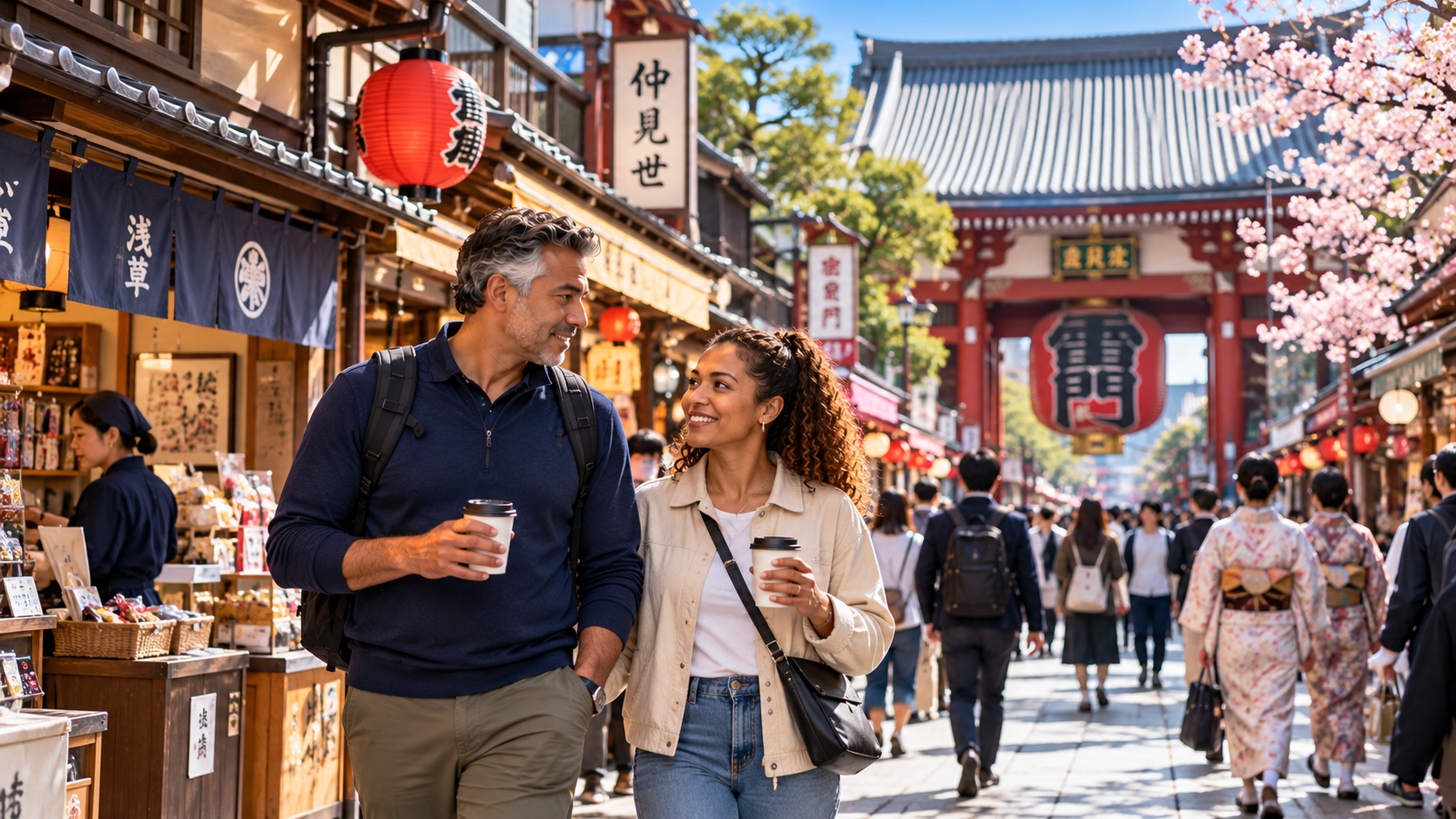
Tokyo was waiting for you last night.
This morning, you're ready for Tokyo.
That's not doing less with your vacation.
That's traveling smarter.