

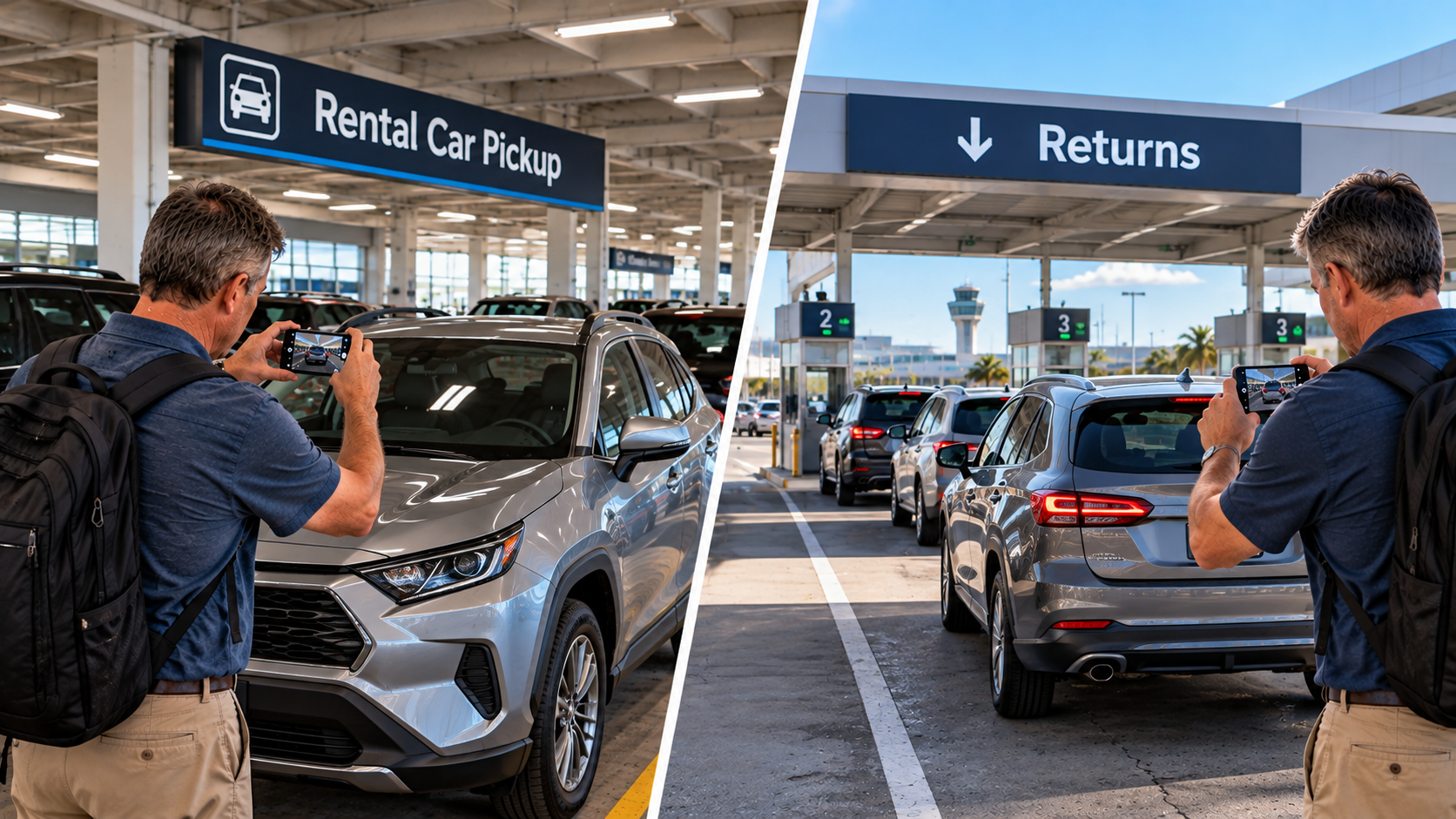
Five Minutes That Could Save You a Rental Car Headache
Why a few quick photos at pickup and return can help protect you from unexpected damage claims.
You've landed, collected your luggage, and finally made it to the rental car garage. The agent hands you the keys, you find your car, and you're ready to get the vacation started.
But before you pull out of that parking space, there's something I always do.
I take a few pictures.
Not because I expect the rental company to cheat me. Not because I'm anticipating an argument over a scratch. And certainly not because I want to conduct a forensic investigation of a Toyota Corolla.
I just want a record of what the car looked like when I received it.
And when I return it, I do the same thing again.
Five minutes total, split between pickup and return.
It's a simple habit that could save an expensive headache later.
Before You Drive Away, Take a Look Around
I've rented cars in plenty of places over the years, and I've never had a rental company send me an unexpected damage claim.
That doesn't mean I skip checking the car.
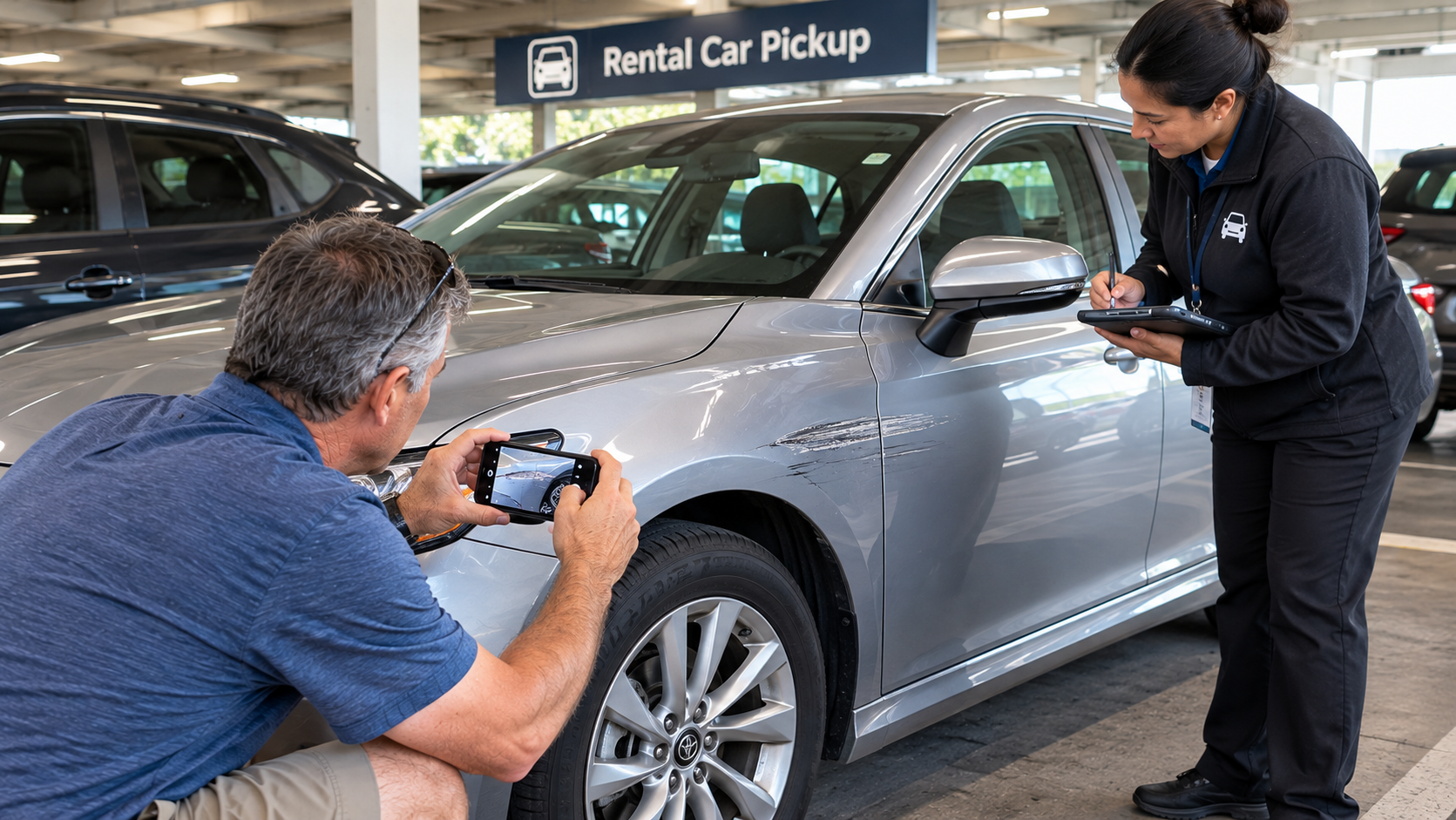
When an attendant is available, I walk around the vehicle with them. If I notice a scratch, dent, or other defect, I point it out and make sure it's recorded on the inspection paperwork or in their electronic system.
Then I take a few pictures of my own.
Front, back, both sides, wheels, glass, and a closer shot of anything questionable. I also check the interior and fuel gauge.
If there's a scratch, I'm not necessarily going to reject the car. I just want it documented.
I've also picked up rentals that weren't completely full of fuel. If the gauge shows three-quarters of a tank, I make sure the agent records that before I leave.
But there's a difference between a cosmetic blemish and a vehicle I don't want to drive.
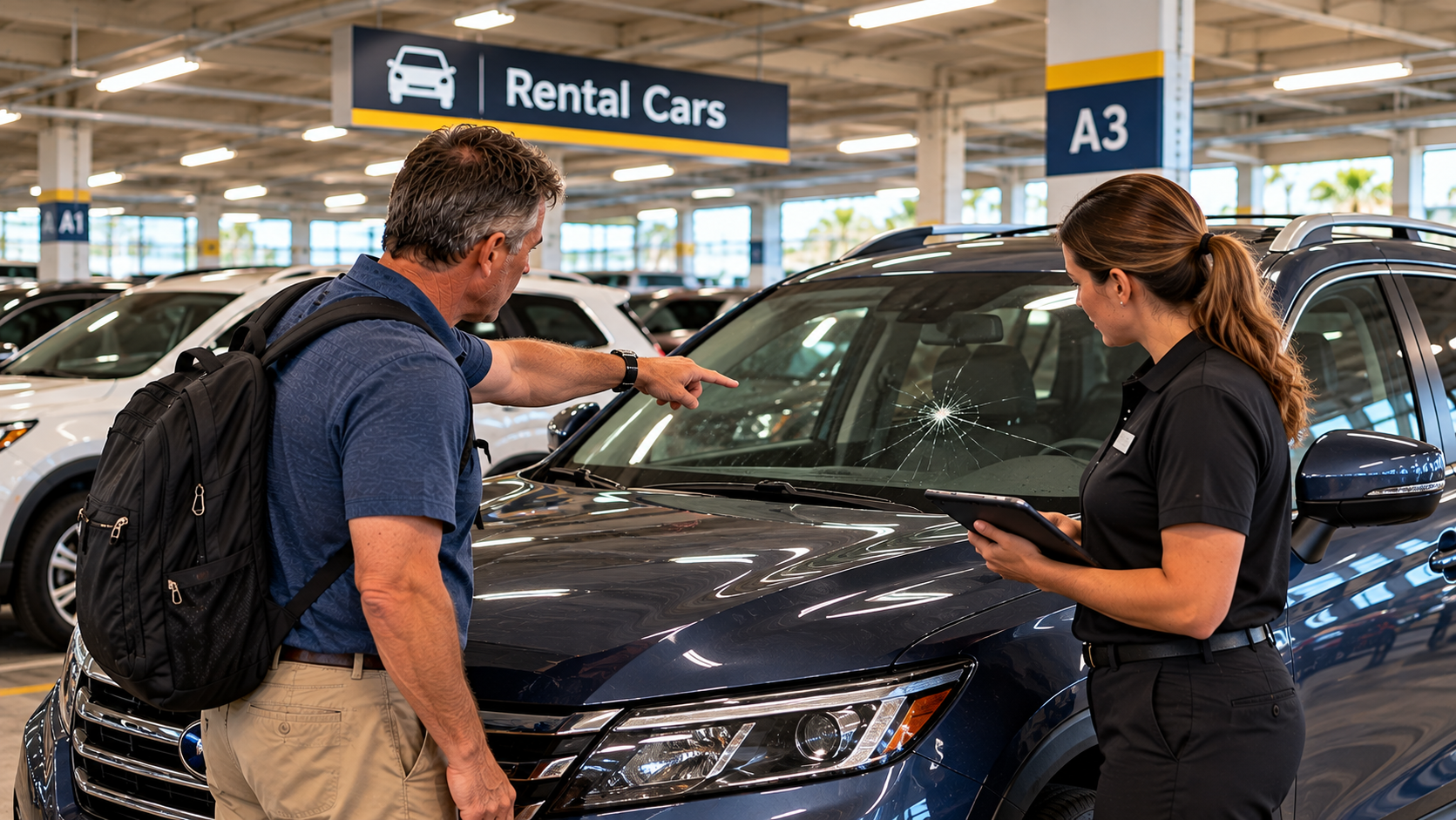
Bad tires, a cracked windshield, or a car in generally poor condition? I'll ask for another vehicle.
The goal isn't to find a perfect car. It's to make sure you know what you're accepting.
Sometimes the Better Choice Is Another Car
Not every defect needs to become a discussion.
A little paint scratch that the rental company acknowledges? Fine. Take a picture and get on with your trip.
But if I notice something that could affect the car's safety or reliability, I don't want to spend the next week wondering whether it will become a problem.
A damaged tire or cracked windshield is a good reason to ask for another vehicle.
And if you have rental status that lets you bypass the counter and choose a car from an aisle, remember that the convenience doesn't eliminate the need to inspect it.
Take your pictures before leaving the lot. If you discover damage, report it using the company's required procedure. Don't assume that having photographs on your phone is the same as notifying the rental company.
A couple of minutes now is easier than trying to explain an existing defect after the trip.
Before You Walk Away, Take Another Look
Here's the part that's easy to overlook.
You've finished the trip. You're thinking about your flight, the security line, or finally getting home.
You pull into the rental return lane, an attendant scans the vehicle, and a receipt arrives by email.
But that quick check-in isn't necessarily a detailed damage inspection conducted with you.
That's why I take another set of pictures before leaving. The same basic views I captured at pickup, plus a quick shot of the fuel gauge.
I generally fill the tank within a few miles of the airport. I've never had a rental company question whether I put enough gas in it, but the dashboard picture takes only seconds. I also keep the fuel receipt when practical.
If the rental has mileage restrictions, photograph the odometer too.
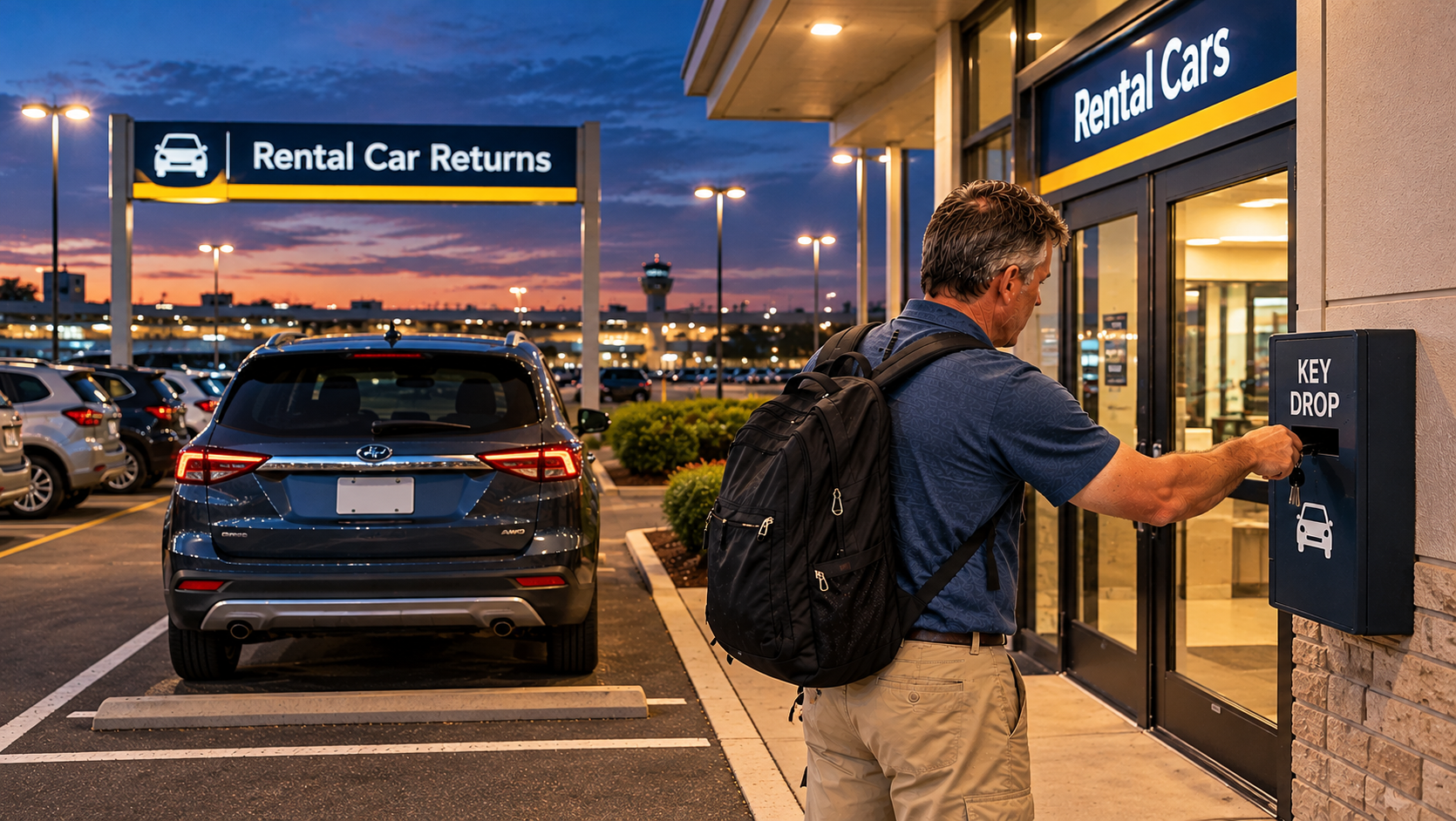
And if you're returning the car after hours, those pictures become even more important.
I've returned vehicles to unattended locations, dropped the keys in the designated box, and received the final receipt by email before boarding my flight. Never had a problem.
But without an attendant present, nobody is there to confirm the vehicle's condition when you leave.
Make sure the location actually permits after-hours returns. Park in the designated area, take your pictures, document where you left the car, and follow the key-drop instructions.
Some rental agreements keep the customer responsible for the vehicle until it's officially checked in. Enterprise's after-hours return guidance, for example, explains that procedures and responsibility can differ depending on the location.
That's not a reason to worry. It's simply a reason to understand the return process.
The goal isn't to prove something went wrong. It's to have a record if someone later says it did.
Pictures, Video, or Both?
Personally, I take pictures.
They're quick, easy to review, and usually give me the record I want.
But video can be useful, too.
If there's an unusual defect that's difficult to show in a still photograph, a short narrated video lets you capture it from several angles and explain what you're seeing.
You don't need special equipment, a 4K production crew, or a running commentary on every square inch of the car.
And neither pictures nor video replaces reporting existing damage to the rental company.
The best documentation is the kind you'll actually take.
What If a Damage Claim Arrives Later?
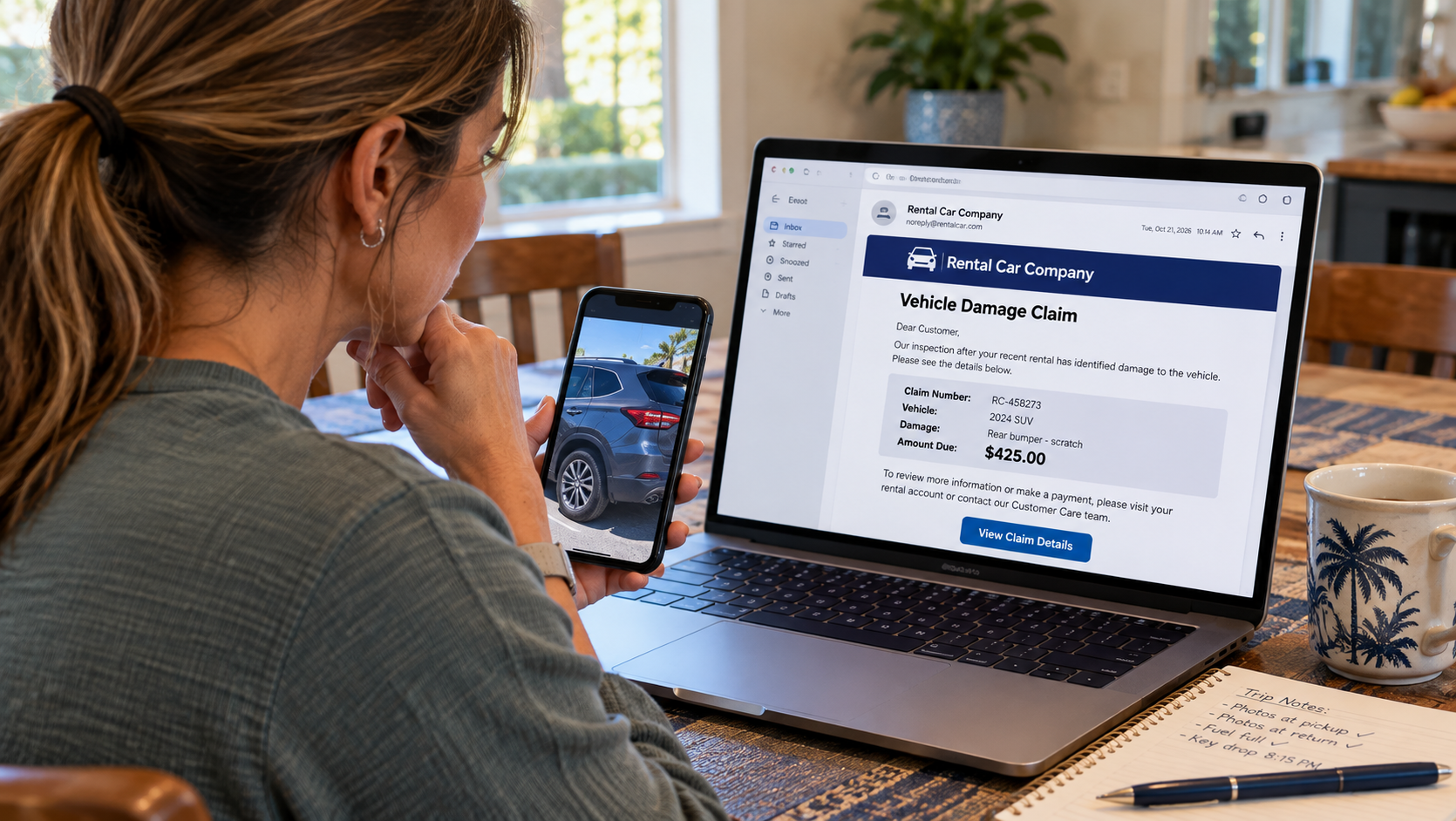
Let's say you're home from vacation when an email arrives claiming that you damaged a wheel or scratched a door.
First, don't assume the claim is correct. But don't automatically assume it's fraudulent, either.
Ask the rental company for its evidence, including photographs, inspection records, the date the damage was discovered, and an explanation of the charges.
Then compare that information with your pickup and return photographs.
If the evidence doesn't support the claim, dispute it professionally in writing. Include the relevant photographs and keep copies of your correspondence.
Your credit card issuer or rental car insurance provider may also be able to help, depending on the circumstances and your coverage. These processes have documentation requirements and deadlines.
The Consumer Financial Protection Bureau explains protections for certain credit card billing errors, although not every disagreement over a rental charge qualifies under those rules.
For more on coverage, see Rental Car Insurance Without the Counter Panic.
And keep your rental agreement, photographs, inspection records, and final receipt until the rental is closed, the charges are reconciled, and any questions are resolved. Keeping them longer can help if a delayed claim appears.
Your pictures aren't a magic shield.
They're evidence. And evidence is a lot more useful than trying to remember what a rental car looked like three weeks ago.
The Curated Verdict
🟢 GO FOR IT: Spend roughly two minutes photographing the vehicle at pickup and another two at return. Report existing damage, document the fuel level, and retain your pictures and paperwork.
🟡 EVALUATE: Take extra close-ups or a short narrated video when something unusual needs attention. Be particularly careful with unattended returns, and ask for another vehicle when its condition raises safety concerns.
🔴 SKIP IT: Turning every rental into a crime scene investigation, or assuming your pictures guarantee that a damage claim will disappear.
Final Thoughts
I've never had a rental car company send me a surprise damage bill.
And I hope I never do.
Most of my rental experiences have been exactly what you'd expect. Pick up the car, enjoy the trip, return it, and receive the final receipt.
That's how the process is supposed to work.
But I've made a habit of taking a few pictures before driving away and again before handing back the keys.
It doesn't interfere with the trip. It doesn't require special equipment. And it doesn't mean I'm suspicious of the people renting me the car.
It's simply a little documentation that might come in handy someday.
You probably won't need those pictures. That's exactly what you're hoping for.
And if you ever do, you'll be glad you took them.