

Rush Fifty Something Tour: Our Concert Experience in Tampa
Forty-six years after my first Rush concert, I finally saw them again. I expected a great show. What I experienced was something much more.
The last time I saw Rush perform live was in 1980.
Forty-six years later, on November 9, 2026, I was sitting inside Benchmark International Arena in Tampa, Florida, waiting for Geddy Lee and Alex Lifeson to take the stage again.
This time, I had my wife, Gina, beside me.
A lot had changed since 1980. We were older, the band was older, and the world had lost Neil Peart, one of the greatest drummers rock music has ever known.
But Rush was back.
And I was about to discover that some things are worth waiting nearly half a century to experience again.
The Crowd Was Part of the Experience
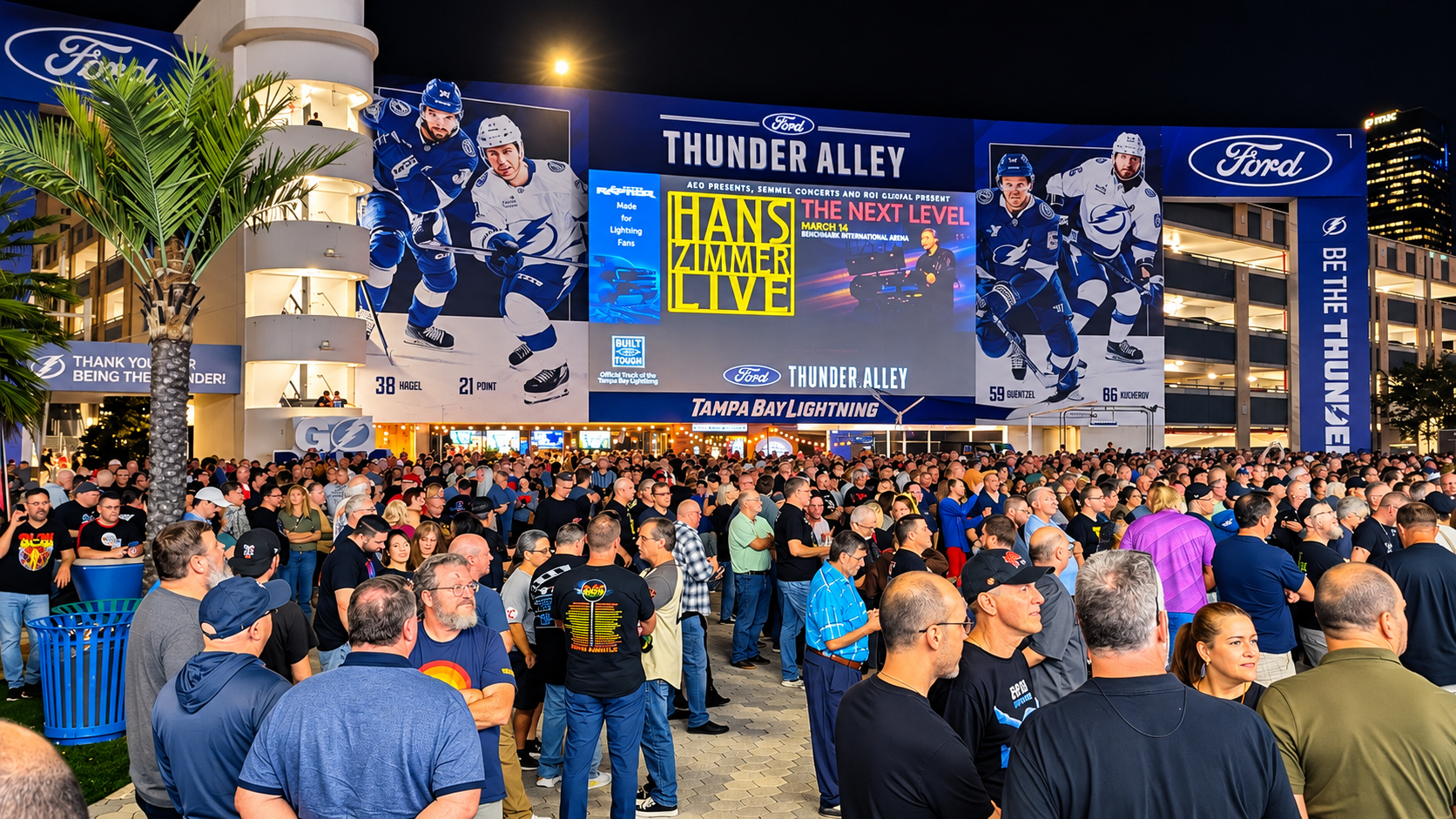
We arrived about ten minutes before the arena doors opened.
There was already an enormous crowd gathered outside, and Gina took one look around.
"I've never seen so many 60-year-old men in my life!"
She wasn't wrong.
There were Rush shirts everywhere, plenty of gray hair, and an atmosphere that felt different from other concerts I've attended.
People weren't simply waiting to get inside. They were talking about Rush.
Some remembered seeing the band decades earlier. Others had attended shows earlier in the tour, including performances at the Hard Rock in Hollywood, Florida. Some were following Rush to multiple cities.
There was a shared understanding among the crowd that this was something special.
We made our way inside and found our seats in Section 110, nine rows above the floor.
Our seats weren't on Geddy's side of the arena, but I had a clear sightline to him and an excellent view of the stage.
The tickets cost us $731.52 for two, including fees.
That wasn't inexpensive, but after the complicated process of originally buying tickets for Dallas, then switching to Tampa, I was happy with where we ended up.
I cover that ticket-buying adventure in Our Tampa Rush Weekend: The Plan, the Concert, and the Unexpected.
Once seated, we started talking with the people around us.
Two men sitting beside us had traveled to Tampa with their wives, but the wives had chosen other activities while their husbands attended the concert.
The hour before the show seemed to disappear.
Everyone was ready.
Seven Minutes of Humor, Then Xanadu
At approximately 7:45 p.m., the arena lights dimmed.
Instead of immediately launching into a song, Rush treated the audience to a humorous opening film.
It followed three younger characters resembling Geddy, Alex, and Anika on a quest to find Rush.
There were inside jokes everywhere.
Geddy appeared as a sausage vendor, poking fun at the overwhelmingly male audience. There were donuts, references to Rush's history, the famous Fly by Night owl, and even little Rush characters reminiscent of their appearance on South Park.
The crowd loved it.
After roughly seven minutes, the film ended.
The arena erupted.
The stage lights came up.
And Rush launched into "Xanadu."
I seriously choked up.
I had waited 46 years to hear this band perform again, and within the first few moments, I knew I was witnessing something extraordinary.
The sound, the energy, the musicianship, and the reaction of the crowd all came together.
It was overwhelming in the best possible way.
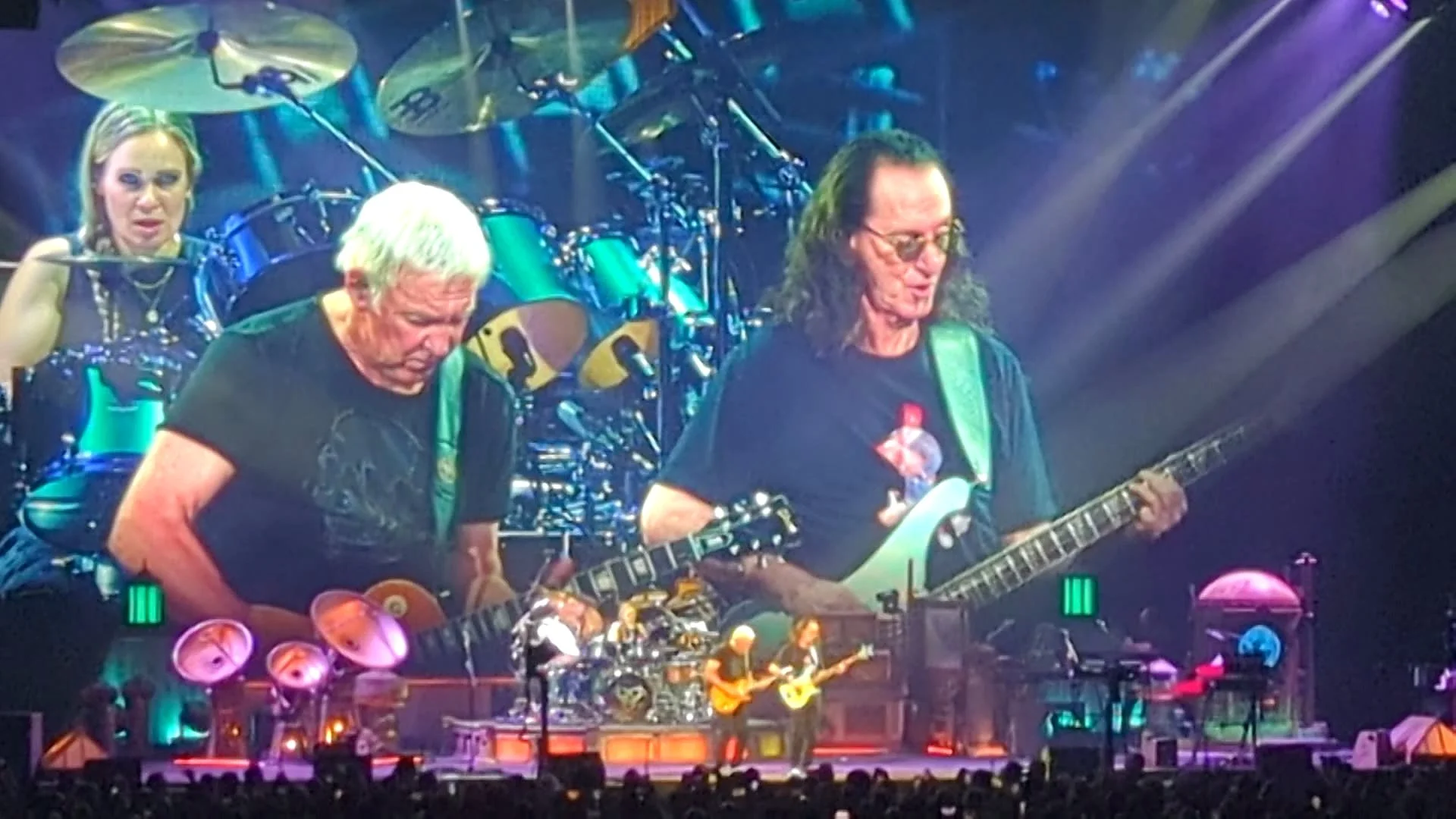
Rush opening the Tampa performance with "Xanadu," capturing the live sound, stage lighting, and atmosphere as the concert begins.
That video is one of my favorite souvenirs from the evening.
It captures a moment I had waited nearly half a century to experience.
The Musicians Were the Spectacle
Rush has never been a band built around simple songs.
Their music is complicated.
Unusual time signatures, intricate arrangements, sudden transitions, and instrumental passages that demand extraordinary precision are part of what makes Rush, well, Rush.
There are no cowboy chords here.
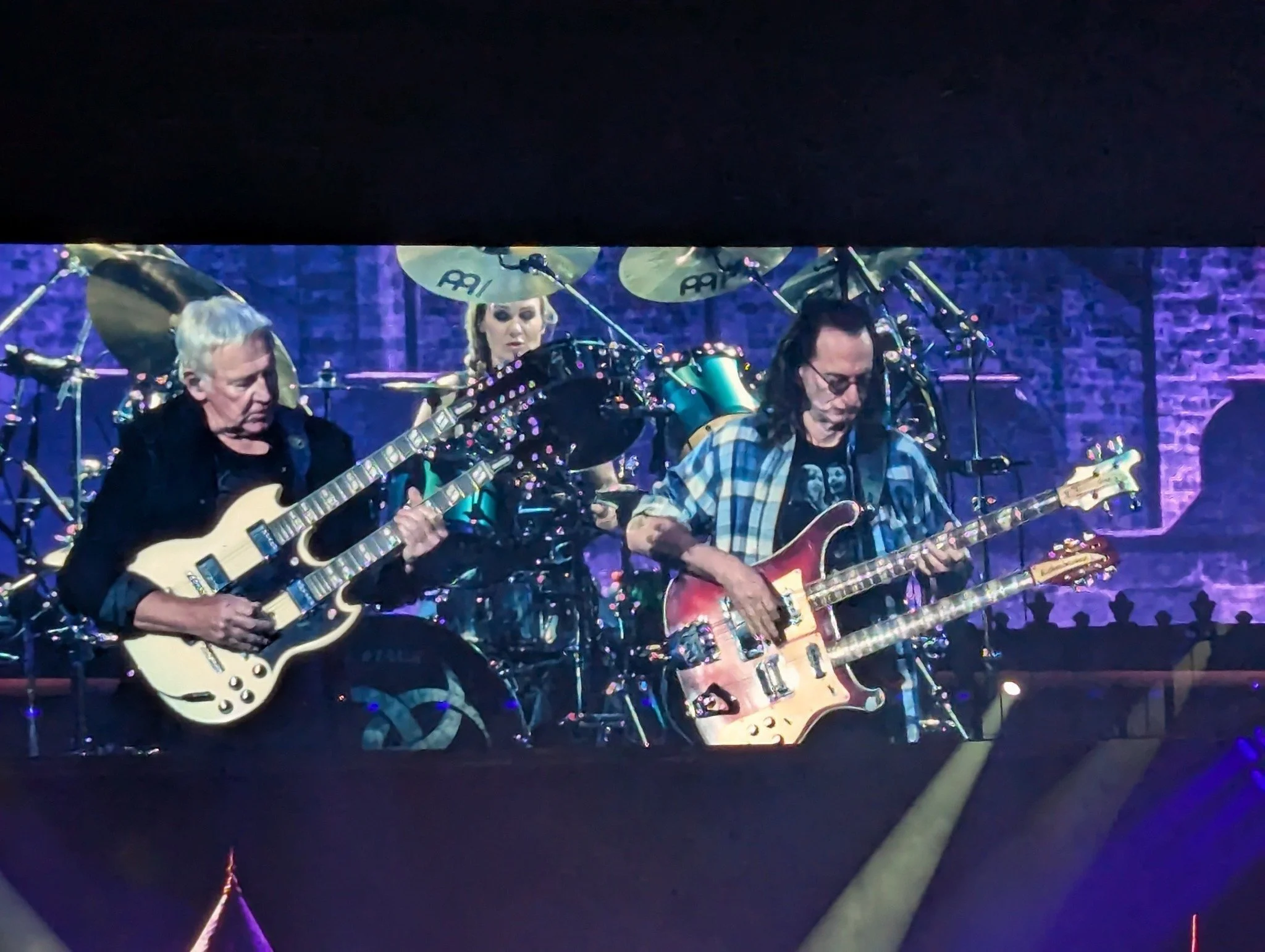
Watching Geddy and Alex perform this music live was astonishing.
The arena's large video screens gave us close-up views of what was happening onstage.
We could watch Alex move from intricate lead guitar passages into chords and back again, seemingly without effort.
Geddy's bass playing was equally remarkable.
His fingers moved so quickly that I joked he was playing 1/64th notes.
And somehow, he was doing all this while singing and occasionally handling keyboards.
Songs such as "Xanadu" and the complete "2112" were particularly impressive.
These aren't songs where musicians can coast through a familiar chorus and let the audience do the work.
The arrangements demand constant attention.
The lighting and video effects were spectacular, but they never overwhelmed the performance.
They complemented it.
The musicians themselves were the spectacle.
Anika Nilles: One Word. Respect.
There is no discussing this tour without discussing Anika Nilles.
And there is no discussing Anika without acknowledging Neil Peart.
Neil didn't leave shoes to fill.
He left a void the size of the Grand Canyon.
Ask a hundred accomplished rock drummers to name the greatest drummers of all time, and I would wager Neil Peart appears on nearly every list.
Period.
Hard stop.
No one was going to replace Neil Peart.
And Anika didn't need to.
She needed to be Anika Nilles.
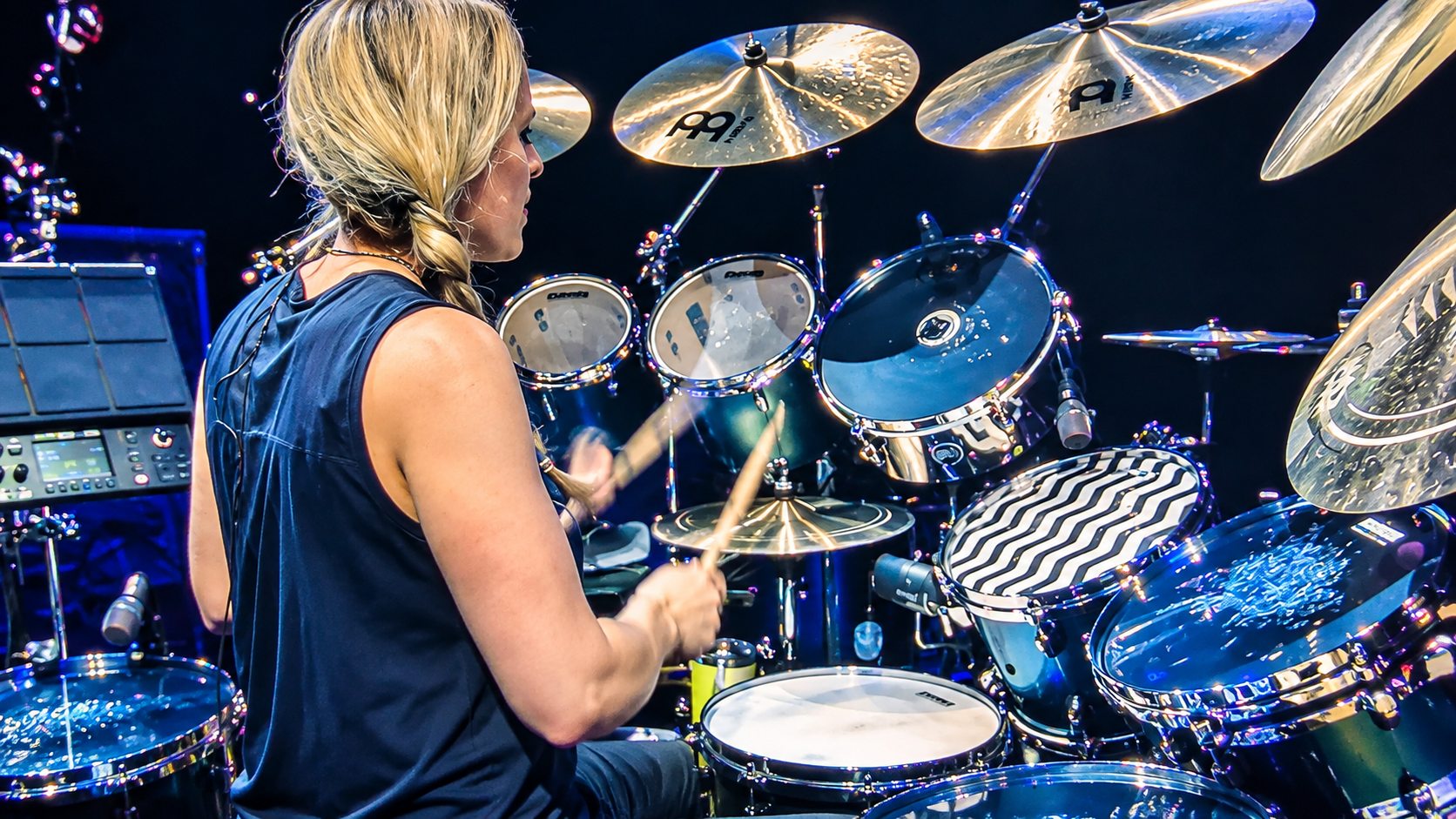
What I witnessed was a drummer of extraordinary talent taking on some of the most demanding music in rock history and delivering an incredible performance.
She was intense.
Focused.
Technically brilliant.
But what struck me most was how much she seemed to enjoy herself.
When Geddy turned toward her and they played together, she would smile.
After particularly difficult passages, you could see her reaction when she nailed them.
There was joy behind that enormous drum kit.
Think about the pressure.
She had to learn an extensive catalog of incredibly complicated Rush music, perform it in front of thousands of devoted fans, and inevitably be compared to someone who should never have to be compared with anyone.
Yet I never felt that the performance was diminished because Neil wasn't there.
Anika was magnificent in her own right.
She did Neil proud.
And she earned my respect.
Neil Peart: More Than a Bandmate, a Brother
Rush didn't attempt to pretend Neil Peart was still there.
They acknowledged his absence in a deeply personal way.
During the concert, there were two video tributes associated with "Bravado" and "Time Stand Still."
These weren't simply videos playing behind the band while the music continued.
They were separate presentations, featuring Neil's recorded voice and interviews alongside footage from years of performances.
It was incredibly moving.
Looking around the arena, I could see plenty of older men wiping tears from their eyes.
I understood.
Neil wasn't just a drummer who had once played with Rush.
He was a brother to Geddy and Alex, someone with whom they had spent decades making music and sharing their lives.
One of the most memorable moments came when Geddy told the story of Neil's audition.
After original drummer John Rutsey left the band, Rush needed someone new.
Geddy explained that they didn't really know how to audition a drummer.
They had never auditioned themselves.
One candidate was just okay.
Then Neil arrived.
He pulled up in a brown Pinto, with his drums packed in garbage bags.
Geddy and Alex weren't particularly impressed by his appearance.
They made a few jokes to themselves, before realizing that neither of them looked especially cool either.
Then Neil started playing.
Everything changed.
Geddy recalled that Neil's triplets brought them to tears.
They knew they had found someone extraordinary.
That scruffy young drummer in the brown Pinto would become one of rock's greatest musicians and an essential part of Rush's songwriting legacy.
Hearing Geddy tell that story made the tribute videos even more meaningful.
It wasn't simply a famous musician remembering another famous musician.
It was one brother remembering another.
The Second Set Was Just as Remarkable
After intermission, Rush returned for another substantial set.
And if anyone wondered whether Geddy and Alex might slow down as the evening progressed, the answer was a resounding no.
They opened the second set with the complete "2112."
For anyone familiar with that composition, you know what a demanding piece of music it is.
The musicianship remained extraordinary.
The second set also included "YYZ," "Red Barchetta," "The Garden," and "Tom Sawyer," among other favorites.
One of my favorite short videos from the evening captures the performance during this second set.
It's only about a minute long, but it brings back the energy of the night immediately.
Rush performing during the second set in Tampa, showing the live performance and concert atmosphere from our seats.
The concert continued to deliver one remarkable musical moment after another.
And there was another perspective I was enjoying just as much as the music.
Gina's.
Gina Discovered a Different Side of Rush
Gina wasn't attending this concert as a lifelong Rush fan.
She knew some of their music, and we had heard more of it recently on SiriusXM as the tour approached.
But this was her first real introduction to Rush as a live band.
She was impressed.
Not just by the musicianship, but by the storytelling.
Rush songs aren't always conventional verse-chorus compositions.
The arrangements can be complex, the rhythms unusual, and Geddy's distinctive voice certainly isn't everyone's cup of tea.
But the lyrics often tell fascinating stories or explore ideas that stay with you.
Gina particularly enjoyed "The Garden."
And something interesting happened on our drive home.
She started looking up Rush lyrics.
Lines from "Bravado," "Tom Sawyer," and "Subdivisions" had caught her attention.
She wanted to understand more about what she'd heard.
I had spent the evening marveling at the musicianship.
Gina was discovering the words.
We had attended the same concert and found different things to appreciate.
That's one of the things I love about sharing experiences with her.
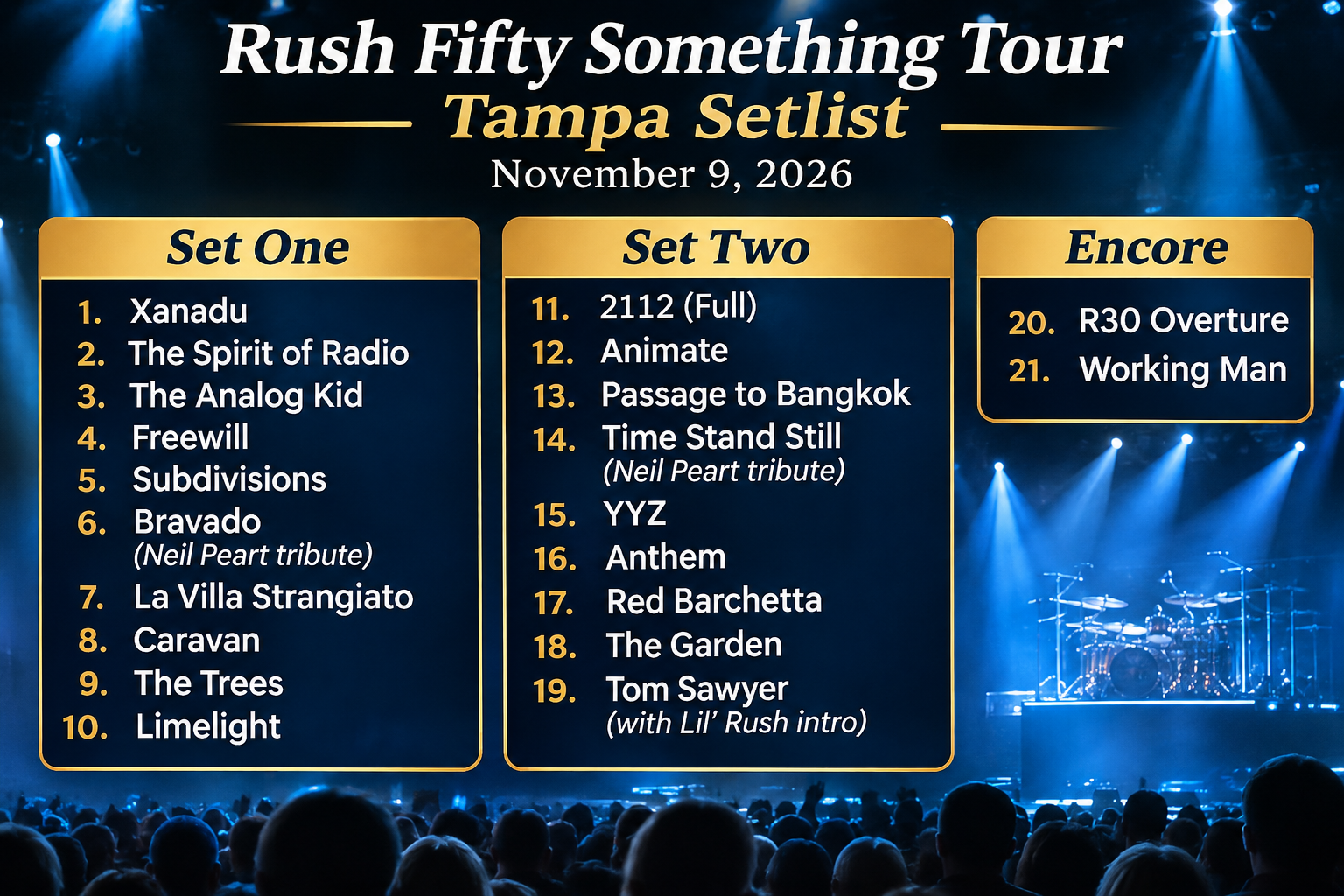
Rush Fifty Something Tour: Tampa Setlist
The November 9, 2026, Tampa performance included two sets and an encore.
The show opened with "Xanadu" and ended with "Working Man."
Between those two songs, we heard an extraordinary cross-section of Rush's catalog, including the complete "2112" and two moving Neil Peart tribute presentations.
$160 in Merchandise. Zero Regrets.
I normally don't spend much money on concert merchandise.
And when I first saw a Rush hat priced at $50, I balked.
Fifty dollars for a hat?
Really?
We had arrived early enough that I probably could have walked right up to the merchandise counter before the concert.
Instead, I waited until intermission.
By then, something had changed.
As I sat listening to Rush perform, I realized that this might be it.
I might never have another opportunity to see them live.
Suddenly, that $50 hat seemed a little less ridiculous.
So I went to the merchandise stand.
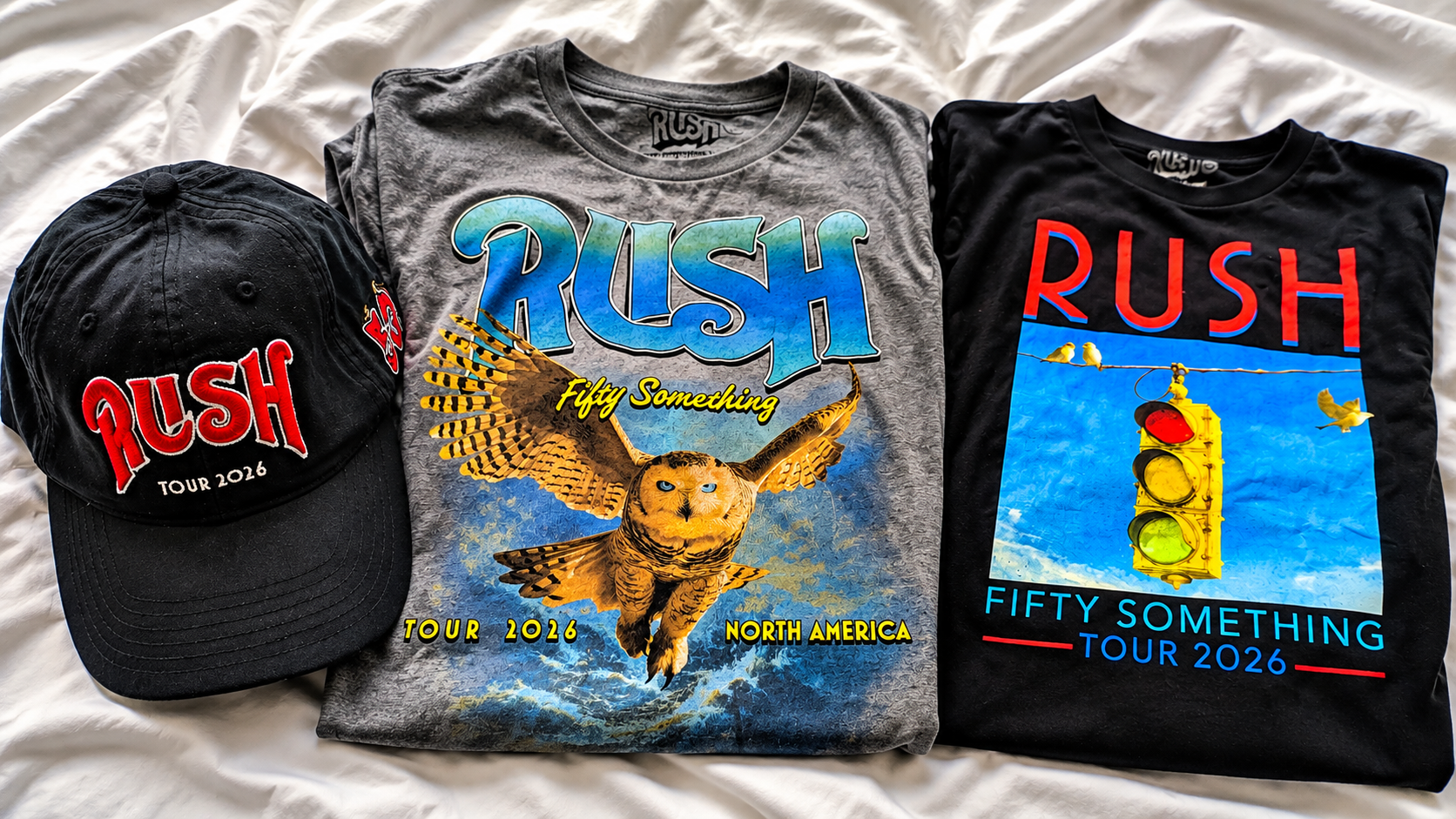
Then I saw a shirt featuring the owl from Fly by Night.
Gina loves owls.
That one was coming home with us.
Then I spotted another shirt featuring a traffic light.
For someone who runs a website called Curated Upgrades, with its green, yellow, and red recommendation system, that design practically called my name.
The hat was $50.
The shirts were $55 each.
Total: $160.
And yes, the checkout screen offered an option to add a tip.
I laughed.
Sorry, Ms. Shirt Lady. No tip for you.
Gina loved her owl shirt.
I loved my traffic-light shirt.
And I'm glad I bought the hat.
Would I ordinarily recommend spending $160 on concert merchandise?
Probably not.
But this wasn't an ordinary concert.
Sometimes the value of a souvenir has very little to do with the price printed on the tag.
Leaving the Arena: A Surprisingly Easy Walk Home
The concert finished at approximately 11 p.m.
By that point, a good portion of the audience was probably well past its usual bedtime.
But nobody seemed eager to complain.
As we made our way out, the crowd was still buzzing.
"Wow."
"Incredible."
Everywhere I listened, people were talking about how good the show had been.
I didn't hear a single negative comment from anyone within earshot.
Despite the large crowd, getting out of the arena was remarkably easy.
We were outside in approximately five minutes.
Police officers were directing traffic at intersections for several blocks, making the area very pedestrian-friendly.
Cars were waiting to leave the parking lots.
We simply started walking.
It took us about twenty minutes to reach the Barrymore Hotel at an easy pace.
The weather was beautiful, and we felt extremely safe.
We didn't encounter any panhandlers or people bothering us.
As we got farther from the arena, the crowd gradually thinned.
Eventually, during the last two blocks, it was just the two of us.
Holding hands.
Talking about the concert.
I couldn't have asked for a better ending to the evening.
Was Rush's Fifty Something Tour Worth the Money?
🟢Go for it!
Our two tickets cost $731.52, including fees.
Add $160 in merchandise, and our concert-related spending reached $891.52.
We didn't purchase food or drinks inside the arena, so I can't offer firsthand information about concession prices.
Frankly, I didn't feel like competing for a urinal during the show.
We were there for the music.
Was it expensive?
Absolutely.
Was it worth it?
Without hesitation.
Geddy Lee and Alex Lifeson, both in their seventies, delivered an astonishingly demanding performance.
Anika Nilles was extraordinary.
The Neil Peart tributes were heartfelt and deeply personal.
The production was spectacular without overshadowing the music.
And Gina came away with a new appreciation for a band that has been part of my life for decades.
I don't know whether Rush will tour again.
I don't know whether I'll ever have another opportunity to see them perform.
But I do know this.
Forty-six years after my first Rush concert, I walked into an arena hoping for a great show.
I walked out saying:
"Wow. I can't believe what I just experienced."
The show exceeded my wildest imagination.
And on that quiet walk back to the hotel, holding Gina's hand, I knew we had just shared a night neither of us would forget.