

Seven Days Without Our Bags
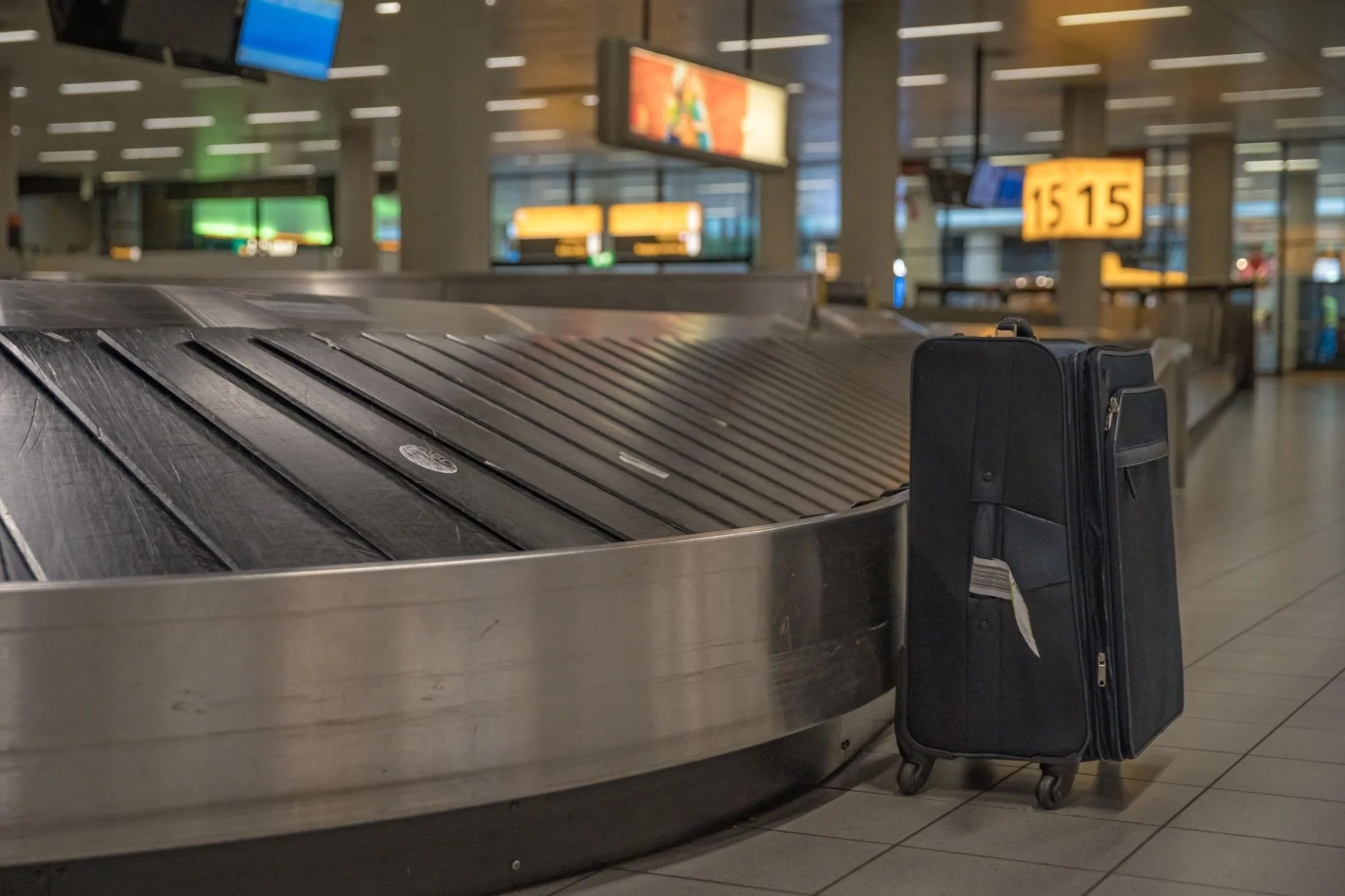
Our bags didn't arrive with us in Ireland. Seven days later, we finally got them back. Here's what we learned, what travelers should do when luggage goes missing, and how to prepare before it happens to you.
Our Bags Took a Different Trip
Our luggage problems actually began before we reached Ireland.
Our itinerary took us through Toronto on our way to Dublin. By the time we arrived in Toronto, our connecting flight to Dublin had already departed. It was close to midnight, airline staff were scarce, and there was considerable confusion about where passengers should go and what we were supposed to do.
Eventually, we found ourselves outside the secure area of the airport. Our checked luggage was nowhere to be found.
After a very long night and a lot of effort trying to reach Air Canada, we were rebooked and continued to Dublin the following day.
That's a story for another article.
The important part of this story began when we arrived in Dublin.
Dublin: Still No Bags
Baggage claim was chaos.
We waited for more than an hour, hoping our suitcases would eventually appear. They didn't.
There wasn't much assistance available, but before leaving the airport we did one thing that turned out to be extremely important:
We filed a missing-baggage report.
We provided our email address and the address of our next lodging. Later, after I purchased an Irish SIM for my travel phone, I updated our contact information with Air Canada.
Because we were traveling around Ireland rather than staying in one place, every time we moved, we updated the airline with our new location.
We also kept checking with Air Canada.
For seven days, we received essentially no useful new information about where our luggage was or when we might see it again.


Ireland wasn't going to wait for our luggage, so neither did we.We Needed Clothes Either Way
Fortunately, we'd packed one change of clothes in our carry-ons.
Unfortunately, one change of clothes doesn't get you very far on a two-week trip.
The people at our first lodging directed us to Dunnes Stores, where we bought a few days' worth of basic clothing, toiletries and other necessities.
We weren't trying to replace everything we'd packed. We bought conservatively and purchased what we actually needed to continue the trip.
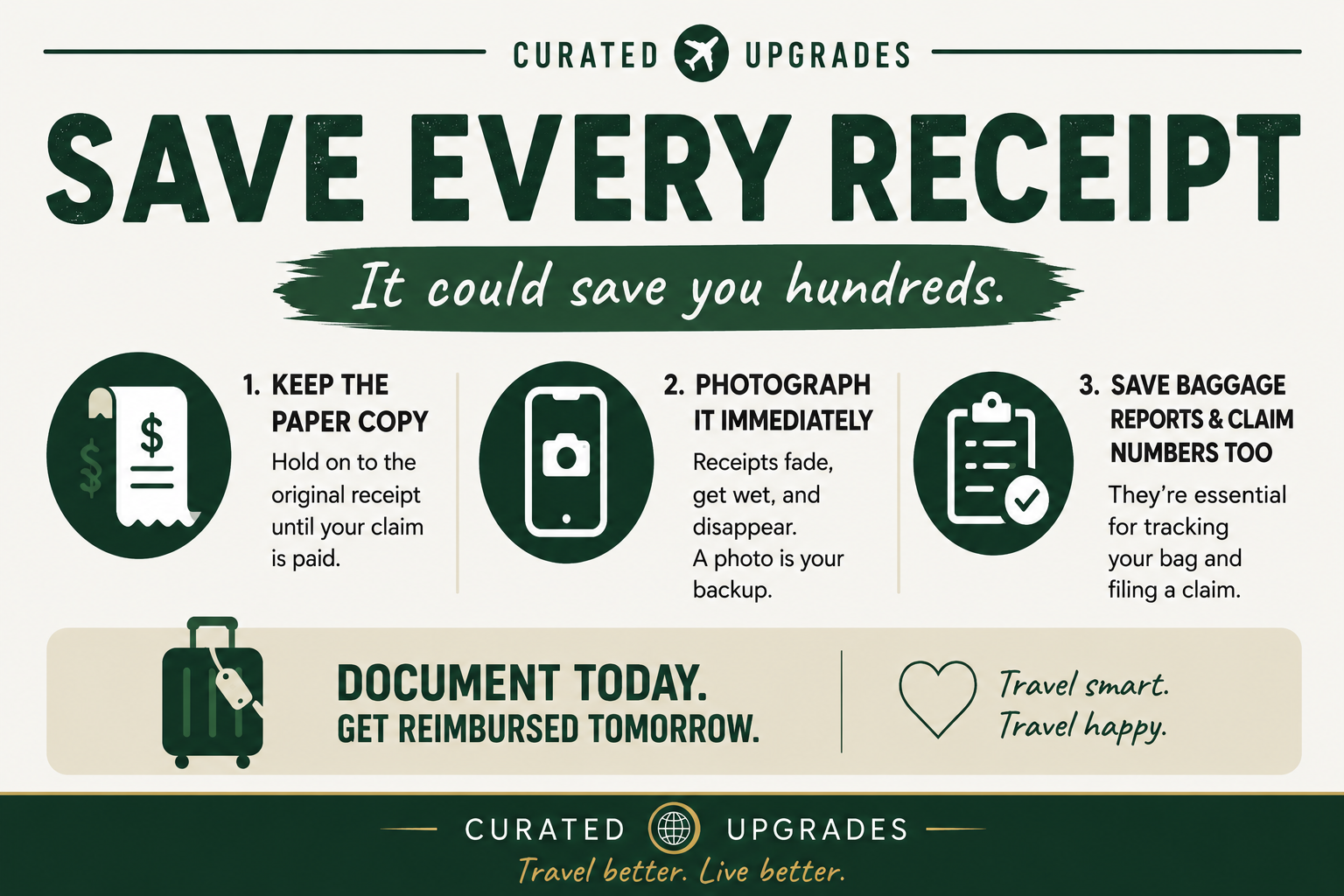
And we saved every receipt.
We kept the paper copies and took photographs of them as backup. That simple habit became extremely valuable when it was time to submit our reimbursement claim.
Our hosts even helped us stretch what we had. On the morning we departed, they kindly washed a couple of days' worth of clothing for us while we ate breakfast.
Then we continued exploring Ireland.
Seven Days Later...
Halfway through our 14-day trip, our luggage finally caught up with us in Dingle.
That solved one problem and created another.
For the first week, we didn't have enough stuff.
Suddenly, we had too much.
We now had everything we'd originally packed for a two-week trip plus all of the clothing and necessities we'd purchased during the seven days our bags were missing.
There was no practical way to fit everything into our luggage for the trip home.
So we went through the replacement clothing, kept what we needed and could comfortably pack, and donated the excess to a local shelter.
At least something good came out of a frustrating situation.

Seven days after arriving in Ireland, our luggage finally caught up with us in Dingle.Air Canada Reimbursed Our Expenses
Once we returned home, I scanned the receipts we'd saved and submitted them to Air Canada.
To Air Canada's credit, the reimbursement process went smoothly.
We were reimbursed for every documented replacement expense we submitted. Air Canada also provided approximately $500 in additional compensation.
About three weeks after we returned to the United States, the reimbursement process was complete.
Our experience happened in 2022. Airline policies and passenger-protection rules have changed since then, so don't assume our reimbursement experience establishes what you will receive today.
But the experience taught us several lessons that remain extremely useful.
The first is simple:
When your bag doesn't arrive, what you do next matters.
Your Checked Bag Didn't Arrive. Now What?
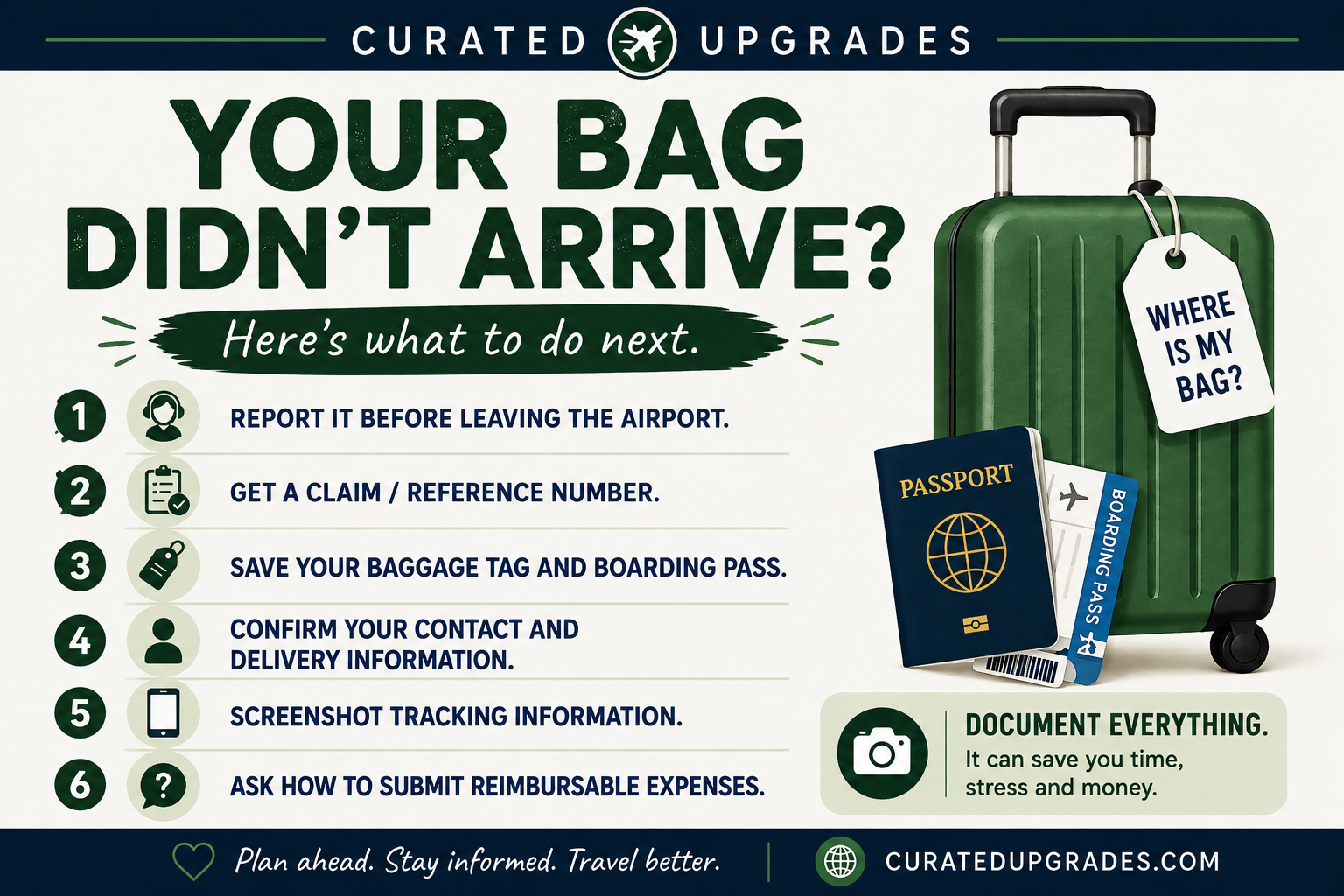
Don't simply leave baggage claim and assume the airline knows your suitcase is missing.
Report the missing bag to the airline before leaving the airport whenever possible. Make sure a mishandled-baggage report is created and keep the claim or reference number.
Keep your boarding passes and baggage-tag receipts. Confirm that the airline has your correct phone number, email address and delivery location.
If you're moving from hotel to hotel, as we were in Ireland, keep the airline updated with your itinerary and current location.
Take screenshots of baggage-tracking information and save emails or messages from the airline.
Ask how the airline wants you to submit expenses associated with the delay.
One of the biggest questions when luggage disappears is:
What am I allowed to buy?
For flights subject to U.S. Department of Transportation baggage rules, airlines are expected to reimburse reasonable, actual and verifiable expenses associated with delayed baggage, up to the applicable liability limit.
That doesn't mean a delayed suitcase is permission for an airline-funded shopping spree.
But it also doesn't mean you have to spend several days wearing the same clothes while waiting for your bag.
Depending on your circumstances, reasonable expenses might include clothing, underwear, toiletries and other necessities you actually need while separated from your belongings.
What is “reasonable” depends on the situation. Someone traveling to a business meeting, wedding or cold-weather destination may reasonably need different replacement items than someone spending a night at an airport hotel.
Our approach in Ireland was simple:
Buy what you genuinely need, spend reasonably and document everything.


We bought enough to keep traveling, saved the receipts and got on with the trip. Here we are doing a falconry experience sporting the latest fashions from Dunnes.
When Does Delayed Baggage Become Lost Baggage?
A delayed bag and a lost bag aren't necessarily treated the same way.
Airlines have their own policies for determining when a delayed suitcase becomes officially lost. The U.S. Department of Transportation says most airlines declare a bag lost somewhere between five and fourteen days after a flight, although policies vary.
Once an airline determines that baggage is lost, it is generally responsible for compensating the passenger for the bag and its contents, subject to applicable liability limits, documentation and depreciation.
That means the jacket you bought several years ago isn't necessarily valued at what a brand-new replacement costs today.
For higher-value items, the airline may also request receipts or other evidence of ownership and value.
How Much Could the Airline Owe You?
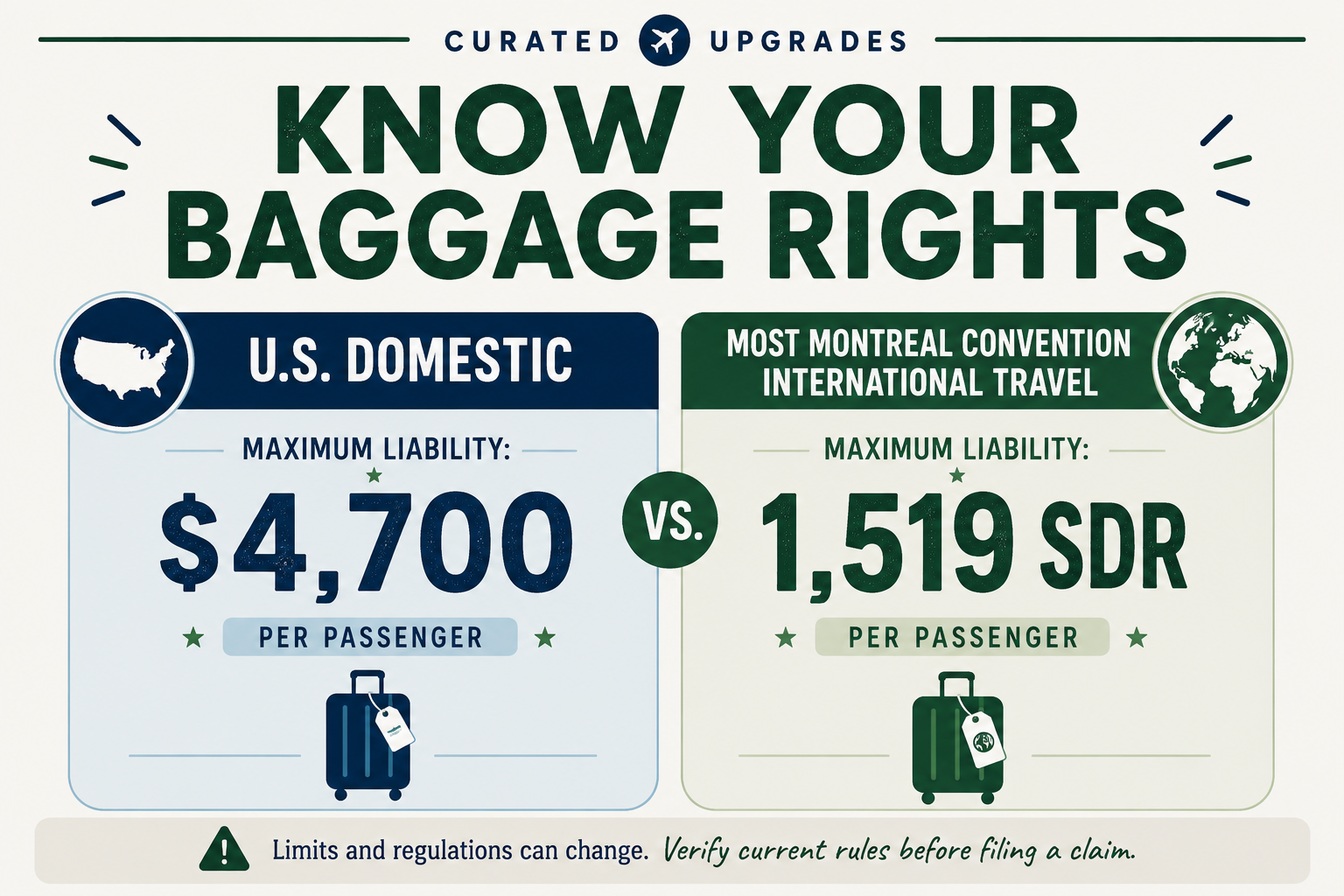
For U.S. domestic flights, the current maximum baggage liability is $4,700 per passenger.
That's a ceiling, not an automatic payout.
Your actual compensation depends on your documented loss or expenses and the rules that apply to your trip.
International travel is different.
For most international flights covered by the Montreal Convention, the current baggage liability limit is 1,519 Special Drawing Rights (SDRs) per passenger for baggage destruction, loss, damage or delay.
An SDR is an international monetary unit whose value changes over time, so check its current value rather than relying on an old dollar conversion.
One other detail worth knowing: the Montreal Convention baggage limit is generally per passenger, not per suitcase.
Your Checked-Bag Fee May Be Refundable Too
Here's one protection that has changed since our Ireland trip.
Under current U.S. rules, if you paid a checked-baggage fee and your bag becomes significantly delayed, you may be entitled to have that baggage fee refunded.
For domestic flights, a checked bag is considered significantly delayed when it hasn't been delivered within 12 hours after arrival.
For an international flight between a U.S. airport and a foreign airport, the threshold is generally 15 hours when the applicable international flight is 12 hours or less, and 30 hours when it exceeds 12 hours.
There are exceptions, but there's an important first step:
File the mishandled-baggage report.
Under current U.S. rules, once the report has been filed and the qualifying delay threshold is reached, the baggage-fee refund should be issued without requiring another request from the passenger.
International Trip? Pay Attention to Deadlines
International baggage claims can have important deadlines.
Under the Montreal Convention, a written complaint involving delayed baggage generally must be made no later than 21 days after the baggage is placed at your disposal.
For damage to checked baggage, the Convention generally provides a shorter seven-day written-complaint period after receiving the bag.
Don't wait until months after your vacation to start sorting through receipts and figuring out what happened.
Get the claim started, preserve your documentation and follow the applicable airline and treaty deadlines.
Don't Forget Your Credit Card or Travel Insurance
The airline may not be your only potential source of coverage.
Depending on how you purchased your trip, your credit card may include baggage-delay or lost-baggage protection. A separate travel-insurance policy may provide additional benefits as well.
Coverage, waiting periods, limits and exclusions vary considerably, so check the actual terms of your policy or card.
And insurance isn't an opportunity to collect twice for the same expense. Disclose other reimbursements you've received and follow each provider's claims requirements.
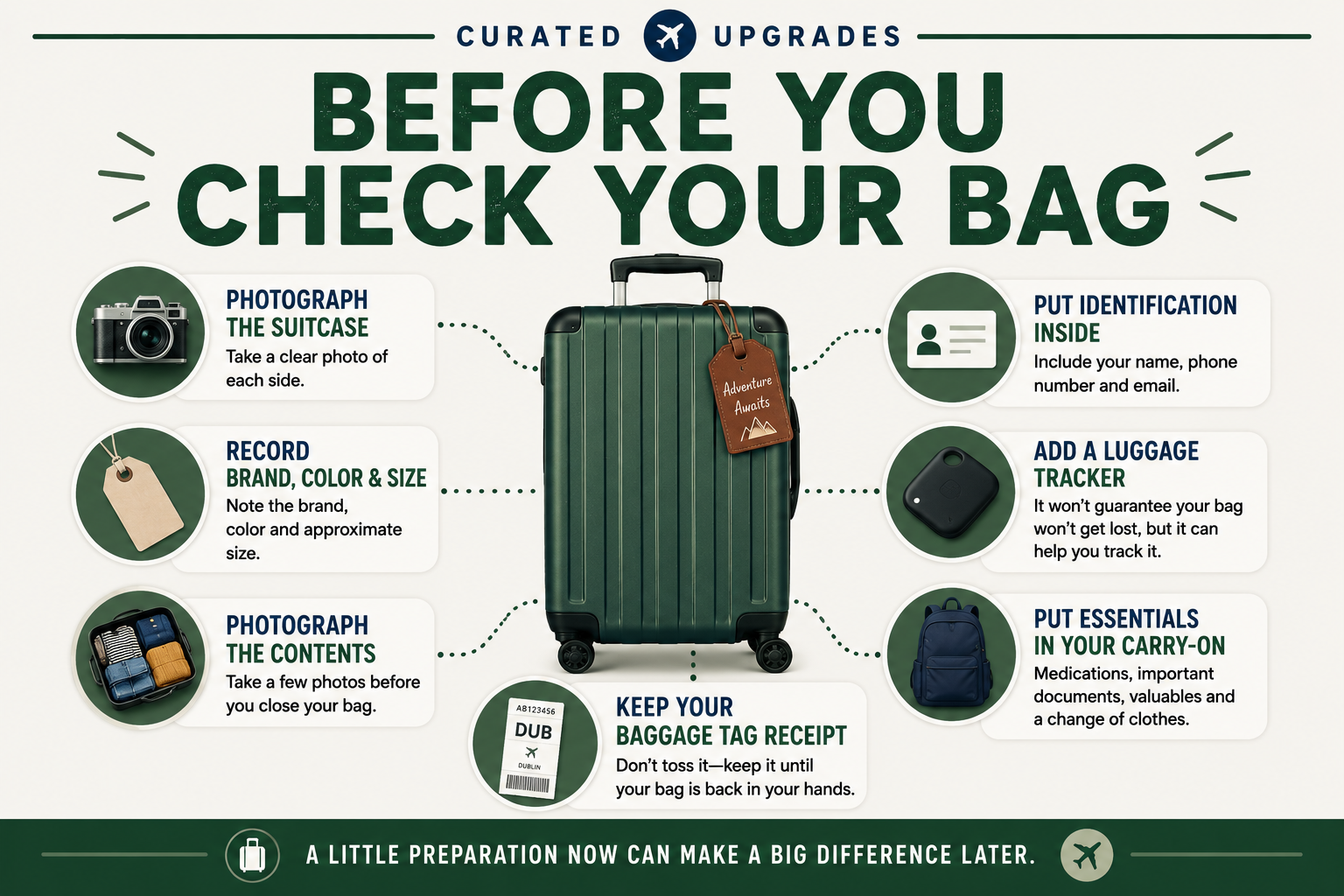
Before You Check Your Next Bag
You can't guarantee that an airline will never misroute your luggage.
You can make the situation much easier to handle if it happens.
Photograph Your Suitcase
Before leaving home, take a clear picture of each checked bag.
Make sure you can identify the brand, color and approximate size. Take another photograph showing the manufacturer's logo or other identifying details.
“Blue Samsonite, approximately 27 inches” is considerably more useful than “medium blue suitcase.”
Photograph What's Inside
Before closing the suitcase, take a few quick photographs of its contents.
You don't need a forensic evidence file for every pair of socks. But photographs can help you remember and document what was packed, particularly if the bag is eventually declared lost.
Put Identification Inside
Exterior luggage tags can disappear.
Put your name and contact information somewhere inside the suitcase as well.
Remove Old Airline Tags and Barcode Stickers
Don't make the baggage-handling system decipher a scrapbook of previous vacations.
Remove obsolete routing tags and barcode stickers before checking your bag again.
Consider a Luggage Tracker
A tracker won't prevent your suitcase from being misrouted.
And knowing where your bag is doesn't necessarily mean you'll be allowed to retrieve it yourself.
But location information can be extremely useful when you're trying to determine whether your suitcase is still at your departure airport, sitting at the connecting airport or vacationing somewhere you never intended to visit.
Keep Essentials in Your Carry-On
We had one change of clothes with us.
After spending seven days without our checked luggage, we understand exactly how valuable that was.
Keep essential medications, important travel documents, valuables, electronics and essential medical equipment with you when permitted.
And consider carrying enough basic clothing and toiletries to get through at least the first day.
Keep Your Baggage Tag
Don't toss that little baggage receipt into the nearest airport trash can.
Keep it until your suitcase is physically back in your possession.
Think About Your Connections
Every connection creates another baggage handoff.
That doesn't mean you should avoid connecting itineraries entirely. Sometimes they're unavoidable or simply make considerably more sense.
But when two itineraries are otherwise comparable, fewer connections mean fewer opportunities for you and your suitcase to head in different directions.
Leave a Little Room
This is one we learned the hard way.
If your suitcase leaves home packed to the zipper, you have nowhere to put anything acquired during the trip, whether that's souvenirs or a week's worth of replacement clothing purchased because your luggage disappeared.
A little unused space can be surprisingly valuable.


Seven days without our luggage, but not seven days without Ireland. We kept traveling, made do with what we had, and didn't let our missing bags define the trip.The Biggest Lesson We Learned
Our bags eventually found us in Dingle.
Fortunately, we didn't spend seven days waiting for them.
We filed the report. We kept Air Canada updated as we moved around Ireland. We bought what we reasonably needed. We documented every expense.
And we kept traveling.
When we returned home, those receipts allowed us to recover what we'd spent.
Would we have preferred that our luggage arrived in Dublin with us?
Absolutely.
But a delayed bag doesn't have to become the defining memory of a trip.
Prepare before you leave. Know what to do when something goes wrong. Document everything. Then get back to enjoying where you came to see.
Passenger-protection rules, airline policies and liability limits can change. This article provides general travel information, not legal advice. Verify current requirements with your airline and the applicable government or international authority.
Last updated: August 2026