

Tender Ports Explained: What You Need to Know Before Going Ashore
Your ship arrives at 8:00 AM. But when can you actually expect to be ashore?
You've planned your cruise, researched your ports, and maybe even booked a few excursions.
Your itinerary says you'll arrive at 8:00 AM.
Perfect! You've found a terrific independent excursion that starts at 9:00 AM.
But there's one little detail you might have overlooked.
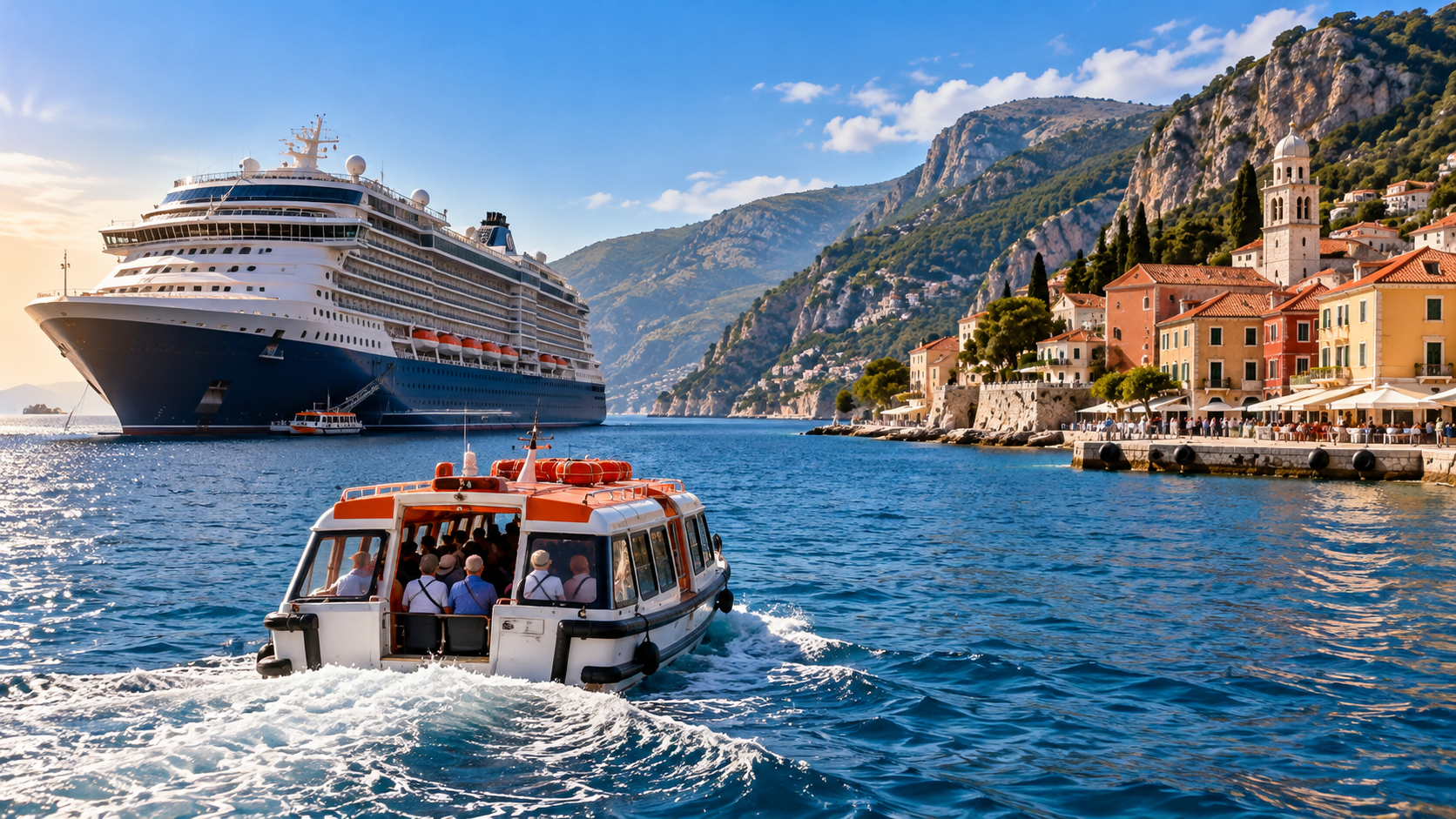
Your ship isn't docking. It's anchoring offshore, and you'll need a smaller boat to get ashore.
Welcome to the world of tender ports.
Tendering is a routine part of cruising, and there's no reason to be intimidated by it. But understanding how it works can save you frustration, missed excursions, and potentially a considerable amount of money.
And here's something even experienced cruisers sometimes forget:
Just because your ship arrives at 8:00 AM doesn't mean you'll be standing on the pier at 8:05.
What Exactly Is a Tender Port?
At many cruise destinations, ships pull directly alongside a pier. Passengers walk down the gangway, and they're ashore.
Simple.
But not every destination has a pier capable of accommodating a large cruise ship. Water depth, harbor facilities, available berths, and other operational considerations can make docking impractical or impossible.
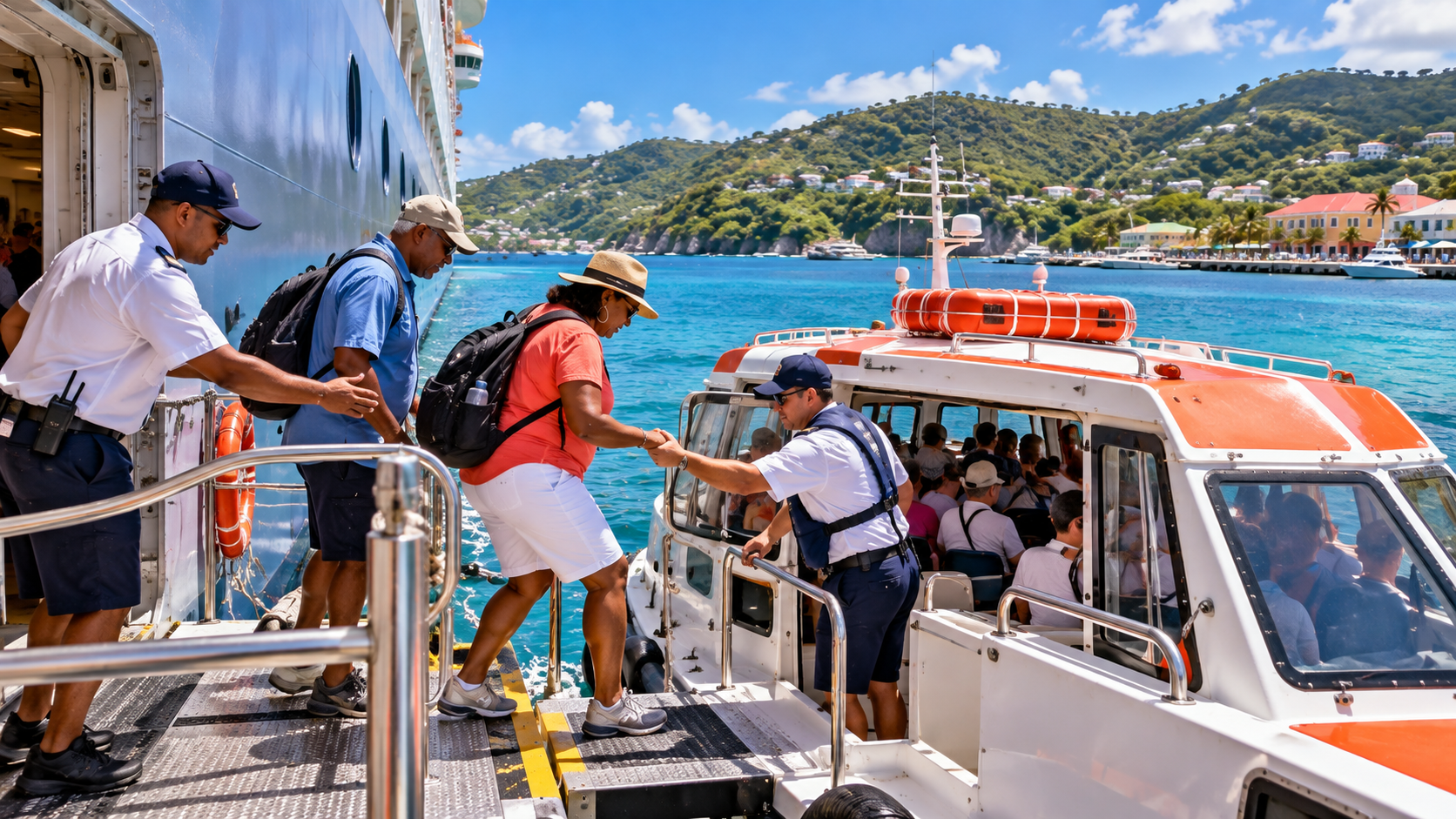
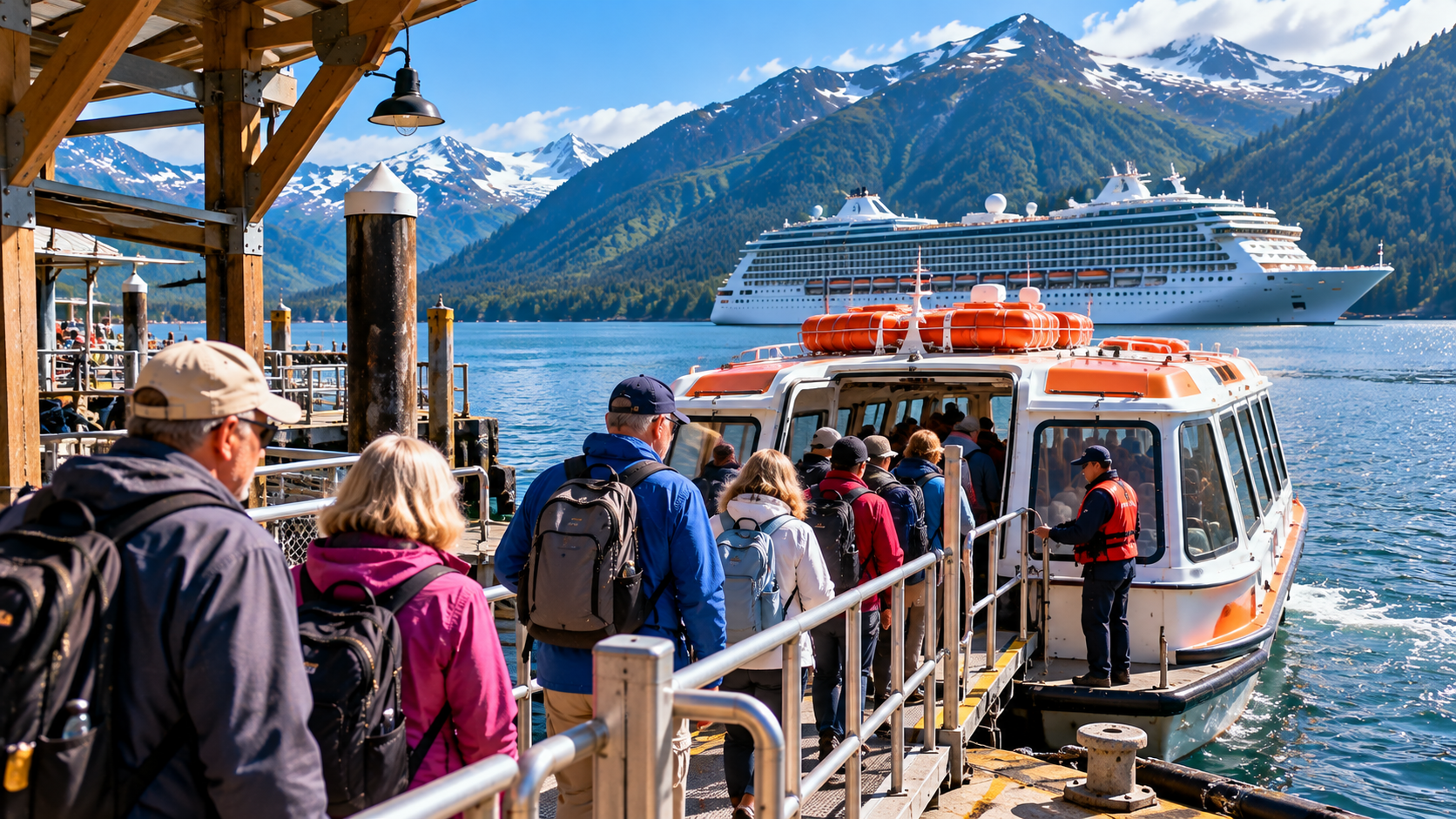
Instead, the ship anchors offshore, and passengers travel between the ship and shore aboard smaller vessels called tenders.
Some ships use their own tender boats. At other destinations, local operators provide the transportation.
And here's an important point:
The arrangements can differ considerably from one port to another.
Different boats. Different operators. Different boarding locations. Different schedules.
You might visit two tender ports on the same cruise and encounter two entirely different procedures.
That's normal.
The Ship Arrives at 8:00 AM. Now What?
Before passengers begin going ashore, the ship must complete its arrival procedures and prepare for tender operations.
Depending on the ship and port, passengers may need tender tickets, be assigned boarding groups, or wait until general tendering begins.
Some passengers may receive priority because they've booked cruise-line excursions or qualify for certain onboard benefits.
For John and Jane Doe, traveling in a regular cabin without loyalty status or special privileges, this can mean waiting for their assigned group or for an announcement that general tendering is available.
An 8:00 AM arrival is not a guaranteed 8:00 AM departure from the ship.
How long will you wait?
It depends.
And I know that's not the definitive answer everyone wants, but it's the accurate one.
The number of passengers going ashore, available tenders, travel distance, local facilities, and weather can all influence the operation.
Rather than guessing, pay attention to the ship's instructions.
Tender arrangements are commonly communicated through onboard announcements, daily schedules, posted notices, and, where supported, the cruise-line app.
If you're unsure, ask Guest Services.
Your Best Source of Information Is Already on the Ship
Cruise forums and Facebook groups can be excellent places to exchange experiences and pick up useful travel tips.
But there's a difference between someone's experience and the procedure for your particular sailing.
A passenger who visited Santorini three years ago might have perfectly accurate information about what happened on their cruise.
That doesn't necessarily mean the same arrangements apply to yours.
Before sailing, cruise lines offer customer service phone numbers, websites, and, in many cases, online chat.
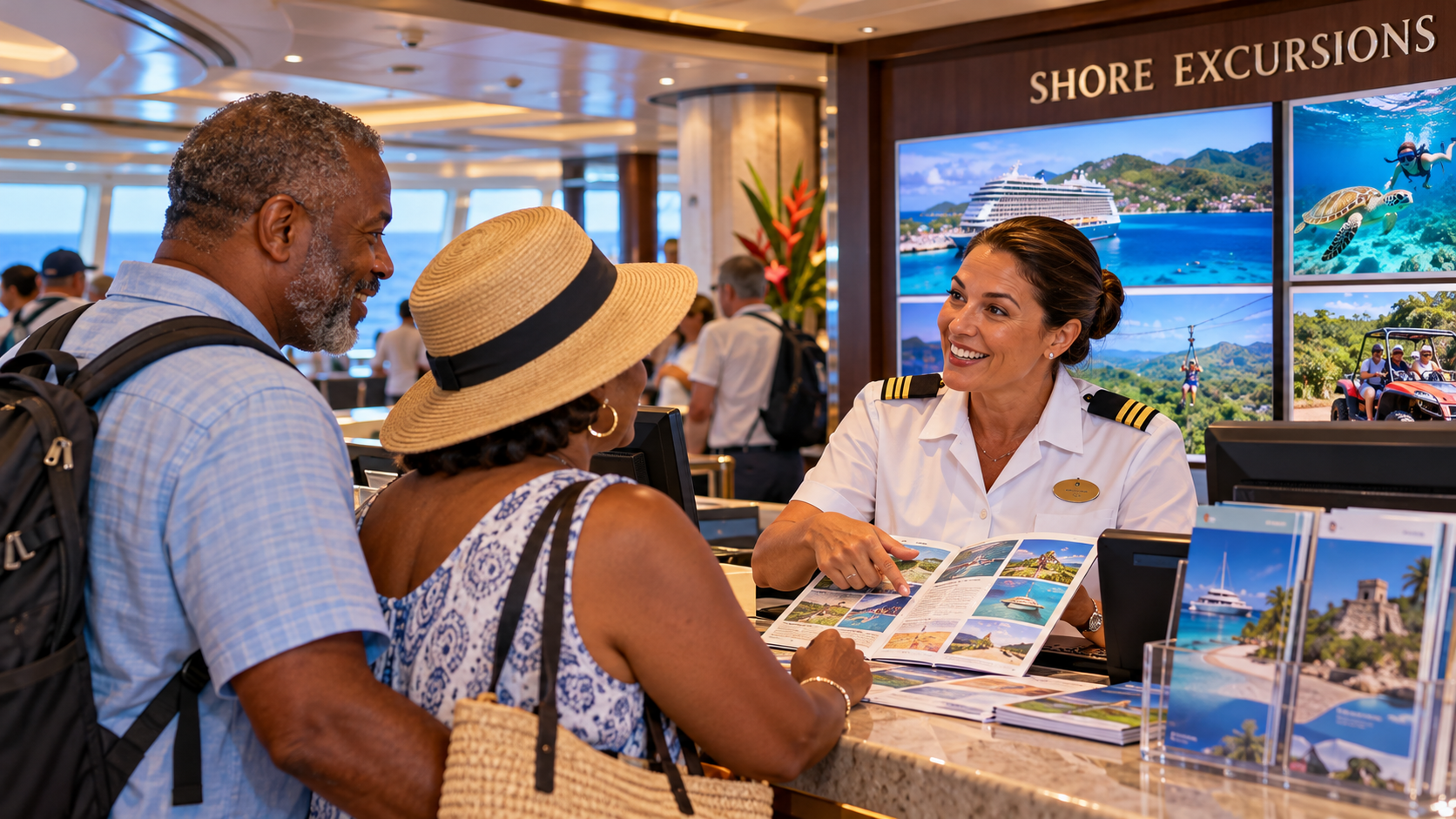
Once aboard, Guest Services and the Shore Excursions desk are valuable resources.
They may not be able to promise exactly when you'll step ashore, but they can explain the expected procedures and tell you where to find updates.
When the answer matters to your plans, ask the people responsible for the operation.
A Facebook discussion at 2:00 AM shouldn't be your final authority on tomorrow morning's tender schedule.
Who Gets Off First?
This is where passengers can encounter different procedures depending on the cruise line.
Some cruise-line excursions receive organized or priority tender arrangements. Certain suite guests and loyalty members may also qualify for priority access.
But we're not going to spend three pages cataloging the benefits of every loyalty program.
If you've earned those privileges, you probably already know about them.
For everyone else, the important questions are straightforward:
Do I need a tender ticket or boarding-group assignment?
Where and when do I get it?
When does general tendering begin?
Can I go ashore whenever I'm ready once the initial rush is over?
The answers may differ between Celebrity, Norwegian, Princess, Holland America, Royal Caribbean, Carnival, and other lines.
They may even differ between ports on the same sailing.
For example, Royal Caribbean confirms priority disembarkation for its shore excursion guests.
Don't assume yesterday's procedure will be tomorrow's procedure.
Cruise-Line Excursion or Independent Tour? There's a Difference.
This is probably the most important planning decision involving tender ports.
Let's say you've found a shore excursion that looks fantastic.
The cruise line offers something similar for $150 per person.
An independent operator offers a comparable experience for $100.
Saving $100 for two people sounds pretty good.
And independent excursions can be excellent. We've certainly enjoyed arranging our own activities rather than booking everything through a cruise line.
But tendering adds another consideration.
When you book through the cruise line, the excursion is generally coordinated with the ship's schedule and tender arrangements.
If the ship misses the port or the excursion cannot operate, the cruise line typically handles cancellation or refund arrangements under its excursion terms.
Cruise lines also commonly offer protections when their sponsored excursions return late, such as waiting when possible or arranging onward transportation.
For example, Princess Cruises explains its priority disembarkation and protected return arrangements.
When you book independently, you're generally responsible for meeting your tour operator on time and returning to the ship before the deadline.
If tender operations are delayed, your operator may or may not wait.
If weather prevents the ship from tendering at all, your refund depends on the operator's cancellation terms and potentially your travel insurance.
And if your independent excursion runs late?
The ship is not generally obligated to wait for you.
None of this means you shouldn't book independently.
It means you should understand the additional responsibility you're accepting.
Our Curated Upgrades Recommendation
🟢 Go for it! An independent excursion with plenty of time between expected tendering, the tour's departure, and the last tender back to the ship.
🟡 Maybe. A short port visit, questionable weather, or an excursion that requires you to get ashore quickly.
🔴 Pass on it. An independent excursion that assumes you'll be ashore immediately after the ship arrives or returns with virtually no time to spare.
Before booking, ask the independent operator whether they regularly accommodate cruise passengers arriving by tender and what happens if tendering is delayed or canceled.
A reputable operator familiar with the port may have useful experience coordinating pickup times.
But remember, their assurances don't override the ship's schedule.
What About Passengers With Mobility Limitations?
This is something I would encourage passengers to investigate well before their cruise.
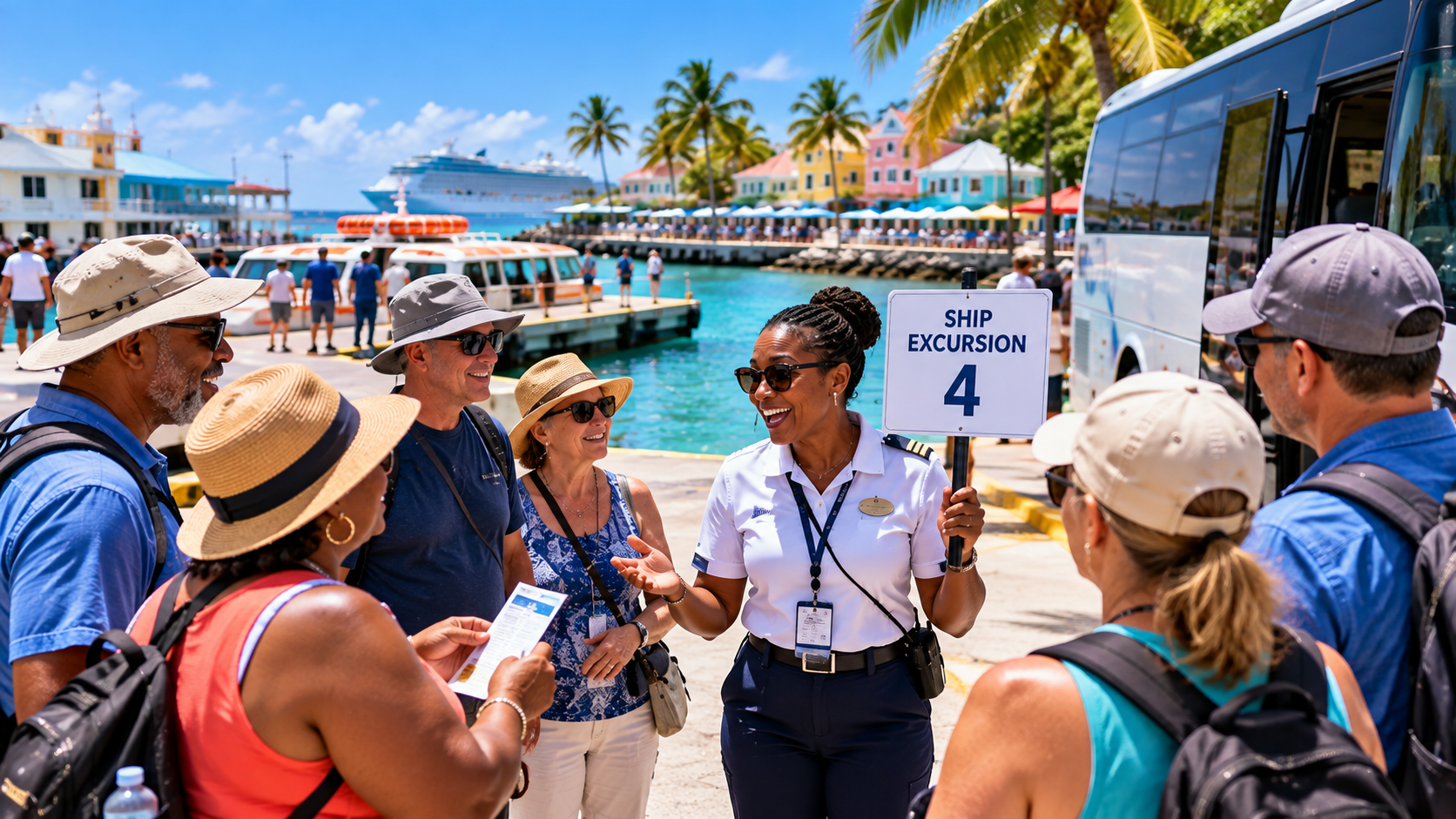
Tendering involves transferring from a large vessel to a smaller one, often with steps, changing heights, and movement between the boats.
Depending on the ship, tender, port facilities, and sea conditions, passengers using wheelchairs or mobility scooters may face restrictions.
Some tender operations can accommodate certain mobility needs. Others cannot.
Even when assistance is normally available, deteriorating sea conditions may make transferring unsafe.
And that's not necessarily a reflection of the crew's willingness to help.
Safety has to come first.
If you have mobility concerns, contact the cruise line's accessibility department before booking and ask about the specific tender ports on your itinerary.
Don't assume that because the cruise ship itself is accessible, every port visit will be.
For additional planning information, Norwegian Cruise Line provides accessibility guidance, including information about tender ports and mobility considerations.
What Happens When the Weather Doesn't Cooperate?
I've never personally experienced a tender port being canceled or significantly delayed.
But after decades working as a harbor pilot, keeping a weather eye out is practically part of my DNA.
And weather can change considerably in just a few hours.
A tender operation that looks perfectly manageable in the morning may become more challenging in the afternoon.
Wind, swell, and vessel movement can affect the safety of transferring passengers.
Sometimes tender operations are delayed. Sometimes they're suspended. Occasionally, a port visit is canceled altogether.
The cruise line and the people managing the operation have to make those decisions based on conditions, not on how badly someone wants to visit the beach.
If you've booked a cruise-line excursion, the cruise line will generally handle cancellation arrangements under its policies.
If you've booked independently, the operator's cancellation policy becomes especially important.
Before paying for an independent excursion at a tender port, find out what happens if the ship cannot get passengers ashore.
And don't assume that because conditions look good when you leave the ship, they'll remain that way all day.
Don't Miss the Last Tender!
This is one deadline you really don't want to misunderstand.
Your itinerary might say the ship departs at 5:00 PM.
That doesn't mean you can stroll down to the tender pier at 4:55 and expect a ride.
The last tender from shore will have its own scheduled departure time.
That time should be communicated by the ship, and it's your responsibility to know it.
Also confirm where the return tender departs. Don't automatically assume it's the same location where you arrived.
And pay attention to whether the ship is using ship time or local time.
The ship will communicate its operating plan, and the crew wants passengers to return safely and on schedule.
They aren't looking for opportunities to leave people behind.
But they also can't operate indefinitely because someone decided to squeeze in one last cocktail or souvenir stop.
Personally, I'm punctual by nature.
And despite having spent a good portion of my life around ships and harbors, I have absolutely no ambition to enjoy my fifteen minutes of fame as the passenger sprinting down the pier while a cruise ship sails away.
YouTube has enough of those videos already.
My recommendation? Get back to the tender landing comfortably ahead of the deadline.
I'd much rather spend an extra twenty minutes enjoying the harbor than twenty minutes wondering whether I've missed the boat.
The Curated Upgrades Take
Tender ports aren't something to worry about.
They're simply another part of cruising that deserves a little planning.
Your cruise line will establish the expected tender arrangements and communicate how passengers should go ashore and return.
Your job is to pay attention to those instructions.
Before booking an independent excursion, consider how much time you realistically have ashore, whether the operator understands tendering, and what happens if the schedule changes.
If you have mobility concerns, ask the cruise line about accessibility before your trip.
And if you aren't completely sure about something?
Ask Guest Services.
They're there to help, and their information is considerably more relevant than a Facebook answer from someone who sailed a different ship, to a different port, several years ago.
This is another example of why we encourage travelers to Ask Better Questions. Knowing whom to ask can be just as important as knowing what to ask.
Remember:
Your itinerary tells you when the ship arrives. It doesn't necessarily tell you when you will.
A little preparation can make the difference between a relaxed day ashore and a stressful one.
Travel Smarter. See More.