

When Your Uber, Lyft or Taxi Ride Goes Wrong: What Can You Do?
Your ride doesn't show. The driver or vehicle doesn't match. Something feels wrong during the trip. Or the fare isn't what you expected. You may not have a neat passenger bill of rights, but you still have options.
Airline passengers have regulations that can create specific rights when certain things go wrong.
Uber, Lyft and taxis aren't nearly that tidy.
Your options may depend on the rideshare platform's policies, the taxi company's rules, local or state regulations and sometimes your payment method.
So this isn't really a “What am I legally entitled to?” article.
It's a:
“My ride just went sideways. What do I do now?” guide.
And in many situations, the first priority is remarkably simple:
Fix the transportation problem first. Sort out the $8 argument later.
Your Ride Isn't Coming
Your app said five minutes.
Then seven.
Then ten.
The little car icon seems to be exploring neighborhoods that have absolutely nothing to do with picking you up.
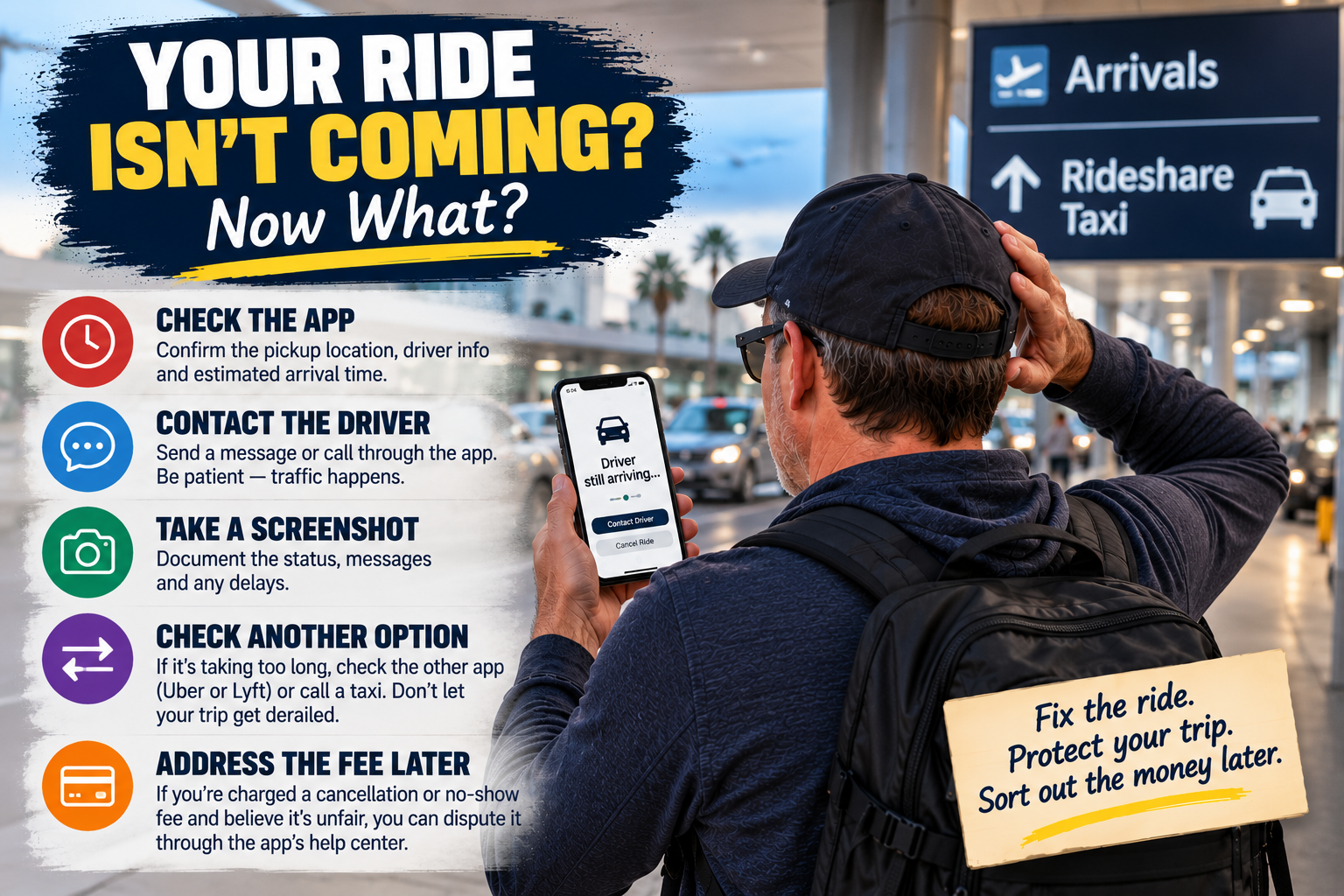
Start by checking the basics.
Make sure you're standing at the correct pickup point, particularly at airports, hotels, stadiums and other places with designated rideshare zones.
Check the driver's location and estimated arrival time.
Send a message or call through the app if appropriate.
Then decide how long you're willing to wait.
This is where I have very little brand loyalty.
I've used Uber plenty of times. I've never actually taken a Lyft ride. But I still compare them.
On one occasion, I wanted a ride home so Gina could keep the car. Lyft didn't have anything useful available in the area. Uber did.
We ultimately changed plans and drove home together, but the lesson stuck:
You're trying to get from A to B. You're not joining a fan club.
If Uber isn't working, check Lyft.
If Lyft isn't working, check Uber.
If neither works, look for a taxi or another transportation option.
I've also used Uber to and from Las Vegas airport late at night without any difficulty. But Vegas is Vegas. Plenty of cars at one airport at 11 p.m. doesn't mean you'll have the same experience somewhere else.
Sometimes the best solution to a rideshare problem is simply another ride.
But What About the Cancellation Fee?
This is where screenshots become useful.
Both Uber and Lyft can charge cancellation or no-show fees under certain circumstances, but their rules aren't identical and can vary by ride type and location.
Uber says cancellation fees may apply after a driver has accepted your request or when a driver cancels after waiting at the pickup location. Uber also provides a process for riders who believe they were charged incorrectly.
Lyft likewise has cancellation and no-show rules and allows riders to dispute a charge through their ride history in the app.
That's why, when the pickup is unraveling, I'll take a screenshot.
Where was the driver?
What did the app say?
Did you message them?
How long had you been waiting?
If you decide another ride is the better solution, don't let a relatively small potential fee hold the rest of your trip hostage.
Get moving.
Then, if you're charged and believe the fee was incorrect, use the platform's review process and the documentation you saved.
The Driver or Vehicle Doesn't Match the App
This one is easy.
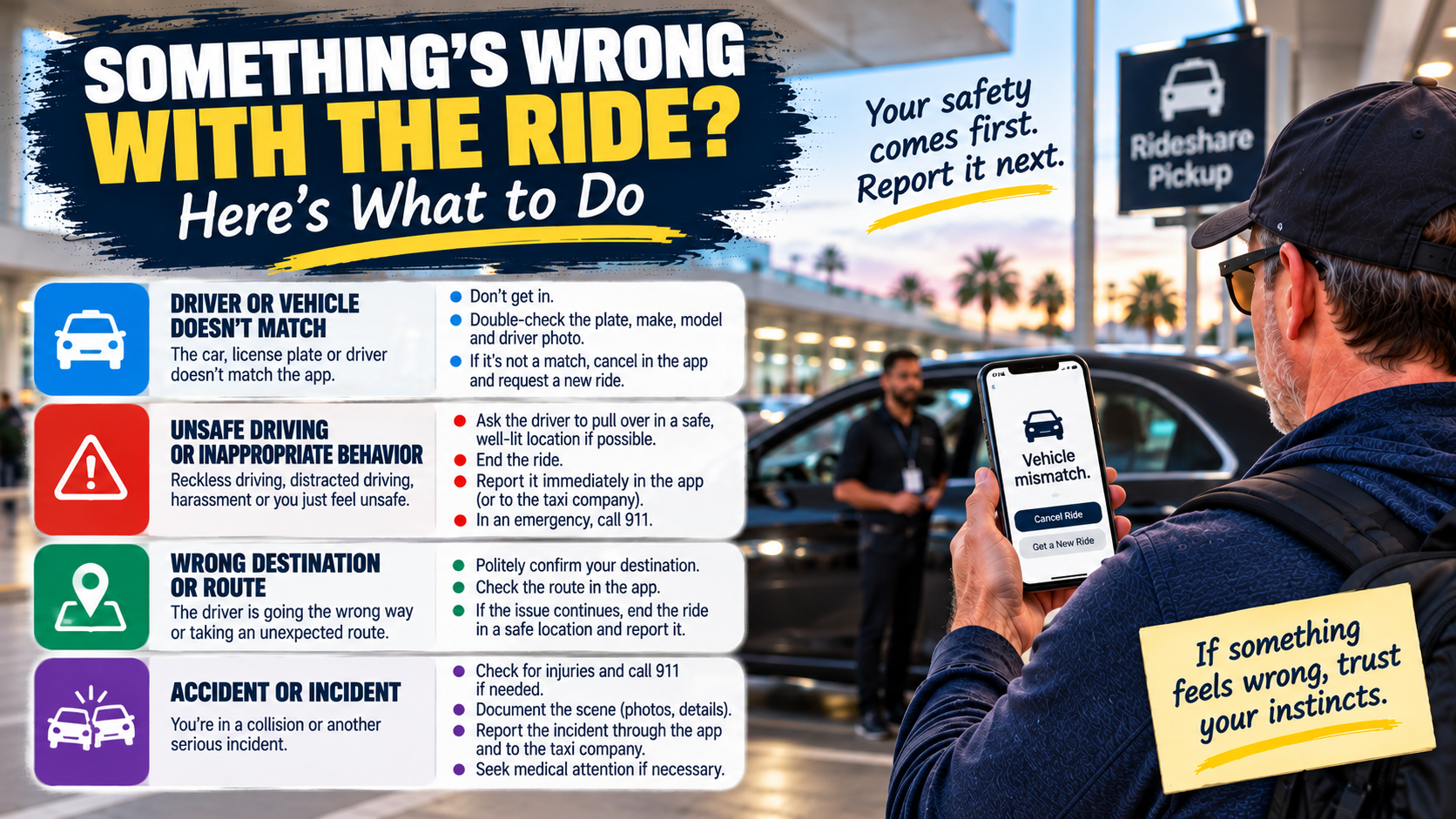
Don't get in.
Uber tells riders to match the license plate, vehicle make and model and driver photo against what's shown in the app before getting into the vehicle. Uber also provides a reporting process when the driver or vehicle doesn't match.
Lyft similarly tells riders to cancel and report the issue when the arriving vehicle differs from the one shown in the app.
A license plate that's off by one digit isn't something to shrug off because you're tired and just want to get to the hotel.
Check the car.
Check the plate.
Check the driver.
Then get in.
A traditional taxi is different because there isn't necessarily an app profile to compare. If something becomes an issue, note whatever identifying information is available, such as the taxi company, vehicle or cab number, driver's identifying information and your receipt.
That information can become very useful later.
Something Feels Wrong During the Ride
Maybe the driving is reckless.
Maybe the driver is behaving inappropriately.
Maybe you're headed somewhere that doesn't resemble the route to your destination.
Or perhaps there's an accident.
This isn't the time to worry about getting a refund.
Your safety comes first.
If you feel unsafe and can safely end the ride in a well-lit, populated location, do so.
If it's simply a route issue, confirm the destination and look at the route in your app. There may be a perfectly reasonable explanation, such as traffic, construction or a road closure.
But if the problem continues, address it.
For a rideshare, report the incident through the platform. For a taxi, that may mean the taxi company or the local agency that regulates taxis.
And if it's an actual emergency, call 911.
The Driver Wants You to Cancel
Don't automatically hit the button because the driver asks you to.
First understand why you're being asked to cancel and what that cancellation will do.
Both Uber and Lyft have rules determining when cancellation fees may apply. Those rules can depend on timing, ride type and location.
If something seems odd, screenshot the conversation and the trip status.
Then use the platform's support process if you're charged a fee you believe shouldn't apply.
The important part isn't figuring out who can tap Cancel faster.
It's preserving enough information to explain what actually happened.
The Fare Looks Wrong
Unexpected doesn't automatically mean incorrect.
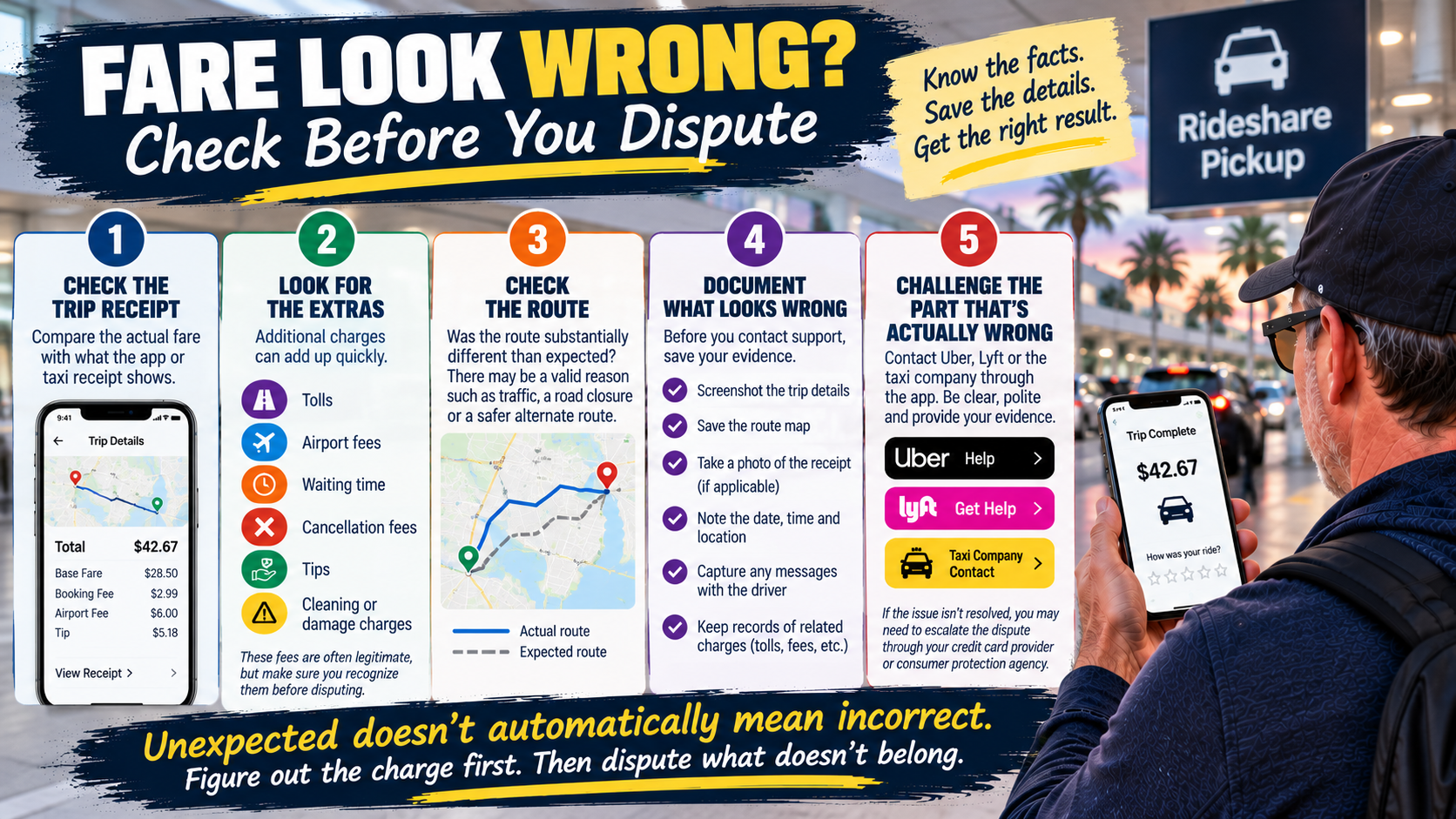
Start with the receipt.
Rideshare fares can include things you may have forgotten about or not noticed initially, such as tolls, airport charges, waiting time, cancellation fees or other adjustments.
The route itself can matter, too.
Uber says its upfront fare is based on the expected trip between the pickup and destination entered by the rider. Significant changes involving time, distance, additional stops or destination changes can result in a different final fare. Uber also provides a fare-review process.
So don't begin with:
“They ripped me off.”
Begin with:
“What exactly am I being charged for?”
Check the receipt.
Check the route.
Check the tolls and fees.
Take screenshots.
Then challenge the part that's actually wrong.
Lyft likewise lets riders dispute ride fares and charges through the app.
If the platform or taxi company resolves it, great.
If you have a legitimate billing problem that remains unresolved after working through the provider's process, then you can consider escalating through your card issuer or the appropriate consumer-protection agency.
You Left Something in the Car
That sinking feeling usually arrives about thirty seconds after the taillights disappear.
Phone.
Wallet.
Bag.
Jacket.
Whatever it is, act quickly.
Uber's current lost-item process lets riders contact the driver to try to arrange a return. Uber notes that it cannot guarantee recovery and that a return fee may apply when an item is returned.
Lyft also lets riders contact the driver through its lost-and-found process. Its current U.S. help page says a $20 return fee is applied when the driver returns the item.
With a taxi, you may not have an app neatly connecting you back to the driver.
That's where the boring little receipt suddenly becomes a treasure map.
Keep it until you're sure you haven't left your phone, glasses, camera or half your vacation in the back seat.
What If It's a Taxi?
Most of the same problem-solving principles still apply.
The difference is where you go for help.
With Uber or Lyft, you generally start inside the platform.
With a taxi, you may start with the driver or taxi company. If that doesn't resolve the problem, regulation varies significantly by location. Depending on where you are, taxis may be overseen by a city, county, airport authority, transportation commission or another local agency.
That's why I wouldn't promise a universal set of “taxi passenger rights.”
There isn't one rulebook that covers every cab everywhere.
Instead:
Get a receipt.
Note the cab number or other identifying information.
Document what happened.
Contact the taxi company first when appropriate.
Find the local regulator if the problem warrants escalation.
Different system.
Same basic strategy.
The Curated Verdict
🟢 GREEN: FIX THE RIDE FIRST
If another Uber, Lyft or taxi can get your trip moving, don't let a small billing dispute strand you unnecessarily. Save the evidence and deal with the money afterward.
🟡 YELLOW: UNEXPECTED DOESN'T MEAN INCORRECT
A higher fare, unusual route or added charge deserves a closer look before it becomes a dispute. Figure out what happened first.
🔴 RED: DRIVER OR VEHICLE DOESN'T MATCH? DON'T GET IN
Verify the vehicle, plate and driver information before entering a rideshare. If something doesn't match, use another ride and report the problem.
Solve the Problem in Front of You
One theme keeps appearing throughout our Know Your Rights series:
You don't need to begin every travel problem by demanding compensation.
Sometimes you need information.
Sometimes you need documentation.
Sometimes you need customer service.
And sometimes you just need another car.
That's especially true with rideshares.
If the Uber isn't coming but Lyft can be there in six minutes, check Lyft.
If neither app has anything useful but three taxis are sitting outside the terminal, perhaps the answer is already parked at the curb.
I'm loyal to my checkbook.
I'm even more loyal to getting where I'm going.
Document what happened. Protect yourself. Use the appropriate support process when something genuinely went wrong.
But don't let a solvable transportation problem become the centerpiece of your vacation.
Fix the ride. Protect the trip. Sort out the money later.
Platform policies, fees and rideshare procedures change and may vary by market, ride type and location. Taxi regulations are generally local. This article reflects information reviewed in September 2026. Check the current rules for the service and location you're using.