

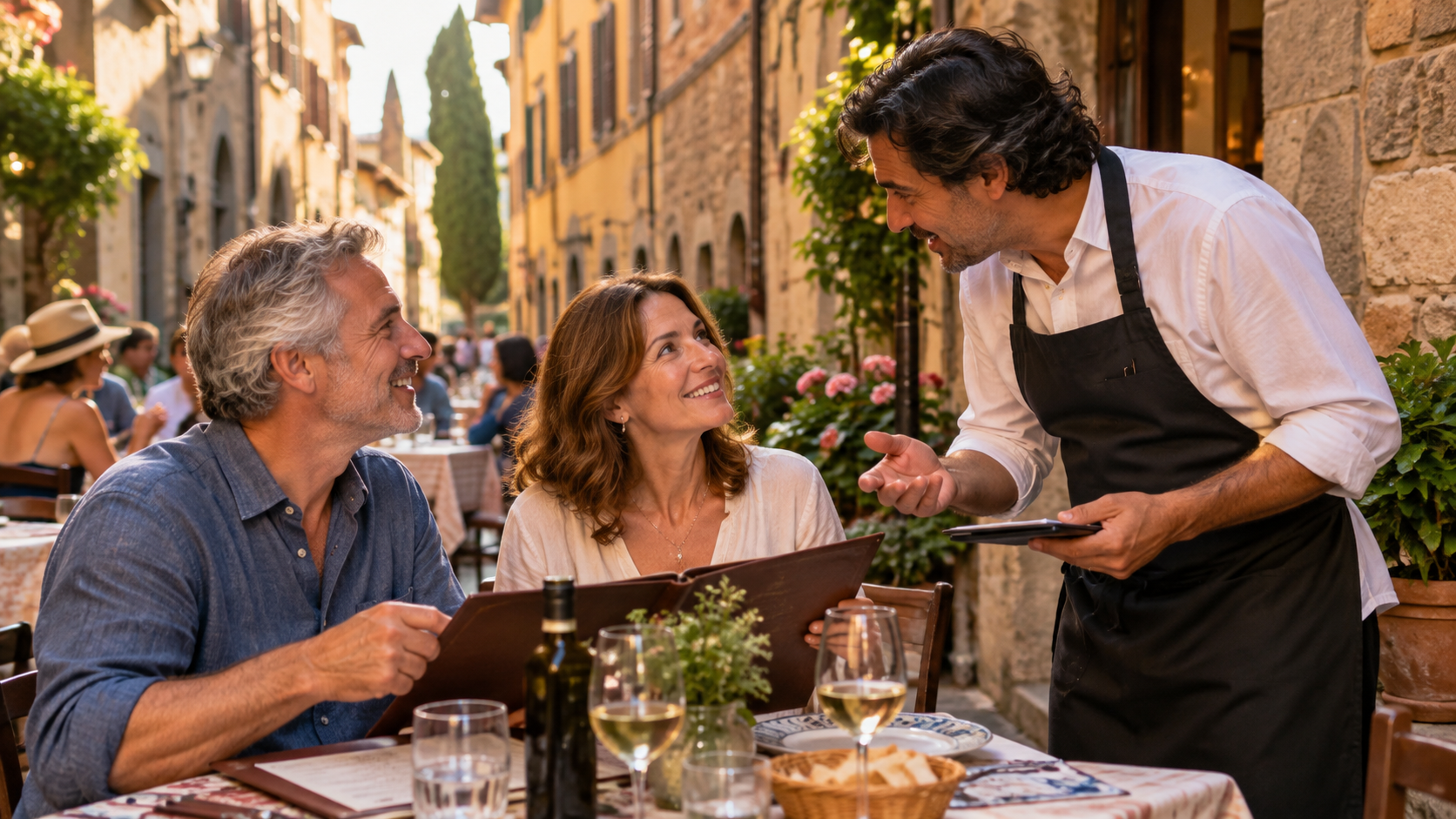
When Dining Out, Your Server Is Not Your Servant
Good service is part of a great travel experience. So is being a good guest.
Travel has a wonderful way of putting us in situations where we're dependent on people we've never met.
The server who helps us navigate an unfamiliar menu. The hotel receptionist who explains how the local transportation system works. The bartender who recommends something we've never tried. The tour guide who brings a place to life in a way no guidebook ever could.
These people can make an ordinary experience memorable.
And yet, every so often, you'll encounter a traveler who seems to believe that purchasing a meal, booking a hotel room, or paying for a tour comes with ownership rights over the person providing the service.
It doesn't.
There's nothing wrong with expecting good service. You've paid for something, and you should receive it.
But there's a considerable difference between being a customer and behaving like someone's superior.
Your server is not your servant. And neither is anyone else who helps make your travels possible.
You're Paying for Service, Not Superiority
A restaurant is a business. So is a hotel, a tour company, or a transportation service.
When you pay for something, you're entitled to receive what was promised.
Your meal should be prepared correctly. Your hotel room should be clean. Your driver should take you where you've arranged to go. Your tour guide should deliver the experience you booked.
Those are reasonable expectations.
What you're not purchasing is the right to snap your fingers at someone, talk down to them, or treat them as though their sole purpose in life is to satisfy your every whim.
We've all seen the behavior, even if we can't remember the precise circumstances.
The guest who becomes increasingly dramatic because their water glass has been empty for ninety seconds.
The person who speaks to a hotel receptionist as though they personally designed the reservation system.
Or the traveler who seems convinced that saying, "Do you know how much I'm paying to stay here?" is going to improve everyone's afternoon.
Here's the thing.
The amount you're spending doesn't determine how much respect another person deserves.
Good manners aren't an upgrade reserved for luxury travelers. They're included in every fare class.
Good Service Doesn't Look the Same Everywhere
One of the most interesting things about international travel is discovering that other countries don't necessarily do things the way we do at home.
That includes service.
In many American restaurants, attentive service often means frequent check-ins, drink refills, and a server who introduces themselves by name.
In parts of Europe, you may experience something very different.
Your server takes your order, brings your meal, and then leaves you alone to enjoy it.
Nobody asks how your first three bites are going. Nobody appears with the check the moment you put down your fork.
You might have to signal when you're ready to pay.
To someone accustomed to American restaurant service, that can initially feel inattentive.
But in that setting, allowing guests to linger without interruption may be considered the more courteous approach.
Neither style is automatically better.
They're simply different expectations.
The same applies to tipping.
In the United States, tipping is a significant part of restaurant compensation in many establishments. In other countries, service may already be included, a smaller gratuity may be customary, or tipping may not be expected at all.
And even within a country, expectations can vary by region, establishment, and type of service.
The customs you grew up with aren't necessarily the customs everyone else grew up with.
That's part of what makes travel interesting.

Five Minutes of Homework Can Save a Lot of Awkwardness
Here's one of the easiest travel preparations you can make.
Before visiting somewhere unfamiliar, open Google and search:
"Local customs and etiquette in [country or city]"
Then try something more specific:
"Restaurant etiquette in France"
"Tipping customs in Japan"
"How to ask for the bill in Italy"
"Hotel tipping etiquette in Mexico"
You don't need to memorize a cultural encyclopedia.
Just get a basic understanding of how things work.
Should you wait to be seated? Is tipping expected? Is it customary to ask for the bill? Are there particular gestures or expressions that might be misunderstood?
And while you're researching local customs, remember that the quality of the information you find often depends on the questions you ask.
Searching for "restaurant etiquette in France" will probably get you further than simply asking, "What should I know about France?"
It's the same principle we explore in Want Better Travel Advice? Ask a Better Travel Question. A little specificity can make a big difference in the advice you receive.
Remember that a Google search is a starting point, not the final authority. Customs evolve, and advice from locals or your hotel can be especially helpful.
You don't have to become an expert in another country's customs before you arrive.
But taking five minutes to learn how not to be a jerk is a pretty reasonable investment in your vacation.
A Little Courtesy Can Open Doors
Some of the best travel experiences begin with ordinary conversations.
Ask a bartender what they enjoy drinking. Ask a server about a local dish you've never encountered. Ask your driver what they like about their city.
You might learn something interesting.
You might discover a restaurant that never appeared in your search results. Hear about a local festival. Find a neighborhood worth exploring.
Or you might simply have a pleasant conversation with someone whose life is very different from yours.
That's worthwhile, too.
Of course, there's an important distinction here.
The person serving you is working.
They're not obligated to entertain you, share their personal history, or become your unofficial tour guide.
If the restaurant is packed and your server is juggling twelve tables, that's probably not the moment to ask for a detailed history of the neighborhood.
Read the room.
A friendly question is an invitation to conversation, not a demand for one.
And please don't be courteous because you think it might earn you a room upgrade, a free drink, or a better table.
Be courteous because you're dealing with another human being.
Any extra kindness you receive in return is a bonus, not the objective.
Good Service Is a Reasonable Expectation
Now, before anyone thinks I'm suggesting travelers should smile politely while being served cold soup and charged for three bottles of wine they never ordered, let's be clear.
You have every right to speak up when something isn't right.
If your meal arrives incorrectly, tell your server.
If your hotel room hasn't been cleaned, contact reception.
If a tour doesn't provide what was advertised, ask for an explanation or appropriate resolution.
And if someone is genuinely rude or dismissive toward you, you're not obligated to pretend everything is wonderful.
Being respectful doesn't mean being a pushover.
But there's a difference between addressing a problem and attacking a person.
Consider two ways to handle an incorrect restaurant order.
You can calmly explain that you ordered the fish rather than the chicken and ask whether it can be corrected.
Or you can announce the mistake to the entire dining room, question the server's intelligence, and demand to see a manager before anyone has had a chance to fix it.
Both approaches communicate that something went wrong.
Only one gives the person an opportunity to make it right without being humiliated.
And sometimes the person you're speaking to isn't responsible for the problem.
Your hotel receptionist probably didn't cause the airline cancellation that delayed your arrival.
Your restaurant server may not have prepared your meal.
Your tour guide probably didn't arrange the rain.
You can hold a business accountable without treating its employees as personal targets.
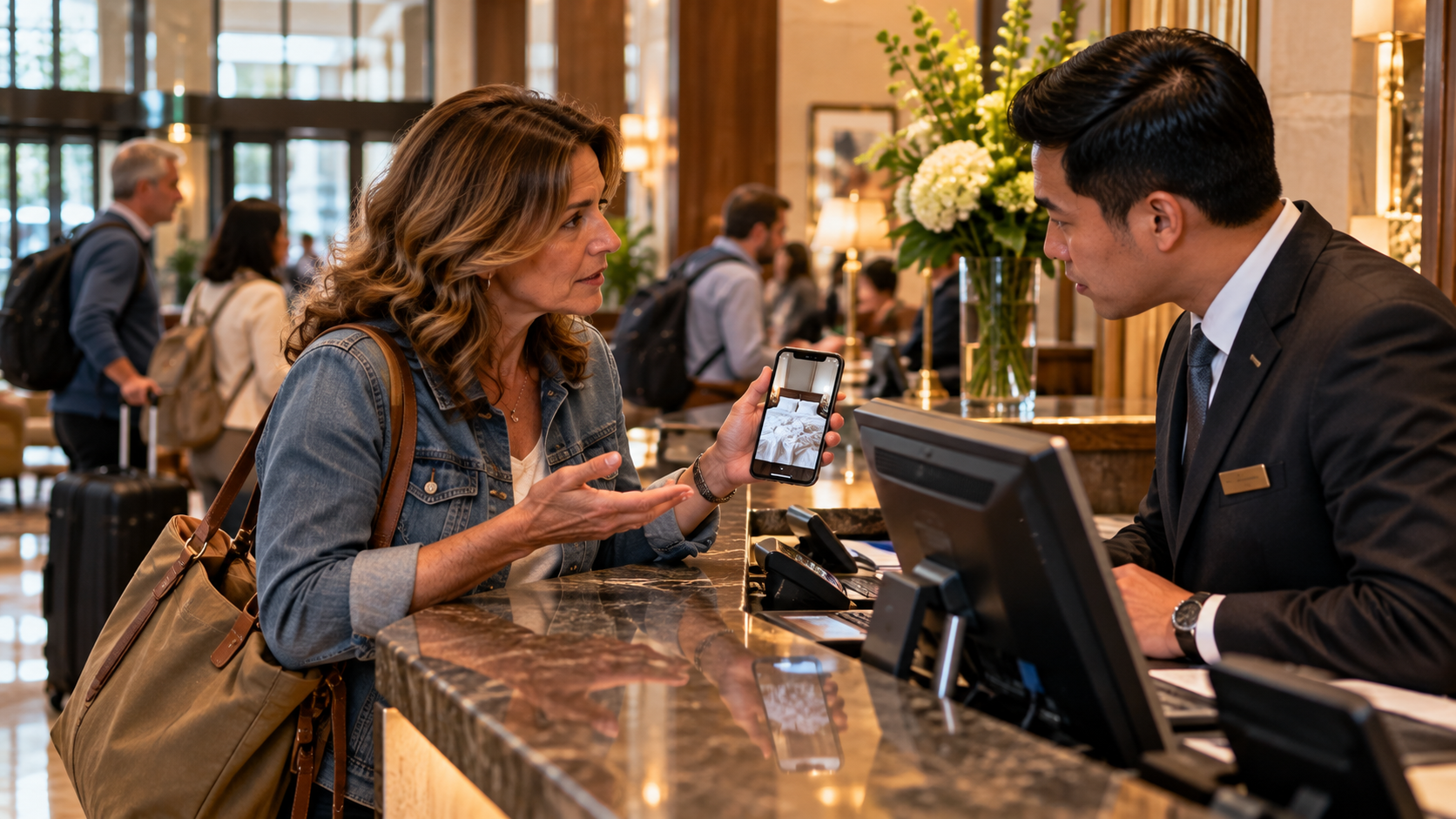
The People You Don't Always See
Travel depends on far more people than the ones who greet us.
There's the housekeeper who prepares your room, the kitchen staff who make your meal, the people loading luggage, maintaining vehicles, cleaning public areas, and doing countless other jobs that rarely appear in vacation photographs.
Their work matters.
A clean hotel room doesn't magically reset itself between guests.
Breakfast doesn't appear because someone waved a croissant-shaped wand.
And when your luggage arrives safely at your destination, quite a few people have contributed to that result.
We don't need to turn every interaction into a grand ceremony of gratitude.
A simple thank-you, patience when something goes wrong, and consideration for the people doing the work go a long way.
Where gratuities are customary, learn what's appropriate and budget for them. Where they aren't, respect that custom as well.
The point isn't to perform appreciation.
It's to recognize that the people behind the scenes are just as much a part of the travel experience as the people standing in front of us.
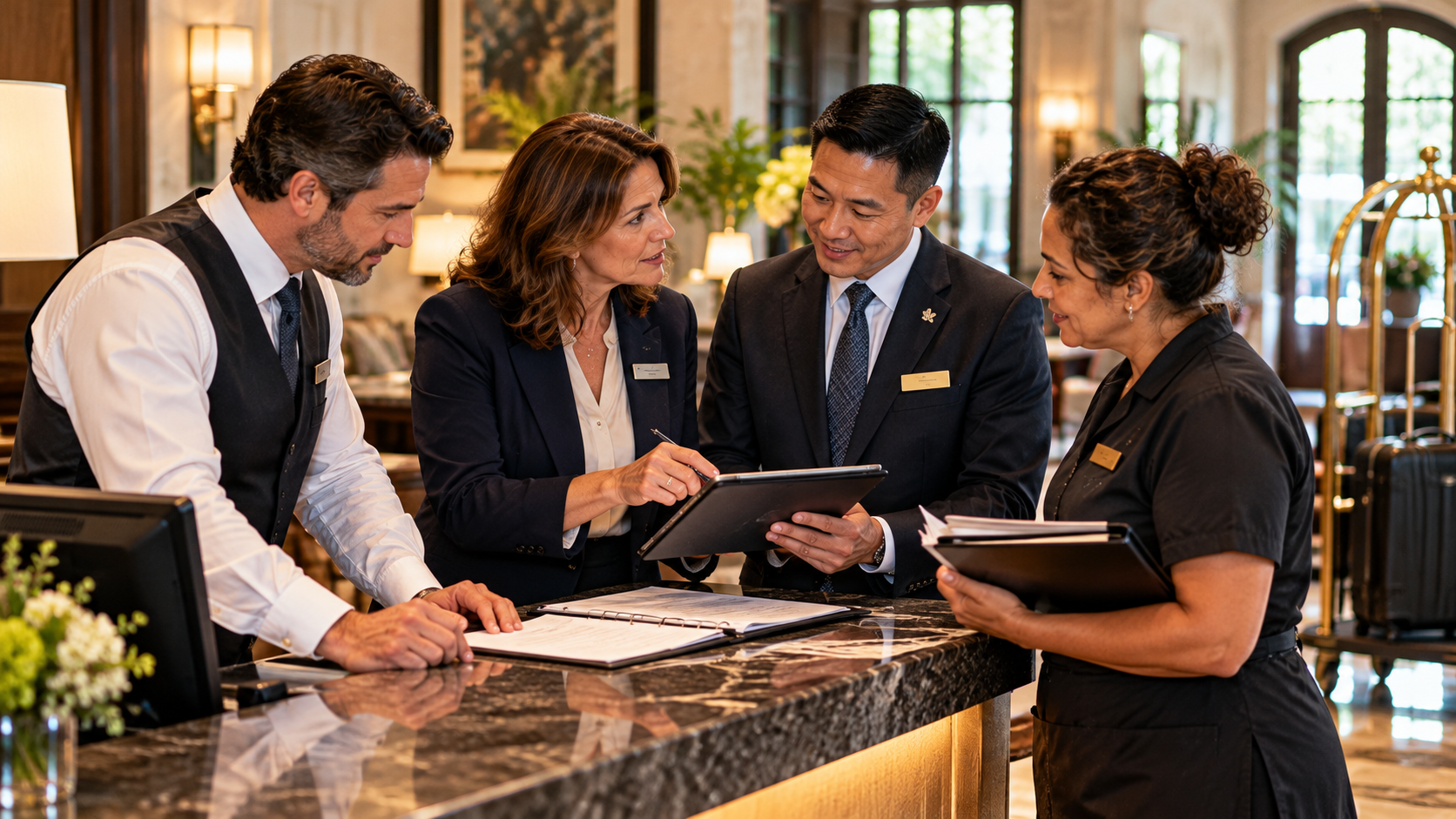
Remember, You're Visiting Their Home
There's another dimension to this when we travel internationally.
We are guests in someone else's country.
That doesn't mean we have to agree with every custom or pretend every experience is perfect.
But it does mean approaching differences with a little humility.
A different language isn't a personal inconvenience.
An unfamiliar dining custom isn't evidence that the locals are doing something wrong.
And a slower pace of service doesn't necessarily mean someone isn't working hard.
Sometimes we need to adjust our expectations rather than demand that the destination adjust to us.
If we travel only to find everything exactly as it is at home, we're missing a fairly important part of the experience.
The differences are often why we went in the first place.
The Experience You Create Goes Both Ways
At Curated Upgrades, we spend a lot of time talking about better travel decisions.
Choosing the right flight. Finding the right hotel. Knowing when to spend more and when to save. Making an itinerary that actually works for the people taking the trip.
But not every upgrade involves a reservation or a purchase.
Sometimes it's how you approach the people you meet.
A little patience when a restaurant is busy.
A genuine thank-you to the person cleaning your room.
A friendly conversation with a driver.
A willingness to learn that the way things work at home isn't the only way they can work.
None of that guarantees perfect service.
And it certainly doesn't mean you should accept poor treatment.
But it can change the tone of an interaction, open the door to a genuine connection, and make an unfamiliar place feel a little more welcoming.
You may not remember every meal you ate or every hotel you stayed in.
But you'll remember some of the people you met along the way.
And some of them may remember you, too.