

Build Your Own Travel Library: Save the Ideas, Remember the Lessons
The best travel ideas don't always arrive when you're planning a trip. And some of the most valuable things you bring home aren't souvenirs.
The Trip You Haven't Planned Yet
Maybe you see a photograph of a little coastal town you've never heard of. Someone in a travel group mentions a scenic train ride. A friend returns from Ireland with stories about a village you wouldn't have discovered on your own.
Or you're chatting with a waitress from Kazakhstan and suddenly find yourself wondering what it would be like to visit her country.
You aren't planning a trip. You might not even have vacation time available.
But something catches your attention.
Wouldn't it be nice to remember that idea when the opportunity comes along?
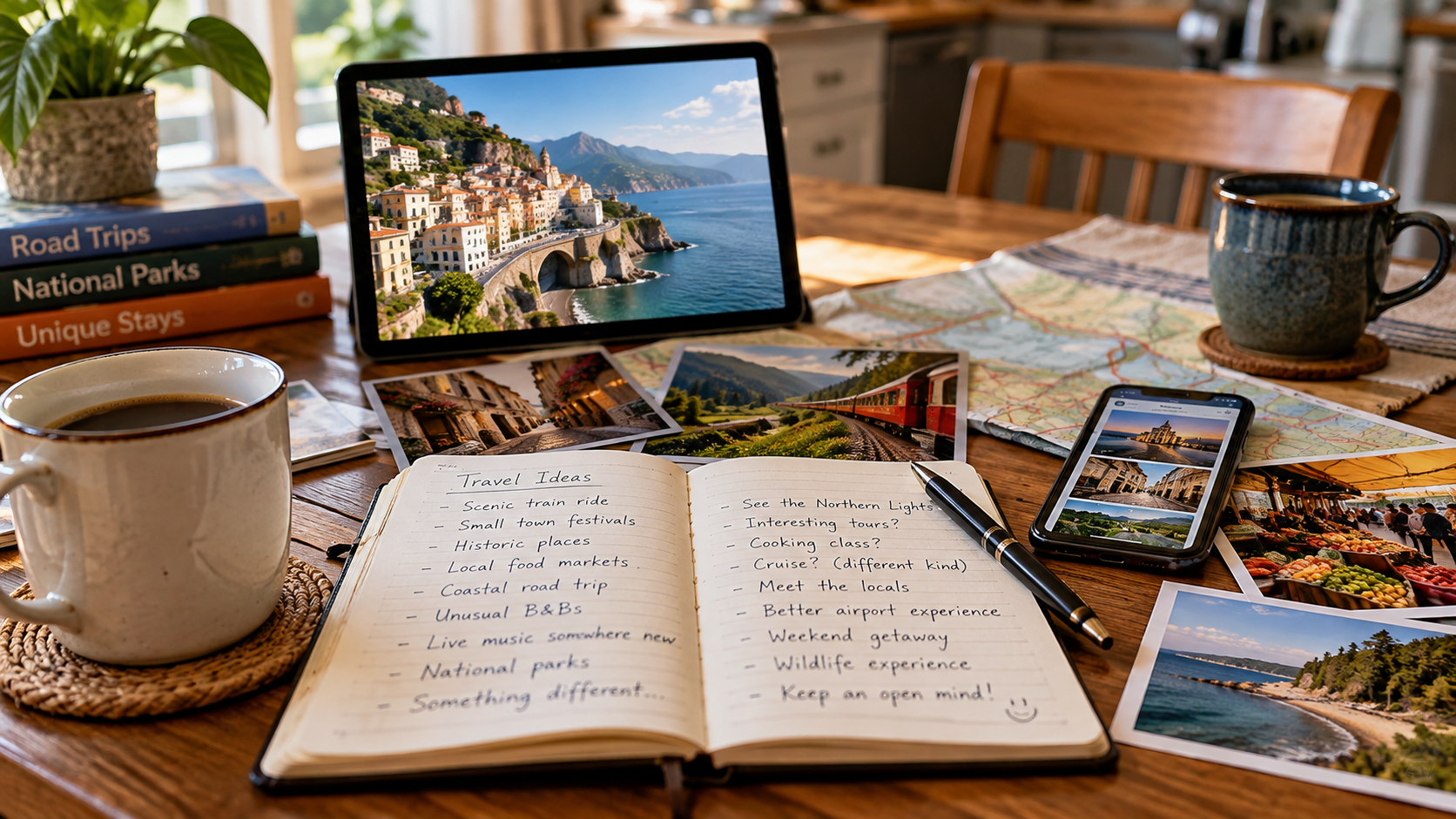
That's the beginning of a travel library.
Not a bucket list of 100 places you must visit. Not a complicated database requiring hours of maintenance.
Just a collection of possibilities, experiences, and lessons that might make your next adventure better.
A travel library isn't a list of places you have to visit. It's a collection of possibilities you don't want to forget.
The Ideas Are Everywhere
My wife and I enjoy traveling, and we're usually thinking about another adventure long before the next one begins.
Some trips are already on the calendar. Others are still possibilities.
We've talked about seeing the Northern Lights, visiting Japan, exploring Machu Picchu, and perhaps traveling to Cuba someday. A Virgin Voyages advertisement caught our attention because the experience sounded interesting.
Will we do all those things?
Who knows?
But they're worth remembering.
And the collection isn't limited to major vacations.
My wife saves screenshots of restaurants that catch her attention. When we're planning a date night, we often look through those ideas for somewhere new to try.
The same approach works when traveling. A restaurant recommendation, an interesting little town, or an unusual attraction might not fit today's plans but could be perfect two years from now.
The point isn't to collect everything.
It's to remember the possibilities that interest you.
Save It Before You Forget It
There's no single correct way to build a travel library.
Save screenshots, bookmark websites, keep notes, collect brochures, or maintain a folder of places you'd like to visit.
If you enjoy spreadsheets, make a spreadsheet.
If you don't, please don't let anyone convince you that you need one.
The important part is being able to find the idea again.
A restaurant name without a location might not be useful six months later. A photograph of a beautiful hotel isn't much help if you can't remember where it was.
Sometimes a few extra words make all the difference.
Small restaurant in Charlotte. Nepalese-Indian. Great reviews.
Historic inn in Scotland. Interesting location. Research before our trip.
Scenic train ride. Friend recommended it. Look into it when planning that region.
You don't need seventeen categories or an elaborate rating system.
You're leaving yourself a breadcrumb.
And sometimes those breadcrumbs lead somewhere wonderful.
Your Next Trip Might Begin With an Old Idea
Imagine you've saved a recommendation for a restaurant in a city you don't expect to visit anytime soon.
Two years later, you're passing through on a road trip.
Suddenly, that recommendation becomes useful.
Or perhaps you've heard about a small town with a beautiful historic district. You save the name and later discover it's only a short detour from a trip you're planning.
That's when a travel library starts earning its keep.
Instead of beginning every trip with a blank page, you have possibilities waiting.
Sometimes a saved idea even changes the trip itself.
A destination becomes worth an extra night. A scenic road replaces the interstate. A concert, festival, or unusual lodging experience influences when you travel.
You aren't obligated to build your vacation around something you saved.
But it's nice to have the option.
Once those possibilities start taking shape, Map First, Book Second can help you see how they fit together before committing to reservations.
The Other Half of the Library Comes Home With You
Collecting ideas is only part of the story.
The other half comes from what you've experienced.
Every trip teaches you something, sometimes through careful planning, sometimes through common sense, and occasionally through an expensive mistake.
We've learned that airport lounges can make a long travel day considerably more pleasant.
We've discovered that business class on an overnight flight can be worth the additional expense when the budget supports it.
We've also learned there are certain economy seats I'd rather avoid altogether.
The same goes for concerts and sporting events. Some seats are so far from the action that I'd rather watch from home.
Those aren't universal travel rules.
They're preferences we've developed through experience.
We generally enjoy having a rental car because it gives us freedom to explore, change plans, and discover places along the way.
But would I rent a car for several days in Manhattan?
Probably not.
Different trip. Different circumstances. Different answer.
And that brings us to a familiar Curated Upgrades question:
Is it worth it?
It depends.

Recommendations Are Starting Points, Not Instructions
There's no shortage of people willing to tell you where to go, what to book, and what you absolutely must experience.
Travel groups, review sites, influencers, friends, and relatives can all provide useful information.
But their priorities might be completely different from yours.
Someone might consider a luxury resort the perfect vacation. You might prefer a small guesthouse and a rental car. One traveler wants every minute scheduled. Another wants the freedom to turn down an interesting road simply to see where it goes.
Neither approach needs approval from the other.
Reviews can help identify potential problems. Trusted recommendations can introduce you to places you'd never have considered.
But they shouldn't make every decision for you.
You don't need to ask a hundred strangers whether a hotel, restaurant, airline seat, or attraction is worth your money.
Sometimes you already know what matters to you.
And sometimes the only way to find out is to experience it yourself.
Use other people's experiences to inform your decisions, not make them for you.
It's the same philosophy behind I'm Loyal to My Checkbook. The best value isn't necessarily what someone else considers the best deal. It's what delivers something worthwhile for your money.
That's one of the most valuable things a travel library can teach you.
Remember Why Something Worked
There's a difference between remembering that you liked a place and remembering why you liked it.
We have restaurants we visit repeatedly, including one in Jacksonville where we'll stop just for cake and coffee after dining elsewhere.
We'd return to Red Rocks Amphitheatre for the right concert. We've attended NASCAR races at several tracks because experiencing different venues is part of the fun.
And sometimes the reason for returning has little to do with our own enjoyment.
Years ago, we returned to a ranch we'd previously visited because we wanted my parents to experience it. My mother was living with Alzheimer's, and being around the horses and baby ponies brought her happiness.
Knowing that the place might bring her joy was reason enough to go back.
That's worth remembering.
A travel library isn't just a record of where you've been.
Sometimes it's a reminder of where you might want to take someone else.
The Disappointments Belong There Too
Not every experience earns a return visit.
And that's useful information.
I don't expect perfection. Restaurants have bad nights. Hotels make mistakes. Tours don't always go according to plan.
If a place has consistently excellent reviews or comes recommended by someone whose judgment I trust, I'm willing to consider giving it another chance.
But there's a difference between an occasional mistake and a business that doesn't seem interested in making things right.
A poorly maintained room, disappointing meal, disorganized tour, or lack of accountability can tell you something worth remembering.
I work hard for my money. I'm happy to pay for an experience that delivers, but I'm not interested in repeatedly paying for disappointment.
There are too many other possibilities.
That doesn't mean everyone else will have the same experience.
Your favorite hotel might be one I wouldn't revisit. An airline seat I consider a waste of money might be exactly what you want.
That's fine.
Your travel library should reflect your experiences, your expectations, and your priorities.
Not someone else's.
A Library That Changes Along With You
What you value at 25 might not be what you value at 45, 65, or 75.
Maybe you once considered a hotel room nothing more than a place to sleep. Now you appreciate a comfortable room with a good view.
Perhaps you used to choose the cheapest available flight, but experience has taught you that a better seat or more convenient schedule is sometimes worth the difference.
Or maybe you've discovered that spending less on accommodations leaves more money for experiences that matter to you.
None of those choices is inherently right or wrong.
Your travel library should evolve as you do.
Something that seemed like a must-do ten years ago might no longer interest you. A destination you once overlooked might suddenly become fascinating.
Travel doesn't just introduce us to new places. Sometimes it changes our perspective and what we value. That's a theme we explore further in How Travel Changed the Way I Think.
And something unfamiliar might turn out to be the highlight of your next adventure.
Don't be afraid to change your mind.
That's part of learning.

You Don't Have to See It All
We don't travel expecting to see and do everything a destination offers.
There are always more restaurants, scenic roads, historic places, and interesting little towns than we can fit into one trip.
And that's okay.
I'd rather return home satisfied with the experiences we enjoyed than exhausted from chasing every attraction on somebody else's must-see list.
A great trip leaves us with memories, stories, and usually a few ideas for another adventure.
Sometimes we discover somewhere we'd love to revisit.
Sometimes we find a place we want to recommend to friends.
And sometimes we come home thinking, Next time, let's do that differently.
All of it belongs in the library.
Start With What You Already Have
You probably already have the beginnings of a travel library.
Saved photographs, restaurant screenshots, bookmarked articles, recommendations buried in text messages, or notes from a trip years ago.
You don't have to organize everything this weekend.
Start with a few ideas that still interest you.
Think about experiences you enjoyed and why they were worthwhile.
Remember a few things that didn't work out and what you learned.
And the next time someone mentions an interesting place, save it somewhere you'll find it again.
Over time, you'll build something more useful than a list of destinations.
You'll develop a collection of ideas, experiences, and lessons that reflects how you actually enjoy traveling.
It won't tell you where you must go, what you must spend, or how many countries you need to visit.
And it certainly won't require strangers on the internet to validate every choice.
It will help you recognize opportunities, understand your own priorities, and make decisions with greater confidence.
Save what interests you. Remember what you've learned. Trust your own judgment. And always leave a little room to be surprised.
Because your next great adventure might begin with something you saved three years ago.