

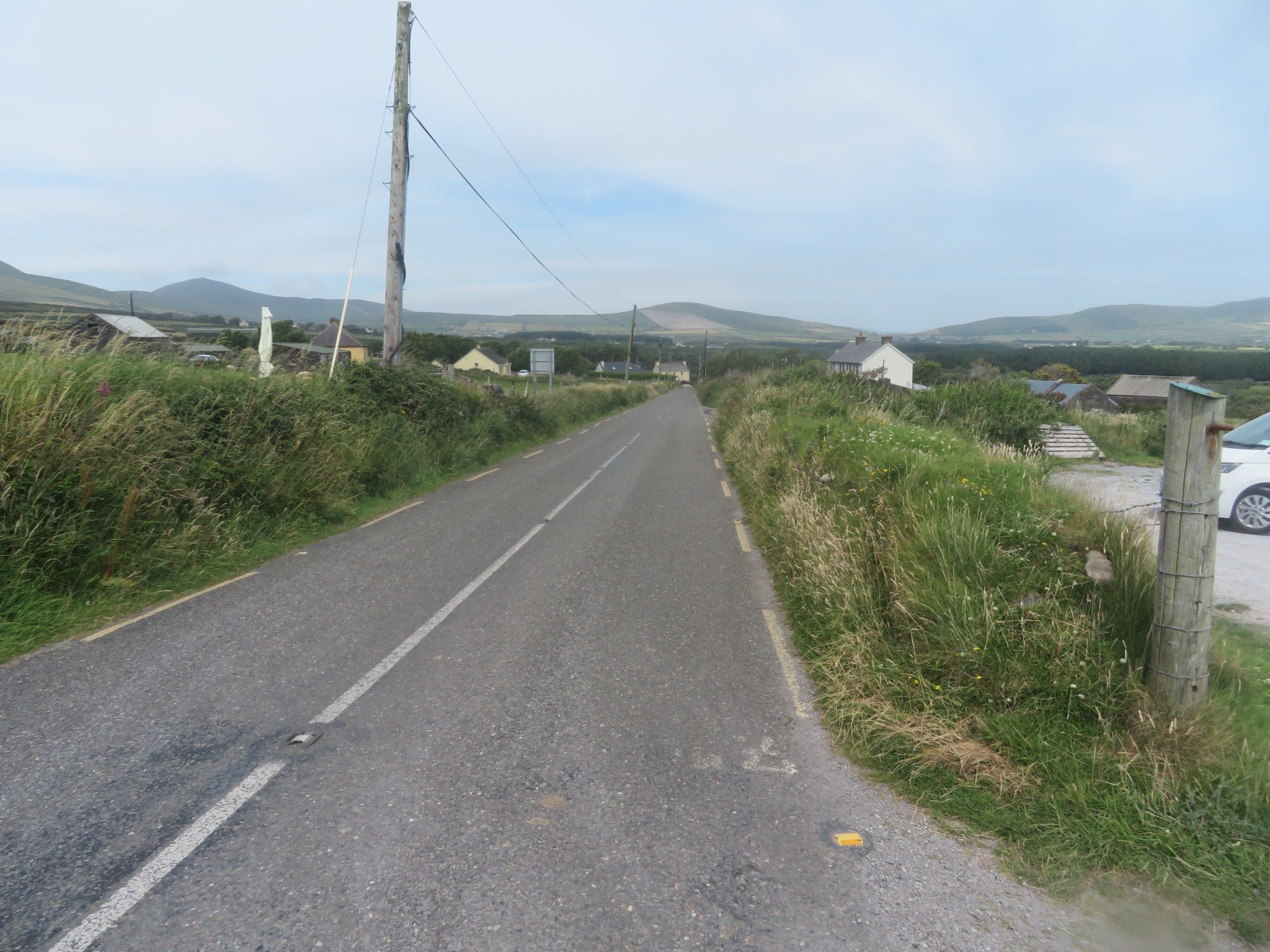
Driving in Ireland: It’s Not as Scary as You’ve Heard
Driving on the left gets most of the attention. We found the bigger adjustment was simply driving somewhere we'd never been before.
Before our two-week road trip through Ireland, we'd heard all the warnings.
Driving on the left. Roundabouts. Narrow roads. Hedgerows. Tiny parking spaces.
And yes, Ireland has all of those things.
But after two weeks behind the wheel, my biggest piece of advice for another American considering an Ireland road trip is pretty simple:
Don't make driving on the left into something bigger than it is.
You're still driving a car.
The steering wheel has moved to the other side, but so has your position on the road. As the driver, you're still sitting toward the center of the roadway rather than suddenly trying to judge everything from the opposite edge of the car.
There is an adjustment period. Turns require more thought. Traffic approaches from directions your American-driving brain isn't accustomed to. And the familiar American right-turn-on-red isn't something you simply carry across the Atlantic. In Ireland, a red light means stop unless an applicable signal permits you to proceed.
But terrifying?
That wasn't our experience.
What required more attention was something I've experienced driving all over the United States and elsewhere:
We were somewhere we'd never been before.
Leaving Dublin Was... Pretty Normal
We rented a manual Renault Clio through My Irish Cousin. Our experience with them was excellent. Communication before the rental was good, we had no problems with the car, and returning it was straightforward.
Then we left Dublin Airport.
And nothing particularly dramatic happened.
We got onto the motorway and headed toward our first lodging.
It felt much like leaving any other major airport in an unfamiliar city. There were lanes to watch, exits to find and signs to read.
One thing did stand out: the motorway seemed remarkably clean compared with many highways we've driven in the United States. We didn't see shoulders scattered with remnants of old tires and previous fender benders.
We didn't encounter any tolls on the motorway route we used leaving Dublin. That's our experience, not a promise that your route will be toll-free.
Once we'd covered the distance we needed to cover that first day, we largely stayed away from motorways for the remainder of the trip.
Not because there was anything wrong with them.
We simply hadn't come to Ireland to make time.
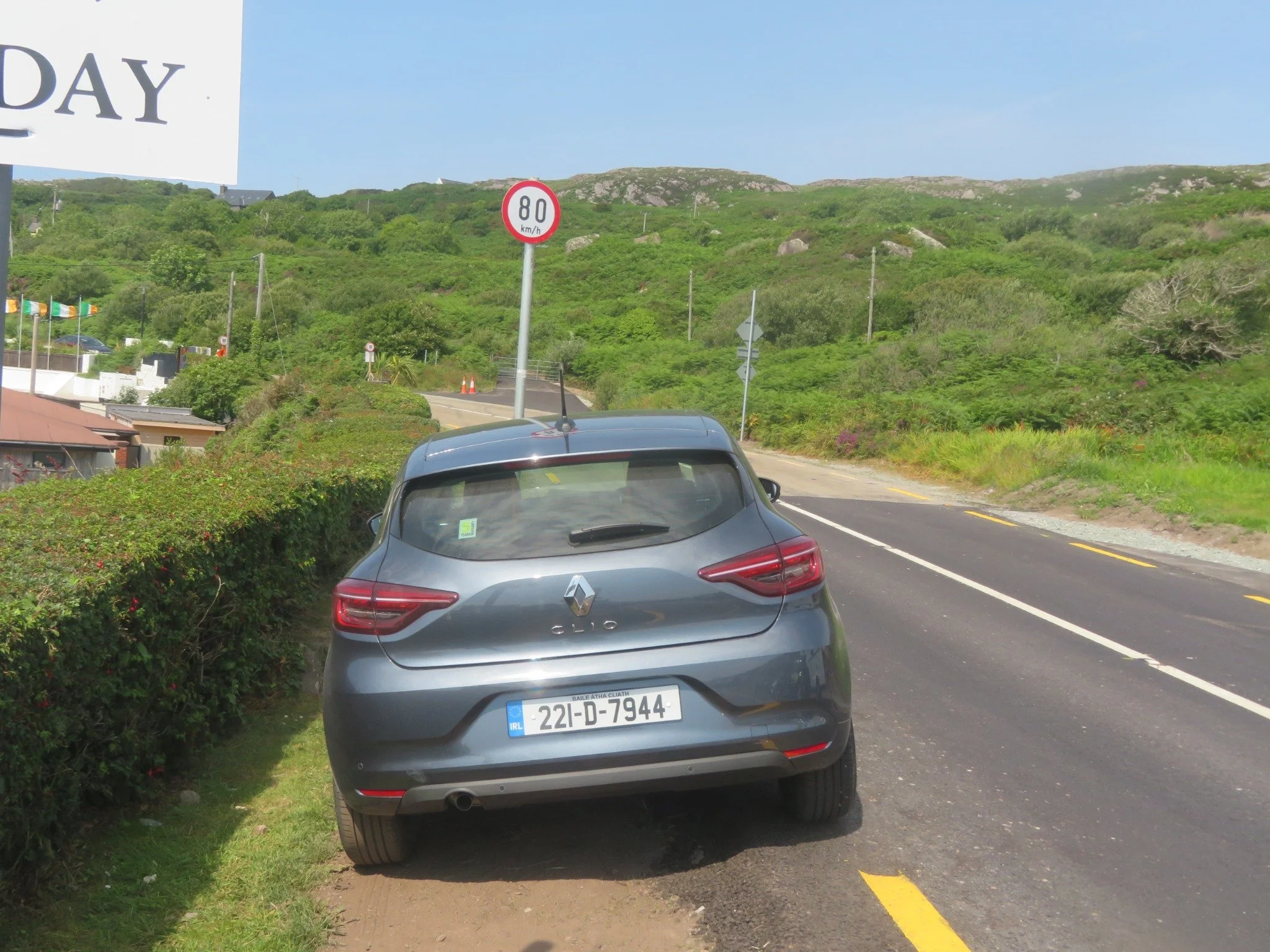
That 80 km/h sign was current when we traveled. Ireland has since reduced the default limit on rural local roads to 60 km/h. Always follow the posted limit.
A Smaller Car Made Sense
At home, I drive a diesel Ram 2500.
I'm rather glad I didn't have it in Ireland.
The secondary roads were generally narrower than what we're accustomed to in the United States. Our rental car was smaller too, and those two things worked rather nicely together.
That doesn't mean you need Ireland's smallest available car. Four adults with luggage may need something larger.
But I wouldn't automatically rent the largest vehicle your budget allows simply because more space sounds better.
A larger vehicle gives you more passenger and luggage room. A smaller one can be easier to position on narrow roads, maneuver through towns and fit into parking spaces.
Our little Clio suited the trip.
It was also a manual, which was fine for me. But if you're not already comfortable driving a manual transmission, Ireland probably isn't where I'd choose to learn while simultaneously adapting to left-side driving.
One new skill at a time seems entirely reasonable.
For American visitors, a current, valid full U.S. driver's license can generally be used during a temporary visit. Ireland's Road Safety Authority notes that rental companies normally require a license issued by the country where you're ordinarily resident, while an International Driving Permit may be required in some circumstances. Check your particular rental company's requirements before traveling rather than assuming either that you need an IDP or that you don't. RSA Road Safety Authority: advice for tourists driving in Ireland
The Driver Drives. The Navigator Navigates.
This may have been one of the most important things we did.
Gina navigated. I drove.
The driver's phone should not be competing for attention with the road.
You're already processing unfamiliar signs, turns, traffic patterns and surroundings. Adding a phone to that equation makes no sense. Ireland's Road Safety Authority specifically states that holding a mobile phone while driving is illegal. RSA
And even with a navigator, you're going to make mistakes.
You will miss an exit.
You will turn one street too early.
You'll reach the street where you intended to turn and discover that it's one-way in the opposite direction.
That isn't an Ireland problem.
That's an unfamiliar-place problem.
I've done those things driving on the right. I've done them driving on the left.
Take your time.
Let the navigation system recalculate.
Go around the block.
Ireland will still be there when you get back.
The Narrow Roads Weren't a Crisis Either
Once we left the motorway and started exploring Ireland's secondary roads, things became more interesting.
Yes, some roads were narrow.
Sometimes two vehicles approaching each other needed to move farther toward their respective sides to make room.
So we slowed down.
That's about it.
You don't have to squeeze past another vehicle at speed simply because both of you technically fit.
Slow down. Position the car. Pass each other. Continue with your day.
And don't treat the number on a speed-limit sign as a challenge.
When we traveled, we encountered rural roads posted at 80 km/h where I was perfectly content driving 60.
Since our trip, Ireland has actually changed this. In February 2025, the default limit on rural local roads was reduced from 80 km/h to 60 km/h. Those are generally local roads designated with an “L” number or roads without a route number. Local authorities can also set special limits, so what matters when you're driving is the limit actually posted for the road you're on. Government of Ireland
Whether the sign says 60, 80 or something else, the limit is a maximum, not an instruction to maintain that speed regardless of conditions.
If the road, visibility, weather or traffic calls for slower driving, slow down.
Besides:
I was on vacation, not a participant in The Amazing Race.
Sometimes Getting Stuck Behind a Tractor Is Part of the Trip
At one point, we spent perhaps ten minutes following a farm tractor pulling a trailer loaded with hay.
We weren't going anywhere quickly.
And that was perfectly fine.
We hadn't built a trip that required us to drive 300 kilometers that day. There wasn't an appointment several hours away hanging over us. Ten minutes behind a tractor wasn't going to destroy the itinerary.
Instead, something unexpected happened.
I got to look around.
As the driver, you're naturally concentrating more on the road than the person sitting beside you. Crawling along behind that tractor for a few minutes gave me a chance to absorb more of the countryside around us.
The delay became part of the drive.
Ireland's Road Safety Authority actually warns visitors to expect tractors and animals on rural roads and advises driving slowly and carefully around them. RSA
That's one of the benefits of keeping your driving days reasonable.
A tractor doesn't become an emergency.
A wrong turn doesn't ruin the schedule.
Stopping somewhere because it looks interesting doesn't require a committee meeting.
You're traveling through the country rather than simply trying to get across it.
How We Planned a Two-Week Ireland Road Trip Without Overplanning It
A Car Gave Us Permission to Change Our Minds
This was the real reason we wanted a rental car.
It wasn't merely transportation between reservations.
If we saw something interesting, we could investigate.
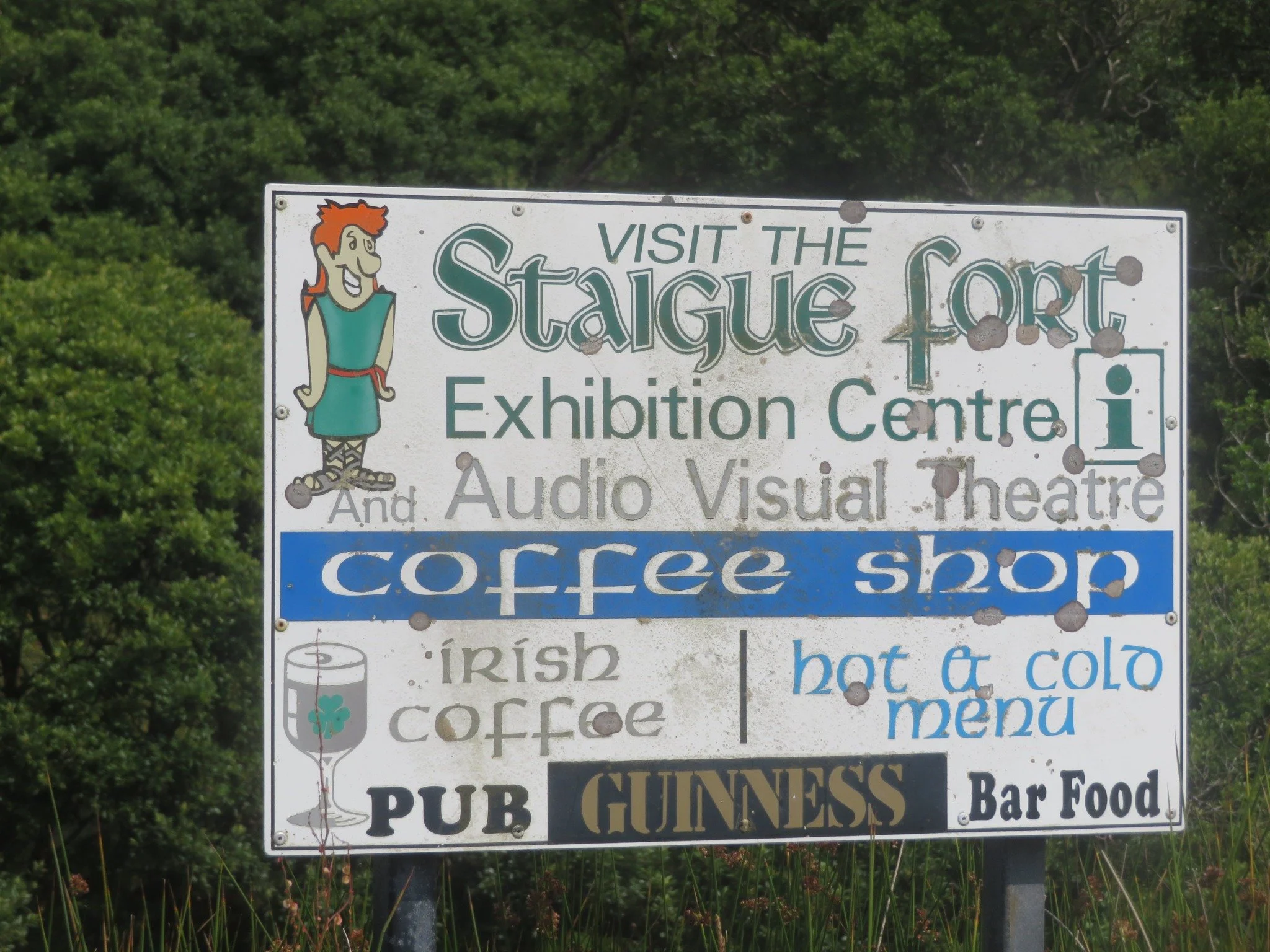
A sign pointing toward an ancient stone fort?
Let's see what's down there.
A viewpoint worth stopping for?
Stop.
A place deserved more time than we'd expected?
Stay longer.
Having a car didn't eliminate planning. It simply meant the plan didn't have to dictate every hour of the day.
That's also why our short driving days mattered. If you've scheduled four or five hours behind the wheel and have a reservation waiting at the other end, an interesting sign becomes something you drive past.
We had room to turn.
Sometimes literally.
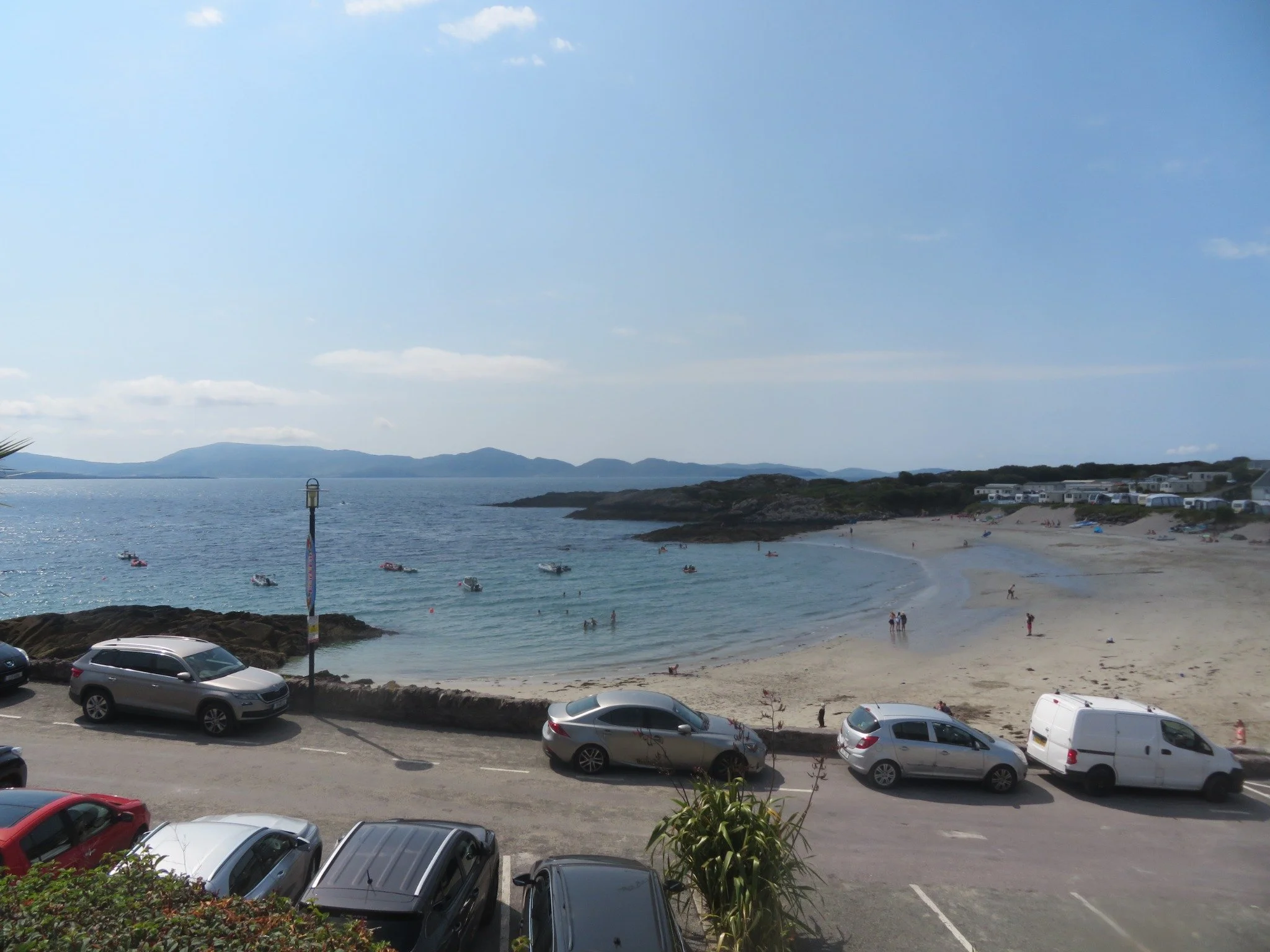
Parking Was Easier Than We Expected
Parking was something we considered before the trip.
When booking lodging, we specifically looked for properties with onsite parking.
Not simply:
Parking available.
Those aren't necessarily the same thing.
“Parking available” can mean public parking somewhere nearby. We wanted to arrive, unload the car and leave it at the property.
Could we carry luggage a couple of blocks?
Of course.
But just because I can doesn't mean I need to deliberately build that inconvenience into the trip.
Besides, experience says that the moment you've checked in and parked two blocks away, you'll discover the charger, jacket or medication you need is still sitting in the car.
Murphy has a passport too.
Every lodging property we chose had adequate onsite parking for its particular setting except the Savoy in Limerick, where we paid to use a nearby car park.
That wasn't a problem. We knew what we were getting.
Parking while sightseeing wasn't particularly difficult for us either.
Even in busy Dingle, we found a space perhaps a block or two from where we initially wanted to go. Since the waterfront and town itself were what we'd come to experience, walking a little wasn't an inconvenience.
During our trip, we always managed to find parking within an easy walk of what we wanted to do.
That's our experience, not a promise that you'll roll into Dingle or Galway on a busy summer afternoon and immediately find an empty space.
But parking never became the ordeal we'd imagined it might.
We Don't Have Photographs of Most of This
You'll notice something about this article.
We don't have photographs of ourselves negotiating roundabouts.
We don't have video of the Clio squeezing between a hedgerow and a small truck carrying sheep.
We don't have photographic documentation of hunting for parking in Galway in July.
There are three pretty good reasons.
I was driving.
Gina was navigating.
And both of us were enjoying Ireland.
Curated Upgrades didn't exist yet. We weren't wondering which photograph might illustrate an article years later.
We were on vacation.
Looking back, I'm rather glad about that.
The driver should be driving. The navigator should be navigating.
And occasionally neither person needs to be creating content.
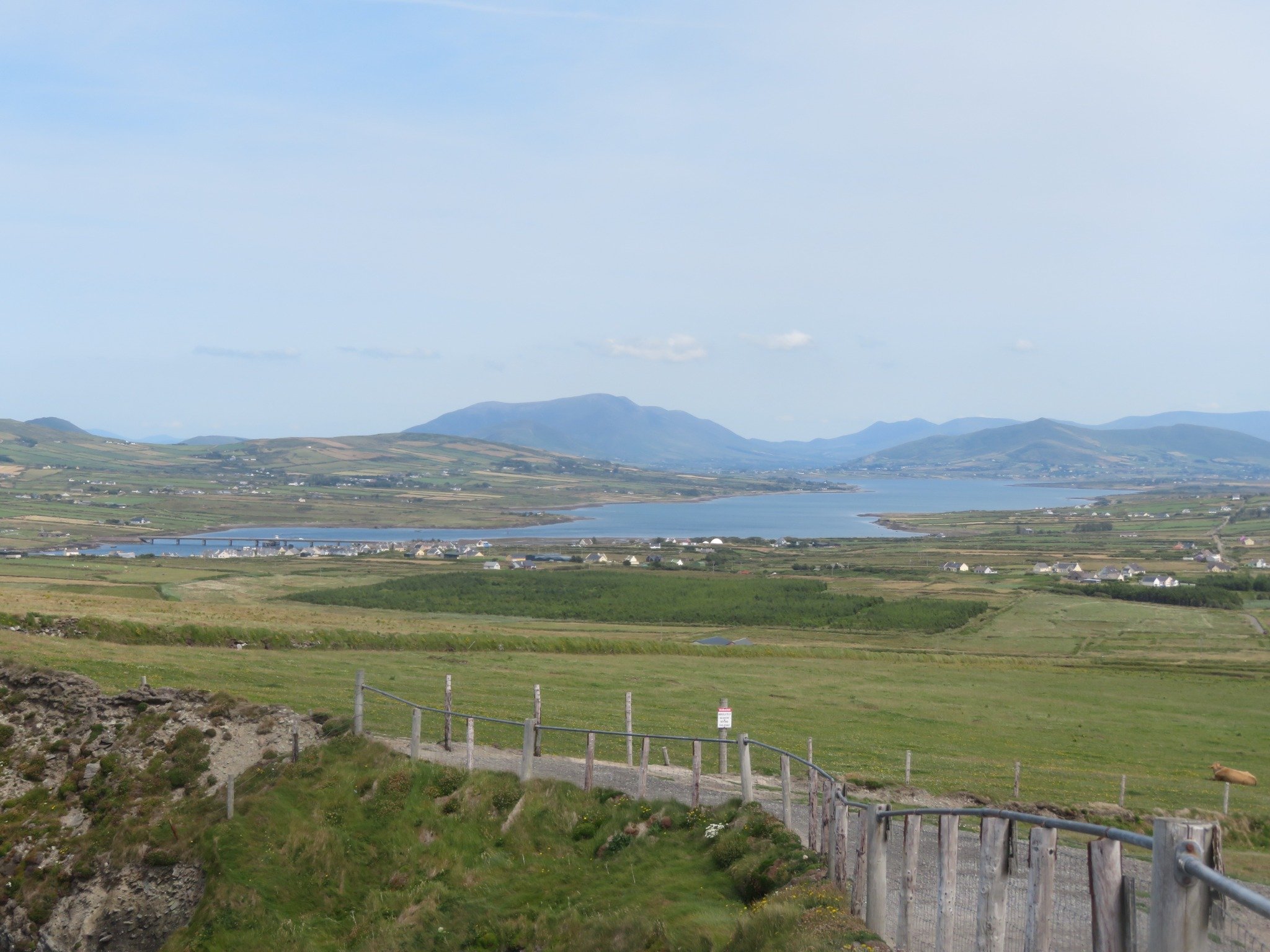
The Car Wasn't the Experience
That's perhaps the most important point.
We didn't go to Ireland because we wanted to drive a Renault Clio.
We rented the Renault because of where those roads could take us.
Having a car allowed us to stay outside towns, choose smaller lodging properties, explore rural areas, pull over when something caught our attention and change plans without reorganizing transportation.
It also allowed us to do things like spend time at Kilkee and decide afterward whether we still wanted to continue to the Cliffs of Moher.
The car supported the trip rather than controlling it.
Kilkee or the Cliffs of Moher? Choosing the Ireland Experience That Fits You
That doesn't mean everyone visiting Ireland needs a rental car.
If your trip is centered around cities, rail-connected destinations or organized excursions, a car may create more inconvenience than freedom.
But if the Ireland you want includes smaller towns, rural lodging, coastal roads and the ability to follow an interesting sign simply because you saw it...
A car can fundamentally change the trip you're able to build.
The Curated Verdict
🟢 GO FOR IT: If an independent Ireland road trip appeals to you, don't let left-side driving alone scare you away. Give yourself time, choose a sensibly sized vehicle and let the driver concentrate on driving.
🟡 EVALUATE: Be realistic about your comfort level. An automatic may make sense if you don't routinely drive a manual. A smaller car is useful on narrow roads, but you still need enough room for your passengers and luggage. And if your itinerary is primarily urban, decide whether a rental car actually adds anything.
🔴 SKIP IT: Don't build an itinerary that requires you to race across Ireland simply because a mapping app says the drive is technically possible. Every tractor, missed turn and interesting roadside stop shouldn't become an enemy of your schedule.
The Bottom Line
Driving in Ireland was different.
It wasn't terrifying.
Driving on the left required attention, but before long it simply became driving.
The narrow roads required us to slow down.
So we slowed down.
A tractor held us up.
So we looked around.
We missed turns.
So we found another way.
We parked a block away.
So we walked a block.
None of those things diminished the trip.
Quite the opposite.
The car gave us the freedom to experience Ireland at our own pace, and because we weren't trying to race across the country, the driving itself became part of the experience.
Take your time.
Keep the phone out of the driver's hands.
Let your navigator navigate.
And remember:
You're on vacation. Nobody is timing you.