

What Happens If You Lose Your Medication While Traveling?
Your prescription is missing, you're away from home, and your doctor's office is closed. Here's how to figure out what to do next.
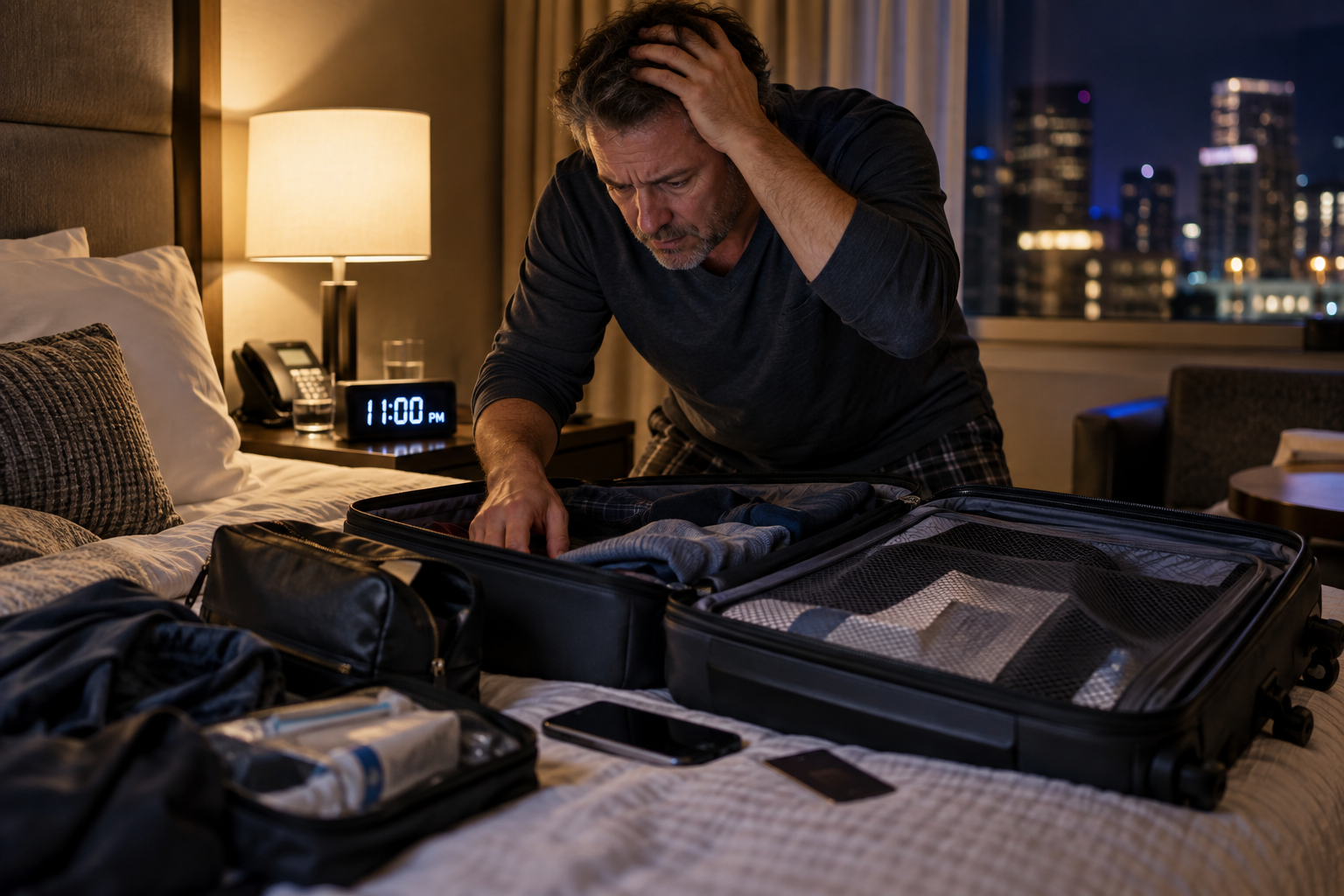
It’s 11:00 Saturday night.
You’ve had dinner, you're back at the hotel, and you reach for the medication you normally take before bed.
It isn't there.
You check the toiletry bag. The suitcase. The bathroom. The nightstand. Every pocket.
Nothing.
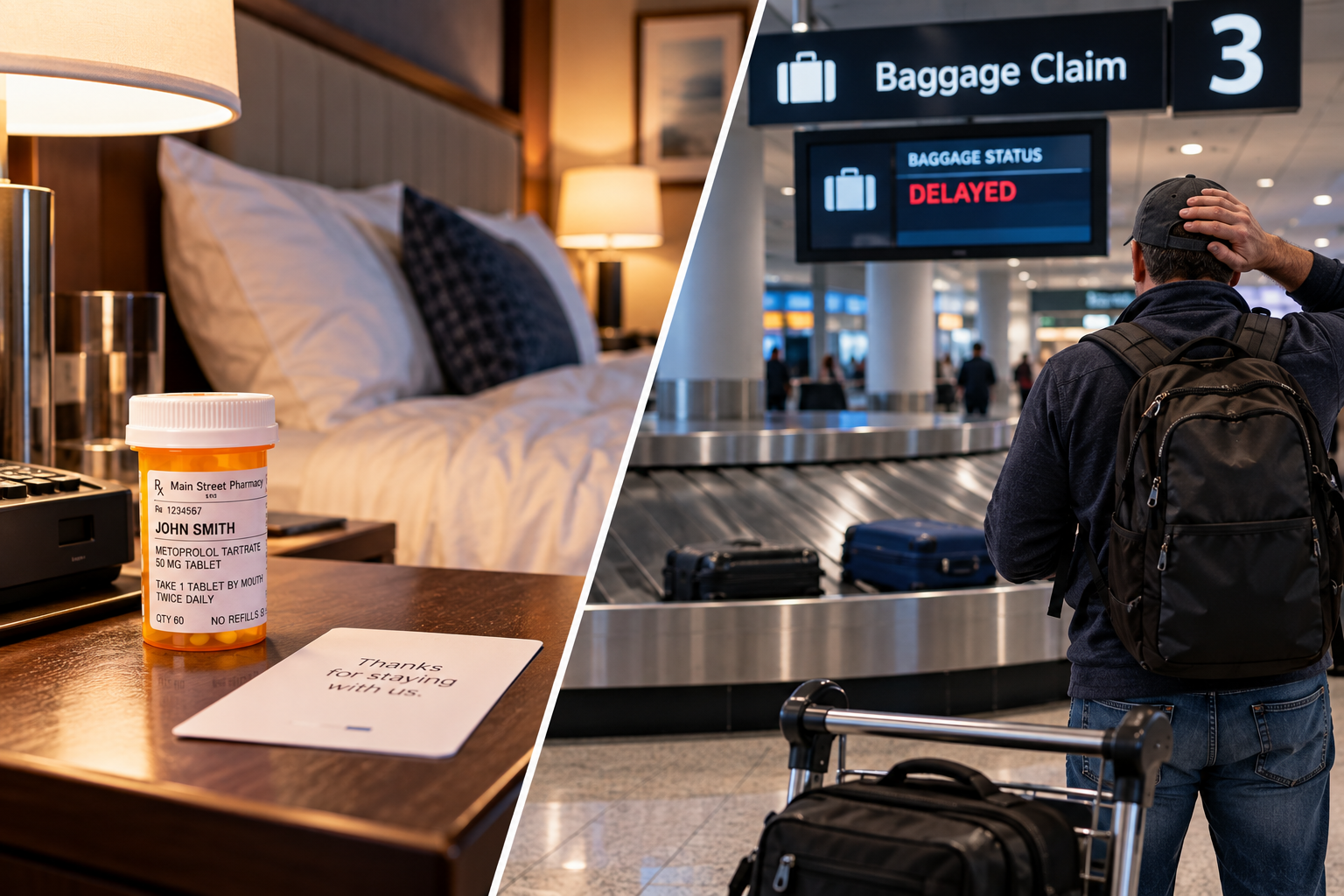
Maybe it's sitting at last night's hotel. Maybe it's inside the checked bag the airline hasn't found. Maybe your bag was stolen. Maybe something leaked all over it.
Or maybe you simply didn't bring enough.
And because Murphy apparently had the seat next to you at dinner, your doctor's office closed hours ago.
Now what?
IMPORTANT: This article provides general travel information, not individual medical advice. Missing one dose of one medication may have little consequence; interrupting another can be dangerous. Do not stop, substitute, double, or otherwise change how you take prescribed medication based on this article. Contact a pharmacist, prescribing healthcare professional, or other qualified medical provider for advice about your specific medication.
IF YOU ARE EXPERIENCING A MEDICAL EMERGENCY OR SERIOUS SYMPTOMS, SEEK EMERGENCY MEDICAL CARE.
First: How Urgent Is This?
Before worrying about the airline, hotel, or insurance company, determine whether missing the medication creates an immediate medical problem.
There isn't one answer.
For one medication, a pharmacist or healthcare professional might recommend an appropriate temporary alternative. Another might be something you can safely wait to replace.
Other medications shouldn't be interrupted.
Don't guess.
If you aren't sure what happens if you miss your next dose, get advice from someone qualified to answer that question.
It's Saturday Night. Who Do You Call?
“Call your doctor” is excellent advice at 10:00 Tuesday morning.
At 11:00 Saturday night, you may need another option.
Your doctor's regular number is still worth trying. The practice may have an answering service or on-call provider.
Depending on your situation and what's available nearby, other options may include a 24-hour pharmacy, your insurer's nurse line, telehealth, urgent care, or an emergency department.
If you're developing serious symptoms or a qualified healthcare professional tells you that you need immediate evaluation, this isn't primarily a travel problem anymore.
It's a medical problem.
Don't Invent Your Own Plan B
DON'T ASSUME YOU SHOULD SKIP THE DOSE, TAKE TWO LATER, SUBSTITUTE ANOTHER DRUG, CHANGE THE DOSAGE, OR TAKE SOMEONE ELSE'S MEDICATION.
A healthcare professional may tell you that one of those first options is appropriate for your particular medication.
That's different from deciding it yourself in a hotel bathroom at midnight.
Get medication-specific advice.
Now, What Happened to It?
Once the immediate medical question is settled, start solving the travel problem.
The Airline Lost Your Bag
File the delayed-baggage report, but don't make waiting for the suitcase your medication plan.
If you need the medication before the bag is likely to return, start working on a replacement while the airline works on your luggage.
A missing suitcase is an inconvenience. A missing suitcase containing medication you need can become a medical problem.
The CDC recommends keeping medication in carry-on baggage specifically because checked luggage can be lost or delayed. We cover the preparation side in Traveling With Prescription Medication: The Complete Guide.
Right now, Captain Hindsight isn't particularly useful.
You Left It at the Hotel
Call immediately. Give the hotel your room number, where you think you left it, and a description.
If they find it, determine whether getting it back is practical and lawful.
Don't automatically ask the hotel to drop prescription medication into an overnight envelope. Mailing medication can create legal complications, particularly when international borders are involved.
It Was Stolen
Contact your pharmacist and prescriber. Depending on the medication, insurer, and circumstances, documentation of the theft may become useful or necessary.
Controlled medications can involve additional restrictions.
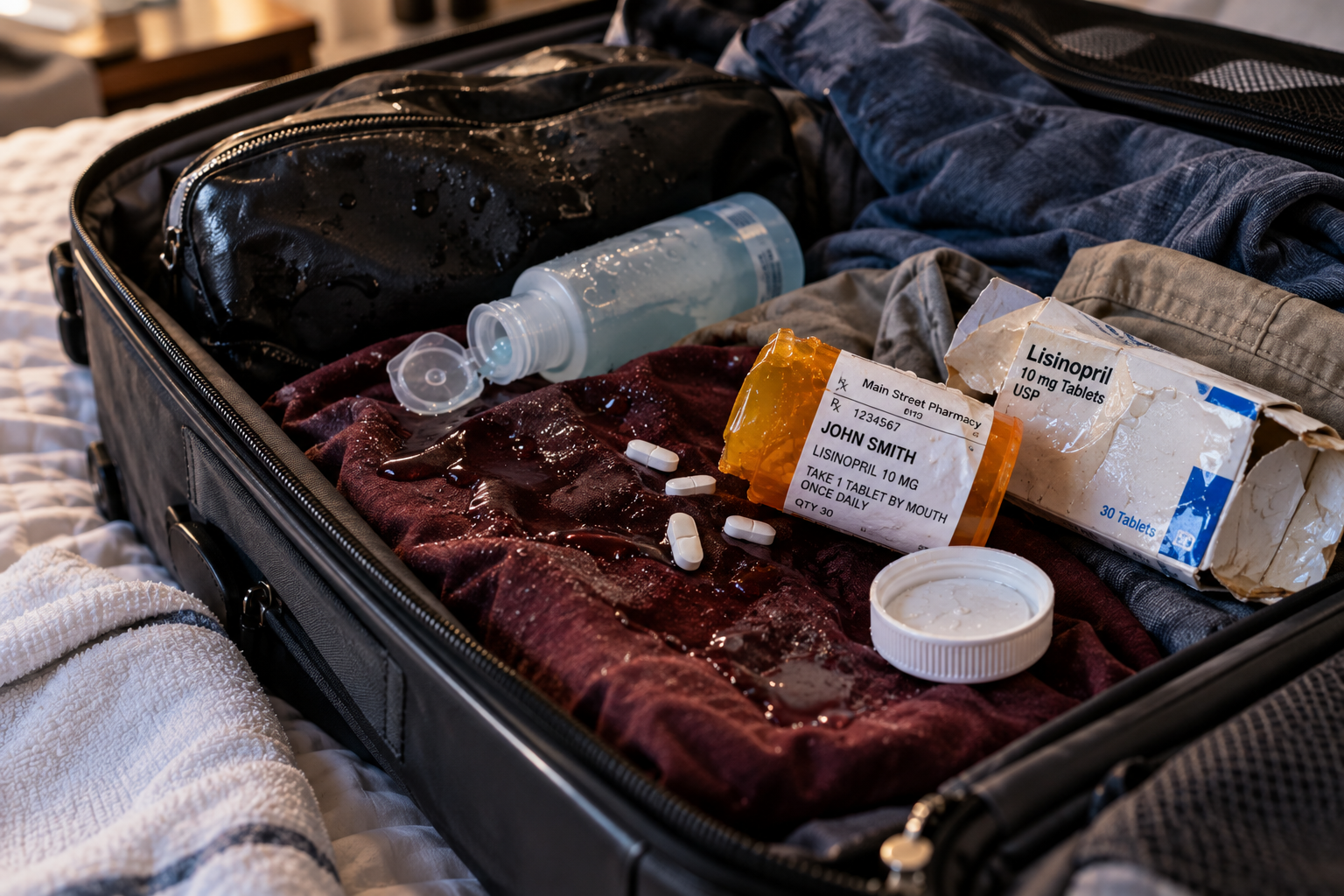
It Was Damaged
Heat, freezing, water, broken packaging, or improper storage can affect some medications.
Don't rely on appearance alone. Ask a pharmacist, healthcare professional, or manufacturer whether the medication can still be used. The CDC notes that extreme temperatures can affect medications.
You Ran Out
Maybe you counted wrong.
Maybe your flight was canceled and the trip gained two days.
Contact your pharmacy or prescriber and explain the situation. Depending on the prescription and your insurance coverage, replacing it early may also require dealing with your insurer.
Start With Your Regular Pharmacy
If you're traveling within the United States, your regular pharmacy is often a good place to start.
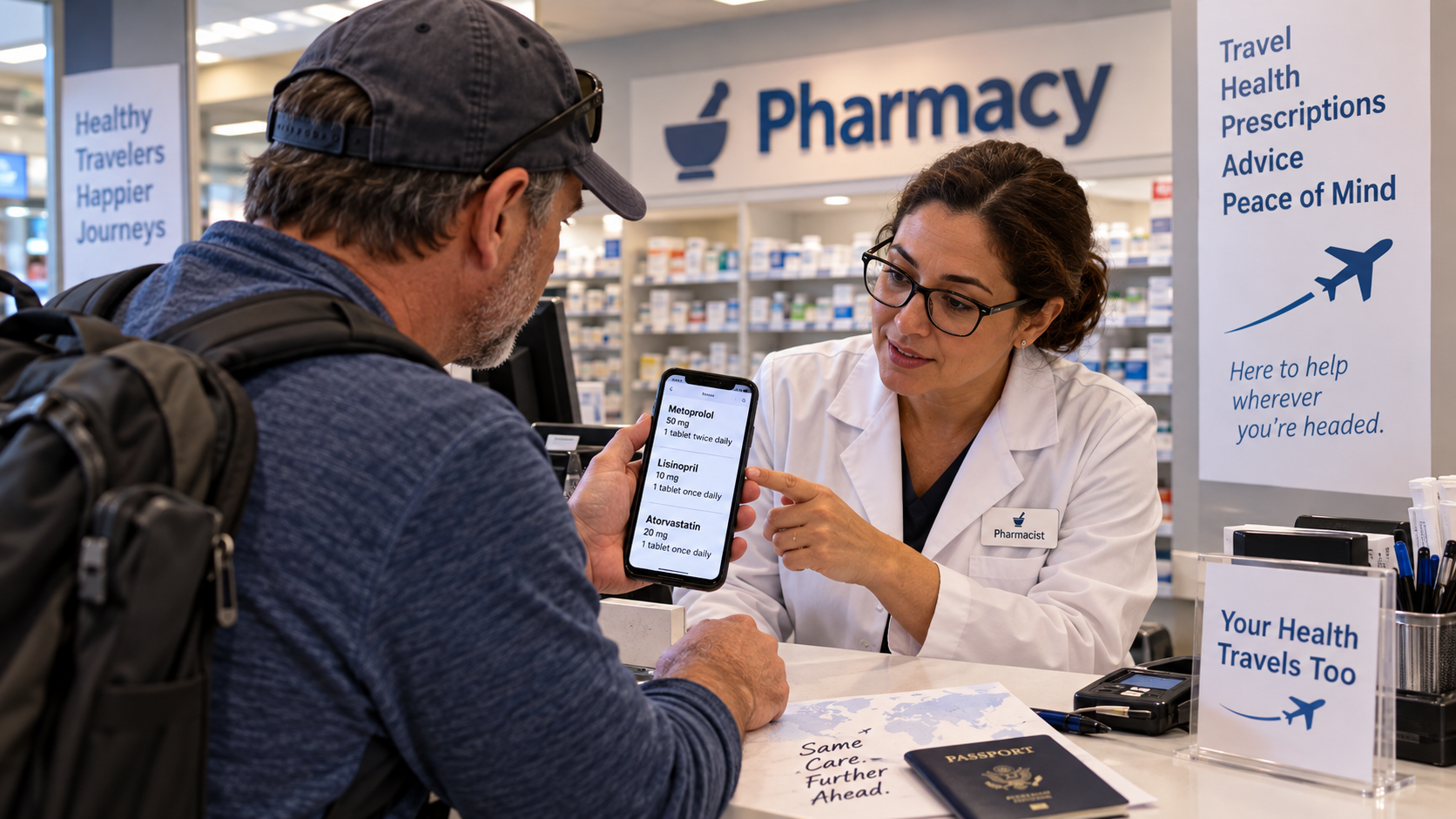
Tell them what medication is missing, its strength and dosage, how much you have left, where you are, and when you need the next dose.
If you're near another location of the same pharmacy chain, ask whether they can access the prescription or help arrange a replacement.
Don't assume the answer will be the same for every medication. State law, prescription status, available refills, insurance rules, and whether the medication is controlled can all matter.
Your insurer may also treat the replacement as an early refill. Ask the pharmacist and insurer what options are available for your particular situation.
Keep receipts and documentation. Depending on why the medication disappeared and the coverage you carry, insurance or a baggage claim could potentially become relevant.
Controlled Medication Is Different
A lost controlled medication can be more complicated to replace.
Federal rules divide controlled substances into different schedules, and additional state requirements can apply. The DEA allows certain electronic controlled-substance prescriptions to be transferred between registered retail pharmacies, subject to specific federal requirements and applicable state law.
Don't assume an ER, urgent-care clinic, or unfamiliar pharmacy will simply replace a lost controlled medication.
Contact the prescribing provider and pharmacist and explain what happened. If it was stolen, ask whether they need a police report or other documentation.
This is a particularly bad subject for advice from the guy in a Facebook group whose cousin had the same thing happen in Vegas.
Know What You're Taking
Replacing medication becomes considerably easier when you can tell someone exactly what you need.
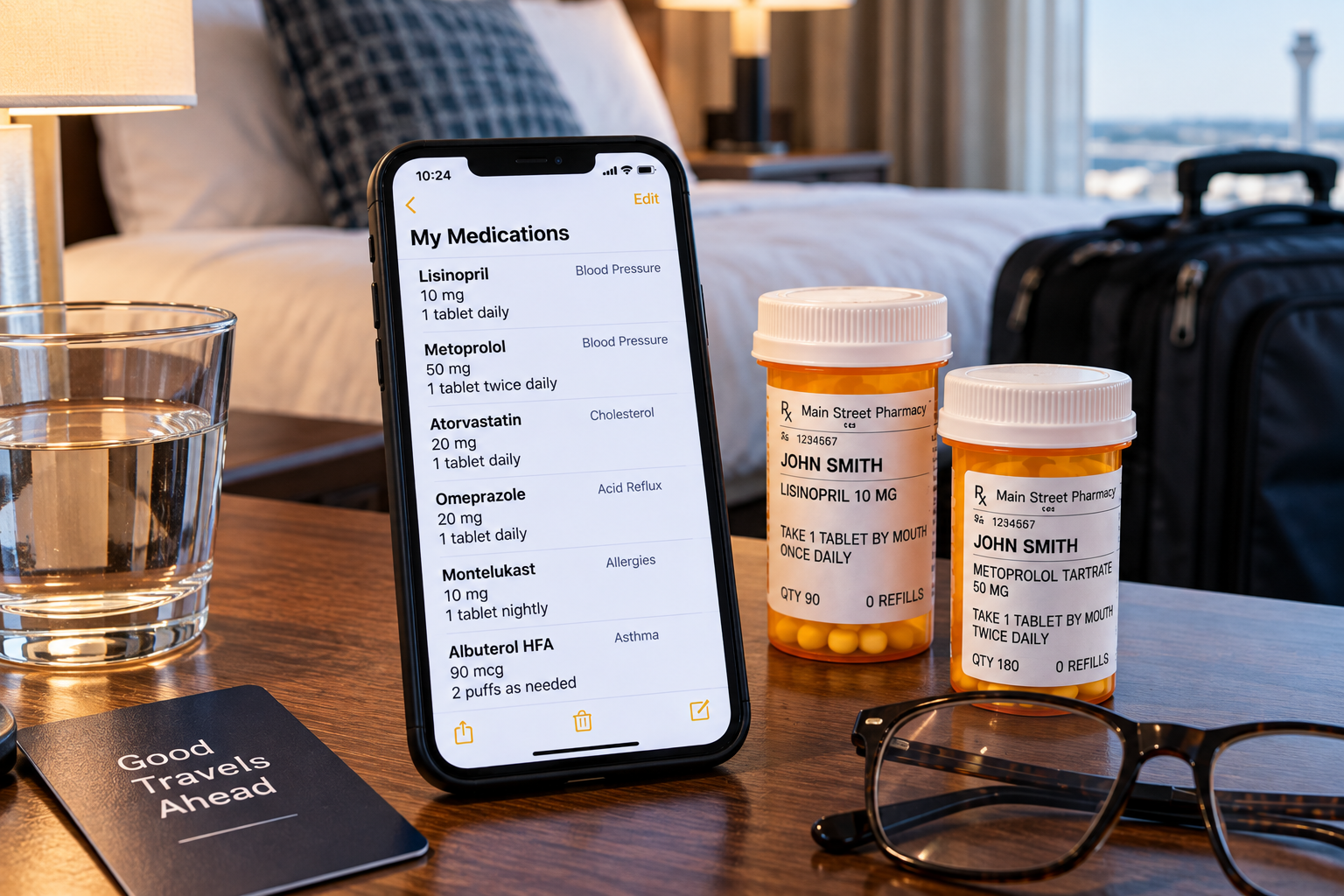
Keep access to the medication name and generic name, strength, dosage and schedule, prescribing healthcare professional, regular pharmacy, relevant prescription information, and medication allergies.
A photo of the current prescription label can also provide useful identifying information.
The CDC recommends traveling with documentation of your medications, including their generic names because brand names can differ internationally.
You don't need your complete medical history in a three-ring binder.
You just need a better answer than:
“They're little white pills. I think the bottle had a blue label.”
What If You're Outside the United States?
Now the problem changes.
A U.S. prescription may not work the same way in another country's healthcare system. Your medication might have a different brand name, strength, or formulation, and laws governing medications can differ substantially.
The CDC Yellow Book provides guidance for travelers who need medical care or replacement medication abroad and recommends obtaining medicine from a trustworthy pharmacy rather than open markets, street vendors, or suspicious sellers.
A local pharmacist, physician, or clinic may need to become involved. A U.S. embassy or consulate can help travelers locate medical services, although it isn't an overseas replacement pharmacy.
This is complicated enough to deserve its own guide:
How Do You Replace Prescription Medication in Another Country?
That's next.
After Murphy Leaves
Once you've solved the problem, then think about preventing a repeat.
The CDC recommends carrying enough medication for the trip plus extra for unexpected delays, keeping medication properly labeled, carrying prescription information, and putting medication in your carry-on rather than checked baggage.
Our Traveling With Prescription Medication: The Complete Guide covers that preparation side in detail.
But when your medication is already missing, you don't need a lecture about how you should have packed.
You need a plan.
The Curated Upgrades Takeaway
Lost medication isn't one problem with one answer.
First determine whether missing the medication creates an immediate medical risk. Don't guess about skipping, substituting, or changing doses. Get qualified advice when you need it.
Then solve the travel problem: locate it, replace it, document what happened, and deal with insurance or reimbursement afterward.
And if it's 11:00 Saturday night?
Solve tonight's problem first.
Captain Hindsight can wait until you get home.
MEDICAL DISCLAIMER: This article provides general travel-planning information only. It cannot determine whether it is safe for you to miss, delay, replace, substitute, or alter any medication. Contact a pharmacist, prescribing healthcare professional, or other qualified medical provider for advice about your specific medication and circumstances. If you are experiencing a medical emergency or serious symptoms, seek emergency medical care.