

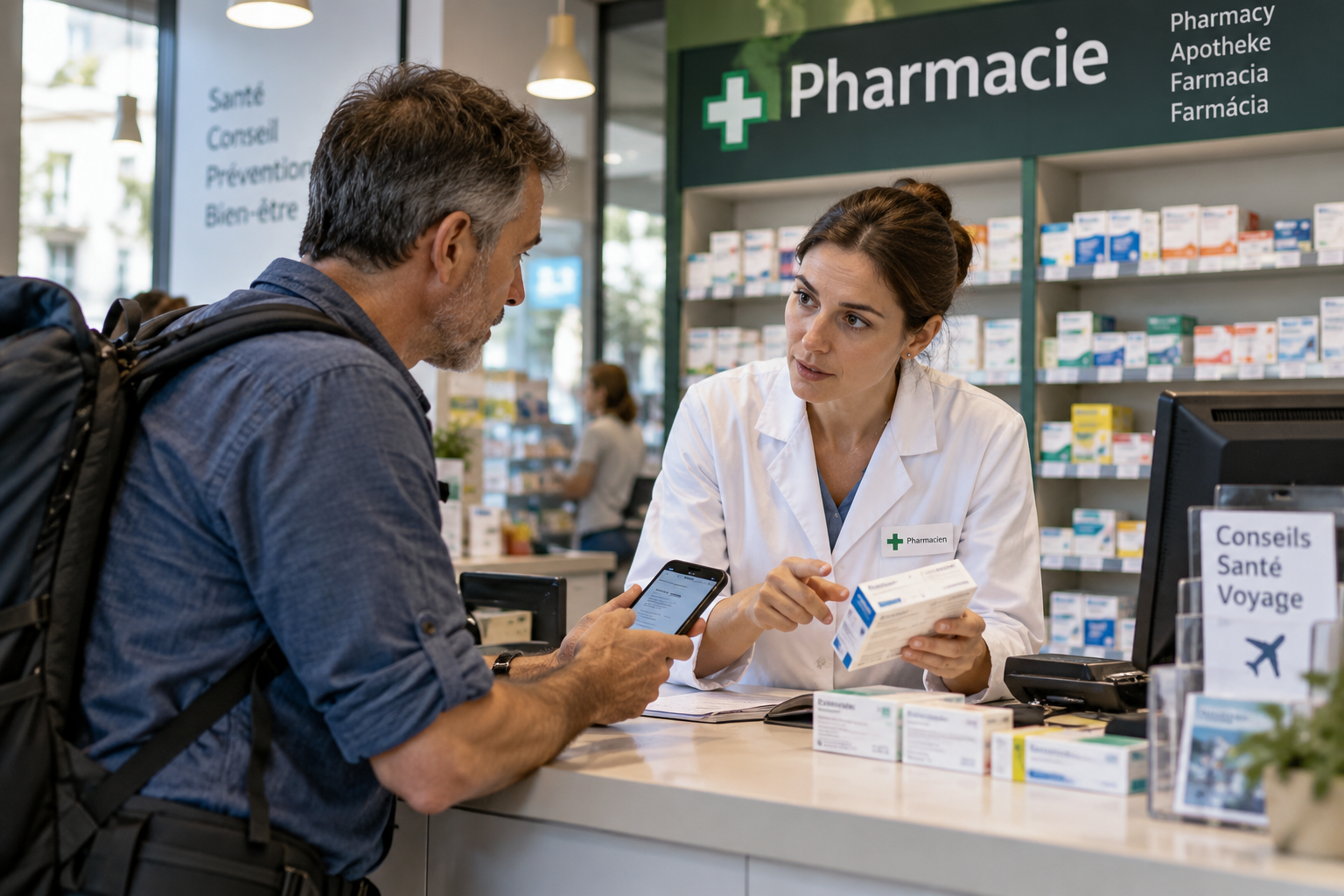
How Do You Replace Prescription Medication in Another Country?
Your medication is gone, you're thousands of miles from home, and your neighborhood pharmacy can't simply hand you another bottle. Now what?
You’re 4,000 miles from home.
Your medication is gone.
Maybe you left it at the last hotel. Maybe your bag disappeared somewhere between airports. Maybe the bottle broke, the medication got wet, or you simply didn't pack enough for an unexpected delay.
Back home, you might call your pharmacy and ask what your options are.
But your pharmacy is now 4,000 miles away too.
And the rules have changed.
IMPORTANT: This article provides general travel information, not individual medical advice. Missing or interrupting some medications can be dangerous. Do not stop, substitute, double, or otherwise change how you take prescribed medication based on this article. Contact a pharmacist, prescribing healthcare professional, or other qualified medical provider for advice about your specific medication.
IF YOU ARE EXPERIENCING A MEDICAL EMERGENCY OR SERIOUS SYMPTOMS, SEEK LOCAL EMERGENCY MEDICAL CARE.
First: Is Missing the Medication Urgent?
This question doesn't change just because you've crossed a border.
Before worrying about prescriptions, pharmacies, insurance, or translation, determine whether waiting for a replacement could create a medical problem.
For some medications, you may have time to work through the local healthcare system. For others, missing even a short period may require prompt medical advice.
Don't make that determination yourself if you aren't sure.
Your prescribing provider may still be reachable from overseas. Your insurer may offer an international assistance or nurse line. A local pharmacist, clinic, physician, or hospital may also be able to advise you.
If serious symptoms develop, seek medical care rather than spending another hour trying to solve the problem from your hotel room.
Your U.S. Prescription May Not Work There
This is where replacing medication overseas becomes very different from replacing it during a domestic trip.
A prescription written by your U.S. doctor doesn't automatically give you the ability to obtain the same medication in another country.
Local laws determine what medications are available, what requires a prescription, and what restrictions apply. The CDC warns international travelers that medications legal in the United States can be restricted or prohibited elsewhere.
You may need help from a healthcare professional in the country you're visiting.
That doesn't make your U.S. prescription useless.
It can still help a local doctor or pharmacist understand exactly what you normally take.
Start With What You Know
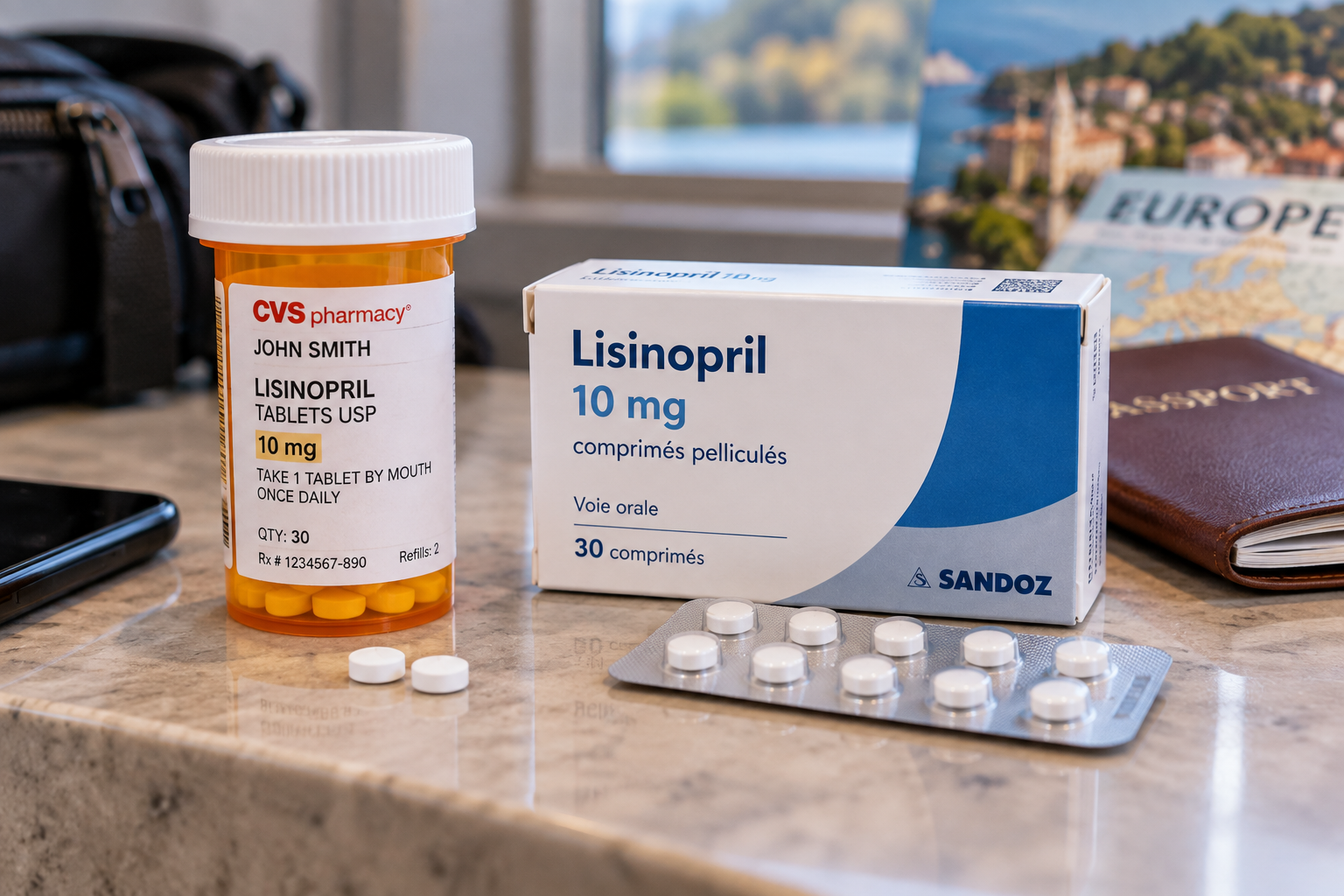
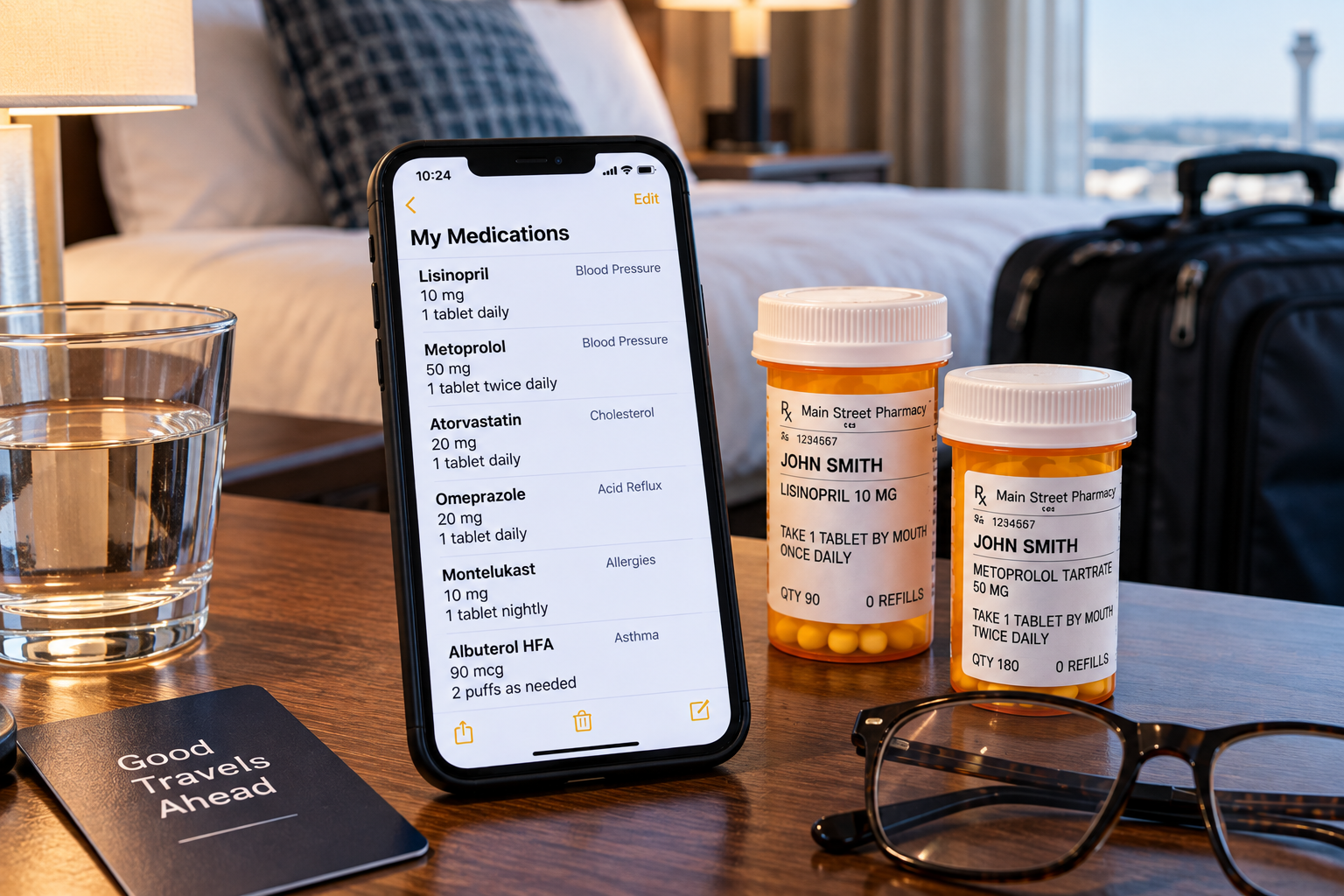
Before looking for a replacement, gather as much information about your medication as possible.
Ideally, you have:
Medication name
Generic or active ingredient name
Strength
Dosage and schedule
Prescriber's name and contact information
Your regular pharmacy
A photo of the prescription label
A copy of the prescription, if available
The generic or active ingredient name can be especially important internationally.
The CDC recommends carrying medication information that includes generic names because trade names and even standard dosing can vary between countries.
“It's a small round white pill” wasn't especially useful in Ohio.
It isn't going to improve with a passport stamp.
Contact Your Prescriber and Pharmacy Anyway
Being overseas doesn't mean your healthcare team at home suddenly becomes irrelevant.
Your U.S. prescriber may be able to provide documentation of the medication, dosage, or treatment. Your pharmacy may be able to provide information that helps a local healthcare professional identify exactly what you take.
But don't assume your U.S. pharmacy can simply transfer the prescription to a foreign pharmacy.
The replacement has to comply with the laws and healthcare system where you actually are.
Think of your doctor and pharmacy back home as part of the information chain, not necessarily the people who can directly put the replacement medication in your hand.
You May Need Local Medical Help
Depending on the destination and medication, you may need a local healthcare professional.
That can sound intimidating when you're traveling, especially if you don't speak the language.
Your hotel may be able to help locate medical care. Your travel insurer may have an assistance service or network of providers.
The U.S. State Department says embassies and consulates can help Americans find local doctors and hospitals.
A local healthcare professional can then determine what options are available under the country's medical and pharmacy system.
This is where having accurate information from home becomes extremely valuable.
Use a Trustworthy Pharmacy
When you need medication badly, a sign saying PHARMACY can suddenly look like a lighthouse.
But this isn't the time to become adventurous about where you buy medicine.
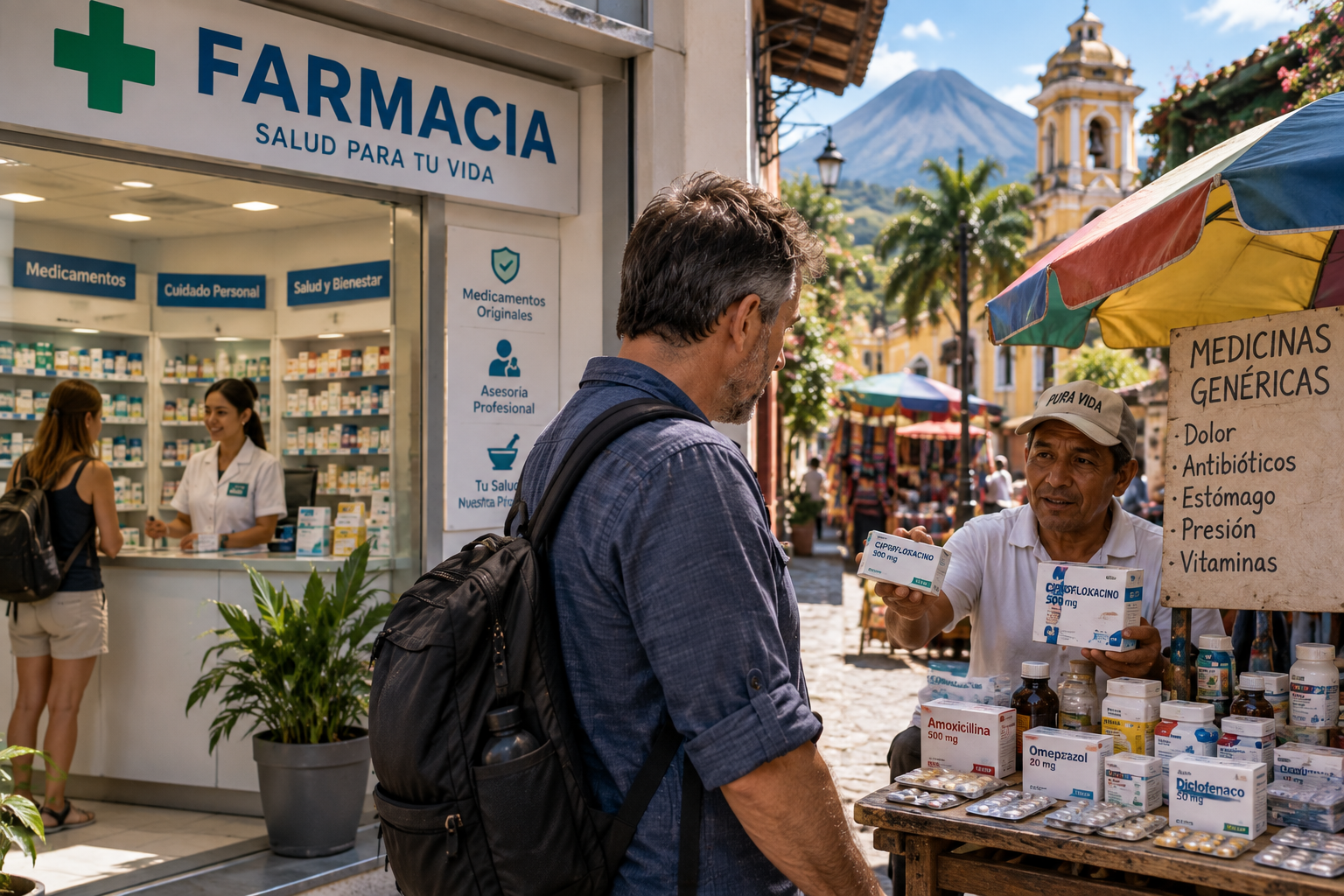
The CDC warns that medications obtained overseas can be counterfeit or substandard. Counterfeit products can contain the wrong amount of an active ingredient, no active ingredient, or potentially harmful ingredients.
If you need replacement medication abroad, the CDC recommends obtaining it from a trustworthy pharmacy and avoiding open markets, street vendors, and suspicious-looking pharmacies.
Ask for a receipt and keep the medication in its original packaging.
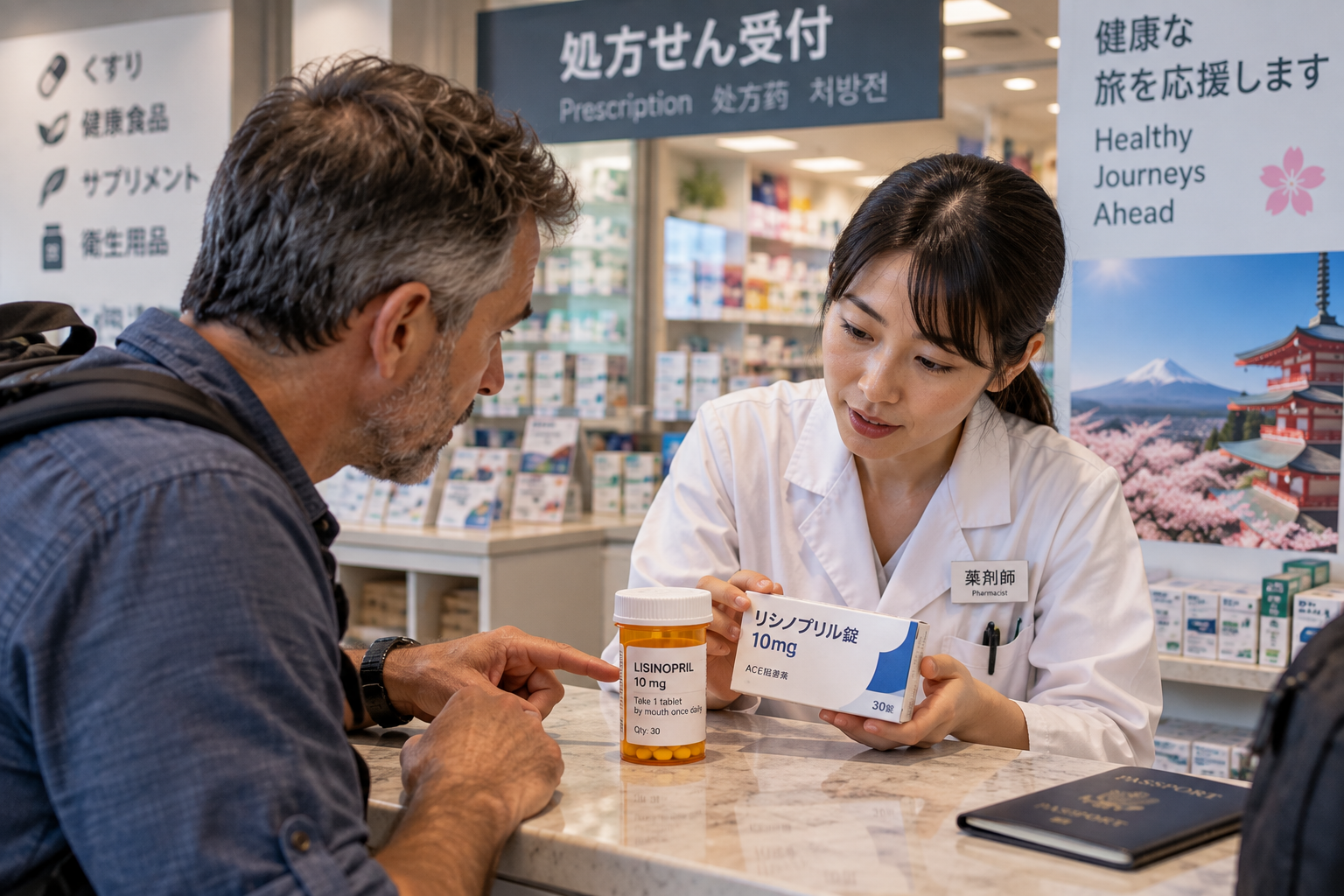
The Same Medication May Look Completely Different
Suppose you've taken the same prescription for years.
At home, you recognize the bottle, label, tablet, and brand name instantly.
Overseas, the replacement may come in a box instead of a bottle. The brand may be unfamiliar. The tablets may look different.
That doesn't necessarily mean it's the wrong medication.
But it also doesn't mean you should assume it's equivalent.
The CDC notes that legitimate medications overseas can have unfamiliar trade or generic names and that the strength or concentration can vary by country.
Confirm the active ingredient, strength, dosage, and formulation with a qualified pharmacist or healthcare professional.
This is another reason the generic name matters more than recognizing the packaging.
Controlled and Restricted Medications Can Be Much More Complicated
Controlled medications deserve extra caution.
A medication legally prescribed to you in the United States may be restricted or prohibited somewhere else. And the problem isn't limited to medications classified as controlled substances in the United States.
The CDC's guidance on prohibited and restricted medications notes that countries establish their own rules. A medication that isn't controlled in the United States could still be restricted at your destination.
Replacing one can therefore be substantially more difficult than replacing a routine prescription.
Don't assume that showing a U.S. prescription requires a foreign pharmacy or physician to replace it.
And don't attempt to work around local restrictions by buying medication through informal sources.
Can the U.S. Embassy Replace Your Medication?
No.
The embassy isn't an overseas CVS with a flag out front.
But it can still be useful.
The U.S. State Department says embassies and consulates can help Americans locate doctors and hospitals. CDC guidance also notes that an embassy or consulate may be able to help travelers locate trustworthy medical services or pharmacies.
It doesn't prescribe medication or dispense it.
And the U.S. government generally doesn't pay your medical bills abroad.
Think directions, not dispensary.
What About Travel Insurance?
This is where travel insurance may become useful beyond canceled flights and lost suitcases.
Depending on your policy, an assistance service may help you locate a physician, clinic, hospital, or pharmacy. Your policy may also provide coverage for eligible medical expenses.
Those are two different things.
Assistance means helping you find care.
Coverage means paying some or all of the bill according to the policy.
Don't assume one automatically includes the other.
Call the assistance number on your policy or insurance card and ask what services are available.
And keep your receipts.
What If the Medication Was in Lost Luggage?
Work both problems at the same time.
Report the missing baggage to the airline and follow the normal baggage-claim process.
But if you need the medication before the suitcase is likely to return, don't make recovering the bag your only plan.
Start working on the medication replacement too.
The suitcase might arrive tomorrow.
Your next dose may be due tonight.
Those are two different clocks.
What If It Was Stolen?
Report the theft when appropriate and document what happened.
Documentation may be useful when dealing with insurance, medical providers, or certain medications.
But paperwork comes after medical safety.
If you need the medication urgently, start arranging medical help while you're dealing with the theft report.
Don't Have Someone Mail Medication From Home
This sounds like an easy solution:
Someone at home finds another bottle and sends it overnight.
Except now you're shipping prescription medication across an international border.
The CDC advises travelers to avoid mailing medications to an international destination, noting that doing so is often illegal because it can be considered importing or exporting medication and may require specific authorization.
A package can also encounter customs restrictions at the destination.
Don't turn a lost-medication problem into a customs problem.
Once You're Home, Fix the Weak Link
Captain Hindsight finally gets his turn.
If replacing medication overseas was difficult because you didn't know the generic name, didn't have your prescription information, or packed every dose in one place, fix that before the next trip.
Our Traveling With Prescription Medication: The Complete Guide covers the preparation side.
And if your medication disappears while you're traveling within the United States, see What Happens If You Lose Your Medication While Traveling?
Different problem.
Different playbook.
The Curated Upgrades Takeaway
Replacing prescription medication in another country isn't necessarily as simple as finding the nearest pharmacy.
Start with the medical question: How urgently do you need the medication?
Then gather accurate information about what you take, contact your healthcare team at home when useful, and work through trustworthy local pharmacies and healthcare providers.
Don't guess about substitutes.
Don't assume your American prescription overrides local rules.
And don't buy questionable medication because solving the problem quickly feels more important than solving it safely.
When you're thousands of miles from home, the most useful thing you can carry may not be another bottle.
It may be enough information to help the right person replace it.
MEDICAL DISCLAIMER: This article provides general travel-planning information only. Medication availability, prescription requirements, import rules, and controlled-substance laws vary by country. Contact qualified healthcare professionals and appropriate local authorities for advice specific to your medication and destination. If you are experiencing a medical emergency or serious symptoms, seek local emergency medical care.