

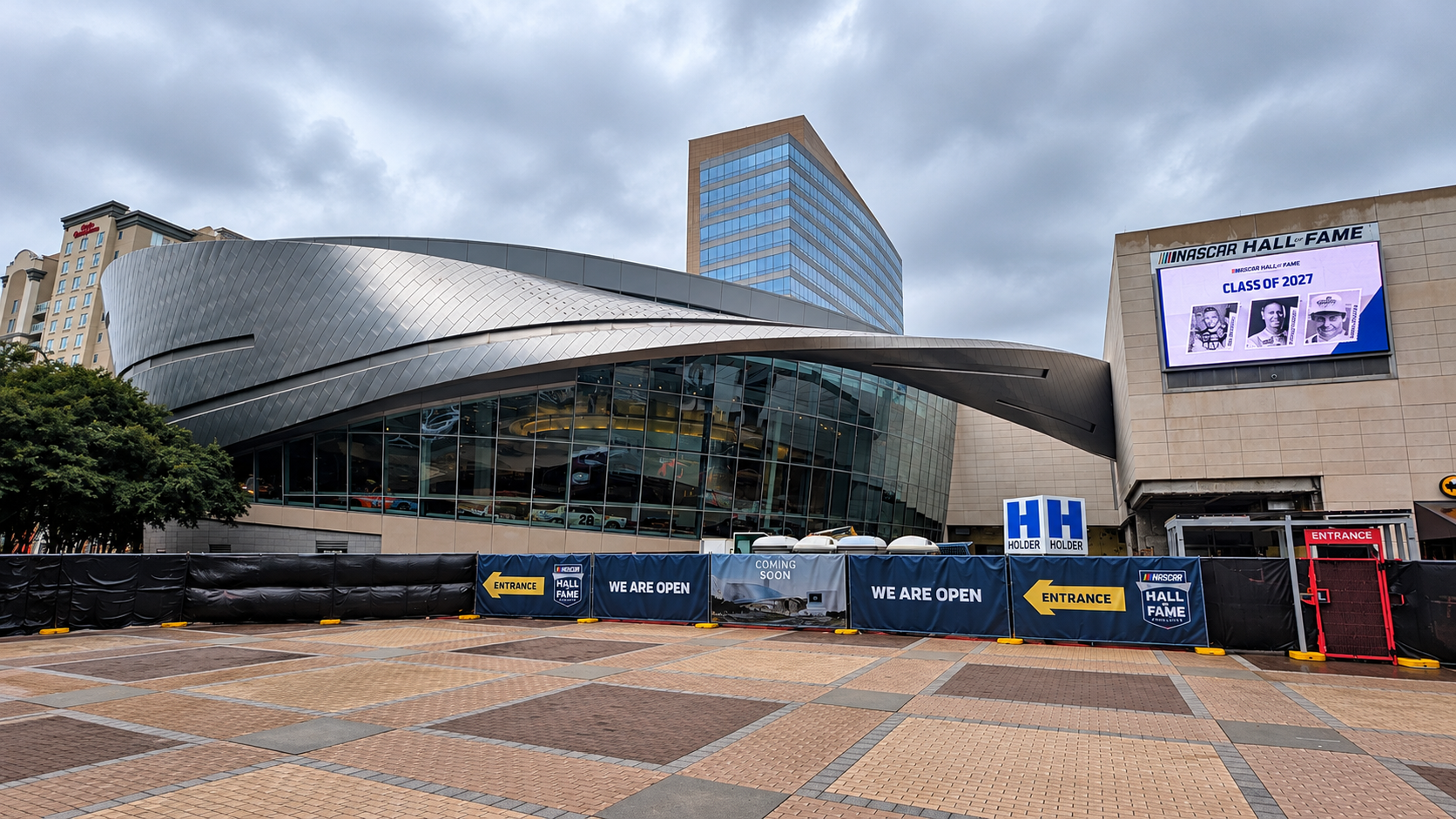
NASCAR Hall of Fame: Our Experience and Lessons Learned
An impressive collection of NASCAR history, a disappointing racing simulator, and an unexpected reminder of what really matters.
A Rainy Saturday in Charlotte
Our NASCAR weekend in Charlotte didn't go quite according to plan. Rain disrupted the racing schedule, and like plenty of other fans, we found ourselves looking for something to do while waiting for the weather to cooperate.
The NASCAR Hall of Fame seemed like an obvious choice.
We enjoy NASCAR, we were already in Charlotte for the races, and the Hall of Fame offered an opportunity to explore the history of the sport. There was also something we were particularly excited about: the racing simulator.
As it turned out, that simulator would become the most frustrating part of our visit.
But the Hall of Fame would also deliver one of the most meaningful moments of our entire weekend.
For more about how the weather affected our plans, see Attending a NASCAR Race Weekend: What You Should Know.
Getting In Shouldn't Be the Hard Part
We arrived on a busy race weekend, with rain bringing additional visitors indoors. None of that was particularly surprising.
What surprised us was how disorganized the admission process seemed.
We went directly to a self-service ticket kiosk, but there was only one employee available to assist visitors having difficulties. There were also two staffed cashier tables for cash purchases and questions, but both were changing their cash boxes at the same time.
The result was an unnecessary bottleneck.
We understand that race weekends are busy. We also understand that weather can change people's plans. But the race schedule had been known for months, and the rain was in the forecast.
From our perspective, additional staffing and better coordination should have been part of the preparation.
Parking was another expense to consider. We paid $25 to park during our visit.
Fortunately, once we were inside, the museum experience was considerably better.
The Exhibits: Where the Hall of Fame Shines
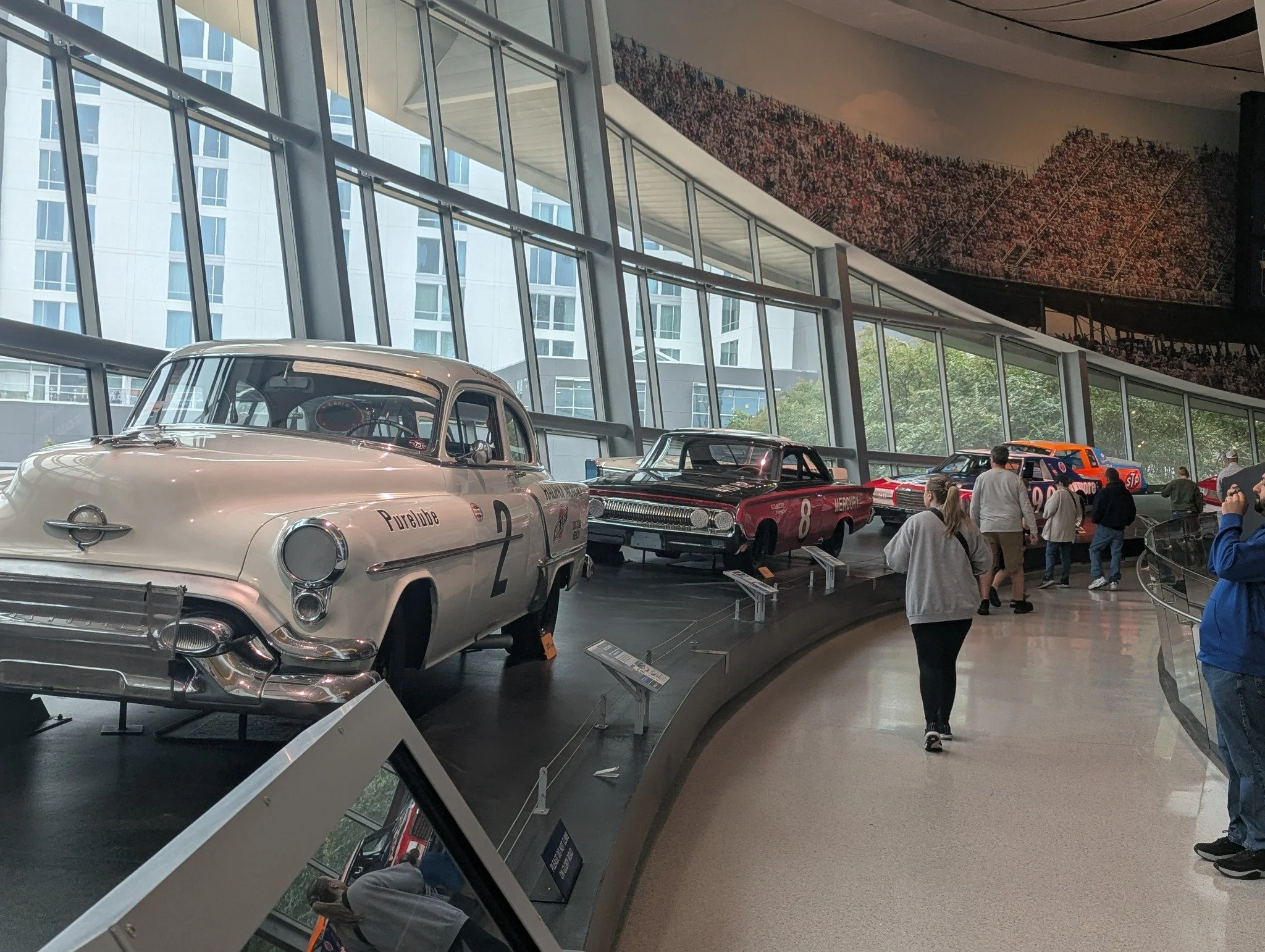
The museum itself is impressive.
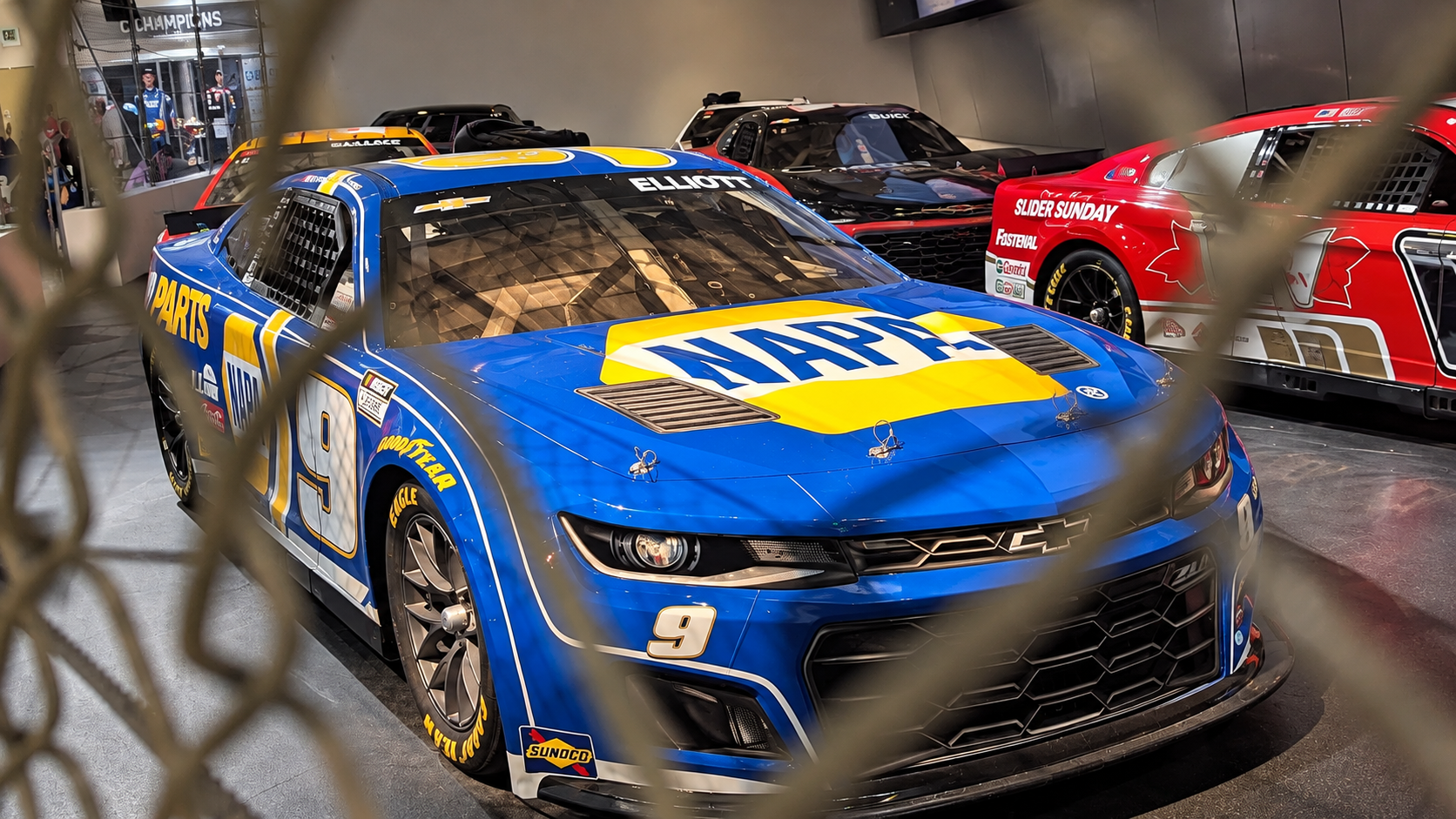
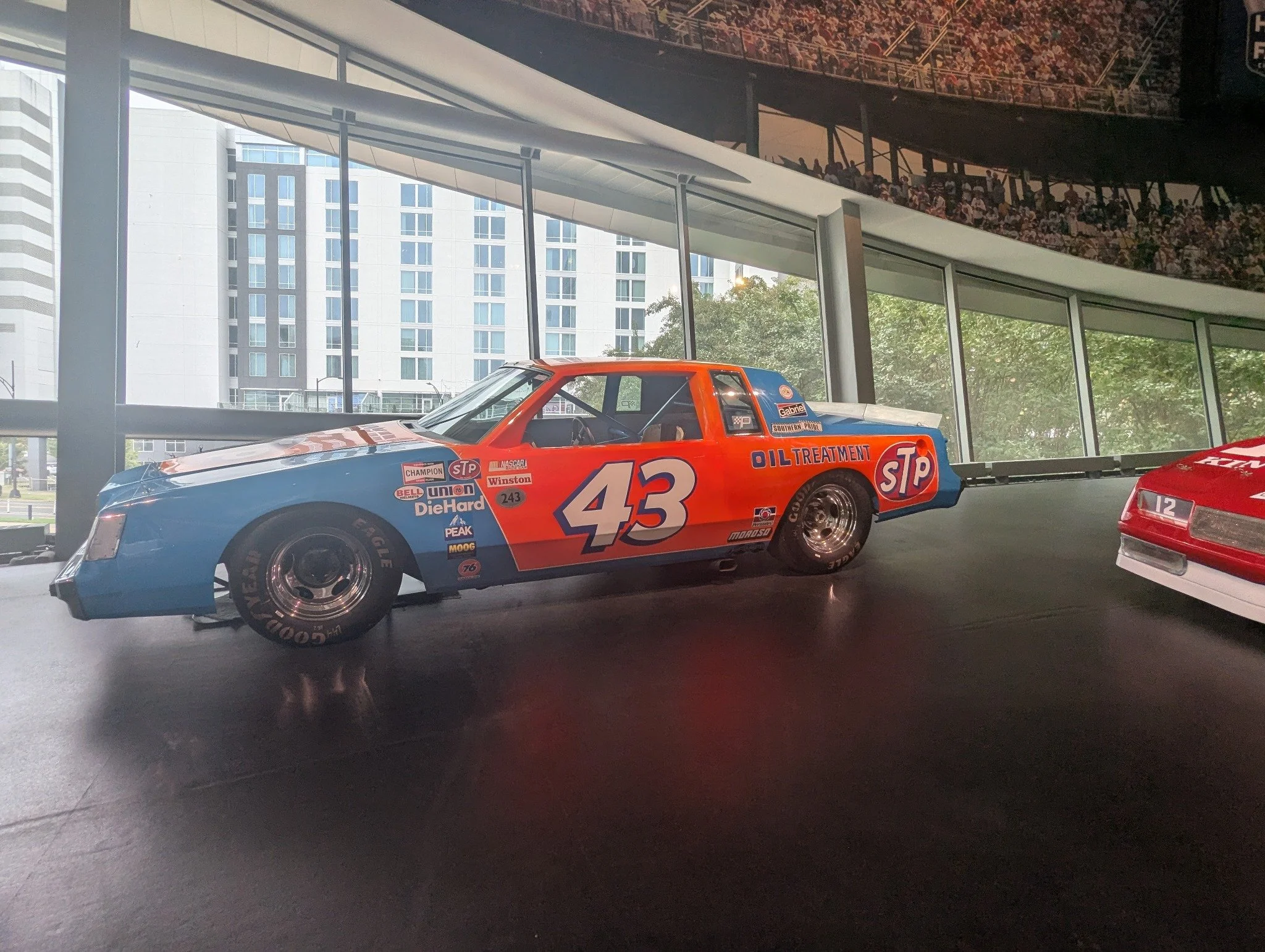
There's an extensive collection of race cars representing different eras, manufacturers, owners, and drivers. The displays tell the story of NASCAR's evolution, from its early years to the highly sophisticated sport it has become.
One particularly interesting theme was the transformation of racing operations.
The exhibits show how teams progressed from working on cars in backyard garages to operating out of enormous, technologically advanced facilities.
The difference is remarkable.
There was also a short film and a wide variety of displays that provided historical context without making the experience feel like reading a textbook.
Even on a busy race weekend, the crowds inside the exhibit areas were manageable. The displays were thoughtfully arranged, informative, and entertaining.
We never felt that the museum itself was too crowded to enjoy.
Unfortunately, we didn't give it the time it deserved.
And that was our decision.
Four Hours at the Hall of Fame, Two Hours in One Line
We spent approximately four hours at the NASCAR Hall of Fame.
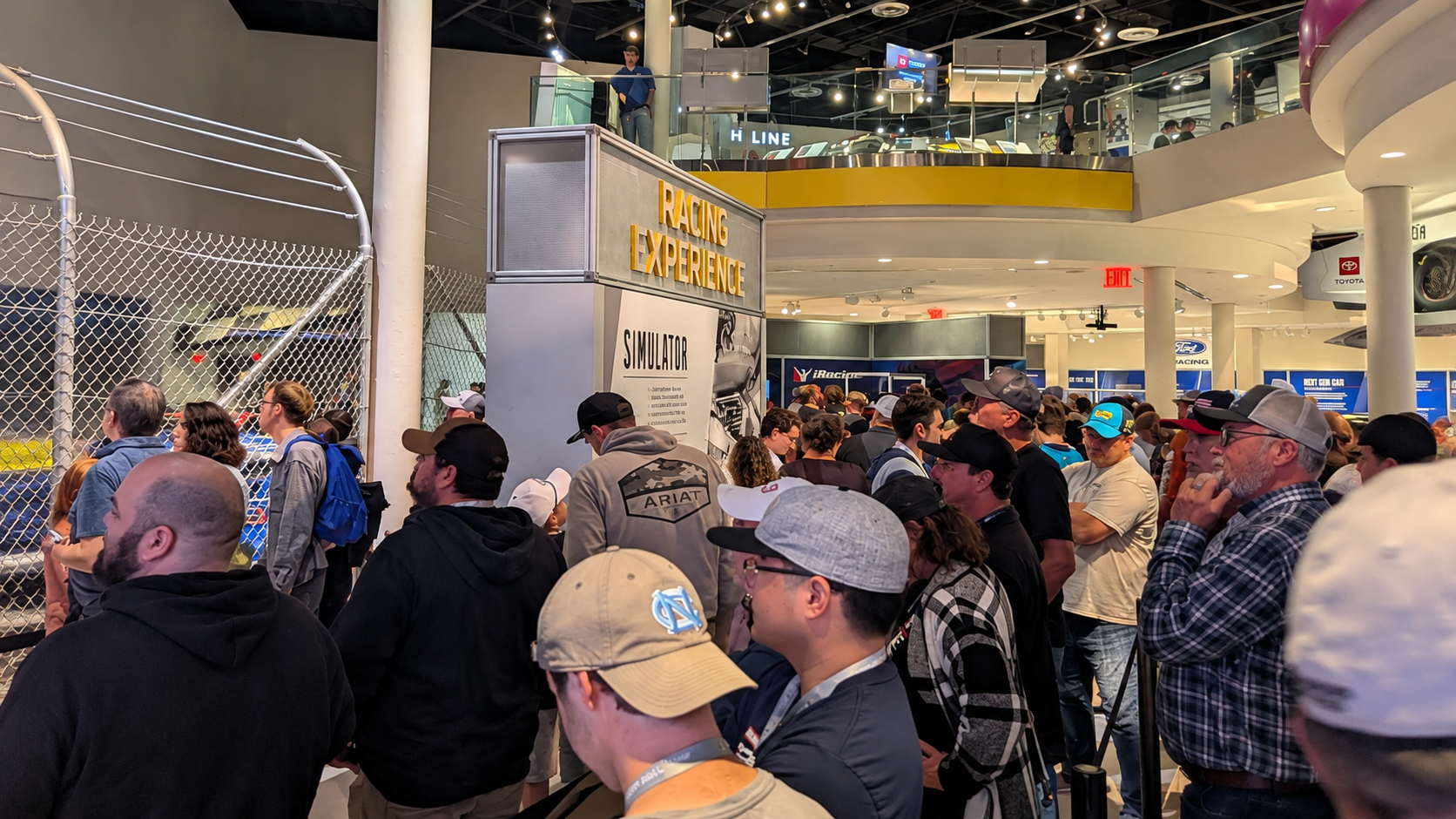
About half of that time was spent waiting for the racing simulator.
To be fair, we made that choice ourselves.
The simulator was the attraction we most wanted to experience. We could find photographs, videos, and historical information online later. Actually getting behind the wheel of a NASCAR racing simulator was something different.
So we waited.
And waited.
By the time we finally got our turn, we'd invested roughly two hours in line for a simulator experience lasting approximately five minutes.
We expected those five minutes to be the highlight of our visit.
They weren't.
The Racing Simulator: Our Biggest Disappointment
The simulator is designed to recreate the speed and excitement of NASCAR racing.
On a 1.5-mile track, a lap can take roughly 30 to 35 seconds. That's a fast-paced experience, even though nobody gets physically hurt when a virtual car crashes.
Gina and I were both participating, with Gina starting ahead of me on the grid.
A young child was in the car behind mine.
Before we even reached the racing portion of the experience, that car struck mine on pit road, triggering a reset.
Resets take time.
Then it happened again.
The other driver would accelerate too quickly, spin out, or collide with my car, causing further interruptions. At times, the other car was driving through mine before I could even get moving.
Meanwhile, the five-minute session continued counting down.
Eventually, I managed to get clear and complete one lap.
One lap after waiting two hours.
Gina had a better experience because she was ahead of the trouble. My repeated interruptions effectively kept the chaos behind her.
We weren't about to stand in line for another two hours to try again.
Children Aren't the Problem. The Experience Needs Better Management.
I don't object to children enjoying racing games.
But there is a significant difference between a child learning to operate a simulator and an adult who understands how a car handles, even in a virtual environment.
The Hall of Fame had other driving-related activities that seemed more suitable for younger participants.
There are also technological solutions that could allow novice drivers to participate without repeatedly disrupting everyone else.
Separate sessions, different skill levels, or settings that prevent collisions between participants would all be worth considering.
I spoke with two employees who expressed similar concerns. Both indicated that they had heard complaints about the situation before, but that management wanted the experience to remain inclusive.
Inclusivity is a reasonable goal.
Allowing one participant to repeatedly disrupt another person's paid experience isn't the only way to achieve it.
We Raised Our Concerns. Here's What Happened.
Before leaving, I spoke with customer service. They took my ticket information and said they would see what they could do.
I also contacted the Hall of Fame's corporate office.
To their credit, I received a response promptly.
The response explained that the Saturday of a Charlotte race weekend is among their busiest days. It also mentioned the opening weekend of a new Kyle Busch exhibit, increased attendance, and difficulties communicating simulator wait times between employees on different floors.
I understand that operating a major attraction can be challenging.
But those explanations didn't address what happened during my simulator session, or why repeated collisions and resets were allowed to consume almost the entire experience.
We had purchased two combination tickets. After I raised the issue, the tickets were downgraded to general admission and we received an $18 refund.
That was appreciated.
However, our remaining cost was $29 per person, still more than the $22 military admission rate I had originally planned to purchase.
The refund addressed part of the financial disappointment.
It didn't address the experience itself.
What We'd Do Differently Next Time
Despite those frustrations, I would absolutely visit the NASCAR Hall of Fame again.
In fact, I probably will the next time we're in Charlotte.
But I'd approach it differently.
If we were visiting during another race weekend, I'd arrive approximately 15 minutes before opening, purchase our admission online while waiting, and head directly to the simulator.
I'd initially purchase one $5 simulator experience per person.
If the lines were short and we enjoyed the first session, we could consider purchasing additional sessions.
At the prices available during our visit, military admission was $22, with simulator experiences priced at $5 each. Two simulator sessions plus admission would have cost $32 per person, subject to current pricing and availability.
Most importantly, I wouldn't allow a two-hour simulator line to dictate the rest of our visit again.
The exhibits deserve time.
Our Recommendations
🟢 Go for it! Visit the NASCAR Hall of Fame.
The museum offers an excellent look at the history of NASCAR. The cars, stories, displays, and evolution of the sport make it worth visiting, even for someone who isn't a lifelong racing enthusiast.
🟡 Maybe. Visit on a NASCAR race weekend.
We enjoyed the exhibits, and the crowds inside were manageable. But a major race weekend, particularly one affected by rain, can create significant demand for certain activities. Arrive early and allow plenty of time.
🔴 Pass on it. Waiting two hours for the simulator.
A five-minute simulator session simply isn't worth sacrificing half your museum visit, especially when the experience can be affected by other participants. We'd try it again with a short line, but we wouldn't repeat that wait.
And then there was one more exhibit.
One I hadn't expected to affect me at all.
Curated Life: The Exhibit I Didn't Expect
By this point, I was still irritated about the simulator.
But something had already begun to change my perspective.
During our Charlotte NASCAR weekend, we'd attended the celebration of life honoring Kyle Busch at Charlotte Motor Speedway. I'd posted a reel of the drone show from that evening.
After the simulator experience, I found myself looking at that reel again.
I started thinking about Kyle's wife, Samantha, and their children, Brexton and Lennix.
Here I was, frustrated because I'd spent two hours waiting for a racing simulator that hadn't worked out the way I'd hoped.
And it occurred to me that Samantha and the kids would probably give anything to have this kind of bad day with Kyle again.
A rainy Saturday. A long line. A disappointing video game.
The sort of day that would be forgotten in a week.
I told Gina what I was thinking. I was beginning to feel pretty foolish about how upset I'd been.
Then Gina stepped into the ladies' room, and I continued through the exhibits.
I turned a corner.
And there it was.
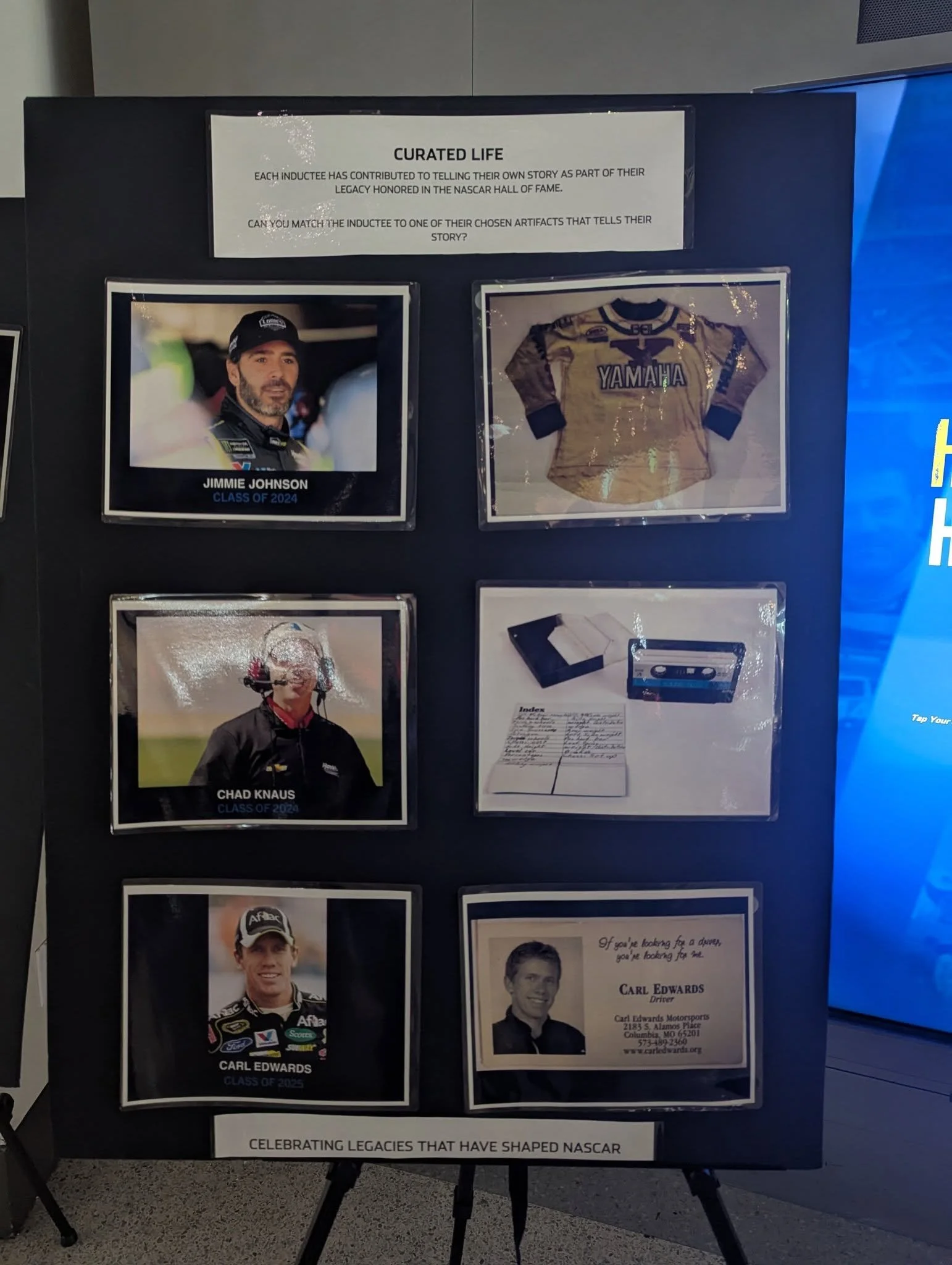
CURATED LIFE.
As the person behind Curated Upgrades, the connection was immediate.
But it wasn't just the name that stopped me.
There were several easels displaying personal items chosen by NASCAR Hall of Fame inductees.
Not championship trophies.
Not expensive cars, enormous homes, or private jets.
An old jersey. A cassette tape with a favorite song. Small things that told personal stories about the people behind the racing accomplishments.
These were individuals who had achieved extraordinary success in their sport, yet some of the things they chose to share were wonderfully ordinary.
And it hit me. Hard.
I stood there thinking about how much time I'd spent being frustrated over five minutes in a racing simulator.
Then I found myself looking at objects that represented what really mattered to people whose careers had been defined by winning.
I struck up a conversation with the docent working at the display.
I told her about the simulator, admitted that I'd been carrying a pretty poor attitude, and explained how the exhibit had suddenly put things into perspective.
She understood.
We talked about how all of us were fortunate simply to be there, enjoying a rainy Saturday at the NASCAR Hall of Fame, even if we'd rather have been watching racing at the speedway.
Compared with what some families were going through, our inconvenience was pretty small.
It was a conversation I hadn't expected to have.
I took a photograph of one of those easels. Not because it was necessarily more important than the others, but because I wanted something to remind me of what I'd felt standing there.
A reminder of what really matters, long after the frustration of that afternoon had faded.
And it became the most memorable part of my visit.
The Experience We Took Home
Would I recommend visiting the NASCAR Hall of Fame?
Absolutely.
Would I recommend standing in line for two hours for a five-minute simulator experience?
Not a chance.
Would I go back?
Without hesitation.
The Hall of Fame has much more to offer than the simulator. We enjoyed the exhibits, appreciated the history, and would happily spend more time exploring them on another visit.
But the experience that stayed with me wasn't the one we'd paid extra to enjoy.
It was a collection of ordinary personal belongings, a conversation with a docent, and a reminder that even a disappointing day can contain something worth remembering.
We started our visit hoping to experience what it felt like to be a NASCAR driver.
We left with a better appreciation of the people behind the drivers.
And for me, that turned out to be the more valuable experience.