

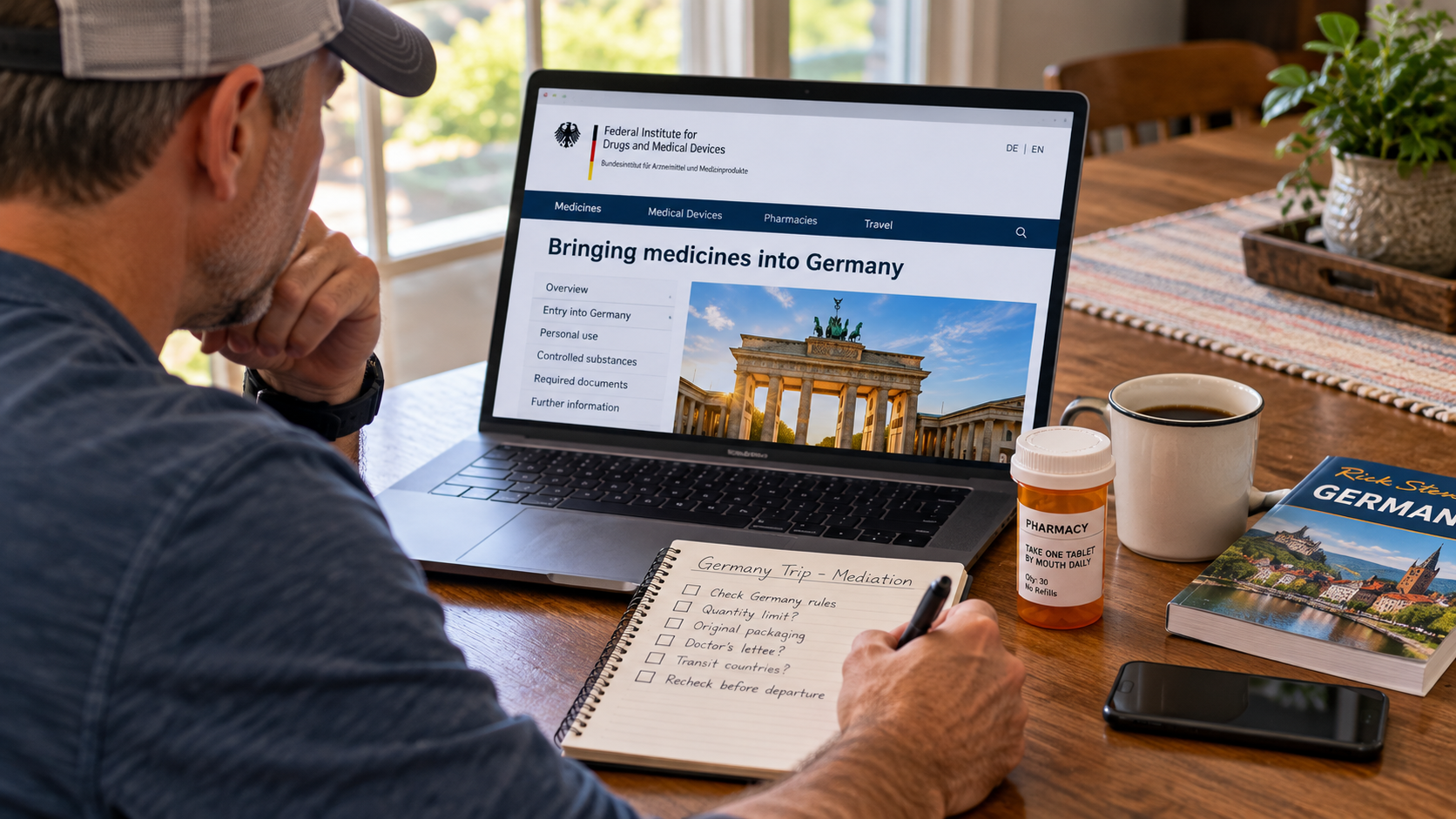
Traveling With Controlled Medications: What You Need to Check Before You Go
A valid prescription at home doesn't automatically give you permission to carry that medication everywhere you travel.
Important: This article is general travel-planning information, not medical or legal advice. Medication laws change, and requirements depend on the specific drug and destination. Verify current rules with official government sources before traveling, and talk with your prescriber before changing or stopping any medication.
You have a valid prescription. The medication is in your name. Your doctor wants you to take it.
So you can travel internationally with it, right?
Not necessarily.
A medication that's perfectly legal in the United States may be restricted, require advance permission or even be prohibited somewhere else. And this isn't just an air-travel issue. The rules can matter when you fly, drive across an international border or visit foreign countries on a cruise.
The U.S. Department of State recommends checking medication restrictions with the embassy or other official source for every country you plan to visit or pass through. Some countries require special permission for medications Americans routinely take at home.
The CDC also warns that medications legal in the United States can be prohibited or restricted elsewhere, with potential consequences ranging from confiscation or denied entry to arrest.
That's why this is something to research before you pack, not something to sort out at customs.
“I've Done It Before” Isn't the Same as “It's Allowed”
Spend five minutes in a travel group and you'll see some version of this:
“I just put everything in my pill organizer.”
“I take Adderall and travel to Japan three times a year.”
“Nobody has ever stopped me.”
And that may all be completely true.
But getting through without a problem doesn't tell you what the law is.
The speed limit may be 70, and plenty of people routinely drive 75 or 80. Most get where they're going without a ticket.
Someone still gets pulled over.
Medication rules work much the same way. Enforcement may not be consistent, but the rule and the potential consequences still exist.
So don't base your decision on what happened to a stranger in a Facebook group. Know the rule. Know the potential consequences. Then decide what level of risk you're willing to accept.
Because if things go sideways in Bangkok, Susan from the Thailand Travel Group isn't coming with you.
Your Prescription Isn't a Passport
Your prescription establishes that the medication was prescribed to you.
It doesn't require another country to let you bring it across its border.
Countries classify medications differently. Something relatively routine in the United States might be controlled somewhere else. A country may permit the medication but limit how much you can carry. Another may require advance authorization.
The CDC even cautions that a medication doesn't have to be a controlled substance in the United States to be restricted in another country.
That's why asking:
“Can I travel with prescription medication?”
isn't really enough.
The better question is:
“Can I bring this specific medication, in this strength and quantity, into these specific countries?”
That's a much more useful question.

Check Before You Pack
Start with the exact medication you're carrying.
Know the generic name, brand name if applicable, strength, dosage, formulation and quantity.
Then check the rules for your destination.
The State Department's Medicine and Health guidance is a good starting point, along with the destination country's embassy, health ministry or customs authority.
For controlled substances, the International Narcotics Control Board maintains country-submitted information specifically for travelers carrying medicines containing controlled substances.
It's useful, but don't stop there. The information comes from individual governments and may not always reflect the latest change. For the final answer, we want the current rule from the government controlling the border we're about to cross.
This is also a good time to review Traveling With Prescription Medication: The Complete Guide for the broader nuts and bolts of traveling with prescriptions.
Quantity and Packaging Can Matter
Permission to carry a medication doesn't necessarily mean permission to carry as much as you want.
Some countries establish personal-use limits. Others distinguish between ordinary prescription drugs and narcotics, psychotropic medications, stimulants or other controlled substances.
Japan is a good example of why you need to investigate the specific medication rather than simply asking whether prescriptions are allowed.
According to Japan's Ministry of Health, Labour and Welfare, many prescription medications can be brought into Japan in limited quantities without its general Import Confirmation procedure. But narcotics and certain other controlled medications fall under separate rules, some require advance permission, and some substances are prohibited.
That's a very different answer from:
“Prescription medication is allowed in Japan.”
Both statements might sound reasonable. Only one tells you enough to plan your trip.
The CDC also recommends keeping medication in its original labeled container during international travel rather than transferring it into an unlabeled container or pill organizer before arrival. It recommends keeping medication with you rather than putting it in checked luggage.
A pill organizer may be wonderfully convenient at home.
At an international border, Tuesday morning's little plastic compartment doesn't tell a customs officer very much.

What a Doctor's Letter Can and Can't Do
A doctor's letter can be extremely useful.
The State Department recommends asking your doctor for a letter explaining your medical condition and listing your prescription medications by their generic names. The CDC likewise recommends documentation that identifies the medication, dosage and reason it's being used.
Depending on the destination and medication, you may also need a copy of the prescription, an import certificate, advance authorization or another document required by that country's government.
But here's the distinction that matters:
A doctor's letter documents why you need the medication. It doesn't change another country's law.
Think of it as documentation, not diplomatic immunity.
If a country requires advance authorization, your doctor's letter may be part of that process.
If the medication is prohibited, waving a letter from your physician at customs doesn't magically make the prohibition disappear.
Don't Forget Where You're Connecting
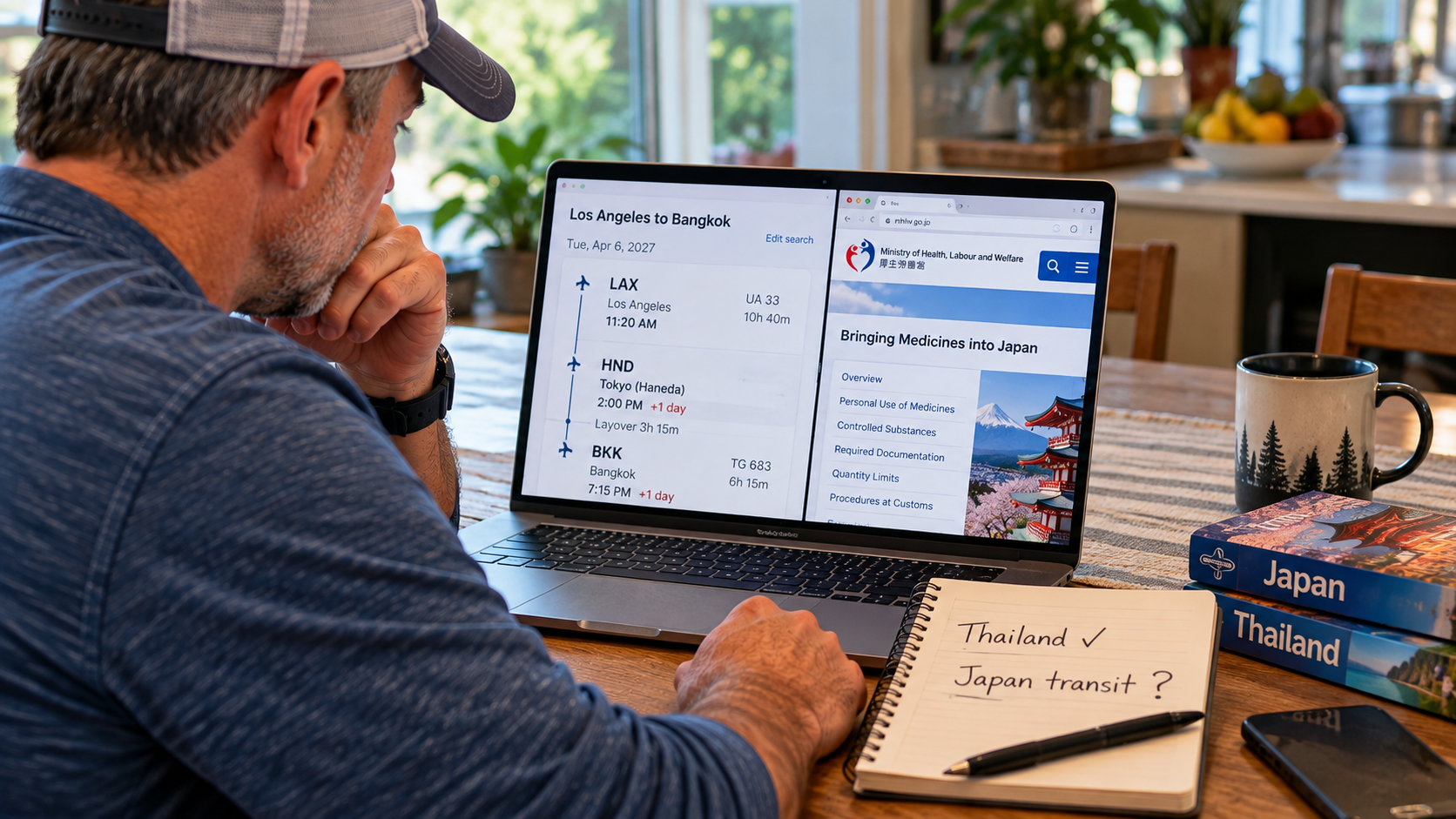
Your destination may not be the only country worth checking.
The State Department recommends checking restrictions for countries you plan to visit or pass through, while the CDC specifically advises travelers to consider countries where they'll pass through customs during a layover.
That doesn't mean every two-hour airport connection automatically creates the same requirements as entering the country.
It means don't assume a connection can't matter.
Pay particular attention if your itinerary requires you to clear immigration or customs, collect and recheck luggage, change airports or otherwise enter the country.
If you're flying:
Los Angeles → Tokyo → Bangkok
Thailand isn't necessarily the only country to research.
Do that research at your kitchen table a month before departure, not while staring at a customs officer in Tokyo.
What If Your Medication Isn't Allowed?
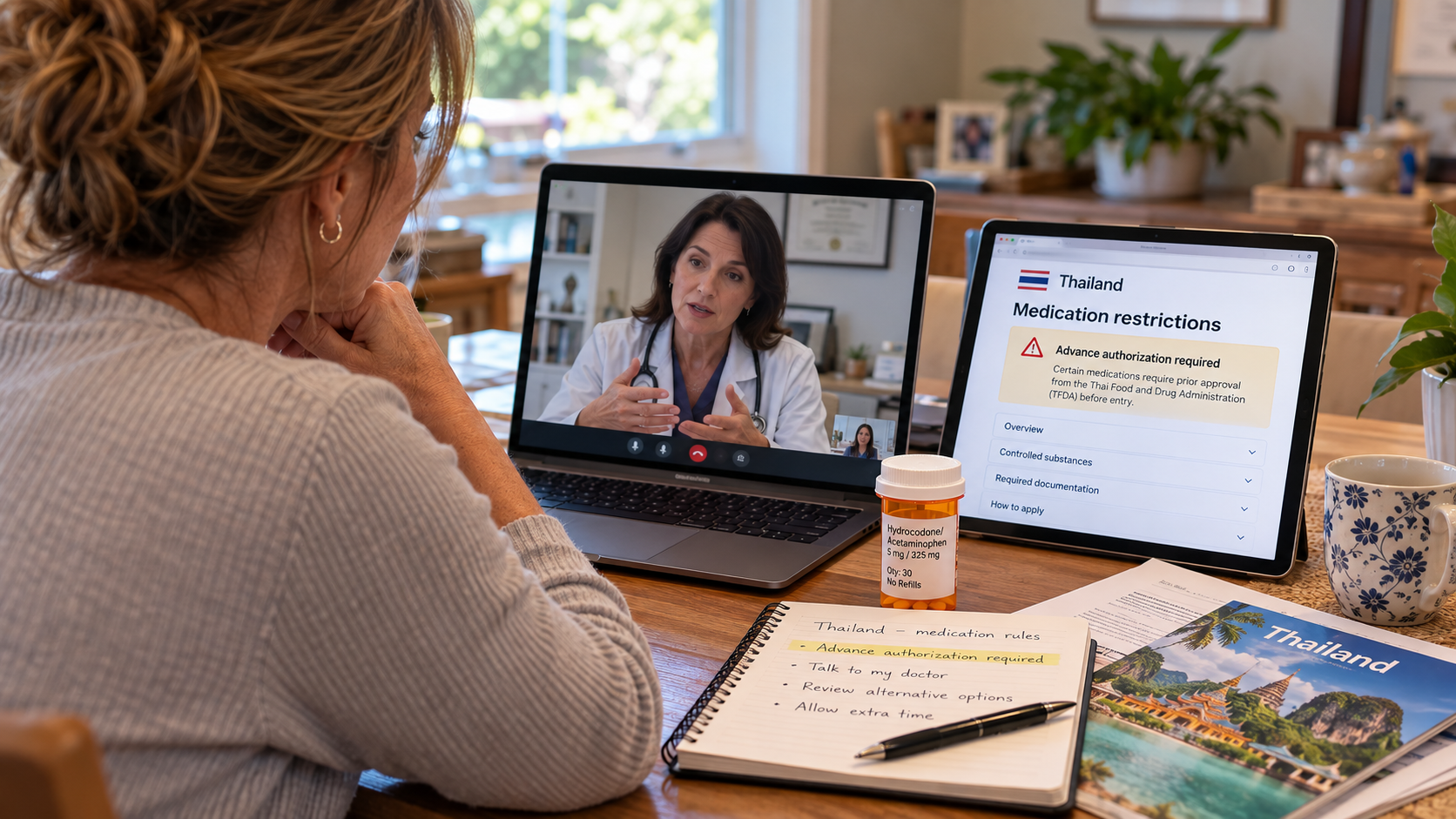
Finding a problem early gives you options.
Depending on the medication and destination, there may be an authorization process. Your physician may be able to provide required documentation. There may be another legitimate option appropriate for your medical situation.
But that's a conversation for your prescriber.
Don't stop, reduce, substitute or change a prescribed medication on your own because of a travel rule.
And don't assume you'll simply buy a replacement when you arrive. Drug names, formulations and availability differ internationally, and the CDC warns that counterfeit or substandard medications can be a concern in some destinations.
If something happens to your medication while you're already traveling, How Do You Replace Prescription Medication in Another Country? covers that problem in more detail.
Sometimes the answer may even be reconsidering the destination. The CDC notes that when a required medication is prohibited and permission can't be obtained, changing the travel plan may be the safest option.
That's not a particularly exciting travel hack.
It's considerably better than discovering the problem at the border.
Driving Across the Border? The Rules Still Apply
Flying isn't what triggers another country's medication laws.
Crossing the border does.
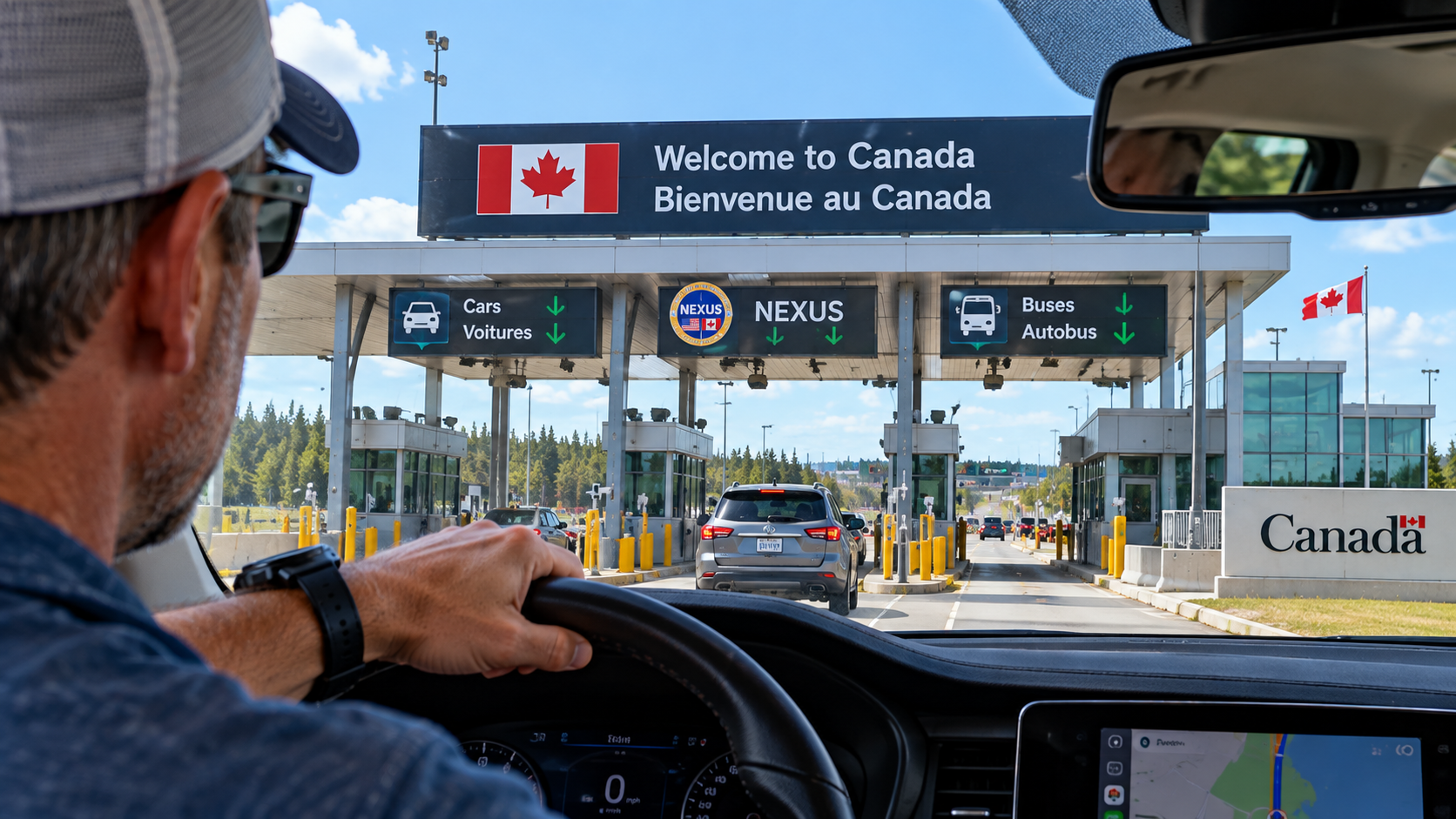
That means driving into Canada or Mexico deserves the same advance research as getting on an international flight.
Canada gives us a good real-world example.
Under Canada's current rules, travelers who meet the requirements can generally bring up to a 90-day supply of a controlled substance based on the usual daily dose. The medication must meet Canada's requirements, including appropriate labeled packaging, and controlled substances must be declared to customs when entering the country.
Health Canada provides the current requirements for travelers entering and leaving Canada with prescription medication containing controlled substances.
And yes, crossing the border in your car is still crossing an international border.
Mexico has its own medication and controlled-substance laws. Rather than relying on somebody's experience at a particular border crossing or assuming the Canadian rules apply there too, check the current Mexican requirements for your specific medication before you leave.
The windshield doesn't create a medication-law exemption.
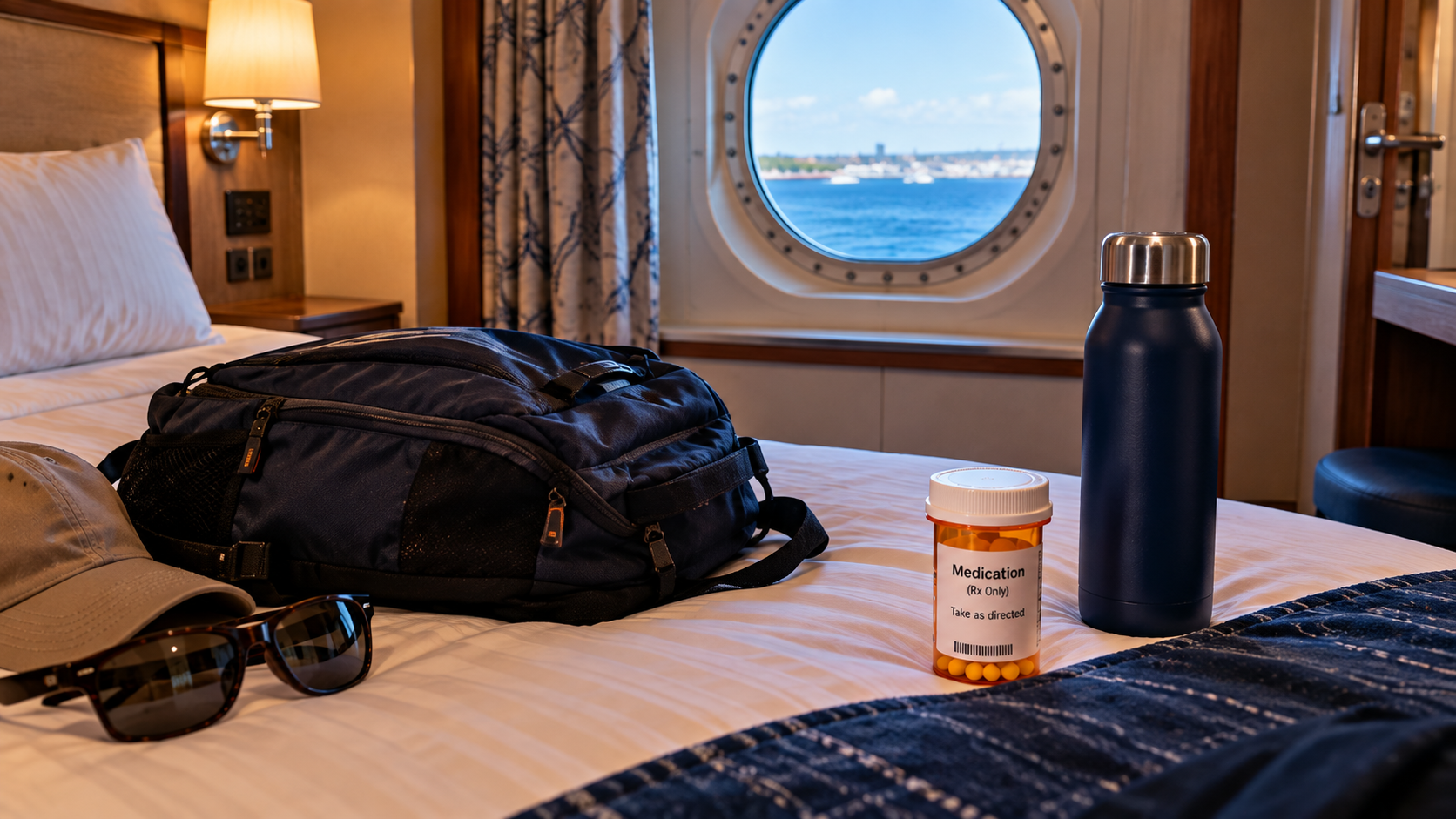
What About a Cruise?
Cruises add another wrinkle because one vacation can involve several countries.
Start by checking your cruise line's current policy for carrying prescription medication. Then investigate the medication requirements for the countries on your itinerary, particularly if you plan to carry the medication ashore.
A seven-night cruise could potentially put you in three or four different jurisdictions without ever changing hotel rooms.
Don't assume that because you boarded the ship legally in Florida, your medication is automatically legal everywhere the ship goes.
Likewise, don't assume that simply leaving medication aboard automatically resolves every legal question. Rules and circumstances vary by country.
The better question isn't:
“Can I take my prescription on a cruise?”
It's:
“What are the rules for this medication on this cruise itinerary?”
If you're carrying CBD, medical marijuana or related products, that's a separate issue with its own set of restrictions. We cover that in Can You Travel With CBD or Medical Marijuana?
Mailing It Ahead Isn't an Easy Workaround
Suppose a country limits how much medication you can carry.
Can you just mail another bottle to your hotel?
Don't assume so.
The CDC warns that mailing medication internationally or transporting medication for someone else can create import or export issues and may require authorization.
Canada, for example, doesn't allow travelers to use its personal traveler provisions simply to mail controlled substances into the country.
Research the rules rather than trying to outsmart them with FedEx.
Bringing Medication Home Is a Separate Question
There's one more border crossing travelers sometimes forget:
Coming home.
Suppose you legally obtain medication while traveling overseas. That doesn't automatically mean you're allowed to bring it into the United States.
The FDA's guidance on importing drugs for personal use explains that foreign medications generally must meet U.S. requirements, with only limited circumstances in which personal importation of an unapproved drug may be allowed.
Controlled substances can introduce additional federal requirements.
So:
“I was allowed to buy it there” does not mean “I'm allowed to bring it home.”
That's a separate question requiring a separate answer.
The Curated Upgrades Takeaway
Most travelers carrying legitimate prescription medication aren't trying to smuggle anything.
They're simply trying to take the medicine they use at home with them on vacation.
Unfortunately, good intentions aren't the rulebook.
You don't need to memorize the controlled-substance laws of the world. You just need a repeatable process for your medication and your trip:
IDENTIFY → DESTINATION → TRANSIT → QUANTITY → DOCUMENTATION & PERMISSION → RECHECK
Identify exactly what you're taking.
Check every destination that matters.
Look at relevant transit-country requirements.
Verify how much you can carry.
Get any required documentation or advance permission.
Then recheck the official guidance shortly before departure because regulations change.
And perhaps most importantly, separate “someone else got away with it” from “this is permitted.”
Those are two very different pieces of travel advice.
Susan from the Facebook group can tell you what happened on her trip.
The government at the border gets to tell you what happens on yours.