

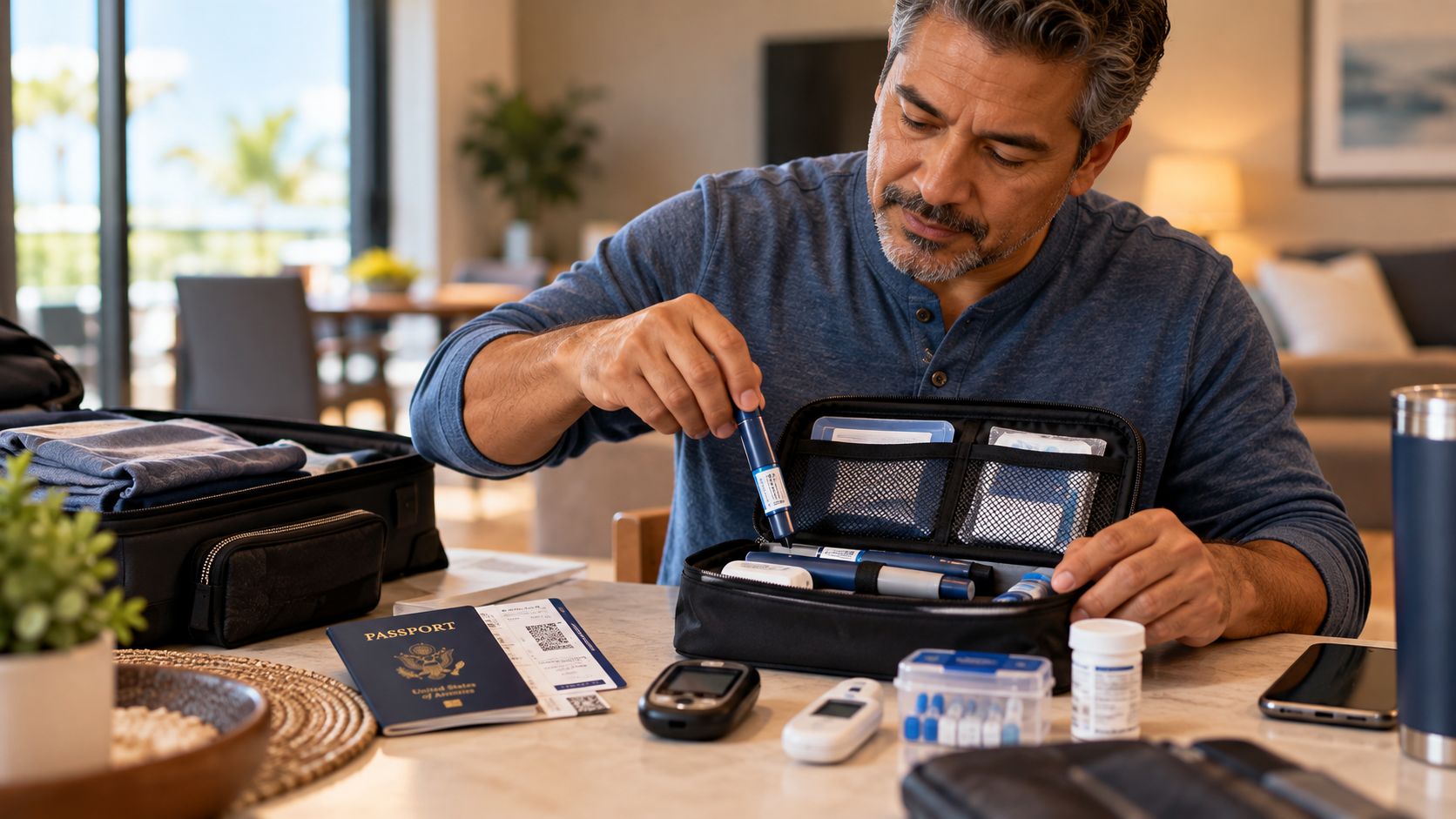
Traveling With Insulin: What to Know Before You Go
From airport security to hotel refrigerators, traveling with insulin requires a little extra preparation. Here's what to check before leaving home and how to prepare when things don't go according to plan.
Traveling with insulin involves more than remembering to pack your medication.
There's airport security to consider, temperature-sensitive supplies to protect, and the possibility of a flight delay, a hotel refrigerator that doesn't work properly, or medication that gets lost or damaged along the way.
None of that means you shouldn't travel. It simply means a little preparation can prevent some very unpleasant surprises.
And here's the most important thing we'll tell you: We can help you plan the trip. Your doctor and pharmacist can help you plan for YOUR insulin.
Not all insulin products have the same storage requirements, dosing schedules or handling instructions. What works for another traveler may not be appropriate for you.
Medical disclaimer: This article provides general travel-planning information, not medical advice. Consult your doctor, diabetes care team or pharmacist about your specific insulin, equipment, treatment schedule and emergency procedures. Follow the manufacturer's instructions for your particular products.
Start With YOUR Insulin
Before making travel arrangements for your medication, talk with your doctor, diabetes care team or pharmacist.
The CDC recommends preparing for travel with diabetes, including bringing additional medication and supplies, understanding how travel may affect your routine, and discussing medication adjustments before departure.
Ask about your particular insulin and itinerary:
Does my insulin need refrigeration during this trip?
What temperatures can it safely tolerate, and for how long?
What's the best way to transport and protect it?
Do I need to adjust my medication schedule when crossing time zones?
How much extra insulin and equipment should I bring?
What should I do if my insulin is lost, overheated, frozen or otherwise damaged?
If I use a pump, what's my backup plan if it stops working?
If you're crossing several time zones, take a look at Medication Across Time Zones: Which Clock Should You Follow? It's a question worth discussing with your healthcare professional before departure.
The CDC recommends packing twice as much diabetes medication as you expect to need, when practical. Also make sure you have enough compatible testing supplies, needles, pump supplies and other equipment for your particular treatment plan.
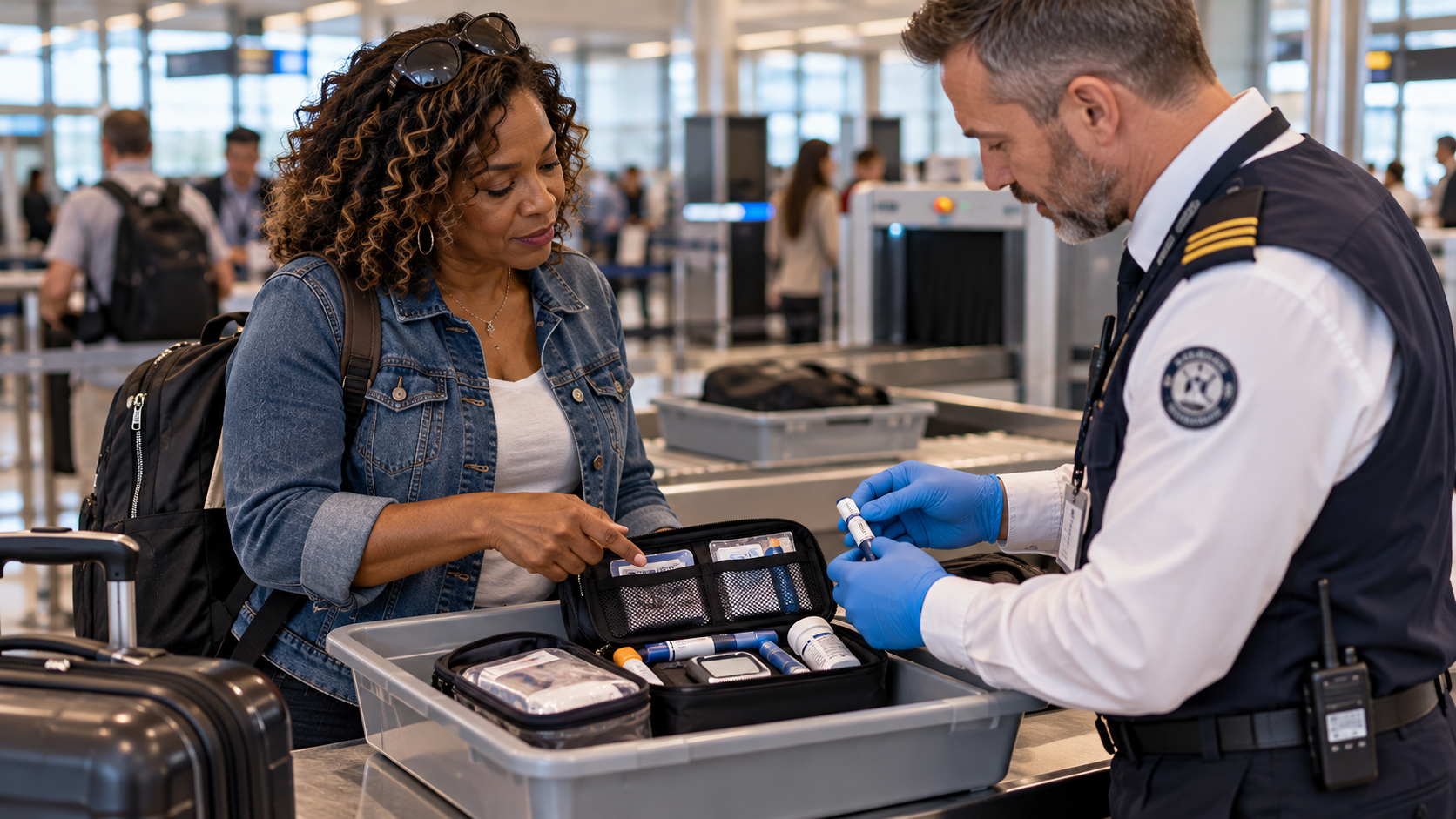
Getting Through Airport Security
The good news is that you can travel through U.S. airport security with insulin and necessary diabetes supplies.
The Transportation Security Administration's guidance on insulin and medical supplies explains that insulin, syringes, testing equipment and related supplies are permitted, subject to screening.
Medically necessary liquids can exceed the usual 3.4-ounce carry-on limit. Cooling packs and other medically necessary accessories may also be permitted, subject to applicable screening procedures.
Keep your supplies organized and tell the security officer what you're carrying before screening begins.
If you use an insulin pump or continuous glucose monitor (CGM), check the manufacturer's instructions for your exact device before traveling. Certain screening equipment may not be appropriate for some devices. Inform security personnel and request an alternative screening procedure when necessary.
Allow Extra Time, Especially When Flying Home
Even when everything you're carrying is permitted, medical supplies or devices may require additional inspection.
Allow extra time to get through security.
This is particularly important when flying home from another country.
TSA rules govern U.S. security checkpoints. Airports overseas operate under their own procedures, and you may encounter different screening requirements, unfamiliar equipment or language barriers.
What went smoothly on your outbound flight might take longer on your return.
Check the security guidance for the airports you'll be using, including international connections.
A little extra time at the airport is preferable to rushing through an unfamiliar screening process while worrying about your medication.
Keep Your Insulin With You
Your insulin and essential diabetes supplies belong in your carry-on luggage, not your checked suitcase.
Checked bags can be delayed, lost or exposed to temperature extremes. The CDC specifically advises against checking insulin because it can become too cold in the baggage compartment.
Keep your medication and necessary supplies where you can access them during the journey.
If the airline requires you to gate-check your carry-on, remove your insulin and other essential medical supplies first.
And remember that temperature protection matters during ground transportation, too. An insulin kit left in a hot parked car can be a problem even if it traveled perfectly well on the airplane.
Does Insulin Always Need Refrigeration?
Not necessarily. It depends on YOUR insulin.
Many unopened insulin products require refrigeration. Some products can remain at specified room temperatures for a limited period, particularly once they're in use.
But those limits aren't universal.
The FDA's guidance on insulin storage explains how temperature extremes can affect insulin and why proper handling matters.
Your particular insulin may have different requirements depending on the formulation, packaging and whether it's unopened or already in use.
Ask your pharmacist about your exact product.
Find out how long it can safely remain outside refrigeration, what temperature range is acceptable, and what to do if it gets too hot or freezes.
If you need an insulated carrier, choose one appropriate for your medication's requirements. Don't place insulin directly against frozen cooling packs where it could freeze.
And don't assume that putting medication in a cooler automatically keeps it at the correct temperature.
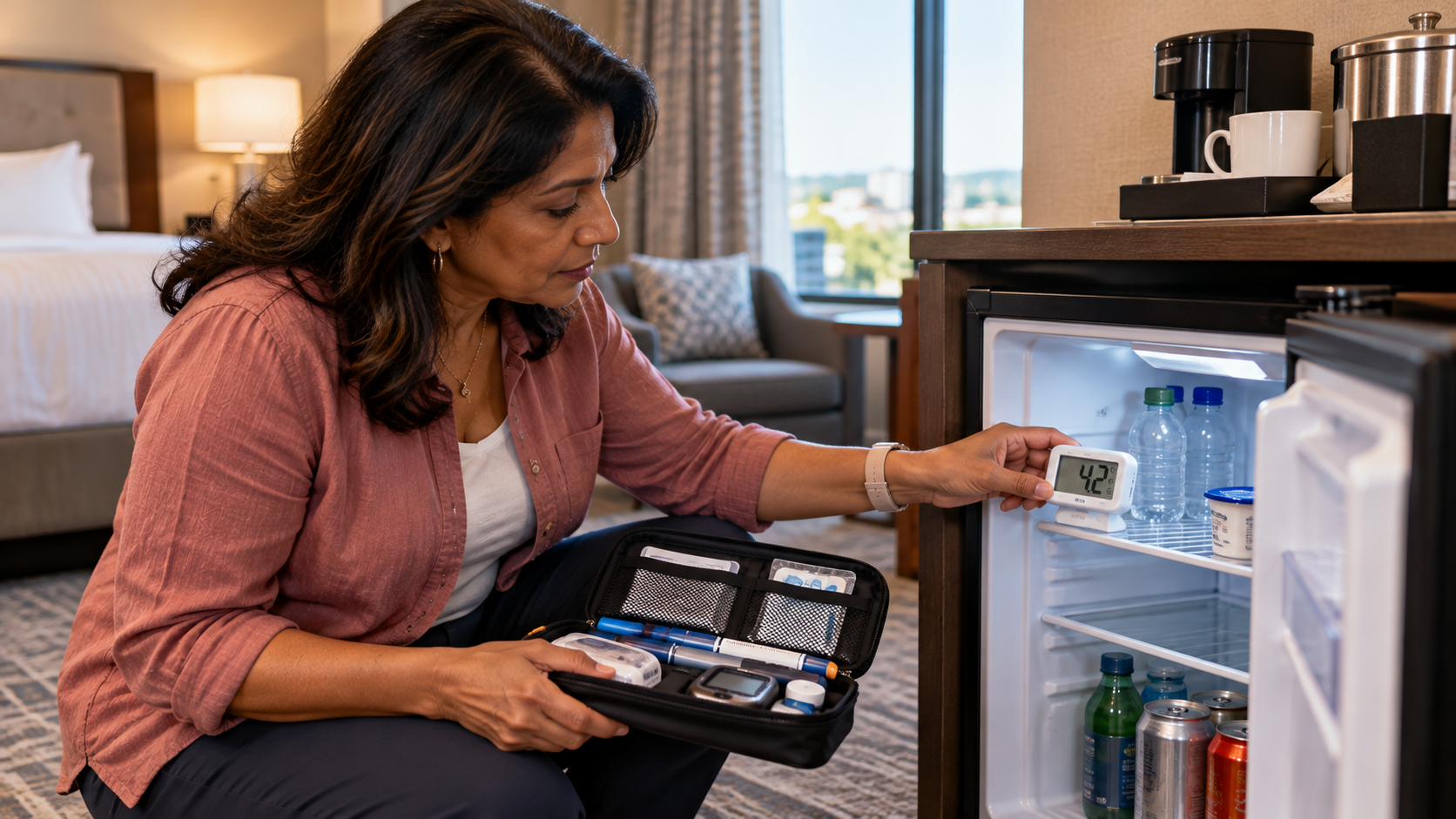
That Hotel Refrigerator Might Not Be What You Think
You've arrived at the hotel. There's a refrigerator in the room. Problem solved?
Maybe.
First, determine whether your particular insulin actually needs refrigeration during your stay.
If it does, verify that the refrigerator can maintain the required temperature.
Some hotel minibars are intended primarily for beverages, and not every unit maintains a consistent temperature suitable for medication. Other refrigerators may have spots cold enough to freeze items placed against the back wall.
Before booking, ask the hotel whether suitable medication refrigeration is available.
If your insulin requires a specific temperature range, explain that requirement. Consider using a small refrigerator thermometer to verify the actual temperature.
And think about the rest of your itinerary. A refrigerator at the hotel won't help during a long sightseeing excursion or a six-hour drive unless you've planned how to protect your medication along the way.
International Travel: Check Before You Leave
When traveling abroad, check the destination country's requirements for prescription medication, injectable supplies and medical documentation.
The U.S. State Department's Medicine and Health guidance is a good place to begin, followed by the destination government's official requirements.
Carry copies of your prescriptions, including generic medication names. Ask your healthcare professional whether you should also carry a letter explaining your need for insulin and injection equipment.
Our Traveling With Prescription Medication: The Complete Guide covers the broader documentation and international travel questions.
There's another consideration: What happens if you need replacement insulin abroad?
Your particular product might be sold under a different name, require a local prescription or not be available at all.
Before departure, ask your healthcare professional what information you should carry and how to obtain appropriate medical help if a replacement becomes necessary.
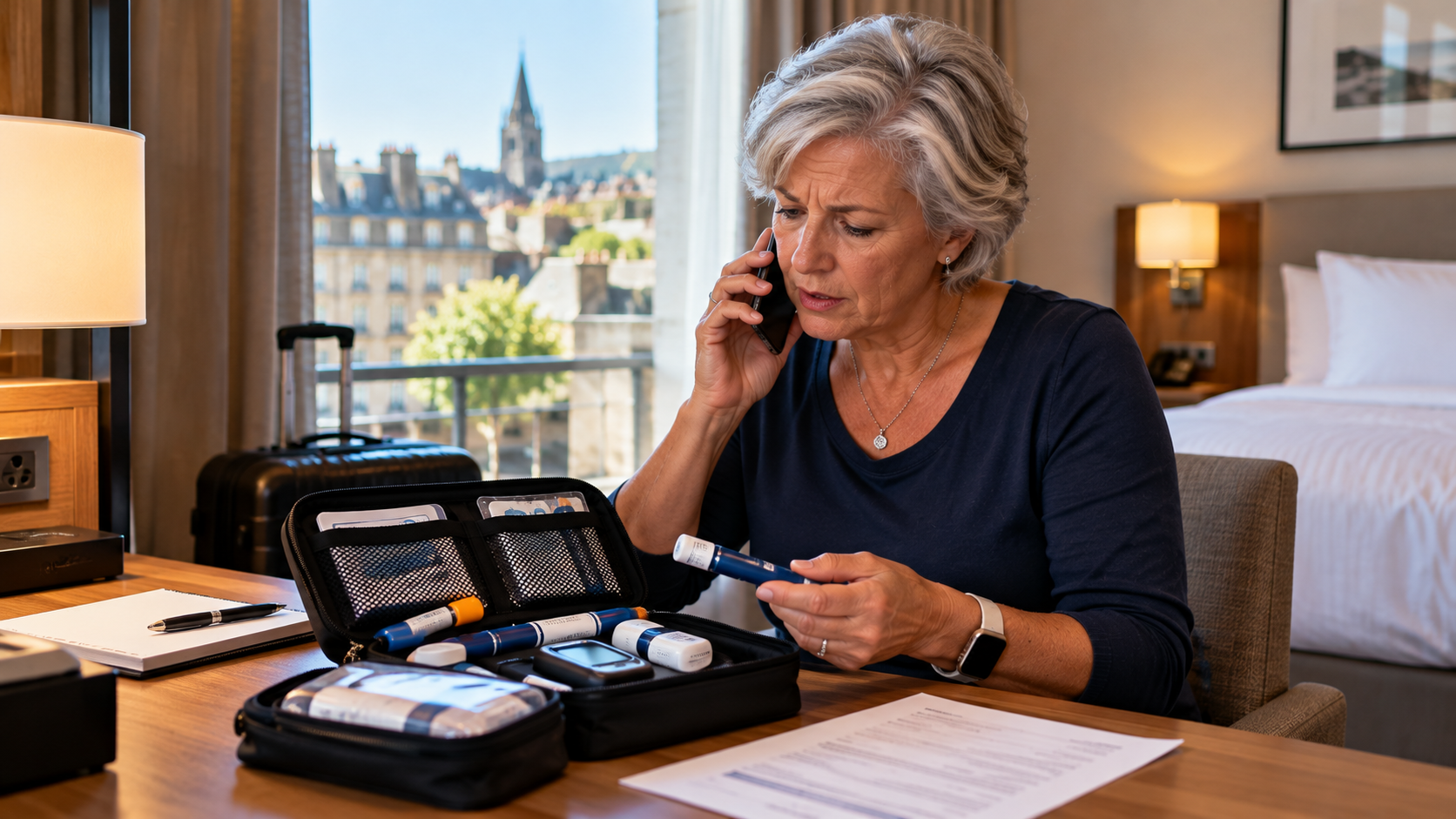
What If Your Insulin Is Lost or Damaged?
Nobody plans to lose their insulin. But bags disappear, refrigerators malfunction, and medication can be exposed to temperatures outside its permitted range.
Know what to do before it happens.
Ask your doctor or pharmacist how to recognize a possible storage problem, whom to contact, and what steps to take if your insulin becomes unusable.
If you suspect your insulin has been frozen, overheated or otherwise compromised, seek prompt advice from your pharmacist, healthcare professional or the manufacturer. Don't assume it's safe simply because it looks normal.
If you need a replacement abroad, your travel insurer's medical assistance service may be able to help locate a healthcare provider or pharmacy.
Don't independently substitute a different insulin product or change your dose. Insulin products aren't necessarily interchangeable, and switching may require medical supervision.
If you depend on insulin and cannot obtain or use your prescribed medication, seek urgent medical assistance rather than waiting until your supplies are exhausted. If you develop symptoms of a serious blood sugar emergency, seek emergency care immediately.
The FDA's emergency insulin guidance provides additional information, but your own healthcare professional should guide decisions whenever possible.
The Curated Upgrades Takeaway
Traveling with insulin takes a little more preparation, but it doesn't have to keep you from exploring the world.
Know YOUR insulin. Understand YOUR storage requirements. Keep your supplies accessible. Allow extra time for security. And have a backup plan.
Most importantly, talk with your doctor, diabetes care team or pharmacist before leaving home.
We can help you anticipate the travel challenges. They're the people who can help you prepare for the medical ones.
That's how you Travel Smarter.