

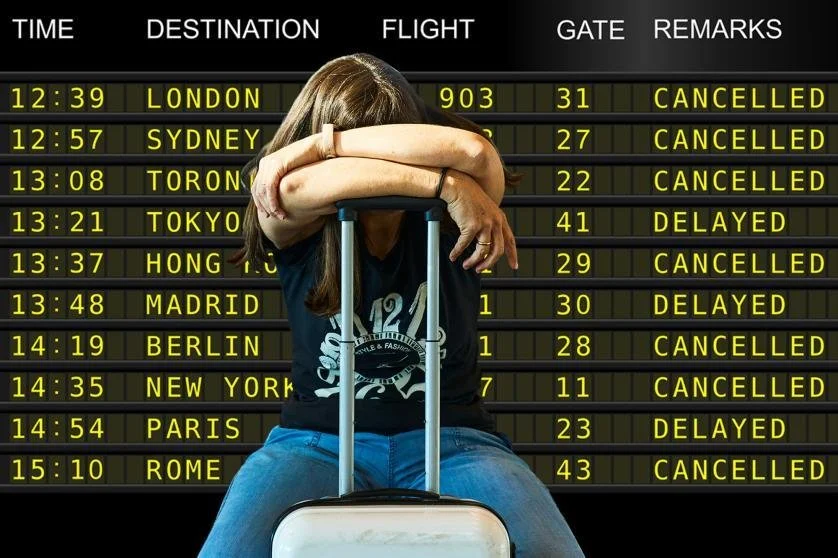
Delayed or Canceled?
What Airlines Owe You
Your flight is delayed. Or worse, canceled altogether. Are you entitled to a refund, another flight, a meal, a hotel room or even cash compensation? The answer depends on where you're flying, which airline you're flying and what caused the disruption.
There are few moments in travel quite like watching ON TIME disappear from the departures board and get replaced by DELAYED.
Then delayed becomes more delayed.
Your connection starts looking questionable. Airline alerts begin appearing on your phone. The customer-service line grows longer.
And sometimes the word nobody wants to see appears:
CANCELED.
That's when the questions start.
Will the airline put me on another flight? Can I get my money back? Who pays for dinner? What about a hotel? Am I entitled to compensation?
Unfortunately, there isn't one universal answer.
Your rights can change dramatically depending on where your trip begins and ends, which airline operates your flight, how long you're delayed, and why the disruption occurred.
And one of the biggest distinctions is whether you're traveling under U.S. rules or European/UK passenger protections.
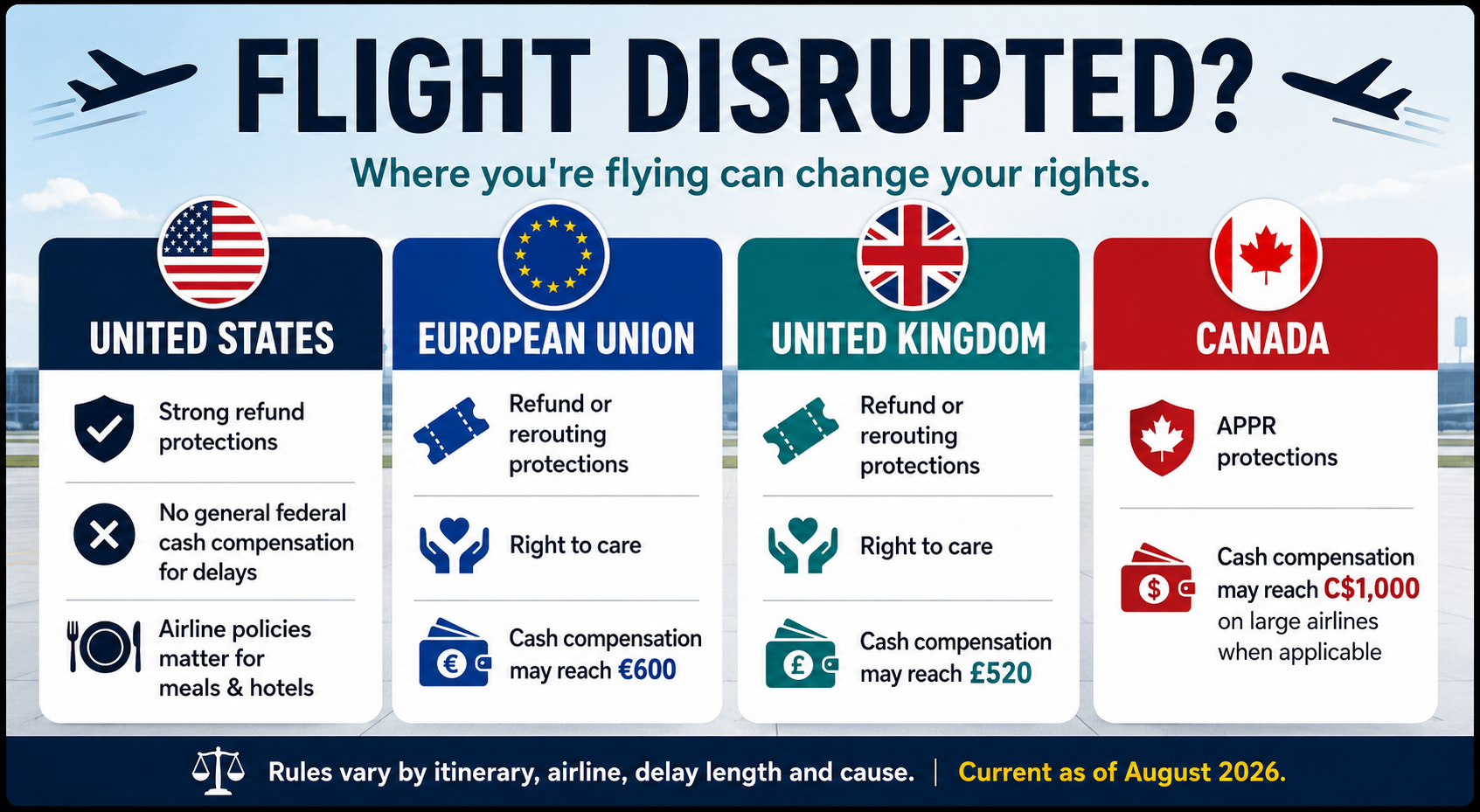
The Biggest Divide: U.S. vs. European Rules
Here's one of the most important things American travelers should understand:
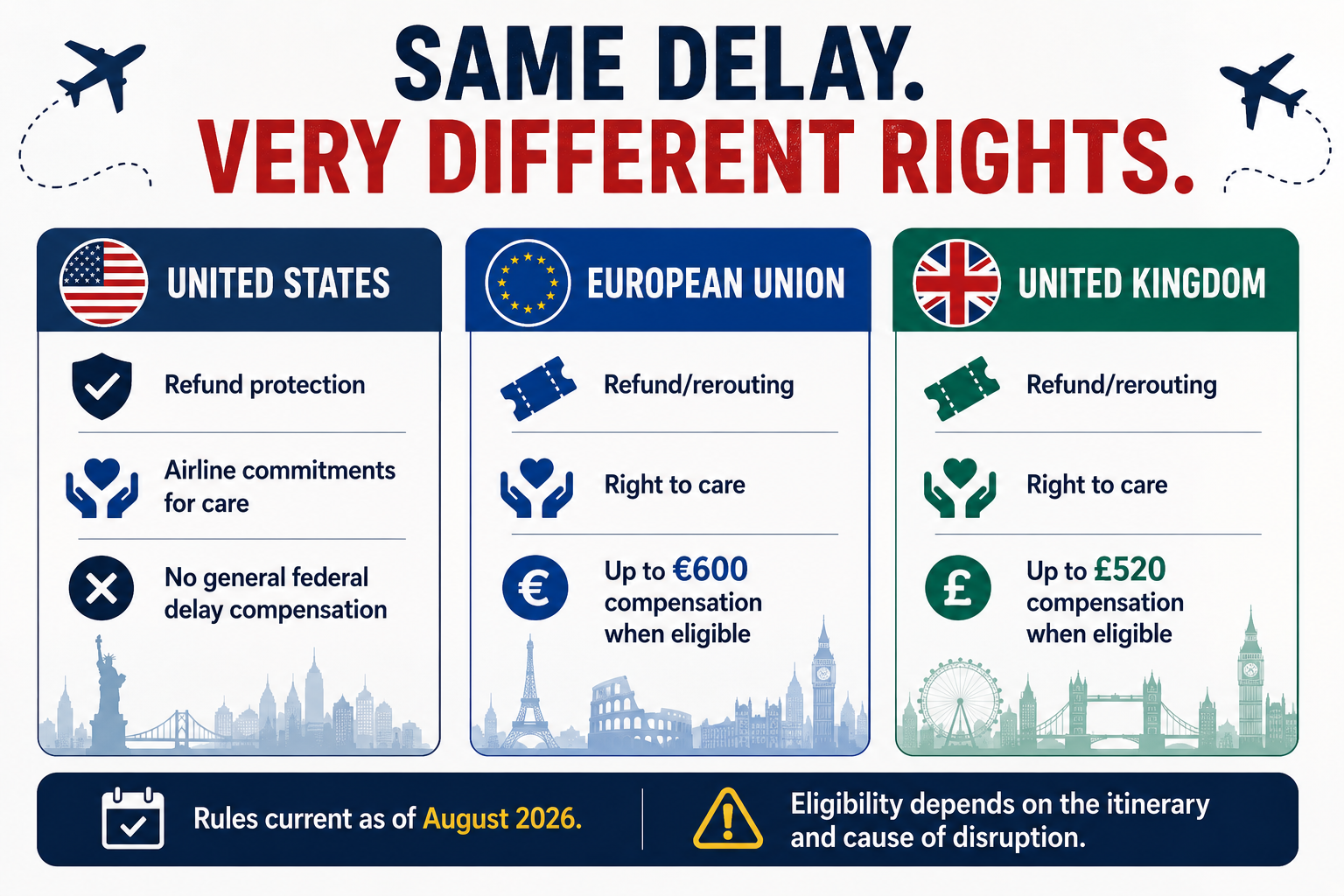
A long flight delay does not automatically entitle you to cash compensation in the United States.
That's very different from traveling under European Union or UK passenger-protection rules.
In the United States, federal protections are particularly strong when an airline cancels or significantly changes your flight and you decide not to take the trip or reject the alternative transportation offered.
In Europe and the UK, qualifying delays and cancellations can trigger not only refund or rerouting rights, but also mandatory care and potentially cash compensation.
So let's start at home.
United States: Start With Refund or Rebook
If an airline cancels your flight, you generally have two fundamental choices:
You still want to travel.
Work with the airline to get rebooked.
The disrupted trip no longer works for you.
You may be entitled to your money back.
Under current U.S . Department of Transportation rules, when an airline cancels a flight to, from or within the United States, you are entitled to a refund if you choose not to travel and don't accept the airline's alternative transportation, travel credit, voucher or other compensation. The reason for the cancellation doesn't eliminate that refund right.
That's an important distinction:
A cancellation doesn't necessarily mean the airline owes you a refund AND another flight.
The refund is the alternative when you decide not to accept the replacement travel arrangements.
What About a Long Delay?
A significantly changed flight can create a refund right too.
As of August 2026, DOT defines certain changes as significant. Among them are an itinerary scheduled to arrive three hours or more later for a domestic trip or six hours or more later for an international trip than originally scheduled. Changing the origin or destination airport, adding connections, or involuntarily downgrading a passenger can also qualify.
Again, there's an important condition:
You get the refund when you choose not to accept the significantly changed transportation or other alternative compensation.
If you take the replacement flight and complete the trip, you generally don't also get your entire ticket price refunded simply because the experience was miserable.
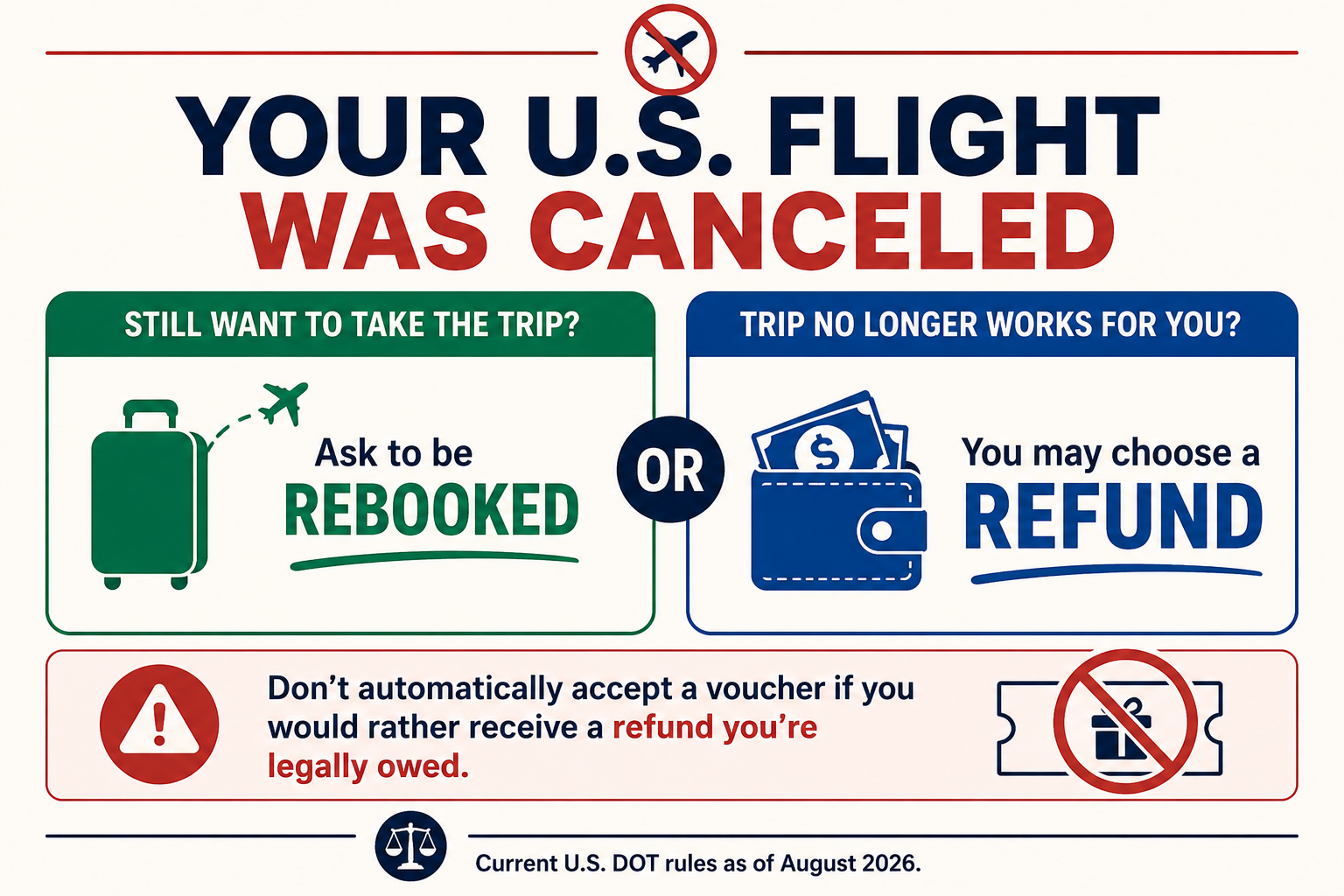
Cash Refund Means Cash Refund
This is worth emphasizing.
If you're legally entitled to a refund, you don't have to accept a future travel credit simply because that's what appears first in an airline app.
Under current DOT rules, airlines must provide automatic refunds when the requirements are met rather than substituting vouchers, credits or frequent-flyer miles unless the passenger chooses one of those alternatives.
As of August 2026, refunds generally must be issued within seven business days for credit-card purchases. DOT's current consumer refund page states 20 business days for other payment methods.
That doesn't mean vouchers are always bad.
If an airline offers a credit worth considerably more than your refund and you know you'll use it, that might be a perfectly good choice.
Just understand the trade before clicking ACCEPT.
What About Meals and Hotels in the United States?
This is where U.S. passenger protections become considerably less generous, and the rules are about to change.
There is currently no blanket federal requirement that an airline provide cash compensation simply because your flight was delayed.
Meals, hotels and ground transportation during disruptions often depend on the airline's own customer-service commitments, particularly when the disruption is considered within the airline's control.
As of September 2026, all nine airlines shown on [DOT's customer-service dashboard] commit to providing a meal or meal cash/voucher when a controllable delay leaves a passenger waiting three hours or more. Airline commitments for hotels, ground transportation and rebooking can be checked on that same dashboard.
But beginning October 19, 2026, the definition of what falls within the airline's control changes.
A new DOT rule implementing the FAA Reauthorization Act of 2024 removes 10 specific causes of delays and cancellations from the category considered within an airline's control. They include certain unexpected maintenance events, cyberattacks, government-system failures, medical emergencies, unruly passengers and several other circumstances.
DOT itself expects the change to result in airlines providing fewer amenities and compensation to passengers during affected disruptions.
That makes one question at the counter even more important:
“Is this considered a controllable delay?”
If the answer is yes, ask what the airline provides.
If the answer is no, don't assume that means you have no rights at all. Your separate refund rights for a canceled or significantly changed flight may still apply if you choose not to travel.
💡 CURATED UPGRADES TIP
Don't start spending hundreds of dollars based on what another passenger in the gate area says the airline will reimburse.
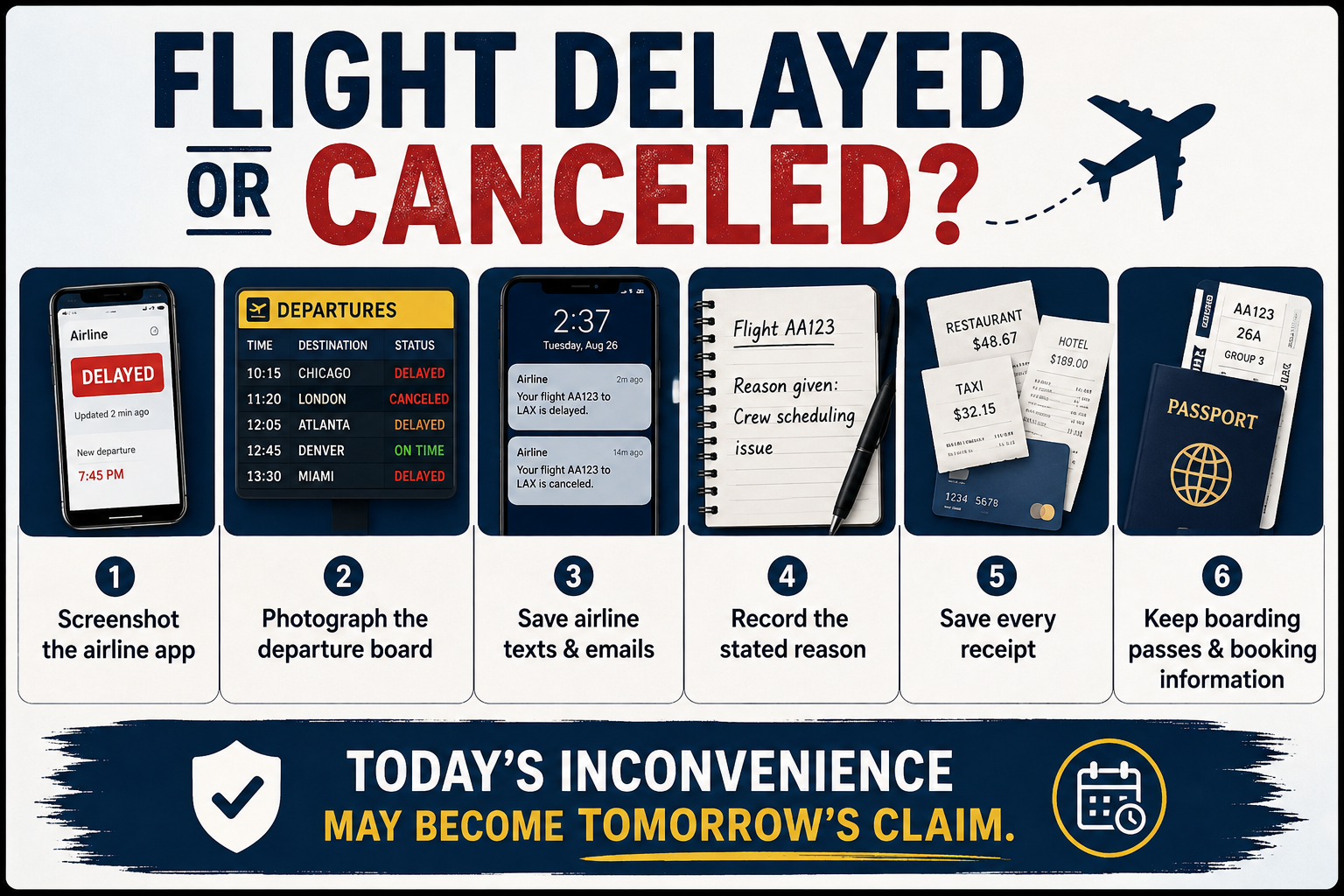
Ask the airline what it will provide or reimburse, take screenshots of the disruption information, and save every receipt for expenses you pay yourself.
Ask About Another Airline
Suppose your airline cancels tonight's flight and offers to put you on its next departure.
Tomorrow night.
Meanwhile, another airline has seats leaving in two hours.
Ask:
“Can you rebook or endorse my ticket to another airline that has availability today?”
The answer may be yes.
But this is not a universal passenger right in the United States.
As of September 2026, DOT's dashboard shows Alaska, American, Delta, Hawaiian, JetBlue and United committing to rebooking passengers on a partner airline or another airline with which they have an agreement during qualifying controllable cancellations and significant delays. Allegiant, Frontier and Southwest do not make that same commitment on the dashboard.
Beginning October 19, 2026, some disruptions that previously fell within the airline-controlled category will be excluded, potentially affecting when those commitments apply.
That's exactly why it's worth asking rather than assuming.
What If You're Flying Internationally?
Don't assume U.S. rules are the only passenger protections that may apply simply because your trip begins or ends in the United States.
Other countries may provide additional rights depending on where your flight departs, where it arrives and which airline operates it.
That's particularly important when traveling to or from Europe, the United Kingdom and countries such as Japan, where passenger protections differ from the U.S. system.
→ READ: Flight Delays in Europe: Your EU261 & UK261 Rights
→ READ: Flight Delays in East Asia: Japan, South Korea & China
Europe: A Very Different System
Cross the Atlantic and the conversation changes considerably.
European Union passenger protections can provide three different categories of help:
Care while you're stranded.
Refund or rerouting options.
Cash compensation in qualifying circumstances.
And those aren't necessarily the same thing.
Who Is Covered?
EU passenger protections generally apply when you're:
flying within the EU;
departing an EU airport for a destination outside the EU, regardless of whether the airline is European; or
arriving in the EU from outside it on an EU airline.
You don't have to be a European citizen.
That means an American traveler flying Delta from Paris to Atlanta can potentially be covered because the flight departs the EU.
But Delta flying Atlanta to Paris presents a different situation because Delta isn't an EU carrier.
The itinerary and operating airline matter.
You Could Be Owed Up to €600
Under the UK passenger-rights framework current in September 2026, qualifying cancellations and arrival delays of three hours or more can result in compensation of:
€250 for flights of 1,500 km or less
€400 for qualifying medium-distance flights
€600 for other longer flights
The precise amount and eligibility depend on the itinerary and circumstances.
That compensation isn't simply reimbursement for the sandwich you bought while waiting.
It's compensation for the disruption itself.
But there's a major catch.
Why the Flight Was Disrupted Matters
European cash compensation generally isn't owed when the airline can establish that the disruption resulted from qualifying extraordinary circumstances outside its control.
Severe weather can qualify.
Certain air-traffic-control restrictions, security risks and other external events can qualify.
That's why the reason given for your delay or cancellation matters.
And it's why I recommend documenting it.
Screenshot the airline app. Save the text message. Photograph the departure board.
If an airline employee tells you the flight is delayed because of a mechanical or crew issue, make a note of that too.
Cash Compensation and “Right to Care” Are Different
This distinction is enormously important.
Even when extraordinary circumstances mean you aren't entitled to EU cash compensation, you may still have care rights while you're stranded.
Current EU rules provide meals and refreshments after qualifying waits based on flight distance. When an overnight stay becomes necessary, hotel accommodation and transportation between the airport and accommodation can also be required.
So:
Bad weather may eliminate your €600 compensation claim.
It does not necessarily eliminate the airline's responsibility to look after you while you're stranded.
That's a very different system from the United States.
A 2026 Update Worth Watching
European passenger-rights legislation was revised in 2026.
As of September 2026, official EU materials say the familiar three-hour compensation threshold and €250/€400/€600 compensation levels are being maintained, while the revised framework adds and clarifies several protections. Because implementation of the revised framework continues to evolve, travelers should verify the current rules with official EU sources before filing a claim.
What About the United Kingdom?
Brexit didn't make UK air-passenger protections disappear.
The UK operates its own regime commonly called UK261.
Under UK rules current as of August 2026, qualifying passengers delayed beyond certain thresholds are entitled to care, including food and drink and, when necessary, overnight accommodation. A delay exceeding five hours can also give the passenger the option not to travel and receive a refund.
Qualifying arrival delays of more than three hours can produce compensation ranging from:
£220 for shorter flights
£350 for medium-distance flights
up to £520 for qualifying long-haul delays of more than four hours.
For a long-haul arrival delay between three and four hours, the current maximum is £260.
Again, extraordinary circumstances can affect compensation eligibility.
And Then There's Canada
Canada has its own Air Passenger Protection Regulations, or APPR.
The Canadian system deserves its own article because the distinctions between disruptions within an airline's control, required for safety, and outside its control can become complicated.
For now, the important takeaway is that Canada can require cash compensation in circumstances where the United States generally does not.
Under the APPR framework, qualifying disruptions within the carrier's control and not required for safety can result in compensation based on the length of the delay.
For large airlines, the figures are currently as high as C$1,000 per passenger for qualifying delays of nine hours or more.
Those figures and eligibility rules should be verified before making a claim. This information is current as of August 2026.
Don't Forget the Card You Used to Buy the Ticket
Sometimes the airline isn't the end of the story.
Many premium travel credit cards include some form of trip-delay insurance or reimbursement when you purchase qualifying travel with the card.
Depending on the card, this can potentially cover expenses such as:
lodging;
meals;
local transportation; and
certain necessities during a covered delay.
But the exact delay threshold, reimbursement limit, eligible expenses and definition of a covered trip vary by card.
So I would not publish a blanket “six hours and $500” rule here.
Instead:
Before your trip, know what the card you used to purchase your ticket actually covers.
And when something goes wrong, save the same documentation you'd want for an airline claim.
This is another topic worthy of its own Curated Upgrades article.
When Your Flight Goes Sideways: What We Do
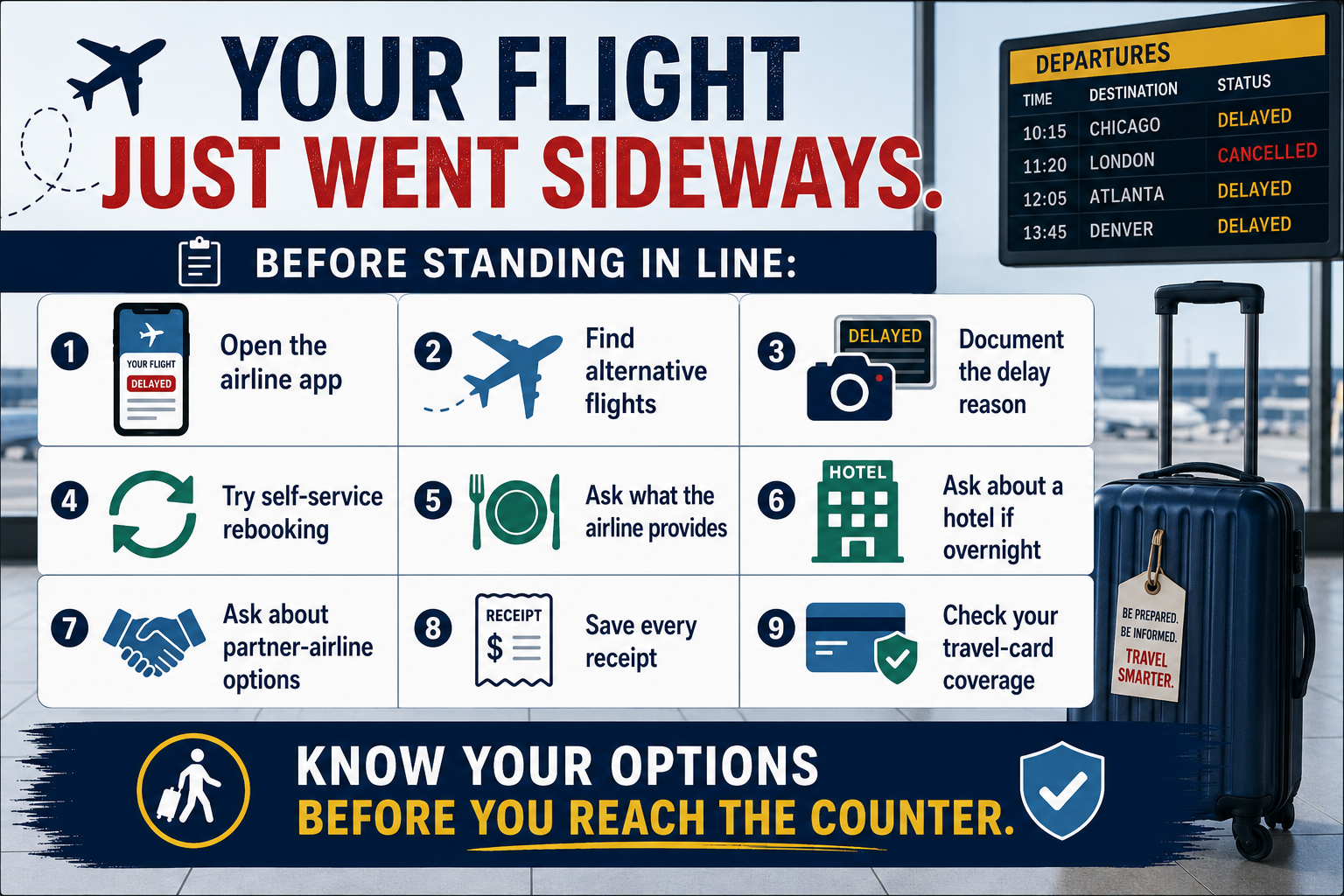
When that DELAYED or CANCELED alert appears, don't panic and don't immediately join the 150-person customer-service line without doing anything else.
Start gathering information.
Check the airline app. Sometimes you can rebook yourself before reaching an agent.
Look at other flights. Know what alternatives exist before you ask for help.
Document the reason for the disruption.
Save your boarding pass and itinerary.
Keep every receipt.
Ask whether the disruption is considered controllable.
Ask about meals or a hotel when appropriate.
Ask about another airline if your carrier can't get you moving soon.
And if the trip no longer makes sense:
Know when you're entitled to walk away and get your money back.
The Most Important Thing to Know
A delayed flight and a canceled flight aren't automatically financial windfalls.
Sometimes you're entitled to a refund.
Sometimes you're entitled to another flight.
Sometimes the airline owes you food and a place to sleep.
Sometimes you may be entitled to hundreds of dollars in compensation.
And sometimes, particularly when weather is responsible in the United States, your airline may owe you considerably less than you expect.
The key is knowing which rules apply to your particular trip.
Don't assume the passenger standing beside you has the same rights you do. Don't assume what happened on your last trip still applies today. And don't assume the first voucher offered is necessarily your only option.
Know your rights. Document what happened. Ask the right questions. Then make the decision that gets your trip back on track.
Passenger-protection laws, airline commitments and compensation amounts change. Regulatory information in this article was verified against official government sources and was current as of August 2026. Always verify current rules with the U.S. Department of Transportation, European Union, UK Civil Aviation Authority, Canadian Transportation Agency or other authority governing your itinerary before relying on a specific benefit or filing a claim.
Last updated: September 2026