

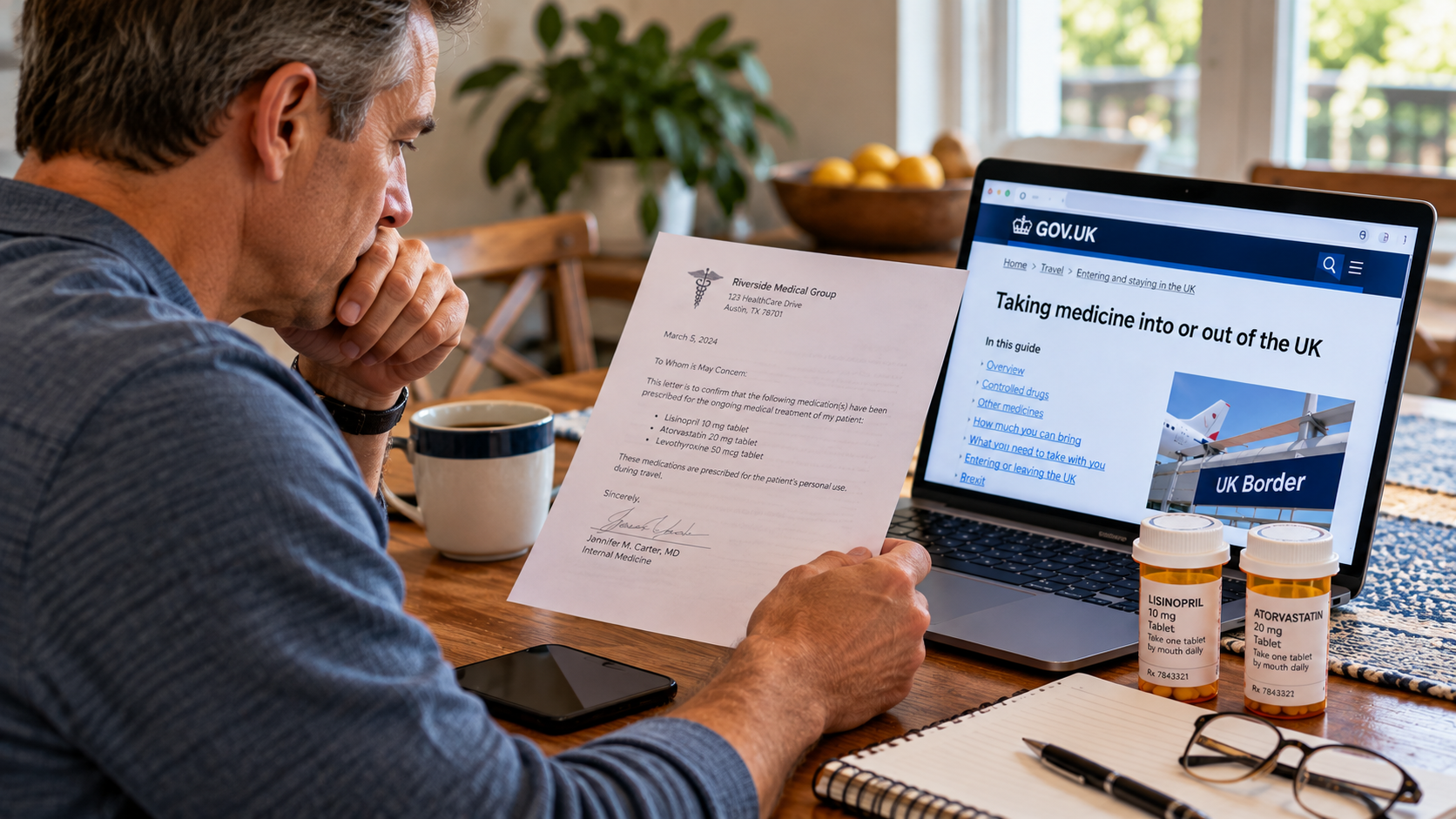
Doctor Letters: Do You Need One to Travel With Medication?
When a doctor's letter is required, when it might help, and why it doesn't automatically give you permission to bring medication into another country.
Medical and legal disclaimer: This article provides general travel information, not medical or legal advice. Medication import requirements vary by country and can change. Verify current requirements with the appropriate government authorities and consult your healthcare professional about your individual medications.
Your Doctor Wrote a Letter. You're Good to Go, Right?
You're preparing for an international trip and wondering whether you need documentation for your prescription medications.
You call your doctor's office, request a letter, and receive a signed document confirming your medications are prescribed to you.
Problem solved?
Not necessarily.
A doctor's letter can explain why you need a medication, satisfy certain documentation requirements, or help answer questions at customs.
But it does not automatically give you permission to bring that medication into another country.
Your doctor can document your medical need. Your destination country determines what you're legally allowed to import.
That's an important distinction.
What a Doctor's Letter Actually Does
A doctor's letter is a medical document, not an international permission slip.
Depending on the circumstances, it can identify your medications, explain their medical necessity, and confirm they're intended for your personal use.
But travelers sometimes confuse three different documents:
Doctor's letter: Explains your medical circumstances.
Prescription: Documents the medication prescribed to you.
Import permit or authorization: Provides official permission when required by the destination country.
One doesn't automatically replace another.
Some countries require a letter for certain medications. Others accept a prescription. Some require advance government authorization, and certain substances may be prohibited regardless of what documentation you carry.
For more about those restrictions, see Traveling With Controlled Medications: What You Need to Check Before You Go.
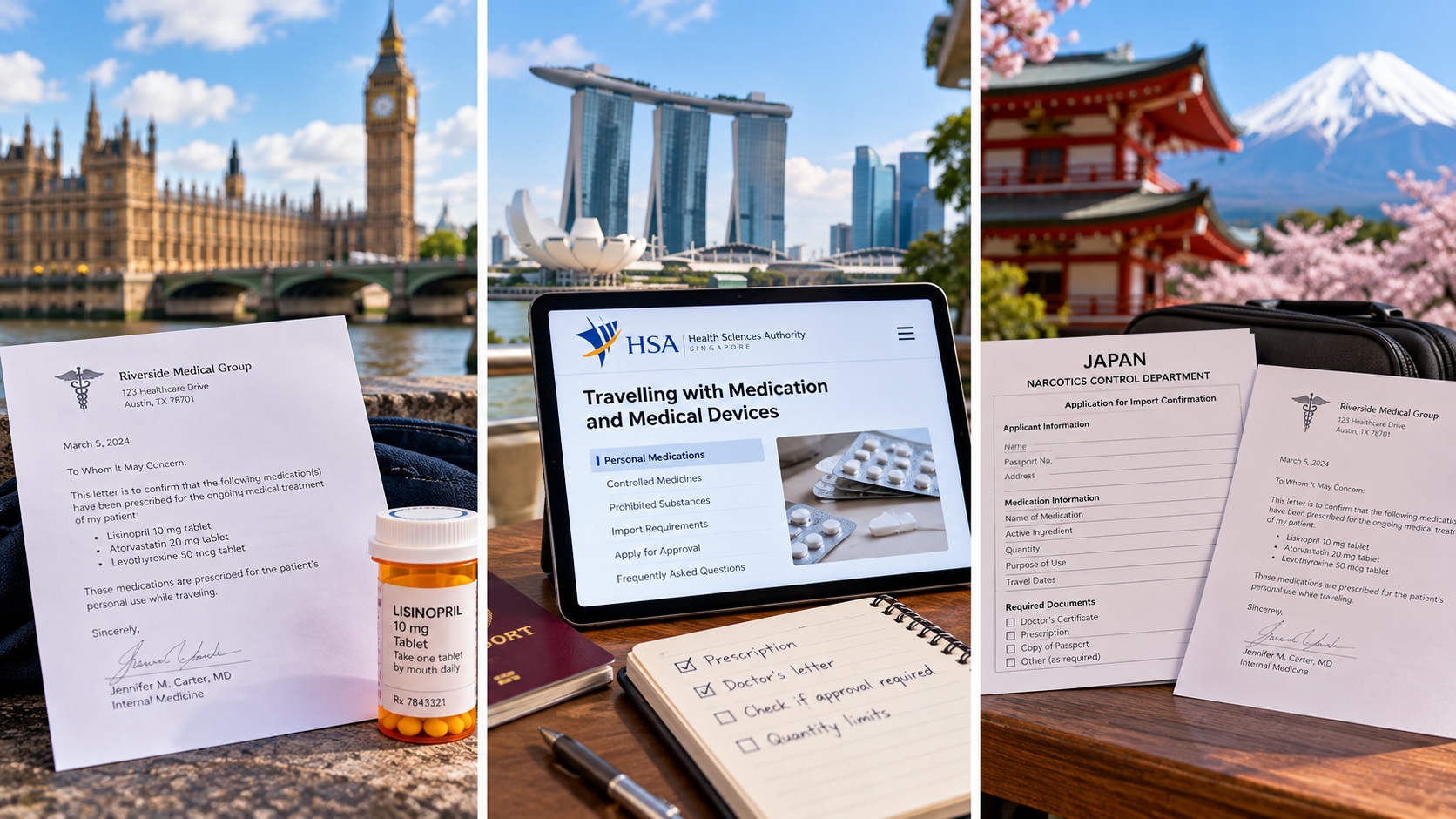
Three Real-World Examples: Yes, Maybe, and No
There's no universal rule requiring every international traveler to carry a doctor's letter.
These examples show how differently countries handle medication documentation. They are not blanket answers for every medication or traveler.
🟢 YES: The United Kingdom
The UK government requires non-UK residents carrying prescribed controlled medication to have a letter proving it was prescribed to them.
The letter must contain specific information, including medication details, quantity, travel dates, and the prescribing professional's signature.
Other restrictions still apply, including rules governing quantities and particular substances.
The takeaway: A doctor's letter can be required, but it doesn't exempt you from other medication rules.
🟡 MAYBE: Singapore
Singapore's Health Sciences Authority accepts a valid prescription or doctor's letter as supporting documentation for certain personal medications.
Some medications require separate government approval, while others are prohibited.
The takeaway: A letter may be useful or acceptable documentation, but the requirements depend on the medication.
🔴 NO: Japan, When Government Authorization Is Required
Japan regulates certain medications and the quantities travelers may bring into the country.
Some require advance authorization, while others cannot legally be imported even with a valid prescription.
A doctor's letter cannot replace a required permit or override a prohibition.
Japan's Narcotics Control Department and the Embassy of Japan in the United States provide official guidance.
The takeaway: When government permission is required, a doctor's letter alone isn't enough.
Your Medication, Your Destination, Your Rules
Two people traveling to the same country may face different requirements.
One might carry a small supply of an ordinary prescription medication. Another might need a controlled substance, injectable treatment, or a larger quantity for an extended trip.
Even medications treating similar conditions can be regulated differently because of their active ingredients.
And regulations change.
What was permitted during your last visit might be restricted today. Documentation requirements and approval procedures can change, too.
That's why checking current rules for your specific medications and itinerary matters more than relying on what worked during a previous trip.
For broader preparation advice, see Traveling With Prescription Medication: The Complete Guide.
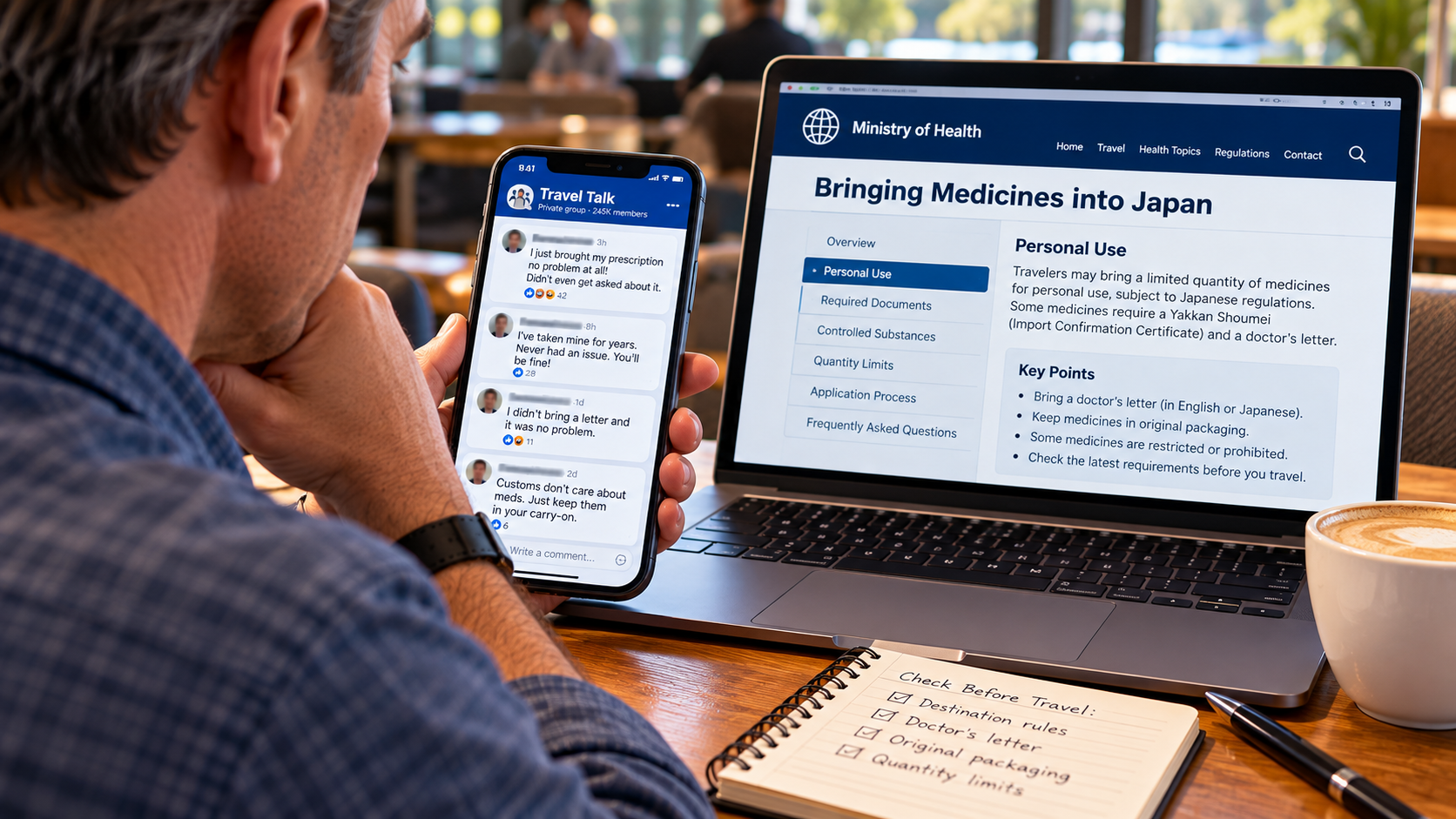
Facebook Groups Are Not Customs Authorities
Travel groups can be terrific resources for hotel recommendations, restaurants, and sightseeing ideas.
But medication laws are a different matter.
You've probably seen comments like:
"I've traveled there five times with my medication. Nobody ever asked me for a letter."
That experience might be completely genuine.
But it doesn't establish whether the medication was legal, whether documentation was required, or whether the traveler simply wasn't questioned.
Getting through customs without a question doesn't prove you complied with the law.
And a traveler who visited last year may not know about a regulation enacted last month.
Use Facebook groups for firsthand travel experiences. Use government authorities for legal requirements and qualified medical professionals for medical advice.
Where to Find Reliable Information
Start with the U.S. Department of State's international travel guidance on medicine and health and the CDC's advice on traveling abroad with medication.
Then check your destination country's official customs, health authority, or embassy website.
Verify the rules for your medication's active ingredients, permitted quantities, documentation, and any advance authorization.
If a letter is required, check whether the country specifies particular information, an official form, or a translation.
If the guidance is unclear, contact the appropriate government authority rather than relying on unofficial interpretations.
For more about medications available without a prescription, see Over-the-Counter Medications Abroad: Pack Them or Buy Them There?
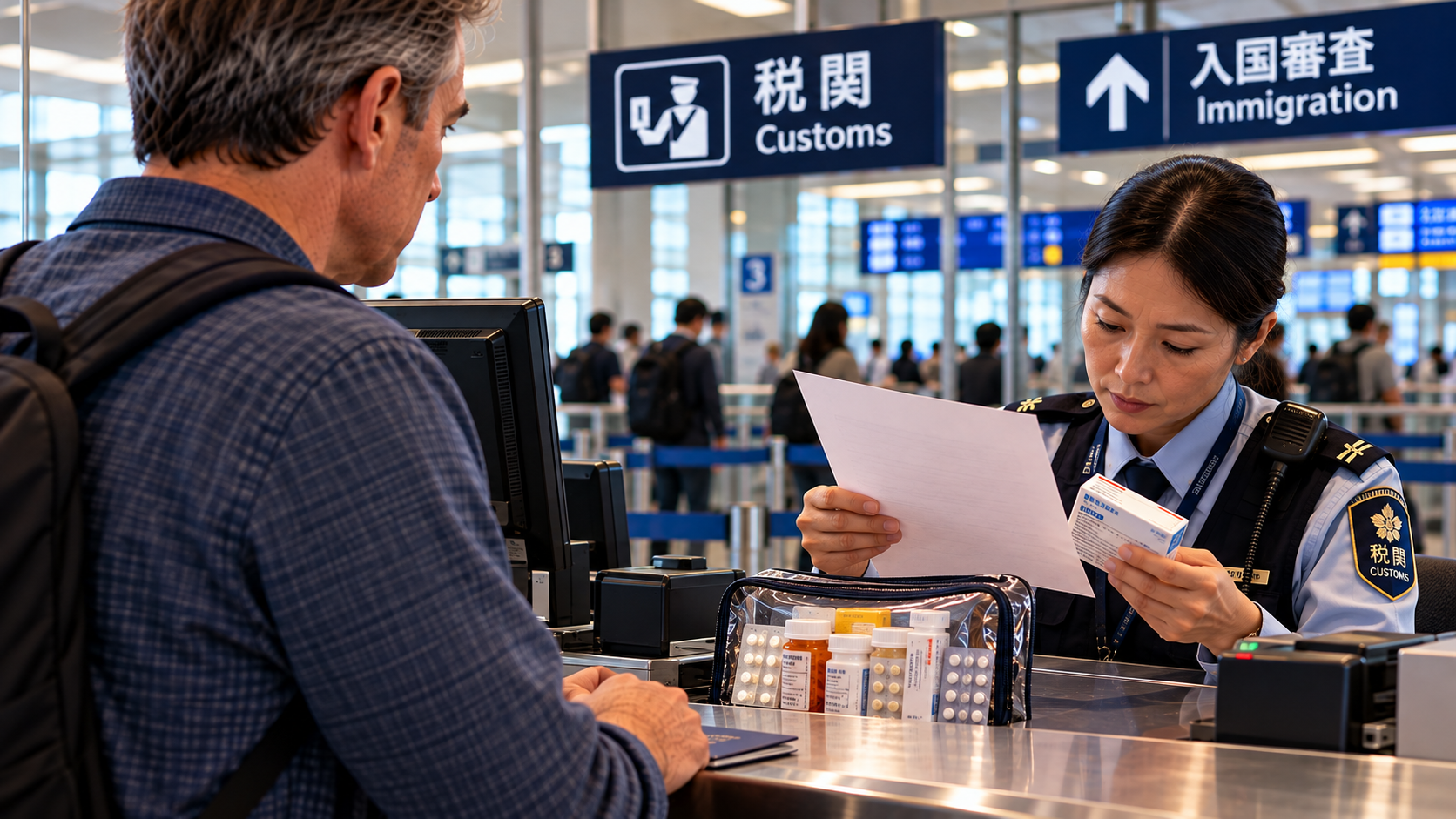
Getting a Doctor's Letter
Call your doctor's office and request one. Tell them where you're traveling and provide any specific requirements you've identified.
Give them time to prepare it.
Don't wait until the day before departure.
The Curated Upgrades Takeaway
A doctor's letter can be required, helpful, or insufficient, depending on your medication and destination.
Before traveling, check the current government requirements for your particular circumstances. Obtain whatever documentation or authorization those rules demand.
Your doctor can explain why you need a medication. Your destination country determines whether you can bring it.
That's traveling smarter.