

Should You Charge to 100% Before an EV Road Trip?
Why a full battery makes sense before some drives, wastes time during others, and depends on where and when you charge.
So, Should You Charge to 100%?
Yes, sometimes. But not necessarily every time you plug in.
Charging to 100% at home before a long road trip can make perfect sense, provided it follows your vehicle manufacturer's recommendations.
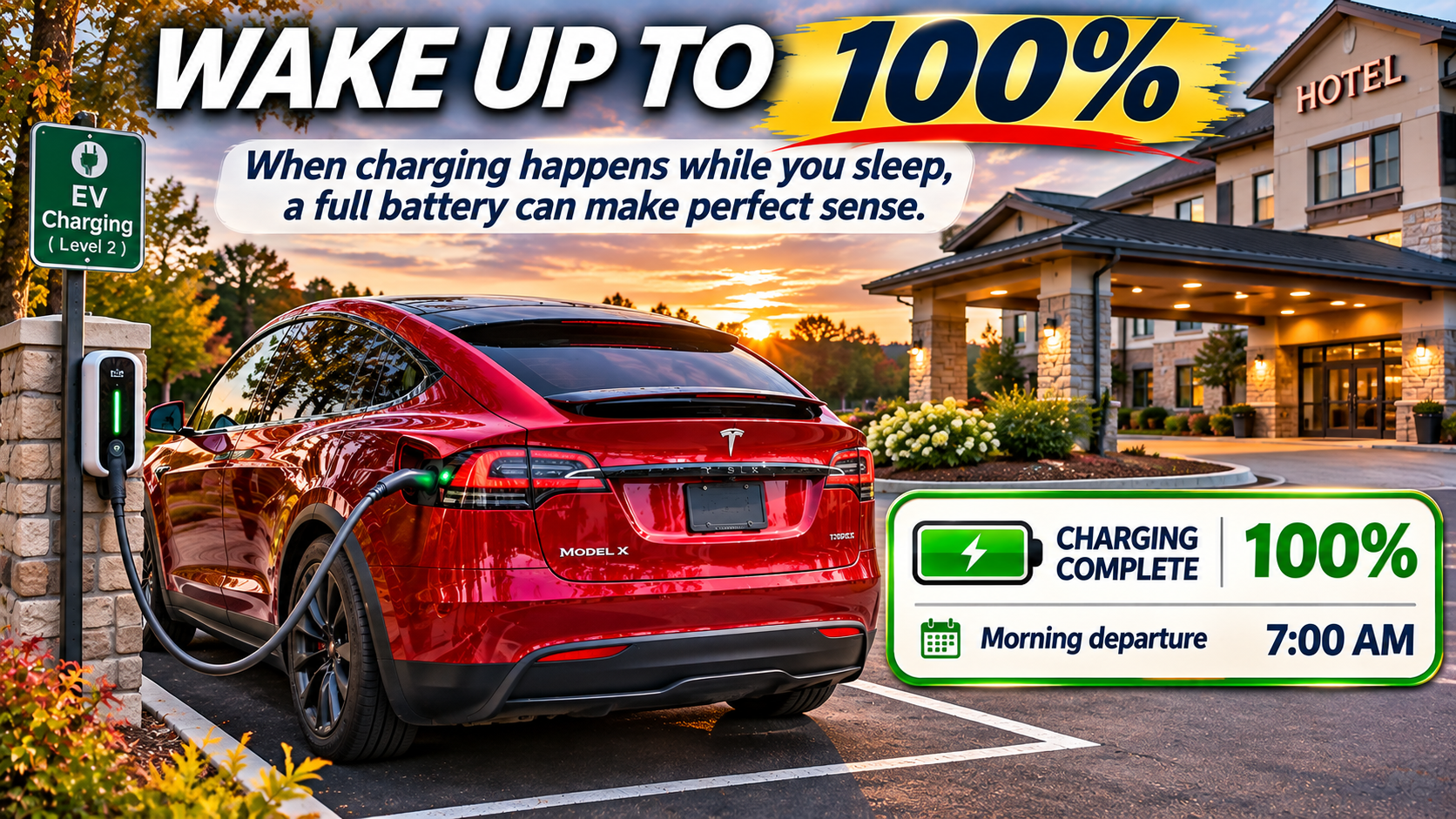
Charging to 100% at a hotel can also be worthwhile, especially when the car has all night to charge and you want maximum range the next morning.
But sitting at a highway fast charger waiting for the battery to reach 100%? That's often a different story.
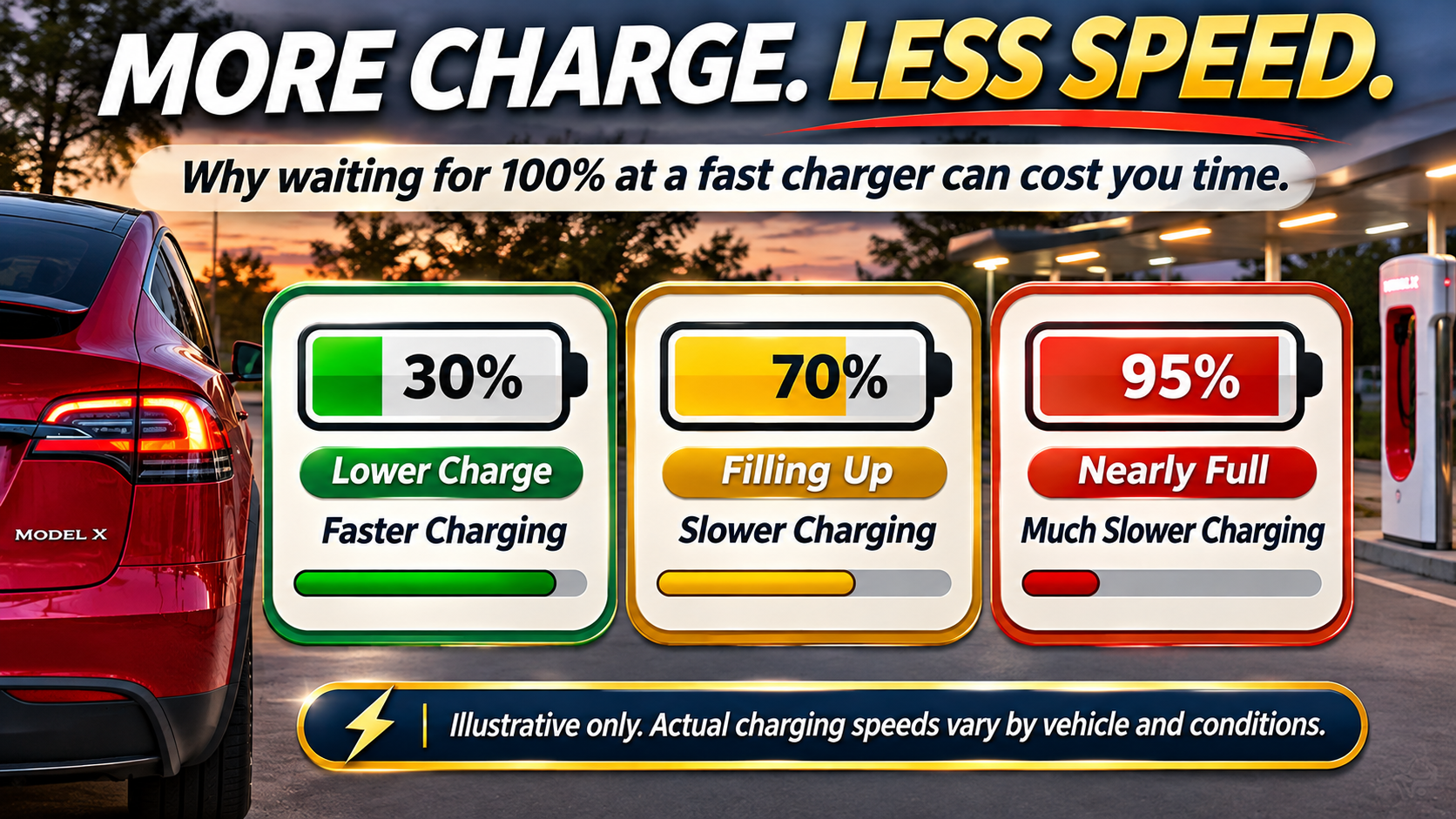
As an EV battery fills, fast charging generally slows down. Those final percentage points can take considerably longer than you expect.
So the question isn't simply whether you should charge to 100%.
It's whether that full charge benefits your trip enough to justify the time it takes.
Here's how I approach it with our Tesla Model X.
Why I Start Long Trips With a Full Battery
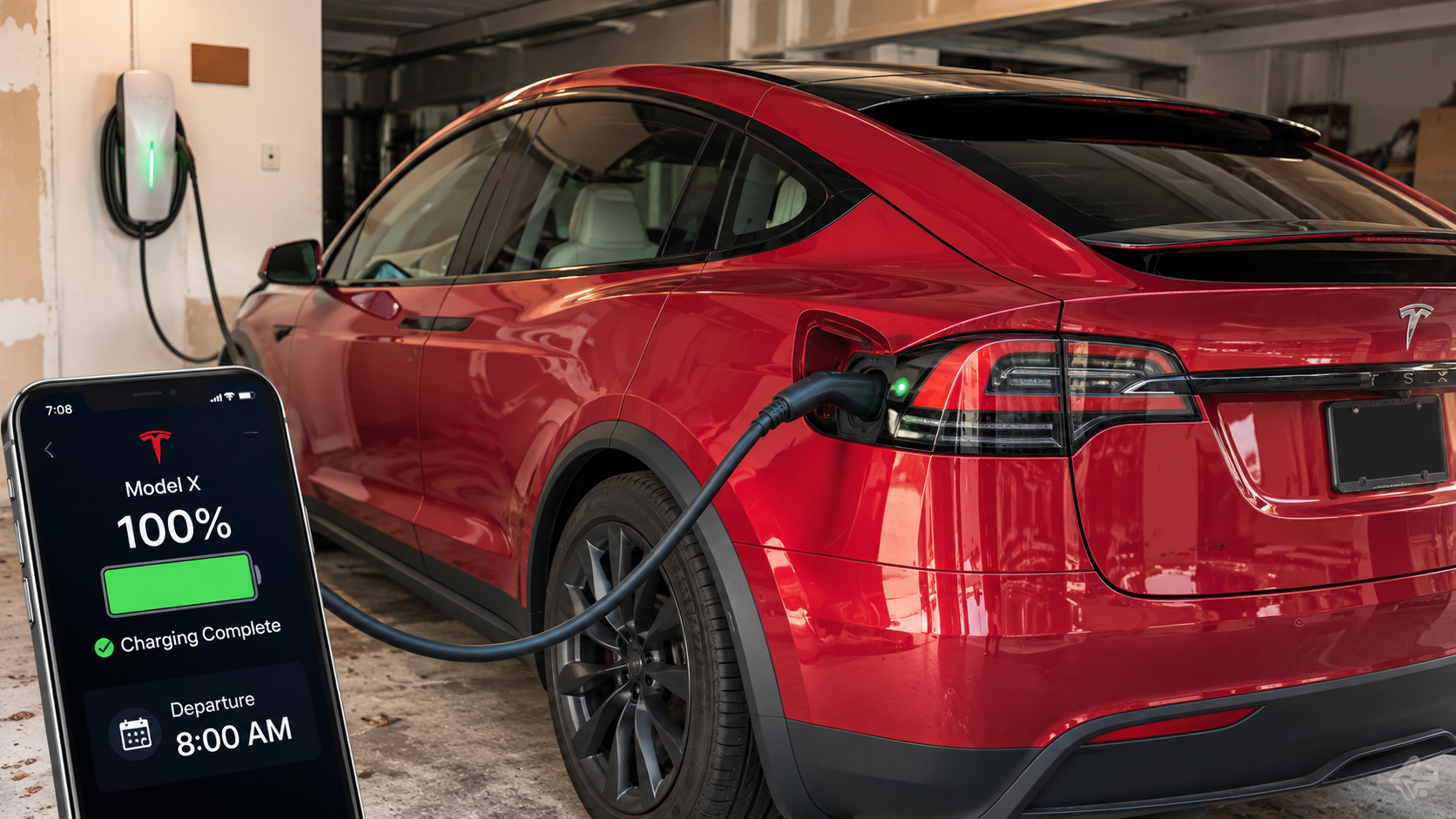
Before a long road trip, I plug our Tesla into the hardwired 240-volt Wall Connector in our garage, usually before going to bed.
I set the charge limit to 100%, and by morning we're ready to go.
We also have outdoor 240-volt outlets at our mountain cabin and lake house, where we use Tesla's Mobile Connector. That gives us the same convenience when starting a trip from either location.
I like leaving with a full battery.
It gives us more flexibility for our first charging stop, especially when we're traveling through areas where chargers are farther apart. And there's another advantage: electricity at home costs considerably less than what we'd pay at a Supercharger along the highway.
But while researching this article, I discovered something about my own charging routine.
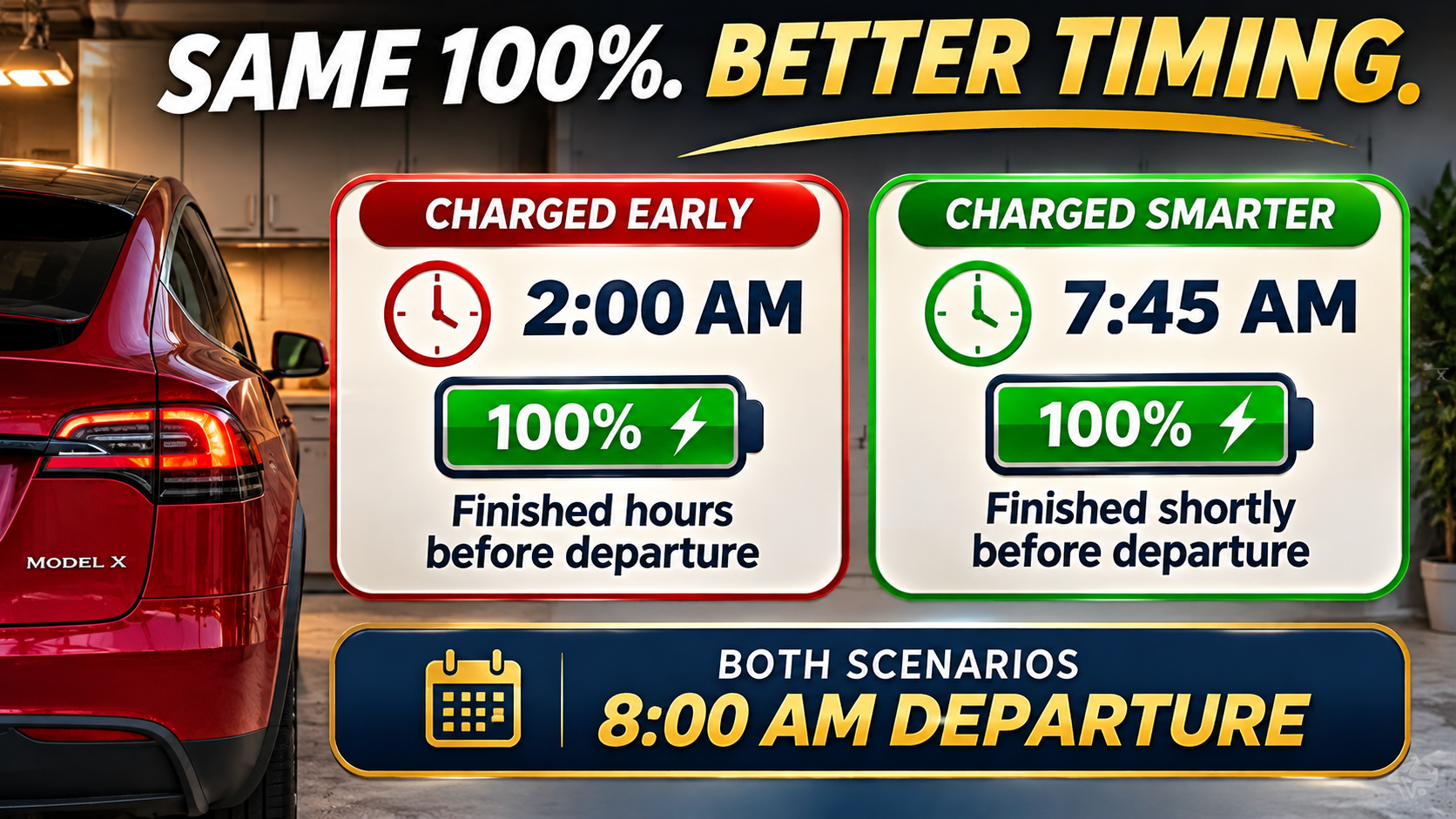
I've always plugged in before bed and let the car reach 100% whenever it finishes. I've never bothered scheduling it to finish shortly before we leave.
Turns out, that's an easy habit to improve.
Tesla's scheduled charging guidance explains how to set an end time so the car can calculate when charging needs to begin.
Instead of reaching 100% at 2 AM and sitting fully charged until our 8 AM departure, I can schedule it to finish closer to the time we're actually leaving.
Same full battery. Same available range. Better timing.
That's one change I plan to make.
What About Battery Health?
You'll find plenty of advice online telling EV owners never to charge above a particular percentage.
But there's no single charging rule that applies to every electric vehicle.
Battery technology continues to evolve, and manufacturers have different recommendations for everyday charging and longer trips.
Some vehicles recommend a lower daily charging limit while allowing a full charge when additional range is needed. Others have different recommendations.
Check your owner's manual or your manufacturer's current charging guidance for your specific vehicle.
For example, Tesla's battery and range guidance explains that recommended charging habits can differ by battery and that drivers should follow the charge limit displayed by their vehicle.
There's also a difference between charging to 100% because you're about to leave on a long trip and leaving a vehicle fully charged for days.
You don't need to understand battery construction to make a sensible charging decision.
You just need to know what your vehicle recommends.
Why I Don’t Charge to 100% at a Supercharger
My Tesla and I don't always agree about when a charging stop should end.
We'll pull into a Supercharger, plug in, and take care of the usual road-trip necessities.
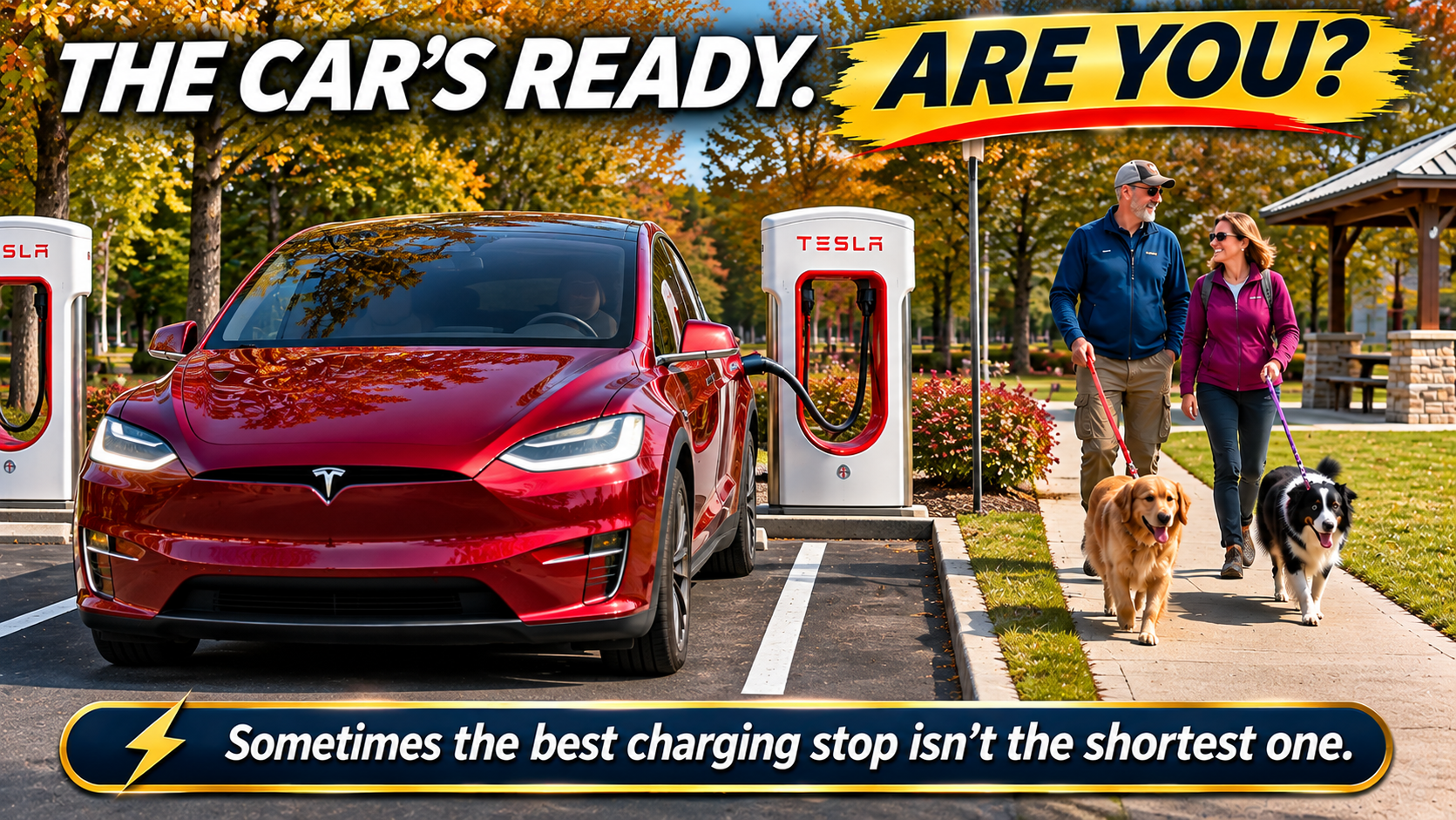
The dogs need a walk. Somebody needs the restroom. Maybe we're getting a snack.
Meanwhile, the Tesla is charging.
Quite often, the car tells us it's ready to continue before we're finished with our break.
And I'm certainly not going to abandon a perfectly good snack just because the navigation system says we have enough electricity to reach the next charger.
But once we're ready to leave, I look at how much charge we actually need.
Sometimes that's well below 80%. Sometimes it's more.
What I don't do is sit there waiting for 100%.
As the U.S. Environmental Protection Agency explains, DC fast charging generally slows as a battery approaches full charge.
Exactly when that slowdown becomes noticeable varies by vehicle, battery conditions, and charging equipment.
That means the additional range gained toward the end of a charging session may come at a much greater cost in time.
And that's where I start thinking about my return on time investment.
If we have enough charge to comfortably reach our next stop, why spend another 20 minutes waiting for a few more percentage points?
On the other hand, if the next reliable charger is a long way off, charging longer might be exactly the right decision.
There's no magic percentage.
The right amount of charge is the amount that gets you comfortably to your next destination.
When the Car Is Ready Before We Are
Here's something that gets overlooked in discussions about charging efficiency.
The fastest charging stop isn't always the shortest travel stop.
If we're walking the dogs, grabbing lunch, or taking a break, the Tesla may continue adding range after it has reached the navigation system's recommended charge level.
That's not necessarily wasted time.
We're doing things we would have done anyway.
But there's a difference between charging while we're already stopped and sitting around solely to squeeze out a few more percentage points.
If the car is ready and we're ready, we leave.
If we're still finishing our break, a little additional range can be useful, provided the station's rules and any congestion or idle fees don't make staying connected a problem.
For us, the objective isn't to spend the least possible time at every charger.
It's to make the most of the time we're already spending on the road.
Why 100% at a Hotel Can Make Sense
A hotel with Level 2 charging changes the equation again.
If we're staying overnight and I want a full battery for the next day's drive, I'll often aim for 100% or close to it, assuming that's appropriate for our vehicle.
The car has hours to charge while we're sleeping, so reaching 100% doesn't necessarily add any travel time.
But I check the estimated completion time.
If charging will finish around 6 AM, that's convenient. I'm usually up early and can unplug when I get up.
If it's going to finish around midnight or 1 AM, I may adjust my plan and unplug before bed to free the charger for another guest. Then, if it's available in the morning, I can finish charging.
Or, if I really need that full charge, I'll set an alarm and move the car when charging is complete.
It's a shared resource, and I don't want to occupy the charger all night when somebody else could be using it.
The point isn't to charge to 100% at every hotel.
It's that charging to 100% while you're sleeping is very different from waiting for 100% at a highway fast charger.
We've covered the practical side of hotel charging in Charge While You Sleep.
Curated Upgrades Recommends
🟢 Go for it: Charge to 100% before a long drive when it makes sense. Follow your vehicle manufacturer's guidance and consider scheduling charging to finish near departure.
🟢 Go for it: Use overnight Level 2 charging to your advantage. If a full battery will help with the next day's drive, home and hotel charging can make reaching 100% convenient. Be considerate of other drivers when using shared chargers.
🟡 Maybe: Charge beyond your usual stopping point at a highway fast charger. Sometimes the next destination justifies it. Other times, the extra range isn't worth the wait.
🔴 Pass on it: Automatically charging to 100% at every fast charger. Don't spend unnecessary time chasing a number when you already have enough range to continue comfortably.
The Bottom Line
I'll still leave home at 100% before many long road trips, when that's appropriate for our vehicle.
I'll still take advantage of hotel charging when a full battery makes sense for the next day.
And I'll still leave a Supercharger well below 100% if that's all I need to comfortably reach our next stop.
The difference is understanding when a full charge helps and when it simply adds time.
The battery percentage isn't the goal. The trip is.
For more practical EV road-trip advice, see How to Plan a Tesla Road Trip and How Much Does Public EV Charging Cost?