


Upgrade Your Decisions, Not Your Budget
Better travel doesn't necessarily mean more expensive travel. Sometimes the best upgrade is spending more. Sometimes it's spending less. And sometimes it's not buying anything at all.
The word upgrade has a problem.
In travel, we've been trained to associate it with spending more.
Upgrade the seat. Upgrade the room. Upgrade the rental car. Upgrade the cruise cabin. Upgrade to the package with more things included.
And sometimes that's exactly the right decision.
I've spent more for better seats. I've used points to get into cabins I wouldn't necessarily pay cash for. I've paid for convenience because I decided my time was worth more than the difference in price.
Those were upgrades.
But I've also chosen the less expensive hotel because it was where I actually wanted to be. Skipped things that didn't add enough to the trip. Driven an electric car because the charging math worked. Stayed somewhere longer instead of adding another destination.
Those were upgrades too.
Because better travel doesn't necessarily mean more expensive travel.
The goal isn't to upgrade everything.
It's to upgrade the decisions.
Spend More When More Buys Something You Value
Suppose one flight costs $80 more but is nonstop and gets you to your destination six hours earlier.
The cheaper ticket still saves $80.
But the more expensive one might buy you dinner at your destination instead of dinner at an airport. It might eliminate a connection and give you half a vacation day back.
That's not automatically worth $80.
But now we're asking the right question:
What am I getting for the difference?
Sometimes the answer is time.
Maybe it's comfort. Flexibility. Location. Sleep.
That's very different from simply asking which option costs less.
Vacation time is a travel currency too, and unlike points or money, you can't earn it back later.
That doesn't mean every minute needs to be optimized. Sitting at a café doing absolutely nothing might be one of the best uses of an afternoon.
The point is to stop giving your time away accidentally.
If you're going to spend six hours to save $80, make it a decision.
This is the same value calculation we explore in When Is a Budget Airline Actually Cheaper?. The lowest fare isn't necessarily the best trip.
Spend Less When More Doesn't Buy Anything You Need
Now take the same idea to a hotel.
One property has a big room, pool, lobby bar and enough amenities to fill half the booking page.
A smaller B&B costs less and has almost none of them.
But the B&B is three blocks from where you actually want to spend your evenings.
Which one is the upgrade?
If you're planning lazy afternoons beside the pool, the first hotel might win easily.
But if you're leaving every morning and returning every night, you may be paying for amenities you barely use while adding transportation to every day.
The cheaper room may produce the better trip.
That's why I'm less interested in whether something is technically a higher class of product than whether it improves the experience.
Spend Where You'll Actually Notice It
A travel budget doesn't have to operate at one spending level.
You can stay somewhere modest and have an extraordinary dinner.
Fly economy one direction and use points for a lie-flat business-class seat on the overnight flight home.
Skip the expensive resort and pay for a private guide.
Book an ordinary cruise cabin and spend the difference ashore.
Or book the balcony because you know you'll sit out there every morning with coffee and couldn't care less about specialty dining.
The upgrade should follow your priorities, not some imaginary hierarchy of how an expensive vacation is supposed to work.
Points & Miles 101 fits here too. Their best use isn't necessarily the redemption that wins an internet contest for the highest cents-per-point value.
Sometimes points let you have the one experience you'd love but wouldn't comfortably buy with cash.
If that's what you wanted from them, that's a pretty good upgrade.
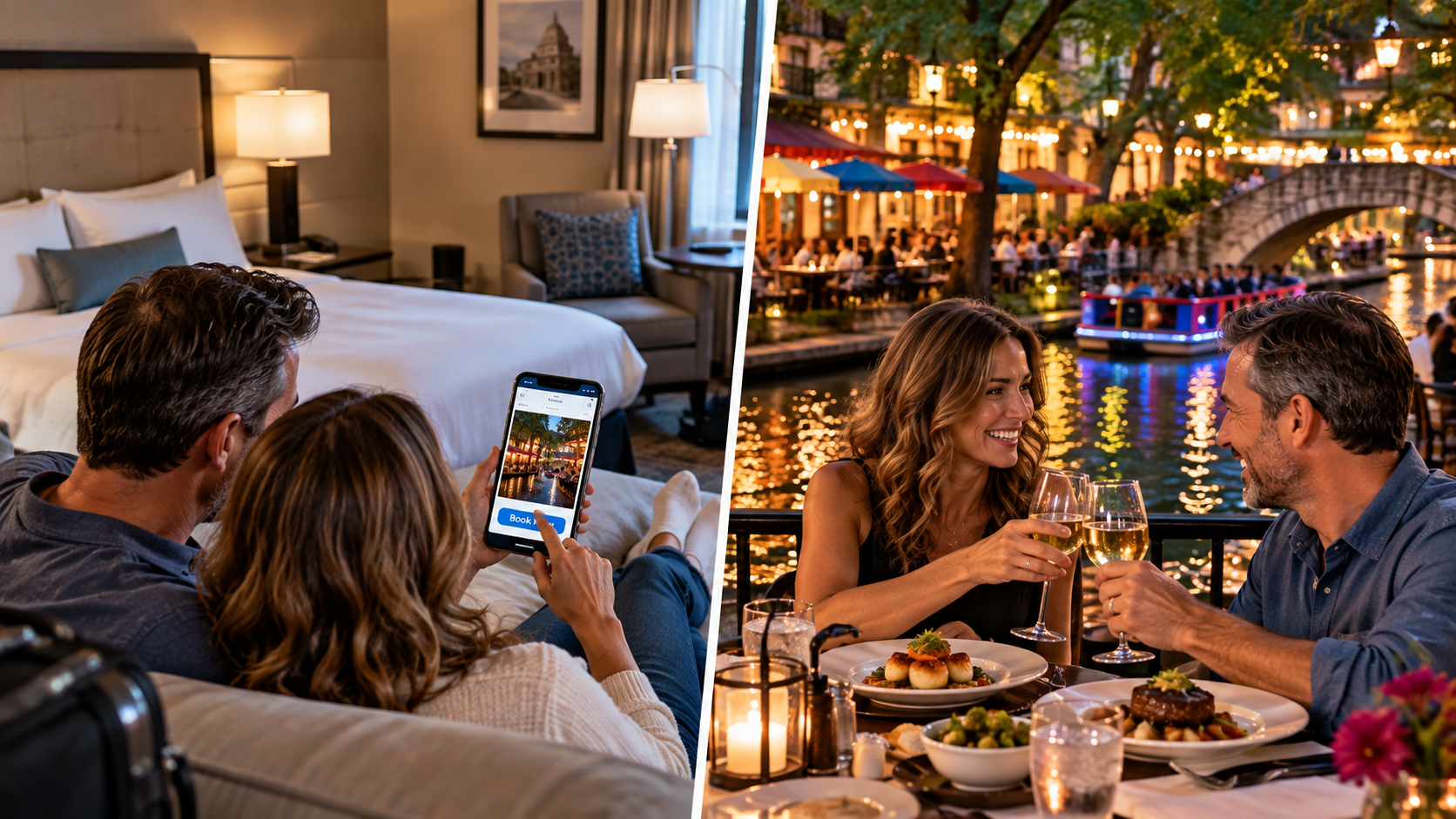
Sometimes the Upgrade Is Removing Something
We have a tendency to improve itineraries by adding things.
Another city.
Another attraction.
Another reservation.
Another “must-do.”
Sometimes editing works better.
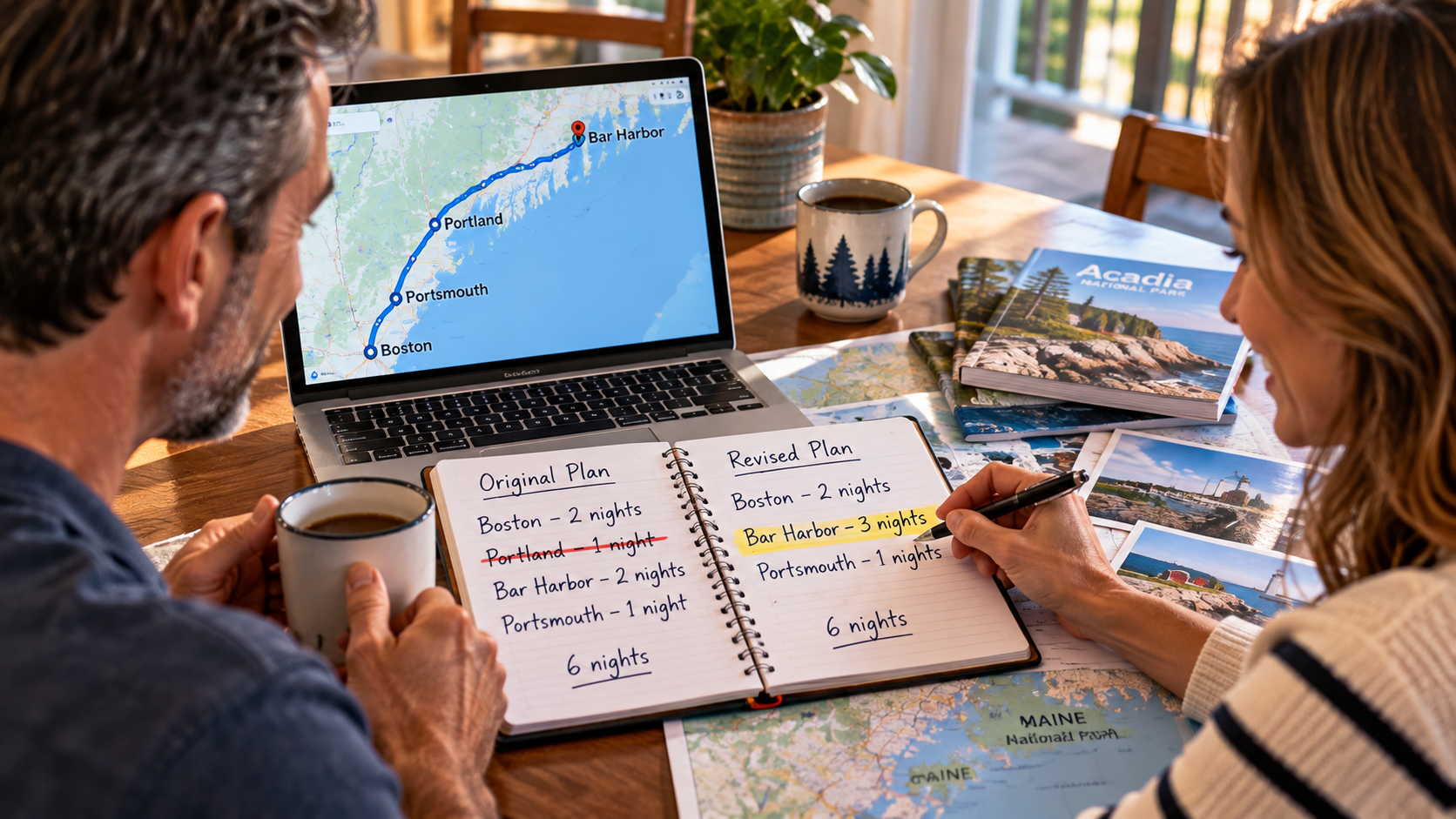
One fewer hotel change.
One fewer day spent driving.
No rental car because public transportation works better.
No cruise drink package because you've done the math and it doesn't fit how you actually drink.
No excursion because you'd rather wander on your own.
No famous attraction that nobody in your family particularly wants to see.
Three nights somewhere instead of three places in three nights might even cost less once you account for transportation and all the little expenses that come with moving.
More importantly, it changes what you're buying.
You're no longer buying three check-ins.
You're buying time somewhere.
And if you genuinely love changing cities every day?
Keep the cities.
This isn't an argument for slow travel.
It's an argument for intentional travel.
Don't Forget the Boring Upgrades
Some of the most useful travel upgrades make terrible Instagram posts.
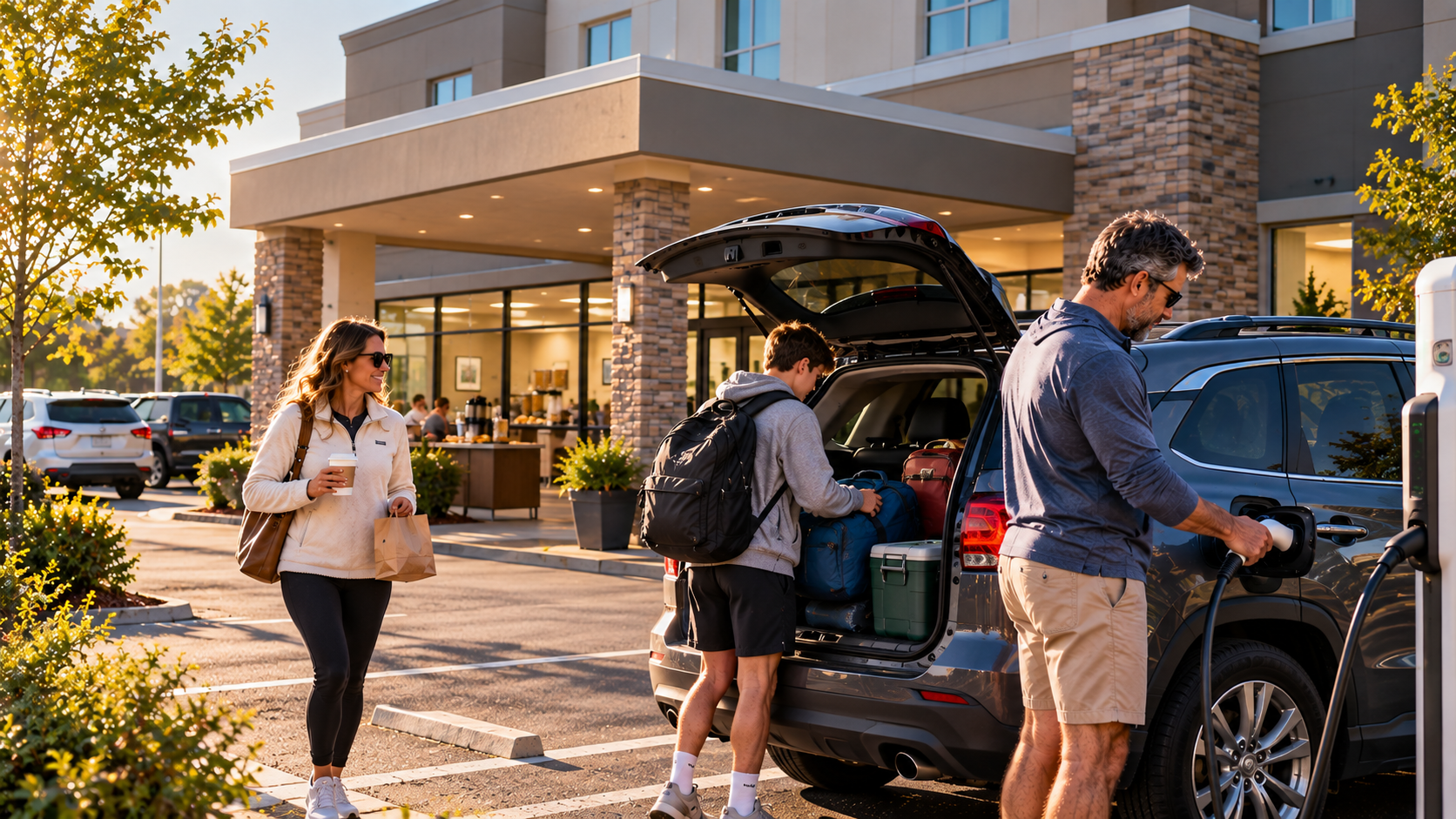
Free hotel charging for an EV.
Parking where you actually need it.
Breakfast included before an early start.
A hotel near the airport before a morning flight.
Laundry halfway through a longer trip.
A room configuration where everybody actually sleeps.
A refundable reservation when your plans aren't certain.
None of those will make anybody gasp when you tell them about your vacation.
They can make the vacation dramatically easier.
Travel marketing naturally emphasizes the things that photograph well.
The suite photographs well.
The champagne photographs extremely well.
Friction doesn't.
But remove enough little bits of friction from a trip and you may notice the improvement far more than another category of hotel room.
Borrow the Idea, Not Someone Else's Vacation
I get plenty of travel inspiration from other people.
I'll see a place I'd never considered and start wondering what it would take to get there.
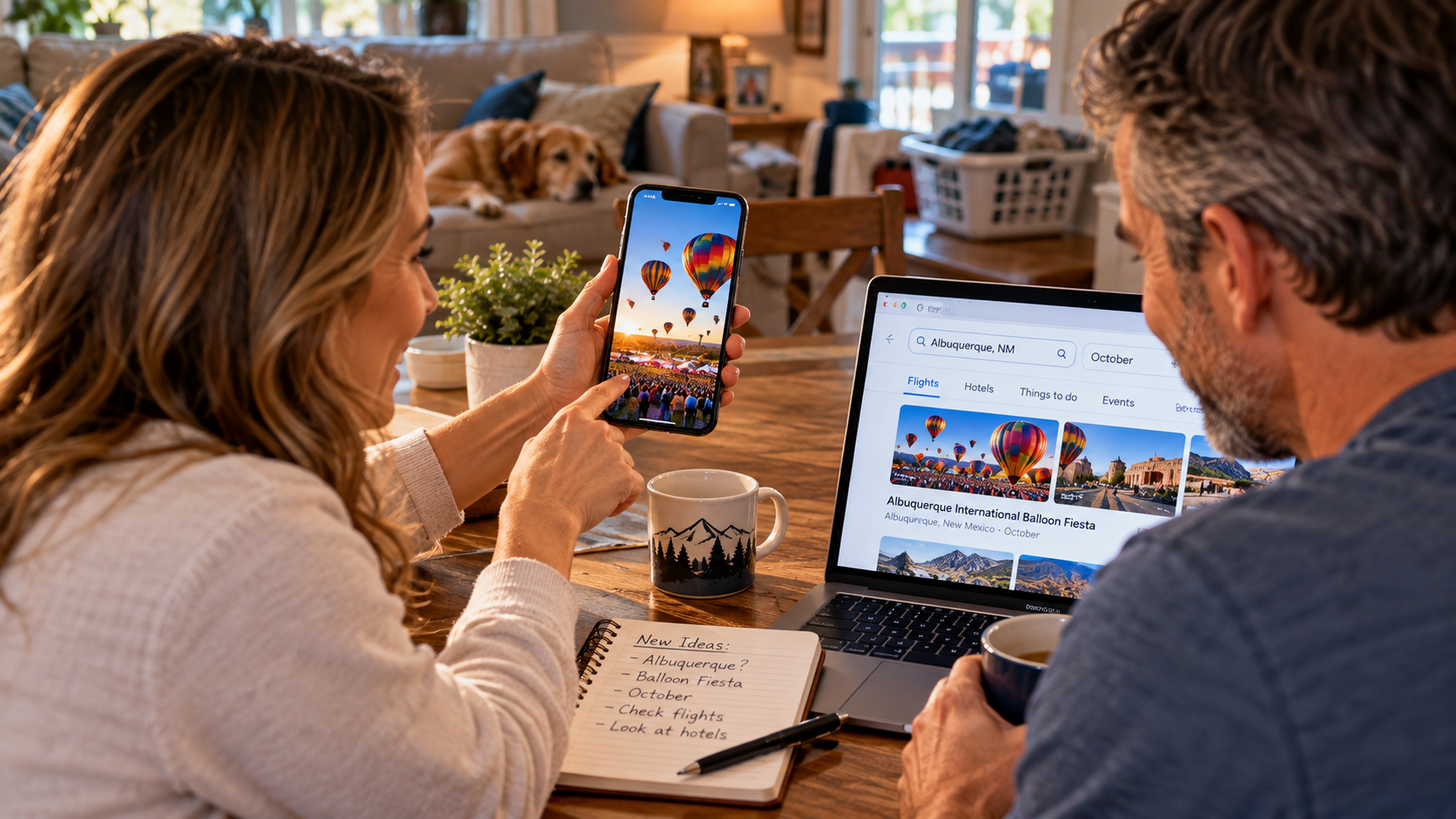
Someone posts about a festival, concert or local event that wasn't remotely on my radar, and suddenly I'm looking at a calendar.
A restaurant, unusual hotel, scenic drive or single photograph can plant the seed for an entirely different trip.
That's one of the things I love about travel groups and social media.
Inspiration is useful. Comparison isn't.
What I won't do is feel compelled to make every moment of every trip Instagram-worthy.
I don't need every hotel room to open onto an infinity pool. I don't need breakfast arranged beside a perfectly positioned pair of sunglasses. And I don't need to judge my vacation against an influencer's carefully edited, filtered and occasionally green-screened version of travel success.
There's nothing wrong with seeing somebody else's trip and thinking:
I want to do that.
That's how inspiration is supposed to work.
The problem begins when “I'd love to experience that” quietly turns into:
“My trip needs to look like that.”
It doesn't.
Borrow the idea.
Keep your own definition of a good trip.
And Sometimes the Upgrade Is Seat 57B
There is someone I hope eventually finds Curated Upgrades.
Maybe they've never traveled much.
Maybe they look at an old college friend's Instagram feed filled with business-class seats, beautiful resorts and perfectly framed sunsets.
Then they look across the room at the mortgage, the regular chaos of life and their 2.3 kids and think:
I could never do that.
Yes, you can.
Your version might look different.
Maybe you're not flying business class.
Maybe you're in seat 57B, and getting on that airplane at all is the upgrade.
Good.
Maybe your hotel doesn't have an infinity pool. Maybe it has two queen beds, free breakfast and a pool full of kids doing cannonballs.
Perfect.
Maybe you're driving instead of flying. Staying with family. Packing sandwiches. Using points for an ordinary hotel instead of a villa. Taking one trip every three years instead of three trips every year.
There is no shame in any of that.
Travel isn't a competition, and there isn't a minimum admission price.
An upgrade isn't necessarily moving from economy to business class.
Sometimes it's moving from:
“I'd love to do that someday.”
to:
“How could we actually make this happen?”
Maybe your first upgrade is choosing the cheaper flight.
Maybe it's traveling for three nights instead of seven.
Maybe it's going somewhere two hours from home because that's what works this year.
Maybe it's saving for the one experience your family has talked about forever.
Or maybe it's simply realizing that seat 57B is going somewhere you've always wanted to see.
Take the seat.
Take the trip.
Get out there.